¿Está listo para crear sus propios vasos o envases de papel con su marca?
Díganos sus requisitos -tamaño, revestimiento, impresión y destino- y nuestro equipo le preparará un presupuesto detallado en 24 horas.

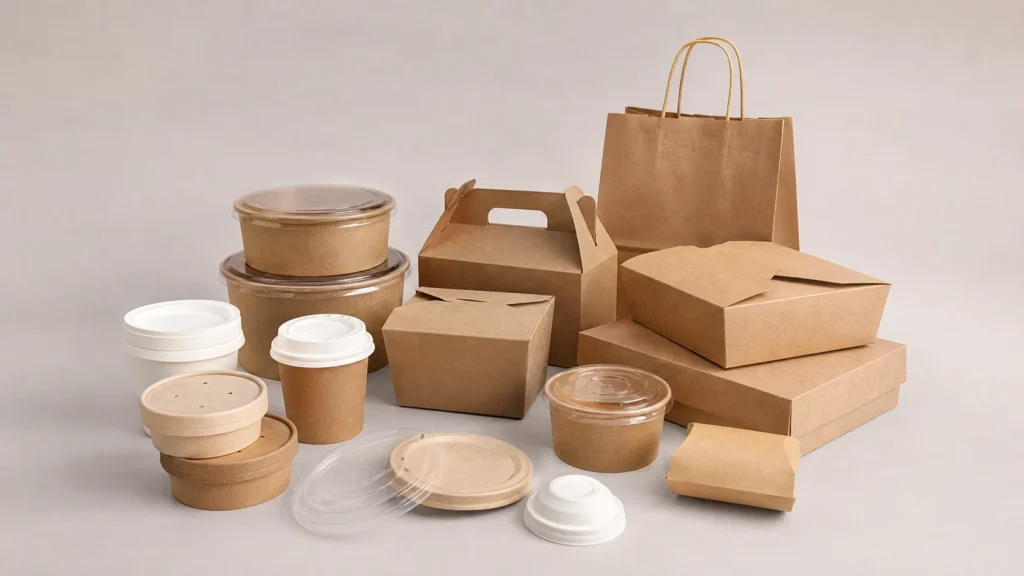
Los envases para comida a domicilio deben cumplir tres requisitos simultáneos: deben contener productos líquidos y semilíquidos sin derramarse, mantener una temperatura de servicio aceptable durante un tiempo de transporte variable y resistir las tensiones mecánicas derivadas de la compresión de la bolsa, el movimiento del vehículo y la entrega por parte del mensajero. Cada uno de estos requisitos empuja las especificaciones en una dirección diferente. Un envase diseñado para retener al máximo el vapor puede atrapar condensación que ablande un producto frito. Una tapa sellada con suficiente estanqueidad para resistir un contenido líquido puede resultar difícil de abrir para el consumidor sin derramar el contenido. Un embalaje secundario que aísle bien puede añadir un coste y un volumen que un servicio de reparto no puede absorber a gran escala. El objetivo de esta guía es ofrecer a los compradores B2B un marco de decisión estructurado —no una lista de recomendaciones de productos— para evaluar, probar y decidirse por un embalaje de reparto que se adapte a su menú específico, tipo de contenido, características de la ruta y contexto operativo.
Los alimentos en tránsito se enfrentan a riesgos que no existen en un entorno de consumo en el propio local. Conocer cada categoría de riesgo antes de elegir un envase evita un error habitual: optimizar un criterio de protección y, sin darse cuenta, socavar otro.
Integridad física del relleno. Las sopas, los currys, las proteínas estofadas y los platos con mucha salsa presentan un riesgo de fugas en cada junta y punto de cierre. Las ensaladas y los platos compuestos se enfrentan a una amenaza física diferente: la compresión que hace que las capas se colapsen y que el aliño se transfiera a componentes que debían permanecer secos. Los productos fritos o empanados se enfrentan a una acumulación de vapor que altera su textura a los pocos minutos de taparlos. Cada tipo de relleno tiene un perfil de deterioro distinto, y un único envase no puede dar respuesta a todos los perfiles por igual.
Estado térmico en el momento del consumo. La medida relevante no es la temperatura en el momento del envío, sino la temperatura cuando el consumidor abre el envase —un momento que puede producirse muchos minutos después, dependiendo de la ruta—. La trayectoria térmica desde la cocina hasta el consumidor se ve afectada por el material del envase, el ajuste de la tapa, el aislamiento de la bolsa secundaria, las condiciones ambientales y el tiempo de permanencia en el punto de recogida del servicio de mensajería. Un comprador no puede saber de antemano cómo interactuarán todas estas variables en su ruta específica sin realizar una observación de campo estructurada utilizando sus propios productos del menú.
Seguridad microbiológica y cumplimiento de la normativa sobre contacto con alimentos. Los envases que entran en contacto con los alimentos deben cumplir los requisitos aplicables en materia de sustancias en contacto con los alimentos. El La FDA establece el marco normativo para las sustancias en contacto con los alimentos y los materiales de envasado que los compradores que operen en el mercado estadounidense o exporten a él deben revisar junto con la documentación de su proveedor. Los compradores de otros mercados deben solicitar a su proveedor la documentación normativa correspondiente y verificarla de forma independiente con arreglo a los requisitos de la jurisdicción aplicable.
Integridad de la marca y de la presentación. Un envase que llega intacto, sin fugas y a una temperatura aceptable, pero con la tapa abollada, la etiqueta rasgada o la base descolorida, sigue suponiendo un fallo para la marca. Tanto el embalaje secundario como los accesorios de la bolsa influyen en el estado de presentación del envase primario en el momento de su apertura.
FIG-01 | Mapa de riesgos en el transporte. Diagrama que ilustra las cuatro zonas de riesgo —mecánica, térmica, microbiológica y de presentación— que afectan a un envase de alimentos desde que sale de la cocina hasta que el consumidor lo abre. Cada zona va acompañada de una nota que indica la variable del envase más directamente relacionada con ella.
No se puede definir las especificaciones de un contenedor sin tener una idea clara de qué va a transportar y qué distancia va a recorrer. Ambos datos son hechos operativos, no suposiciones.
Representa las características del relleno. Para cada plato del menú destinado a la entrega a domicilio, indica: el estado del contenido (líquido, semilíquido, sólido con salsa, seco), la temperatura del contenido en el momento de taparlo, el volumen y el peso de la ración, el espacio libre entre el contenido y la tapa, y cualquier ingrediente que deba permanecer físicamente separado (por ejemplo, ingredientes crujientes, aderezos o guarniciones). Estas características determinan si un envase necesita una tapa de alto sellado, una tapa con orificios de ventilación, un interior compartimentado o un recipiente separado para la salsa —o una combinación de estos elementos—.
Trazar el recorrido de la entrega. Identifica el rango realista de duraciones de tránsito para tu zona de reparto. Ten en cuenta si los repartidores utilizan bolsas isotérmicas y, en caso afirmativo, si dichas bolsas están estandarizadas entre tus socios de reparto o si varían. Identifica cualquier ruta con varias paradas en la que los contenedores puedan apilarse o cambiarse de posición. Tenga en cuenta los rangos de temperatura ambiente de las estaciones en las que opera su negocio. Este perfil de trayecto afecta directamente a las expectativas térmicas que puede establecer de forma razonable y a la tensión mecánica que debe soportar el contenedor.
Identificar las prioridades en materia de restricciones. En la mayoría de las operaciones de reparto, la resistencia a las fugas es la restricción principal, ya que la pérdida de líquido supone tanto un riesgo para la seguridad alimentaria como un fallo irreversible en la experiencia del consumidor. El rendimiento térmico es la restricción secundaria. La presentación ocupa el tercer lugar. Comprender qué restricción es la principal para tu operación permite aclarar qué concesiones en las especificaciones son aceptables y cuáles no.
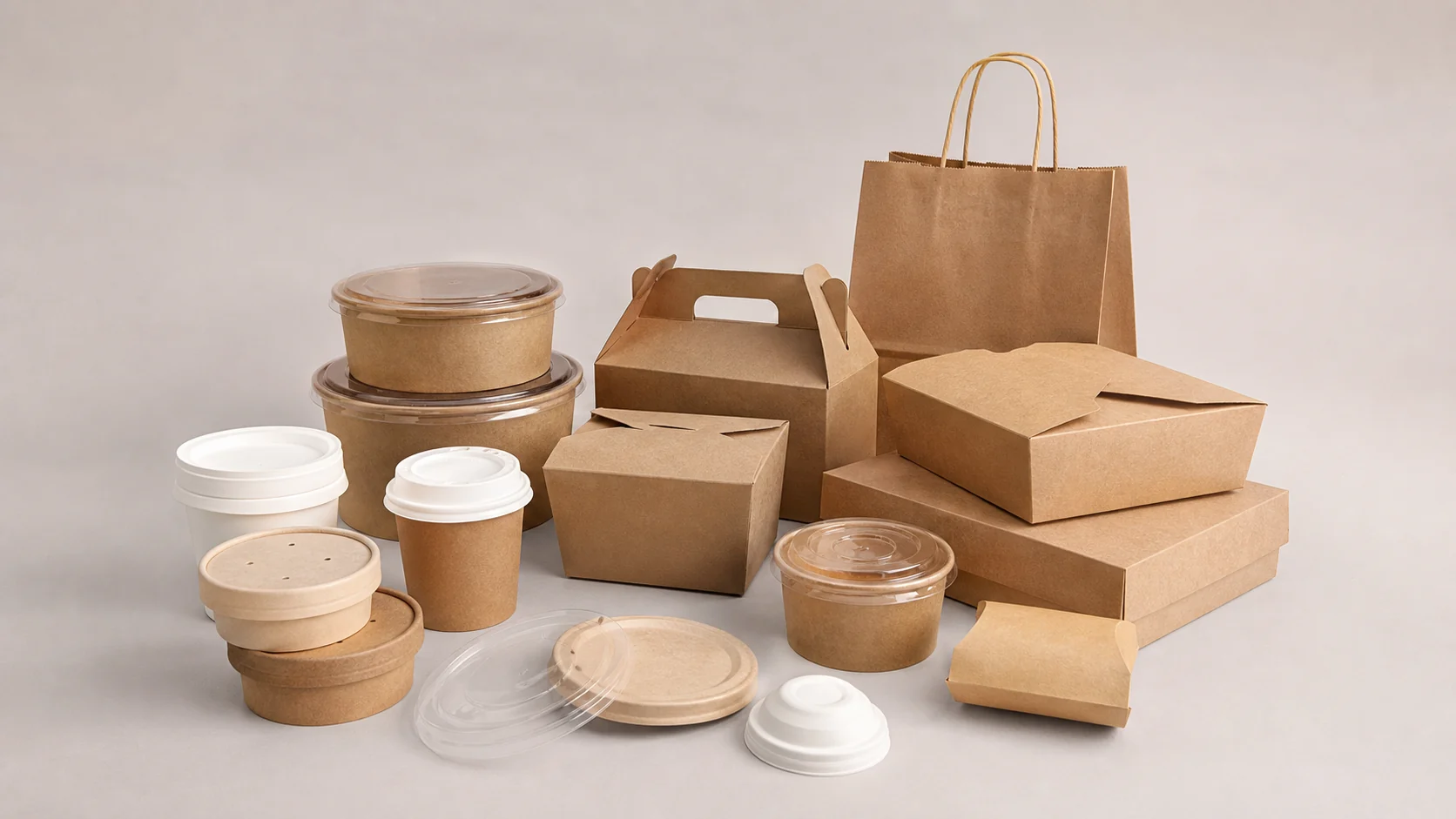
Los compradores que busquen una amplia selección de categorías de contenedores adecuadas para distintos contextos de entrega pueden consultar la Gama de envases para alimentos de Papacko desarrollar el vocabulario relacionado con los formatos disponibles antes de entablar conversaciones con los proveedores.
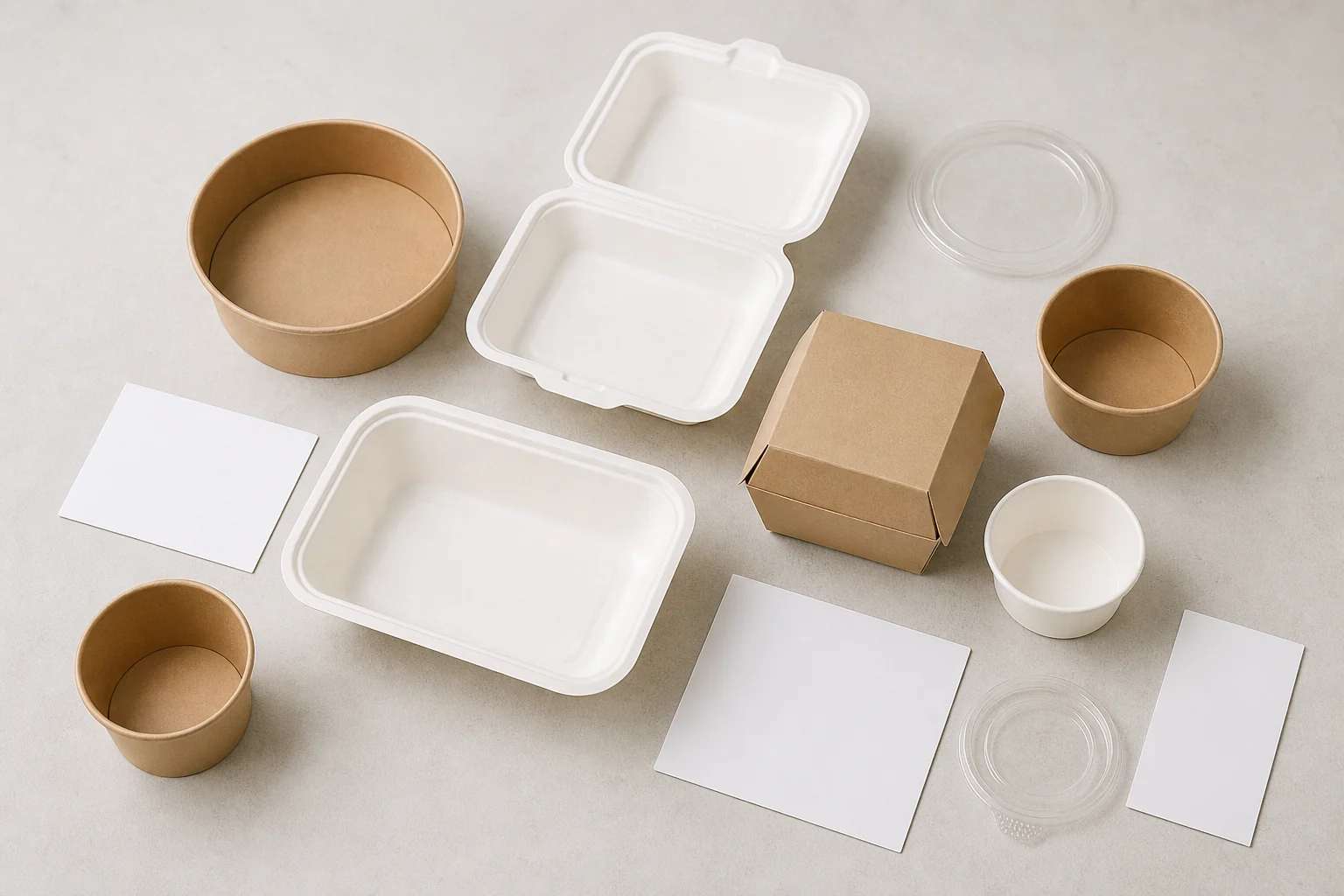
Uno de los errores más comunes en la adquisición de embalajes de envío es seleccionar un recipiente de un proveedor y una tapa de otro, y dar por sentado que funcionarán como un sistema. La resistencia a las fugas, en particular, depende de la interfaz entre el recipiente y la tapa, y no de cada uno de los componentes por separado. La misma referencia de tapa colocada en un envase de un lote de producción diferente, o en un envase de otro proveedor con unas dimensiones nominalmente iguales, puede dar lugar a un resultado de sellado distinto.
Criterios de selección de contenedores. El cuerpo del envase debe tener capacidad para el volumen de llenado con un espacio libre adecuado, ser lo suficientemente rígido desde el punto de vista estructural como para resistir las fuerzas de compresión de una bolsa de mensajería y estar fabricado con un material adecuado para la temperatura y el tipo de llenado. En el caso de los envases de líquidos calientes, la compatibilidad del material con la temperatura de llenado es esencial y debe confirmarse contrastándola con las especificaciones documentadas del proveedor sobre el material, sin basarse en suposiciones derivadas de la categoría general del producto. Para los envases con alto contenido en grasa, debe solicitarse y revisarse el índice de resistencia a la grasa del envase, siempre que el proveedor lo haya documentado.
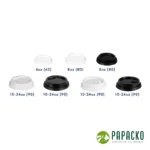
Criterios de selección de tapas. Las tapas cumplen diferentes funciones según el tipo de contenido. Una tapa de encaje a presión, adecuada para un plato con gran cantidad de líquido, es un producto distinto de una tapa con orificios de ventilación, adecuada para un producto frito. Comprar una tapa con orificios de ventilación para una sopa supone un riesgo de fugas; comprar una tapa hermética para pollo frito supone un riesgo de condensación que deteriora la textura. Es imprescindible confirmar que el código de referencia (SKU) específico de la tapa es mecánicamente compatible con el código de referencia específico del recipiente mediante pruebas físicas, y no solo comparando los datos del catálogo. Los compradores que busquen tapas de papel para recipientes tipo cuenco pueden consultar el Gama de tapas para cuencos de papel de Papacko como parte de su investigación sobre formatos.
Embalaje secundario. Las bolsas de reparto, los contenedores isotérmicos y las bolsas interiores constituyen la capa secundaria. Su contribución al sistema varía en función del material, el ajuste y el cumplimiento de las normas de uso. Una bolsa secundaria mal ajustada —en la que el envase queda suelto y se inclina durante el transporte— puede provocar que un envase bien sellado acabe teniendo fugas. La selección del embalaje secundario debe evaluarse junto con la del envase primario, y no después de esta.
FIG-02 | Diagrama del sistema de envase, cierre y embalaje secundario. Esquema que muestra cómo el envase principal, la tapa y la bolsa secundaria funcionan como un sistema integrado. Las flechas indican los modos de fallo que se producen cuando se selecciona un componente concreto de forma aislada respecto a los demás.
Si se tratan la resistencia a las fugas, la retención del calor y la durabilidad durante el transporte como tres listas de comprobación independientes, se obtienen especificaciones que, en la práctica, entran en conflicto entre sí. Se trata de compensaciones que deben equilibrarse, en lugar de resolverse de forma independiente.
El equilibrio entre ventilación y consumo. Los productos fritos y rebozados se benefician de las tapas con orificios de ventilación que permiten que se escape el vapor, conservando así la textura. Sin embargo, estas tapas son, por naturaleza, más permeables, lo que las hace inadecuadas para rellenos líquidos o semilíquidos. Si tu menú incluye tanto productos fritos como platos con salsa, necesitarás como mínimo dos referencias de tapas y un proceso de distribución riguroso para garantizar que se asigne la tapa correcta a cada relleno. La complejidad operativa aumenta con cada referencia adicional en el sistema.
La disyuntiva del aislamiento. Los envases de paredes más gruesas y las bolsas secundarias aislantes retienen el calor con mayor eficacia, pero aumentan el coste, el peso y el volumen cúbico. En el caso de las operaciones de reparto con márgenes económicos ajustados por pedido, las mejoras en el aislamiento deben evaluarse en función de la mejora real de la temperatura percibida por el consumidor y de la pérdida térmica real que se produce en rutas representativas, y no en función de las propiedades teóricas de los materiales.
La relación entre rigidez y flexibilidad. Los envases rígidos resisten la compresión dentro de la bolsa de reparto y protegen los productos frágiles que contienen, como platos con varias capas o ensaladas preparadas. Sin embargo, los envases rígidos son menos apilables, ocupan más volumen en las bolsas de mensajería y pueden requerir un embalaje secundario más grande. Los envases más ligeros y compresibles reducen los costes de embalaje secundario por pedido, pero transfieren la tensión mecánica al contenido.
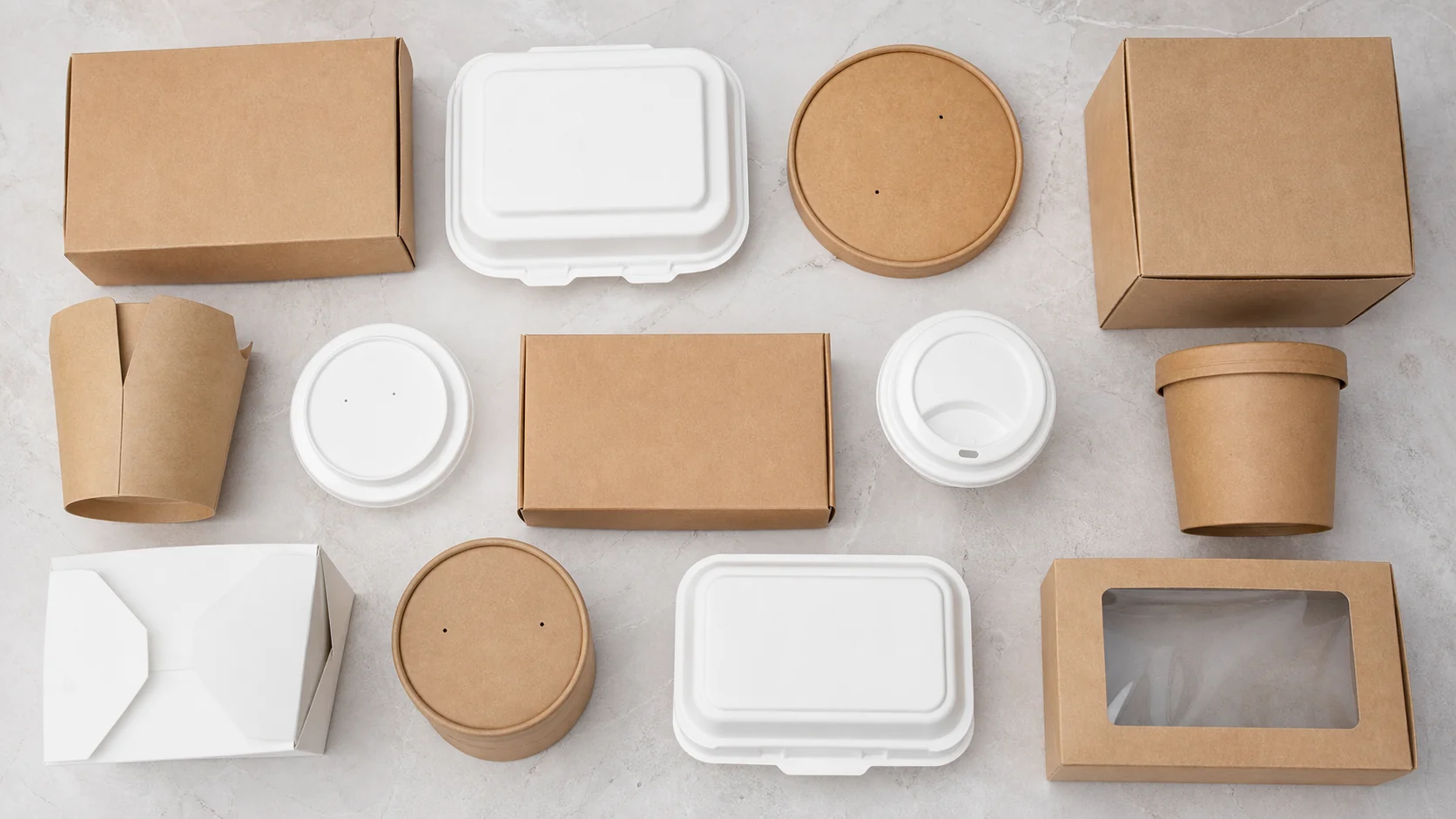
La disyuntiva material. El papel kraft y otros formatos a base de fibra gozan de una preferencia cada vez mayor por motivos de sostenibilidad y por la percepción de los consumidores. Los compradores que estén barajando formatos a base de fibra para envases de líquidos calientes o con alto contenido en grasa deben solicitar y revisar específicamente la documentación del proveedor sobre el revestimiento aplicado al material, ya que el papel kraft sin revestimiento o con un revestimiento inadecuado no es intrínsecamente resistente a las fugas. Papacko’s Gama de cuencos de papel kraft ofrece información específica sobre el formato, pero la idoneidad del material para rellenos concretos debe confirmarse mediante un muestreo con los propios productos del menú del comprador y en sus condiciones de relleno.
FIG-03 | Matriz de compensaciones. Matriz visual que relaciona los tres ejes principales de rendimiento —resistencia a las fugas, retención del calor y resistencia al transporte— con las variables de formato del envase y la tapa. Cada celda indica en qué dirección influye la variable en cada eje, mostrando dónde surgen los conflictos.
Ninguna comparación de formatos de embalaje de envío debería dar lugar directamente a un pedido de compra al por mayor sin pasar por una fase intermedia de evaluación de muestras. La fase de evaluación de muestras es donde las afirmaciones del catálogo se enfrentan a la realidad operativa.
Define los criterios de aceptación antes de recibir las muestras. El error más habitual en la evaluación de muestras es recibirlas y decidir después, de forma subjetiva, si son aceptables. Define de antemano criterios específicos y observables: ¿Permanece la tapa en su sitio después de dar la vuelta al envase durante un intervalo definido? ¿Se mantiene la temperatura de llenado dentro de un rango aceptable cuando el envase se transporta en tu bolsa de mensajería real a lo largo de una ruta representativa? ¿Conserva el envase su forma estructural tras colocarse en posición apilada durante un periodo de permanencia realista? Estos criterios deben reflejar sus condiciones operativas reales, no una idealización de laboratorio.
Utiliza tus propias opciones de menú y condiciones de cumplimiento. Las muestras evaluadas con agua o con un relleno genérico no reflejarán las propiedades térmicas, químicas o mecánicas de tu producto real. Los rellenos a base de aceite caliente se comportan de forma diferente a los rellenos a base de agua. Los rellenos de alta densidad ejercen una presión diferente sobre las juntas de las tapas. Evalúa las muestras con el plato real, a la temperatura real de llenado y siguiendo tu flujo de trabajo real en la cocina.
Evalúa todo el recorrido, no solo en el momento de la salida. Un envase que sale de la cocina en perfectas condiciones puede comportarse de forma diferente en el punto de entrega. Siempre que sea posible, realiza pruebas de evaluación siguiendo tu ruta de reparto real, incluyendo la entrega al repartidor, la colocación en la bolsa de reparto, el transporte y la apertura por parte del consumidor. Esta es la única evaluación que refleja el rendimiento real del sistema.
Presenta las credenciales del proveedor junto con las muestras físicas. Además de la evaluación física, solicita al proveedor la documentación relativa a la composición del material, los fundamentos del cumplimiento de la normativa sobre contacto con alimentos y cualquier orientación específica del formato en cuanto a las limitaciones de llenado. La visión más amplia de Papacko… gama de envases alimentarios desechables incluye varias categorías de formatos; para cualquier formato que se esté considerando, solicite la documentación técnica correspondiente como parte del proceso de muestreo.
La siguiente tabla clasifica las variables clave para la toma de decisiones por categoría principal de envase. Se trata de un marco de referencia para la toma de decisiones de los compradores, no de los resultados de una prueba de producto. Todas las entradas reflejan características generales del formato, sujetas a variaciones según el SKU específico, el proveedor y las condiciones de funcionamiento. Los compradores deben considerar esta tabla como un punto de partida para mantener conversaciones estructuradas con los proveedores, y no como una guía de compra.
| Rellenar categoría | Consideraciones sobre el formato del envase primario | Consideraciones sobre el tipo de tapa | Prioridad del embalaje secundario | Riesgo clave que hay que evaluar en el muestreo |
|---|---|---|---|---|
| Líquidos calientes (sopas, caldos, ramen) | Se requiere una base de paredes altas, borde elevado y resistente a las fugas | Cierre hermético o precinto de seguridad; sin orificios de ventilación | Bolsa isotérmica; soporte para mantenerla en posición vertical | Desplazamiento de la tapa debido al peso del contenido; integridad de la junta de la base |
| Semilíquidos (currys, guisos, pasta con salsa) | De paredes altas o medias; revestimiento resistente a la grasa si es de fibra | Cierre hermético; válvula de control de raciones solo si se ha comprobado que es segura. | Bolsa isotérmica; se recomienda utilizar un forro de contención de derrames | Fuga de salsa por las costuras de la base o los laterales durante el transporte |
| Productos fritos, rebozados o crujientes | Rígido o semirrígido; se acepta un perfil poco profundo | Tapa con orificios de ventilación o perforada; no se recomienda un cierre hermético | Bolsa estándar; evita comprimirla en exceso | Acumulación de vapor; deterioro de la textura al abrir el envase |
| Ensaladas combinadas / acompañamientos secos | Opciones rígidas y compartimentadas que merece la pena evaluar | De encaje a presión; debe resistir una ligera compresión sin deformarse | Bolsa estándar; espacio libre previsto para el aire residual | Migración de componentes; contaminación por aditivos de los elementos secos |
| Menú mixto (varios tipos de relleno por pedido) | Probablemente se necesitarán varias referencias; la coordinación del sistema es fundamental | Varias referencias de tapas; es fundamental la rigurosidad en el proceso de envío | La bolsa secundaria debe adaptarse a contenedores de distintas alturas | Emparejamiento incorrecto entre tapa y recipiente en el envío |
| Cuencos (con cereales, fideos o poke) | Formato de cuenco con borde alto; la compatibilidad del revestimiento es fundamental para los envases en caliente | Tapa plana con cierre a presión o tapa abovedada, en función de la altura de llenado | Aislado si está caliente; estándar si está a temperatura ambiente | La tapa encaja en el borde del cuenco; compatibilidad de llenado con el revestimiento del cuenco |
FIG-04 | Diagrama de flujo para la elección del formato. Árbol de decisión que guía a los compradores desde la categoría y la temperatura de llenado hasta las opciones de formato de envase, la selección del tipo de tapa y las recomendaciones sobre el embalaje secundario. Cada nodo hace referencia a las compensaciones identificadas en la sección anterior.
Antes de pasar de la aprobación de muestras a la realización de pedidos en serie, los compradores deben seguir la siguiente lista de comprobación estructurada. No se trata de una lista de comprobación exhaustiva en materia de cumplimiento normativo —las obligaciones reglamentarias varían según el mercado y deben evaluarse con el asesoramiento profesional adecuado—, sino de una revisión de la preparación operativa y de las compras.
Papacko colabora con empresas del sector alimentario B2B —restaurantes, cocinas virtuales, empresas de catering, fabricantes de alimentos y grupos hoteleros— para desarrollar especificaciones de envasado adaptadas a su contexto de reparto. Las conversaciones más productivas con los proveedores comienzan con un pliego de condiciones documentado, en lugar de con una consulta general.
Un resumen útil sobre el embalaje para entregas incluye: un resumen de las categorías de tu menú y los tipos de relleno, el perfil típico de tu ruta de reparto, una clasificación por orden de prioridad de tus limitaciones, cualquier formato existente que vayas a sustituir y los problemas específicos que hayan causado, tu volumen aproximado y la frecuencia de los pedidos, así como cualquier limitación de formato impuesta por las dimensiones de las bolsas de tu socio de reparto. Cuanto más específico sea el resumen, más precisas serán las recomendaciones de formato que Papacko pueda ofrecerte, y más eficientemente podrás avanzar en la fase de pruebas.
Los compradores que hayan seguido esta guía y hayan definido una orientación preliminar en cuanto al formato pueden explorar las Gama completa de envases para comida para llevar en Papacko antes de ponerse en contacto con el equipo, para preparar el vocabulario necesario para la conversación e identificar los tipos de diseño más relevantes para su proyecto.
FIG-05 | Breve descripción general de la plantilla. Plantilla visual de una página que resume los siete elementos de un pliego de condiciones eficaz para el embalaje de envíos: resumen de la auditoría de llenado, perfil de la ruta, prioridad de las limitaciones, estimación de volumen, restricciones de formato, problemas actuales y calendario.
Esta guía se ha elaborado para compradores B2B de los sectores de la restauración, las cocinas fantasma, el catering y la hostelería que estén evaluando o reevaluando las especificaciones de los envases para reparto a domicilio. El contenido se basa en conocimientos de dominio público sobre el sector del embalaje, principios de aprovisionamiento de la cadena de suministro y consideraciones logísticas operativas relevantes para el contexto de la entrega de comida a domicilio. No se basa en datos de pruebas propios, resultados de laboratorios internos ni ensayos de campo controlados.
Todas las caracterizaciones de rendimiento que figuran en esta guía describen tendencias a nivel de formato y compensaciones conocidas en el diseño de envases de distribución. No se garantiza que ninguna referencia específica, material o configuración vaya a comportarse de una manera concreta. Las referencias normativas, incluido el enlace de la FDA facilitado, se incluyen únicamente a título orientativo; los compradores son responsables de verificar sus obligaciones específicas de cumplimiento con asesores cualificados en la jurisdicción en la que operan. No se implican ni se declaran reclamaciones de cumplimiento, certificaciones ni autorizaciones reglamentarias para ningún producto mencionado.
Utilice esta guía como un marco estructurado para pasar de una necesidad de embalaje indefinida a un pliego de condiciones documentado, un plan de evaluación de muestras y un compromiso de volumen fundamentado. Está diseñada para mejorar la calidad de las preguntas que se plantean los compradores —tanto a sí mismos como a sus proveedores— en lugar de responder a esas preguntas en nombre del comprador. Cada decisión de compra debe validarse en función de las condiciones específicas de su actividad, utilizando muestras reales de su proveedor previsto.
El rendimiento del sellado de la tapa depende de la interfaz específica entre el envase y la tapa, del peso y la viscosidad del contenido, y de las tensiones mecánicas aplicadas durante el transporte. No existe una clasificación universal del sellado que pueda aplicarse a todos los tipos de llenado. El único método fiable consiste en evaluar la referencia específica de la tapa en la referencia específica del envase con su llenado real, a su temperatura de llenado real y a lo largo de su ruta real. Defina criterios de superación observables —como la retención tras la inversión y la inspección posterior a la ruta— antes de comenzar la evaluación, y evalúe varias unidades para tener en cuenta la variabilidad de la aplicación.
Que un envase de papel kraft concreto sea adecuado para un llenado específico de líquido caliente depende del revestimiento o recubrimiento aplicado al interior de dicho envase, de la temperatura de llenado en el momento del taponado, de la duración del llenado (el tiempo que el líquido permanece en el envase antes de su consumo) y de las instrucciones de llenado documentadas por el proveedor para ese envase. El papel kraft sin revestimiento no es intrínsecamente resistente a las fugas en el caso de los líquidos calientes. Los compradores deben solicitar la documentación específica sobre el material y el revestimiento de cualquier referencia de papel kraft que estén barajando y evaluarla con su llenado real en condiciones realistas antes de comprometerse a comprar un volumen determinado.
No hay una única variable que determine el resultado térmico en la entrega. El material del envase, el sellado de la tapa, el aislamiento de la bolsa secundaria, la temperatura ambiente, la duración del transporte y el tiempo de permanencia en el punto de recogida del servicio de mensajería interactúan entre sí. Las mejoras en una variable pueden verse contrarrestadas por deficiencias en otra. Los compradores que necesiten mejorar el rendimiento térmico deberían, en primer lugar, documentar el perfil térmico actual a lo largo de su ruta real —a ser posible, con múltiples observaciones en diferentes momentos y condiciones ambientales— antes de decidir en qué medida intervenir.
El número mínimo viable de referencias (SKU) depende de la diversidad de tipos de contenido del menú. Los establecimientos que sirvan tanto bebidas calientes como productos fritos necesitarán, como mínimo, dos referencias de tapas, ya que los requisitos de ventilación de cada uno de ellos son incompatibles. Los establecimientos con menús muy variados pueden necesitar referencias adicionales para adaptarse a las características de los productos. Cada referencia adicional aumenta la complejidad del proceso de expedición y el riesgo de que no se emparejen correctamente el envase y la tapa. Los compradores deben sopesar el riesgo de proliferación de referencias frente a la ventaja en cuanto al rendimiento que supone una mejor correspondencia entre el producto y el envase cada vez que se amplía la gama.
Como mínimo, los compradores deben solicitar: una confirmación por escrito de que los SKU específicos del envase y la tapa son mecánicamente compatibles; la composición de los materiales y la base de cumplimiento de las normas de contacto con alimentos para el mercado en el que se utilizará el envase; cualquier limitación de llenado documentada o recomendación de temperatura específica para el SKU; y las cantidades mínimas de pedido, los plazos de entrega y los detalles del proceso de reposición. Los compradores no deben basarse en garantías verbales ni en afirmaciones generales sobre la categoría del producto en lugar de en documentación escrita específica para cada referencia. En lo que respecta específicamente al cumplimiento de la normativa sobre contacto con alimentos, los compradores deben contrastar la documentación con los requisitos de su jurisdicción de actuación, en lugar de dar por sentado que un único marco normativo se aplica de forma universal.
Es conveniente realizar una revisión del formato cuando exista un patrón documentado de fugas o quejas sobre la temperatura comunicadas por los consumidores que se relacione con el envase, y no con la preparación o el comportamiento del servicio de mensajería; cuando un cambio significativo en el menú introduzca tipos de llenado para los que el formato actual no fue diseñado; cuando un cambio de socio de mensajería o de tipo de bolsa modifique el contexto del embalaje secundario; o cuando los cambios de proveedor afecten a la compatibilidad o la uniformidad del sistema actual de envase y tapa. Los cambios de formato no deben iniciarse basándose únicamente en la reducción de costes sin evaluar si el formato sustitutivo mantiene el rendimiento en toda la gama de rellenos y rutas. Cualquier nuevo formato debe completar el proceso de evaluación de muestras descrito en esta guía antes de su adopción a gran escala.