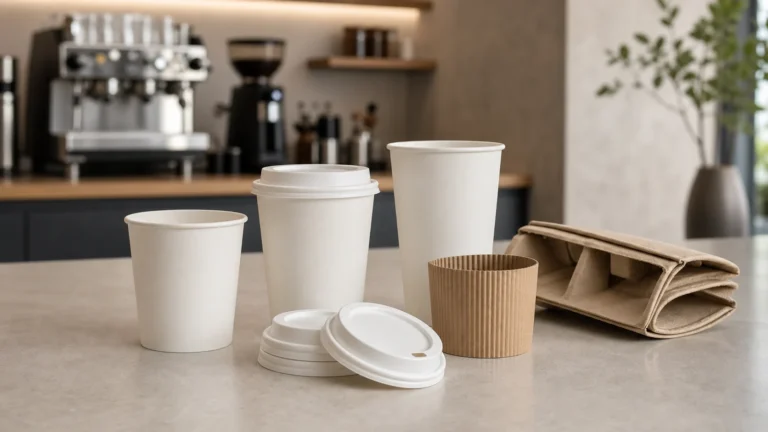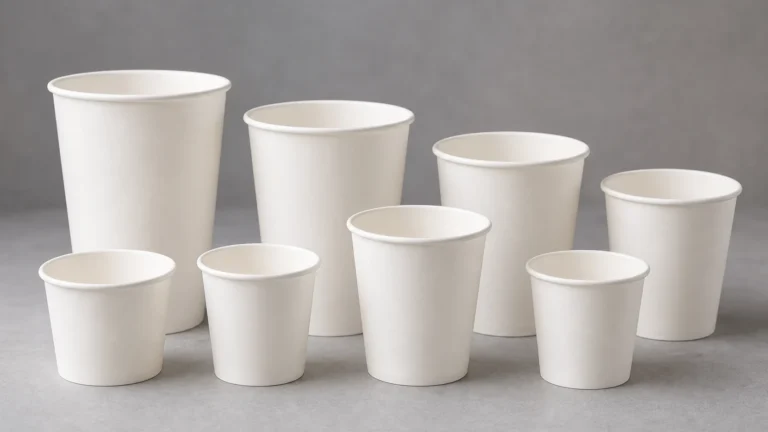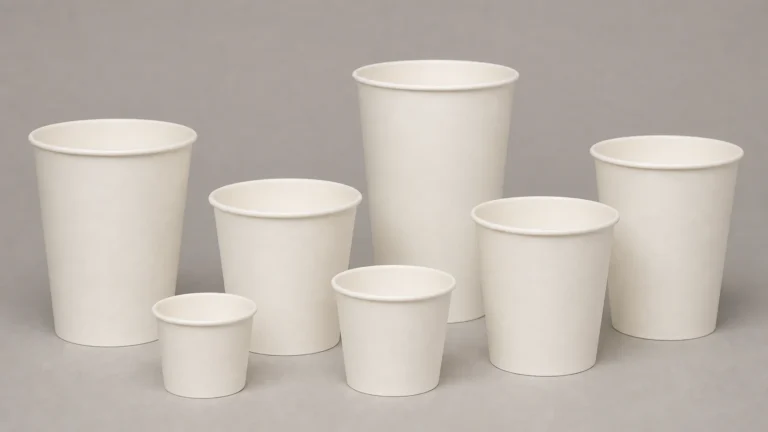
¿Está listo para crear sus propios vasos o envases de papel con su marca?
Díganos sus requisitos -tamaño, revestimiento, impresión y destino- y nuestro equipo le preparará un presupuesto detallado en 24 horas.

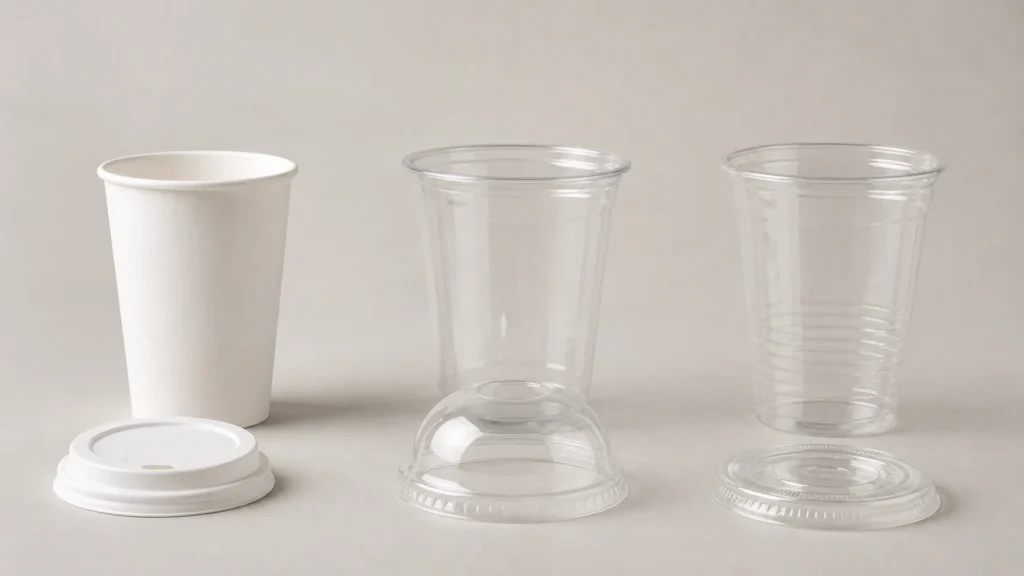
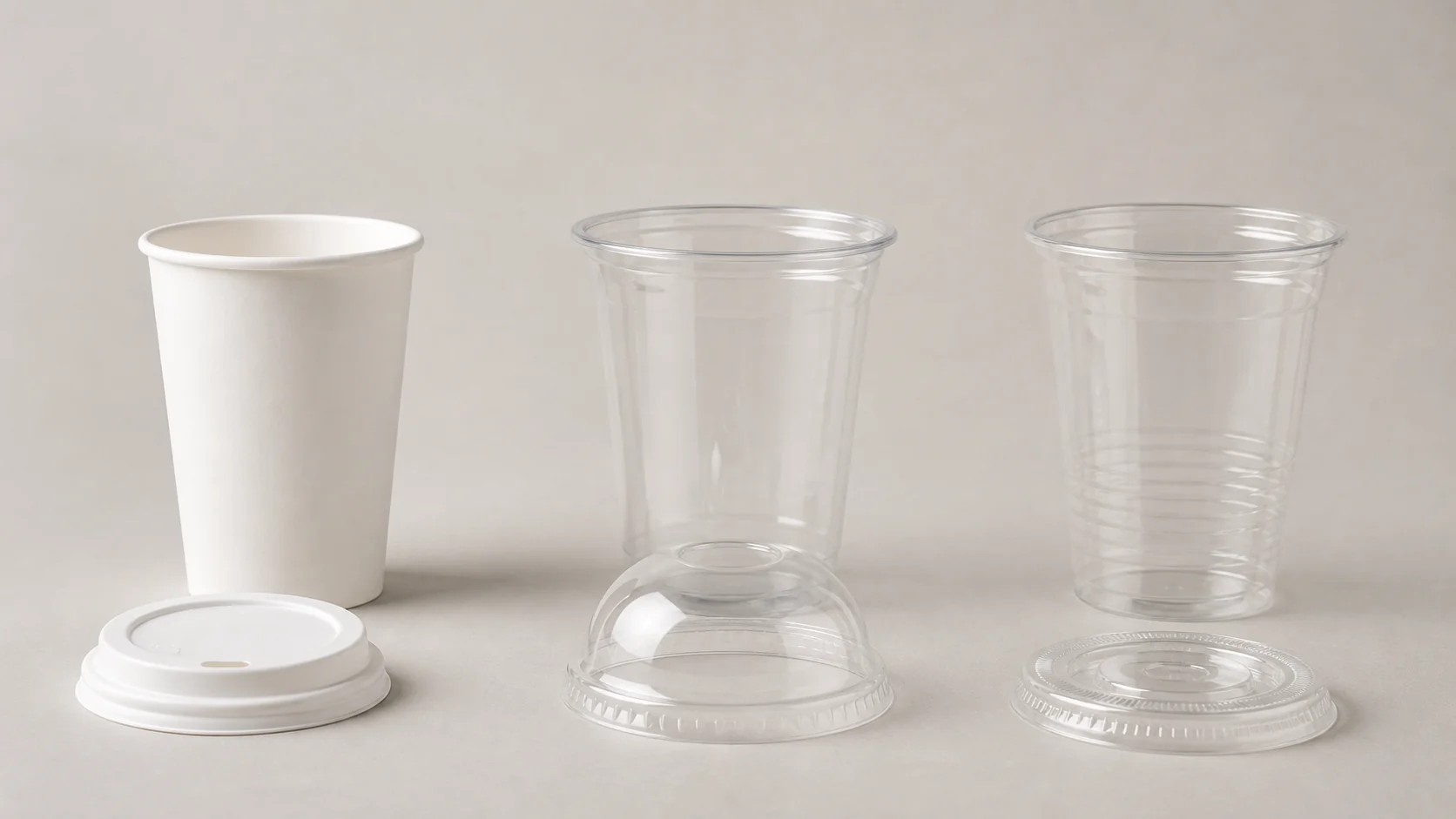
Compare cold drink cups by matching the beverage menu to condensation behavior, wall clarity, and lid or straw fit rather than to a single material. Paper, PLA, and PET are different service routes with different trade-offs. Confirm each route against supplier SKU data, intended-use conditions, market requirements, and physical samples before ordering.
Cold-beverage service creates conditions that a hot-cup program never has to manage. Ice, high liquid volumes, extended dwell time on a counter, and outside humidity all act on the cup wall at once. A cup that looks correct in a catalog photograph can sweat onto a tray, distort under a domed lid, or fail to seat a straw the way a menu of blended and layered drinks requires. The comparison work happens before the purchase order, not after the first case is opened.
Start with the drinks themselves. An iced americano, a fruit tea with tapioca, a layered cold brew, and a blended frappe place different demands on wall stiffness, opening size, and visual presentation. Sort the menu into groups, then ask which cup family serves each group and whether one family can reasonably cover the whole board.
Four buyer variables sit underneath every cold-cup decision:
None of these variables is settled by naming a material. Paper, PLA, and PET each appear across a range of constructions, coatings, wall weights, and rim profiles. The useful question is not “which material is best” but “which SKU, in which construction, matches this menu and this market.” Papacko publishes cold and hot formats across its vasos de papel range, and the same discipline of reading SKU-level data applies to every route below.
Paper cold cups are often the starting point when branding, exterior print, and a familiar handling format matter more than seeing the drink through the wall. A printed paper exterior gives a cafe a large, continuous surface for logos, seasonal artwork, and menu messaging, and it presents a fully opaque service format that many buyers already know how to store, stack, and carry.
Cold paper cups are a distinct construction question from hot cups, and the two should not be treated as interchangeable. Cold service involves condensation on the outside wall and prolonged contact with iced liquid on the inside. Ask the supplier what a specific cold SKU is built to handle rather than assuming a hot-cup lining carries over. Request the wall construction, the volume options, and the rim profile that lids are designed against.
Condensation is the variable buyers most often underestimate with paper. Water forming on an outer wall affects hand feel, tray liners, and carrier fit, and behavior differs by SKU and by ambient conditions. Do not treat any cup as condensation-proof. Instead, ask how the format is intended to be handled and validate it with samples under conditions close to your service floor.
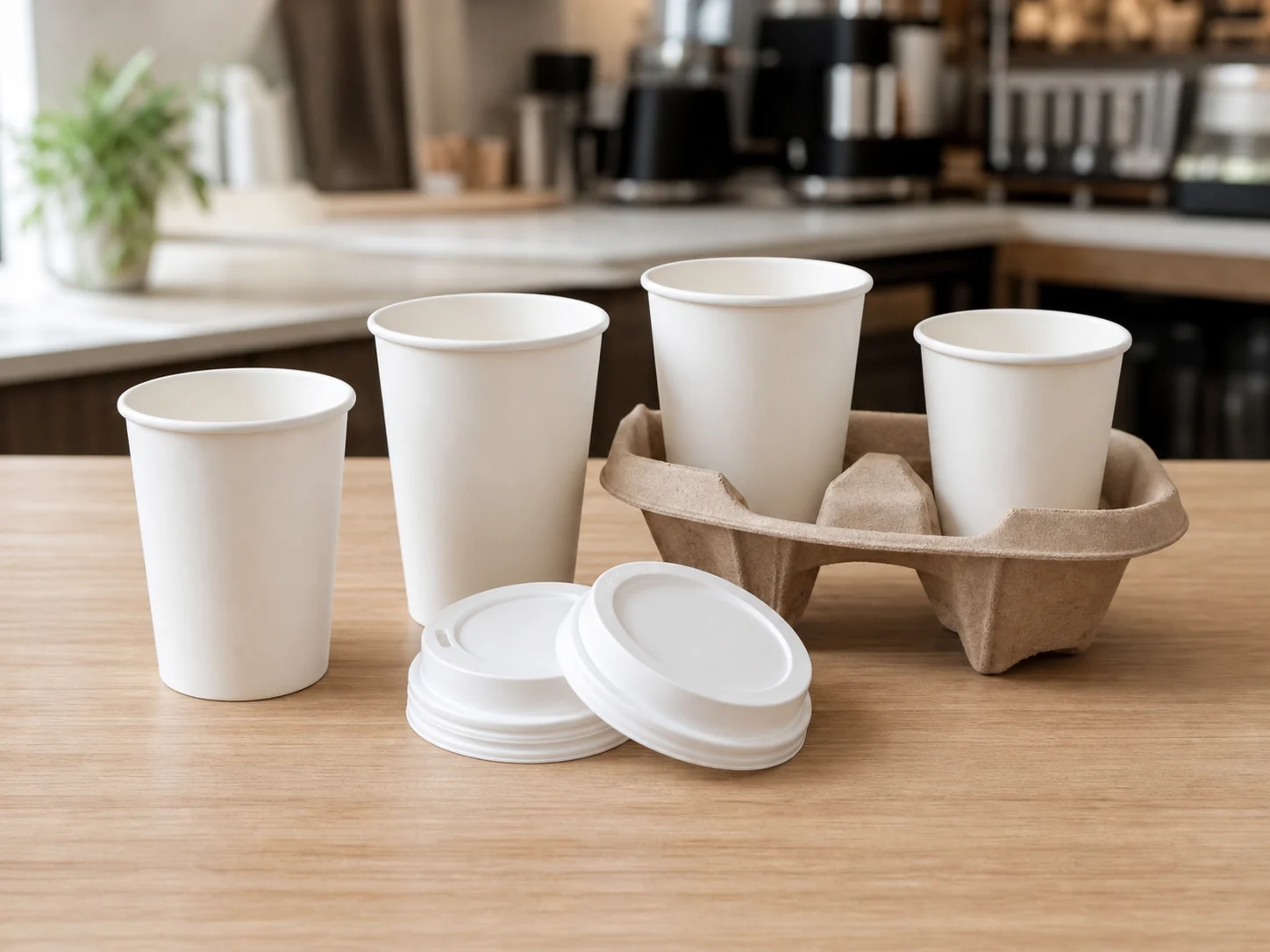
For buyers weighing exterior material considerations alongside print, Papacko also groups options under its vasos de papel ecológicos range. Treat any environmental descriptor as a prompt to request the underlying SKU documentation, not as a finished claim. Put the following in the supplier file for any paper cold cup:
Paper earns its place when the exterior is part of the brand experience and the drink does not need to be seen. Where visibility is central to the drink, the comparison shifts toward the clear routes below.
PLA cold cups appear on many buyer shortlists because they offer a clear-walled format positioned around plant-derived material. That combination is attractive when a cafe wants both drink visibility and a material story. The buyer’s job is to separate what a PLA SKU can be documented to do from what a general material description implies.
Clarity is the first thing to check against your actual menu. PLA can present drinks through the wall, but clarity, haze, and wall stiffness vary by SKU and construction. If layered drinks or colored beverages are central to your presentation, request samples and judge them filled with ice and liquid, not empty on a desk.
The second area is the environmental language attached to PLA. Terms such as compostable carry specific conditions and depend on facilities, standards, and market context that vary widely. Do not restate any compostability or recyclability claim on the cafe’s behalf. Ask the supplier exactly what is certified, under which standard, for which SKU, and in which market, and keep that documentation in the file rather than paraphrasing it.

Temperature and dwell behavior also deserve direct questions. PLA’s response to warm conditions, transport, and storage differs from PET, so confirm the intended conditions of use for the specific cup rather than assuming a general profile. Questions to log for any PLA cold SKU:
PLA belongs in the comparison when a buyer wants clear walls plus a documented material narrative and is prepared to verify both at the SKU level. Papacko’s broader envases alimentarios desechables range is a useful reference point when a cold-cup decision sits inside a wider packaging program.
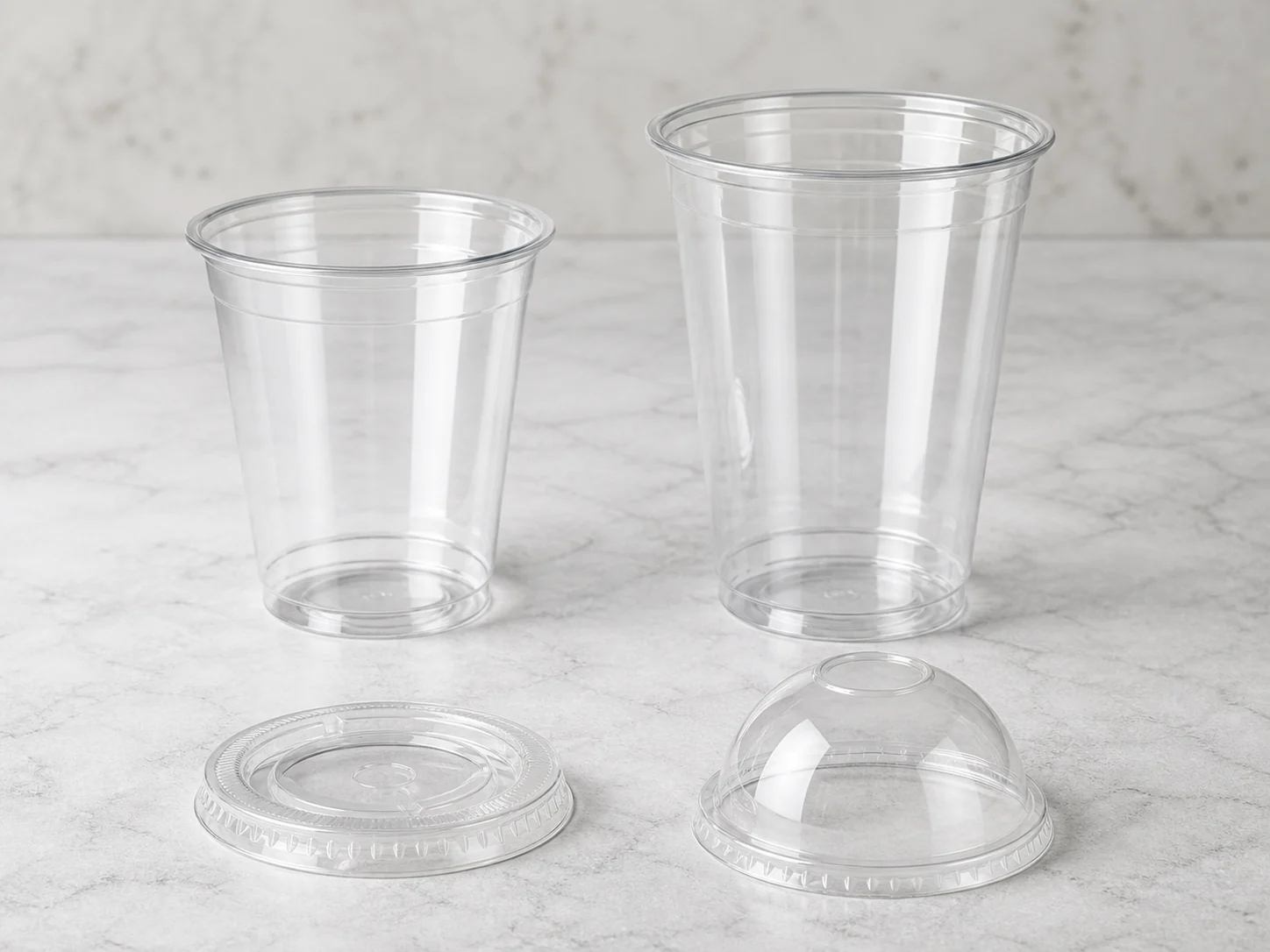
PET cold cups are chosen most often when product visibility is central to the service route. Cold brew with visible layers, fruit teas with fruit and tapioca, and blended drinks with distinct textures all rely on the customer seeing the drink through the wall. PET is frequently selected where that clarity, along with wall rigidity for domed presentations, drives the format decision.
Clarity and rigidity are the two attributes buyers usually associate with PET, but both still vary by SKU. Ask for the specific wall weight, the volume ladder, and the rim family, and confirm how the cup holds a dome lid over a topping-heavy drink. A cup that reads as premium in a photograph should be checked filled, lidded, and carried before it is committed to a menu.
Dome lids are a particular reason PET enters the conversation. Drinks finished with whipped topping, tall ice, or garnish need headroom that flat lids cannot provide, and the cup rim and dome lid must be validated as a pair. Confirm that the dome and flat lid options a supplier lists are tested against the exact rim of the cup SKU you intend to buy.
Environmental and disposal language for PET should be handled with the same restraint as the other routes. Recycling outcomes depend on local systems and market context, so record what the supplier documents for the SKU and market rather than generalizing. Log these items for any PET cold cup:
PET fits when the drink itself is the visual, and the cafe wants a clear, rigid, dome-ready format. As with paper and PLA, the decision is made SKU by SKU, not by the material name alone.
The most common cold-cup sourcing error is treating the lid as an afterthought. A cup and its lid are a single system. The rim diameter, the rim roll or bead profile, and the lid tooling all have to match, and a lid that fits one supplier’s rim will not necessarily fit another’s cup of the same nominal volume.
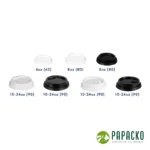
Review the rim family first. Cups are usually organized into rim diameter families so that a range of volumes can share compatible lids. Confirm which family a cup SKU belongs to and which lids are validated against it, rather than assuming a lid pictured near a cup is a tested pair. When a menu spans several cup sizes, a shared rim family reduces the number of lid lines a cafe has to stock.
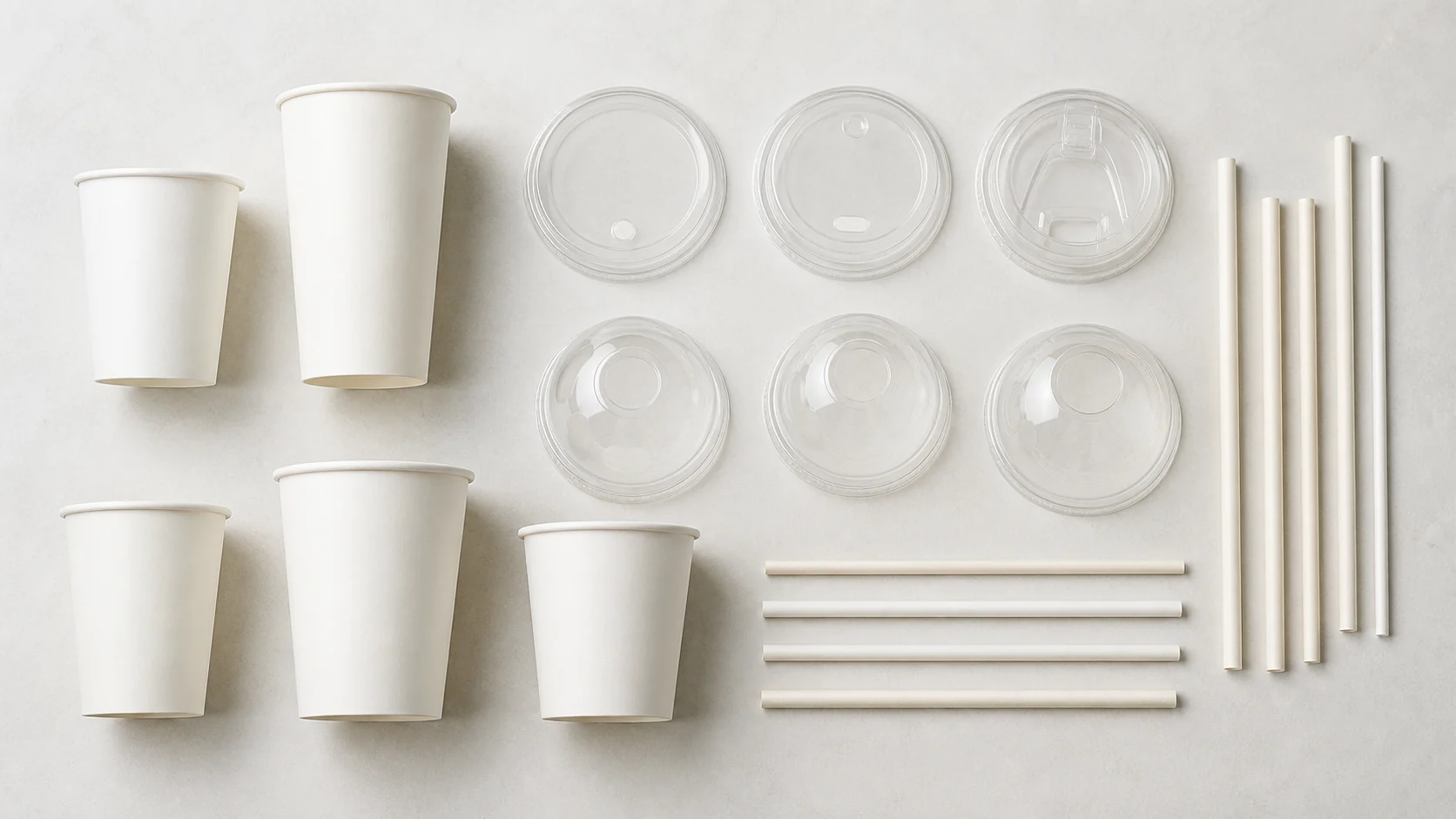
Straw and opening choices then sit on top of the rim decision:
Straw diameter matters as much as the opening. Thick straws for tapioca drinks require a wider slot than standard straws, and the lid opening has to be matched to the straws actually in service. If a cafe is changing straw type, the lid opening should be revalidated at the same time.
Papacko's tapas de vasos de papel listing is a reference point for how lid options are organized against rim families, and the CTA section below covers how to bring lid and straw requirements into a single brief. The governing rule stays constant: never approve a cup without approving its exact lid and straw combination against physical samples.
The table below frames each route as a set of questions and decision conditions, not as performance guarantees. Every entry should be confirmed against supplier SKU data and physical samples for your specific menu and market.
| Ruta | Buyer question | What to request | Decision condition |
|---|---|---|---|
| Papel | Is a printed, opaque exterior more valuable than seeing the drink? | Cold-use construction, volume ladder, rim family, print process and lead time | Consider when branding and exterior print lead, and drink visibility is not required |
| PLA | Do you want clear walls plus a documented material narrative? | Clarity and stiffness grade, environmental certifications by standard and market, conditions of use, validated lids | Consider when visibility and a verifiable material story both matter and can be checked at SKU level |
| PET | Is seeing the drink central to its presentation? | Wall weight and rigidity, volume ladder, rim family, flat and dome lids validated against the rim | Consider when clarity, rigidity, and dome-ready presentation drive the format |
Read the table as a starting filter. A cafe with a mixed menu may land on more than one route, and the sample review stage decides which SKUs actually earn a place on the board.
Different service models weight the four buyer variables differently, so it helps to map routes to realistic scenarios rather than to a single winner.
A branding-led espresso bar with a small iced menu often values the printed exterior of a paper format. Here the exterior surface carries seasonal artwork and the drink visibility trade-off is acceptable, so the paper route is a reasonable starting point to validate.
A specialty shop built around visually layered cold brew and fruit teas usually weights clarity most heavily. That points toward a clear route, PET or PLA, where the decision between them turns on whether a documented material narrative or maximum rigidity for dome presentations matters more to the program.
A high-volume QSR juggling speed, carrier fit, and condensation on trays needs to weigh handling and lid seating across many cups per hour. The priority is a rim family that keeps lid stocking simple and a wall that behaves predictably under fast service.
A distributor serving mixed accounts needs breadth and documentation more than a single format. The useful question is which SKUs come with the clearest intended-use and market data, so downstream buyers can match cups to their own menus.
Use these scenarios to weight the variables, then move every shortlisted route into the sample and specification review before committing.
No cold-cup decision should close on a catalog alone. Build a structured review that puts each shortlisted SKU under conditions close to your service floor. The goal is to replace assumptions with observations you can document.
Run the review in stages:
Documentation is part of the sample stage, not separate from it. Intended food type and conditions of use are recognized inputs in food-contact documentation, as reflected in the FDA reference on food types and conditions of use for food-contact substances; this points to why that documentation matters and is not a claim of approval for any product. Keep the supplier’s SKU statements on file alongside your own sample notes.
Treat the review as the decision, not a formality after it. A cup that passes on paper but sweats onto trays, distorts under a dome, or fails to seat a straw for tapioca drinks has told you what you need to know before a full order commits. Papacko’s categoría de vasos de papel can be used to assemble a shortlist to run through exactly this process.
A sourcing brief works best when it carries everything a supplier needs to match SKUs to your service in one place. To open a documented cup-and-lid conversation with Papacko, bring the following:
With those inputs, the conversation moves from generic material comparison to SKU-level matching against your actual conditions. Include the lid and straw requirements explicitly so the cup rim family and the lid options are reviewed as a system rather than sourced separately. The output should be a specification you can hold samples against and reorder from with confidence.
Experiencia y contexto de abastecimiento. This guide is written for cafe, QSR, foodservice, and distributor buyers comparing cold-cup routes. It frames paper, PLA, and PET as service options to evaluate, not as ranked winners, and it does not describe outcomes from any specific account or deployment.
Fundamento técnico y normativo. Material behavior, clarity, condensation, and lid fit vary by SKU and construction, so the guide directs buyers to supplier documentation and physical samples rather than to fixed figures. The single authority reference supports only the point that intended food type and conditions of use matter in food-contact documentation, and is not a statement of approval for any product.
Cómo aplicar esta guía. Use it to structure your comparison, sample review, and sourcing brief. Final selection depends on supplier SKU information, your intended beverage and use route, your market requirements, and physical sample validation carried out under conditions close to your own service.
There is no single best material; paper, PLA, and PET each suit different priorities around clarity, branding, and material narrative. Match the route to your menu and verify it with supplier SKU data and samples.
Both can present drinks through the wall, but clarity, rigidity, and material documentation differ by SKU. Decide based on whether maximum rigidity or a documented material story matters more, then confirm with filled, lidded samples.
No cup should be treated as condensation-proof; behavior varies by SKU and ambient conditions. Ask the supplier how a format is intended to be handled and validate it with samples over realistic dwell times.
A cup and lid form one system, and lids are validated against specific rim families rather than nominal volumes. Approving a cup without approving its exact lid and straw combination risks fit and seating problems in service.
Thick straws for tapioca need a wider lid opening than standard straws. Match the lid opening to the straws actually in service, and revalidate the opening whenever the straw type changes.
Bring your beverage menu, a sample set, lid and straw requirements, market destination, artwork status, and reordering needs. Those inputs let a supplier match specific SKUs to your service rather than compare materials in the abstract.