¿Está listo para crear sus propios vasos o envases de papel con su marca?
Díganos sus requisitos -tamaño, revestimiento, impresión y destino- y nuestro equipo le preparará un presupuesto detallado en 24 horas.

Match four things before ordering: the menu items and their moisture, oil and temperature demands; the service route from fill to customer; the exact bowl-and-lid pair as a validated system; and the supplier documentation covering coatings, liners and any heating instructions. Confirm each with physical samples under your own conditions before committing volume.
Paper bowls look interchangeable on a spec sheet, yet the differences that matter for foodservice sit below the surface: the coating or liner, the rim geometry, the lid fit, and the written conditions of use the supplier is willing to stand behind. Buyers who treat a bowl as a commodity often discover late that a bowl performing well with a dry salad fails with a hot broth, or that a lid described as compatible does not seat reliably on the rim they actually received. This guide is written for foodservice, restaurant-chain, QSR, cafe, distributor and wholesale buyers who need a structured way to select bowl systems for salads, soups, noodles and combo meals without over-claiming what any single SKU can do.
The recurring theme throughout is verification. Nothing here should be read as a blanket assurance that a given bowl is microwave-safe, leak-resistant, grease-resistant, recyclable or compostable. Those properties depend on the specific construction, the food, the handling route and the region, and they can only be established by requesting documentation and testing samples. Papacko’s broader envases para alimentos range spans several bowl families, and the right choice among them is a matching exercise, not a ranking.
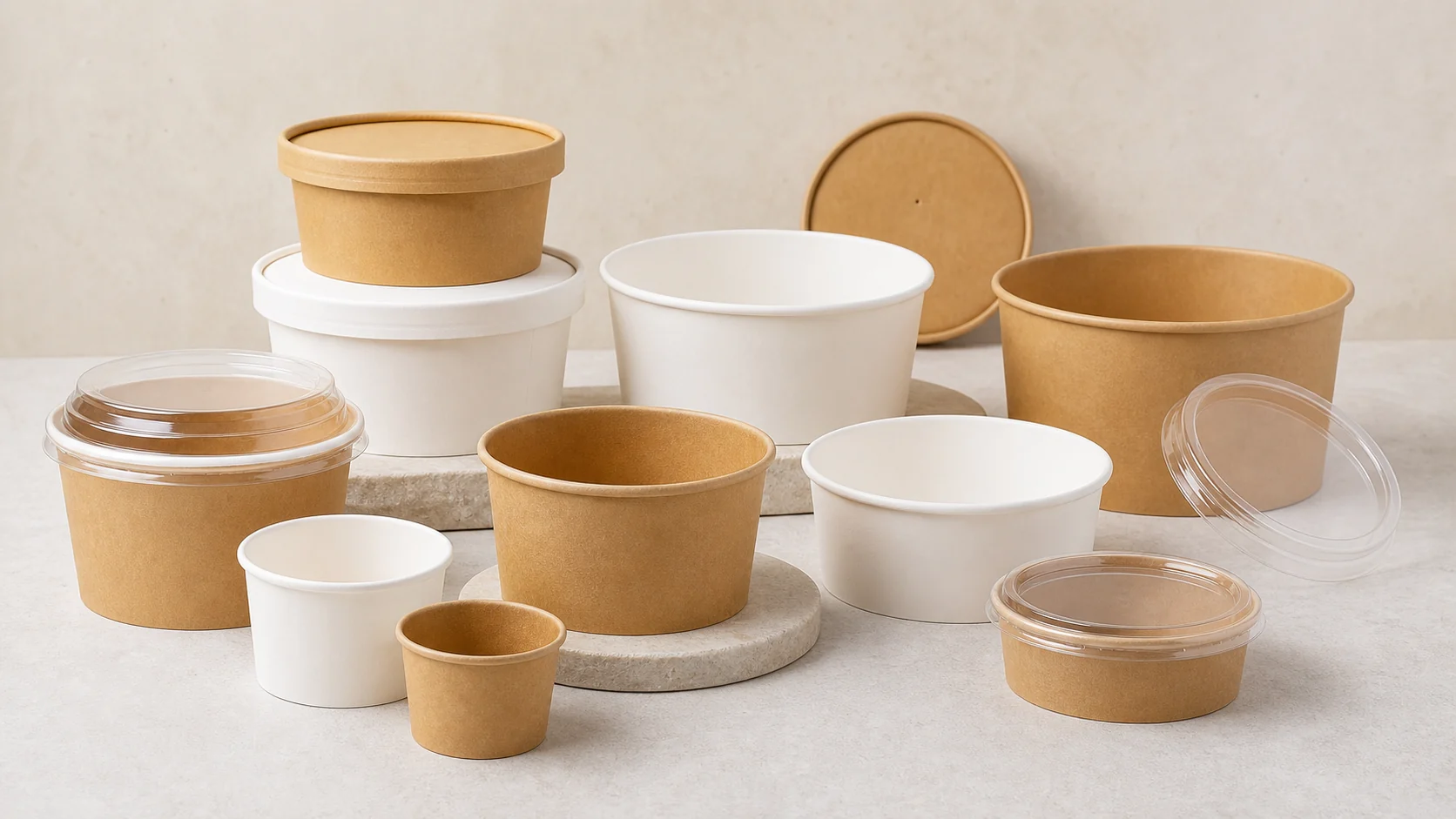
The menu defines the physical demands on the bowl, so begin there rather than with a catalogue. A dry grain salad, a hot ramen with broth, a creamy soup and a rice-and-protein combo each stress a bowl differently. Broth introduces sustained heat and liquid that probe every seam and coating. Dressings and oils test grease behaviour over time. Acidic components, sauces and dairy raise questions about how the food interacts with the food-contact surface during the hold period. Write down, for each menu item, the temperature at fill, whether liquid is present, the fat and acid load, and how long the food sits in the bowl before it is eaten.
The service route is the second half of the picture, and it is often underweighted. A bowl assembled and eaten in-house within minutes faces a mild journey. The same bowl routed through a delivery aggregator may sit stacked, tilted, insulated and jostled for far longer, and may be reheated by the customer in ways you never specified. Map the full path: fill, close, hold, transport, and final handling by staff or the end customer. Note the hold temperature, the stacking load, the transit time and whether the customer is expected to reheat, and if so by what route.
These two inputs, menu and route, drive every later decision. They tell you which coating or liner questions matter, whether lid sealing is critical or merely convenient, and whether microwave instructions need to be part of the specification at all. Buyers who skip this step tend to select on price and rim diameter, then absorb the cost of returns and complaints when the bowl meets the real menu. A short internal worksheet capturing menu demands and route stresses, filled in before any supplier conversation, is the single most useful document you can bring to sourcing.
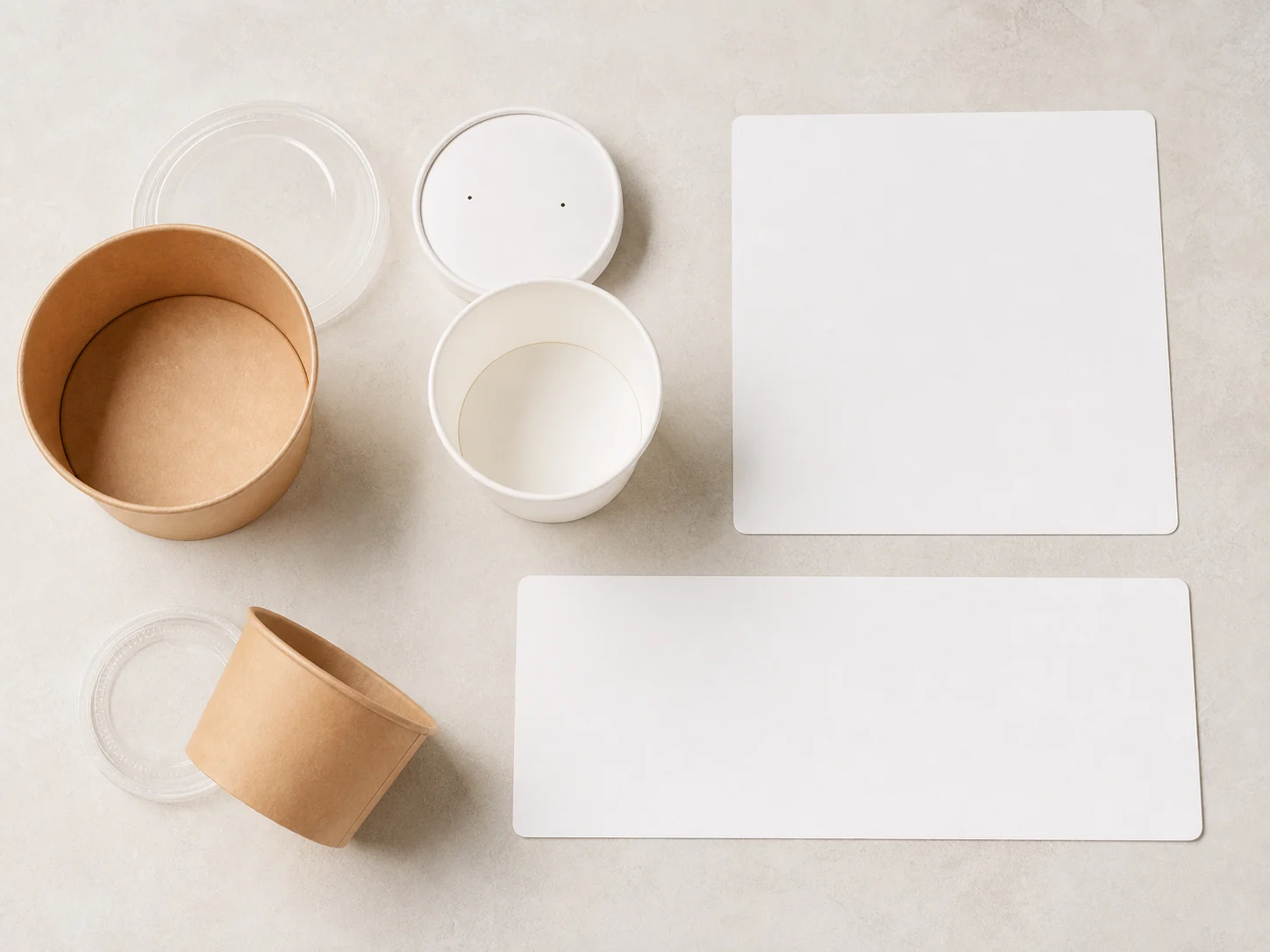
Paper bowls are not a single material. The paperboard base may carry a polyethylene or polylactic-acid style coating, a different water-resistant or grease-resistant treatment, or a distinct inner liner, and these vary by SKU and by production run. Because the coating governs how the bowl behaves with liquid, heat and oil, your questions should be about the specific construction of the exact item you intend to buy, not about paper bowls in general. Ask the supplier to identify the base board, the inner surface treatment, and any outer coating or print layer in writing.
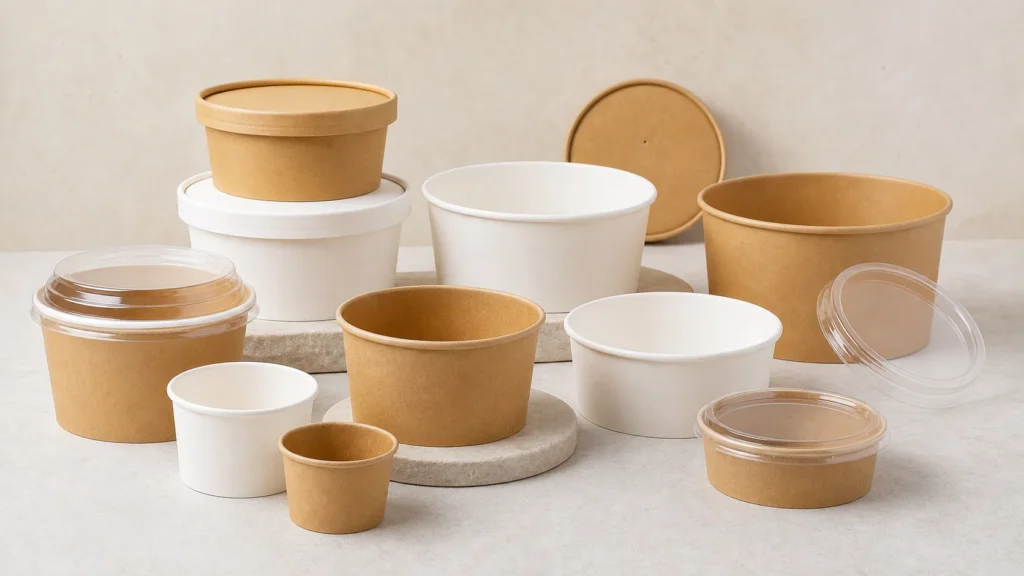
Kraft-style constructions are a common request for their appearance and their fibre character, and Papacko’s boles de papel kraft illustrate how the same visual family can carry different internal treatments depending on the intended use. The visible outside of a bowl tells you very little about its inner liner, so do not infer performance from a kraft or white exterior. Two bowls that look identical on a shelf can differ entirely in how they hold hot broth.
Frame your construction questions around behaviour under your conditions rather than around adjectives. Instead of asking whether a bowl is grease-proof, ask how the specific coating is expected to behave with your fat load over your hold time, and ask what documentation supports that. Instead of asking whether it is leak-proof, ask how the seam and base are formed and how the bowl is expected to behave with liquid at your fill temperature. The distinction matters because universal claims rarely survive contact with a real menu, whereas condition-specific evidence can be requested, reviewed and tested.
End-of-life properties deserve the same discipline. Recyclability and compostability depend on the coating, the local collection infrastructure and regional rules, and they cannot be assumed from the fibre content alone. If a market or client requires a particular disposal claim, treat it as a documentation item to be confirmed for the exact SKU and destination, not as a default characteristic of paper. Ask what the supplier can substantiate, in which markets, and with what evidence.
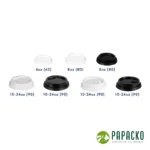
A lid is not an accessory chosen after the bowl; it is half of a single closure system, and the two must be evaluated together. The rim family, its diameter, its curl and its profile determine which lids can seat at all, and small differences in rim geometry between production runs or between suppliers can turn a compatible lid into an unreliable one. Ask which lid families are designed to match the specific rim you are buying, and treat any lid described only as generically compatible with caution until you have seen it seat on your actual bowl.
The closure requirement follows from the menu and route you mapped earlier. A dry salad may need only a lid that stays on during handling and display. A hot broth carried through delivery raises questions about how the lid behaves under heat, whether it vents, and how it resists dislodging when the bowl is tilted or stacked. Clear domed lids suit tall garnished salads and layered combos where presentation matters, while flat lids stack more compactly for transport. None of these are inherently sealed or spill-resistant; those are behaviours to observe under your own conditions, not properties to assume.
Review the lid material alongside the bowl material, because the two interact. A lid and bowl may carry different coatings, different heat responses and different end-of-life pathways, and a mixed system can complicate any disposal claim you intend to make. When you request samples, always request the bowl and the intended lid as a pair from the same supplier, and validate them fitted together, filled with a representative food, and handled through your real route. A lid that seats cleanly empty on a showroom bowl tells you little about how the same pair performs full, hot and in transit.
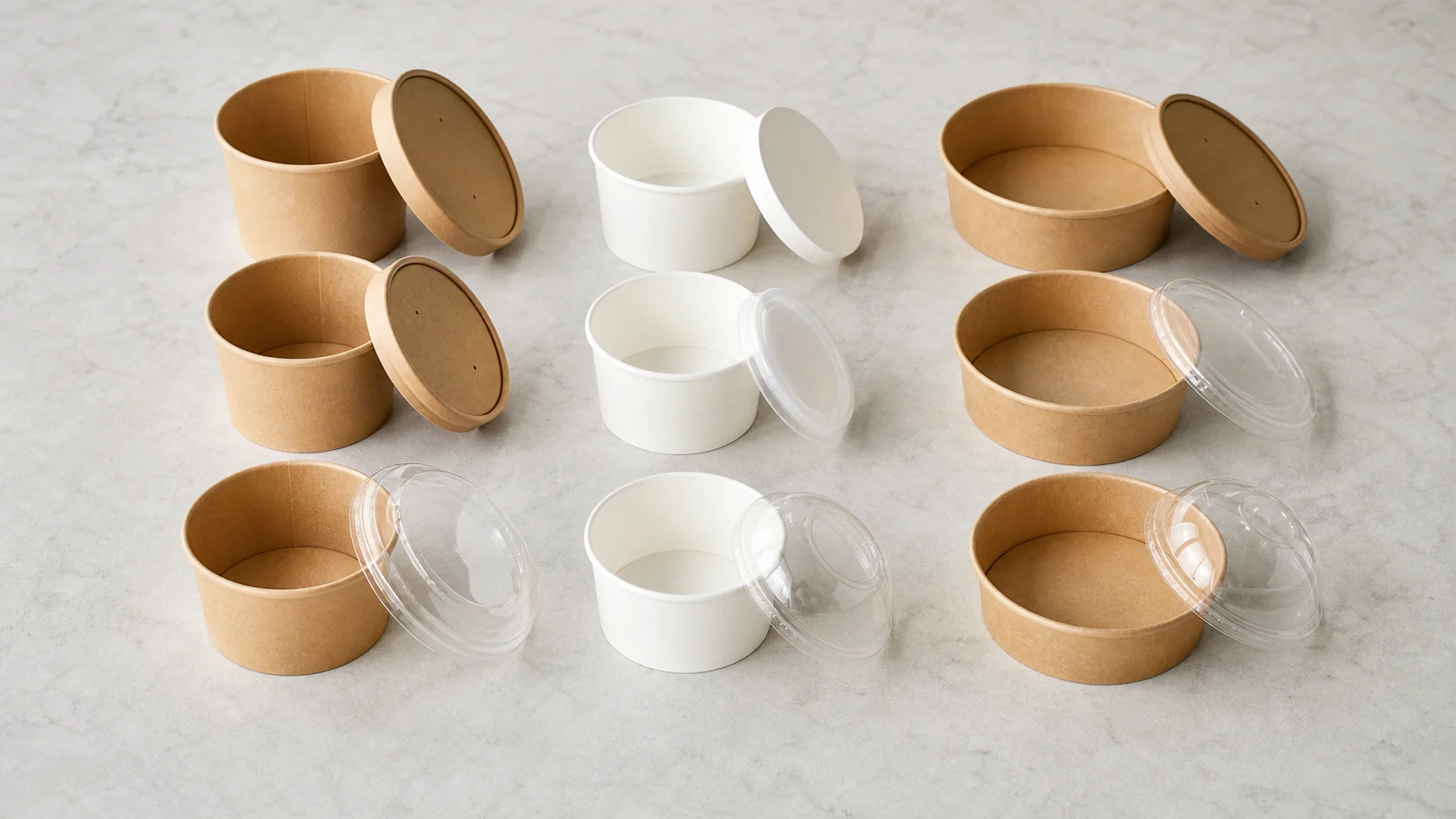
Whether a paper bowl can be microwaved is not something this guide, or any general source, can answer for your SKU. It is strictly a supplier-instruction and exact-SKU validation question, and it must be resolved for the complete assembled system: the specific bowl, its coating or liner, the inks used, the lid, and the exact heating route you intend, including whether the lid is on or off. Different coatings and liners respond differently to microwave energy, and a construction that behaves acceptably one way may not another. Ask the supplier what they instruct, in writing, for the precise item and the precise heating scenario.
Do not extrapolate from one bowl to another, from bowl to lid, or from a supplier’s general statement to your particular route. If your service model expects the end customer to reheat food in the container, that expectation must be named in the sourcing brief and confirmed against supplier documentation for the complete system before it becomes part of your operation. If the supplier does not instruct microwave use for that exact configuration, do not present it as an option to customers.
Food-contact documentation itself recognises that intended use conditions matter and are categorised. The FDA’s reference on food types and conditions of use distinguishes food type and the conditions under which a material is used, including a reheating-in-container category among the recognised conditions. This supports only one narrow point: that the industry framework treats reheating as a distinct condition to be documented, not an automatic property of any container. It is not product approval, and it does not substitute for the supplier’s instruction on your specific SKU. This guide gives no heating time or temperature guidance of any kind; those figures, where they exist, belong solely to the supplier’s documentation for the exact system.
The table below organises the four menu families around questions to ask rather than promises to accept. Use it as a prompt for supplier conversations and sample testing. No route in this table is described as safe or guaranteed; each entry is a starting point for verification under your own menu and handling conditions.
| Menu route | Service question | What to request | What to validate |
|---|---|---|---|
| Salad | Is the food dry, dressed, or hot, and how long is the hold before eating? | Construction and coating details, lid options for tall or garnished contents, grease behaviour for dressed items | Lid seating on a filled bowl, coating behaviour with dressings over hold time, stacking during display |
| Soup | What fill temperature, liquid volume and hold time does the broth impose? | Coating and liner behaviour with hot liquid, seam and base construction, lid behaviour under heat and any venting design | Behaviour with hot liquid at your fill temperature, lid retention when tilted, transit through your delivery route |
| Noodles | Does the item carry broth, sauce or oil, and is customer reheating expected? | Grease and liquid behaviour for the specific sauce load, supplier microwave instruction for the exact system if reheating is planned, lid fit | Coating and lid under your sauce and heat load, reheating route against written supplier instruction, spill behaviour in transit |
| Combo meals | Are hot and cold components combined, and how is the bowl compartmented or layered? | Options for mixed components, lid clearance for layered contents, coating behaviour across the component mix | Fit with real portions, lid clearance when fully filled, behaviour with the hottest and oiliest component present |
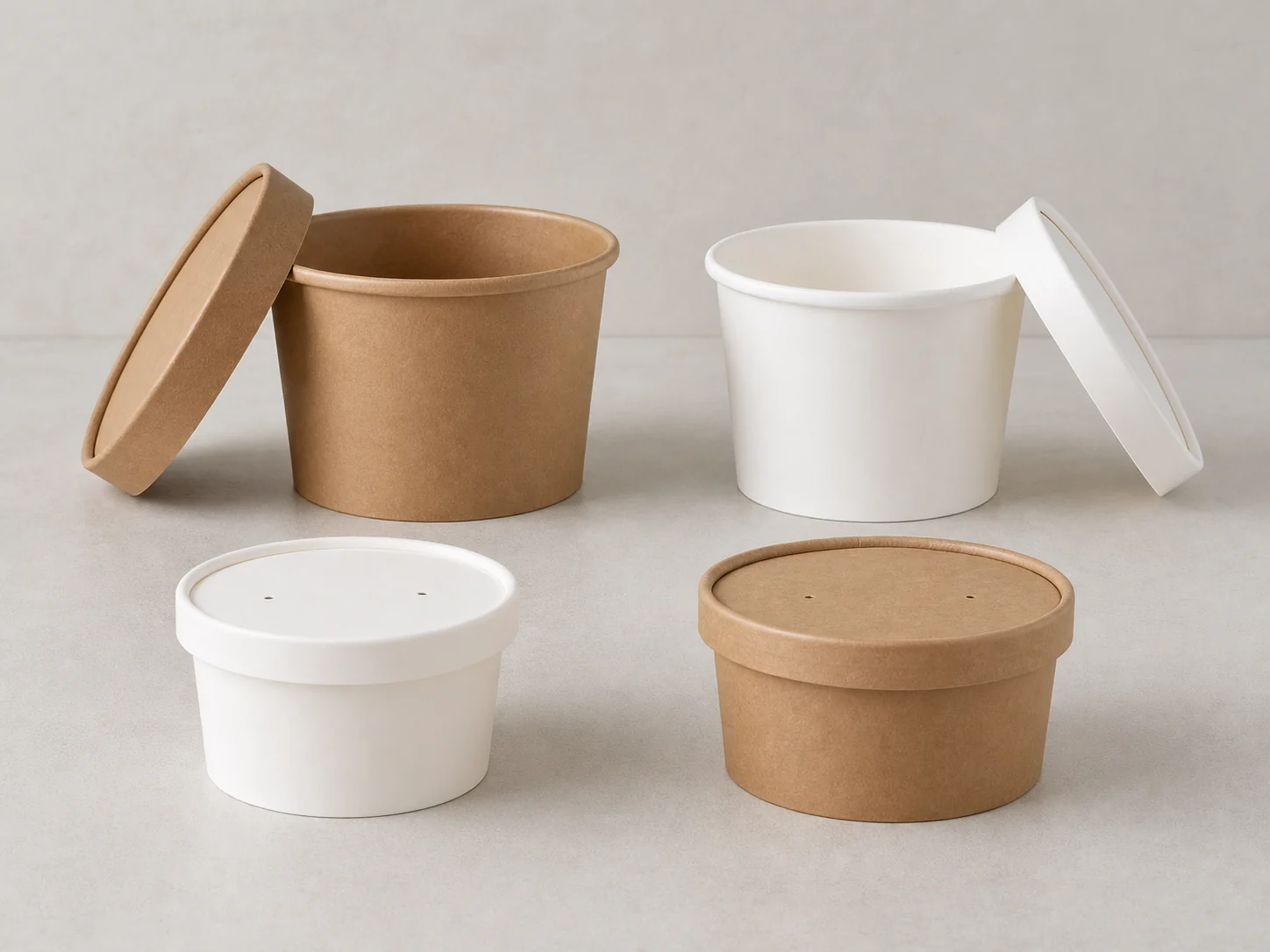
Salads span a wide range, from dry grain bowls to heavily dressed and warm assemblies, so the selection path starts with where your item sits on that range. For dry and lightly dressed salads, the priority is usually presentation and a lid that holds tall or garnished contents cleanly, and Papacko’s paper salad bowls are a category worth reviewing as a starting point for this menu type. As dressings, warm grains and oils enter the picture, coating behaviour over the hold period becomes the question to test, since a bowl that suits a dry salad may not suit a dressed one held for an hour.
Soup is the most demanding path because heat and liquid act together over time. Here the coating or liner behaviour with hot liquid, the seam and base construction, and the lid’s behaviour under heat are the decisive factors, and all three must be observed with a representative broth at your real fill temperature, not judged from a description. If soup travels through delivery, add tilt and stacking to the test, because a closure that holds on a bench may not hold in a stacked insulated bag. Treat every favourable observation as conditional until it survives your full route.
Noodles combine several stresses at once: heat, liquid, oil and, frequently, an expectation that the customer reheats the dish. The selection path must therefore resolve the microwave question explicitly and in writing for the exact bowl-lid-coating-ink system before reheating is offered, alongside grease behaviour for the specific sauce. Combo meals introduce the added variable of mixed hot and cold components and layered or portioned contents, so the path here centres on lid clearance when the bowl is genuinely full and on coating behaviour against the hottest, oiliest element in the combination. In every path, the constant is the same: select on documented, tested behaviour under your own conditions, never on the general reputation of paper as a material.
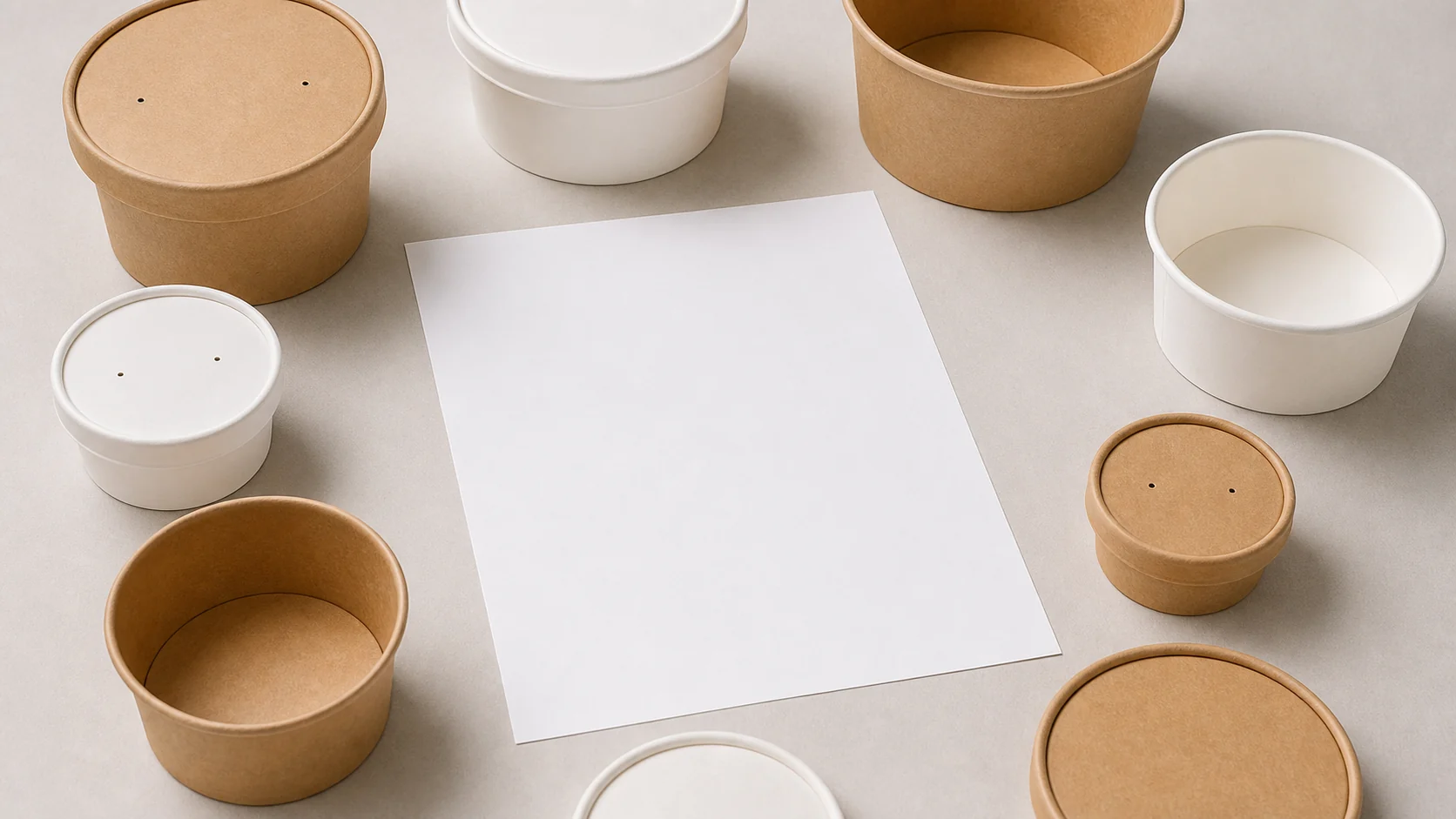
A structured checklist turns a promising sample into a defensible sourcing decision. Work through the following before you commit to volume, and record the result of each item rather than relying on impressions:
The value of the checklist is that it forces conditions to be named. A bowl is never validated in the abstract; it is validated for a food, a route, a lid, a market and a reorder pattern. Keep the completed checklist on file, because it becomes the reference point if a later production run drifts or if a customer raises a question about performance or disposal claims.
If you are ready to move from evaluation to sourcing, bring a complete brief rather than a single product enquiry, because the bowl and lid are one system and the decision depends on your conditions. A useful brief states your menu items and their moisture, heat, oil and hold demands; your service route from fill to final handling; your sample and testing plan; your lid requirements including rim family and closure needs; your market destinations and any claims they require; your artwork and print status; and your expected reordering volumes and cadence. Matching lids to rims is central to this, and Papacko’s tapas de vasos de papel are one starting point for reviewing lid families against the rim you intend to standardise on.
Bringing these elements together lets the sourcing conversation resolve the questions this guide raises rather than deferring them. A brief that names the menu, the route, the sample plan, the lid requirement, the market destination, the artwork status and the reordering need gives a supplier the context to propose specific SKUs, supply the relevant documentation, and prepare the right samples for you to validate. The aim is a bowl-and-lid pair confirmed under your own handling, not a catalogue selection made on assumptions.
Experiencia y contexto de abastecimiento. This guide reflects the practical buying questions that recur across foodservice, chain, QSR, cafe and distribution procurement when selecting paper bowl systems for salads, soups, noodles and combo meals. It is written to structure supplier conversations and sample testing, and it deliberately avoids ranking products or asserting performance, because the right choice depends on the buyer’s specific menu, route and market.
Fundamento técnico y normativo. Statements here are framed as questions to verify rather than properties to assume. The single external reference, the FDA material on food types and conditions of use, supports only the narrow point that food-contact documentation distinguishes food type and conditions of use, including a reheating-in-container category. It is not product approval, and it does not establish that any bowl is microwave-safe, leak-resistant, grease-resistant, recyclable, compostable or food-safe.
Cómo aplicar esta guía. Treat every property that matters, including microwave use, closure behaviour and end-of-life claims, as something to confirm with written supplier documentation for the exact SKU and to validate with physical samples under your intended menu and handling route. Use the checklist and the sourcing brief to record conditions and results, and re-verify on reorder so the system you validated remains the system you receive. For related formats, the wider food packaging category offers adjacent options to consider alongside bowls.
That cannot be answered generally. Microwave use is a supplier-instruction and exact-SKU question for the complete system, including bowl, coating or liner, inks and lid, and it must be confirmed in writing and validated for the specific heating route.
Liquid behaviour depends on the coating, liner, seam and base of the specific SKU and on fill temperature and hold time. Request construction details and test a representative broth in the actual bowl through the real service route before relying on any closure.
Not safely by assumption. Lids match specific rim families and geometries, and small differences between bowls or production runs can affect fit, so validate each lid seated on the exact bowl it will be paired with, filled and handled as in service.
End-of-life properties depend on the coating, the local collection infrastructure and regional rules, and they cannot be assumed from fibre content. Confirm any such claim with supplier documentation for the exact SKU and the specific market where the bowl will be disposed of.
Focus on lid clearance when the bowl is genuinely full and on coating behaviour against the hottest and oiliest component present. Test the real portions together, since the mix, not a single element, defines how the system behaves.
Bring menu demands, service route, sample and testing plan, lid and rim requirements, market destinations and their claim needs, artwork status, and reordering volumes. A complete brief lets the supplier propose specific SKUs and documentation for validation.