¿Está listo para crear sus propios vasos o envases de papel con su marca?
Díganos sus requisitos -tamaño, revestimiento, impresión y destino- y nuestro equipo le preparará un presupuesto detallado en 24 horas.


Every disposable coffee cup decision begins not at the product catalogue but at the service counter—or wherever the first hand-off between staff and customer actually occurs. Before specifying a cup construction, a lid style, or a print finish, operators benefit from tracing the complete journey a filled cup will take: from the filling station, across the counter or into a carrier bag, through a drive-through window, onto a delivery rider’s insulated bag, and finally into a customer’s hand. Each transition point introduces a distinct set of physical demands that no single cup format automatically satisfies.

A café serving primarily walk-in customers who consume on-site faces a fundamentally different set of requirements from a ghost kitchen dispatching orders through multiple delivery platforms. The walk-in scenario rewards cups that feel premium in the hand and support a clean sip experience; the delivery scenario rewards structural rigidity, a lid that resists displacement during bag loading and road vibration, and a base geometry that sits stably inside a cupholder or delivery bag compartment. Mapping these routes before purchasing avoids the common mistake of selecting a cup that performs well at the counter but fails in transit.
Service-route mapping should also account for staff ergonomics. Cups that are difficult to sleeve quickly, lids that require excessive force to seat, and stacks that tip or jam in dispensers all create friction during peak service periods. Operators running high-volume morning rushes will weight these factors differently from boutique roasters serving a slower, more deliberate trade.
Disposable coffee cups are not a single product category. They are a family of constructions, each engineered around a different balance of insulation, structural integrity, material weight, and surface suitability for printing or labelling.
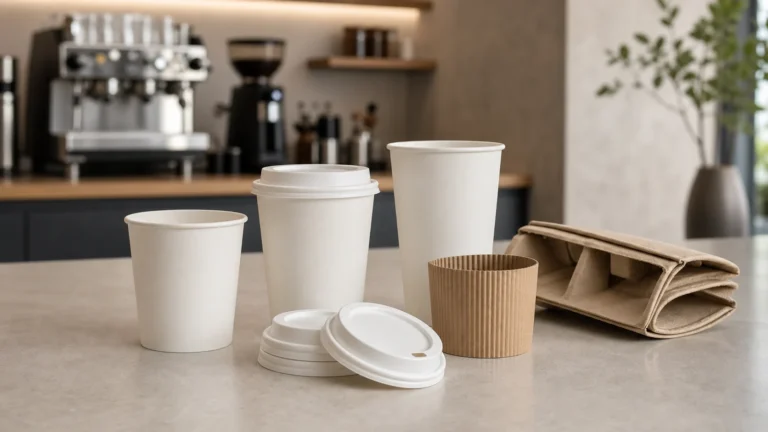
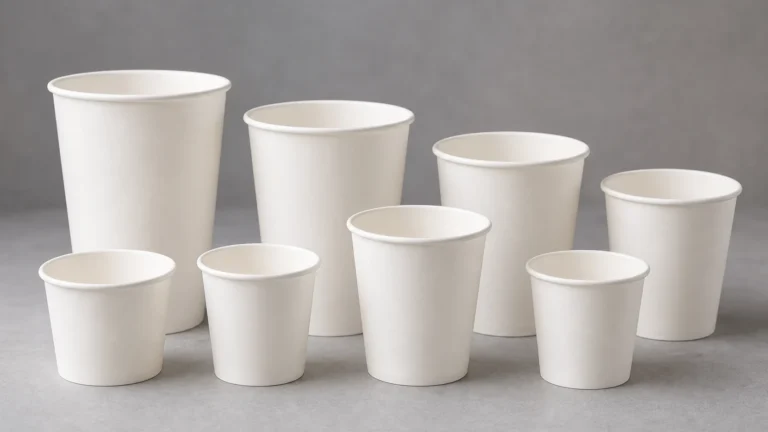
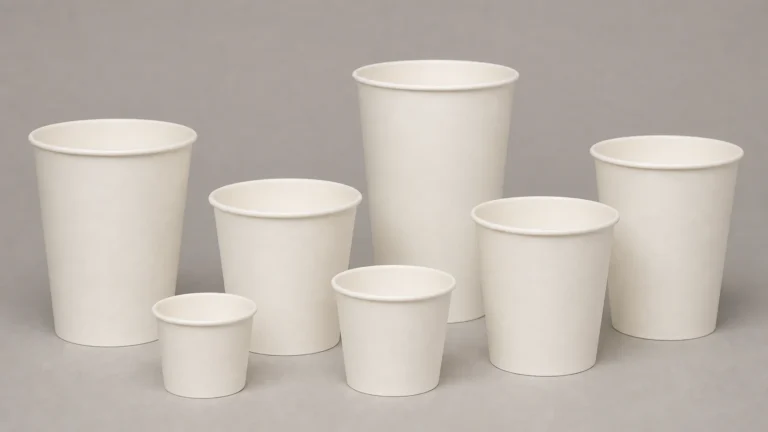
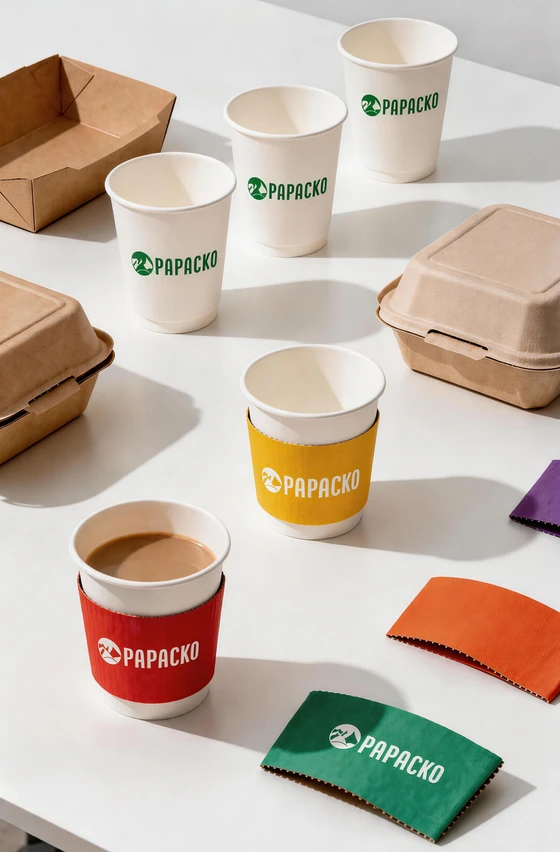
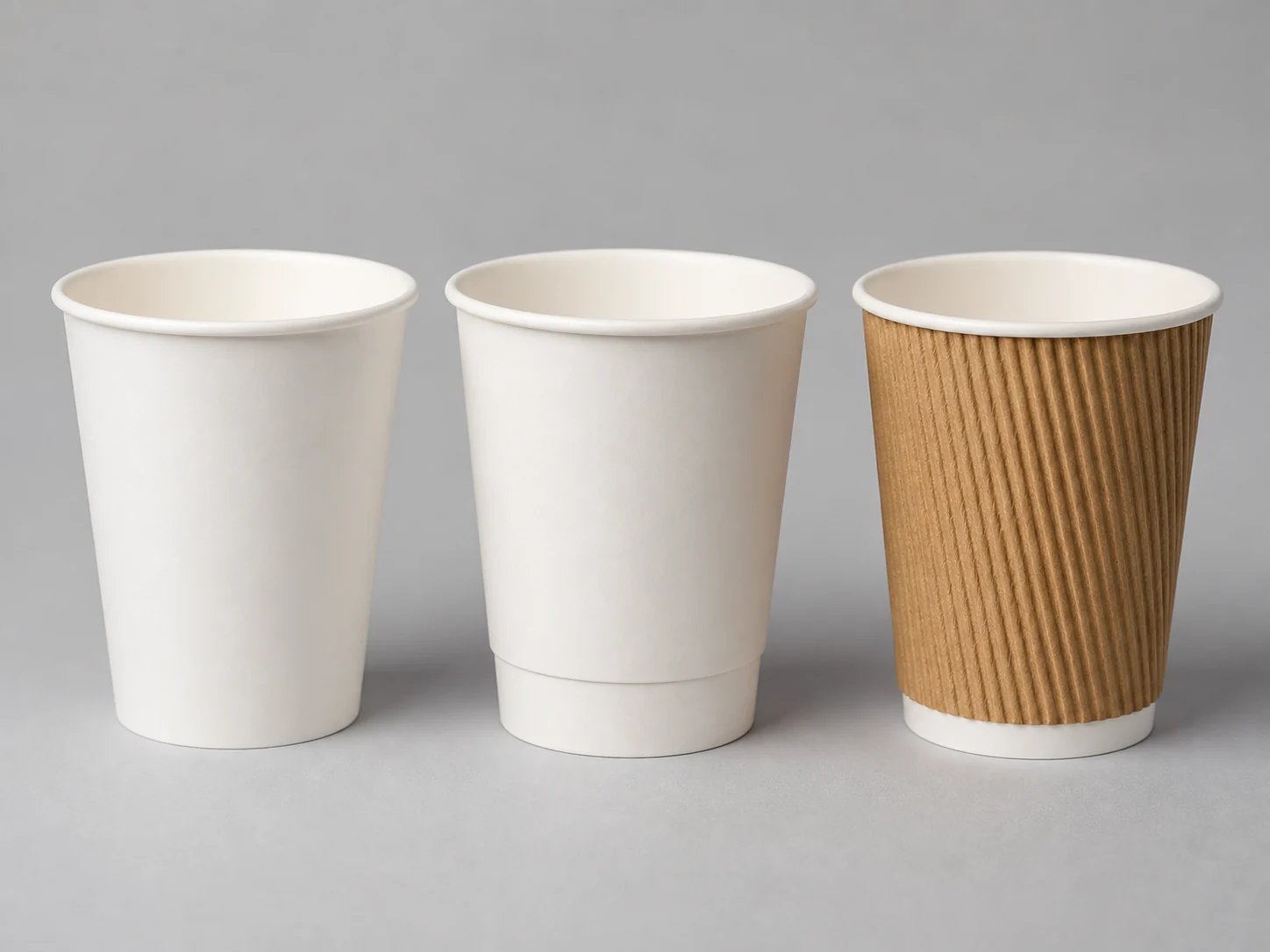
The single-wall cup is the foundational form: one layer of paperboard, typically coated on the interior to manage moisture and maintain structural integrity during use. Its simplicity makes it the most widely available and the most straightforward to print on. The trade-off is that the outer surface conducts heat from the contents to the hand, which is why single-wall cups are almost always paired with a corrugated sleeve or a separate insulating wrap when used for hot beverages. Without a sleeve, the customer experience can be uncomfortable, and staff may find that customers set cups down rather than carry them—a behaviour worth observing during any trial period.
Single-wall cups remain a strong choice for cold beverages, where the outer surface temperature is not a discomfort issue and where the clean cylindrical profile suits condensation management and straw or dome-lid fitment.
Double-wall construction introduces a second layer of paperboard bonded to the outer surface, creating an air gap that provides passive insulation. The result is a cup that can be held comfortably without a sleeve for hot beverages, reducing both the material cost of a separate sleeve and the assembly step at the counter. The outer wall also provides a clean, smooth surface for high-quality print work, which is why double-wall cups are frequently chosen by specialty coffee operators for whom the cup is a brand communication vehicle as much as a functional container.
The additional material in a double-wall cup means a slightly heavier stack and a different hand-feel that some customers associate with premium positioning. Whether that association aligns with a given brand’s identity is a question operators should test with their own customer base rather than assume.
Ripple-wall cups use a corrugated middle layer bonded between an inner and outer wall, creating a textured exterior that provides both insulation and grip. The ripple profile is visually distinctive and tactilely engaging, which can reinforce a craft or artisan brand positioning. Print options on ripple-wall cups are more constrained than on smooth double-wall surfaces, so operators with detailed or colour-rich artwork should evaluate print results on physical samples before committing to a rollout.
Beyond paperboard, disposable cups for cold beverages are frequently produced in clear or translucent plastic, allowing the visual presentation of layered drinks, cold brews, and blended beverages to function as a merchandising asset. Plastic cups vary in their material composition, and operators should review the food-contact material compliance documentation for any plastic cup they consider, referencing the framework provided by the European Commission’s food contact materials guidance as a baseline for understanding what questions to ask suppliers.
Hybrid constructions—paperboard cups with plastic windows, or cups with moulded plastic bases—exist for specific presentation applications but introduce complexity in sourcing, stacking, and end-of-life handling that operators should evaluate carefully.
A cup without its correct lid is an incomplete system. The lid-to-rim interface is the most mechanically critical junction in the entire disposable cup assembly, and it is the point most likely to fail under real service conditions if the lid and cup are not sourced as a matched pair or validated together.
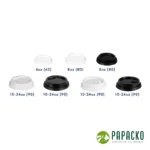
Sip-hole lids are the standard format for hot beverages in most markets. A moulded aperture allows the customer to drink without removing the lid, reducing spill risk during carry and transit. The geometry of the sip hole—its size, the angle of the surrounding moulded channel, and the height of the lid dome—affects both the drinking experience and the degree to which the lid resists liquid escape when the cup is tilted or jostled. These are characteristics that cannot be evaluated from a product specification sheet; they require physical testing under realistic conditions.
Flat lids with straw slots are the conventional format for cold beverages served with a straw. The slot geometry must accommodate the straw diameter in use, and the lid must resist displacement when the straw is inserted and when the cup is carried. Operators who have moved to paper straws should verify that their existing flat lids are compatible with the diameter and rigidity of their paper straw supplier’s product, as the two do not always pair without modification.
Tapas abovedadas are used for blended beverages, cold foam drinks, and any application where the beverage surface rises above the cup rim. The dome height must be sufficient to contain the product without compressing it, and the dome must seat securely enough that it does not pop off during the hand-off or carry phase. Dome lids are also used as a presentation format for certain iced drinks where visual impact is part of the product’s appeal.
Tear-tab lids incorporate a small tab that the customer peels back to create a drinking aperture, providing a sealed surface until the moment of consumption. This format is common in drive-through and delivery contexts where the cup may travel a significant distance before being consumed.
Lid retention depends on the relationship between the lid’s inner channel geometry and the cup’s rim profile. A lid that fits correctly will seat with a defined tactile click or resistance and will not release under normal carry forces. A lid that is nominally the same diameter but sourced from a different manufacturer may fit loosely, require excessive force to seat, or deform the cup rim during application.
Operators should never assume that a lid labelled for a given cup diameter is interchangeable across cup brands. The only reliable validation is physical: fill the cup to the intended level, seat the lid, and subject the assembly to the carry and transit conditions it will actually experience. Papacko’s paper cup lid range is designed to be evaluated alongside the cups it is intended to complement, and the company encourages operators to request matched samples for this purpose.

The distinction between hot and cold beverage service is not simply a matter of temperature management. It shapes every aspect of cup selection, from wall construction and coating type to lid format, sleeve requirement, and the visual presentation logic of the finished drink.
Hot beverage cups are designed to manage the thermal and moisture demands of freshly brewed coffee, tea, and similar drinks. The interior coating must maintain integrity in contact with hot liquid over the duration of the service period. The exterior must either provide sufficient insulation for comfortable handling or be paired with a sleeve. The lid must create a drinking experience that is comfortable and controlled, directing liquid flow in a predictable way and minimising the risk of splashing during the sip.
For espresso-based drinks, the cup’s structural rigidity matters because these drinks are often consumed quickly, with the cup held in one hand while the customer is standing or walking. A cup that softens or deforms before the drink is finished undermines both the functional and the perceived quality of the experience.
For filter coffee and longer-format drinks, the cup’s ability to maintain its shape and insulation over an extended hold time becomes more important. Operators running self-serve stations or batch-brew setups should test cups under the actual hold conditions their customers will experience, not just under immediate post-fill conditions.
Cold beverage cups face a different set of demands. Condensation on the outer surface is a near-universal phenomenon with iced drinks, and it affects both grip and the legibility of any printed branding. Operators who invest in high-quality print work on cold cups should evaluate how that print holds up after the cup has been in a customer’s hand for several minutes in a warm environment.
The base of a cold cup must be stable in the contexts where it will be set down: countertops, car cupholders, delivery bag compartments, and outdoor tables. A base that is slightly too narrow for a common cupholder diameter is a detail that only becomes apparent in physical testing.
Clear plastic cold cups offer the visual presentation advantage of showing the drink’s layers, colours, and garnishes, which is a significant merchandising asset for specialty cold beverages. Operators should evaluate whether this visual benefit justifies the sourcing and compliance considerations that come with plastic cup formats, consulting food-contact material documentation as part of that evaluation.
The gap between a cup that performs well at the point of fill and a cup that arrives at the customer in acceptable condition is where many operators discover that their initial cup selection was incomplete. Carrying and delivery validation is the process of closing that gap before it becomes a customer complaint.
In-store carry testing should replicate the actual distances and movements a filled cup will travel from the preparation station to the customer. This includes the counter pass, any movement through a crowded café floor, and the hand-off moment itself. Testers should carry cups at the angles and with the grip styles that real customers use—which are not always the careful two-handed carry that a controlled test might default to.
Lid retention, sleeve grip, and base stability should all be observed during this process. A lid that seats correctly when applied carefully may release when a customer grabs the cup by the lid rather than the body—a behaviour that is common and should be anticipated.
Drive-through service introduces a window-pass dynamic that is mechanically distinct from a counter hand-off. The cup must be passed through a window opening, often at an angle, and received by a customer who may be reaching across a car interior. The lid must remain seated through this transfer, and the cup must be stable in a car cupholder immediately after receipt.
Operators running drive-through service should test their cup and lid assembly through an actual window pass, with the cup filled to the level it will be served at, before finalising their cup selection.
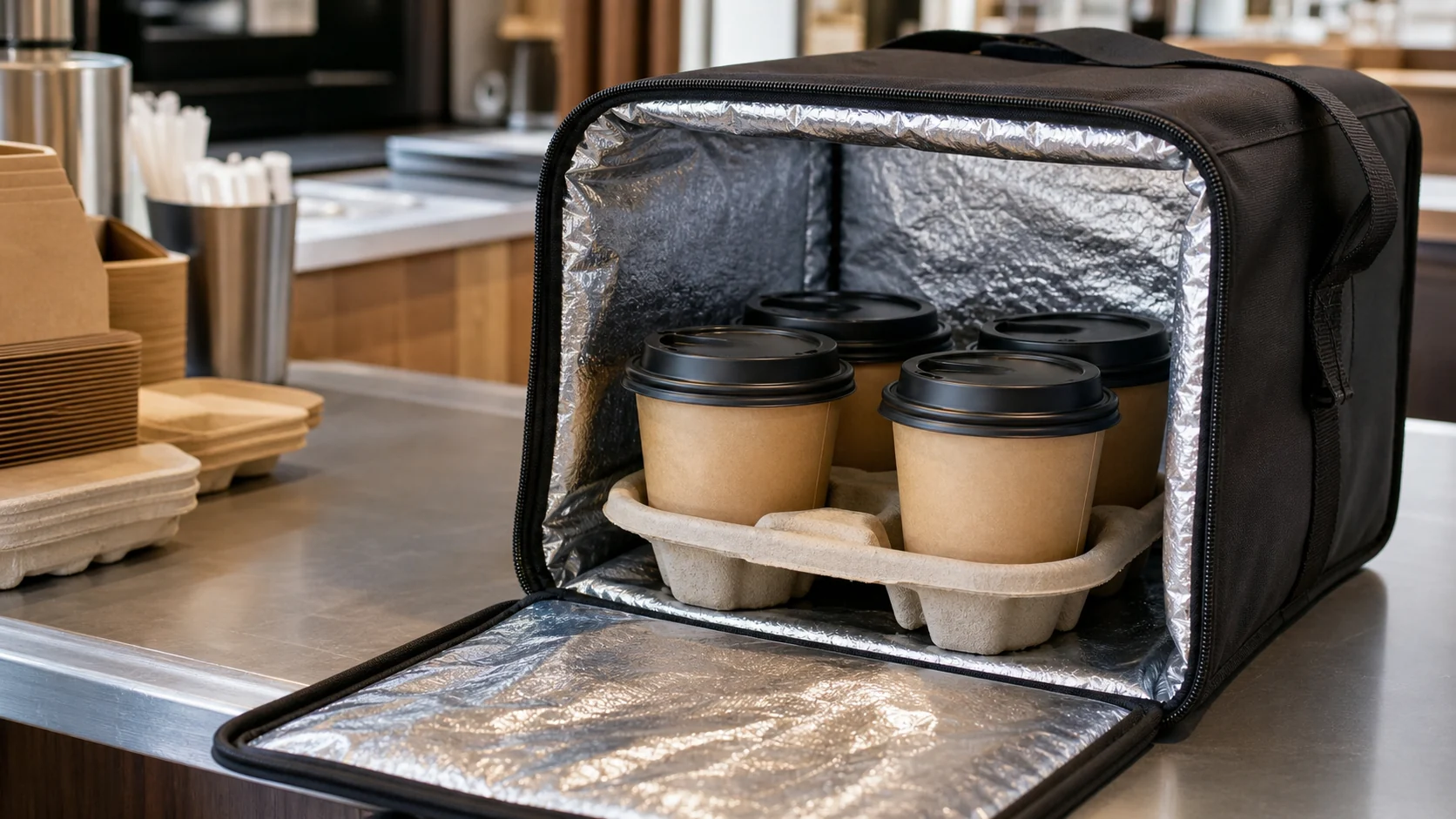
Third-party delivery is the most demanding carrying scenario for disposable cups. A filled cup may be loaded into an insulated bag, transported by bicycle or motorcycle over uneven surfaces, and unloaded multiple times before reaching the customer. The cup must maintain its structural integrity and the lid must remain seated through all of these events.
Operators should test their cup and lid assembly inside the actual delivery bags used by their delivery partners, under the fill levels and stacking configurations that will occur in practice. A cup that performs well in isolation may fail when it is one of several items loaded into a bag together.
Custom printing transforms a disposable cup from a functional container into a brand communication asset. The decision to invest in custom print work involves considerations that extend well beyond the artwork itself.
Offset lithography, flexographic printing, and digital printing each produce different results on different cup constructions. Smooth double-wall cups generally support the highest print resolution and the widest colour gamut. Ripple-wall cups constrain print placement to the smooth outer surface areas between the corrugations. Single-wall cups with sleeves offer the option of printing on the sleeve rather than the cup body, which can reduce minimum order requirements for custom artwork.
Operators should request printed samples of their actual artwork on the actual cup construction they intend to use before approving a print run. Colour rendering on curved paperboard surfaces differs from colour rendering on flat proofs, and the difference is only visible on a physical sample.
A cup rollout involves more than receiving a pallet of printed cups. Staff need to be familiar with the new cup’s stacking behaviour, lid fitment, and sleeve application if applicable. If the new cup has a different base diameter from the previous cup, cupholder inserts and delivery bag compartments may need to be adjusted. If the lid format has changed, staff need to understand the new seating mechanism.
Operators who treat a cup rollout as a logistics event rather than a training event often discover avoidable service failures in the first week of use. A brief staff briefing that covers the physical characteristics of the new cup and lid, with hands-on practice, reduces these failures significantly.
Explore the full range of custom and standard paper cup options at Papacko’s paper cups category to identify constructions suitable for sampling and print evaluation.
The following checklist is intended to structure the cup and lid sourcing process for foodservice operators. It is not exhaustive, and individual operations will have requirements that extend beyond these items.
Service Route and Use Case
– [ ] Document the complete journey a filled cup will take from fill point to customer hand
– [ ] Identify all transition points where the cup will be handled, set down, or transferred
– [ ] Note any delivery or drive-through requirements that impose specific structural demands
Cup Construction
– [ ] Determine whether single-wall, double-wall, or ripple-wall construction best suits the primary service context
– [ ] Evaluate whether a sleeve is required or preferred for hot beverage service
– [ ] Assess whether clear plastic cups are appropriate for cold beverage presentation needs
– [ ] Review food-contact material compliance documentation for all cup materials under consideration, referencing the European Commission’s food contact materials framework
Lid Selection
– [ ] Identify the lid format required for each beverage category (sip-hole, flat, dome, tear-tab)
– [ ] Source lids from the same supplier as cups, or validate fit physically before ordering
– [ ] Test lid retention under actual carry and transit conditions
Cold Beverage Packaging
– [ ] Evaluate cup stability in relevant cupholders and delivery bag compartments
– [ ] Assess condensation behaviour and its effect on grip and print legibility
– [ ] Consider whether clear cup formats serve a merchandising function worth the additional sourcing complexity
– [ ] Review Papacko’s food packaging containers for cold-format options
Consideraciones sobre sostenibilidad
– [ ] Review available material options including plant-based and compostable formats
– [ ] Evaluate Papacko’s compostable food packaging range for relevant applications
– [ ] Confirm that any sustainability claims made to customers are supported by supplier documentation
Print and Branding
– [ ] Request printed samples of actual artwork on actual cup construction before approving a run
– [ ] Confirm print method compatibility with chosen cup surface
– [ ] Plan staff training to accompany any cup rollout
Validation
– [ ] Conduct in-store carry testing under realistic conditions
– [ ] Conduct drive-through window-pass testing if applicable
– [ ] Conduct delivery bag loading and transit testing if applicable
– [ ] Repeat validation after any change to cup, lid, fill level, or service format
Papacko supplies disposable cups, lids, and food packaging to foodservice operators across a range of service formats and volume requirements. The product range spans standard and custom-print paper cups, matched lid formats, cold beverage containers, and compostable packaging options.
Operators are encouraged to request physical samples and to test those samples under their actual service conditions before placing orders. The following resources support the evaluation process:
Contact Papacko directly to discuss your service format, request samples, and confirm product availability for your operation.
This article is intended to provide foodservice operators with a structured framework for evaluating and selecting disposable coffee cups and lids. It covers cup constructions, lid formats, service-route considerations, and sourcing process guidance.
What this article does not cover: This article does not make claims about specific temperature performance, cup dimensions, leakproofness, certification status, recyclability, compostability, pricing, minimum order quantities, lead times, or the universal suitability of any material for any application. These factors vary by product, supplier, market, and operational context, and cannot be accurately generalised.
Responsabilidad del comprador: Operators are responsible for verifying that any cup, lid, or packaging product they select is appropriate for their specific use case. This verification must include physical testing under actual filling, carrying, and service conditions. Compliance with applicable food-contact material regulations is the operator’s responsibility; the European Commission’s food contact materials guidance provides a relevant regulatory framework for operators in European markets.
Supplier claims: Any claims made by suppliers regarding product performance, compliance, or sustainability should be supported by documentation that operators review before purchase. This article does not independently verify supplier claims.
The only reliable answer is physical testing. Lid and cup dimensions are described using nominal diameter measurements, but the actual seating geometry—the depth and angle of the lid’s inner channel relative to the cup’s rim curl—varies between manufacturers even when the nominal diameter is the same. A lid that is nominally compatible may seat loosely, require excessive force, or deform the rim under real service conditions. Request samples of both the cup and the lid, fill the cup to your intended service level, seat the lid, and carry the assembly through your actual service route before drawing any conclusions. If you source cups and lids from the same supplier, ask explicitly whether the lid is designed and tested to pair with the specific cup construction you are ordering.
Ambas estructuras proporcionan un aislamiento pasivo que reduce la necesidad de utilizar un manguito adicional con bebidas calientes, pero difieren en cuanto a las características de la superficie y la idoneidad para la impresión. Los vasos de doble pared presentan una superficie exterior lisa que permite realizar impresiones detalladas y de alta resolución en todo el cuerpo del vaso, lo que los convierte en una opción muy recomendable para los operadores para quienes el vaso es un importante medio de comunicación de la marca. Los vasos de pared ondulada presentan un exterior texturizado que muchos clientes asocian con una estética artesanal, pero la superficie ondulada limita dónde se puede aplicar la impresión y con qué resolución. La elección adecuada depende del posicionamiento de tu marca y de la importancia que tenga la calidad de impresión para la experiencia de tus clientes. Solicita muestras impresas con tu diseño real en ambos tipos de vasos antes de decidirte.
Utilizar un único formato de vaso tanto para bebidas calientes como frías resulta atractivo desde el punto de vista operativo, pero conlleva algunas desventajas que conviene analizar con detenimiento. Un vaso diseñado específicamente para bebidas calientes puede que no presente las bebidas frías con la misma eficacia que un vaso de plástico transparente o uno diseñado específicamente para bebidas frías, y los tipos de tapas necesarios para el servicio de bebidas calientes y frías suelen ser diferentes. Por el contrario, gestionar dos formatos de vaso distintos añade complejidad a la formación del personal, al almacenamiento y a la reposición de existencias. La respuesta adecuada depende de tu carta, de tu volumen de servicio y de la importancia que le des a la presentación visual de tu oferta de bebidas frías. Los operadores con una carta en la que predominan las bebidas calientes y una gama reducida de bebidas frías suelen considerar que un único formato de vaso con diferentes tapas es viable; los operadores con una oferta significativa de bebidas frías suelen considerar que los vasos para bebidas frías diseñados específicamente justifican la gestión adicional del inventario.
El servicio de reparto a domicilio supone las condiciones físicas más exigentes de todos los formatos de servicio, por lo que la selección de vasos para el reparto debe validarse específicamente en condiciones reales de reparto, en lugar de deducirse a partir de su rendimiento en el mostrador. Las variables clave son la sujeción de la tapa ante la vibración y el movimiento durante el transporte en bicicleta o motocicleta, la integridad estructural cuando el vaso es uno de los varios artículos cargados en una bolsa isotérmica y la estabilidad de la base en el compartimento de la bolsa. Prueba el conjunto de vaso y tapa dentro de tus propias bolsas de reparto, llenándolas hasta los niveles reales de servicio, y somete la bolsa cargada al tipo de movimiento que experimentará durante el transporte. Presta especial atención a si las tapas permanecen bien fijadas al cargar y descargar la bolsa, ya que este es un punto de fallo habitual. Si tu socio de reparto utiliza formatos de bolsa estandarizados, consigue esas bolsas para realizar las pruebas antes de decidir definitivamente qué vaso vas a utilizar.
Food-contact material compliance is a regulatory matter, and the questions you ask should be calibrated to the regulatory framework applicable in your market. For operators in European markets, the European Commission’s food contact materials guidance provides the relevant framework and describes the documentation that responsible suppliers should be able to provide. At a minimum, ask your supplier to provide a Declaration of Compliance for the specific cup and lid products you are considering, confirm which regulations the declaration covers, and ask whether the declaration covers the specific use conditions of your application—including the type of beverage, the fill temperature range, and the duration of contact. Do not assume that a declaration covering one product in a supplier’s range covers all products, or that a declaration issued for one market is valid in another.
Print quality on a disposable cup is affected by the print method, the ink formulation, the cup surface, the curvature of the cup body, and the specific colours and detail in your artwork. None of these factors can be fully evaluated from a digital proof or a flat print sample. The only reliable evaluation is a physical printed sample of your actual artwork on the actual cup construction you intend to order, produced using the same print method that will be used for the full run. When reviewing the sample, assess colour accuracy under the lighting conditions of your service environment, not just under office or studio lighting. Check how the print reads at the distance from which customers will typically see the cup—usually arm’s length or across a counter. Evaluate whether any colour shifts or registration issues are visible at the seam or at the base taper. If the sample does not meet your standards, work with the supplier to identify whether the issue is in the artwork file, the print method, or the cup surface before proceeding.