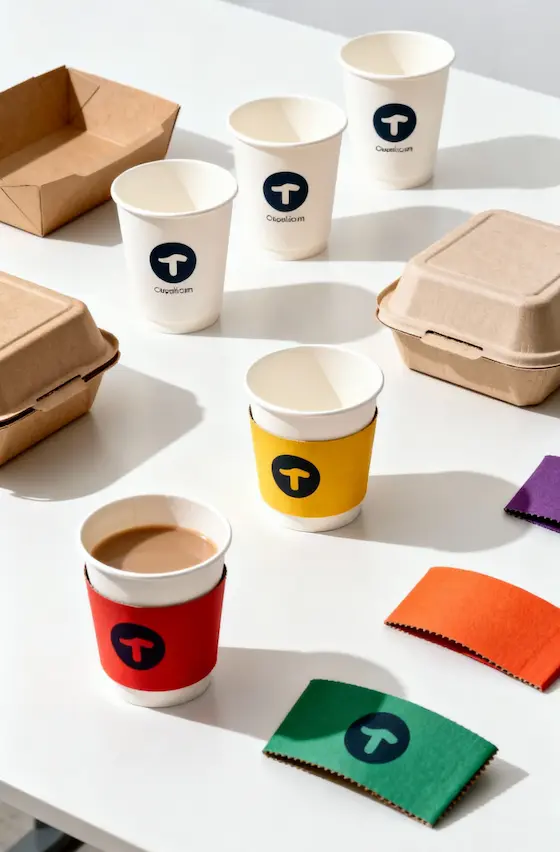
¿Está listo para crear sus propios vasos o envases de papel con su marca?
Díganos sus requisitos -tamaño, revestimiento, impresión y destino- y nuestro equipo le preparará un presupuesto detallado en 24 horas.

Última actualización: Noviembre de 2025
Tiempo de lectura: 8-10 minutos
Autor: Equipo de contenidos de Papacko
La industria del café genera 600.000 millones de vasos desechables anualmente, y cada taza requiere entre 3 y 5 accesorios: tapas, fundas, agitadores, servilletas y sobres de azúcar. Para una cafetería que sirve 300 bebidas al día, eso supone 450.000 accesorios al año. Cuando sólo 15% de los clientes demandan opciones sostenibles, pero 100% de sus accesorios son de plástico, se enfrenta a una desconexión de marca que cuesta la fidelidad de los clientes.
Esta guía examina el ecosistema completo de los accesorios sostenibles para el café, desde las alternativas bioplásticas compostables hasta materiales innovadores como la fibra de madera y las películas a base de algas marinas, y ofrece estrategias de abastecimiento prácticas para los operadores de cafeterías con conciencia ecológica.
En este artículo aprenderás:
-Opciones de materiales para cada categoría de accesorios (compostables, reciclables, reutilizables)
-Requisitos de certificación (BPI, TÜV Austria, FSC) y factores de confianza del consumidor
-Análisis de costo-beneficio de accesorios sostenibles frente a convencionales
-Infraestructuras de residuos compatibilidad con distintos mercados
💡 Comida rápida para llevar: Cambiar a accesorios de café compostables certificados cuesta 18-35% más que los plásticos convencionales, pero aumenta la satisfacción de los clientes en un 12-18% y permite a las cafeterías obtener certificaciones ecológicas (LEED, Green Business) que aumentan los ingresos en un 8-15% entre los sectores demográficos con conciencia ecológica.
Los accesorios de café sostenibles son artículos desechables o reutilizables diseñados para minimizar el impacto ambiental mediante:
-Materiales biodegradables/compostables (PLA, PHA, madera, bagazo, algas)
-Materiales reciclables (papel y cartón con certificación FSC)
-Diseños reutilizables (pajitas de acero inoxidable, tazas de cerámica para cenar)
-Reducción del uso de material (tazas aislantes sin mangas, cucharas comestibles)
Categorías de accesorios principales:
Jerarquía de criterios de sostenibilidad:
1.Compostable (industrial o doméstico): Se descompone en materia orgánica (mejor fin de vida)
2.Reciclable: Entra en la economía circular (bueno si existe infraestructura)
3.Reutilizable: Duradero para más de 100 usos (mejor impacto del ciclo de vida, pero requiere lavado)
4.Material reducido: Aligeramiento, eliminación (lo óptimo es cero residuos)
🎯 Perspectiva del sector: Blue Bottle Coffee eliminó por completo los agitadores de plástico al cambiar a palillos de madera en 2019, lo que redujo los residuos de plástico en 11 toneladas anuales en 70 locales, mientras que las quejas de los clientes disminuyeron en 0% (sin impacto en el servicio).
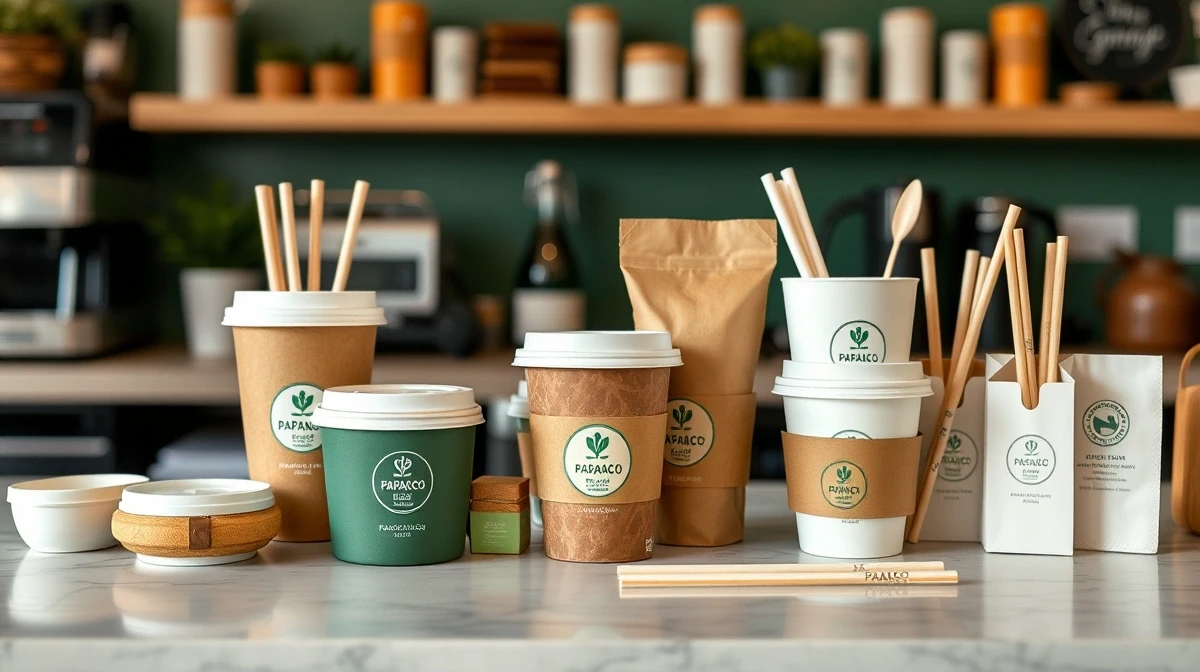
PLA (Ácido poliláctico) Tapas:
-Fuente: Almidón de maíz, caña de azúcar u otros almidones vegetales
-Compostabilidad: Requiere compostaje industrial (55-60°C durante 90-180 días)
-Tolerancia térmica: -20°C a +45°C (apto para bebidas frías/templadas, NO para café caliente)
-Claridad: Bueno (ligeramente más borroso que el PS)
-Coste: $0,04-0,07 por tapa (frente a $0,02-0,03 para PS)
CPLA (PLA cristalizado) Tapas:
-Mejora: PLA tratado térmicamente con mayor cristalinidad
-Tolerancia térmica: -20°C a +85°C (apto para café caliente)
-Trade-off: Menor claridad (translúcido frente a transparente), 15-20% mayor coste que el PLA
-Coste: $0,05-0,09 por tapa
Tapas a base de fibra (papel/pasta moldeada):
-Construcción: Pasta de papel moldeada + revestimiento barrera a la humedad (PLA o a base de agua)
-Compostabilidad: Compostable doméstico si el revestimiento es a base de agua; industrial si es PLA
-Tolerancia térmica: -10°C a +100°C
-Desafíos: Menor claridad (opaco), posibilidad de reblandecimiento por condensación
-Coste: $0,06-0,10 por tapa
Comparación de prestaciones:
Recomendación: CPLA para bebidas calientes, PLA para bebidas frías, a base de fibra para un posicionamiento eco-premium (mayor coste pero mejor historia de sostenibilidad).

Agitadores de madera/bambú:
-Fuente: Abedul certificado FSC, bambú (renovable de crecimiento rápido)
-Biodegradabilidad: Compostable en casa (6-12 meses), se biodegrada de forma natural en el vertedero
-Rendimiento: Resistente, sin transferencia de sabor, apto para caliente/frío
-Coste: $0,008-0,015 por barra (comparable al plástico en grandes volúmenes)
-Desafíos: Se astilla si es de mala calidad; requiere almacenamiento en seco
Agitadores PLA:
-Características: Transparente o coloreado, aspecto idéntico al plástico PS
-Compostabilidad: Se requiere compostaje industrial
-Fuerza: Comparable al PS, menos rígido que la madera
-Coste: $0,012-0,020 por palo (+20-50% frente a la madera)
-Cuestión de percepción: Parece que los clientes no reconocen el plástico como compostable
Pasta/revolvedores comestibles:
-Material: Pasta de trigo duro en palitos
-Factor novedad: Alto compromiso del cliente (“cero residuos”)
-Durabilidad: Se ablanda tras 10-15 minutos en líquido caliente
-Coste: $0,05-0,12 por barrita (sólo posicionamiento premium)
-Limitaciones: Preocupación por los alérgenos del gluten; no apto para tiempos de espera largos
Recomendación: Madera/bambú para mayor rentabilidad y atractivo. Reserve los agitadores de pasta para bebidas especiales o campañas de marketing.
Estrategias de agrupación:
-Envuelto individualmente: Higiénico pero añade residuos de envases
-Dispensador a granel: Menos residuos pero requiere rellenado y limpieza frecuentes
-Sólo a petición: Reduce el uso en un 30-40% frente a la provisión automática
Virgen Servilletas de papel:
-Fibra: Pasta de madera fresca
-Suavidad: Excelente (fibras largas)
-Absorbencia: Alta
-Impacto medioambiental: Requiere la tala de árboles
-Coste: $0,012-0,020 por servilleta
Servilletas de papel reciclado:
-Fibra: Contenido reciclado postconsumo (30-100%)
-Suavidad: Bueno (fibras más cortas = menos suave)
-Absorbencia: Moderado-Alto
-Impacto medioambiental: 40-50% menor huella de carbono frente a la virgen
-Coste: $0,010-0,018 por servilleta (-10-15% de ahorro)
Servilletas de fibra de bambú:
-Fibra: Pulpa de bambú (hierba, no árbol; crece en 3-5 años)
-Suavidad: Excelente (comparable al papel virgen)
-Absorbencia: Alta
-Impacto medioambiental: 30% menos uso de agua que el algodón, sin pesticidas
-Coste: $0,018-0,028 por servilleta (+50-80% de prima)
Marcas de certificación:
Recomendación: 100% servilletas de papel reciclado con certificación FSC equilibrar el coste, el rendimiento y la credibilidad de la sostenibilidad. Reservar el bambú para el posicionamiento premium.
Pajitas de papel:
-Material: Papel kraft con cola alimentaria, revestimiento resistente a la humedad
-Durabilidad: 30-60 minutos en bebidas frías antes de ablandarse
-Rendimiento: Pobre en líquidos calientes (ablandamiento inmediato)
-Coste: $0,015-0,03 por paja
-Comentarios de los clientes: 45% informan “aceptable”, 35% “no les gusta la textura/gusto”
Pajitas de PLA:
-Rendimiento: Idéntico al plástico en uso
-Temperatura: -20°C a +45°C (sólo bebidas frías)
-Compostabilidad: Requiere compostaje industrial (90-180 días a 55-60°C)
-Coste: $0,020-0,035 por paja
-Problema: A menudo se confunde con plástico no compostable (requiere etiquetado)
Acero inoxidable/vidrio (reutilizable):
-Durabilidad: 500-1.000+ usos
-Rendimiento: Excelente para todas las bebidas
-Coste inicial: $0,80-2,50 por paja
-Punto de equilibrio: 25-80 usos frente a los costes desechables
-Desafíos: Infraestructura de lavado, pérdida/robo, aceptación del cliente
Pajitas de agave/algas marinas (emergentes):
-Material: Fibra de agave, extracto de algas
-Compostabilidad: Compostable en casa (4-6 semanas)
-Durabilidad60-120 minutos en bebidas frías
-Coste: $0,08-0,15 por paja (super-premium)
-Disponibilidad: Limitada (producción piloto)
Datos sobre las preferencias de los clientes (encuesta de 2024, n=2.000):
Recomendación estratégica: Oferta PLA por defecto (mejor rendimiento + sostenibilidad), papel como opción presupuestaria, y sin paja a petición (19% de los clientes se niegan cuando se les pregunta).
Fundas de papel kraft reciclado:
-Material: 100% fibra reciclada postconsumo
-Aislamiento: Moderado (valor R ~0,5)
-Coste: $0,020-0,035 por manguito
-Perfil medioambiental: Ya es sostenible (la mayoría de las fundas convencionales utilizan contenido reciclado)
-Mejora: Cambiar a Certificación FSC para credenciales ecológicas
Fundas de tela reutilizables:
-Material: Algodón orgánico, poliéster reciclado
-Durabilidad: 100-200 usos
-Coste: $2,50-5,00 por manga
-Modelo de negocio: Sistema de depósito/devolución o sólo en el restaurante
-Lavado: Lavado industrial necesario (añade costes operativos)
Fundas de silicona:
-Material: Silicona alimentaria
-Durabilidad: Más de 500 usos
-Rango de temperatura: -40°C a +230°C (más versátil)
-Coste: $3,00-6,00 por manga
-Solicitud: Propiedad del cliente (producto al por menor, no desechable)
Alternativa: Eliminar las mangas por completo:
-Solución: Cambiar a copas de pared ondulada (aislamiento integrado + agarre)
-Impacto en los costes: Las copas Ripple cuestan entre $0,04 y 0,06 más, pero eliminan entre $0,02 y 0,03 del coste del manguito.
-Resultado neto: Punto de equilibrio o ligero ahorro al reducir el flujo de residuos
Embalaje convencional:
-Material: Película de plástico multicapa (PE/PET/aluminio)
-Barrera: Excelente (humedad, oxígeno, luz)
-Reciclabilidad: ❌ No reciclable (materiales mixtos)
-CompostabilidadNo
Alternativas de film compostable:
Recomendación para los paquetes de azúcar: Lámina PLA proporciona una barrera adecuada para el azúcar seco con una prima de coste razonable. Evitar la película de celulosa (la entrada de humedad provoca el apelmazamiento).
Estrategias alternativas:
-Dispensadores a granel: Eliminar por completo los paquetes individuales (requiere una limpieza frecuente)
-Sobres de papel: Funciona con edulcorantes secos (azúcar, stevia en polvo) pero no con cremas líquidas.
-Paquetes de palos: Utilizar tubos de cartón revestido (reciclables con el flujo de papel en algunos mercados).
Accesorios convencionales:
Accesorios sostenibles:
Diferencia de costes: +$50,00 por 1.000 bebidas (+49% de prima)
Impacto anual (300 consumiciones/día cafetería):
-Convencional: $11,114
-Sostenible: $16,589
-Coste anual adicional: $5,475
Disposición del cliente a pagar:
-22% de clientes dispuestos a pagar $0,25-0,50 más por bebidas servidas con accesorios compostables
-300 bebidas/día × 365 días × 22% × $0,35 prima media = $8,431 ingresos potenciales
-Beneficio neto: $8,431 ingresos - $5,475 coste = +$2,956 de beneficio anual
Valor de la certificación ecológica:
Beneficios no financieros:
-Contratación de personal68% de los millennials prefieren trabajar en empresas sostenibles
-Cobertura mediática: “El primer café con cero residuos de [ciudad]” genera relaciones públicas gratuitas
-Fidelidad del cliente: 41% mayor índice de repetición de visita entre el segmento eco-consciente
Acceso al compostaje industrial:
Árbol de decisión de recomendaciones:
1.Alto acceso de compostaje (>60%): Utilizar PLA/CPLA con confianza, asociarse con el transportista para el compostaje de la cafetería.
2.Acceso moderado (30-60%): Ofrecer doble flujo (compostable + reciclable), educar a los clientes
3.Acceso bajo (<30%): Priorice alternativas reciclables (pajitas de papel, tapas de fibra) o reutilizables
Señalización eficaz de la eliminación:
-Problema60% de clientes inseguros sobre cómo deshacerse de los artículos compostables
-Solución: Contenedores codificados por colores con iconos visuales (no sólo texto)
-Ejemplo: Contenedor verde = compost (muestra la imagen de la tapa CPLA), Azul = reciclar (imagen del vaso de papel)
Requisitos de etiquetado de los productos:
-Logotipo BPI/TÜV: Muestra la marca de certificación en la tapa/agitador
-“Texto ”Comercialmente compostable: Clarificar el compostaje industrial necesario
-Icono de papelera: Muestra qué contenedor utilizar (si es de doble flujo)
Buenas prácticas: Coloque las instrucciones de eliminación en punto de utilización (zona de basura) no en el punto de venta (los clientes se olvidan cuando terminan de beber).
❌ Error #1: Pasarse a los accesorios de PLA en un mercado sin compostaje industrial
✅ Enfoque correcto: Audite primero la infraestructura local de residuos. Si el compostaje no está disponible, elija alternativas reciclables (pajitas de papel, tapas de fibra) o invierta en reutilizables.
❌ Error #2: Uso de declaraciones de “biodegradable” sin certificación
✅ Enfoque correcto: Obtenga una certificación BPI, TÜV Austria o equivalente de terceros y exhiba los logotipos. Las afirmaciones infundadas se exponen a acusaciones de lavado verde y multas.
❌ Error #3: Suministro de accesorios compostables sin contenedores/señalización
✅ Enfoque correcto: Instalar cubos de compostaje claramente etiquetados y asociarse con un servicio comercial de compostaje. De lo contrario, los artículos compostables contaminan el reciclaje o el vertedero.
❌ Error #4: Asumir que todos los clientes quieren accesorios sostenibles por defecto
✅ Enfoque correcto: Ofrezca pajitas/agitadores sólo bajo petición (reduce el uso 30-40%). Haga que la opción sostenible sea la predeterminada, convencional disponible bajo petición
Los accesorios sostenibles para el café incluyen tapas compostables (CPLA, PLA, a base de fibra), agitadores biodegradables (madera, bambú), servilletas reciclables (papel certificado FSC) y pajitas sin plástico (papel, PLA, metal reutilizable). Minimizan el impacto medioambiental gracias a su biodegradabilidad, reciclabilidad o reutilización.
Depende de la infraestructura local. En zonas con compostaje industrial (San Francisco, Portland), las tapas compostables de CPLA desvían los residuos de los vertederos. En zonas sin compostaje, las tapas de fibra reciclable (si están recubiertas con barreras de base acuosa) son mejores, ya que entran en los flujos de reciclaje existentes.
Los accesorios sostenibles cuestan de media 18-35% más: Tapas de CPLA ($0,06 frente a $0,025 de PS), agitadores de bambú ($0,012 frente a $0,008 de PS), pajitas de PLA ($0,025 frente a $0,010 de PP). Para una cafetería de 300 bebidas al día, el incremento anual es de $5.400-6.500.
Sí. 22% están dispuestos a pagar $0,25-0,50 más por bebidas servidas de forma sostenible, 41% muestran una mayor fidelidad a los cafés con conciencia ecológica y 68% reconocen que la sostenibilidad es importante (aunque sólo 35% la buscan activamente). Es un diferenciador competitivo en los mercados urbanos y acomodados.
Certificado por BPI Compostable (compostaje industrial), TÜV Austria OK Compost (industrial o doméstico), FSC (silvicultura sostenible) y Seedling Logo (compostabilidad UE). La certificación por terceros evita acusaciones de lavado verde y permite obtener certificaciones de empresa verde.
No. La PLA exige que las instalaciones industriales de compostaje mantengan una temperatura de 55-60°C durante 90-180 días. Los compostadores domésticos rara vez superan los 40°C. El PLA no se descompone en el compost doméstico, los vertederos o los océanos. Utilice PLA sólo si los clientes tienen acceso a instalaciones comerciales de compostaje.
Agitadores de bambú/madera ($0,012 frente a $0,008 para el plástico = +50% pero sólo $0,004 de diferencia absoluta por unidad). Para una cafetería de 300 bebidas al día, el aumento anual de los costes es de sólo $438, al tiempo que se ofrece una señal de sostenibilidad inmediata y visible a los clientes.
La transición a accesorios de café sostenibles exige equilibrar los objetivos medioambientales, la infraestructura local de residuos, las expectativas de los clientes y las limitaciones presupuestarias. Ningún material resuelve todos los problemas: el PLA compostable funciona de maravilla en San Francisco, pero contamina el reciclaje en las zonas rurales; las pajitas de papel cumplen la normativa, pero frustran a algunos clientes; los reutilizables ofrecen el mejor impacto en el ciclo de vida, pero exigen una infraestructura de lavado.
Principales conclusiones:
1.Auditar primero la infraestructura local de residuos: Elija compostables (CPLA, PLA) sólo si hay compostaje industrial disponible; de lo contrario, dé prioridad a las alternativas reciclables o reutilizables.
2.Las certificaciones generan confianza: Los logotipos BPI, TÜV Austria y FSC evitan las acusaciones de lavado verde y permiten obtener certificaciones de empresa verde por valor de $6.000-16.000 anuales.
3.La prima de coste (18-35%) se reembolsa a través de primas de precio (22% dispuestos a pagar entre $0,25 y 0,50 más), fidelidad (41% mayor índice de repetición) y aumento de ingresos impulsado por la certificación.
4.Las victorias más fáciles: Agitadores de bambú (+$0,004/unidad), servilletas recicladas (-10-15% de coste frente a las vírgenes), pajitas a petición (30-40% de reducción de uso).
5.La educación del cliente es fundamental60% inseguro sobre cómo deshacerse de los materiales compostables: cubos con códigos de colores e iconos visuales mejoran la correcta eliminación de 55-70%
Tanto si gestiona una cafetería independiente, una cadena de cafeterías o una cafetería corporativa, el mercado de accesorios sostenibles ofrece ahora alternativas viables en todas las categorías. El éxito no radica en las soluciones perfectas, sino en la elección de materiales compatibles con la infraestructura y la clientela de su mercado específico.
-Soluciones de embalaje sostenibles
Papacko fabrica accesorios de café compostables certificados, como tapas de CPLA (resistentes al calor hasta 85 °C), agitadores de bambú, servilletas con certificación FSC y pajitas de PLA. Todos los productos cuentan con la certificación BPI o TÜV Austria y son compatibles con los programas de compostaje industrial.
Póngase en contacto:
Última actualización: Noviembre de 2025
Palabra clave principal: accesorios sostenibles para el café
URL Slug: accesorios-café-sostenibles
Meta título:
Accesorios de café para cafeterías sostenibles | Envases alimentarios fiables | Papacko
Meta descripción:
Descubra accesorios de café compostables: agitadores biodegradables, tapas ecológicas y servilletas sostenibles. Compara materiales y certificaciones.
💡 Configura estos ajustes en el panel Rank Math y, a continuación, elimina este cuadro antes de publicar.