Prêt à créer vos propres gobelets ou emballages en papier ?
Faites-nous part de vos exigences - taille, revêtement, impression et destination - et notre équipe établira un devis détaillé dans les 24 heures.

Dernière mise à jour: novembre 2025
Temps de lecture: 9 minutes
Auteur: Équipe de contenu de Papacko
Les ventes à emporter de votre bar à salades ont chuté de 30% lorsque vous avez opté pour des couvercles opaques afin d'économiser $0,03 par bol, tandis que le concurrent d'en face, dont les couvercles sont transparents, a augmenté son volume de vente à emporter de 40%. Leurs clients photographient les salades avant de les acheter, les partagent sur les médias sociaux, et la visibilité des ingrédients colorés suscite des achats impulsifs que votre produit caché ne peut égaler.
Saladiers Les produits à couvercle transparent ne sont pas de simples contenants - ce sont des outils de merchandising visuel qui déclenchent des décisions d'achat, permettent de photographier les aliments, communiquent leur fraîcheur et permettent de vérifier les ingrédients avant l'ouverture. La transparence du couvercle, la qualité du scellage et l'esthétique du design ont un impact direct sur les taux de conversion des ventes, des études montrant que les achats impulsifs sont 35-55% plus élevés pour les produits visibles que pour les produits couverts.
Dans ce guide, vous apprendrez :
-L'impact d'une bonne visibilité des couvercles sur les décisions d'achat et les ventes
-Technologies d'étanchéité du couvercle qui empêchent les fuites et préservent la fraîcheur
-Choix de la taille en fonction des types de salades et des stratégies de portion
-Options de matériaux : Couvercles transparents en PET, PLA ou rPET
-Possibilités de personnalisation pour l'image de marque et la différenciation
-Analyse des coûts : couvercles transparents ou opaques et valeur totale
-Les erreurs courantes qui nuisent à l'attrait des produits
💡 À retenir: Les saladiers à couvercle transparent augmentent les achats impulsifs de 35-55% par rapport aux couvercles opaques, car la visibilité des ingrédients motive les décisions d'achat.
Caractéristiques essentielles : Couvercle transparent en PET/PLA avec 90%+, fermeture sécurisée par pression ou charnière pour éviter les fuites pendant le transport, capacité de 24 à 48 oz pour les salades des repas principaux, résistance à la condensation pour le stockage au froid.
Prime de coût : +$0,08-0,15 par unité par rapport aux couvercles opaques, compensé par une conversion des ventes supérieure de 15-25%.
Meilleure personnalisation : étiquettes de manchon en couleur ou impression directe sur le bol (éviter l'impression sur le couvercle qui obscurcit la visibilité).
Idéal pour : Les présentoirs à emporter, les services de préparation de repas, les cafés axés sur la santé, la restauration.
La transparence n'est pas seulement esthétique, c'est un déclencheur psychologique qui a un impact direct sur le comportement d'achat et la valeur perçue.
Processus de décision du consommateur:
1.Analyse visuelle (1-2 secondes) : Le client scrute la vitrine
2.Déclenchement des intérêts: Les ingrédients colorés et visibles attirent l'attention
3.Évaluation de la qualité (3-5 secondes) : Évaluer la fraîcheur, la taille des portions, le mélange des ingrédients
4.Décision d'achat (dans les 10 secondes pour les achats d'impulsion)
Couvercles transparents Activer les étapes 2-3:
-Les couleurs des ingrédients (verts, rouges, jaunes) déclenchent une réaction d'appétit.
-Des indicateurs de fraîcheur visibles (laitue croquante, légumes brillants) permettent de communiquer sur la qualité.
-L'évaluation de la taille des portions réduit l'incertitude liée à l'achat (“Est-ce assez de nourriture ?”)
-Vérification des ingrédients (“Est-ce qu'il y a des tomates ?” visible sans demander)
Les couvercles opaques bloquent les étapes 2-3:
-L'aspect générique ne permet pas de différencier les produits
-Absence d'indices visuels de fraîcheur (le client suppose que le produit est plus vieux ou de moindre qualité)
-L'achat nécessite un acte de foi ou une demande de renseignements de la part du personnel (les frictions réduisent les achats impulsifs).
Taux de conversion des achats impulsifs:
-Salades à couvercle transparent : 18-25% des clients ayant vu le présentoir effectuent un achat
-Salades à couvercle opaque : taux de conversion 10-14%
-Ascenseur: 35-55% conversion supérieure avec couvercles transparents
Valeur moyenne des transactions:
-Couvercle transparent (permet de voir les ingrédients de qualité supérieure tels que le saumon et l'avocat) : $12-15 moyenne
-Couvercle opaque (contenu inconnu) : $9-11 moyen
-Ascenseur: 15-25% valeur de transaction plus élevée
Amplification des médias sociaux:
-1 client sur 8 photographie la salade visible avant/pendant sa consommation
-Les posts Instagram/TikTok avec des aliments visibles et colorés surpassent les emballages génériques de 300 à 500% d'engagement.
-Contenu généré par les utilisateurs = marketing gratuit (valeur estimée : $5-10 par message)
Exemple d'étude de cas:
-Chaîne de magasins de produits de santé (12 sites)
-Passage de couvercles opaques à des couvercles transparents
-Investissement : +$0.12/bol (500 bols/jour/emplacement)
-Résultat : +42% de ventes à la sauvette dans les 30 jours
-RCI : $18 000 de recettes mensuelles supplémentaires contre $7 200 d'augmentation des coûts d'emballage = 150% de ROI
Une bonne visibilité ne signifie rien si le couvercle fuit pendant le transport, ce qui nuit à l'expérience du client et à la réputation de la marque.
Joint à emboîtement (Le plus courant) :
-Mécanisme: Le bord du couvercle s'enclenche sur la lèvre du bol par friction/compression
-Qualité du joint: Bon pour le stockage stationnaire, moyen pour le transport
-Performances du test d'étanchéité: Résiste à un test d'inversion de 10 secondes, mais a du mal à s'incliner de façon prolongée (45°+).
-Usages conseillés: Consommation en magasin, transport court (<15 minutes), transport debout
-Taux d'échec: 3-5% plaintes pour fuites avec des produits de qualité, 8-12% avec des options budgétaires
Couvercle à charnière avec fermeture par pression:
-Mécanisme: Charnière attachée + fermeture à bouton-pression sur le côté opposé
-Qualité du joint: Excellent (la charnière empêche la séparation complète du couvercle)
-Performances du test d'étanchéité: Passe l'inversion de 30 secondes, supporte le transport brutal
-Usages conseillés: Service de livraison, préparation des repas (stockage sur plusieurs jours), transport des clients dans des sacs.
-Taux d'échec: 1-2% fuite avec une conception de qualité
-Prime: +$0.05-0.08 vs snap-fit standard
Sceau d'inviolabilité:
-Mécanisme: Couvercle encliquetable + bande de sécurité amovible sur le pourtour
-Qualité du joint: Excellent sceau initial + montre si ouvert
-Performances du test d'étanchéité: Excellent (la pression exercée par la bande renforce le joint)
-Usages conseillés: Salades préemballées, distribution en gros/au détail, priorité à la sécurité alimentaire
-Taux d'échec: <1% fuite
-Prime: +$0.08-0.12 vs standard snap-fit
Problème: La différence de température (salade froide, air à température ambiante) provoque la condensation de l'humidité à l'intérieur du couvercle, ce qui crée.. :
-Gouttelettes d'eau obscurcissant la visibilité
-Perception d'une “perte de fraîcheur” (la salade semble humide ou détrempée alors qu'elle est croustillante)
-Dilution du pansement en cas d'écoulement de condensation
Solutions:
Revêtement anti-buée (couvercles en PET) :
-Un revêtement hydrophile microscopique répartit la condensation en film mince plutôt qu'en gouttelettes.
-Maintient la clarté du 85-95% même en cas de différence de température
-Coût : +$0,02-0,04 par couvercle
-Efficacité : 12-24 heures de stockage au froid
Couvercles ventilés:
-De petites ouvertures d'aération (1-2mm) permettent à l'humidité de s'échapper.
-Prévient la formation de condensation
-Compromis : Réduit l'intégrité du joint, ne convient pas aux salades à forte teneur en liquide ou en vinaigrette.
-Meilleur pour : Salades sèches, courtes périodes de conservation (<12 heures)
Bols à double paroi:
-La construction isolée réduit la différence de température
-Prévient la formation de condensation
-Option Premium : +$0.15-0.25 vs simple paroi
-Le meilleur pour : Préparation de repas haut de gamme, positionnement premium
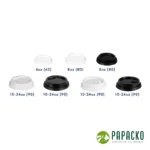
#### Comparaison des performances du joint de couvercle
L'adaptation de la taille du bol au type de salade et au client cible permet d'optimiser la perception de la valeur et de minimiser les déchets.
24oz (700ml) - Salade personnelle:
-Capacité: Salade d'accompagnement, déjeuner léger
-Contenu typique: 4-5 oz de légumes verts + 3-4 oz de garnitures/protéines
-Usages conseillés: Petit-déjeuner et déjeuner léger à emporter, salades d'accompagnement, repas pour enfants
-Perception du client: “Léger mais satisfaisant”
-Fourchette de prix: $0.18-0.28 par ensemble bol+couvercle
32oz (950ml) - Salade repas standard ⭐ Les plus populaires :
-Capacité: Plat principal, repas équilibré
-Contenu typique: 6-7 oz de légumes verts + 5-6 oz de garnitures/protéines
-Usages conseillés: Entrée de déjeuner, préparation de repas standard
-Perception du client: “Repas complet, bon rapport qualité-prix”
-Fourchette de prix: $0.22-0.35 par ensemble bol+couvercle
-Part de marché: 55-65% des ventes de saladiers
48oz (1400ml) - Grande salade à partager:
-Capacité: Repas copieux, portion à partager
-Contenu typique: 8-10 oz de légumes verts + 8-10 oz de garnitures/protéines
-Usages conseillés: Entrée du dîner, repas post-entraînement, partage, préparation de repas en vrac
-Perception du client: “Substantiel, valeur de la prime”
-Fourchette de prix: $0.28-0.45 par ensemble bol+couvercle
64oz (1900ml) - Format familial/traiteur:
-Capacité: service de 2-3 personnes, restauration
-Contenu typique: 12-15 oz de légumes verts + 12-15 oz de garnitures
-Usages conseillés: Repas de famille, commandes de traiteur, plateaux de fête
-Perception du client: “Qualité de la restauration, digne d'un événement”
-Fourchette de prix: $0.45-0.70 par ensemble bol+couvercle
Impact du niveau de remplissage sur la valeur perçue:
-90-95% complet : Perception maximale de la valeur (“portion généreuse”)
-75-85% complet : Attente standard (acceptable)
-60-70% complet : Perçue comme étant “maigre”, elle suscite des plaintes.
Stratégie optimale: Choisir la taille du bol pour que la salade typique soit remplie à 85-90%
-Permet d'obtenir une perception de la valeur sans déborder (ce qui entraîne des problèmes d'étanchéité du couvercle).
-Exemple : salade de 7oz → utiliser un bol de 32oz (87% plein) et non un bol de 48oz (58% plein)
Positionnement des prix par taille:
-24oz personal : $7-9 (option starter/light)
-Standard 32oz : $10-13 (offre principale, perception de la meilleure valeur)
-Grand format de 48 oz : $14-18 (niveau supérieur, “vaut la peine de faire des folies”)
-64oz catering : $25-35 (occasion spéciale, partage)
Le matériau du couvercle détermine la clarté, la durabilité, la résistance à la température et l'impact sur l'environnement.
Propriétés:
-Clarté : Excellente (transmission de la lumière 90-95%)
-Rigidité : élevée (maintien de la forme, pas de flexion)
-Plage de température : -20°C à 60°C (idéal pour le stockage à froid)
-Sécurité alimentaire : Approuvé par la FDA, Sans BPA
-Recyclabilité : Largement recyclable (#1 plastique), 30-40% taux de recyclage réel
Avantages:
-Visibilité cristalline (idéale pour le merchandising visuel)
-Forte résistance aux chocs (ne se fissure pas facilement)
-Option la moins chère ($0,08-0,12 par couvercle pour 32oz)
-Disponibilité universelle auprès des fournisseurs
Limites:
-A base de pétrole (non renouvelable)
-Non compostable
-Recyclage limité dans les pays où les denrées alimentaires sont contaminées
Usages conseillés: Opérations privilégiant la clarté et la rentabilité, marchés dotés d'une bonne infrastructure de recyclage du PET.
Propriétés:
-Clarté : Bonne (85-90% transmission de la lumière, léger trouble)
-Rigidité : Modérée (peut fléchir sous la pression)
-Plage de température : -10°C à 45°C (tolérance à chaud limitée)
-Sécurité alimentaire : Approuvé par la FDA, sans BPA, biosourcé
-Compostabilité : Compostage commercial uniquement (90-180 jours à 55-60°C)
Avantages:
-D'origine végétale (maïs, canne à sucre)
-Compostable dans le commerce (lorsque l'infrastructure existe)
-Valeur marketing (“emballage compostable”)
Limites:
-Clarté légèrement réduite par rapport au PET (affecte l'attrait visuel)
-Non recyclable (contamine le flux de PET)
-Coût plus élevé : +25-40% vs PET
-Nécessite un compostage commercial (pas de compostage domestique)
Usages conseillés: Marques axées sur la santé et mettant l'accent sur la durabilité, marchés disposant d'un accès au compostage commercial, prêts à accepter un léger compromis en matière de clarté.
Propriétés:
-Clarté : Bonne (transmission de la lumière 80-85%, varie selon le contenu recyclé %)
-Rigidité : élevée (semblable à celle du PET vierge)
-Plage de température : -20°C à 60°C
-Sécurité alimentaire : Un processus de recyclage de qualité alimentaire approuvé par la FDA
-Recyclable : Oui (plastique #1, identique au PET vierge)
Avantages:
-Réduit la consommation de plastique vierge (30-100% contenu recyclé)
-Performances similaires à celles du PET vierge
-Un développement durable plus fort que le PET vierge
-Coût comparable à celui du PET vierge (+5-15%)
Limites:
-Légère réduction de la clarté par rapport au PET vierge (en particulier lorsque la teneur en matières recyclées % est élevée)
-Teinte de couleur possible (léger gris/jaune au 80-100% recyclé)
-Variabilité de la chaîne d'approvisionnement (disponibilité des matériaux recyclés)
Usages conseillés: Marques privilégiant l'économie circulaire, allégations de durabilité modérées, compromis de clarté minimal acceptable
#### Comparaison des matériaux du couvercle transparent
## Personnalisation de la marque et différenciation
La personnalisation stratégique renforce la reconnaissance de la marque sans compromettre l'attrait visuel qui stimule les ventes de couvercles transparents.
Étiquettes de pochette en couleur Recommandé :
-Placement: Entoure l'extérieur de la cuvette (le couvercle reste entièrement transparent)
-Avantages:
- Visibilité totale de la marque (logo, couleurs, messages)
- Ne masque pas la visibilité de la salade
- Facilité d'application (manuelle ou automatisée)
- MOQ inférieur (5 000-10 000 contre 50 000+ pour les bols imprimés)
-Coût: +$0.03-0.06 par bol
-Flexibilité de la conception: Couleurs, dégradés, photographie, codes QR
Impression directe sur cuvette:
-Placement: Logo 1-2 couleurs sur l'extérieur du bol
-Avantages:
- Permanent (ne se décolle pas comme les étiquettes)
- Esthétique épurée
- Coût unitaire inférieur pour un volume élevé
-Limites:
- QMV élevée (50 000-100 000 bols)
- Couleurs limitées (1-2 typiquement)
- Les modifications de conception nécessitent un nouveau cycle de production
-Coût: +$0.02-0.04 par bol (au MOQ)
Impression du couvercle ❌ NON recommandé :
-Problème: L'impression sur le dessus du couvercle empêche la visibilité de la salade (ce qui va à l'encontre de l'objectif du couvercle transparent).
-Meilleure alternative: Petit logo sur le bord du couvercle (ne bloque pas la vue)
Formes de bols personnalisées:
-Options: Carré ou rond, variations de la profondeur du bol, compartimenté
-Avantages: Présence unique dans les rayons, différenciation fonctionnelle
-Limites: Coût d'outillage élevé ($5 000-15 000), MOQ 100 000+.
-Usages conseillés: Grandes chaînes, lignes de produits caractéristiques
Ce qu'il faut communiquer sur l'emballage:
-Nom de la marque/logo (priorité absolue)
-Les principaux facteurs de différenciation (“biologique”, “d'origine locale”, “à haute teneur en protéines”)
-Code QR pour les informations nutritionnelles ou le programme de fidélisation
-Les poignées des médias sociaux (encourager l'UGC)
Ce qu'il faut éviter:
-❌ Texte dense (illisible sur une petite surface)
-❌ Blocage de la visibilité des ingrédients
-❌ Images de stock génériques (détournent l'attention du produit réel)
Principes de conception efficaces:
-Contraste élevé (couleurs vives de la marque + fond blanc/clair)
-Police de caractères grande et lisible (au moins 12 points pour le corps du texte)
-Hiérarchie visuelle : Logo > différenciateur > CTA/social
La compréhension des coûts totaux par rapport à l'impact sur les revenus prouve le retour sur investissement d'un couvercle transparent.
Saladier à couvercle opaque (32 oz) :
-Bol : $0.12-0.18
-Couvercle à dôme opaque : $0.05-0.08
-Total: $0.17-0.26 par jeu
Saladier à couvercle transparent (32 oz) :
-Bol : $0.12-0.18 (idem)
-Couvercle en PET transparent : $0.08-0.12 (+$0.03-0.04)
-Revêtement anti-buée : +$0.02-0.04 (en option)
-Total: $0.20-0.34 par jeu
Différence de prime: +$0,03-0,08 par bol (12-30% plus cher)
Scénario: Déjeuner de 50 personnes, étalage de salades à emporter
Couvercles opaques:
-Taux de conversion : 12% (6 achats)
-Transaction moyenne : $10
-Recettes : $60
Couvercles transparents:
-Taux de conversion : 18% (9 achats, +50% lift)
-Transaction moyenne : $12 (+20% pour les ingrédients visibles de qualité supérieure)
-Recettes : $108
-Recettes supplémentaires: +$48 par tranche de 50 personnes
Analyse des coûts:
-Coût d'emballage supplémentaire : 50 bols × $0,06 = $3
-Bénéfice net : $48 recettes - $3 coûts = $45 gain net
-ROI: 1,500% (recettes supplémentaires vs coûts supplémentaires)
Impact quotidien (500 clients) :
-Recettes supplémentaires : $480/jour
-Coût supplémentaire de l'emballage : $30/jour
-Indemnité journalière nette : $450
-Mensuel: $13.500 bénéfices supplémentaires grâce aux couvercles transparents
Avantages quantifiables:
-Taux de conversion plus élevé : +35-55%
-Valeur de transaction plus élevée : +15-25%
-Impressions sur les médias sociaux : Est. $5-10 par message UGC
-Service clientèle réduit (questions sur les ingrédients) : Demandes de renseignements -50%
Avantages qualitatifs:
-Perception de la marque (positionnement premium/qualité)
-Satisfaction des clients (transparence = confiance)
-Différenciation concurrentielle
-Une présentation digne d'Instagram
Tirez les leçons de ces erreurs fréquentes qui nuisent à l'efficacité des couvertures claires.
❌ Erreur #1 : Privilégier le coût à la clarté
Problème: Choisir des couvercles transparents de 70-75% pour économiser $0.02/unité. Résultat : L'aspect trouble diminue l'attrait visuel, ce qui annule les avantages des couvercles transparents.
Approche correcte: Investissez dans des couvercles à haute clarté (85-90%+ transparence). L'économie de $0,02 est annulée par la réduction de la conversion des ventes.
❌ Erreur #2 : Remplir excessivement les bols
Problème: Remplir les bols à la capacité de 100% semble généreux, mais cela entraîne des problèmes d'étanchéité du couvercle, des fuites et des réclamations de la part des clients.
Approche correcte: Remplir jusqu'à la capacité 85-90%. Permet d'obtenir une perception de valeur sans compromettre l'intégrité du scellé. Utiliser la taille supérieure si les portions nécessitent plus d'espace.
❌ Erreur #3 : Ignorer le contrôle de la condensation
Problème: Utiliser des couvercles anti-buée pour les entrepôts frigorifiques. La condensation obscurcit la visibilité en l'espace de 2 à 4 heures, détruisant ainsi l'avantage visuel du merchandising.
Approche correcte: Utiliser un revêtement anti-buée pour toute salade conservée au froid >4 heures. Le coût de +$0.02-0.04 maintient la clarté et la fraîcheur perçue.
❌ Erreur #4 : Impression sur le dessus du couvercle
Problème: L'ajout d'un logo ou d'un texte au centre du couvercle empêche de voir les couleurs et les ingrédients de la salade.
Approche correcte: Le couvercle doit être complètement dégagé. N'imprimez que sur l'extérieur du bol, sur les étiquettes des manchons ou sur le bord du couvercle. C'est la visibilité qui motive les achats, pas la proéminence du logo.
❌ Erreur #5 : Une taille unique pour toutes les salades
Problème: Utilisation de bols de 48 oz pour toutes les salades (y compris les petites salades d'accompagnement de 6 oz). Résultat : Les salades paraissent petites/insuffisantes dans les bols surdimensionnés, ce qui nuit à la perception de la valeur.
Approche correcte: Faites correspondre la taille du bol au niveau de remplissage typique de la salade (85-90%). Petites salades → bols de 24 oz ; repas standard → 32 oz ; portions copieuses → 48 oz. La bonne taille améliore la perception de la valeur.
Les bols à salade avec couvercle sont des récipients de qualité alimentaire composés d'un bol en carton ou en plastique (d'une capacité de 24 à 64 oz) et d'un couvercle transparent ou opaque fixé par pression, par charnière ou par bande d'étanchéité. Les versions à couvercle transparent permettent un merchandising visuel en mettant en valeur les ingrédients colorés, ce qui génère 35-55% plus d'achats impulsifs que les alternatives opaques. Idéal pour les présentoirs "grab-and-go", les services de préparation de repas et les restaurants axés sur la santé.
Les couvercles transparents déclenchent des décisions d'achat grâce à la visibilité des ingrédients : les clients voient les légumes verts frais et colorés, les protéines et les garnitures sans avoir à demander au personnel ou à ouvrir l'emballage. Cela permet d'évaluer visuellement la fraîcheur, la taille des portions et de vérifier les ingrédients en 3 à 5 secondes, ce qui est essentiel pour les achats impulsifs. Les études montrent un taux de conversion de 18-25% avec des couvercles transparents contre 10-14% avec des couvercles opaques (35-55% d'augmentation), ainsi qu'une valeur moyenne de transaction plus élevée de 15-25% lorsque les ingrédients de qualité supérieure sont visibles.
Le PET (polyéthylène téréphtalate) offre la meilleure clarté (90-95% de transmission de la lumière), la meilleure durabilité et le meilleur rapport coût-efficacité ($0,08-0,12 par couvercle de 32 oz). Le PLA (acide polylactique) offre un positionnement durable avec une compostabilité commerciale, mais une clarté réduite (85-90%) et un coût plus élevé (+25-40%). Le rPET (PET recyclé) équilibre la durabilité et la performance avec une clarté de 80-90% et un coût comparable (+5-15%). Choisissez en fonction des critères suivants : clarté maximale → PET vierge ; priorité à la durabilité → rPET ou PLA ; existence d'une infrastructure de compostage → PLA.
Trois stratégies : (1) utiliser des couvercles renforcés à pression ou à charnière avec des mécanismes de fermeture sûrs (taux d'échec de 1-3% contre 5-8% pour les couvercles à pression de base), (2) remplir les bols à une capacité de 85-90% et non de 100% (un remplissage excessif compromet l'étanchéité), (3) envisager des bandes d'étanchéité inviolables pour la livraison/le transport (+$0,08-0,12, réduit les fuites à <1%). Tester la qualité de l'étanchéité en remplissant le bol, en fermant le couvercle et en l'inversant pendant 10 à 30 secondes - l'absence de fuite indique que l'étanchéité est satisfaisante. Pour les services de livraison, les couvercles à charnière ($0.05-0.08 premium) sont nettement plus performants que les couvercles à encliquetage de base.
32oz (950ml) sert 55-65% de repas préparés - 6-7oz de légumes verts plus 5-6oz de protéines/suppings pour un repas de midi ou du soir standard. 48 oz (1400 ml) conviennent aux repas riches en protéines ou post-entraînement (8-10 oz de légumes verts + 8-10 oz de garnitures). 24 oz (700 ml) conviennent aux salades d'accompagnement ou aux repas légers. Stratégie optimale : proposer 32 oz comme format de base (meilleure perception de la valeur lorsque la bouteille est remplie à 85-90%), avec 24 oz et 48 oz pour les petits/grands appétits.
Les couvercles transparents en PET coûtent +$0,03-0,08 de plus que les couvercles opaques pour les bols de 32 oz : couvercles transparents ($0,08-0,12) contre opaques ($0,05-0,08), ce qui représente une prime de 12-30%. Cependant, les couvercles transparents entraînent une conversion des ventes de +35-55% et une valeur de transaction de +15-25%. Analyse du retour sur investissement : la course au déjeuner de 50 clients génère +$48 de recettes supplémentaires contre +$3 de coût d'emballage = 1,500% de retour sur investissement. Le revêtement antibuée ajoute encore +$0,02-0,04 mais maintient la clarté pendant le stockage au froid (essentiel pour le merchandising visuel).
Oui, trois méthodes principales : (1) Étiquettes de manchon en couleur enveloppant l'extérieur du bol (recommandé) - ne masque pas la visibilité, MOQ 5 000-10 000, +$0.03-0.06/bol. (2) Impression directe du bol pour 1 ou 2 logos en couleur - permanente, MOQ 50 000-100 000, +$0.02-0.04/bol. (3) Impression sur le bord du couvercle (pas sur le dessus du couvercle) - petit logo ne masquant pas la vue des ingrédients. Évitez d'imprimer au centre du couvercle - cela va à l'encontre de l'objectif du couvercle en masquant la visibilité de la salade qui motive les achats.
Les saladiers à couvercle transparent transforment l'emballage d'une nécessité fonctionnelle en un outil de vente actif - la visibilité des ingrédients entraîne des décisions d'achat, des partages sur les médias sociaux et l'acceptation d'un prix supérieur que les alternatives opaques ne peuvent pas égaler. Le surcoût de l'emballage de 12-30% est compensé par des taux de conversion plus élevés de 35-55% et des valeurs de transaction accrues de 15-25%, ce qui se traduit par un retour sur investissement de 1 500%+ dans les scénarios typiques d'achat immédiat.
Principaux enseignements :
1.La visibilité du couvercle augmente les achats impulsifs de 35-55% grâce au merchandising visuel - les clients voient les ingrédients colorés, évaluent la fraîcheur et vérifient le contenu en 3 à 5 secondes.
2.La qualité de l'étanchéité du couvercle (charnière ou fermeture à pression renforcée) et les niveaux de remplissage adéquats (capacité de 85-90%) évitent 95-99% de plaintes concernant des fuites.
3.Les couvercles transparents en PET offrent la meilleure clarté (90-95%) et le meilleur rapport coût-efficacité ; le PLA et le rPET offrent un positionnement durable avec des compromis modérés en matière de clarté.
4.La personnalisation stratégique (étiquettes sur le bol, pas d'impression sur le couvercle) maintient la visibilité tout en renforçant la reconnaissance de la marque.
5.Le choix de la taille correspondant aux portions de salade typiques (24 oz léger, 32 oz standard, 48 oz copieux) améliore la valeur perçue et minimise les déchets.
Pour les restaurants axés sur la santé, les services de préparation de repas et les opérations "grab-and-go", les saladiers à couvercle transparent offrent une augmentation mesurable des ventes et une valeur marketing qui dépasse de loin le coût supplémentaire de l'emballage, ce qui en fait un investissement stratégique dans la croissance du chiffre d'affaires, et pas seulement une dépense opérationnelle.
Découvrez d'autres solutions d'emballage alimentaire :
-Contenants pour emballages alimentaires
-Boîtes à lunch en papier kraft
-Solutions d'emballage pour la vente à emporter
Papacko fournit des saladiers prêts à l'exportation avec des couvercles à haute clarté aux restaurants axés sur la santé, aux services de préparation de repas et aux opérations "grab-and-go" dans le monde entier. Nous proposons des options de personnalisation, des conceptions de scellés sécurisés et des choix de matériaux conformes à vos objectifs de développement durable.
Le choix des saladiers à couvercle transparent doit généralement être évalué en tenant compte de la taille du saladier, de l'ajustement du couvercle, des objectifs de présentation en rayon, ainsi que du système global d'emballage des salades utilisé pour la livraison et la mise en rayon.
Prenez contact avec nous :
Dernière mise à jour: novembre 2025
Équipe chargée du contenu: Papacko
Révisé par: Département du développement des produits et du marchandisage visuel