Prêt à créer vos propres gobelets ou emballages en papier ?
Faites-nous part de vos exigences - taille, revêtement, impression et destination - et notre équipe établira un devis détaillé dans les 24 heures.

For restaurants, ghost kitchens, cafes, and multi-unit operators, buying bulk takeout containers is not just a cost decision. It is a packaging system decision that affects food quality, speed of service, storage, compliance, and customer complaints. A container that looks acceptable in a sample room can still fail in real use if the lid fit is inconsistent, the coating is wrong for oily foods, or the material cannot handle actual fill temperatures.
In most B2B buying programs, bulk takeout containers are ordered by case or pallet, often in standard stock formats or custom printed runs. Common case counts range from 100 to 1000 units depending on the item type, size, and packing method. The right choice depends on menu style, transit time, legal restrictions, and how much SKU complexity your team can manage.
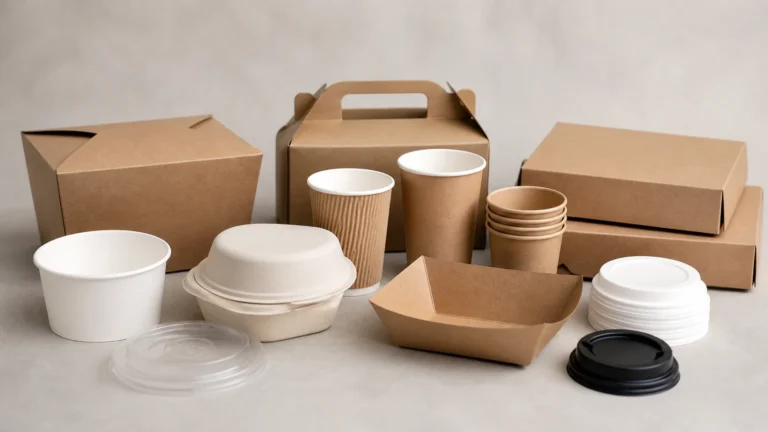
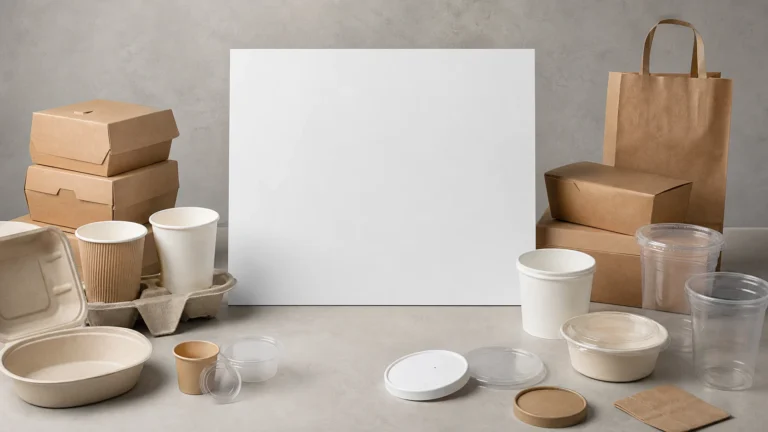
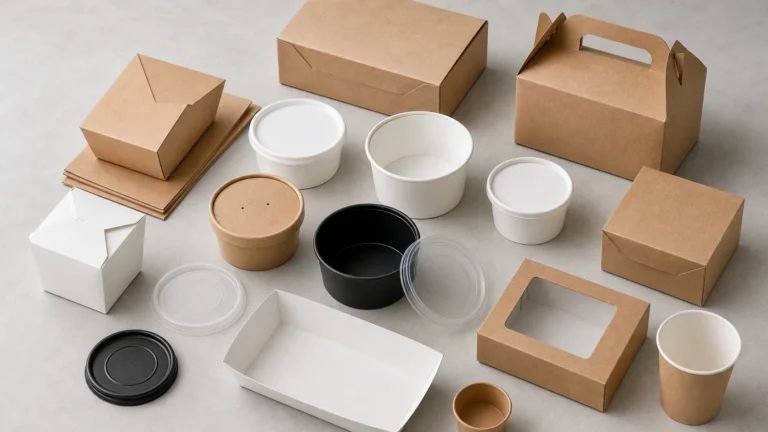
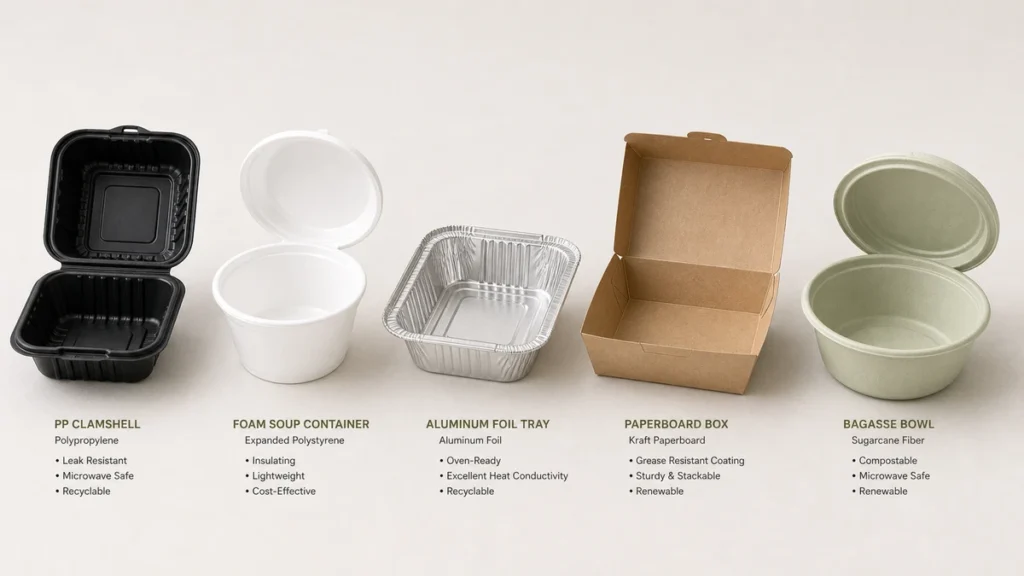
The main commercial formats include PP clamshells and bowls, PET cold containers, EPS foam cups and boxes where allowed, aluminum trays, paperboard or kraft cartons, and molded fiber formats with different barrier treatments.
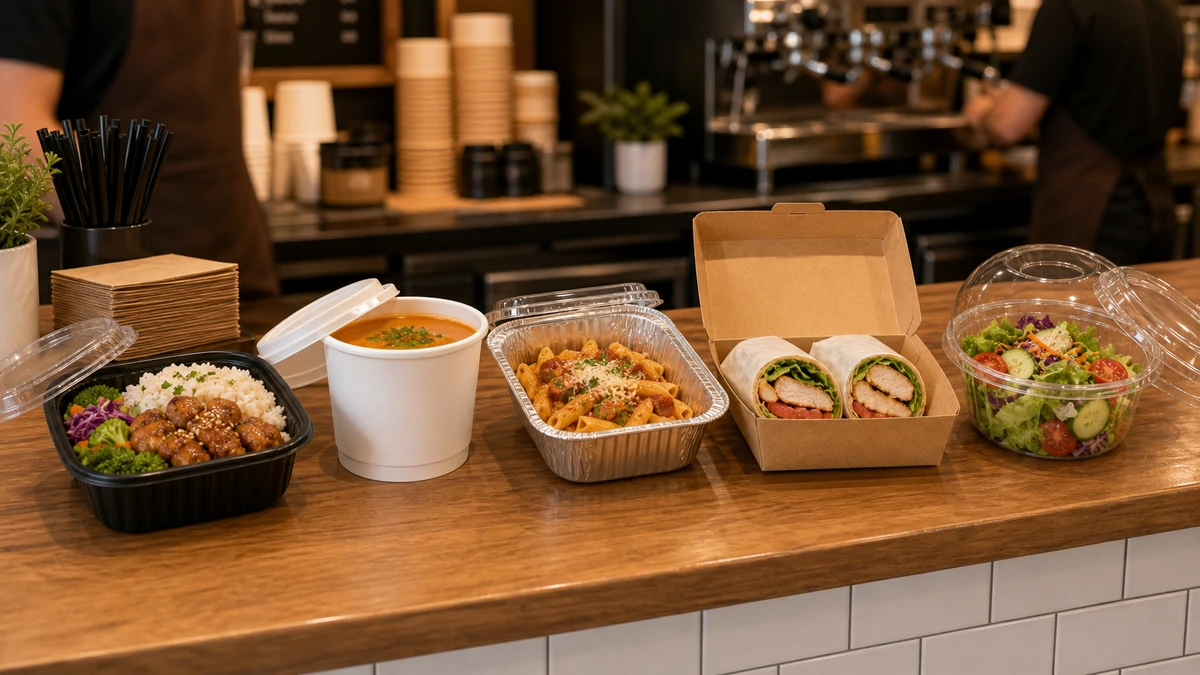
A reliable buying process starts with three filters. First, match the container to the food. Second, confirm the specification meets local compliance and intended temperature use. Third, verify that your supplier can hold quality, documentation, and lead times over repeat orders. For buyers reviewing broader category options, Papacko’s contenants d'emballage alimentaire range is a practical starting point for comparing common foodservice formats.
The best material for bulk takeout containers depends on what the package must do during filling, transport, and reheating.
Polypropylene, or PP, is the most common default for hot takeaway. It handles heat well, resists grease, and works across many menu types from rice bowls to pasta, mixed entrees, and prepared meals. It also stacks efficiently and is widely available in hinged and separate lid formats. For many operators, PP is the most balanced option for hot-fill takeout.
PET is mainly for cold presentation. It offers clarity that works well for salads, desserts, fruit cups, and chilled deli items, but it is not the right choice for hot dispatch or microwave reheating. Ordering PET for a menu that later shifts toward warm entrees often creates a costly correction.
EPS foam still performs strongly for insulation, especially for soup or longer delivery routes, but legal restrictions can make it difficult for chains operating across multiple markets. Even where permitted, buyers should weigh storage volume, image considerations, and future sourcing risk.
Aluminum trays support high heat and oven finishing. They suit bake-and-serve items, meal kits, and freezer-to-oven formats, but they are usually more expensive than PP and cannot be microwaved.
Paperboard, kraft, and molded fiber formats can work well for dry foods, bakery, sandwiches, and some fast casual applications. The key issue is not just the base material. It is the barrier system. Moisture, oil, sauces, and long hold times quickly expose under-specified coatings.
A practical shortlist looks like this:
The most common buying mistake is choosing based on trend language rather than operational fit. A compostable or paper-based item may sound attractive, but if it softens under steam, leaks during transport, or cannot be disposed of as claimed in the actual service area, it creates more problems than it solves.
Buying bulk takeout containers efficiently means controlling both SKU count and reorder rhythm. Too many SKUs increase storage pressure and forecasting errors. Too few can slow packing lines or force teams to overfill the wrong item.
Smaller operations can often run effectively with one or two core sizes plus portion cups. Multi-unit operators usually need three to five container SKUs to cover mains, sides, sauces, and liquid-heavy foods without compromising pack quality. The goal is not maximum variety. The goal is enough functional coverage with minimal overlap.
A simple planning model starts with actual order patterns, not just cover count. One order may use a single entree box, while another uses a bowl, lid, condiment cup, and side container. Build usage by SKU first, then calculate inventory.
A practical reorder formula is:
Reorder point = average daily usage x lead time in days + safety stock
Safety stock should reflect real peak periods, not just average weeks. If a location or chain has strong weekend, holiday, or seasonal spikes, those peaks should be built into purchasing plans.
Buyers should also check physical storage before chasing lower unit costs at higher volume tiers. A price break is only useful if the operation can store, rotate, and use the stock cleanly. Bulky formats such as foam or some fiber packs can erase apparent unit savings once warehouse and back-of-house space are considered.
When aligning fill volumes across drinks, soups, and sides, related references such as Papacko’s tailles des gobelets en papier can help standardize case-pack logic across the full takeaway program. For operators combining container formats with beverage service, gobelets en papier are often evaluated at the same time to keep ordering simpler.
For B2B buyers, compliance should be validated before commercial rollout, not after a sample passes a basic food test. A takeout container can be generally food safe yet still be unsuitable for hot fill, microwave use, freezer storage, or contact with fatty or acidic foods.
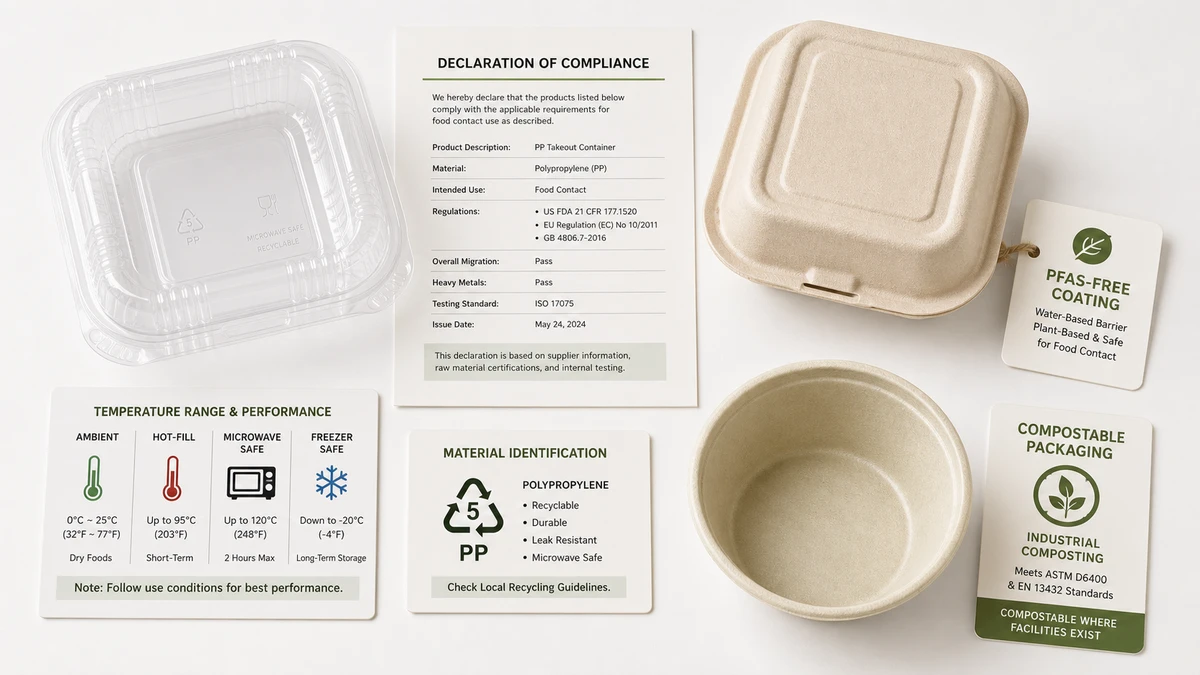
Request intended-use documentation for each item, especially if the program includes hot foods, reheating, coated fiber, or printed surfaces. At minimum, ask for:
For U.S. buyers, the FDA overview on food-contact materials is the right authority reference: Substances en contact avec les aliments (FDA).
Coating choice matters more than many buyers expect. A kraft box that works well for sandwiches may fail with sauced noodles. A molded fiber bowl may perform acceptably for short holds but soften during longer delivery windows if the barrier is not matched to the food. When evaluating paper-based items, ask whether the coating is designed for grease, moisture, freezer use, or reheating, and whether the claim applies to the full finished item rather than just the base substrate.
Regional restrictions are another key filter. Foam, certain plastic formats, and some environmental marketing claims may be restricted depending on the city, state, or export market. Multi-state chains should usually standardize around the most restrictive practical market to avoid split specifications and stocking complexity.
A good sample is not enough. Buyers of bulk takeout containers should test the full commercial package in realistic packing conditions.
The first issue to verify is lid fit. A lid that appears to match by nominal size can still create problems if the rim profile, snap force, or molding tolerance is inconsistent. Poor fit slows line speed, increases leakage risk, and creates customer frustration. Always test the exact lid and base combination that will be supplied, not just a similar sample.
The second issue is sample scope. Ask for plain stock samples, alternate materials if relevant, and where possible a pre-production sample for custom items. Test with your hottest item, wettest item, and longest transport route. Check closure after filling, after stacking, and after movement in a delivery bag.
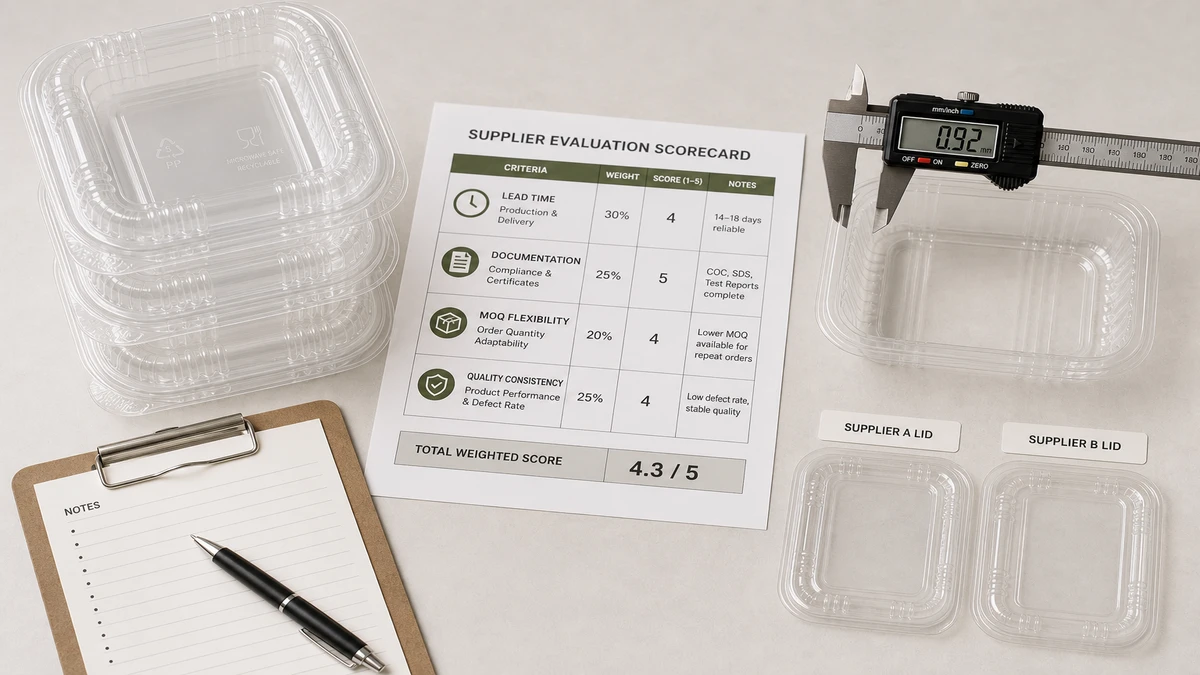
MOQ and lead time should be confirmed at SKU level. Common stock-item MOQs are often one case or a small mixed-case threshold, while custom printed items usually require higher minimums. Depending on the format and print method, custom MOQs can range from a few thousand units to full production runs. Do not assume the same MOQ applies across bowls, clamshells, cups, and lids.
Lead times also vary by supply model. Stock items may ship within days, while custom printed programs can require several weeks for artwork approval, plate setup, substrate preparation, and production scheduling. A practical planning range is often:
Ask whether the supplier can combine multiple SKUs toward a commercial threshold. This is especially important for chains that need a family of containers rather than one hero item. MOQ flexibility often has more value than a slightly lower quoted unit cost.
Supplier documentation speed is another useful indicator. A capable supplier should respond quickly on specifications, compliance files, and material questions. Delays at this stage often predict delays during live replenishment.
For buyers building a full takeaway system, Papacko’s accessoires d'emballage can also be reviewed alongside lids, sleeves, and supporting components that affect pack-out performance.
Custom branding on bulk takeout containers can strengthen presentation, but it adds complexity in tooling, artwork control, and inventory risk. Buyers should treat print as a commercial decision, not just a design preference.
Flexographic printing is usually the most practical route for stable, high-volume SKUs. It can be cost-efficient at scale, but setup costs and plate requirements make it less flexible when artwork changes often.
Digital printing is faster for shorter runs, regional tests, or launch quantities. It reduces setup burden but usually carries a higher per-unit cost at scale.
Labels remain one of the most practical middle-ground options. They allow operators to use a standard stock container while updating branding, campaign messaging, or compliance information without committing to large printed inventories. For many chains, this lowers obsolete stock risk.
The right print approach depends on run length, change frequency, and how standardized the packaging system is across the network. In many cases, a neutral base plus selective labels or sleeves is more operationally resilient than direct print on every SKU. Buyers thinking about artwork simplicity and brand consistency may also find Papacko’s conception d'emballages minimaliste useful when balancing visual impact against cost and execution complexity.
For most hot takeout programs, PP is the most balanced choice. It handles heat well, resists grease, and works across many menu types. Foam can insulate better, but legal and storage trade-offs often make PP the safer chain-level standard.
They can be, but mainly when industrial composting access actually exists and the disposal path is realistic for the customer or facility. Without that end-of-life system, the premium may not create a practical benefit.
Small operations often work well with one to two main container sizes plus sauce or side formats. Multi-unit groups typically need three to five core SKUs to cover mains, sides, sauces, and liquid-heavy foods without overcomplicating inventory.
Nominal size alone does not guarantee compatibility. Small differences in rim profile, tolerance, material stiffness, or closure force can affect how the lid seats and seals. Real pack-line testing is the safest way to validate fit.
Request food-contact compliance documentation, material composition details, intended-use temperature information, coating details for paper or fiber items, and any support for compostability or sourcing claims if relevant. For printed items, also request information on inks, coatings, and traceability.
Confirm the MOQ for each SKU, whether mixed SKUs can be combined toward minimums, realistic lead times for stock and custom items, and what sample types are available. Always test samples with actual foods, fill temperatures, and transport conditions before approving a rollout.