Prêt à créer vos propres gobelets ou emballages en papier ?
Faites-nous part de vos exigences - taille, revêtement, impression et destination - et notre équipe établira un devis détaillé dans les 24 heures.

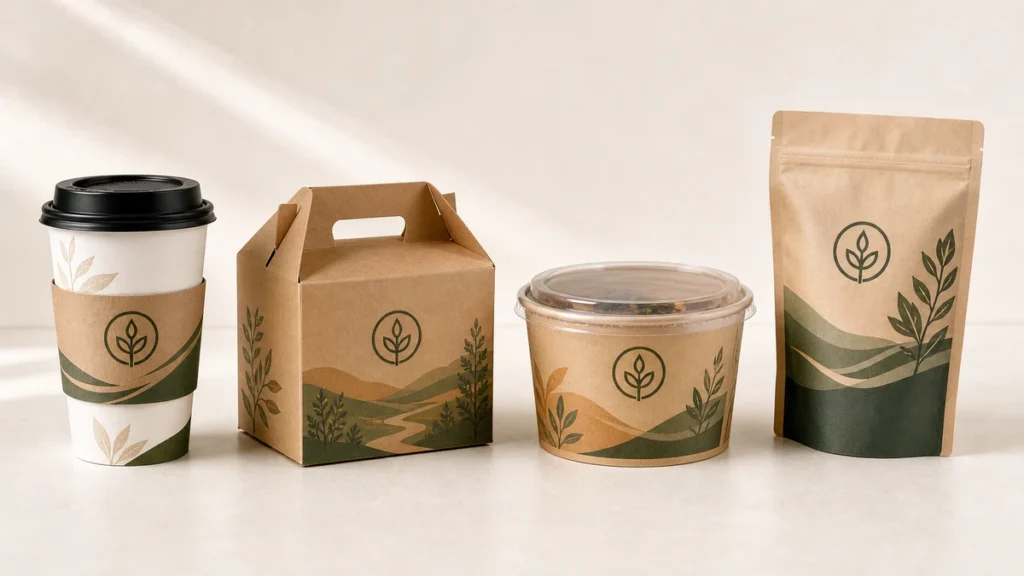
Choosing a custom food packaging supplier is not only about unit price. It is a sourcing decision that affects product protection, launch timing, working capital, and day-to-day operations. The right supplier should match your food application, print needs, order volume, and compliance requirements while giving you clear answers on samples, lead time, and documentation. For most B2B buyers, the first screen should cover six points: material range, coating and barrier suitability, MOQ structure, sample process, lid or closure fit, and food-contact compliance support.
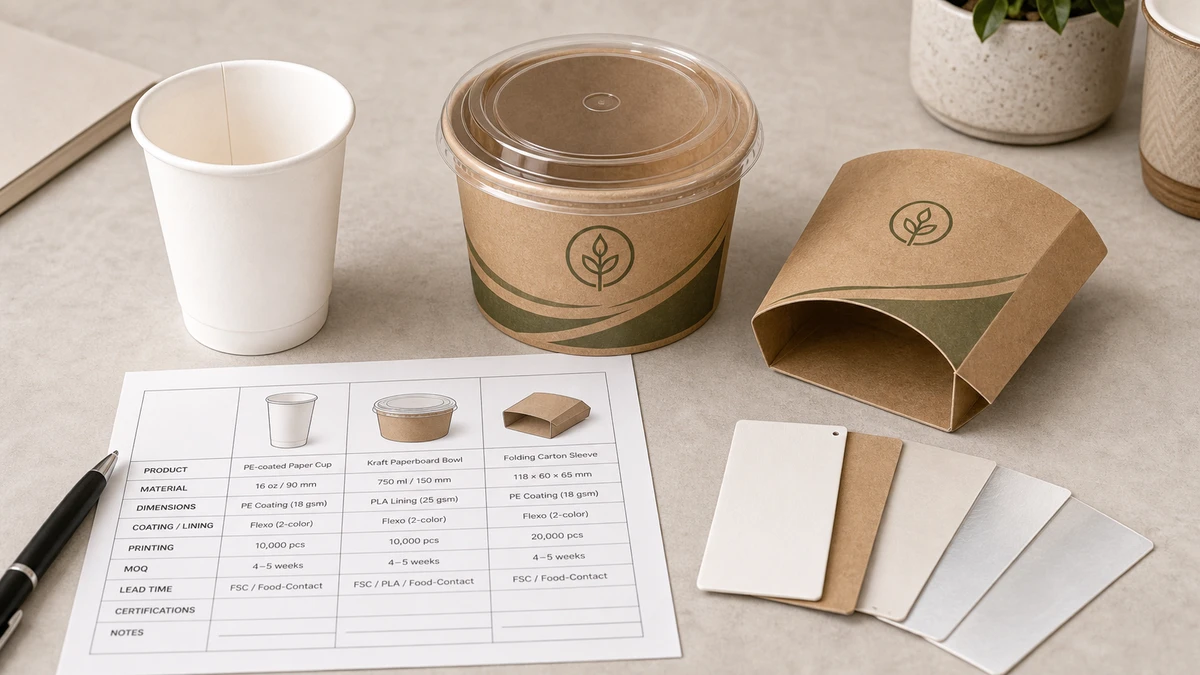
A practical buying process starts with the product itself. What food will be packed, at what temperature, for how long, and through which channel? A hot beverage cup, a fried takeaway bowl, a bakery carton, and a flexible pouch for dry goods each require different material and conversion capabilities. If a supplier cannot explain these differences in detail, they are unlikely to support your program well when production pressure starts.
A capable custom food packaging supplier should offer more than one default construction. Buyers should ask what paperboard grades, barrier-coated papers, plastic formats, laminates, and closure options the supplier can run consistently. The key is not having the biggest catalog. It is having documented capability that matches the intended use.
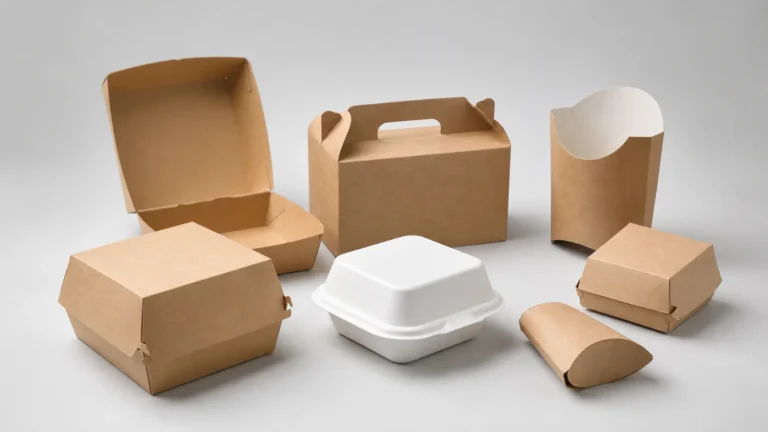
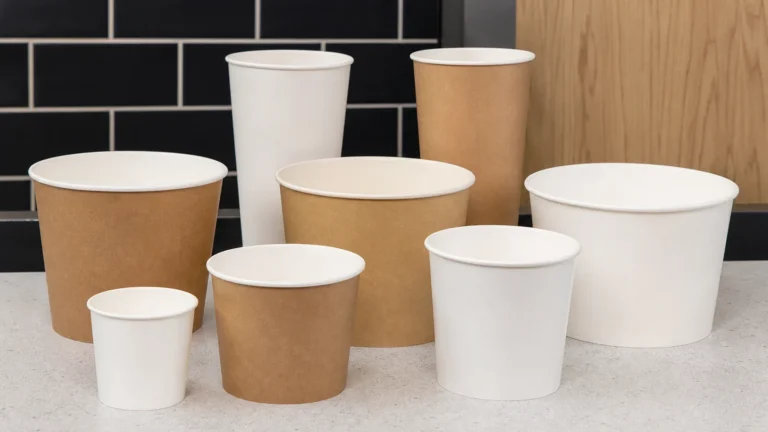
For example, cup and bowl programs often depend on board grade, coating type, sealing quality, and rim consistency. Cartons and sleeves depend more on print performance, die-cut accuracy, and crush resistance in transport. Flexible packs depend on barrier structure and sealing control. If your range includes multiple formats, it can be useful to review benchmark categories such as gobelets en papier et contenants d'emballage alimentaire while building a shortlist.
Material choice should be tied to food conditions, not trend language. Ask these basic questions before requesting a quote:
Coating and barrier details matter because they directly affect performance and claims. A buyer should request the board weight or caliper, coating type, barrier description, temperature suitability, and intended food-contact conditions. If sustainability is part of the brief, define the claim early and ask for evidence for the finished pack, not just the base substrate. Buyers comparing PE and alternative coated cup structures can use gobelets en papier écologiques as a reference point when discussing construction options.
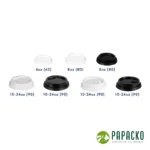
Lid fit is another common failure point. A cup or bowl may look acceptable on paper, but if the rim tolerance is off or the lid profile is mismatched, leakage, loose fit, or slow line handling can follow. If your program includes beverage or bowl formats, verify compatibility with the specific couvercles de tasses à café or other closure family you plan to use.
Custom packaging design should solve a packaging problem, not create one. Buyers often focus first on graphics, but the bigger commercial decisions are usually structure, substrate, and print process. Those choices determine MOQ, setup cost, lead time, and whether the pack performs in real use.
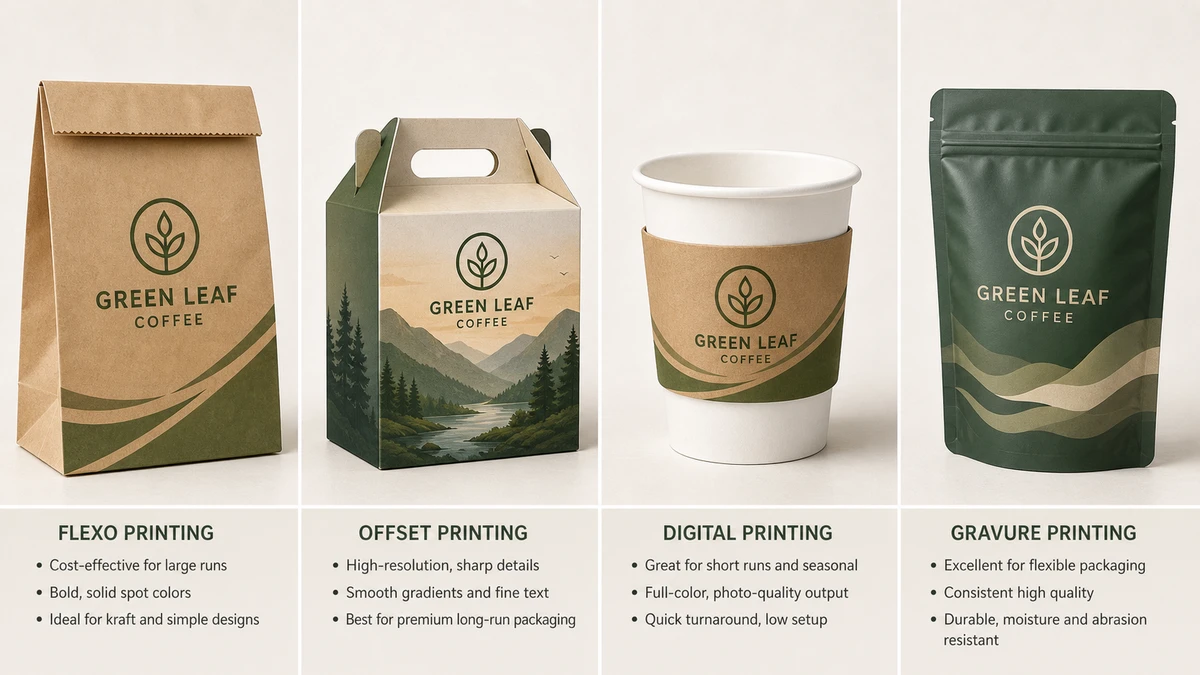
Start with the substrate. Virgin SBS paperboard usually gives strong print quality and clean converting for folding cartons, sleeves, and some dry-food formats. Kraft paperboard supports a more natural appearance but may show less fine print detail. PE-coated paperboard remains common where moisture and grease resistance are critical, especially for cups and takeaway applications. PLA-coated and other alternative barrier systems may suit some sustainability-driven briefs, but heat limits and disposal realities must be checked carefully.
Then consider the print method. Different processes fit different business cases:
A common sourcing mistake is ordering a mature SKU on a short-run process for too long, or forcing a new uncertain SKU into a high setup model too early. A supplier should be able to explain when a program should move from digital into a more economical large-run process.
Structural choice also matters. Folding cartons ship flat and use storage space efficiently. Sleeves can reduce MOQ pressure because they let buyers pair custom graphics with a more standard primary pack. Rigid trays and bowls can improve product protection but may increase freight and tooling complexity. Flexible pouches can offer strong barrier performance, but only when the sealing method and filling process are controlled.
Before approving any design, buyers should confirm:
MOQ is where supplier economics meet buyer risk. A low unit price can look attractive until it locks you into too many months of stock, too many SKUs, or too much obsolete packaging when artwork changes.
Typical MOQ depends on format and print process. Digital paper packaging may start around a few hundred to a few thousand units. Offset cartons and flexo items often require several thousand units or more. Tooling-heavy molded items can go much higher. The key question is not whether the MOQ sounds normal in general. It is whether it fits your actual consumption rate.
Buyers should ask how MOQ is calculated:
These details can change the economics significantly. A supplier offering one low quoted MOQ may still create a large commitment if every size or design must run separately.
A simple check is to divide the MOQ by monthly usage. If one order represents many months of stock, review warehousing, cash exposure, and design change risk before proceeding. Packaging for seasonal menus, regional promotions, or fast-changing retail programs should be watched especially closely.
MOQ can sometimes be improved through better specification choices. Three common levers are:
If your team is still standardizing dimensions before RFQ, using a reference such as tailles des gobelets en papier can help align internal requirements before quotes are requested. That reduces supplier back-and-forth and avoids quoting multiple nearly identical formats.
Lead time should never be treated as one number. A reliable custom food packaging supplier should break it into stages so the buyer can see where schedule risk actually sits.
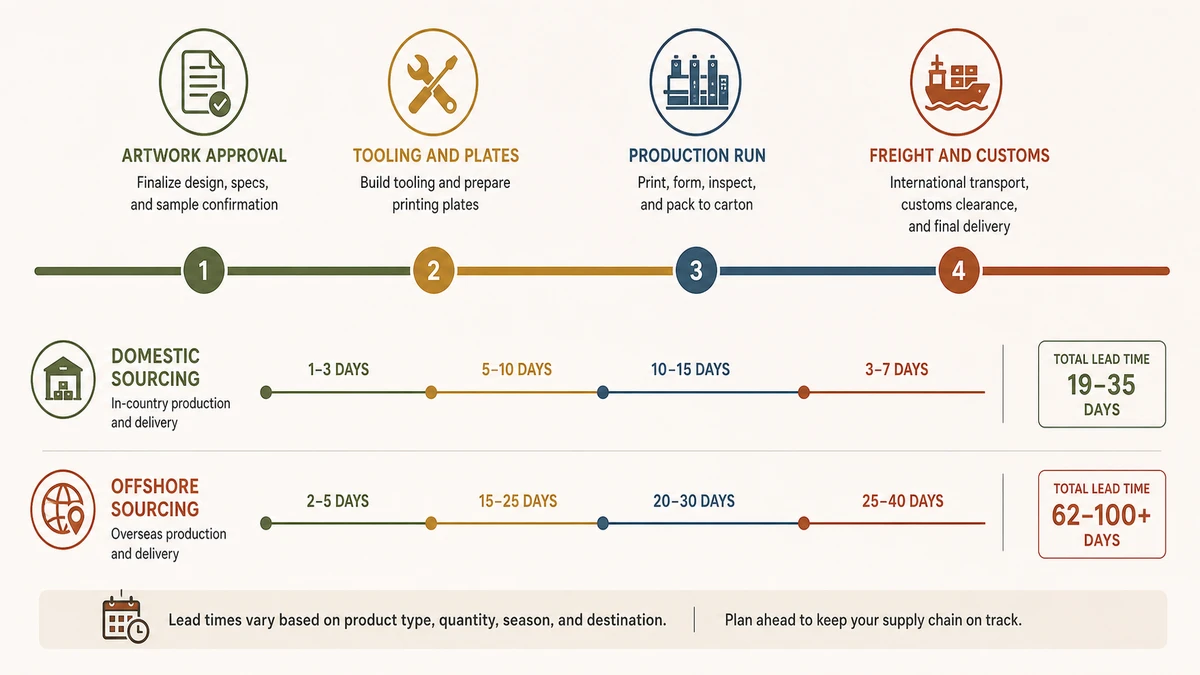
The full timeline usually includes four parts:
First orders take longer than reorders because they include more approval steps. Even a simple item can slow down if artwork files need correction, dimensions are revised, or sample feedback reveals fit issues. Offshore supply adds more variability because freight and customs become part of the working schedule, not just an afterthought.
Domestic supply may offer a shorter replenishment cycle and easier issue resolution. Offshore supply may offer lower unit cost at stable volume. Neither is automatically better. The better choice depends on forecast quality, launch deadlines, warehouse capacity, and tolerance for schedule change.
When reviewing quoted lead time, ask for these details in writing:
Buyers should also build buffer into first orders, especially around peak periods. Delays often occur before production starts, not only during manufacturing. A supplier who can separate approval time, factory time, and transit time is usually easier to plan with than one quoting a single broad estimate.
A sample process is one of the clearest signs of supplier maturity. For food packaging, drawings and digital mockups are not enough. Buyers should request samples that allow them to assess print appearance, structural integrity, coating feel, lid fit, stacking behavior, and where relevant, leakage risk.
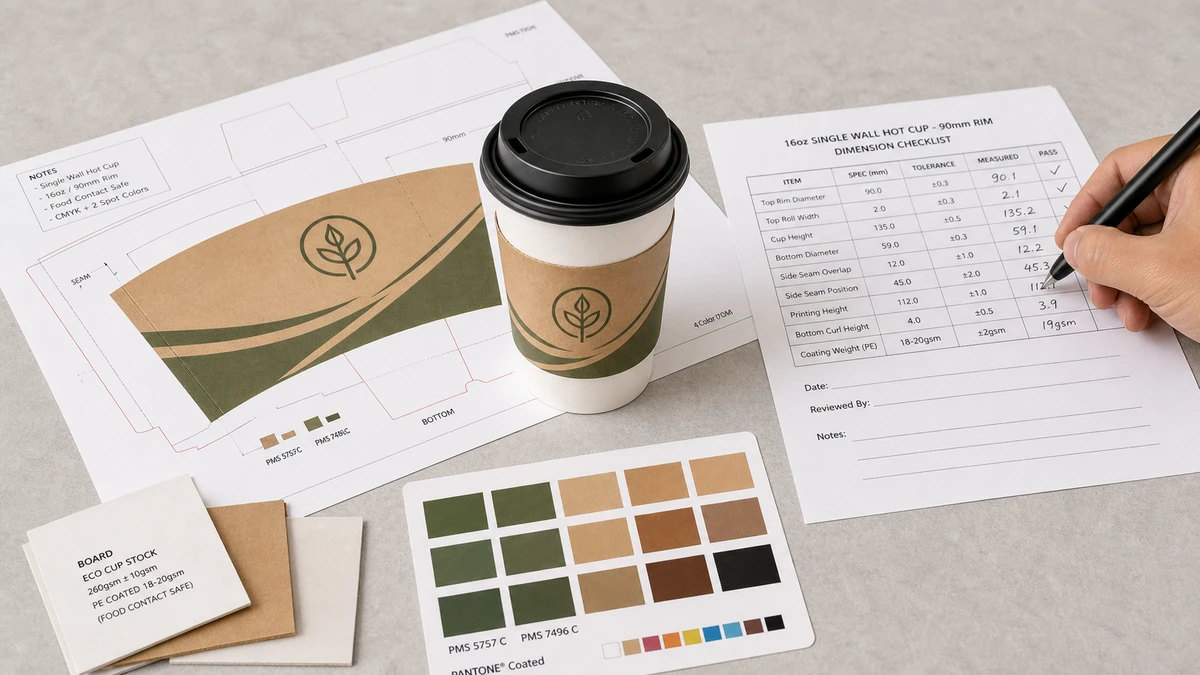
Sample types may include unprinted structural prototypes, printed pre-production samples, press proofs, or retained reference samples from approved production. Ask what the sample actually represents. A digital mockup may show artwork placement but tell you little about final color, board stiffness, or sealing behavior.
Lid fit deserves direct physical verification. Cups, bowls, and containers should be tested with the exact matching closure family under expected use conditions. Hot fill, transport vibration, stacking, and handling by staff can reveal failures that a static desk review will not.
Documentation is equally important. At minimum, most buyers should request:
For US market applications, the FDA food-contact framework remains the key authority reference at the manufacturing and sourcing stage: FDA food contact substances.
A common mistake is accepting a document that covers only the raw material but not the finished, printed, coated, or laminated construction. Buyers should confirm that documentation applies to the actual delivered pack and its intended food use.
A good shortlist compares suppliers on total program fit, not only quoted cost. The most useful approach is to score each supplier against the same buying criteria.
Focus on these areas:
Suppliers should also be judged by how they handle detail. Do they ask about fill temperature, hold time, food type, and closure fit? Do they explain assumptions in the quote? Do they identify what still needs testing? Strong suppliers usually ask more technical questions early because they are trying to avoid failure later.
Red flags include vague compliance claims, no stage-by-stage lead time breakdown, no physical sample path, or uncertainty around whether a closure family has been validated with the chosen container. Another warning sign is when a supplier pushes a standard material without confirming the actual food condition.
Before placing a first order, lock the written specification. That should include the substrate, coating, print process, dimensions, fit requirements, MOQ basis, case pack, shipping terms, and approval reference. A signed sample and approved specification are much easier to enforce than a long email thread with mixed assumptions.
The most important factor is capability fit. A supplier should match your real product requirements in material, structure, print method, compliance support, and lead-time control. Price only becomes meaningful after that fit is confirmed.
It depends on format and print process. Digital paper packaging may start around 500 to 2,000 units, while offset cartons, flexo items, or molded formats often require several thousand units or more.
Production alone may take roughly 15 to 45 days from approved artwork, depending on the format and process. First orders usually take longer once sampling, tooling, and freight are included.
At minimum, request food-contact compliance statements, relevant migration or suitability information, and technical declarations for coatings, inks, or adhesives where needed. Many buyers also require traceability or shipment-level conformance records.
Samples reveal issues that specifications alone may miss, including print appearance, board feel, lid fit, stacking, and leakage risk. Catching these problems before a production run is usually much cheaper than correcting finished stock.
Test the actual cup, bowl, or container with the intended lid under real use conditions. Check snap fit, leak resistance, removal force, stacking behavior, and handling after hot or cold fill. Small tolerance issues can create major service problems.
Choose based on your operating model. Domestic sourcing may support faster replenishment and lower inventory risk. Offshore sourcing may suit stable, higher-volume programs that can absorb longer lead times and more planning discipline.