Prêt à créer vos propres gobelets ou emballages en papier ?
Faites-nous part de vos exigences - taille, revêtement, impression et destination - et notre équipe établira un devis détaillé dans les 24 heures.

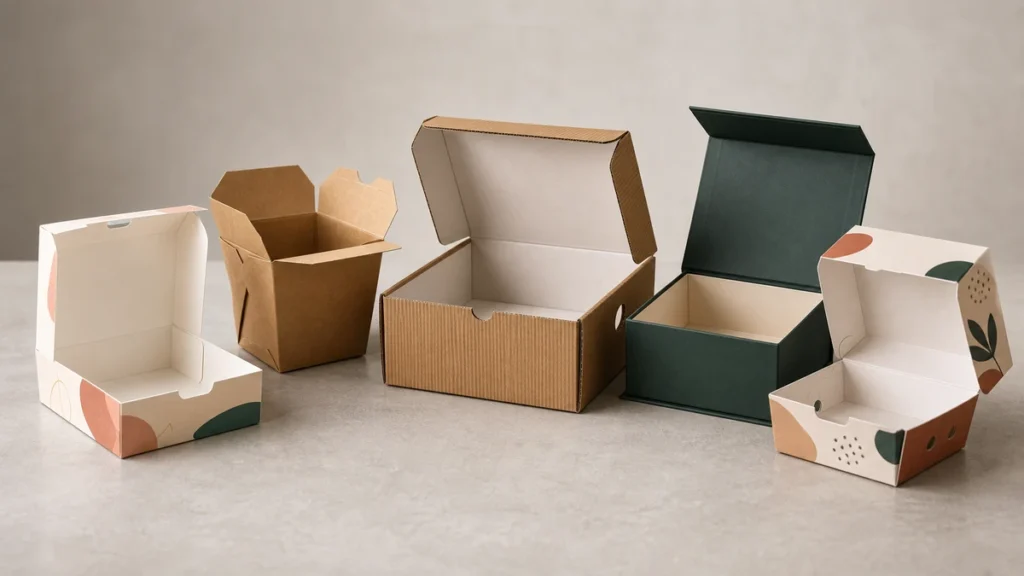
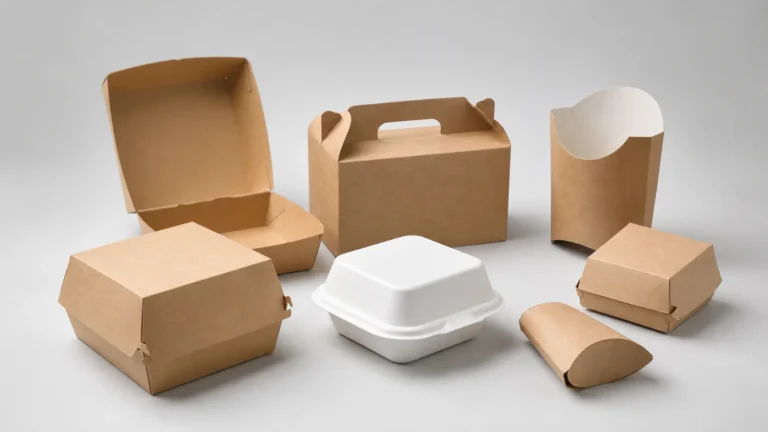
Custom food boxes are product-specific packaging structures designed around what the food does in use: its weight, heat, moisture, grease output, stacking load, and brand presentation. Most buyers narrow the choice by matching three things: product behavior, handling time, and print requirements. Get that match wrong and the failure shows up fast – grease bleed, crushed corners, loose closures, or poor delivery presentation.
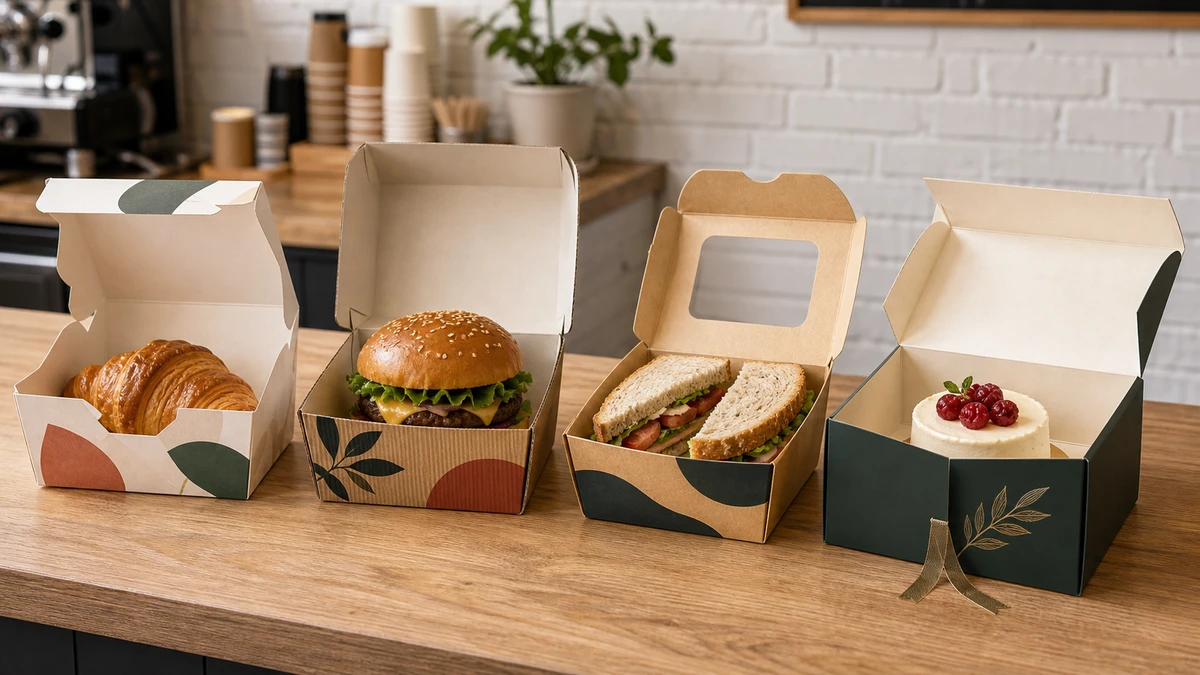
Most food-service orders fall into four structural families:
Three questions eliminate poor-fit options early: How heavy and wet is the product? How long is the handling chain? How important is print quality? If you cannot describe the filled product’s weight, hold time, and transport path, you are not ready to approve a box structure yet.
Paperboard is usually best for presentation, kraft for simple grab-and-go formats, and corrugated for delivery or heavier loads. The correct material depends on the failure you are trying to prevent: grease strike-through, sidewall collapse, poor print reproduction, or freight damage.
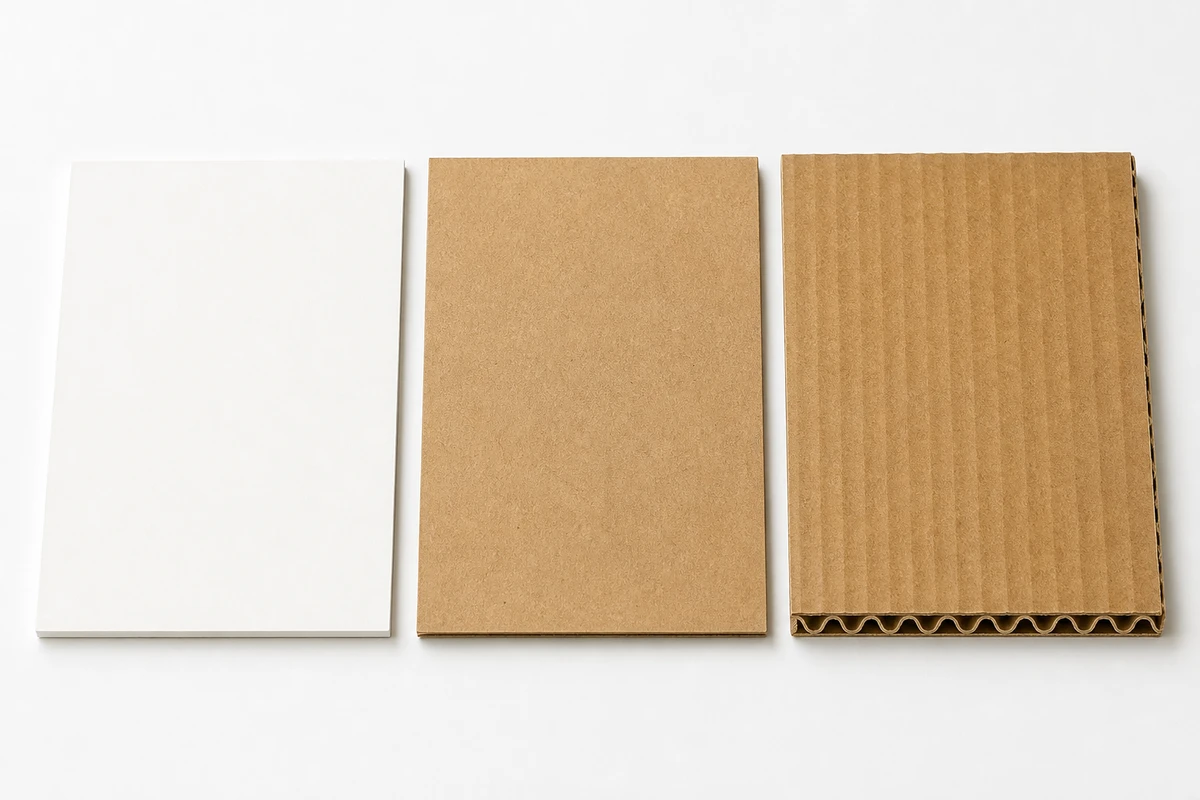
SBS and folding boxboards typically run 250-400 gsm and support sharp graphics and clean die-cutting, but offer less compression strength than corrugated. Best for retail bakery, dessert slices, and premium presentation; not reliable for boxes carrying 2-3 kg unless the geometry is specifically engineered for it.
Uncoated kraft breathes better than laminated sheets, helping vent steam and reduce sogginess in hot foods. Oil absorption and panel staining become visible as hold time extends, and white or pastel print colors shift noticeably on brown stock.
E-flute (~1.5 mm) suits display-ready boxes; B- or C-flute (~3-4 mm) handles stacked transport and heavier packs. Corrugated costs more and looks thicker, but pays for itself when delivery damage or pallet stacking is the primary risk.
| Matériau | Plage typique | Strongest Use Case | Main Limitation |
|---|---|---|---|
| SBS / folding boxboard | 250-400 gsm | Retail bakery, desserts, premium print | Lower crush strength |
| carton kraft | 250-400 gsm | Grab-and-go, hot food, natural aesthetic | Oil absorption, lower print accuracy |
| Corrugated E-flute | ~1.5 mm | Bakery delivery, stronger retail cartons | Bulkier profile |
| Corrugated B/C-flute | ~3-4 mm | Heavy or stacked transport | Less refined look |
Start with the likely failure mode: collapse points to corrugated, weak shelf impact points to SBS, condensation buildup points to kraft or vented structures. Compare cost on landed performance, not unit price – saving a few cents per unit on board often costs more through leakage complaints and damaged presentation in transit. For buyers comparing broader formats, Papacko’s contenants d'emballage alimentaire range is a useful reference when a carton may not be the best structure.
Print method should be chosen like a purchasing decision. The right question is: what print process matches your reorder pattern, lead time, and artwork stability?
Flexo uses relief plates standard for kraft and corrugated runs, with plate costs typically around $150-$500 per color and runs commonly starting from 500-2,000 units. Once artwork is stable, flexo usually delivers the lowest unit cost on repeat orders but is less suitable for photo-heavy graphics or frequent seasonal redesigns.
Digital removes plate cost and shortens setup, with many suppliers running batches from 25-100 units and turnaround around 5-10 business days. It is often the cheapest way to validate a new box before committing to larger inventory, and absorbs frequent artwork changes far better than plated production.
Offset print quality is captured on a paper sheet then bonded to the structural substrate, making commercial sense from around 1,000 units with lead times often running 3-6 weeks. Best when packaging is part of the premium product value and the SKU will remain active long enough to justify setup cost.
| Méthode d'impression | Best MOQ Zone | Artwork Type | Coût de la mise en place | Délai de livraison |
|---|---|---|---|---|
| Numérique | 25-500 | Full color, changing designs | Faible | Fast |
| Flexo | 500-2,000+ | Simple logos, spot colors | Moyen | Modéré |
| Litho-laminate | 1,000+ | Premium graphics, photo detail | Élevé | Longer |
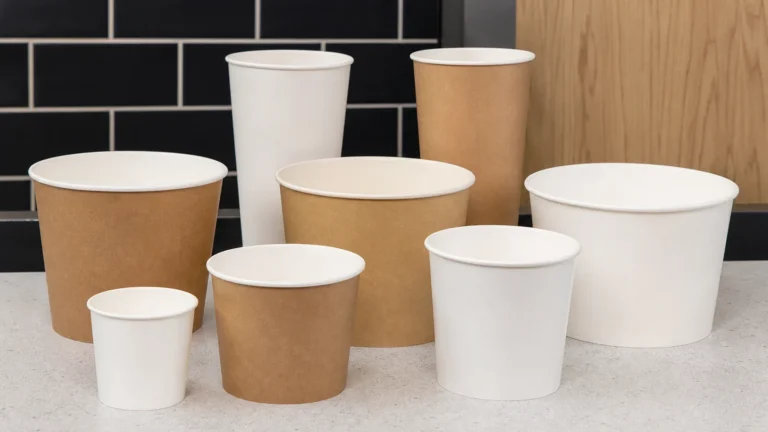
Simplify artwork before requesting final pricing. Reducing a six-color flexo design to three spot colors can materially lower cost without changing the structure. For related guidance, Papacko’s gobelets en papier page and conception d'emballages minimaliste overview show how print complexity affects economics across product lines.
Food packaging fails in predictable ways: the base softens, the lid loosens, grease reaches the outer panel, or stacked boxes deform. Structural details decide whether the box performs in real service.
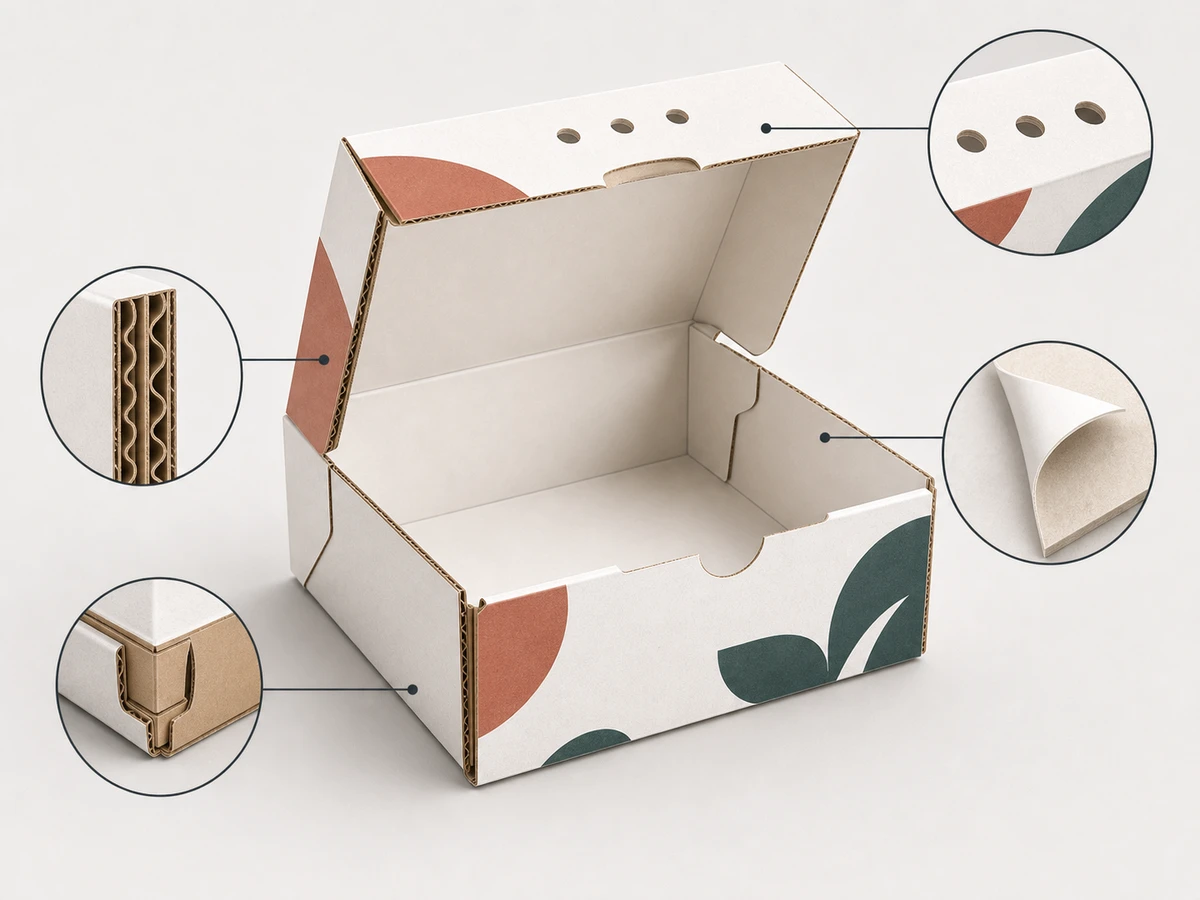
Single-wall structures suit most bakery and light takeaway uses. Double-wall or heavier corrugated becomes relevant when contents exceed about 2 kg, when boxes are stacked four to six high, or when humidity exposure is prolonged. Ask for compression or BCT data when stacking is a factor rather than assuming a heavier gsm alone solves the problem.
| Closure | Vitesse | Containment | Meilleure utilisation |
|---|---|---|---|
| Tuck-top, auto-bottom | Fast | Modéré | Dry bakery, light retail |
| Crash-lock base with tuck lid | Modéré | Supérieur | Pastries, cakes, heavier filled packs |
| Full-overlap glued seal | Slower | Élevé | Greasy meals, delivery formats |
| Premium magnetic rigid closure | Fast | Élevé | Gift boxes |
A common field issue is repeated opening and re-closing by staff during peak periods, where simple tuck styles can lose reliability.
Clay-coated surfaces improve print but do not provide real grease protection. PE laminate gives reliable moisture and oil resistance but weakens recyclability in most markets; aqueous grease-resistant coatings can work for moderate-fat bakery products while often preserving better recycling compatibility. If the filled item sits hot for 15-30 minutes with visible oil release, do not approve an uncoated board based on how a sample looks when empty.
Trapped steam condenses inside the pack, softening board and degrading food texture. Spec options include top-panel die-cut vents, micro-perforation, or absorbent liners – vent placement high on the sidewall or top panel typically performs better in delivery testing than venting through the base.
If the brand requires Pantone control or high-resolution graphics, specify coated white board early. Buyers often standardize with matching accessoires d'emballage rather than evaluating the box in isolation.
MOQ and lead time shape cash flow, storage pressure, and the real cost of packaging mistakes.
MOQs exist because setup costs – die cutting, plates, machine setup, operator time – must be spread across the run. Once structure is validated, moving from digital to offset or flexo at scale can reduce unit cost by roughly 30-50% depending on artwork and volume.
| Type de boîte | Quantité minimale de commande type | Main Cost Driver |
|---|---|---|
| Digital short-run tuck boxes | 100-500 | Setup efficiency |
| Offset folding cartons | 1,000-5,000 | Plates and press time |
| Rigid setup boxes | 500-2,000 | Assembly labor |
| Corrugated custom print runs | 500-2,000 | Board conversion and print setup |
Quoted lead times begin after artwork approval, not after the first inquiry. Domestic digital or semi-custom runs typically run 5-20 business days; fully custom domestic runs 4-8 weeks; overseas custom runs 25-35 days production plus 20-35 days sea transit. A seasonal bakery planning holiday gift boxes should place the order 10-12 weeks before the first sale date.
| Sourcing Model | Works Best For | Main Advantage | Main Trade-Off |
|---|---|---|---|
| Domestic digital / short-run | New launches, low volume, design changes | Low commitment, quick reorder | Higher unit cost |
| Domestic offset / flexo | Stable regional demand | Better responsiveness, lower freight risk | Higher MOQ than digital |
| Offshore volume production | Standardized SKUs, chain rollout, annual planning | Lowest landed unit cost at scale | Long lead times, higher inventory commitment |
Use a reorder point, not instinct: Reorder point = average weekly usage x lead time in weeks + safety stock. At 300 boxes per week, a 4-week lead time, and 2 weeks of safety stock, reorder at 1,800 units. Check case-pack dimensions before approving volume – storage that looks manageable on a quote sheet can overwhelm a back room.
Sustainability claims only help if they match the actual material system and the local disposal route.
In the United States, the FDA framework for food-contact substances governs coatings, additives, and packaging components intended to contact food. Buyers can review the framework here: Recommandations de la FDA concernant les substances en contact avec les aliments. Ask suppliers for food-contact declarations for board and coatings, coating type and intended use, whether print is exterior-only or near contact areas, and confirmation of low-migration ink use where relevant.
Certification FSC tracks responsible fiber sourcing through chain-of-custody standards; see FSC standards. Certification BPI applies to industrial compostability, not home composting. A box made from recycled fiber is not automatically recyclable after use, and a compostable coating is only commercially useful if your market has access to the right composting stream.
| Material / Coating | Food-Contact Suitability | End-of-Life Potential | Main Trade-Off |
|---|---|---|---|
| SBS + PE laminate | Common for barrier performance | Often limited in curbside recycling | Strong barrier, weaker disposal profile |
| SBS + aqueous coating | Suitable for moderate-grease uses | Often better recycling compatibility | Lower barrier ceiling than PE |
| Kraft uncoated | Good for dry goods, short-hold hot items | Strong fiber story | Weak against oil and long hold times |
| PLA-coated board | May support industrial compostability | Conditional on facility access | Claim depends on system availability |
For broader material trade-offs, Papacko’s overview of emballages en papier durables is a useful resource when comparing end-of-life claims across formats.
Most expensive mistakes happen before production begins – from vague specifications, untested dimensions, and ordering for the best-case scenario rather than the real service environment.
Specify finished product dimensions after packing, total filled weight, packing temperature, expected hold time, maximum stacking height, and transport method. A 6-10 mm clearance allowance on each side is a reasonable starting point for most cartons, but validate it against the actual product and insert design.
Prioritize in this order: leakage or grease risk, compression risk, print requirement, then storage and freight impact. A board-grade upgrade can solve one issue while creating another, so box choice should be validated as a line item in operations, not only by procurement.
Provide vector files at final size with bleed marked clearly, color expectations noted by substrate, and white ink requirements on kraft if applicable. A physical proof is the safer path when brand color consistency matters – screen approvals are not sufficient for color-critical work.
Fill the sample with real food, hold at actual service temperature, tilt to check closure security, and stack multiple filled boxes for at least 30 minutes. This is where field issues surface: closure looseness after steam exposure, base bowing, or poor fit inside the delivery bag.
A credible supplier should provide board and coating specifications, food-contact documentation, a sampling policy, a realistic lead-time trigger point, and repeat-order consistency expectations. If a quote arrives without questions about food type, temperature, or board grade, that is a warning sign.
Build a one-page packaging brief before requesting pricing. Include the filled product dimensions, weight, hold time, grease level, print requirement, delivery method, stacking condition, and target reorder volume. That brief lets a supplier quote the right board grade, coating, print process, and case-pack format with fewer revisions – and makes sampling meaningful because you are testing against real commercial conditions, not just a visual mockup.
Start with weight and handling. If the product is light and presentation-led, paperboard is often enough; if it is heavier, stacked, or delivered over distance, corrugated is usually the safer choice.
Not necessarily. Kraft may support a strong fiber story, but the full answer depends on coatings, food contamination after use, and whether the local waste stream can actually process the pack.
Digital printing is often the safest starting point because it avoids plate cost and allows short runs while you validate fit, graphics, and in-service performance.
For seasonal programs, 10-12 weeks ahead is a practical planning window for many custom runs, especially if the design or structure is new or if production is offshore.
No. Dry bakery items may not need one, but hot, oily, or sauce-heavy foods usually do. The longer the hold time, the more important barrier performance becomes.
Ask for board grade, coating type, print method, lead time from artwork approval, food-contact documentation, and a structural sample policy. Those answers tell you far more than a unit price alone.
Reorders can vary if board grade, coating, or print conditions change. Buyers should keep a written specification sheet and ask suppliers to match the approved construction on repeat orders.