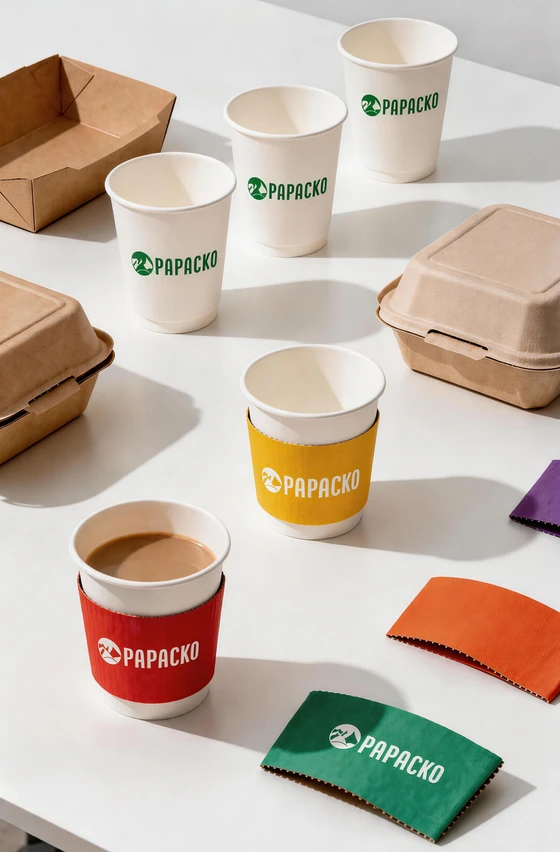
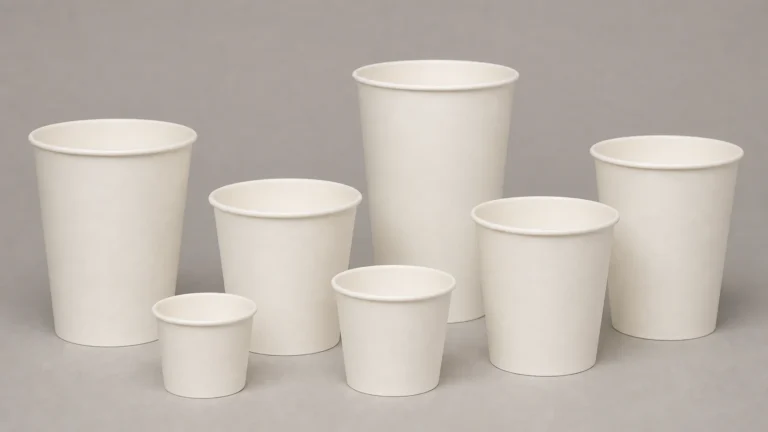
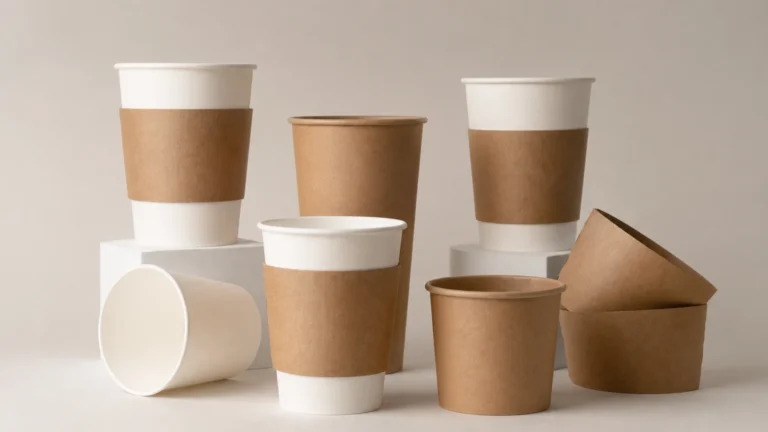
Gobelets en papier recyclé pour des restaurants respectueux de l'environnement
The food service industry distributes 120 billion disposable cups annually, with 92 billion ending in landfills despite recyclability claims. Restaurants increasingly face pressure from environmentally conscious consumers - 68%.
Dernière mise à jour: avril 2026
Temps de lectureDurée de l'intervention : 9-11 minutes
Auteur: Équipe de contenu de Papacko
Introduction
The food service industry distributes 120 billion disposable cups annually, with 92 billion ending in landfills despite recyclability claims. Restaurants increasingly face pressure from environmentally conscious consumers—68% of diners actively seek sustainable packaging, and 43% avoid establishments using non-recyclable containers. Yet navigating recycled paper cup specifications, understanding certification authenticity, and calculating true environmental impact remains complex for operators who encounter 15-30% cost premiums without clear ROI visibility.
This comprehensive guide demystifies recycled paper cup selection for restaurants committed to genuine sustainability: understanding post-consumer recycled (PCR) content percentages and their impact on cup performance, navigating certification processes (FSC, BPI, ” target=”_blank” rel=”noopener”>ASTM D6400, and others), examining real restaurant case studies demonstrating implementation strategies, calculating cost-benefit ratios including carbon reduction and marketing value, addressing technical challenges like strength and coating compatibility, and building authentic sustainability narratives that resonate with eco-conscious customers.
💡 À retenir: Sustainable recycled “>paper cups require 30-100% post-consumer recycled content (PCR), FSC Chain of Custody or SFI certifications verifying sustainable sourcing, compostability certifications (BPI, ASTM D6400) for proper end-of-life disposal, performance testing ensuring equivalent functionality to virgin cups, and cost 15-30% premiums ($0.09-0.14/cup vs $0.07-0.11 virgin) offset by 25-40% customer preference gains and carbon footprint reductions of 35-55%.
Understanding Recycled Content in Paper Cups
Post-Consumer vs Post-Industrial Recycled Content
Understanding different recycled paper cups requires attention to these factors:
Defining recycled material types:
Type de matériau
Définition
Environmental Value
Vérification
Impact sur les coûts
Post-consumer recycled (PCR)
Waste collected after consumer use (office paper, newspapers)
High (diverts landfill waste)
Third-party certified
+15-30% vs virgin
Post-industrial recycled (PIR)
Manufacturing scrap never reaching consumers
Lower (internal reuse)
Auto-certifié
+5-12% vs virgin
Virgin fiber
New wood pulp, no recycled content
Baseline (requires forestry)
FSC/SFI for sustainability
Baseline cost
Why PCR matters more: Post-consumer recycled content represents true waste diversion from landfills and consumer recycling participation, making it the gold standard for sustainability claims. Post-industrial recycled content, while better than virgin-only production, simply reuses manufacturing waste that would oftensometimesecycled internally anyway.
PCR Percentage Standards and Performance
The key to choosing various recycled paper cups depends on:
Common PCR levels in food service cups:
PCR Content
Strength vs Virgin
Résistance à la chaleur
Compatibilité des revêtements
Meilleures applications
Supplément de prix
10-30% PCR
95-98% equivalent
Excellent
All coatings work
Hot and cold beverages
+5-10%
30-50% PCR
90-95% equivalent
Très bien
Most coatings work
Cold beverages, warm coffee
+10-18%
50-80% PCR
85-92% equivalent
Good (requires testing)
Aqueous coatings preferred
Cold beverages primarily
+18-25%
80-100% PCR
75-88% equivalent
Moderate (double-cupping for hot)
Limited coating options
Demonstration projects, cold only
+25-35%
Technical considerations:
-Recycled fibers are shorter (broken during pulping/processing), reducing tensile strength 5-25%
-Higher PCR content requires thicker paperboard (280-320 GSM vs 250-280 GSM virgin) to maintain rigidity
-Heat resistance decreases with PCR percentage—100% PCR cups may require double-cupping for hot beverages over 180°F (82°C)
-Coating adhesion can be inconsistent on high-PCR paperboard (aqueous coatings perform better than PE laminates)
Sweet spot recommendation: 30-50% PCR balances meaningful sustainability impact with performance equivalent to virgin cups, acceptable cost premiums (+10-18%), and compatibility with all standard coatings and beverage types.
Certification Landscape and Verification
Forestry and Sourcing Certifications
Understanding standard recycled paper cups requires attention to these factors:
FSC (Forest Stewardship Council):
Certification Level
Ce qu'il vérifie
Audit Requirements
Label Use Rights
Coût
FSC 100%
All fiber from FSC-certified forests
Annual third-party audit
“FSC 100%” logo on cups
$1,500-5,000 initial + $800-2,500 annual
FSC Mix
Combination of FSC, recycled, and controlled sources
Annual third-party audit
“FSC Mix” logo
Identique à ci-dessus
FSC Recyclé
100% recycled content (PCR or PIR)
Annual third-party audit
“FSC Recycled” logo
Identique à ci-dessus
Chain of Custody requirement: Every step from forest to finished cup must be FSC-certified and tracked. Restaurants don’t need certification to purchase FSC cups, but suppliers must maintain CoC certification to print FSC logos.Consumer recognition: 73% of environmentally conscious consumers recognize FSC logo (highest awareness of any forestry certification), making it powerful marketing tool.SFI (Sustainable Forestry Initiative):
Similar to FSC ($1,500-5,000 initial, $800-2,500 annual)
FSC vs SFI for restaurants: FSC offers higher consumer recognition internationally and stricter social/environmental standards, making it preferred choice for consumer-facing sustainability messaging. SFI is equally valid environmentally but less recognized, better suited for B2B contexts.
Compostability and Biodegradability Certifications
When evaluating the recycled paper cups, consider the following:
ASTM D6400 (compostable plastics) and ASTM D6868 (compostable coatings on paper)
Exigences
90% biodegradation within 180 days in industrial composting facility (140-160°F)
Test
Third-party lab testing (costs $3,000-8,000 per product)
Certification
Annual renewal, product-specific (each cup size/design certified separately)
Label
BPI Certified Compostable logo allowed on packaging
Cost to supplier
$5,000-12,000 initial + $2,000-5,000 annual per product line
Distinction critique: ” target=”_blank” rel=”noopener”>BPI certification requires industrial composting facilities—cups will NOT compost in home composting or landfills. Restaurants must partner with commercial composting services or clarify “commercially compostable” to avoid greenwashing claims.Other compostability certifications:
Certification
Organisme émetteur
Geographic Recognition
Standard
Restaurant Value
TUV Austria (OK Compost)
TUV Austria
Europe, international
EN 13432
High for EU operations
CMA (Alliance pour la fabrication de compost)
Composting industry group
Amérique du Nord
ASTM D6400, D6868
Moderate (industry-focused)
Cedar Grove approved
Cedar Grove Composting
US Pacific Northwest
Internal standards
High for Seattle/Portland area
Restaurant selection criteria: Choose BPI for broadest North American recognition, TUV Austria for European markets, or local certifications (Cedar Grove) if operating in specific municipalities with commercial composting mandates.
Carbon Footprint and LCA Certifications
Understanding standard recycled paper cups requires attention to these factors:
-Sustainability-focused customer base (73% millennials/Gen Z)
-Previously using virgin fiber cups ($0.09/cup)
Mise en œuvre:
-Switched to 30% PCR cups with FSC Mix certification ($0.11/cup, +22% cost)
-Sourced through regional supplier (MOQ 10,000 units, 2-month supply)
-Added BPI-certified PLA lining for compostability (+$0.02/cup additional)
-Partnered with local commercial composting service ($85/month pickup)
Résultats (12-month analysis):
-Impact sur les coûts: +$1,100/year in cup costs, +$1,020/year composting service = $2,120 total annual increase
-Impact sur les revenus: 18% increase in customer feedback scores citing sustainability, 12% growth in repeat customer frequency (attributed partially to sustainability positioning)
-Marketing ROI: Featured in local sustainability directory, earned media coverage worth estimated $3,500 in advertising equivalence
-Carbon reduction: 2.4 metric tons CO₂e avoided vs virgin cups (verified by supplier LCA data)
Key learnings:
-Customers willing to absorb 5-10 cent “green cup fee” when sustainability explained via signage
-Composting partnership critical—recyclable cups sent to landfill undermine entire initiative
-FSC logo on cups recognized by 68% of customers (per informal survey), validating certification investment
Case Study 2: Regional Fast-Casual Chain (15 Locations)
Points clés à prendre en considération :
Background:
-Health-focused fast-casual brand, 2.2 million cups/year across network
-Corporate sustainability goals: 50% emission reduction by 2030
-Previously using virgin cups with PE lining ($0.08/cup bulk pricing)
Mise en œuvre:
-Negotiated with national supplier for 50% PCR cups with FSC Recycled certification ($0.10/cup at 2 million volume)
-Specified aqueous coating (water-based, compatible with recycling infrastructure) instead of PE
-Lower production efficiency: +$0.005-0.010/cup (recycled fiber processing complexity)
Indirect Benefits and Value Drivers
For recycled cups, focus on:
Customer preference premiums:
Sustainability Feature
Customer Willingness to Pay Extra
Repeat Visit Increase
Brand Perception Lift
“Recyclable” claim (no verification)
8-12% will pay $0.05-0.10 more
+3-5%
+5-8%
Certifié FSC
15-22% will pay $0.10-0.20 more
+8-12%
+12-18%
PCR content stated (30-50%)
22-30% will pay $0.15-0.30 more
+10-15%
+15-22%
Compostable certified (BPI)
28-38% will pay $0.20-0.40 more
+12-18%
+18-28%
Marketing and PR value:
-Earned media: Sustainability initiatives generate 3-5x more press coverage than traditional promotions (estimated value $2,000-15,000 depending on market)
-Engagement dans les médias sociaux: Posts about eco-packaging achieve 35-60% higher engagement vs standard content
Recycled cup coating recommendation: Aqueous coatings perform best on PCR paperboard due to better absorption into recycled fibers, maintain recyclability in most systems, and support compostability certifications. Avoid PE linings if emphasizing recyclability—they render cups non-recyclable in 78% of municipal programs.
End-of-Life Infrastructure Challenges
Recycling acceptance reality:
Configuration du gobelet
Theoretical Recyclability
Actual Facility Acceptance Rate
Contamination Issues
Virgin paper + PE lining
“Recyclable” (if separated)
18-25% accept
PE lining, food residue
PCR paper + PE lining
“ Recyclable ”
22-28% accept
Identique à ci-dessus
PCR paper + aqueous coating
Recyclable
65-78% accept
Food residue only
PCR + PLA lining, BPI certified
Compostable (industrial only)
35-45% composting facilities accept food service ware
Customer confusion (looks like plastic)
Perspicacité critique: “Recyclable” and “compostable” claims mean nothing without local infrastructure. Restaurants must:
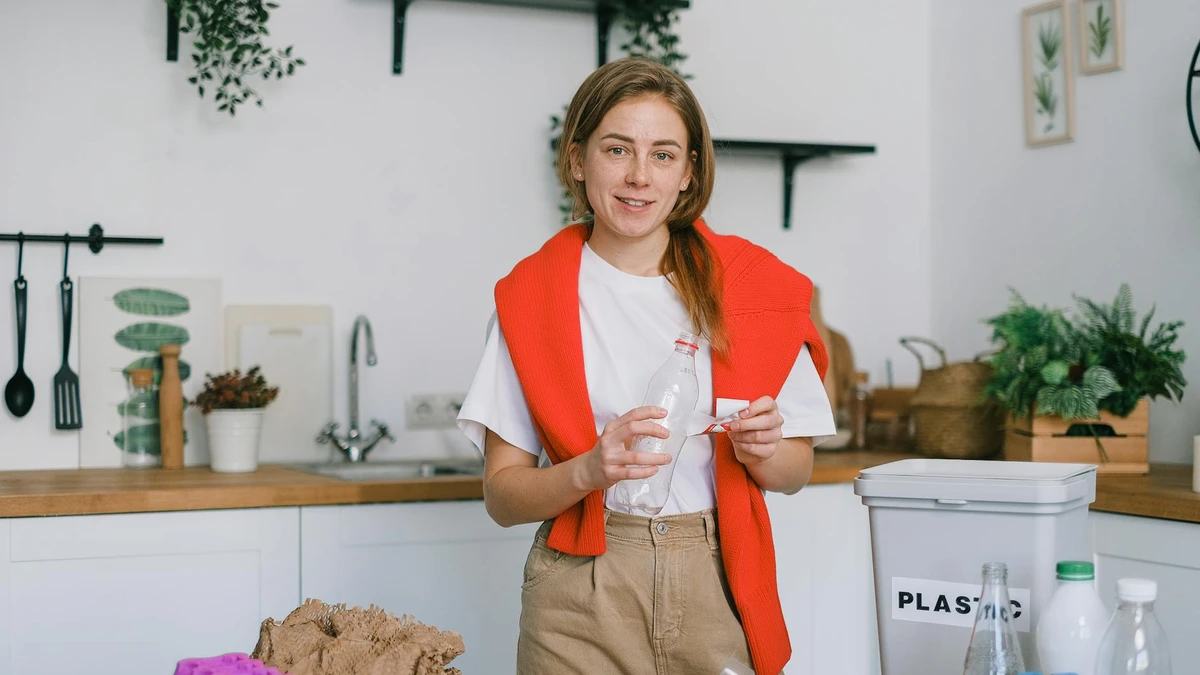
1.Verify local recycling/composting facilities accept specific cup type
2.Educate customers on proper disposal (compostable ≠ recyclable ≠ trash)
3.Provide appropriate bin infrastructure (color-coded, clear signage)
4.Measure diversion rates (track actual recycling/composting vs trash)
Meilleures pratiques: Partner with waste management service to verify cup compatibility before switching. Waste audits every 6-12 months measure actual diversion success.
Building Authentic Sustainability Messaging
Certification Logo Usage and Claims
Legal compliance for environmental claims:
Claim Type
Vérification requise
Regulatory Risk
Customer Trust Impact
“ Recyclable ”
Must be accepted by 60%+ of recycling facilities serving customers (FTC Green Guides)
High if unsubstantiated
Low (overused, skepticism)
“Made with recycled content”
Must state percentage (e.g., “30% PCR”)
Moderate (misleading if unclear)
Medium-high if specific
“Compostable”
Must specify conditions (“commercially compostable”)
High if implies home compost
Medium (facility access limits value)
Certified logos (FSC, BPI)
Must hold valid certification + chain of custody
Low (third-party verified)
High (trusted verification)
FTC Green Guides compliance:
-Claims must be specific, not vague (“30% post-consumer recycled content” not “eco-friendly”)
-Qualifications required (“commercially compostable in facilities that may not be available in your area”)
-Certifications must be current and product-specific (don’t show FSC logo if certification expired)
“This cup contains 50% recycled paper—equivalent to saving 0.003 trees per cup. When you compost it in our green bin, it breaks down in 90 days instead of sitting in landfills for years.”
Engagement, appreciation
High (specific, relatable, actionable)
Transparency about limitations
“Our cups are commercially compostable (not home compostable) and require special facilities. We partner with GreenCycle to ensure proper composting—just use our green bins!”
Trust, respect
Highest (honest, solutions-focused)
In-store education tactics:
-Manchons pour tasses: Print sustainability story and disposal instructions directly on sleeves (100% customer reach)
-Bin signage: Visual guides showing which items go in compost/recycle/trash (reduce contamination 25-40%)
-Table tents/posters: Highlight certifications, explain what they mean in plain language
-Digital menu boards: Rotate sustainability facts between menu items
-Formation du personnel: Baristas can briefly explain cup sustainability when asked (35% of customers inquire)
Supplier Selection and Procurement
Qualifying Recycled Cup Suppliers
Vendor evaluation criteria:
Facteur
Minimum Requirement
Méthode de vérification
Disqualification Red Flags
Certification validity
Current FSC CoC, BPI (if claiming compostable)
Request certificate copies + verify with issuing body
Expired certs, certificates for different products
PCR content verification
Third-party tested (not self-certified)
Lab test reports showing fiber analysis
“We use recycled content” without percentage or proof
1. Order 500-1,000 sample cups (pay for samples—free samples often not representative)
2. Test with actual beverages: hot coffee (195°F), iced drinks (35°F), acidic (orange juice)
3. Conduct leak test (fill, let sit 30 minutes, check for bottom or seam leakage)
4. Drop test (fill, drop from waist height onto hard floor, check for structural failure)
5. Staff usability test (baristas handle samples during service, report feedback)
6. Customer perception test (offer samples to 20-50 customers, gather feedback on feel/quality)
Only commit to large orders after successful 2-4 week sample period using actual operational conditions.
Regulatory Landscape and Future Trends
Regional Sustainability Mandates
Jurisdictions with packaging regulations (as of 2026):
Emplacement
Réglementation
Recycled Content Requirement
Compostability Requirement
Compliance Deadline
Californie
SB 54 (Extended Producer Responsibility)
25% PCR by 2028, 50% by 2032
20% compostable/recyclable
2028-2032 phased
Ville de New York
Local Law 142
None specified
Compostable certification required for city contracts
2027
EU (Directive 2019/904)
Directive sur les plastiques à usage unique
25% PCR for beverage containers
None for paper (targets plastic)
2025 (enacted)
Seattle
Compostable Requirements Ordinance
Aucun
All food service ware must be compostable or recyclable
2024 (enacted)
Canada (Federal)
Single-Use Plastics Prohibition
N/A for paper
Promotes compostable alternatives
2023-2025
Compliance strategy:
-Multi-location restaurants should adopt strictest standard across all locations (e.g., 50% PCR, BPI compostable) to avoid managing location-specific cup specifications
-Anticipate regulations tightening—2030 projections suggest 40-60% PCR minimums and extended producer responsibility in 15-20 US states
Restaurant perspective: Monitor innovations but prioritize proven certifications (FSC, BPI) and available infrastructure (composting, recycling facilities) over experimental technologies with limited scalability.
Common Mistakes in Recycled Cup Adoption
❌ Erreur #1: Assuming “recyclable” cups will actually be recycled without verifying local facility acceptance and providing proper bins
✅ Approche correcte: Contact municipal waste provider to confirm cup type accepted. Conduct waste audit 30 days post-implementation to measure actual recycling rates. Provide clearly labeled bins with visual guides. 65-78% diversion achievable with aqueous-coated cups and proper infrastructure.
❌ Erreur #2: Paying premiums for compostable cups but sending them to landfills (where they don’t compost) because no composting service contracted
✅ Approche correcte: Only adopt compostable cups if commercial composting available (partner with service provider first, then switch cups). Otherwise, use recyclable cups with aqueous coatings—paying for compostability without infrastructure is greenwashing and wasted money.
❌ Erreur #3: Selecting 80-100% PCR cups without testing performance, well-known to customer complaints about cup integrity
✅ Approche correcte: Start with 30-50% PCR for proven performance equivalent to virgin cups. Test samples with actual beverages for 2-4 weeks. Only increase PCR percentage if operational testing confirms no quality degradation. High PCR doesn’t help sustainability if customers double-cup or complain.
❌ Erreur #4: Using vague “eco-friendly” marketing without specific claims or certifications, inviting greenwashing skepticism
✅ Approche correcte: Specify exact PCR percentage, display certification logos (FSC, BPI), explain disposal instructions. Use transparent messaging: “30% recycled content saves 0.003 trees per cup—compost in green bins.” Specificity builds trust where vague claims create skepticism.
❌ Erreur #5: Switching to recycled cups to “look sustainable” without measuring actual environmental impact or tracking diversion rates
✅ Approche correcte: Conduct baseline waste audit before switching, repeat 3-6 months after. Measure: recycling/composting diversion rate, contamination rate, customer feedback. Set targets (e.g., 60% diversion by year 1). Sustainability requires measurement, not just material substitution.
1. What are recycled paper cups and how do they differ from regular cups?
Recycled paper cups are beverage containers made with 30-100% post-consumer recycled (PCR) content—waste paper collected after consumer use and reprocessed into new paperboard. They differ from virgin cups by incorporating recycled fibers instead of 100% new wood pulp, reducing landfill waste and forestry demand. Typical recycled cups use 30-50% PCR content (balanced performance and sustainability), FSC Recycled or FSC Mix certifications verify sourcing, and aqueous or PLA coatings provide liquid resistance. Performance is 90-95% equivalent to virgin cups when properly engineered, with slight strength trade-offs compensated by thicker paperboard (280-300 GSM vs 250-270 GSM).
2. What certifications should I look for when buying recycled paper cups?
Essential certifications: (1) FSC Recycled (100% recycled content from verified sources, highest forestry credential) or FSC Mix (combination recycled and sustainable virgin), (2) ” target=”_blank” rel=”noopener”>BPI Certified Compostable (verifies ASTM D6400/D6868 compliance, breaks down in 180 days in commercial composting), (3) Recycled content percentage verified by third-party testing (30-100% PCR, not self-certified claims). Optional but valuable: ISO 14040 Lifecycle Assessment, Carbon Trust certification, regional standards (TUV Austria OK Compost for EU). Avoid suppliers claiming “eco-friendly” without specific certifications—73% of consumers recognize FSC, making it most valuable marketing certification.
3. How much more do recycled paper cups cost compared to standard cups?
Recycled cups cost 15-30% premiums over virgin cups: standard virgin cups $0.08/unit (50,000 quantity), 30% PCR with FSC Recycled $0.10/unit (+25%), 50% PCR with BPI compostable $0.12/unit (+50%), 80% PCR $0.14/unit (+75%). Cost drivers include PCR sourcing ($0.01-0.03 per 10% increase), thicker paperboard for strength compensation ($0.008-0.015), compostable coatings ($0.015-0.025), and amortized certification fees ($0.005-0.015). For restaurant using 200,000 cups annually, switching to 50% PCR increases costs $8,000/year but drives 10-15% repeat customer growth and 18-28% brand perception lift among sustainability-focused segments.
4. Are recycled paper cups actually better for the environment?
Yes, when properly sourced and disposed of: 50% PCR cups reduce carbon footprint 21.6% vs virgin cups (14.5 kg vs 18.5 kg CO₂e per 1,000 cups), divert post-consumer waste from landfills (30-50% PCR = 4-7 grams diverted per cup), and reduce forestry pressure when FSC-certified, recycled cups matter.But environmental benefit depends on end-of-life: cups sent to landfills provide minimal benefit over virgin cups, recycling diverts material but requires facility acceptance (65-78% for aqueous-coated), commercial composting offers best outcome (breaks down in 90-180 days). Lifecycle assessments show 35-55% total environmental impact reduction when recycled cups properly composted or recycled vs virgin cups landfilled.
5. Can recycled paper cups be composted or recycled after use?
Depends on coating and local infrastructure: (1) Aqueous-coated recycled cups are recyclable in 65-78% of facilities and commercially compostable in most programs, (2) PLA-lined cups are commercially compostable (BPI certified) but only accepted by 35-45% of composting facilities and NOT recyclable, (3) PE-lined cups (polyethylene plastic) are theoretically recyclable but only accepted by 18-25% of facilities due to separation challenges. Critical: “compostable” means commercial composting facilities (140-160°F), NOT home composting or landfills. Verify local waste provider accepts specific cup type before switching—proper infrastructure is prerequisite for environmental benefit.
6. Do recycled paper cups perform as well as virgin fiber cups?
30-50% PCR cups perform 90-95% equivalently to virgin cups when properly engineered: slightly reduced fiber strength compensated by thicker paperboard (280-300 GSM vs 250-270 GSM), heat resistance equivalent with quality aqueous coatings, leak resistance comparable when bottom construction reinforced, and rigidity maintained through optimized cup design. 80-100% PCR cups show 75-88% virgin cup performance—may require double-cupping for hot beverages over 180°F and show higher failure rates (2-3% vs <0.5%). Best practice: test samples with actual beverages for 2-4 weeks before committing—operational validation more reliable than supplier claims. 30-50% PCR is sweet spot for performance-sustainability balance.
7. How do I market recycled paper cups to customers without greenwashing?
Authentic sustainability messaging requires: (1) Specific claims not vague (“50% post-consumer recycled content” not “eco-friendly cups”), (2) Certification logos displayed (FSC Recycled, BPI Compostable with explanations), (3) Transparent disposal instructions (“commercially compostable—use green bins” not “better for environment”), (4) Honest limitations acknowledged (“compostable in facilities not available everywhere—we partner with GreenCycle”), (5) Quantified impact (“this cup saves 0.003 trees and reduces carbon 22% vs virgin”). FTC Green Guides require substantiation and clarity—avoid unqualified “recyclable” claims. Print sustainability story on sleeves, train staff to explain certifications, conduct waste audits measuring actual diversion rates (not just material substitution). Transparency builds trust where vague claims invite skepticism.
Conclusion
Transitioning to recycled paper cups represents one of the most impactful sustainability actions restaurants can implement—diverting thousands of pounds of post-consumer waste from landfills annually, reducing carbon footprints 20-50%, and meeting growing consumer expectations for environmental responsibility. Success requires moving beyond superficial “eco-friendly” claims to substantiated certifications, performance-tested products, and proper end-of-life infrastructure.
Principaux enseignements :
1.30-50% PCR is the sweet spot—balances meaningful environmental impact with virgin-equivalent performance and manageable 10-18% cost premiums
Papacko Content Team - Nous créons des guides pratiques, basés sur l'usine, pour l'emballage B2B des aliments et des boissons. Les sujets abordés comprennent la sélection des gobelets en papier, les revêtements PE/PLA/à base d'eau, la conformité au contact alimentaire, l'impression, le contrôle qualité et les flux de travail prêts pour l'exportation, afin que les cafés, les restaurants, les distributeurs et les partenaires OEM puissent s'adapter grâce à un approvisionnement fiable.