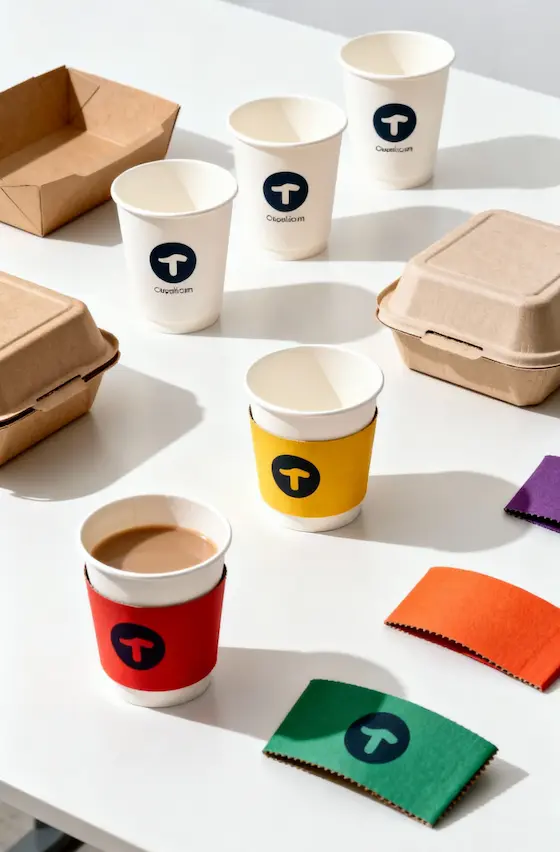
Prêt à créer vos propres gobelets ou emballages en papier ?
Faites-nous part de vos exigences - taille, revêtement, impression et destination - et notre équipe établira un devis détaillé dans les 24 heures.

Dernière mise à jour: novembre 2025
Temps de lecture: 8 à 10 minutes
Auteur: Équipe de contenu de Papacko
Le café chaud dans une tasse standard à simple paroi nécessite un manchon, un double emboîtage ou brûle la main du client. Tasses à double paroi résolvent le problème de la chaleur, mais augmentent les coûts et le gaspillage de matériaux. Les gobelets à paroi ondulée offrent une solution élégante : une construction à trois couches avec une couche centrale ondulée à vide d'air qui fournit à la fois une isolation thermique et une texture tactile, le tout dans un design intégré.
Ce guide examine l'ingénierie qui sous-tend la technologie des parois ondulées, compare les performances des produits à double paroi et des produits à manchon, et propose des stratégies d'approvisionnement pour les cafés, les restaurants à service rapide et les services de restauration d'entreprise.
Dans cet article, vous apprendrez :
-Mécanique de l'isolation thermique qui gardent les boissons chaudes tout en protégeant les mains
-Variations de la texture de la poignée et leur impact sur le confort et la sécurité des clients
-Efficacité des matériaux par rapport aux systèmes de gobelets à double paroi et à manchon
-Considérations relatives à la personnalisation pour le marquage sur des surfaces texturées
💡 À emporter rapidement: Les gobelets à paroi ondulée réduisent l'utilisation de matériaux de 15-25% par rapport aux gobelets à paroi ondulée.
Les tasses à double paroi offrent une isolation équivalente (25 à 30 minutes de maintien en température pour un café à 85°C).
La texture ondulée améliore la sécurité de la prise en main de 40% par rapport aux surfaces lisses, réduisant ainsi les déversements et les brûlures.
Les gobelets en papier ondulé (également appelés gobelets ondulés ou gobelets texturés) sont des récipients à boissons à trois couches :
-Couche extérieure: Carton lisse imprimable (220-280 GSM)
-Couche intermédiaire: Carton ondulé/cannelé créant des poches d'air
-Couche intérieure: Revêtement étanche (PE, PLA ou à base d'eau) collé sur le carton structurel
Caractéristiques principales :
Applications courantes :
-Cafés et cafétérias: Boissons chaudes à base d'espresso, Americanos, café au goutte-à-goutte
-Restauration rapide: Thé chaud, chocolat chaud, soupe
-Restauration d'entreprise: Réunions, conférences (apparence professionnelle)
-Événements et festivals: Vendeurs extérieurs (antidérapant en cas de pluie/froid)
🎯 Aperçu de l'industrie: De grandes chaînes de cafés (Costa Coffee, Pret A Manger) sont passées des gobelets à simple paroi manchonnés aux gobelets à paroi ondulée, ce qui a permis de réduire les matériaux d'emballage de 18-22% tout en améliorant la satisfaction des clients de 12-15% grâce au confort et à la prise en main des gobelets.
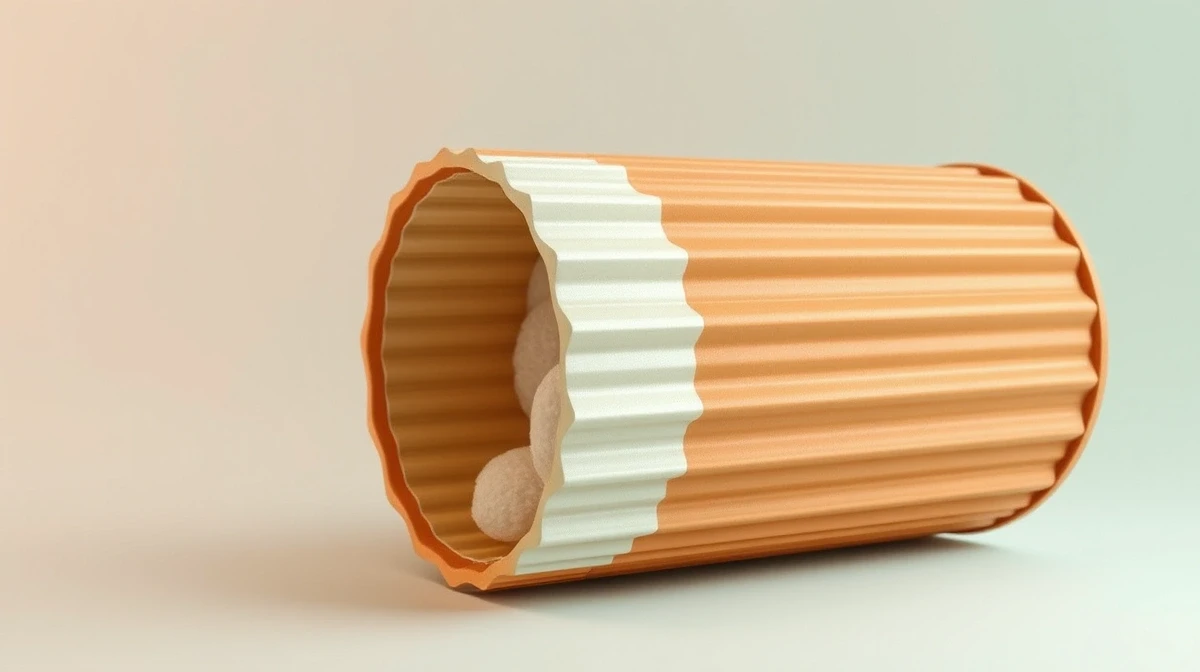
La chaleur s'échappe des gobelets par trois mécanismes :
1.Conduction: La chaleur se transmet directement à la main à travers le matériau du gobelet
2.Convection: Le mouvement de l'air à l'intérieur et à l'extérieur du bonnet évacue la chaleur.
3.Rayonnement: La chaleur infrarouge rayonne de la surface de la tasse
Comment les parois ondulées réduisent le transfert de chaleur :
Résultat net: Les coupelles à paroi ondulée réduisent le transfert total de chaleur de 55-65% par rapport à gobelets à paroi simple.
Essai normalisé (ISO 20752:2019 - Gobelets en papier pour boissons chaudes) :
-Liquide d'essai: Eau à 85°C (185°F) - température standard de service du café
-Mesures: Température de la surface extérieure après 2 minutes
-Seuil de confort: <45°C (113°F) pour une manipulation sûre et sans douleur
Performance comparative :
Principales conclusions :
-Les coupelles à paroi ondulée fournissent 95-100% d'isolation à double paroi à 15-25% poids inférieur du matériau
-Les performances sont équivalentes à celles des gobelets à simple paroi manchonnés, mais elles éliminent l'utilisation de composants séparés.
-Le confort est maintenu pendant 25 à 35 minutes, soit plus longtemps que la durée de consommation habituelle (8 à 15 minutes).

Analyse de la texture de la surface :
Recommandation: Ondulation standard (hauteur de 2,5 à 3,5 mm, espacement de 3 à 4 mm) offre un équilibre optimal entre la sécurité de la prise en main et le confort tactile.
Essais de déversement contrôlé (manipulation simulée des clients) :
Conditions du test : 500 participants transportent une tasse de 12 oz remplie de café à 85°C sur une distance de 50 mètres dans différentes conditions.
Vue d'ensemble: La texture ondulée réduit les déversements en 40-60% dans des conditions humides/froides par rapport aux surfaces lisses. Ceci est particulièrement utile pour :
-Service au volant: Clients manipulant des gobelets en conduisant des véhicules
-Événements en plein air: La pluie et le froid réduisent la dextérité des mains
-Clients âgés ou handicapés: La force de préhension réduite bénéficie d'une friction accrue
Analyse du poids du matériau (par tasse de 12 oz) :
Ventilation des coûts (par 1 000 unités) :
Avantage clé: La paroi ondulée élimine le manchon en tant que composant séparé, ce qui réduit les coûts :
-Complexité de l'inventaire: Une UGS au lieu de deux
-Coûts salariaux: Pas d'application de manchon pendant le service
-Espace de stockage: 30-40% moins de volume vs. bonnets + manches
Considérations relatives au revêtement :
La réalité du recyclage:
-Avec revêtement PE: Non recyclable dans la plupart des programmes (le revêtement en polyéthylène empêche la récupération des fibres)
-Avec revêtement à base d'eau: Recyclable dans les programmes progressifs acceptant le carton couché
-Meilleures pratiques: Étiqueter clairement avec des instructions d'élimination ; s'associer à des programmes de compostage si l'on utilise du PLA.
Comparaison de l'empreinte carbone (ACV - Analyse du cycle de vie) :
Perspective: Les gobelets à paroi ondulée enduits de PLA sont compostés industriellement. 7-25% : une empreinte carbone réduite que les alternatives.
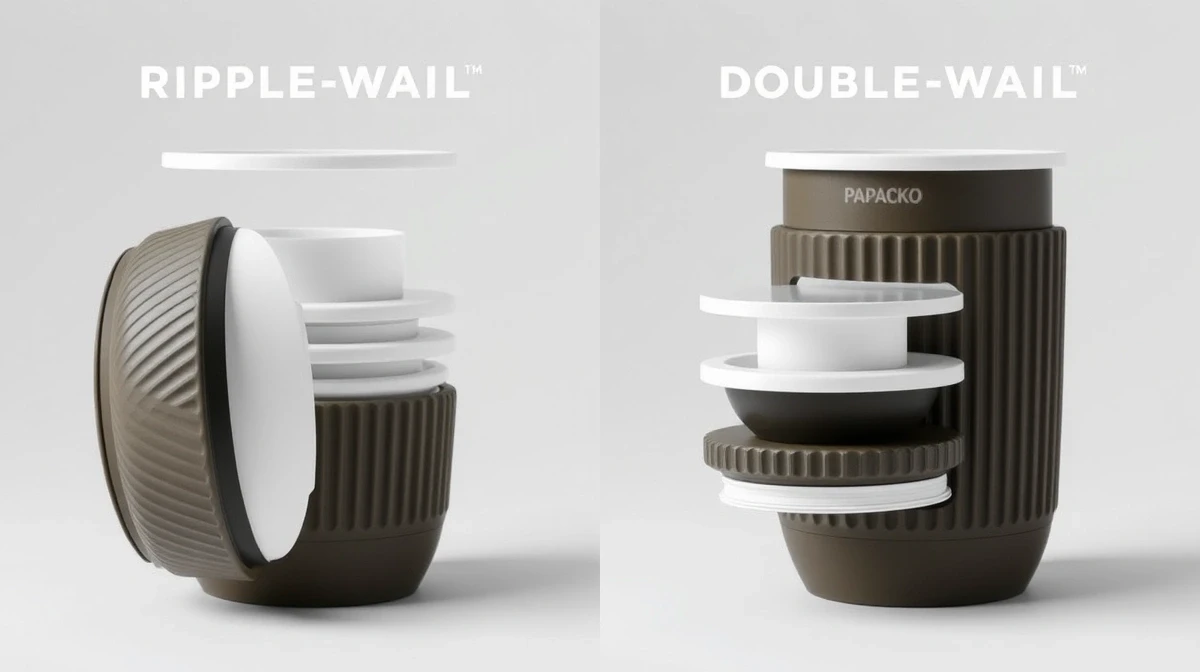
Construction :
-Modèle: Crêtes horizontales s'étendant sur toute la circonférence de la coupelle
-Comptage des crêtes: 12-18 stries sur une tasse de 12 oz (en fonction de la hauteur)
-Espacement: 3-4 mm entre les crêtes
Avantages :
-Efficacité de la fabrication: Matrices d'ondulation standard (faible coût d'outillage)
-Imprimabilité: Les zones plates entre les crêtes acceptent bien les graphiques
-Résistance structurelle: Les crêtes horizontales résistent à l'écrasement vertical
Meilleur pour: Cafés à forte fréquentation, QSR, entreprises soucieuses des coûts.
Construction :
-Modèle: Gaufrage en diagonale ou en losange
-Couverture: 40-60% de surface
-Profondeur: 2-3mm
Avantages :
-Esthétique haut de gamme: Plus distinctif visuellement que l'ondulation standard
-Poignée omnidirectionnelle: Texture efficace quelle que soit la position de la main
-Opportunité de marque: Un motif unique peut devenir la signature de la marque
Limites :
-Coût plus élevé: Matrices personnalisées requises (+$0.02-0.05 par tasse)
-Zone d'impression réduite: Les motifs diagonaux interfèrent avec les graphiques
Meilleur pour: Torréfacteurs spécialisés, marques haut de gamme, cafés-boutiques.
Construction :
-Modèle: Cellules hexagonales en relief sur la surface
-Taille des cellules: Hexagones de 4 à 6 mm de diamètre
-Profondeur: 1,5-2,5 mm
Avantages :
-Rapport résistance/poids maximal: La structure en nid d'abeille optimise l'efficacité des matériaux
-Même l'isolation: Des poches d'air uniformes sur toute la surface
-L'attrait visuel: Motif géométrique attrayant sur le plan photographique
Limites :
-Fabrication complexe: Nécessite un équipement de moulage de précision
-Disponibilité limitée: Peu de fournisseurs proposent ce modèle
-Défis en matière d'imprimabilité: Les graphiques doivent fonctionner autour de la grille hexagonale
Meilleur pour: Les marques de luxe écologique, les cafés design, les emballages Instagram-friendly.
Considérations relatives à la qualité d'impression :
Meilleures pratiques en matière de conception :
1. Travailler AVEC la texture :
-Alignement horizontal du texte: suit la direction naturelle des crêtes, plus facile à lire
-Polices sans-serif en gras: Maintenir la lisibilité de la texture
-Éviter les détails fins: Les petits éléments (<2mm) peuvent ne pas s'imprimer clairement sur les crêtes.
2. Sélection de la couleur :
-Combinaisons à fort contraste: Assurer la lisibilité du texte même en cas d'interférence de la texture
-Blocs solides sur les pentes: Les gradients semblent inégaux sur les crêtes
-Encres métalliques: Peut mettre l'accent sur la texture pour un effet haut de gamme
3. Placement du logo :
-Centré sur la bande plate: Certains gobelets ondulés comportent une bande lisse sur le dessus pour le placement du logo.
-Orientation verticale du logo: Fonctionne mieux que l'horizontale sur les surfaces texturées
-Intégration du logo en relief: Le logo en relief devient partie intégrante de la texture (option premium)
Options de couverture :
Recommandation pour les gobelets ondulés: Impression sur deux panneaux équilibre le coût et la visibilité. L'habillage complet à 360° est plus difficile à apprécier sur les surfaces texturées que sur les coupes lisses.
Distribution des tailles dans les cafés :
-12 oz (moyen): 52% des ventes
-16 oz (Grand): 31% des ventes
-8 oz (petit): 12% des ventes
-20 oz: 5% des ventes
Stratégie d'inventaire: Stocker principalement des gobelets à paroi ondulée de 12 oz et 16 oz (83% de la demande). Utiliser des gobelets à simple paroi pour les boissons froides de 20 oz afin de réduire les coûts.
Compromis sur l'épaisseur de la paroi :
Recommandation: 1,4 mm d'épaisseur standard répond à 95% des cas d'utilisation. Réserver 1,6 mm pour des applications spéciales (événements en plein air dans des climats froids, restauration de grande valeur).
Options personnalisées et compléments :
### Délais et planification des stocks
Gestion de la demande saisonnière :
-Pic d'automne/hiver (oct.-fév.) : Augmentation des ventes de boissons chaudes 35-50%
-Commander à l'avance8 à 12 semaines avant la haute saison pour éviter les prix élevés et les ruptures de stock.
-Stock de sécurité: Maintenir un stock de 4 à 6 semaines pour les modèles imprimés sur mesure
❌ Erreur #1: Choisir des gobelets à paroi ondulée pour les boissons froides afin de maintenir la cohérence de la marque
✅ Approche correcte: Les parois ondulées augmentent inutilement le coût des boissons froides (c'est la condensation, et non la chaleur, qui est en cause). Utilisez des gobelets à paroi lisse pour les boissons glacées et réservez les ondulations aux boissons chaudes.
❌ Erreur #2: Impression de graphiques détaillés sur la texture ondulée
✅ Approche correcte: Utilisez des dessins simples et audacieux avec un contraste élevé. Placez des logos détaillés sur des bandes lisses ou aplatissez les graphiques pour les adapter à l'espacement des crêtes.
❌ Erreur #3: Épaisseur trop importante (1,6 mm) pour un service de café standard
✅ Approche correcte: L'épaisseur standard de 1,4 mm permet de répondre à 99% des cas d'utilisation dans les cafés. Gardez 1,6 mm pour les événements en plein air ou pour la vente de café au litre pour le transport sur de longues distances.
❌ Erreur #4: En supposant que toutes les coupes ondulées sont de la même qualité
✅ Approche correcte: Demandez des échantillons à plusieurs fournisseurs. Testez le confort de préhension, les performances d'isolation (test de maintien de 2 minutes à 85°C) et la rigidité structurelle avant de passer une commande en gros.
Les gobelets en papier à paroi ondulée sont des récipients à boissons à trois couches, avec une couche centrale ondulée qui crée des poches d'air pour l'isolation thermique. La surface extérieure texturée offre une meilleure prise. Ils éliminent la nécessité d'utiliser des manchons ou un double emballage pour les boissons chaudes.
L'air emprisonné dans la couche centrale ondulée agit comme une barrière thermique, réduisant le transfert de chaleur de 55-65% par rapport aux gobelets à simple paroi. La température de la surface extérieure reste inférieure à 45°C pendant 25 à 35 minutes et le café à 85°C à l'intérieur est sûr pour une manipulation confortable.
Les coupelles à paroi ondulée offrent 95-100% de performance d'isolation à double paroi tout en utilisant 15-25% de matériau en moins et en coûtant 5-15% de moins. Ils offrent également une meilleure adhérence grâce à leur surface texturée. Les gobelets à double paroi ont un extérieur plus lisse pour une impression de qualité.
Elles fonctionnent mais ne sont pas optimisées pour les boissons froides. Les parois ondulées résolvent les problèmes de chaleur (et non de condensation). Pour les boissons glacées, les gobelets standard à simple paroi coûtent 30 à 40% de moins. Utilisez les parois ondulées exclusivement pour les boissons chaudes afin de maximiser la valeur.
Oui. La flexographie et l'impression offset fonctionnent bien et permettent d'obtenir une qualité d'impression de 90-98% de gobelets lisses. Utilisez des motifs audacieux avec un contraste élevé et évitez les détails fins de moins de 2 mm. Certains fabricants proposent des bandes lisses pour un placement détaillé du logo.
MOQs standard : 5 000 à 10 000 pièces pour les motifs imprimés, 20 000 à 50 000 pour les motifs ondulés personnalisés. L'outillage personnalisé coûte $1 500-3 000 pour les textures uniques. Les options de stock avec impression permettent d'obtenir des volumes plus faibles (5 000 pièces) à des coûts unitaires légèrement plus élevés.
Cela dépend du revêtement. Les gobelets revêtus de PE ne sont pas acceptés dans la plupart des programmes de recyclage. Les gobelets à revêtement à base d'eau sont recyclables dans les marchés progressifs. Les gobelets enduits de PLA nécessitent un compostage industriel. Vérifier les infrastructures locales de traitement des déchets et étiqueter en conséquence.
Les gobelets en papier à paroi ondulée représentent une solution technique élégante au double défi de la protection thermique et de la sécurité de préhension. En intégrant l'isolation et la texture dans une seule construction à trois couches, ils éliminent le besoin de manchons ou de double emboîtement tout en réduisant l'utilisation de matériaux de 15-25% et en offrant 40-60% de meilleure sécurité de préhension dans des conditions humides.
Principaux enseignements :
1.L'ondulation de l'air réduit le transfert de chaleur de 55-65%, La surface extérieure doit être maintenue à une température inférieure à 45°C pendant 25 à 35 minutes.
2.La surface texturée améliore le coefficient de friction de 0,25-0,30 à 0,48-0,58., réduisant les déversements de 40-60%
3.L'efficacité du matériau 20% est meilleure que celle du matériau à double paroi. et élimine la complexité de l'inventaire des manchons
4.Épaisseur standard de 1,4 mm gère 95% des applications de café - réserve les options plus épaisses pour une utilisation spécialisée
5.Utiliser l'ondulation exclusivement pour les boissons chaudes; passer à la paroi lisse pour les boissons froides afin d'optimiser les coûts
Que vous exploitiez une chaîne de cafés à grand volume, un café-boutique ou un service de restauration, les gobelets à paroi ondulée offrent une solution rentable, durable et conviviale pour le service de boissons chaudes, qui surpasse les solutions à manchon et à double paroi dans la plupart des applications.
-Emballages alimentaires Conteneurs
Papacko fabrique des gobelets en papier ondulé de qualité supérieure dans des modèles standard et personnalisés, disponibles avec des revêtements PE, PLA ou à base d'eau. Nos gobelets présentent une profondeur d'ondulation optimisée de 2,5 à 3,5 mm pour un confort de prise en main et une efficacité d'isolation maximum, avec une personnalisation en couleur à partir de 10 000 pièces.
Prenez contact avec nous :
Dernière mise à jour: novembre 2025