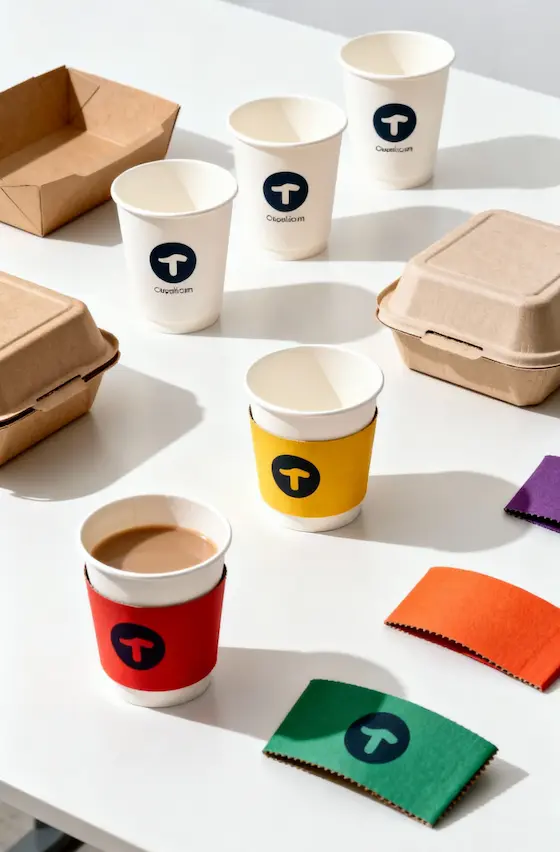
Prêt à créer vos propres gobelets ou emballages en papier ?
Faites-nous part de vos exigences - taille, revêtement, impression et destination - et notre équipe établira un devis détaillé dans les 24 heures.

Dernière mise à jour: novembre 2025
Temps de lecture: 8 à 10 minutes
Auteur: Équipe de contenu de Papacko
L'industrie du café génère 600 milliards gobelets jetables Chaque tasse nécessite 3 à 5 accessoires : couvercles, manchons, agitateurs, serviettes et sachets de sucre. Pour un café servant 300 boissons par jour, cela représente 450 000 accessoires par an. Lorsque seulement 15% des clients demandent des options durables, mais que 100% de vos accessoires sont en plastique, vous êtes confronté à un décalage de marque qui coûte la fidélité des clients.
Ce guide examine l'écosystème complet des accessoires de café durables, des alternatives bioplastiques compostables aux matériaux innovants tels que la fibre de bois et les films à base d'algues, et fournit des stratégies d'approvisionnement réalisables pour les exploitants de cafés soucieux de l'environnement.
Dans cet article, vous apprendrez :
-Options de matériaux pour chaque catégorie d'accessoires (compostable, recyclable, réutilisable)
-Exigences en matière de certification (BPI, TÜV Austria, FSC) et les facteurs de confiance des consommateurs
-Analyse coûts-avantages des accessoires durables par rapport aux accessoires conventionnels
-Infrastructures de traitement des déchets compatibilité avec les différents marchés
💡 À emporter rapidement: Le passage à des accessoires de café certifiés compostables coûte 18-35% de plus que les plastiques conventionnels, mais augmente la satisfaction des clients de 12-18% et permet aux cafés d'obtenir des certifications vertes (LEED, Green Business) qui entraînent une croissance du chiffre d'affaires de 8-15% parmi les groupes démographiques soucieux de l'environnement.
Les accessoires de café durables sont des articles jetables ou réutilisables conçus pour minimiser l'impact sur l'environnement :
-Matériaux biodégradables/compostables (PLA, PHA, bois, bagasse, algues)
-Matériaux recyclables (papier et carton certifiés FSC)
-Modèles réutilisables (pailles en acier inoxydable, tasses en céramique pour les repas)
-Réduction de l'utilisation de matériaux (gobelets isolés sans manches, cuillères comestibles)
Catégories d'accessoires primaires :
Hiérarchie des critères de durabilité :
1.Compostable (industriel ou domestique) : Se décompose en matière organique (meilleure fin de vie)
2.Recyclable: Entre dans l'économie circulaire (bon si l'infrastructure existe)
3.Réutilisable: Durable pour plus de 100 utilisations (meilleur impact sur le cycle de vie mais nécessite un lavage)
4.Matériau réduit: Allègement, élimination (l'idéal est le zéro déchet)
🎯 Aperçu de l'industrie: Blue Bottle Coffee a entièrement éliminé les agitateurs en plastique en adoptant des bâtonnets en bois en 2019, réduisant ainsi les déchets plastiques de 11 tonnes par an dans 70 établissements, tandis que les plaintes des clients ont diminué de 0% (pas d'impact sur le service).
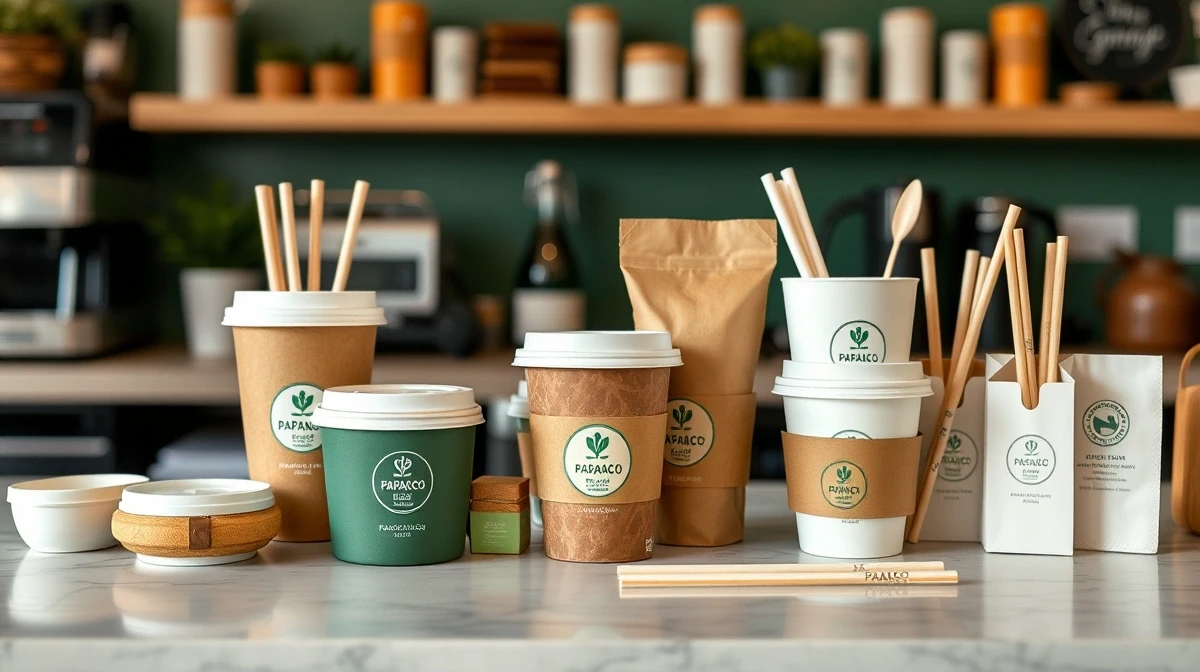
PLA (Acide polylactique) Couvercles :
-Source: Amidon de maïs, canne à sucre ou autres amidons végétaux
-Compostabilité: Compostage industriel nécessaire (55-60°C pendant 90-180 jours)
-Tolérance de températureTempérature d'utilisation : -20°C à +45°C (convient aux boissons froides/chaudes, PAS au café chaud)
-Clarté: Bon (un peu plus flou que le PS)
-Coût: $0,04-0,07 par couvercle (vs. $0,02-0,03 pour PS)
CPLA (PLA cristallisé) Couvercles :
-Amélioration: PLA traité thermiquement avec une cristallinité plus élevée
-Tolérance de températureTempérature d'utilisation : -20°C à +85°C (convient pour le café chaud)
-Compromis: Moins de clarté (translucide vs. transparent), 15-20% coût plus élevé que le PLA
-Coût: $0.05-0.09 par couvercle
Couvercles à base de fibres (papier/pâte moulée) :
-La construction: Pâte à papier moulée + revêtement anti-humidité (PLA ou à base d'eau)
-Compostabilité: Domestique compostable si revêtement à base d'eau ; industriel si PLA
-Tolérance de températureTempérature de fonctionnement : -10°C à +100°C
-Défis: Clarté moindre (opaque), risque de ramollissement par condensation
-Coût: $0.06-0.10 par couvercle
Comparaison des performances :
Recommandation: CPLA pour les boissons chaudes, PLA pour les boissons froides, à base de fibres pour un positionnement éco-premium (coût plus élevé mais meilleure durabilité).

Bois/Bambou Agitateurs :
-Source: Bouleau certifié FSC, bambou (renouvelable à croissance rapide)
-Biodégradabilité: Compostable à domicile (6-12 mois), se biodégrade naturellement dans les décharges.
-Performance: Robuste, pas de transfert de goût, convient pour le chaud et le froid.
-Coût: $0,008-0,015 par bâtonnet (comparable au plastique à des volumes élevés)
-Défis: Éclate s'il est de mauvaise qualité ; nécessite un stockage au sec
Agitateurs PLA :
-Caractéristiques: Transparent ou coloré, aspect identique au plastique PS
-Compostabilité: Compostage industriel nécessaire
-Force: Comparable au PS, moins rigide que le bois
-Coût: $0.012-0.020 par bâton (+20-50% par rapport au bois)
-Question de perception: Ressemble à du plastique - les clients pourraient ne pas le reconnaître comme compostable
Pâtes/agitateurs comestibles :
-Matériau: Pâtes de blé dur transformées en bâtonnets de brassage
-Facteur de nouveauté: Engagement élevé de la part des clients (“zéro déchet”)
-Durabilité: Se ramollit après 10 à 15 minutes dans un liquide chaud
-Coût: $0.05-0.12 par bâtonnet (positionnement premium uniquement)
-Limites: Préoccupations liées aux allergènes du gluten ; ne convient pas pour les longues durées d'attente.
Recommandation: Bois/bambou pour la rentabilité et l'attrait général. Réservez les agitateurs de pâtes aux boissons spéciales ou aux campagnes de marketing.
Stratégies de regroupement :
-Emballage individuel: Hygiénique mais ajoute des déchets d'emballage
-Distributeur en vrac: Moins de déchets mais nécessite des remplissages et des nettoyages fréquents
-Sur demande uniquement: Réduit l'utilisation de 30-40% par rapport à la mise à disposition automatique
Vierge Serviettes en papier:
-Fibre: Pâte de bois fraîche
-Douceur: Excellent (fibres longues)
-Absorption: Haut
-Impact environnemental: Nécessite l'abattage d'arbres
-Coût: $0.012-0.020 par serviette
Serviettes en papier recyclé :
-Fibre: Contenu recyclé après consommation (30-100%)
-Douceur: Bon (fibres plus courtes = moins douces)
-Absorption: Modéré-élevé
-Impact environnemental: 40-50% empreinte carbone réduite par rapport à la matière vierge
-Coût: $0,010-0,018 par serviette (-10-15% d'économies)
Serviettes en fibre de bambou :
-Fibre: Pâte de bambou (herbe, pas arbre ; pousse en 3-5 ans)
-Douceur: Excellent (comparable au papier vierge)
-Absorption: Haut
-Impact environnemental: 30% moins d'eau que le coton, pas de pesticides
-Coût: $0.018-0.028 par serviette (+50-80% premium)
Marques de certification :
Recommandation: 100% serviettes en papier recyclé avec certification FSC équilibrer le coût, la performance et la crédibilité en matière de développement durable. Réserver le bambou à un positionnement haut de gamme.
Pailles en papier :
-Matériau: Papier kraft avec colle alimentaire, revêtement résistant à l'humidité
-Durabilité: 30-60 minutes dans des boissons froides avant d'être ramolli
-Performance: Médiocre dans les liquides chauds (ramollissement immédiat)
-Coût: $0,015-0,03 par paille
-Commentaires des clients: 45% rapportent “acceptable”, 35% “n'aiment pas la texture/le goût”
Pailles en PLA :
-Performance: Identique au plastique utilisé
-TempératureTempérature d'utilisation : -20°C à +45°C (boissons froides uniquement)
-Compostabilité: Compostage industriel nécessaire (90-180 jours à 55-60°C)
-Coût: $0.020-0.035 par paille
-Problème: Souvent confondu avec le plastique non compostable (nécessite un étiquetage)
Acier inoxydable/verre (réutilisable) :
-Durabilité: 500-1 000+ utilisations
-Performance: Excellent pour toutes les boissons
-Coût initial: $0,80-2,50 par paille
-Seuil de rentabilité25-80 utilisations par rapport à des coûts jetables
-Défis: Infrastructure de lavage, perte/vol, acceptation par les clients
Pailles en agave/algue (émergentes) :
-Matériau: Fibre d'agave, extrait d'algue
-Compostabilité: Compostable à domicile (4-6 semaines)
-DurabilitéDurée de conservation : 60-120 minutes dans des boissons froides
-Coût: $0,08-0,15 par paille (super-premium)
-Disponibilité: Limité (production pilote)
Données sur les préférences des clients (enquête 2024, n=2 000) :
Recommandation stratégique: Offre PLA par défaut (meilleures performances + durabilité), le papier comme option budgétaire, et pas de paille sur demande (19% des clients refusent lorsqu'on leur pose la question).
Papier kraft recyclé Manches :
-Matériau: 100% fibres recyclées post-consommation
-Isolation: Modéré (valeur R ~0,5)
-Coût: $0.020-0.035 par manchon
-Profil environnemental: Déjà durable (la plupart des manchons conventionnels utilisent des matériaux recyclés)
-Amélioration: Passer à Certification FSC pour des références vertes
Manchons en tissu réutilisables :
-Matériau: Coton biologique, polyester recyclé
-Durabilité: 100-200 utilisations
-Coût: $2.50-5.00 par manchon
-Modèle d'entreprise: Système de dépôt/retour ou dîner uniquement
-Lavage: Lavage industriel nécessaire (coût opérationnel supplémentaire)
Manchons en silicone :
-Matériau: Silicone de qualité alimentaire
-Durabilité: 500+ utilisations
-Plage de températureTempérature de fonctionnement : -40°C à +230°C (le plus polyvalent)
-Coût: $3.00-6.00 par manchon
-Demande: Propriété du client (produit de détail, non jetable)
Alternative : Éliminer complètement les manches :
-Solution: Passage aux gobelets à paroi ondulée (isolation intégrée + poignée)
-Impact sur les coûts: Les coupes ondulées coûtent $0.04-0.06 de plus mais éliminent $0.02-0.03 de frais de manche.
-Résultat net: Le seuil de rentabilité ou de légères économies tout en réduisant le flux de déchets
Emballage conventionnel :
-Matériau: Film plastique multicouche (PE/PET/aluminium)
-Barrière: Excellent (humidité, oxygène, lumière)
-RecyclabilitéNon recyclable (matériaux mélangés)
-Compostabilité: ❌ Non
Alternatives aux films compostables :
Recommandation pour les sachets de sucre: Film PLA fournit une barrière adéquate pour le sucre sec à un coût raisonnable. Éviter la pellicule de cellulose (la pénétration de l'humidité provoque la formation d'une croûte).
Stratégies alternatives :
-Distributeurs de produits en vrac: Éliminer complètement les paquets individuels (nécessite un nettoyage fréquent)
-Enveloppes en papier: Fonctionne pour les édulcorants secs (sucre, poudre de stévia) mais pas pour les crèmes liquides.
-Paquets de bâtonnets: Utiliser des tubes en carton couché (recyclables avec le flux de papier sur certains marchés).
Accessoires conventionnels :
Accessoires durables :
Différence de coût: +$50.00 par 1 000 boissons (+49% premium)
Impact annuel (300 boissons/jour au café) :
-Conventionnel: $11,114
-Durable: $16,589
-Coût annuel supplémentaire: $5,475
Volonté de payer du client :
-22% de clients prêts à payer $0.25-0.50 de plus pour des boissons servies avec des accessoires compostables
-300 boissons/jour × 365 jours × 22% × $0,35 prime moyenne = $8,431 recettes potentielles
-Prestations nettes: $8,431 recettes - $5,475 coûts = +$2,956 bénéfice annuel
Valeur de la certification verte :
Avantages non financiers :
-Recrutement des employésLes entreprises durables : 68% des milléniaux préfèrent travailler pour des entreprises durables.
-Couverture médiatique: “Le premier café zéro déchet de [ville]” génère des relations publiques gratuites
-Fidélisation de la clientèle: 41% : taux de visites répétées plus élevé dans le segment des personnes soucieuses de l'environnement
Accès au compostage industriel :
Arbre de décision de la recommandation :
1.Accès élevé au compostage (>60%): Utiliser le PLA/CPLA en toute confiance, s'associer avec le transporteur pour le compostage des cafés.
2.Accès modéré (30-60%): Proposer un double flux (compostable + recyclable), éduquer les clients
3.Faible accès (<30%): Fixer des priorités alternatives recyclables (pailles en papier, couvercles en fibre) ou réutilisables
Une signalisation efficace de l'élimination des déchets :
-Problème60% des clients ne savent pas comment jeter les produits compostables
-Solution: Des bacs à code couleur avec des icônes visuelles (et pas seulement du texte)
-Exemple: Poubelle verte = compost (image du couvercle CPLA), bleue = recyclage (image du gobelet en papier)
Exigences en matière d'étiquetage des produits :
-Logo BPI/TÜV: Affichage de la marque de certification sur le couvercle/agitateur
-“Texte ”commercialement compostable: Clarifier les besoins en matière de compostage industriel
-Icône de la corbeille: Indiquer la poubelle à utiliser (en cas de double flux)
Meilleures pratiques: Placez les instructions d'élimination à point d'utilisation (zone des poubelles) et non au point de vente (les clients l'oublient lorsqu'ils ont fini de boire).
❌ Erreur #1: Passage aux accessoires en PLA dans un marché sans compostage industriel
✅ Approche correcte: Vérifier d'abord l'infrastructure locale des déchets. Si le compostage n'est pas possible, choisissez des alternatives recyclables (pailles en papier, couvercles en fibre) ou investissez dans des produits réutilisables.
❌ Erreur #2: Utilisation d'allégations “biodégradables” sans certification
✅ Approche correcte: Obtenir la certification BPI, TÜV Autriche ou une certification tierce équivalente et afficher les logos. Les affirmations non fondées risquent d'entraîner des accusations d'écoblanchiment et des amendes.
❌ Erreur #3: Mise à disposition d'accessoires compostables sans bacs/signalisation
✅ Approche correcte: Installer des bacs à compost clairement identifiés et s'associer à un service de compostage commercial. Sinon, les articles compostables contaminent le recyclage ou les décharges.
❌ Erreur #4: En partant du principe que tous les clients veulent des accessoires durables par défaut
✅ Approche correcte: Proposer des pailles/brasseurs uniquement sur demande (réduit l'utilisation 30-40%). Faire de l'option durable une option par défaut, l'option conventionnelle étant disponible sur demande
Les accessoires de café durables comprennent des couvercles compostables (CPLA, PLA, à base de fibres), des agitateurs biodégradables (bois, bambou), des serviettes recyclables (papier certifié FSC) et des pailles sans plastique (papier, PLA, métal réutilisable). Ils minimisent l'impact sur l'environnement grâce à leur biodégradabilité, leur recyclabilité ou leur réutilisation.
Cela dépend de l'infrastructure locale. Dans les zones de compostage industriel (San Francisco, Portland), les couvercles CPLA compostables détournent les déchets des décharges. Dans les régions où il n'y a pas de compostage, les couvercles en fibre recyclable (s'ils sont enduits de barrières à base d'eau) sont meilleurs car ils entrent dans les flux de recyclage existants.
Les accessoires durables coûtent en moyenne 18-35% de plus : Couvercles en CPLA ($0,06 contre $0,025 pour le PS), agitateurs en bambou ($0,012 contre $0,008 pour le PS), pailles en PLA ($0,025 contre $0,010 pour le PP). Pour un café de 300 boissons par jour, l'augmentation annuelle est de $5 400-6 500.
Oui. 22% sont prêts à payer $0,25-0,50 de plus pour des boissons servies de manière durable, 41% sont plus fidèles aux cafés respectueux de l'environnement et 68% reconnaissent l'importance de la durabilité (bien que seuls 35% la recherchent activement). C'est un facteur de différenciation concurrentielle sur les marchés urbains et aisés.
Certifié BPI Compostable (compostage industriel), TÜV Austria OK Compost (compostage industriel ou domestique), FSC (sylviculture durable) et Seedling Logo (compostabilité européenne). La certification par une tierce partie permet d'éviter les accusations d'écoblanchiment et de se qualifier pour les certifications d'entreprises vertes.
Non. Le PLA exige que les installations de compostage industriel maintiennent une température de 55 à 60°C pendant 90 à 180 jours. Les composteurs domestiques dépassent rarement 40°C. Le PLA ne se décompose pas dans le compost de jardin, les décharges ou les océans. N'utilisez le PLA que si vos clients ont accès à un système de compostage commercial.
Agitateurs en bambou/bois ($0,012 contre $0,008 pour le plastique = +50% mais seulement $0,004 de différence absolue par unité). Pour un café servant 300 boissons par jour, l'augmentation annuelle des coûts n'est que de $438, tout en fournissant aux clients un signal immédiat et visible en matière de développement durable.
Pour passer à des accessoires de café durables, il faut trouver un équilibre entre les objectifs environnementaux, les infrastructures locales de traitement des déchets, les attentes des clients et les contraintes budgétaires. Aucun matériau ne résout tous les problèmes : le PLA compostable fonctionne parfaitement à San Francisco mais contamine le recyclage dans les zones rurales ; les pailles en papier satisfont aux réglementations mais frustrent certains clients ; les matériaux réutilisables ont le meilleur impact sur le cycle de vie mais nécessitent une infrastructure de lavage.
Principaux enseignements :
1.Audit de l'infrastructure locale de traitement des déchets: Choisir des produits compostables (CPLA, PLA) uniquement si le compostage industriel est possible ; sinon, donner la priorité aux produits recyclables ou réutilisables.
2.Les certifications renforcent la confiance: Les logos BPI, TÜV Austria et FSC permettent d'éviter les accusations d'écoblanchiment et d'obtenir des certifications d'entreprises vertes d'une valeur de $6 000 à 16 000 euros par an.
3.La prime de coût (18-35%) est remboursée par des primes de prix (22% prêts à payer $0,25-0,50 de plus), la fidélité (41% taux de répétition plus élevé) et l'augmentation des revenus liée à la certification.
4.Les victoires les plus faciles: agitateurs en bambou (+$0,004/unité), serviettes recyclées (-10-15% coût vs. vierge), pailles sur demande (30-40% réduction de l'utilisation).
5.L'éducation des clients est essentielleLes bacs à code couleur avec icônes visuelles améliorent l'élimination des déchets compostables en 55-70%
Que vous exploitiez un café indépendant, une chaîne de cafés ou une cafétéria d'entreprise, le marché des accessoires durables offre désormais des alternatives viables dans toutes les catégories. Le succès ne réside pas dans des solutions parfaites, mais dans le choix de matériaux compatibles avec l'infrastructure et la clientèle de votre marché spécifique.
-Solutions d'emballage durables
Papacko fabrique des accessoires de café certifiés compostables, notamment des couvercles en CPLA (résistant à une température de 85°C), des agitateurs en bambou, des serviettes certifiées FSC et des pailles en PLA. Tous les produits sont certifiés BPI ou TÜV Autriche et sont compatibles avec les programmes de compostage industriel.
Prenez contact avec nous :
Dernière mise à jour: novembre 2025
Mot-clé principal : accessoires de café durables
URL Slug : Accessoires pour café durable
Titre méta :
Accessoires pour cafés durables | Emballages alimentaires fiables | Papacko
Méta-description :
Découvrez les accessoires compostables pour le café : agitateurs biodégradables, couvercles écologiques et serviettes durables. Comparez les matériaux et les certifications.
💡 Configurez ces paramètres dans le panneau Rank Math, puis supprimez cette case avant la publication.