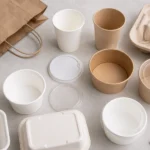
Sei pronto a creare i tuoi bicchieri di carta o le tue confezioni personalizzati con il tuo marchio?
Comunicateci le vostre esigenze — dimensioni, rivestimento, stampa e destinazione — e il nostro team vi preparerà un preventivo dettagliato entro 24 ore.
Sei pronto a creare i tuoi bicchieri di carta o le tue confezioni personalizzati con il tuo marchio?
Comunicateci le vostre esigenze — dimensioni, rivestimento, stampa e destinazione — e il nostro team vi preparerà un preventivo dettagliato entro 24 ore.
Panoramica sui materiali di imballaggio compostabili 2027
Il mercato degli imballaggi compostabili si trova a un punto di svolta con l'avvicinarsi del 2027, trainato dalla convergenza di fattori quali i requisiti normativi (142 giurisdizioni vietano ormai la plastica monouso) e le innovazioni nel campo della scienza dei materiali.
Ultimo aggiornamento: aprile 2026
Tempo di lettura: 10-12 minutes
Autore: Il team editoriale di Papacko
Introduzione
The compostable packaging market stands at an inflection point as we approach 2027, driven by converging forces of regulatory mandates (142 jurisdictions now ban single-use plastics), material science breakthroughs (next-generation biopolymers with performance parity to petroleum plastics), consumer demand (78% of consumers actively seek compostable options), and infrastructure expansion (commercial composting facilities up 240% since 2022). The industry is projected to grow from $8.4 billion in 2025 to $14.8 billion by 2027—a 76% increase in just two years.
This comprehensive overview examines the compostable packaging landscape entering 2027, covering emerging material innovations (seaweed-based polymers, mycelium composites, enzymatic coatings), performance advancements enabling new applications, regulatory trends shaping market dynamics, certification evolution addressing greenwashing, composting infrastructure development, cost trajectory analysis, and market forecasts across foodservice, retail, and e-commerce sectors.
💡 In sintesi: The 2027 compostable packaging landscape features material innovations achieving petroleum-plastic performance parity (heat resistance to 250°F, 12-month shelf stability), cost reductions of 30-45% through manufacturing scale, home compostability certifications expanding market accessibility, regulatory mandates driving forced adoption across 35+ US states, and infrastructure investments creating commercial composting access for 65% of US population—transforming compostable packaging from niche eco-product to mainstream default.
Market Landscape and Growth Projections
Global Market Size and Trajectory
When evaluating eco-friendly compostable packaging, consider the following:
Current state (2025-2026):
•Global market value: $8.4 billion (2025)
•North American market: $2.8 billion (33% of global)
•European market: $3.6 billion (43% of global, regulatory-driven)
•Asia-Pacific: $1.7 billion (20% of global, fastest growth rate)
2027 projections:
•Global market value: $14.8 billion (+76% from 2025)
•North American market: $5.2 billion (+86% growth, regulatory acceleration)
### Sector Adoption RatesFoodservice compostable packaging adoption (% of total packaging):
Foodservice Segment
2023 Adoption
2025 Adoption
2027 Projected
Growth Driver
Ristoranti a servizio rapido
12%
28%
52%
Brand commitments, regulatory
Fast-casual chains
35%
58%
78%
Consumer expectations
Coffee shops/cafés
42%
65%
82%
Premium positioning, mandates
Catering services
28%
48%
68%
Corporate client requirements
Delivery platforms
18%
35%
58%
Sustainability differentiation
Grocery deli/prepared foods
15%
32%
55%
Retailer sustainability goals
Approfondimento chiave: Fast-casual and coffee segments lead adoption (78-82% by 2027), while QSR chains accelerate from low baseline as cost barriers decline and regulations force transition.
•PHA: Truly home compostable (breaks down in backyard conditions), produced from waste feedstocks (no food crop competition), excellent barrier properties
•Cellulose nanofibers: Superior strength-to-weight ratio (lighter packaging, reduced shipping costs), renewable forestry sources, minimal processing energy
Funzione: Coatings provide moisture/grease barriers while maintaining compostabilityNext-generation coating innovations:
Tipo di rivestimento
Technology Basis
Prestazioni della barriera
Temperature Limit
Compost Breakdown
2027 Market Share
Enzymatic coatings
Engineered enzymes activate degradation
Excellent (oil, water)
210°F
45-90 days
15-20% (rapid growth)
Nanocellulose films
Plant fiber nano-structures
Superior (gas barrier)
230°F
60-120 days
25-30%
Chitosan (crustacean shells)
Waste stream from seafood industry
Good (moisture)
190°F
30-60 giorni
12-18%
Protein-based coatings
Whey, soy, corn proteins
Moderate (grease)
180°F
45-75 days
8-12%
Hybrid bio-coatings
Multi-layer combinations
Excellent (multi-barrier)
220°F
60-90 days
20-25%
Performance comparison to petroleum-based coatings:
Attributo
Petroleum Coating (PE, PFAS)
Next-Gen Bio-Coating
2027 Gap
Barriera contro l'umidità
Excellent (industry standard)
Excellent (parity achieved)
0% gap
Resistenza al grasso
Eccellente
Very good (95% parity)
5% gap
Tolleranza al calore
Up to 250°F
Up to 230°F (nanocellulose)
20°F gap (closing)
Shelf stability
12-18 mesi
8-14 months (improving)
15-25% gap
Costo
Valori di riferimento
+15-30% premium
Declining rapidly
Environmental end-of-life
Landfill/incineration (pollution)
Complete composting (nutrient)
Decisive advantage
Critical advancement: 2027 marks the year bio-coatings achieve functional parity with petroleum coatings for 80-85% of foodservice applications, eliminating performance justifications for non-compostable options.
Compostable packaging costs by product category (2027 projected, bulk pricing):
Categoria di prodotto
Conventional Plastic Cost
Compostable Cost (2027)
Premium
Volume Threshold for Parity
Coperchi per tazze da caffè
$0.04-0.06
$0.05-0.08
+12-25%
500,000+ units/year
Contenitori a conchiglia
$0.18-0.28
$0.22-0.35
+15-22%
200,000+ units/year
Soup/noodle bowls
$0.14-0.22
$0.20-0.30
+20-30%
150,000+ units/year
Cutlery sets
$0.08-0.14
$0.10-0.18
+15-25%
300,000+ units/year
Produce bags
$0.03-0.05
$0.04-0.07
+18-28%
1,000,000+ units/year
Imballaggio protettivo
$0.25-0.45
$0.32-0.55
+20-28%
100,000+ units/year
Approfondimento chiave: High-volume operations (chains, large facilities) approaching cost parity through bulk purchasing; small independents still face 20-30% premiums but can offset through premium pricing and customer willingness-to-pay.
1. Cosa si intende per imballaggio compostabile nel 2027?
Per “imballaggi compostabili” nel 2027 si intendono i materiali certificati come in grado di degradarsi in biomassa non tossica entro 90-180 giorni (compostaggio industriale) o 6-12 mesi (compostaggio domestico) in condizioni specifiche, verificate da standard di terze parti (BPI, TÜV Austria, EN 13432). A differenza dei materiali compostabili degli anni '20, limitati ad applicazioni semplici, i materiali del 2027 includono biopolimeri di nuova generazione (PHA, nanofibre di cellulosa, polimeri derivati dalle alghe) che raggiungono prestazioni pari a quelle delle plastiche derivate dal petrolio: resistenza al calore fino a 250°F, stabilità di conservazione di 12 mesi, proprietà barriera superiori. Principali progressi: ampia diffusione della compostabilità domestica (accessibilità per il 90%+ della popolazione), aumento dei costi ridotto al 10-25% (avvicinandosi alla parità) e obblighi normativi che rendono gli imballaggi compostabili lo standard predefinito nei settori della ristorazione e della vendita al dettaglio.
2. Quali materiali vengono utilizzati negli imballaggi compostabili?
Gli imballaggi compostabili del 2027 utilizzano biopolimeri avanzati e rivestimenti a base biologica: (1) PHA ottenuto dalla fermentazione batterica (compostabile in casa, tolleranza al calore fino a 220°F), (2) nanofibre di cellulosa ricavate dalla polpa di legno (tolleranza fino a 250°F, resistenza superiore), (3) polimeri di lignina ricavati dagli scarti dell’industria cartaria (240°F, il più conveniente tra i materiali di alta qualità), (4) pellicole a base di alghe (coltivate in mare, compostaggio domestico in 2-4 mesi), (5) compositi di micelio derivati da strutture fungine (imballaggi protettivi coltivati su misura) e (6) rivestimenti di nuova generazione, tra cui barriere enzimatiche, pellicole di nanocellulosa e chitosano ricavato dagli scarti dei prodotti ittici. Questi materiali sostituiscono il PLA di prima generazione (limitato a 185°F) e raggiungono prestazioni pari all’85-95% rispetto alle plastiche petrolifere, pur mantenendo le certificazioni di completa compostabilità.
3. Quanto costa un imballaggio compostabile rispetto a uno in plastica?
Compostable packaging costs 10-25% more than conventional plastic in 2027 (down from 45-75% premiums in 2023), with price parity projected by 2029-2030 for high-volume applications. Specific costs: compostable “>coffee cup lids $0.05-0.08 vs plastic $0.04-0.06 (+12-25%), clamshell containers $0.22-0.35 vs $0.18-0.28 (+15-22%), soup bowls $0.20-0.30 vs $0.14-0.22 (+20-30%). High-volume purchasers (500,000+ units annually) achieve near-parity through bulk discounts. Cost reductions driven by 340% manufacturing capacity growth (2023-2027), second-generation materials using waste feedstocks, and improved processing efficiency (-30-40% energy costs). Total cost of ownersften favors compostable when including disposal savings and regulatory compliance.
4. Gli imballaggi compostabili sono davvero migliori per l'ambiente?
Yes, when properly disposed of, certified compostable packaging delivers measurable environmental benefits: (1) Diverts 75-90% of waste from landfills (breaks down into nutrient-rich soil vs persisting 500+ years), (2) Reduces carbon footprint 30-65% vs petroleum plastics (renewable feedstocks, lower processing emissions), (3) Eliminates toxic microplastics (complete biodegradation to organic matter), and (4) Utilizes waste streams (agricultural byproducts, forestry waste) vs virgin petroleum. Critical caveat: benefits require proper disposal—compostables in landfills don’t break down properly (anaerobic conditions), and contaminating recycling streams creates problems. 2027 infrastructure improvements (65% population composting access, home-compostable certifications) significantly improve proper disposal rates from 35% (2023) to projected 68% (2027).
5. Where can I dispose of compostable packaging?
Disposal options in 2027: (1) Commercial composting facilities serving 65% of US population (find via FindAComposter.com or municipal programs—average 8-mile distance), (2) Home composting for TUV Austria OK Compost HOME or ASTM HOME-certified products (accessible to 90%+ population with yard space), (3) Curbside municipal composting programs in 380+ cities (green bin collection), (4) On-site composting systems for large generators (in-vessel composters, anaerobic digesters at workplaces, campuses), and (5) Mail-back programs for areas without access (TerraCycle, Loop). Check package QR codes for location-specific disposal instructions. Do not place compostables in recycling (contaminates streams) or trash if composting available (negates environmental benefits).
6. What regulations are driving compostable packaging adoption?
2027 regulatory landscape includes: (1) 35 US states with single-use plastic bans requiring compostable alternatives, (2) California AB 1162 mandating all foodservice packaging be reusable or compostable, (3) 28 states banning PFAS forever chemicals (forcing transition to bio-based coatings), (4) 18 states with Extended Producer Responsibility programs funding composting infrastructure, (5) 380+ municipal ordinances banning foam and plastic foodservice containers, (6) EU Single-Use Plastics Directive requiring compostable options for takeout containers, and (7) Proposed federal PFAS ban affecting all food packaging. Compliance timelines are often 12-18 months post-legislation, creating urgent transition pressure. Early adoption avoids supply shortages and price spikes during forced transitions.
7. What are the biggest challenges facing compostable packaging in 2027?
Key challenges: (1) Infrastructure gaps—35% of population still lacks composting access, limiting disposal options, (2) Consumer confusion—62% don’t understand biodegradable vs compostable differences, leading to improper disposal, (3) Performance limitations for niche applications—very long shelf life (12+ months) and extreme heat (250°F+ oven-safe) still challenging, (4) Greenwashing proliferation—vague “eco-friendly” claims without certification erode consumer trust, (5) Cost premiums (10-25%) remain barrier for price-sensitive segments, and (6) Supply chain capacity—demand surges from regulatory mandates strain manufacturing, causing shortages. Solutions emerging: home-compostable certifications address infrastructure, standardized labeling improves consumer understanding, material innovations closing performance gaps, harmonized certification standards combat greenwashing, and 340% capacity expansion reducing costs and shortages.
Conclusione
The compostable packaging landscape in 2027 represents a transformative moment where material innovations, regulatory mandates, infrastructure expansion, and consumer demand converge to make compostable packaging the mainstream default than niche alternative. Next-generation biopolymers achieve performance parity with petroleum plastics (85-95% across most applications), cost premiums compress to 10-25% (approaching parity within 3 years), home compostability certifications expand accessibility to 90%+ of population, and regulatory requirements across 35 US states force transitions regardless of sustainability preferences.
Punti chiave:
1.Material innovations deliver parity—PHA, cellulose nanofibers, seaweed polymers achieve 220-250°F heat tolerance and superior barrier properties vs first-gen PLA
2.Home compostability transforms market—eliminates infrastructure dependency, expands addressable market from 35% to 90%+ population
4.Cost barriers eroding rapidly—10-25% premiums in 2027 (vs 45-75% in 2023), approaching parity by 2029-2030 for high-volume buyers
5.Infrastructure expanding dramatically—65% population access to commercial composting (vs 27% in 2022), 240% facility growth
Risorse correlate
•“>Food Packaging Containers
•“>Sustainable Packaging Solutions
•“>Compostability Certifications Guide
Ready to Transition to 2027 Compostable Packaging?
Papacko supplies forward-thinking foodservice and retail businesses with next-generation compostable packaging including PHA-based containers (home compostable, 220°F tolerance), cellulose nanofiber bowls (250°F heat resistance), seaweed-based films (rapid home composting), and enzymatic-coated solutions (superior barrier properties). Our sustainability team provides material selection guidance, certification verification, composting infrastructure partnership recommendations, and regulatory compliance support—ensuring your transition to compostable packaging delivers both environmental impact and operational performance.
Papacko Content Team — Realizziamo guide pratiche e basate sull’esperienza di fabbrica per il packaging B2B nel settore alimentare e delle bevande. Gli argomenti trattati includono la scelta di bicchieri e ciotole di carta, rivestimenti in PE/PLA/a base acquosa, conformità alle normative sul contatto con gli alimenti, stampa, controllo qualità e flussi di lavoro pronti per l’esportazione, affinché caffetterie, ristoranti, distributori e partner OEM possano crescere con una fornitura affidabile.
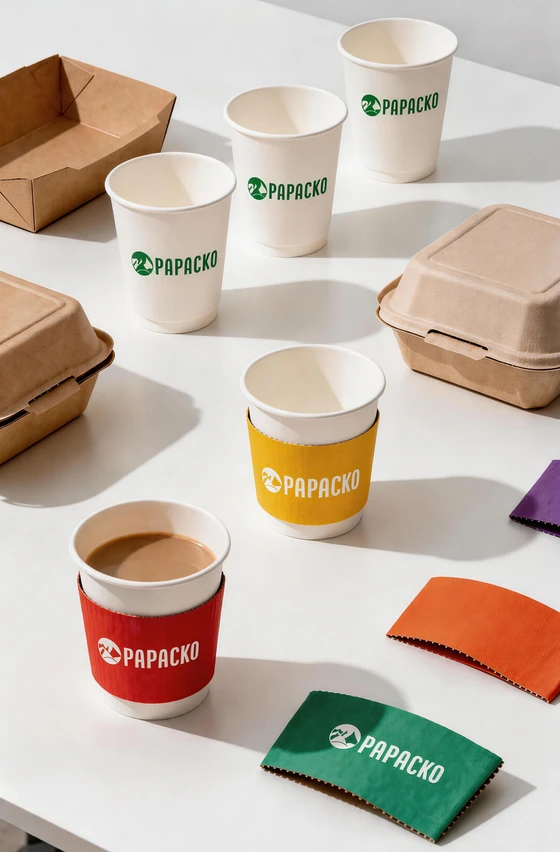



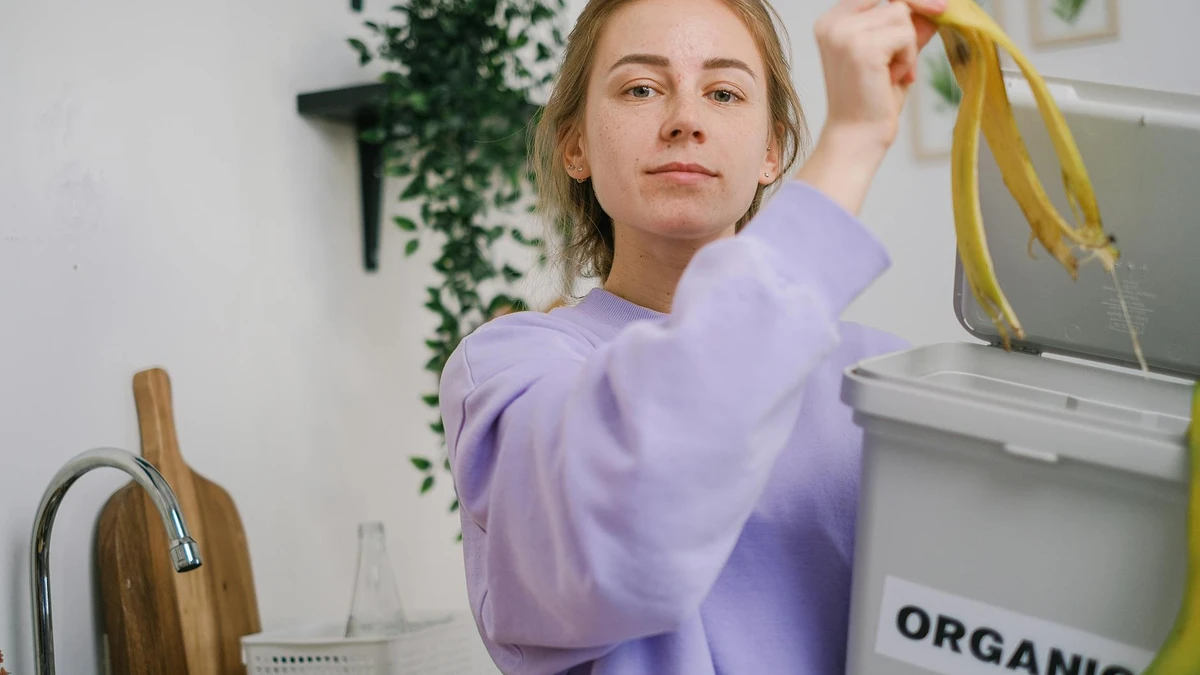 food containers breaking down among organic waste in backyard” style=”border-radius: 8px; box-shadow: 0 2px 8px rgba(0,0,0,0.08);”/>