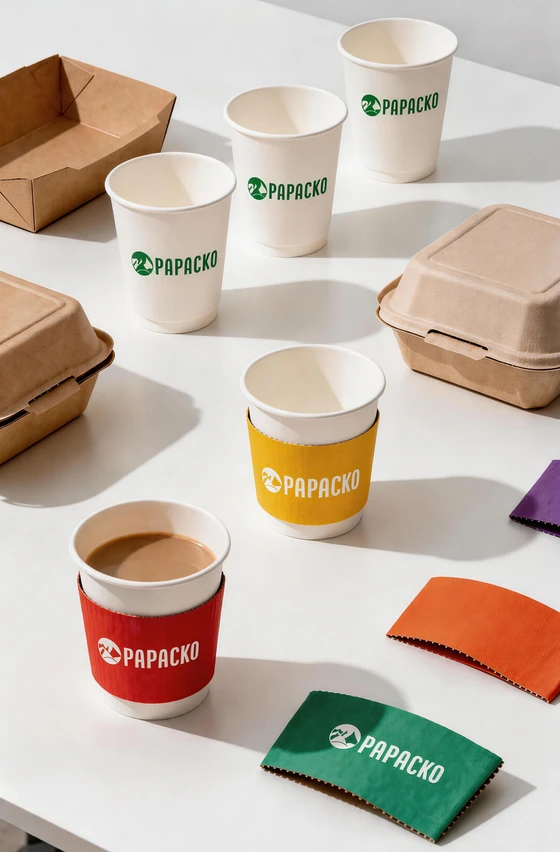
هل أنت مستعد لإنشاء أكواب ورقية أو عبوات ورقية تحمل علامتك التجارية الخاصة بك؟
أخبرنا بمتطلباتك - الحجم والطلاء والطباعة والوجهة - وسيقوم فريقنا بإعداد عرض أسعار مفصل في غضون 24 ساعة.

Buying paper napkins wholesale is mainly a specification decision, not a commodity purchase. For most cafes, a 2-ply quarter-fold napkin in the 30×30 cm to 33×33 cm range is the safest starting point; for catering, larger 2-ply or 3-ply napkins usually justify their higher cost by reducing guest overuse and service complaints.
When buyers get napkin specs wrong, the problems are predictable: weak sheets that break during use, refill packs that jam dispensers, oversized cases that consume dry storage, or custom print runs that arrive after the event window. The right approach is to work from mechanism to outcome: how the sheet is built, how it dispenses, how it handles moisture, and what that means for cost per cover.
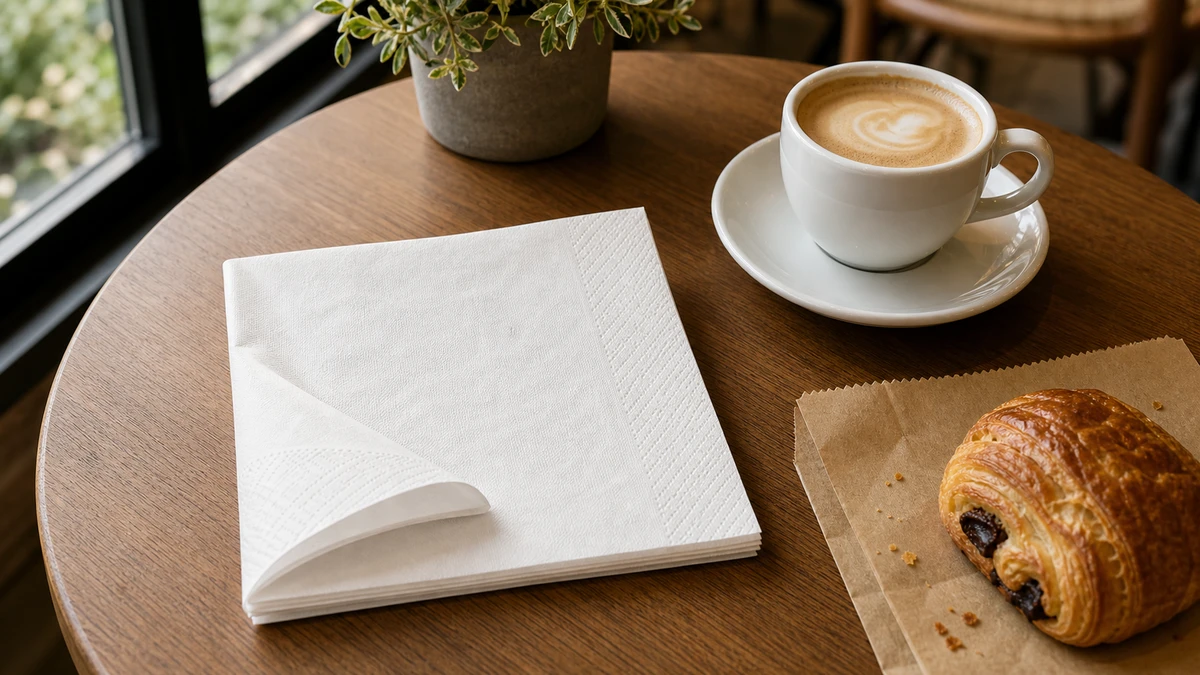
The four napkin specs that matter most are ply count, sheet size, fold type, and fiber source. Together, they determine absorbency, hand feel, dispenser fit, print quality, case volume, and true operating cost.
Ply is the number of tissue layers bonded into one napkin: 1-ply typically runs around 13-17 gsm, 2-ply around 28-36 gsm total, and 3-ply around 45-55 gsm total. More layers create more fiber structure and more space to hold liquid, so the napkin survives longer in real use. A 1-ply napkin may be 20-35% cheaper per unit, but if guests take twice as many, the saving disappears – a common outcome in buffet and takeaway environments. For a 300-cover catered event, moving from 1-ply at 6 napkins per guest to 2-ply at 3 napkins per guest can materially reduce total consumption even when the per-unit price is higher.
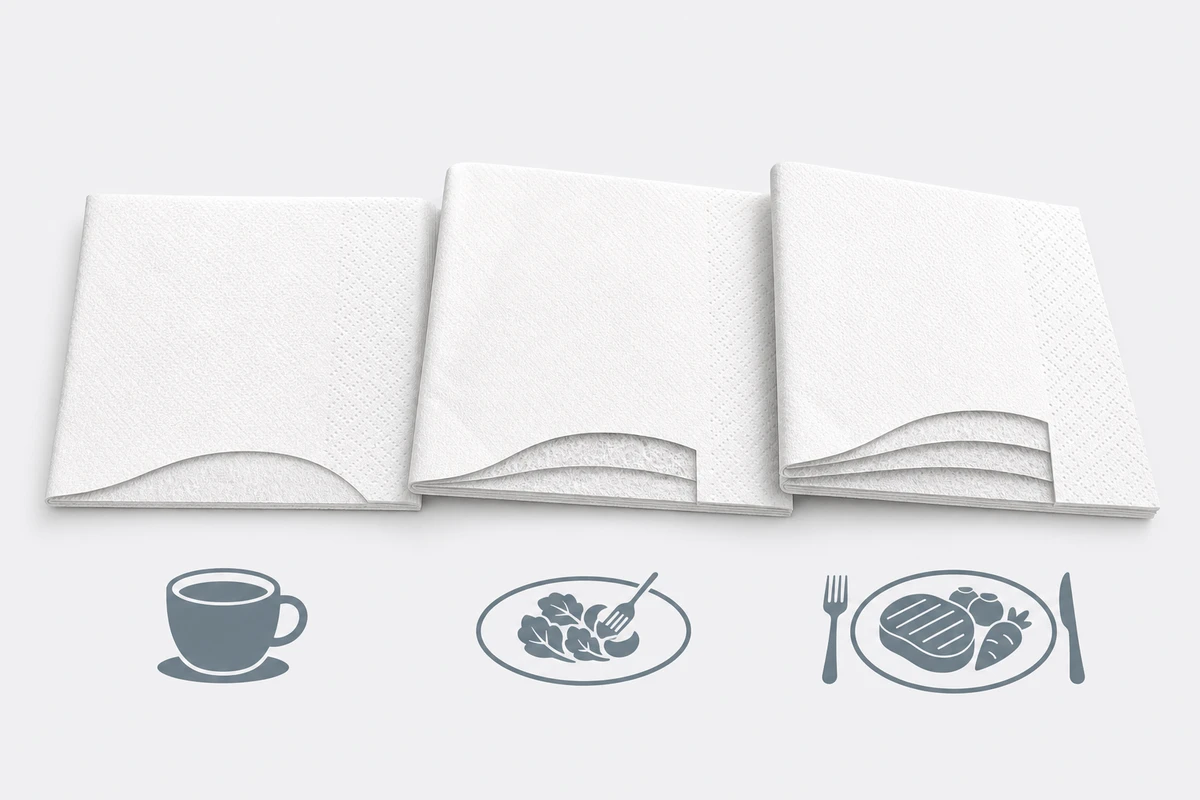
Common wholesale sizes run from 25×25 cm for cocktail service, 30×30 to 33×33 cm for cafe and luncheon use, up to 38×38 cm or larger for dinner service and linen-replacement catering. Larger sheets improve wipe coverage and reduce the need for multiples, but they increase case volume and cost per thousand – a storage trade-off that matters more in smaller sites than many buyers expect.
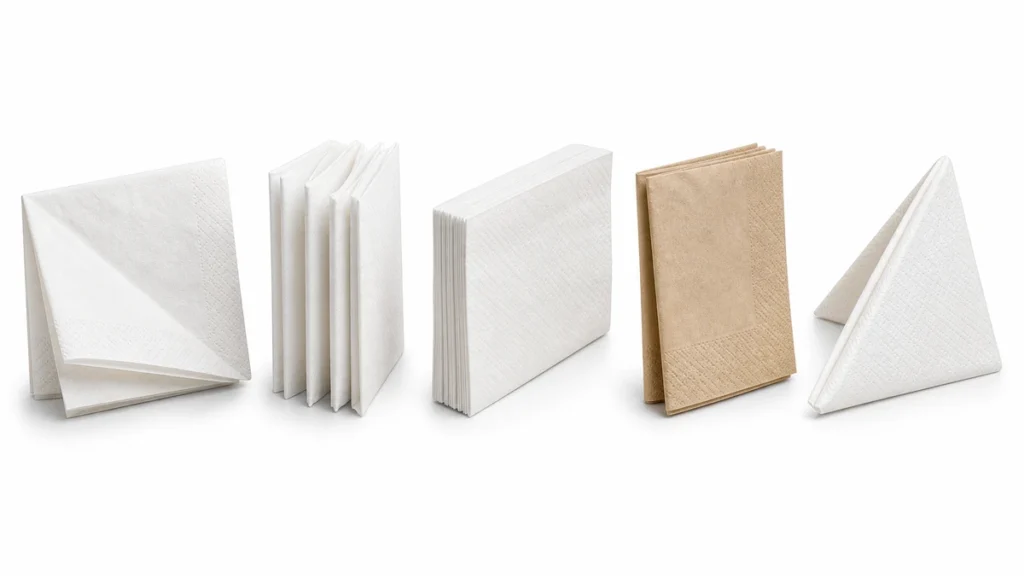
Fold style is a handling and waste-control issue, not a presentation detail. Quarter-fold is the standard tabletop format; octofold suits compact beverage service; interfold enables controlled dispensing; linen-fold and airlaid styles serve premium catering. If your site uses dispenser units, verify the refill format against the actual throat width and pack geometry before committing to volume – buying the right napkin size in the wrong fold is one of the most common sourcing mistakes, and it causes bridging or double-feeding in service.
Virgin wood pulp offers the most consistent wet strength and lowest lint, making it the natural choice where presentation and print definition matter. Recycled fiber usually lowers cost and supports sustainability messaging, but lint level and sheet consistency vary by mill. Bamboo or bagasse blends support premium sustainability positioning at a noticeable cost premium, and typically only make commercial sense where the end customer will value the material story enough to support the higher cost per cover.
Wholesale catalogs can make napkins look interchangeable. Buyers get better results by comparing options the way an operator uses them: by counter service, table service, buffet demand, event presentation, and print requirement.
| حالة الاستخدام | Best wholesale spec | Why it works | Main trade-off |
|---|---|---|---|
| Coffee counter / pastry takeaway | 1-ply or light 2-ply, 25×25 to 30×30 cm | Lowest cost, high pack density | Weak on moisture and greasy foods |
| Sit-down cafe / bistro | 2-ply, 30×30 to 33×33 cm, quarter-fold | Balanced absorbency and cost | Higher unit cost than 1-ply |
| Buffet catering | 2-ply, 33×33 to 40×40 cm | Better durability, lower guest overpull | More storage and freight volume |
| Premium plated events | 3-ply or linen-feel / airlaid style | Strong presentation and hand feel | Highest cost, often slower lead time |
| Bar / beverage service | 1-ply beverage or cocktail fold | Compact and economical | Not suitable for meal service |
Plain white remains the easiest SKU to replenish and standardize across sites, with broad distributor availability and low reorder risk. Natural or kraft napkins support a craft or sustainability-led visual identity; simple one-color branding holds up well, though print detail is less crisp than on white virgin stock. Custom-printed napkins become economical when the run is large enough to spread setup costs – many print programs start around 5,000-10,000 units – but for a 40-seat cafe with changing promotions, that volume can create obsolete stock.
Flexographic printing suits larger runs and simple logos at lower unit cost, but carries heavy setup. Digital printing suits short runs and multi-color event branding with faster turnaround but higher unit cost at scale. Embossing creates a premium tactile effect without ink, though tooling cost means it works best on repeat orders. A realistic lead-time rule: stock napkins can move in days, but first-time custom print jobs often require 3-5 أسابيع once proofing, plate prep, and shipment are included.
A stronger, larger, or more decorative napkin nearly always increases unit cost, case cube, minimum order quantity, print lead time, or storage demand. That does not make the premium spec wrong – it just means the spec should earn its place in the operation.
[رأي الخبير]
– For dispenser programs, ask for the refill pack dimensions, not only the open napkin size.
– If the napkin carries a logo, request a proof on the actual tissue substrate, not a smooth paper mock-up.
– When comparing costs, track napkins used per cover, not just price per thousand.
The most reliable way to order napkins is to calculate from covers, then adjust for service style, guest behavior, and storage capacity.
Use a practical service-rate baseline:
| Service format | Napkins per cover |
|---|---|
| Cafe counter service | 2-3 |
| Sit-down cafe / bistro | 3-4 |
| Full-service plated catering | 4-6 |
| Buffet catering | 5-8 |
| QSR takeaway | 2-3 |
| Food truck / kiosk | 1-2 |
Actual use typically runs 15-25% above theory, especially in open-access dispenser formats. For a site serving 200 covers per day at 4 napkins per cover, the base need is 800 napkins; adding 20% variance gives 960 per day, or approximately 5,760 over six trading days – a practical order quantity of one 6,000-unit case equivalent. This kind of planning prevents emergency top-up buying, which nearly always costs more.
If you use a small dispenser napkin at the counter and a larger 2-ply napkin for dine-in service, calculate them separately. Blended estimates are one of the main reasons buyers run out of dine-in stock while still holding excess counter stock.
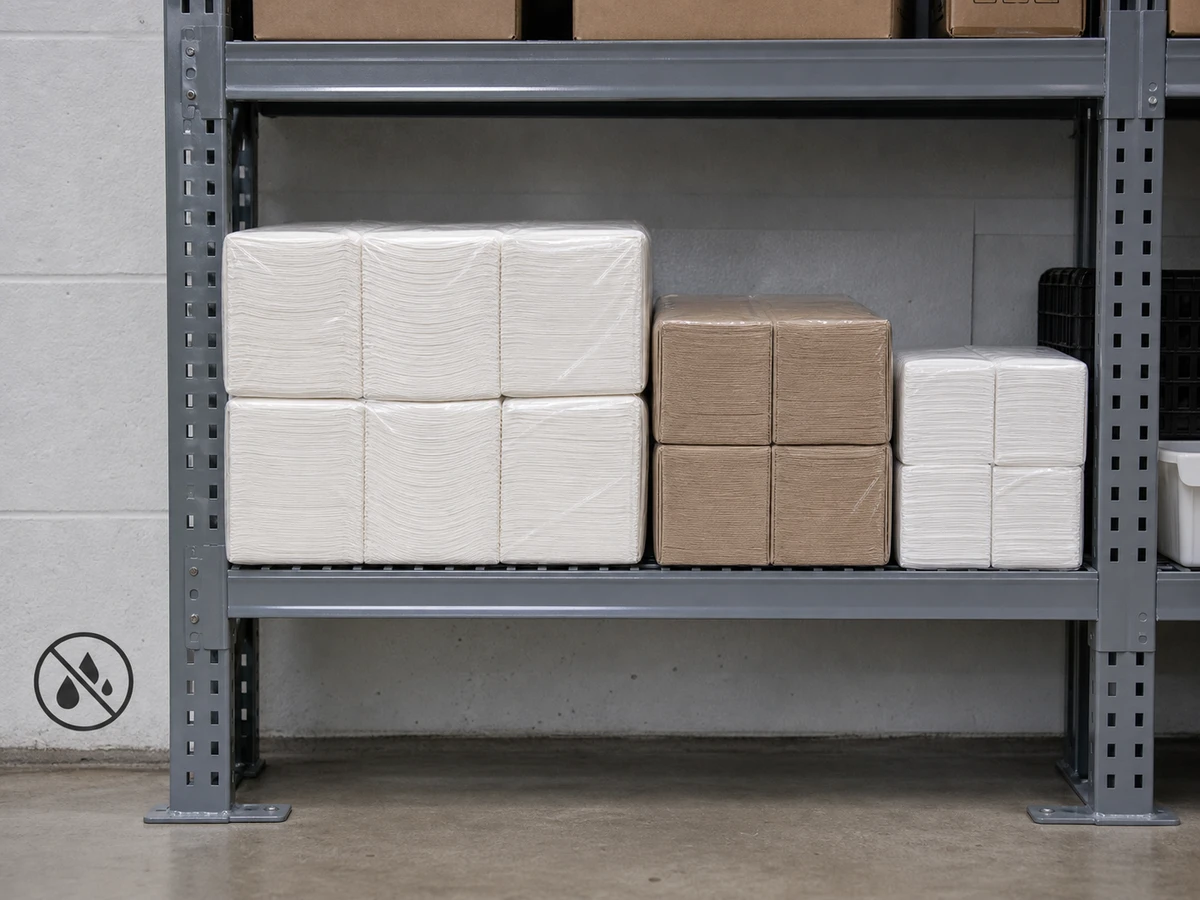
Case volume matters, and humidity damage is a real issue in back-of-house storage. Buyers who save 10% on bulk pricing can lose that advantage entirely when cases stored near wash-up areas soften before use. If dry storage is tight, weigh lower-cost bulk orders with higher stockholding risk against smaller frequent orders with higher freight or distributor markup – that is an operational decision, not just a procurement one.
For napkins used in food service, compliance should be documented, not assumed. The key questions are whether the material is suitable for food-contact environments, whether printed inks or dyes are appropriate, and whether fiber claims are backed by actual certification.
The U.S. Food and Drug Administration explains how المواد التي تتلامس مع الأغذية are regulated and why supporting documentation matters for materials used around food: https://www.fda.gov/food/food-ingredients-packaging/food-contact-substances-fcs
Food-contact compliance governs substances used in the napkin material or print system. Buyers should request a declaration or test-backed statement tied to the exact SKU, especially for printed, dyed, or recycled-fiber products. شهادة FSC confirms responsible fiber sourcing and chain of custody – it does not mean the napkin is compostable or food-safe. Recycled-content claims should state whether content is post-consumer or pre-consumer; “contains recycled fiber” without a percentage is too vague for most procurement reviews. الادعاءات المتعلقة بالقابلية للتحلل require caution: a napkin may be technically compostable under industrial conditions but not accepted by your local waste contractor, so end-of-life claims must be matched to the disposal infrastructure you actually use.
Before approving a wholesale napkin supplier, ask for the product specification sheet for the exact SKU, a food-contact declaration, any fiber certification number, recycled content percentage if claimed, print or colorant confirmation for custom or dyed napkins, and pack count, case dimensions, pallet configuration, and lead time. This documentation matters most for hotel groups, institutional catering, export orders, and buyers standardizing across multiple sites.
[رأي الخبير]
– A certification logo on artwork is not enough; ask for the certificate number and expiry.
– For recycled napkins, confirm whether the supplier can provide mineral oil or migration-related test data where relevant to your market.
– If compostability is part of the brief, verify that the waste stream accepts that format before paying the premium.
The right supplier is not always the one with the lowest price per thousand. You are buying consistency, refill fit, delivery reliability, print control, and documentation quality.
| المعايير | Direct mill | Wholesale distributor | Import trader |
|---|---|---|---|
| Unit price at scale | الأقوى | معتدل | Often competitive |
| مرونة الحد الأدنى لكمية الطلب | Weak | الأقوى | Moderate to weak |
| Lead time speed | معتدل | Strongest for stock items | Weakest |
| Spec control | الأقوى | معتدل | تختلف على نطاق واسع |
| Mixed-SKU ordering | Weak | الأقوى | معتدل |
| Documentation handling | Usually strong | Usually good | Must be checked closely |
Direct mill suits buyers with stable higher-volume demand and the ability to take larger minimums – chains, contract caterers, and distributors standardizing a repeat spec. Wholesale distributor suits cafes and smaller catering operations that need lower MOQs, faster replenishment, and mixed orders. Import trader can be cost-effective for planned larger orders, especially with custom print, but requires more work validating specifications and compliance files, and carries longer lead times.
Before any meaningful order, request a current production sample and test wet strength, ply separation under light pressure, lint transfer on dark fabric or glassware, dispenser fit, printed logo sharpness and rub resistance, and pack count accuracy. Dispenser fit and pack consistency cause more day-to-day operational friction than buyers expect – refill packs that bow inside the dispenser slow service even when the napkin itself is otherwise acceptable.
Score at least three suppliers on price at your volume, sample quality versus stated spec, MOQ fit, lead-time reliability, compliance documentation, custom print capability, and case-pack and pallet efficiency. For multi-site rollouts, also check export-carton labeling, pallet stability, and whether the supplier can hold spec consistency across reorders – the challenge is making the fifth reorder match the first without color drift or silent spec substitution.
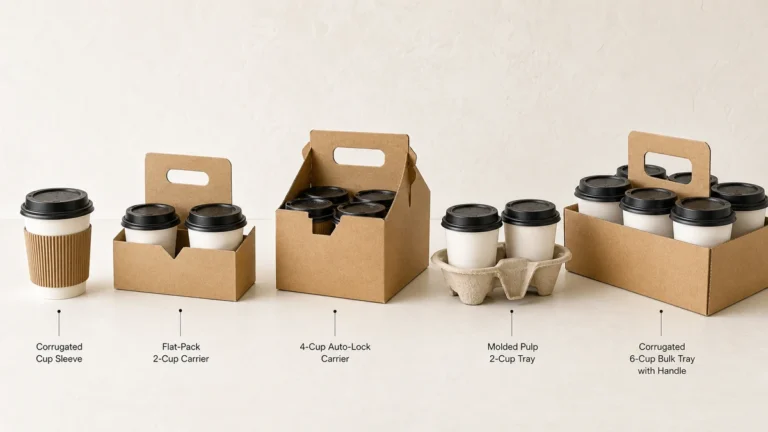
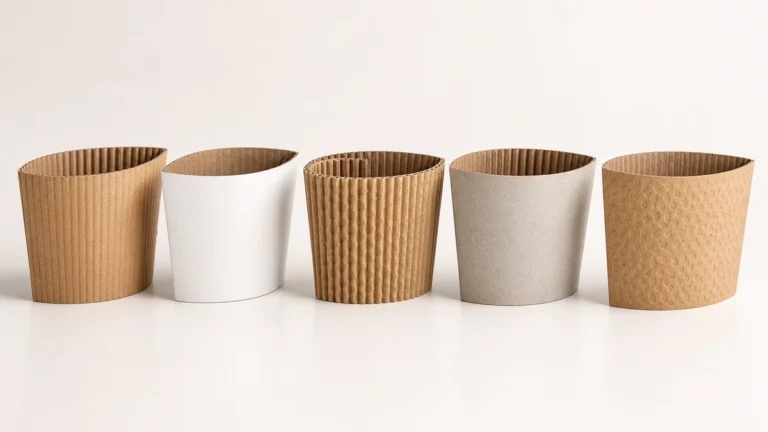
Napkins rarely sit alone in procurement. Most cafes and caterers order them alongside cups, lids, takeaway containers, sleeves, or bags. Standardizing these items together reduces artwork mismatches, fragmented lead times, and unnecessary freight handling.
If you’re aligning napkins with a broader program, it helps to review related categories such as حاويات تغليف المواد الغذائية, ملحقات التعبئة والتغليف, و أكواب ورقية صديقة للبيئة. For teams refining specification consistency, Papacko’s guides on أحجام الأكواب الورقية و التغليف الورقي المستدام are also useful reference points.
Matching print colors across napkins, sleeves, and bags improves brand consistency; combining replenishment cycles reduces ordering friction; and synchronized proofs prevent one packaging item arriving approved while another lags. For event caterers, a napkin spec that works loose on a table may not work inside a pre-built event kit if the fold is wrong or the pack depth disrupts assembly.
A productive sourcing conversation should include current napkin SKUs and monthly usage, fold type and open dimensions, dispenser model if applicable, plain versus printed requirement, vector brand files and Pantone references, target MOQ and reorder cadence, storage limits, and any food-contact or sustainability documentation needs.
If you are reviewing or re-tendering napkin supply, start with a one-page spec brief and ask for current samples, case dimensions, lead time, and compliance documents against that brief. That process usually reveals faster than price comparison alone whether a supplier can support standardization, clean reorders, and practical service performance.

For most cafe table or counter service, 2-ply is the safest balance of cost and performance. It usually reduces overuse compared with 1-ply while avoiding the premium cost of 3-ply.
Check the fold type, refill pack dimensions, and the dispenser throat or cavity size. A physical sample test is the most reliable way to avoid jamming or double-feeding.
Often, but not always. Recycled fiber can reduce cost, though print quality, lint level, and wet strength may vary depending on the mill and sheet construction.
Usually when your order volume is high enough to spread setup costs over a larger run. For many buyers, that starts around several thousand units and becomes much more efficient on repeat orders.
Usually no. Catering often needs larger sheets, stronger wet performance, and sometimes a better presentation grade, especially for plated or buffet events.
Ask for the SKU spec sheet, food-contact documentation, any fiber certification details, case and pallet configuration, and confirmed lead time. For printed napkins, also request a production proof.
No. Compostability claims should be matched to the disposal route you actually have available, and the supplier should be able to explain the basis for the claim for that specific product.