هل أنت مستعد لإنشاء أكواب ورقية أو عبوات ورقية تحمل علامتك التجارية الخاصة بك؟
أخبرنا بمتطلباتك - الحجم والطلاء والطباعة والوجهة - وسيقوم فريقنا بإعداد عرض أسعار مفصل في غضون 24 ساعة.

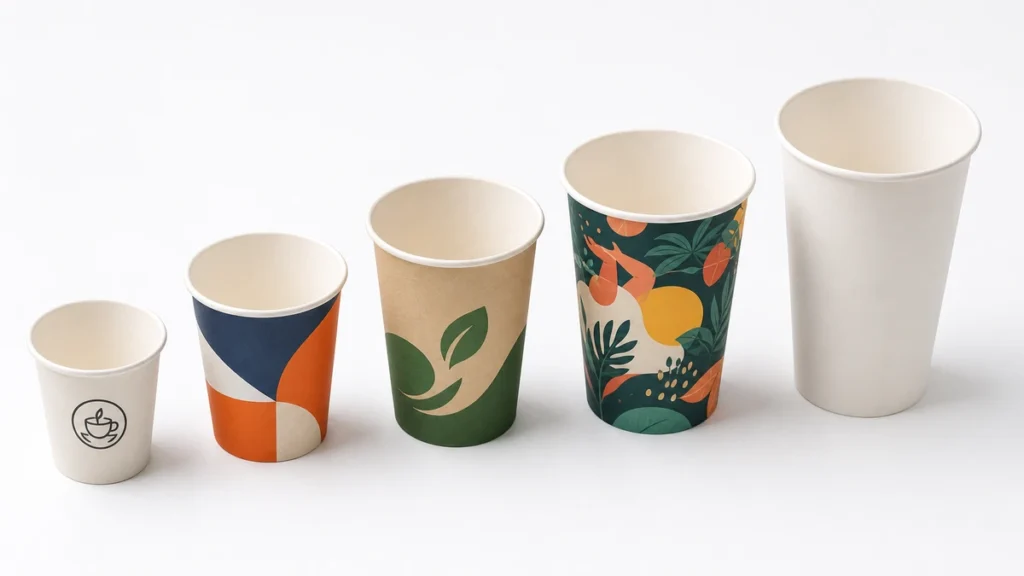
For most commercial programs, the MOQ for custom printed paper cups lands between 1,000 and 50,000 units per SKU. The real driver is setup economics: print plates, press changeovers, cup-forming line time, and QC all create fixed costs that must be spread across enough units to make the run commercially workable.
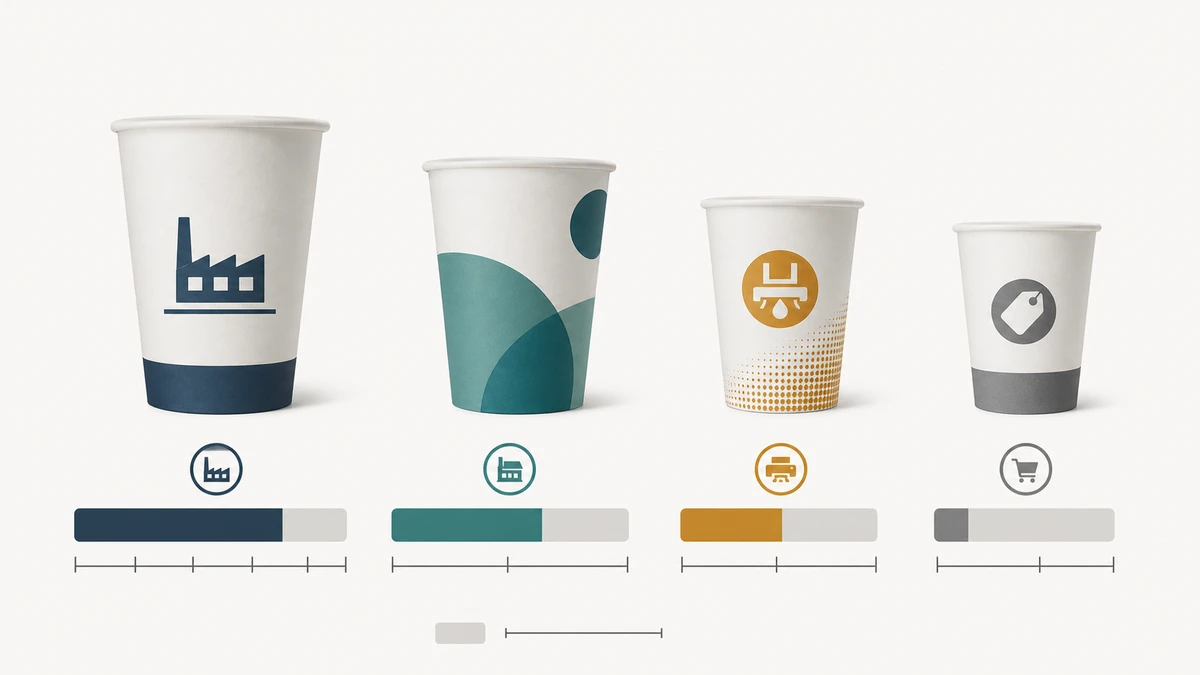
Flexographic plates typically cost $150-$400 per color, so a four-color design adds $600-$1,600 before the first sellable cup is made. Low volumes mean those fixed costs land on fewer units, raising unit price or triggering a setup surcharge.
| نوع المورد | الحد الأدنى المعتاد للطلب | Best Fit |
|---|---|---|
| Large integrated manufacturer | 25,000-100,000 units | QSR chains, distributors, national rollouts |
| Mid-tier converter | 5,000-25,000 units | Regional operators, hospitality groups |
| Specialty short-run printer | 500-5,000 units | Events, pilots, launches, test markets |
| Reseller using stock cups + overprint | 250-1,000 units | Pop-ups, single stores, temporary campaigns |
Resellers quote lower MOQs by overprinting a stock cup rather than running a fully custom blank, which limits artwork to simpler layouts and fewer colors.
Below MOQ, most suppliers add a setup surcharge, shift the job to digital printing, or decline the order. Unit pricing can rise 30-80%, enough to erase the value of offshore sourcing or make a promotional run hard to justify.
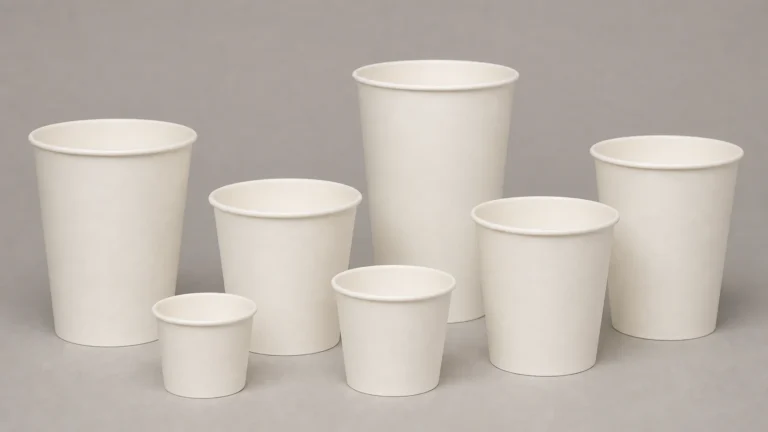
A 12 أونصة و 16 أونصة cup use different blanks, different forming setups, and often different case-pack counts, so they are normally quoted as separate SKUs with separate MOQs. Before RFQ, confirm cup size in oz and ml, rim diameter, matching lid SKU, and MOQ per size. Standard size ranges on أحجام الأكواب الورقية can help narrow the right SKU mix before requesting quotes.
Lead time for custom printed paper cups is typically 18-35 business days factory-side after artwork approval. For imported orders, the realistic planning window is usually 6-10 weeks landed once freight is included.
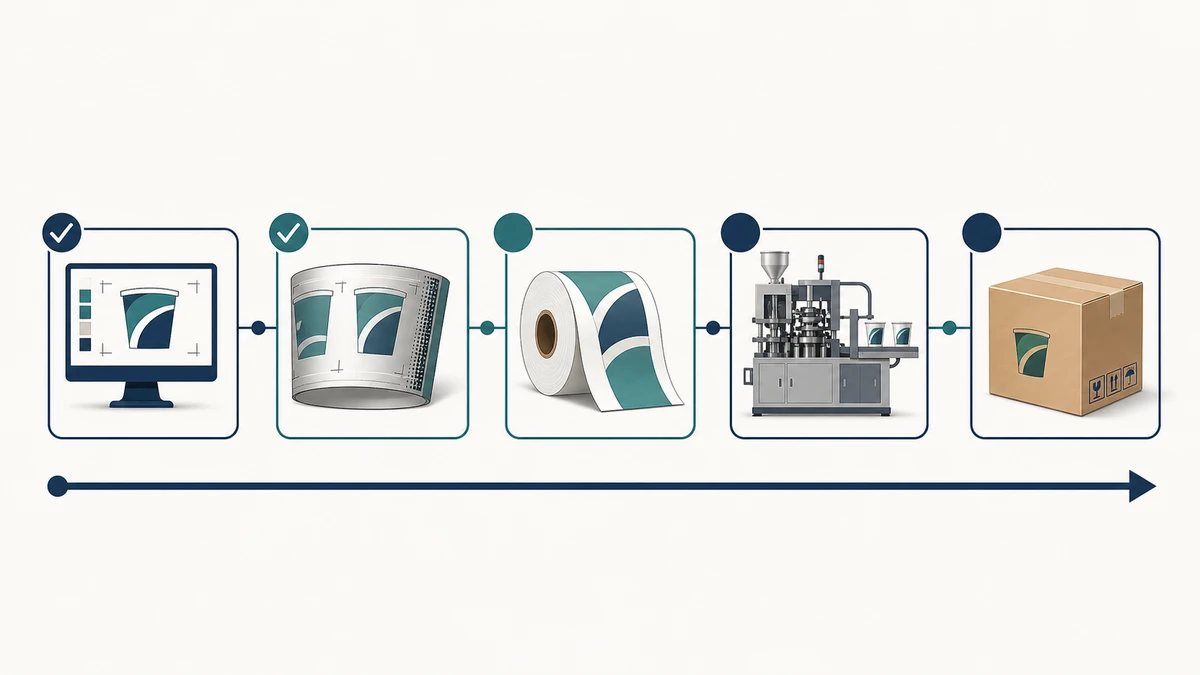
| المرحلة | Activity | Realistic Duration |
|---|---|---|
| 1. Artwork approval | File review, proof cycle, sign-off | 2-5 business days |
| 2. Plate or cylinder making | Flexo plates or gravure cylinders | 5-10 business days |
| 3. Board allocation | PE-, PLA-, or other coated board reserved | 1-5 business days |
| 4. Printing and converting | Printing, die-cutting, forming, seaming | 7-15 business days |
| 5. QC and dispatch | Inspection, case packing, booking freight | 2-5 business days |
Ocean freight from East Asia to North America or Europe typically adds 18-30 days depending on port conditions and routing.
Most delays are cumulative: artwork revisions add 1-3 days per cycle, first-order sample approval can add 10-20 days, and holiday shutdowns can create 4-6 week backlog effects. Artwork readiness is the most controllable variable – a clean, approved file moves; an almost-ready file sits.
Work backwards from the delivery date and protect at least two weeks beyond the quoted schedule. For an October campaign needing imported cups mid-month, artwork should typically be finalized no later than early August, since production holidays, vessel rollovers, and customs paperwork rarely occur in isolation.
Artwork readiness is one of the few variables a buyer can fully control, and it has an outsized effect on both lead time and print quality.
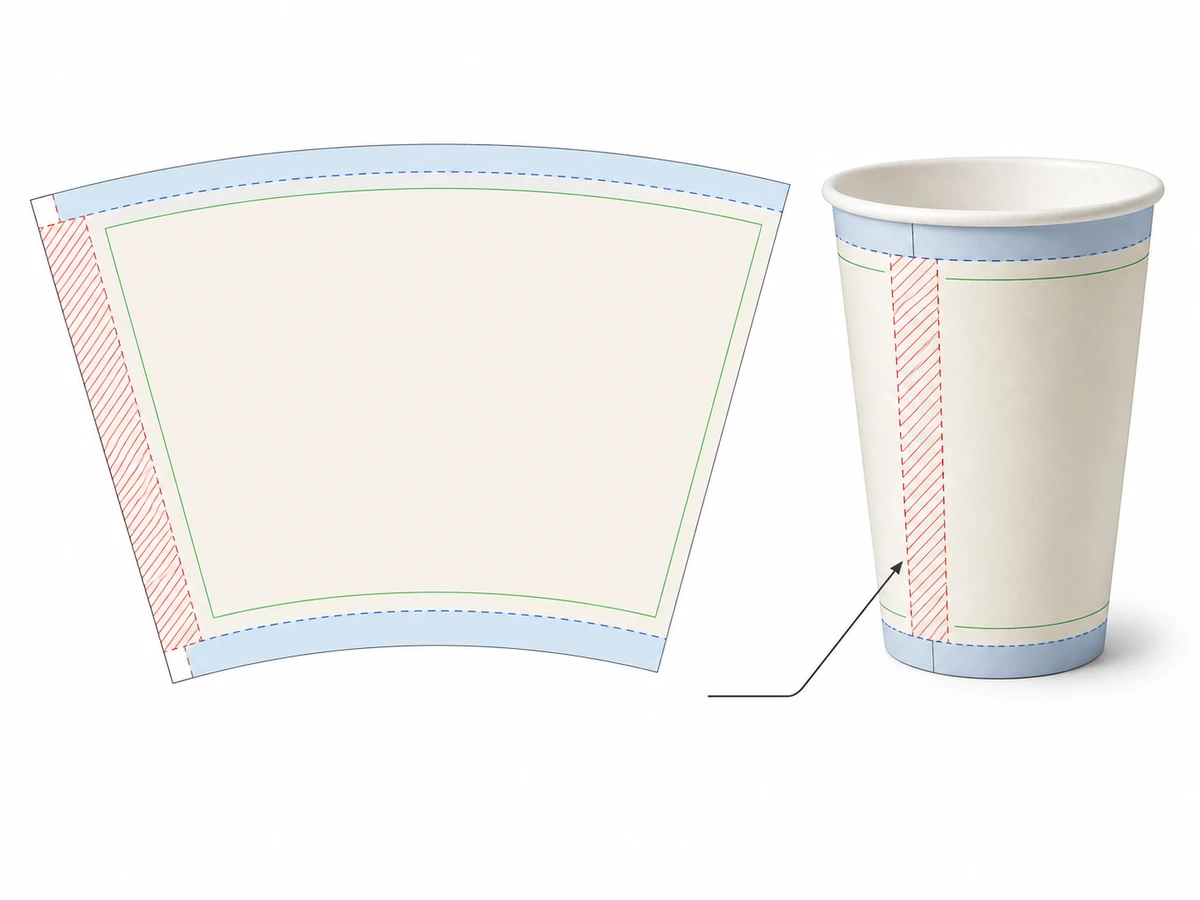
Every cup size uses a specific fan-shaped blank; artwork built on a rectangle will distort once wrapped and seamed. Request the supplier’s template before design work begins, and confirm the seam overlap zone (usually 3-5 mm), bleed (usually 3-4 mm), and safe area for critical text (at least 5-6 mm inside final edges).
| المواصفات | Typical Requirement | ما أهمية ذلك |
|---|---|---|
| تنسيق الملف | PDF/X-1a or AI with outlined fonts | Prevents font substitution |
| وضع الألوان | CMYK | Avoids uncontrolled RGB conversion |
| قرار | 300 dpi at final size | Prevents visible pixelation |
| Minimum line weight | 0.25 pt | Fine strokes can disappear on flexo |
| Small black text | K-only black | Reduces fringing on press |
If spot colors are needed, list exact PMS references and confirm whether the supplier is printing spot colors or process simulation.
Flexo handles bold logos and flat color blocks well; digital suits short runs and complex graphics but unit cost rises quickly at scale. Forcing photographic or gradient-heavy art into a flexo-friendly budget typically requires design simplification.
The most recurring issues are RGB files submitted for CMYK production, missing bleed, and web-resolution logos at 72-96 dpi. Missing bleed alone can create white edges on a visible share of finished cups because blank cutting and forming run at speed.
For first orders, request a digital proof to catch layout issues and a physical sample or press proof if color is brand-critical. If sustainability positioning is part of the design brief, align print and material spec with realistic end-of-life claims; broad guidance is available in التغليف الورقي المستدام.
The right question is not “Which method is best?” but “Which method matches my volume, artwork, launch speed, and reorder pattern without overpaying or over-specifying?”
| Buying Scenario | Best-Fit Method | Why It Wins | Main Trade-Off |
|---|---|---|---|
| 500-2,000 cups for launch or sampling | رقمي | No plates, fast setup | Higher unit cost |
| 5,000-25,000 cups with 2-4 solid colors | فلكسوغرافيك | Best cost balance at mid volume | Plate cost upfront |
| 50,000+ cups on repeat program | فلكسوغرافيك | Lowest cost at scale, strong repeatability | Longer setup cycle |
| Complex photo-heavy artwork | Digital or selective offset | Better tonal reproduction | Slower or more expensive |
| Specialty finish on promotional items | الشاشة | Thick ink effect, tactile finish | Not standard for high-volume disposable cups |
Flexo is the dominant method for most commercial paper cup production. Setup cost is front-loaded, but unit price drops sharply as volume rises – the standard choice for cafes, chains, and QSR programs from 5,000 units upward where artwork is logo-led and the cup will be reordered.
Digital eliminates plate cost by printing directly to the blank. It is most practical at 250-1,000 units, with unit cost typically 30-60% higher than flexo at the 5,000-cup level. For low-volume programs, avoiding tooling that would overwhelm order value makes digital the right answer.
Offset appears in some pre-print supply chains where board is printed before cup conversion, offering better image detail but more setup complexity. It suits longer runs and structured supply programs rather than buyers sourcing smaller quantities directly.
Three questions frame the decision: What is the actual reorder volume? Is the design simple enough for the process? Will first-run tooling be reused often enough to pay back? If piloting, digital usually makes sense; if rolling out a stable brand program, flexo usually wins.
Cup construction affects thermal performance, print surface behavior, case-pack density, storage footprint, and service workflow. Good buying decisions come from identifying the main constraint first.
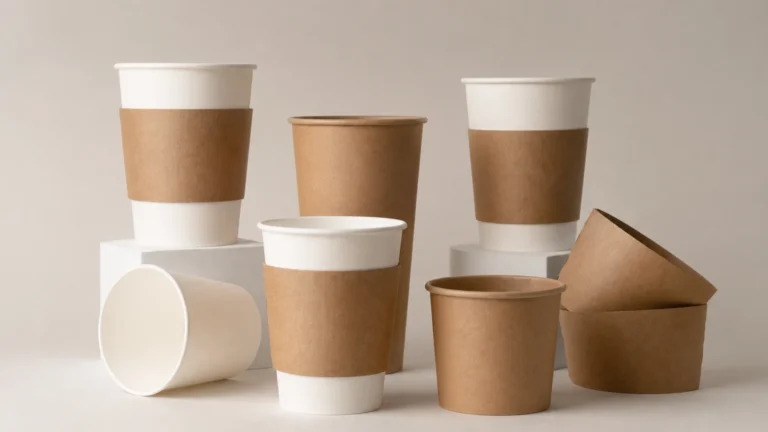
جدار واحد uses one paperboard layer, commonly 170-300 gsm; heat transfers directly through the wall, so hot-drink service often requires a sleeve. جدار مزدوج uses two paper layers with a 2-4 mm air gap that improves insulation and rigidity. جدار متموج adds a fluted outer layer that creates insulation and grip through structure rather than a smooth outer ply.
| السمة | جدار واحد | جدار مزدوج | Ripple-Wall |
|---|---|---|---|
| Hot-drink comfort | الأقل | عالية | عالية |
| Need for sleeve | Usually yes | Usually no | Usually no |
| سطح الطباعة | سلس | سلس | Textured; less friendly to fine detail |
| Stack efficiency | الأعلى | أدنى | أدنى |
| Relative cost | الأقل | +30-60% vs single-wall | +20-45% vs single-wall |
| Best commercial fit | Cold drinks, sleeve programs | Premium hot beverage service | Hot drinks with craft look and cost discipline |
Best when cold beverages dominate, sleeves are already part of the program, or storage density matters. It delivers the lowest landed cost when heat management is handled through a separate accessory.
Best for cafe-style hot beverage service where customers hold the cup longer, with a smooth premium print surface that eliminates the need for a sleeve.
Best when insulation close to double-wall is needed at lower cost or with a textured look, provided the design uses simple logos and bold color blocks rather than fine-line or photo-based art.
Wall construction changes case-pack density: a 12 oz single-wall cup might ship 1,000 per case, while the equivalent double-wall or ripple format may pack at 400-500 per case. This raises freight cost per delivered cup and reduces multi-site replenishment efficiency. Confirm case dimensions and pallet yield before approving a PO.
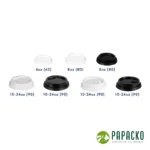
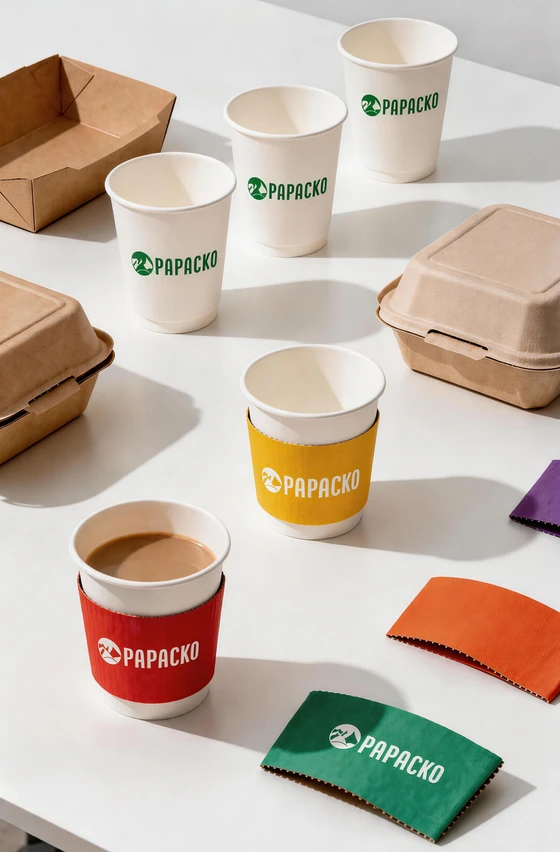
Cup selection should be validated with lids, sleeves, and carriers as one system. Components such as أغطية أكواب القهوة and sleeves should be confirmed against actual rim diameter and service conditions before artwork is approved.
A custom cup order becomes a supply-chain decision the moment case counts, pallet heights, and reorder timing enter the picture.
Evaluate in sequence: wall type -> case count -> pallet yield -> storage cost -> delivered unit cost. A 12 oz double-wall or ripple cup often packs at 400-500 per case versus 1,000 per case for single-wall, meaning freight and storage cost per serving can move sharply upward even when the quoted unit price looks comparable. Before approving a PO, request case dimensions, gross weight, units per case, and cases per pallet.
Paper cups are hygroscopic and absorb moisture, directly affecting board stiffness, rim integrity, and sleeve separation in service. A workable storage range is 15-25 degrees C at below 65% relative humidity, with at least 10 cm floor clearance and FIFO rotation. Cups stored in humid conditions can show sleeve sticking or rim distortion within 4-6 أسابيع – an issue that typically surfaces when operators begin drawing on stock rather than when the pallet arrives.
A simple planning check: weekly usage x landed lead time = base reorder point, then add 1-2 أسبوع safety stock. At 500 cups per week, a 50,000-unit order represents nearly two years of inventory – raising risk around artwork changes, humidity exposure, and storage inefficiency.
Most failed cup projects fail because assumptions survive too long into production. The final specification stage is where good buyers remove ambiguity.
A reliable RFQ or PO package should lock these points in sequence:
If cups are entering foodservice channels, request food-contact documentation relevant to the destination market. In the U.S., the FDA’s framework for food contact substances governs coatings, inks, and substrate components. If compostability or recyclability is part of the brief, qualify the claim against the real disposal route rather than technical design intent alone.
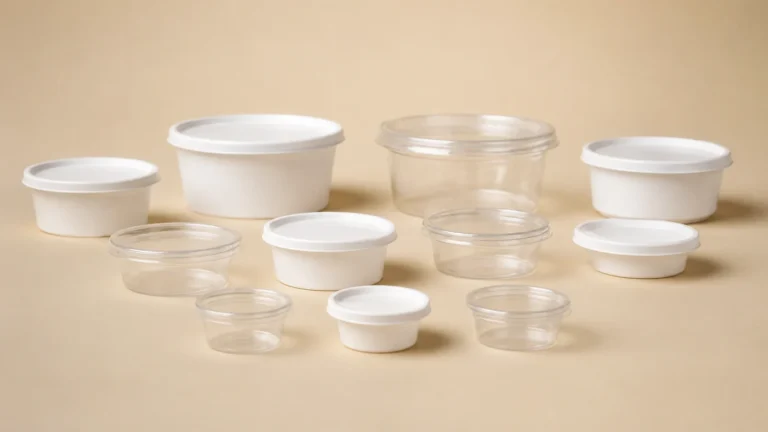
Before requesting quotes, assemble a working specification pack covering cup size and estimated annual volume by SKU, hot or cold use case, wall type, liner or coating preference, matching lid requirement, print-ready artwork or a dieline-based draft, required in-hand date, delivery location, and any storage constraints. Align your cup program with adjacent حاويات تغليف المواد الغذائية and service accessories early, and start with your core أكواب ورقية program before aligning lids and sleeves.
Most programs fall between 1,000 and 50,000 units per SKU. The exact minimum depends on print method, cup size, and how the supplier handles setup cost.
Usually yes on total order value, but not on unit price. Digital avoids plate cost, so it is often the most practical option for short runs even though each cup costs more.
Because each size uses a different blank and often different tooling and case-pack logic. A 12 oz and 16 oz cup are typically quoted and produced as separate items.
For imported production, planning 6-10 weeks ahead is usually safer than relying on the factory lead time alone. First orders often need extra time for proofing and sample validation.
Not always, but it is strongly recommended for first orders, new substrates, or brand-critical colors. A physical sample also helps catch practical issues like seam placement and lid fit.
Not always. They improve insulation and rigidity, but they also cost more and reduce case-pack density, which affects storage and freight economics.
They can, but storage conditions matter. Humidity, floor contact, and slow stock rotation can affect board stiffness, print condition, and service performance over time.