هل أنت مستعد لإنشاء أكواب ورقية أو عبوات ورقية تحمل علامتك التجارية الخاصة بك؟
أخبرنا بمتطلباتك - الحجم والطلاء والطباعة والوجهة - وسيقوم فريقنا بإعداد عرض أسعار مفصل في غضون 24 ساعة.

آخر تحديث: نوفمبر 2025
وقت القراءة: 11 دقيقة
المؤلف: فريق محتوى باباكو
Your café chain is expanding to 15 locations, but you’re still ordering coffee ملحقات التعبئة والتغليف piecemeal from three different suppliers, paying 30-40% markup, dealing with inconsistent quality, and spending 8-10 hours monthly on reordering. Meanwhile, your competitor sources everything from one wholesale partner, pays 35% less, maintains consistent branding across all locations, and never runs out of stock.
Wholesale coffee packaging accessories aren’t just about buying in bulk—they require strategic supplier selection, MOQ negotiation, quality control systems, inventory management, and understanding total cost of ownership beyond unit price. The difference between reactive purchasing and strategic wholesale sourcing can represent $15,000-30,000 annual savings for a mid-sized café operation.
في هذا الدليل, ستتعلم
-Essential coffee packaging accessories and typical wholesale MOQs
-How to evaluate and select reliable wholesale suppliers
-Quality control checkpoints for bulk orders
-Pricing structures and total cost analysis
-Supply chain management for multi-location operations
-Common wholesale purchasing mistakes and how to avoid them
-Import/export considerations for international sourcing
💡 الوجبات السريعة: Coffee packaging accessories wholesale requires 10,000-50,000 unit MOQs per SKU, 30-60 day lead times, and total investment of $5,000-15,000 for comprehensive starter inventory.
Expect 25-40% savings vs retail, but factor in storage costs ($200-500/month), cash flow requirements (60-90 day payment terms), and quality control overhead.
Critical success factors: Multi-SKU bundling with single supplier, quarterly forecasting based on actual usage data, backup supplier for critical items.
Best for: Operations using 10,000+ units/month, multi-location chains, distributors serving 5+ cafés.
Understanding total cost of ownership—not just unit price—prevents expensive mistakes and enables accurate ROI calculation.
Tiered Volume Pricing (الأكثر شيوعاً):
-Base price at MOQ: $0.050/unit
-2x MOQ: $0.045/unit (-10%)
-5x MOQ: $0.040/unit (-20%)
-10x MOQ: $0.037/unit (-26%)
الإيجابيات: Predictable, easy to calculate, encourages larger orders
السلبيات: Limited negotiation flexibility, may push you to overstock
Negotiated Contract Pricing:
-Annual commitment of $50,000+ total purchases
-Fixed pricing for 12 months regardless of order size
-Typically 15-25% below tiered pricing at equivalent volume
الإيجابيات: Budget certainty, best per-unit economics, supplier relationship priority
السلبيات: Requires accurate forecasting, penalties for under-performance, cash flow commitment
Spot Pricing (Market-Based):
-Pricing varies per order based on raw material costs
-Common for paper products tied to pulp market prices
-Typically 5-10% premium vs contract pricing for flexibility
الإيجابيات: No long-term commitment, can capitalize on market dips
السلبيات: Unpredictable budgeting, higher average cost, no supplier loyalty benefits
الشحن واللوجستيات:
-Domestic freight: $200-500 per pallet (2,000-3,000 lbs)
-International shipping: $1,500-4,000 per 20ft container
-Import duties/customs: 0-15% of product value (varies by country and product type)
-Freight insurance: 1-3% of shipment value
Storage and Handling:
-Warehouse rent: $8-15 per pallet per month
-Or dedicated storage: $200-500/month for 200-300 sq ft
-Inventory management labor: 2-4 hours/month
-Damage/obsolescence: Factor 1-3% loss
Cash Flow Impact:
-Payment terms: Net 30-60 days from shipment (not delivery)
-Opportunity cost: Capital tied up in inventory
-Financing costs: If using credit line, add 6-12% annual interest
Quality Control Overhead:
-Sample testing: $50-100 per order
-Defect management: 1-2 hours staff time per issue
-Returns/replacements: 5-10% of defect value in logistics costs
#### Total Cost of Ownership Analysis (Example: أغطية فناجين القهوة)
الرؤى الرئيسية: Direct wholesale offers best per-unit cost but requires 23x more capital investment than distributor option.
Efficiently distributing wholesale inventory across multiple locations prevents stockouts, minimizes waste, and optimizes cash flow.
Centralized Warehouse Model:
-Single wholesale order ships to central location
-Redistribute to individual cafés based on usage
-Requires: Dedicated storage space, distribution logistics, inventory tracking system
المزايا:
-Maximum volume discounts (single large order)
-Centralized quality control
-Easier management of slow-moving items
-Buffer stock protects against supplier delays
التحديات:
-Requires 200-500 sq ft storage space
-Internal distribution costs and logistics
-Single point of failure (if warehouse has issues)
-Staff time for redistribution: 4-8 hours/week
Decentralized Direct Shipping:
-Wholesale supplier ships separately to each location
-Each café manages own inventory
-Smaller orders per location, but combined volume for pricing
المزايا:
-No central warehouse needed
-Each location manages own stock levels
-Faster restocking (direct from supplier)
التحديات:
-Higher shipping costs (multiple addresses)
-Inconsistent stock management between locations
-Quality variability (different batches per location)
-More complex ordering process
Consumption-Based Forecasting:
1.Track Actual Usage (90-day baseline):
– Record daily/weekly consumption per SKU
– Calculate average: Total units ÷ days = units/day
– Identify variance: Seasonal peaks, promotional impacts
2.Calculate Reorder Point:
“`
Reorder Point = (Average Daily Usage × Lead Time Days) + Safety Stock
مثال:
– Coffee cup lids: 500 units/day average
– Supplier lead time: 21 days
– Safety stock: 7 days buffer
– Reorder Point = (500 × 21) + (500 × 7) = 14,000 units
“`
3.Set Economic Order Quantity (EOQ):
Balance ordering costs vs holding costs:
– Order too frequently: Higher shipping costs, more admin time
– Order too large: Cash tied up, storage costs, risk of damage/obsolescence
Optimal Order Frequency: 60-90 days for most accessories (2-3 months supply)
#### Multi-Location Inventory Distribution Matrix
Wholesale Order Strategy: Order 61,000 units monthly, distribute based on usage ratios. Maintain 30,500 units safety stock across network.
Sourcing coffee packaging accessories internationally can offer 30-50% cost savings but requires understanding customs, compliance, and logistics complexity.
Volume Threshold: Generally cost-effective at 50,000+ units per order (fills 20-30% of 20ft container)
تحليل التكلفة والعائد:
-Product cost savings: 35-50% vs domestic
-Shipping cost: $1,500-3,000 per 20ft container
-Import duties: 0-15% depending on product category and origin country
-Customs broker: $150-300 per shipment
-Quality control inspection: $300-500 (if using third-party)
-Lead time: 6-10 weeks vs 2-4 weeks domestic
مثال على نقطة التعادل:
-Domestic: 50,000 lids @ $0.04 = $2,000
-Import: 50,000 lids @ $0.022 + $500 shipping/duties + $200 broker = $1,800
-Savings: $200 (10%) on first order; 20-25% on subsequent orders (lower proportional shipping cost)
Product Certifications:
-FDA Food Contact Notification: Required for any packaging touching food/beverage in US
-لائحة الاتحاد الأوروبي 10/2011: For food contact materials in Europe
-BPA-Free Certification: For lids and plastics
-Compostability Standards: BPI (US), EN 13432 (EU) if making eco claims
Documentation Checklist:
1.Commercial invoice (detailed product description, HS codes, value)
2.Packing list (weights, dimensions, box counts)
3.Bill of Lading (ocean) or Airway Bill (air freight)
4.Certificate of Origin (for duty-free trade agreements)
5.Product testing reports (if required by destination country)
HS Code Examples (Harmonized System for customs classification):
-أكواب ورقية: 4823.69
-Plastic lids: 3923.50
-Paper napkins: 4818.20
-Wooden stirrers: 4421.91
Tip: Incorrect HS codes cause customs delays. Verify with customs broker before first shipment.
Freight Forwarder = Logistics coordinator (books shipping, handles documentation)
Customs Broker = Clearance specialist (processes customs entry, pays duties)
هيكل التكاليف:
-Freight forwarding: Typically included in shipping quote
-Customs brokerage: $150-300 per shipment (first time); $100-150 ongoing
-ISF filing (US): $50-75 per shipment
-Demurrage/detention fees: $75-150/day if pickup delayed (avoid!)
Choosing a Partner:
-Ask: “How many food packaging shipments do you handle monthly?” (Want: 20+)
-Verify: “Do you have customs bonding for expedited clearance?” (Critical for time-sensitive)
-Confirm: “What’s your average clearance time?” (Target: 1-2 days after arrival)
Learn from these frequent errors to prevent costly problems.
❌ Mistake #1: Ordering Based on Unit Price Alone
المشكلة: Choosing supplier with lowest unit price ($0.03/lid) but MOQ requires 50,000 units ($1,500 investment), when usage is only 5,000/month. Result: 10 months of inventory, $1,500 cash tied up, risk of damage/obsolescence.
النهج الصحيح: Calculate total cost including storage, cash flow, and risk. Often a $0.035/lid supplier with 10,000 MOQ ($350 investment) offers better total economics.
❌ Mistake #2: No Backup Supplier
المشكلة: Single-sourcing all accessories from one supplier. When that supplier faces production delays or quality issues, entire operation faces stockouts.
النهج الصحيح: Maintain backup supplier (even if 10-15% more expensive) for critical items. Order small quantities quarterly to keep relationship active. Cost: ~5% of total supply budget as “insurance.”
❌ Mistake #3: Ignoring Lead Time Variability
المشكلة: Supplier states “4 weeks lead time,” but it’s actually 3 weeks in low season, 6 weeks during holidays. Not accounting for this causes stockouts during peak periods.
النهج الصحيح: Ask: “What’s your lead time during peak season?” Add 25-50% buffer to quoted lead times for reorder point calculations. Track actual lead times over 6 months to build accurate model.
❌ Mistake #4: Over-Ordering Slow-Moving Items
المشكلة: Ordering 6-month supply of all accessories equally, but cup sleeves (optional item) move 5x slower than lids. Result: Sleeves still in stock after 2.5 years, taking up storage space.
النهج الصحيح: Segment inventory by turnover rate:
-Fast movers (lids, napkins): 90-day supply
-Medium movers (stirrers, bags): 60-day supply
-Slow movers (sleeves, specialty items): 30-45 day supply
❌ Mistake #5: Not Negotiating Payment Terms
المشكلة: Accepting supplier’s standard Net 30 terms when competitors offer Net 60. Missing opportunity for cash flow improvement.
النهج الصحيح: For orders over $5,000, always negotiate:
-Ask for Net 60 or Net 90 terms (especially if annual commitment)
-Request 2/10 Net 30 (2% discount if paid within 10 days)
-For first order, propose 50% deposit, 50% on delivery (reduces risk both sides)
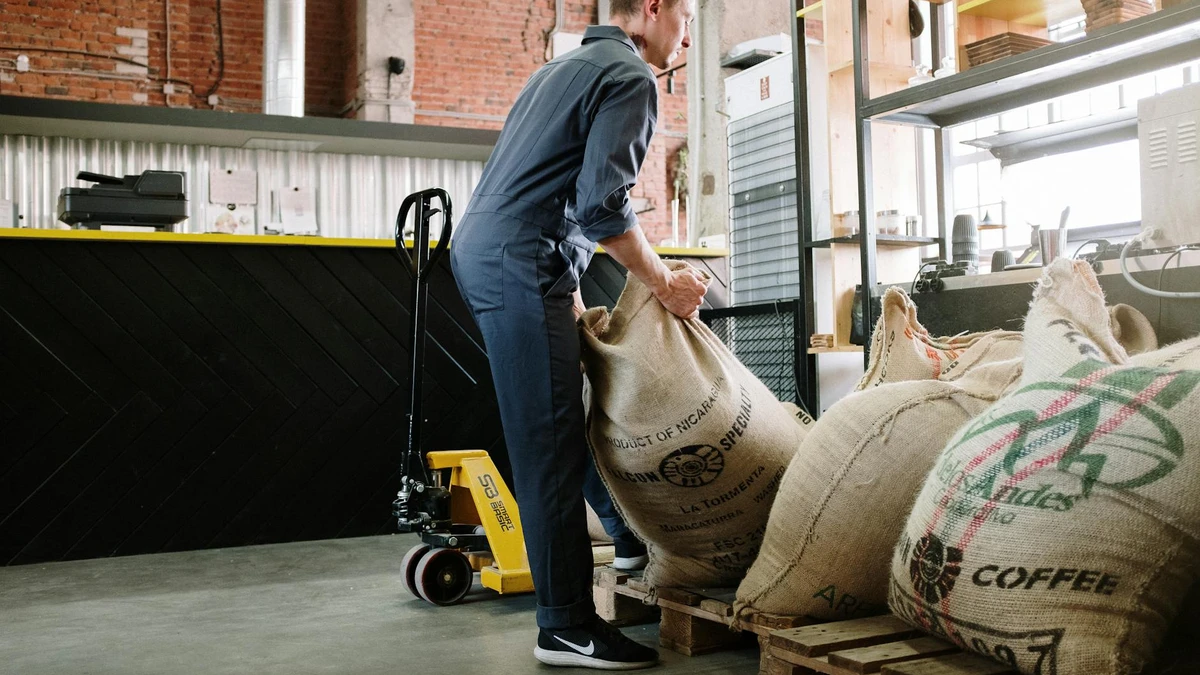
Coffee packaging accessories are disposable items beyond cups and containers that complete the coffee service experience: lids, sleeves, stirrers, straws, napkins, cup holders, portion cups for cream, and takeaway bags. Wholesale purchasing typically requires 5,000-20,000 unit MOQs per SKU, involves 30-60 day lead times, and offers 25-40% savings vs retail pricing for operations using 10,000+ units monthly.
MOQs vary by product: lids (10,000-20,000 units), sleeves (5,000-10,000), cup holders (1,000-2,000), stirrers (10,000-50,000), napkins (10,000-20,000), and bags (5,000-10,000). Direct manufacturers typically require 2-3x higher MOQs than wholesale distributors. For small operations, start with distributors (lower MOQs, faster delivery) before transitioning to direct manufacturers as volume grows.
Typical wholesale savings: 25-40% vs retail/foodservice supplier pricing. Example: coffee cup lids retail at $0.06-0.08 each, wholesale at $0.03-0.045. However, factor in total cost of ownership: shipping (adds $0.002-0.007/unit), storage (adds $0.001-0.003/unit), cash flow costs (adds $0.002-0.004/unit), and quality control. Real net savings: 20-35% after all costs considered.
Choose domestic when: orders under 50,000 units, need fast turnaround (2-4 weeks), testing new products, or risk-averse. Choose international when: orders 50,000+ units, can commit to 6-10 week lead times, seeking 35-50% cost savings, and have customs clearance support. Break-even point: typically 50,000-100,000 units where shipping cost per unit becomes negligible. First-time importers: use freight forwarder and customs broker.
Calculate: 20,000 coffee cup lids = approximately 2 cubic meters (1 pallet). Comprehensive 90-day supply for mid-sized café (4 locations): 6-8 pallets = 200-300 sq ft dedicated space. Options: rent commercial warehouse space ($8-15/pallet/month), use garage/basement (climate-controlled preferred), or negotiate supplier warehousing with monthly shipments. Factor 20-30% additional space for receiving, unpacking, and redistribution activities.
Standard terms: Net 30 (payment due 30 days after invoice). Negotiate for larger accounts: Net 60 or Net 90, especially with annual commitments over $50,000. First orders often require: 30-50% deposit, balance on delivery or Net 15-30. Early payment discounts (2/10 Net 30): 2% discount if paid within 10 days, otherwise Net 30. International orders: typically 30-50% deposit, balance before shipment or against copy of Bill of Lading.
Five-step verification: (1) Request production samples (50-100 units from actual production run, not just sales samples), (2) Check certifications (آيزو 9001, الامتثال لمعايير إدارة الغذاء والدواء الأمريكية (FDA), FSC for paper), (3) Inspect first order 100% before accepting, (4) Request factory tour (virtual acceptable), (5) Start with small order (meet minimum MOQ only) before committing to larger quantities. Red flags: no sample policy, vague specifications, prices 30%+ below market, no certification documentation.
Successful wholesale sourcing of coffee packaging accessories requires strategic planning beyond simply finding the lowest unit price. The difference between reactive purchasing and strategic wholesale management represents $15,000-30,000 annual savings for mid-sized café operations, plus operational benefits of consistent quality, reliable supply, and reduced administrative overhead.
الوجبات السريعة الرئيسية:
1.Coffee packaging accessories wholesale requires 10,000-50,000 unit MOQs and delivers 25-40% gross savings (20-35% net after total cost of ownership)
2.Supplier selection based on quality verification (production samples, certifications, factory tours) prevents costly quality failures after large orders
3.Total cost analysis including shipping, storage, cash flow, and quality control reveals true economics beyond unit price
4.Multi-location operations benefit from centralized purchasing with decentralized inventory distribution based on consumption patterns
5.International sourcing becomes cost-effective at 50,000+ unit orders, but requires customs compliance, freight forwarding, and 6-10 week lead times
For café chains and distributors serving multiple locations, strategic wholesale partnerships with reliable suppliers, backed by consumption-based forecasting and total cost analysis, transform packaging accessories from operational headache into competitive advantage through cost control, quality consistency, and supply reliability.
اكتشف المزيد من حلول تغليف المواد الغذائية:
-الأكواب الورقية وتغليف القهوة
Papacko supplies export-ready coffee packaging accessories to cafés, distributors, and multi-location chains worldwide. We offer flexible MOQs for growing operations, quality certifications, and supply chain support for international orders.
تواصل معنا
آخر تحديث: نوفمبر 2025
فريق المحتوى: باباكو
تمت مراجعته من قبل: Supply Chain & Export Department