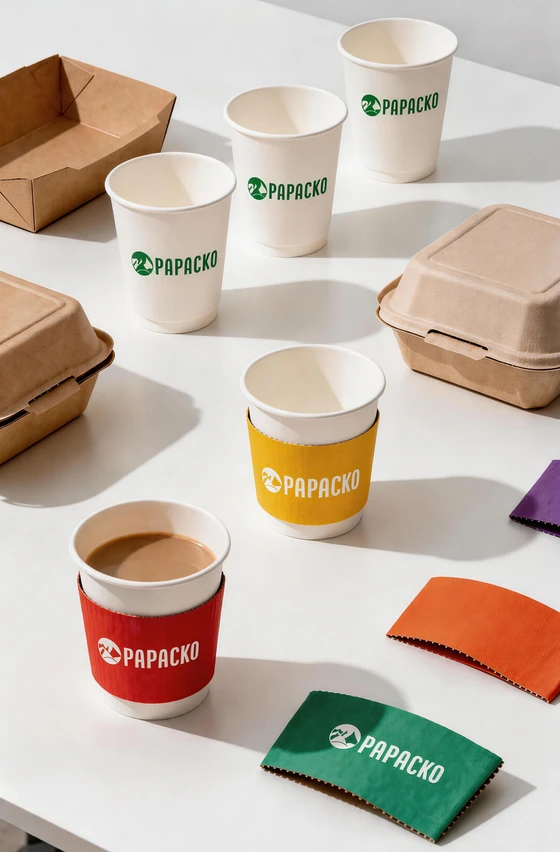
Ready to create your own branded paper cups or packaging?
Tell us your requirements — size, coating, printing, and destination — and our team will prepare a detailed quotation within 24 hours.
Last Updated: November 2025
Reading Time: 9 minutes
Author: Papacko Content Team
Embossed paper napkins aren’t just functional—they’re tactile branding tools that add raised texture to the table setting.
In this guide, you’ll learn:
•Embossing vs printing: process differences and quality comparison
•Design specifications for effective embossed logos
•Material selection: ply count, absorbency, and texture
•MOQ requirements and cost analysis for custom embossing
•Size selection and fold styles for different applications
•Common mistakes that waste embossing investment
•How to choose reliable suppliers and verify quality
Understanding the technical differences between embossing and printing reveals why each technique suits different branding goals.
Mechanism:
•Step 1: Create custom metal embossing die (tooling matched to the design and embossing system)
•Step 2: Pass tissue through an embossing unit using settings selected for the paper and design
•Step 3: Pressure compresses paper fibers, creating raised (embossed) or recessed (debossed) texture
•Result: 3D textured logo, no ink or color added
Characteristics:
•Appearance: Monochromatic (same color as napkin), visible through light/shadow and texture
•Tactility: Raised surface creates touch sensation (key differentiator)
•Durability: Depends on the paper, pattern and converting conditions
•Complexity Limit: Simple designs work best (thin lines <2mm don't emboss well)
•Material Requirement: One-ply and multi-ply napkins can be embossed; confirm suitability for the specific logo and paper
Best For:
•Upscale restaurants emphasizing tactile elegance
•Hotels and event venues (formal settings)
•Brands prioritizing premium perception over color vibrancy
Mechanism:
•Flexographic printing: Rubber plate transfers ink to napkin surface
•Gravure printing: Engraved cylinder applies ink in patterns
•Result: 2D printed logo, full color options available
Characteristics:
•Appearance: Flat printed image, any color (1-4+ colors possible)
•Tactility: Printing adds an image rather than an embossed relief
•Durability: Depends on ink, paper and printing conditions
•Complexity: Handles fine details, gradients, photos well
•Material Flexibility: Works on 1-3 ply napkins
Best For:
•Casual dining requiring color branding
•Budget-conscious operations (lower setup cost)
•Complex logos with fine details or multiple colors
•Promotional campaigns needing frequent design changes
Embossing vs Printing Feature Comparison
Not all logo designs emboss successfully—specific design requirements ensure clear, durable embossed textures.
Minimum Line Width: 3mm (0.12 inches)
•Thinner lines (<2mm) don't create sufficient depth during embossing
•Result: Weak texture that’s barely visible/tactile
•Problem areas: Thin script fonts, detailed illustrations, fine borders
Optimal Line Width: 4-6mm (0.16-0.24 inches)
•Creates clear, durable embossed texture
•Visible from multiple angles (light/shadow reveals depth)
•Tactile enough to feel with fingertips
Text Height: Minimum 8mm (0.31 inches)
•Smaller text becomes illegible when embossed
•Script/decorative fonts require 10mm+ minimum
•Sans-serif fonts emboss more clearly than serif
Spacing Between Elements: 3mm+ minimum
•Prevents adjacent elements from merging during embossing
•Maintains clarity when texture compresses surrounding fibers
Works Well:
•✅ Simple wordmarks (company name only)
•✅ Geometric logos (circles, squares, triangles)
•✅ Bold icons (simplified symbols)
•✅ Initials/monograms (large, bold letters)
Doesn’t Work Well:
•❌ Fine line illustrations (details lost)
•❌ Thin script fonts (breaks apart)
•❌ Detailed patterns (texture muddles)
•❌ Small text under 6mm (illegible)
•❌ Gradients or shading (embossing creates binary raised/flat, no gradation)
Vector Files Required:
•AI (Adobe Illustrator), EPS, or PDF containing vector artwork
•Embossing die manufacturer needs scalable vector outlines
•Raster formats (PNG, JPG) not acceptable (pixelation issues)
Color Specification:
•Not applicable (embossing creates texture, not color)
•If combining embossing + printing, provide Pantone codes for print layer
Design Area:
•Standard napkin sizes allow 40-80mm diameter embossing area
•Center placement most common (visible when folded)
•Corner placement option (visible on table setting)
Napkin material directly impacts embossing depth, texture visibility, and overall quality perception.
1-Ply (Single Layer) — Check Logo Suitability:
•Paper Weight: 22-28 GSM
•Embossing Result: Available in embossed products; custom-logo detail depends on the paper and tooling
•Use Case: Budget cocktail napkins, fast food
2-Ply (Double Layer) — Embossing Option:
•Paper Weight: 30-36 GSM (15-18 GSM per layer)
•Embossing Result: Depends on the paper and embossing conditions
•Structural Integrity: Adequate for normal restaurant use
•Cost: +20-30% vs 1-ply
•Use Case: Casual to mid-range dining, cafés, events
3-Ply (Triple Layer) — Premium:
•Paper Weight: 40-48 GSM (13-16 GSM per layer)
•Embossing Result: Depends on the paper, pattern and embossing conditions
•Structural Integrity: Assess wet strength with a finished sample
•Cost: +40-60% vs 1-ply, +15-25% vs 2-ply
•Use Case: Fine dining, luxury hotels, high-end events
•Perceived Quality: Maximum premium positioning
Smooth Finish:
•Creates sharpest embossed edges
•Best for detailed logos (within embossing complexity limits)
•Absorbency depends on the paper and converting conditions
Textured/Embossed Base Paper:
•Pre-textured surface (dimples, lines)
•Logo embossing adds second texture layer
•Embossing can change absorption capacity; compare finished samples
•Slightly reduces logo embossing clarity (texture competes visually)
White Napkins (Most Popular):
•Embossing creates subtle light/shadow contrast
•Classic, elegant, versatile for any setting
Colored Napkins:
•Embossing visible through texture + light reflection
•Popular colors: cream, beige, black, navy, burgundy
•Cost: +5-10% vs white (colored dyes)
•Best for: Matching restaurant color schemes, event themes
Printed + Embossed Combination:
•Embossed texture with added ink color around/inside logo
•Maximum visual impact (color + texture)
•Cost: +$0.05-0.08 vs embossing alone (combines both processes)
•MOQ typically higher (50,000-100,000)
Matching napkin size and fold to dining context optimizes functionality and brand visibility.
Cocktail Napkin (25×25cm, ~10×10 inches):
•Use: Beverage service, appetizers, bar settings
•Fold: Quarter-fold (folded to 12.5×12.5cm)
•Embossing Placement: Center (visible when flat on bar/table)
•Cost Range: $0.03-0.06 per napkin (2-ply embossed)
Luncheon Napkin (33×33cm, ~13×13 inches) ⭐ Most Common:
•Use: Casual to mid-range dining, cafés, catering
•Fold: Quarter-fold or triangle fold
•Embossing Placement: Center or corner (visible in multiple fold styles)
•Cost Range: $0.04-0.08 per napkin (2-ply embossed)
Dinner Napkin (40×40cm, ~16×16 inches):
•Use: Fine dining, formal events, luxury hotels
•Fold: Various decorative folds (fan, rose, pyramid)
•Embossing Placement: Corner preferred (visible in decorative folds)
•Cost Range: $0.06-0.12 per napkin (3-ply embossed)
Dispenser Napkin (30×30cm, interfold):
•Use: Quick-service restaurants, cafeterias, self-serve
•Fold: Interfold (one-at-a-time dispensing)
•Embossing Placement: Center (visible when pulled from dispenser)
•Cost Range: $0.03-0.05 per napkin (2-ply embossed)
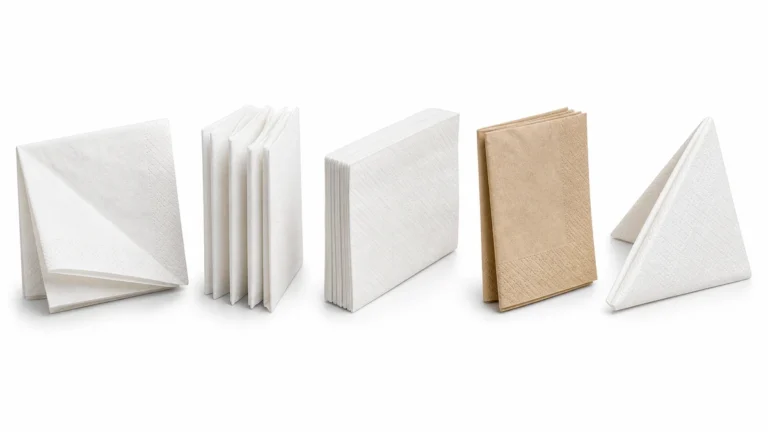
Quarter-Fold (most common):
•Square folded into 4 sections
•Embossing visible on top quarter when placed on table
•Simple, fast for staff to fold/unfold
Triangle Fold:
•Folded diagonally into triangle shape
•Embossing on one corner remains visible
•Elegant presentation, common in cafés
Decorative Folds (fine dining):
•Fan, rose, pyramid, bird-of-paradise
•Embossing placement critical (corner ensures visibility across fold styles)
•Check that the selected paper holds the intended fold
Understanding cost structure and minimum requirements prevents budget surprises and ensures realistic planning.
Embossing Die Creation:
•One-Time Fee: $800-2,000 (depends on logo complexity, die size)
•Die Ownership: Confirm ownership and storage terms with the supplier
•Reorder Benefit: Confirm whether existing tooling can be reused and what charges apply
Initial Order MOQ:
•2-Ply Embossed: 30,000-50,000 napkins minimum
•3-Ply Embossed: 50,000-100,000 minimum (higher setup requirements)
•Rationale: Die creation cost must amortize across large quantity
Reorder MOQ:
•2-Ply: 10,000-20,000 minimum (lower than initial since die already exists)
•3-Ply: 20,000-30,000 minimum
Why High MOQ:
•Die setup time (2-4 hours machine time)
•Quality control testing (100-200 napkins discarded during calibration)
•Packaging/storage logistics for custom products
Cost Components:
1.Embossing Die: $800-2,000 one-time
2.Blank Napkins: $0.02-0.05 per napkin (material cost)
3.Embossing Labor: $0.01-0.03 per napkin (machine time + operator)
4.Packaging: $0.005-0.01 per napkin (sleeves, boxes)
5.Shipping: $200-800 (domestic), $800-2,000 (international)
Illustrative Pricing Example (40,000 luncheon napkins, 2-ply, white):
•Embossing die: $1,200
•Blank napkins: 40,000 × $0.03 = $1,200
•Embossing labor: 40,000 × $0.02 = $800
•Packaging: 40,000 × $0.01 = $400
•Shipping: $500 (domestic)
•Total: $4,100 ($0.1025 per napkin including die)
Reorder Economics (same 40,000 napkins):
•No die fee (already created)
•Blank napkins: $1,200
•Embossing labor: $800
•Packaging: $400
•Shipping: $500
•Total: $2,900 ($0.0725 per napkin, save 29.3%)
Die Creation Phase: 7-10 business days
•Customer submits artwork
•Manufacturer creates metal die
•Test embossing samples sent for approval
•Revisions add 3-5 days per iteration
Production Phase: 10-15 business days
•Napkin embossing (40,000-50,000 units/day typical capacity)
•Quality inspection
•Packaging
Shipping:
•Domestic ground: 3-7 days
•International ocean: 4-6 weeks
•International air: 7-10 days (expensive, 3-4× ocean cost)
Total Timeline: 4-6 weeks from artwork approval to delivery (domestic)
Size and Cost Comparison
Learn from these frequent errors that waste embossing investment and reduce effectiveness.
❌ Mistake #1: Embossing Logo with Thin Lines (<2mm)
Problem: Fine-line logo design submitted for embossing. Result: Weak texture barely visible, poor tactility, customers don’t notice.
Correct Approach: Simplify logo for embossing—remove fine details, thicken lines to 3mm+ minimum. If brand requires fine details, use flat printing instead of embossing.
❌ Mistake #2: Choosing Ply Count Without Testing the Logo
Problem: Assuming ply count alone determines whether a logo can be embossed.
Correct Approach: Choose the paper and ply count using an approved embossed sample. One-ply napkins are not automatically unsuitable.
❌ Mistake #3: Expecting Color from Embossing
Problem: Ordering embossed napkins expecting logo color to appear. Embossing creates texture only, no color added.
Correct Approach: If color critical to brand, use flat printing or embossing + printing combination. Embossing alone delivers monochrome texture matching napkin base color.
❌ Mistake #4: Ordering Minimum Quantity Without Testing
Problem: Committing to 50,000-unit MOQ without seeing physical sample. Result: Embossing depth insufficient, logo placement wrong, entire batch unusable.
Correct Approach: Always request 10-20 physical samples before approving full production run. Cost: $50-150, prevents $3,000-5,000 disasters. Test sample with actual restaurant use (wipe wet hands, fold/unfold).
❌ Mistake #5: Ignoring Fold Style When Choosing Embossing Placement
Problem: Center embossing on dinner napkins that will be decoratively folded. Result: Logo hidden inside complex folds, brand not visible on table.
Correct Approach: Match embossing placement to intended fold style. Quarter-fold → center embossing. Decorative folds → corner embossing. Consult with supplier on placement for specific fold techniques.
Embossed paper napkins are custom napkins featuring raised (or recessed) logo textures created through mechanical pressure without ink. The embossing process compresses paper fibers with embossing tooling, creating a tactile pattern. Cost: $0.04-0.12 per napkin depending on ply count and size. Best for fine dining, hotels, and upscale events prioritizing premium brand perception.
Embossing creates 3D raised texture through pressure (no ink). Printing applies 2D ink for color logos. Key trade-offs: embossing = monochrome premium tactility; printing = an inked image with color options. Embossing costs +$0.02-0.04 more but delivers upscale perception. Combination (embossing + printing) achieves both texture and color for +$0.05-0.08.
Simple, bold designs with 3mm+ line thickness: wordmarks, geometric logos, large initials/monograms. Minimum text height 8mm (script fonts 10mm+). Avoid: thin lines <2mm (don’t create depth), fine illustrations (details lost), small text under 6mm (illegible), gradients (embossing is binary raised/flat). Vector files (AI, EPS) required for die creation. Test rule: if logo has elements thinner than a pencil line, it won’t emboss well.
30,000-50,000 napkins for 2-ply, 50,000-100,000 for 3-ply initial orders. High MOQ driven by embossing die creation cost ($800-2,000 one-time) that must amortize across large quantities. Reorders have lower MOQ (10,000-20,000 for 2-ply) since die already exists. Budget operators: consider flat printing (20,000-30,000 MOQ, lower setup cost) if can’t commit to embossing volumes.
2-ply luncheon napkins: $0.04-0.08 per napkin including production, +$800-2,000 one-time die fee. 3-ply dinner napkins: $0.06-0.12. In the illustrative example above, the first order (40,000 units) totals ~$4,100 ($0.1025/napkin with die amortized). The same example saves 29.3% on a reorder (~$2,900 for same quantity, $0.0725/napkin). Premium vs flat printing: +$0.02-0.04 per napkin.
Total timeline: 4-6 weeks domestic (6-8 weeks international). Breakdown: die creation (7-10 days), production (10-15 days), shipping (3-7 days domestic ground, 4-6 weeks ocean freight). Sample approval phase adds 5-10 days (recommended to avoid production errors). Rush production possible (+30-50% cost) for 1-2 week reduction. Plan 8-10 weeks ahead for major events or seasonal campaigns.
Yes, two options: (1) Colored base paper (cream, beige, black, navy, burgundy, etc.) with monochrome embossing matching paper color (+5-10% vs white napkins), or (2) Embossing + flat printing combination adding ink color around/inside embossed logo for both texture and color (+$0.05-0.08 vs embossing alone, MOQ 50,000-100,000). Note: embossing process itself doesn’t add color—only creates texture. Color must come from paper dye or separate printing step.
Embossed paper napkins transform functional table service into tactile brand experience.
Key Takeaways:
1.Embossing creates 3D texture through mechanical pressure
2.Design requirements critical: 3mm+ line thickness, 8mm+ text height, simple/bold logos work best—fine details don’t emboss successfully
3.Material selection determines quality: 2-ply option (adequate for most applications, $0.04-0.08), 3-ply premium (an additional ply, $0.06-0.12)
For fine dining restaurants, luxury hotels, and brands prioritizing premium tactile experience over color flexibility, embossing adds texture to disposable napkins.
Explore more packaging solutions:
Papacko supplies custom embossed paper napkins to restaurants, hotels, and event services worldwide. We offer die creation services, material selection guidance, and quality assurance to ensure your branded napkins meet exact specifications.
Embossed napkins are usually evaluated alongside broader presentation choices such as napkin grade, eco-material options, and the rest of the branded takeaway set. These guides help connect print detail to the full service experience.
Get in touch:
Last Updated: November 2025
Content Team: Papacko