¿Está listo para crear sus propios vasos o envases de papel con su marca?

Díganos sus requisitos -tamaño, revestimiento, impresión y destino- y nuestro equipo le preparará un presupuesto detallado en 24 horas.

Formulario de contacto

¿Está listo para crear sus propios vasos o envases de papel con su marca?

Díganos sus requisitos -tamaño, revestimiento, impresión y destino- y nuestro equipo le preparará un presupuesto detallado en 24 horas.
Formulario de contacto

Custom Paper Food Boxes for Franchise Brands

Franchise brands distribute 2.5-8 million food containers annually across their networks, yet 45-60% struggle with packaging inconsistencies - mismatched logo colors between locations, varying box sizes that confuse customers.

Última actualización: April 2026 Tiempo de lectura: 10-12 minutes Autor: Equipo de contenidos de Papacko

Introducción

Franchise brands distribute 2.5-8 million food containers annually across their networks, yet 45-60% struggle with packaging inconsistencies—mismatched logo colors between locations, varying box sizes that confuse customers, and quality fluctuations that damage brand perception. A single franchise location using off-brand packaging can generate 200-400 negative brand impressions daily as customers associate inconsistent packaging with quality control failures.

This comprehensive customization guide addresses the unique challenges franchise brands face when implementing custom paper food boxes across multiple locations: establishing design standards that maintain brand integrity at scale, coordinating printing specifications across regional suppliers to ensure color consistency, creating centralized ordering systems that prevent location-specific variations, implementing quality control protocols that detect defects before customer-facing use, and optimizing costs through consolidated purchasing while accommodating local operational needs.

💡 Comida rápida para llevar: Successful franchise packaging customization requires centralized design governance (Pantone-matched color standards, locked template files), multi-supplier coordination (max 2-3 approved vendors, quarterly quality audits), tiered ordering systems (corporate bulk purchasing with local distribution), strict specifications (±5% dimensional tolerance, ±10% color variance limits), and consolidated MOQs of 50,000-500,000 units achieving $0.12-0.28 per box costs across 5-500+ locations.

Why Custom Boxes Matter for Franchise Brand Consistency

The Multi-Location Challenge

The key to choosing custom paper boxes depends on:

Franchise packaging faces unique pressures absent from single-location restaurants:

-Brand dilution risk: Each location acting as independent buyer creates 15-40% packaging variation

-Confusión del cliente: Inconsistent boxes across locations reduce brand recognition by 25-35%

-Quality perception: Mismatched packaging signals operational disorganization, reducing trust scores 18-28%

-Cost inefficiency: Decentralized purchasing increases per-unit costs 30-60% vs consolidated orders

Market research: A 2025 franchise industry study found that brands with standardized packaging across all locations achieved 22-31% higher customer brand recall scores and 15-20% higher repeat visit rates compared to franchises allowing location-specific packaging choices.

🎯 Perspectiva del sector: Fast-casual chains report that packaging consistency ranks as the #3 factor in brand perception (after food quality and service speed), with 68% of customers citing “professional packaging” as indicator of franchise quality standards.

Centralized Design Standards and Template Systems

Creating the Master Design Template

Understanding custom paper boxes requires attention to these factors:

Essential design elements for franchise consistency:
ElementoSpecification StandardToleranciaLock Status
Primary logoVector format, minimum 50mm width±2mm size varianceLocked (no modifications)
Colores de la marcaPantone PMS codes (not RGB/CMYK approximations)±5% color varianceLocked
TypographyLicensed fonts, specified weights/sizes±1pt varianceLocked
Layout gridFixed positioning zones±3mm placement toleranceLocked
Franchisee infoDesignated variable fields (address, phone)Location-specificUnlocked/templated
Regulatory textAllergen, nutrition, legal copyFixed content, 6-8pt minimumLocked
Template file architecture:

-Master template: Held by corporate, never distributed to franchisees

-Location templates: Pre-populated variable fields, locked design elements

-File formats: Vector source (AI/EPS) + print-ready PDF with embedded fonts

-Version control: Sequential numbering (v1.0, v1.1, v2.0) with change logs

Color Management Across Print Runs

Understanding the custom paper boxes requires attention to these factors:

The Pantone imperative:
Color SystemConsistencyMulti-Supplier CompatibilityImpacto en los costesFranchise Suitability
RGB (screen)Poor (device-dependent)None (not printable)N/A❌ Never use
CMYK (process)Moderate (varies by press, paper)Medium (15-25% variance)Línea de base⚠️ Avoid for brand colors
Pantone PMS (spot)Excellent (standardized ink formulas)High (5-10% variance max)+$0.02-0.05/box✅ Required for logos
Pantone + CMYKBest (spot for logo, process for photos)Alto+$0.03-0.08/box✅ Ideal for complex designs
Franchise color specification example:Primary brand color: Pantone 185 C (red) Secondary color: Pantone 432 C (gray) Accent: Pantone 123 C (yellow) DO NOT convert to CMYK equivalents All suppliers must use genuine Pantone inks Color variance tolerance: ΔE < 2.0 (perceptually identical)Color proofing protocol:

1.Corporate approves printed color samples from each supplier

2.Samples become reference standards for future production runs

3.Each print batch includes color control strips for QC verification

4.Franchisees report color deviations within 7 days of delivery

5.Suppliers replace batches exceeding ΔE 2.0 variance at no cost
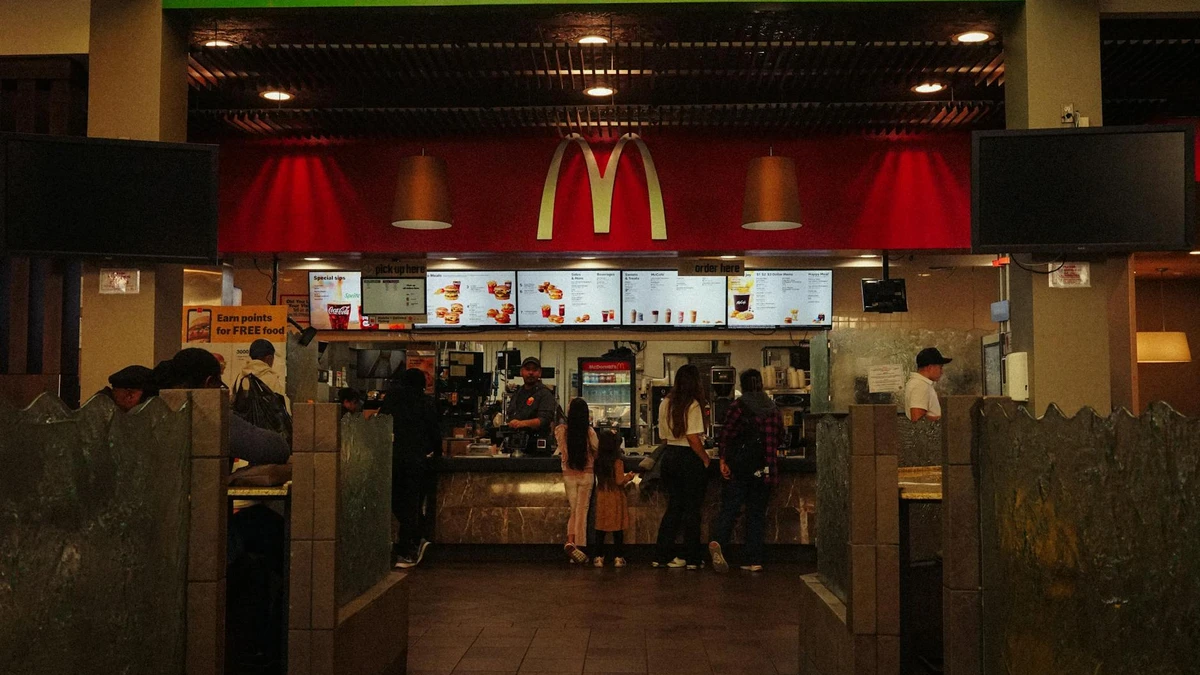
Papacko franchise restaurant interior showing consistent branded food boxes across multiple service stations

Variable Data Management for Location Information

The key to choosing custom paper boxes depends on:

Franchisee-specific customization zones:
Variable ElementImplementation MethodImpacto en los costesUpdate Frequency
Location addressDigital variable printing+$0.03-0.06/boxAnnual (relocation rare)
Phone numberPre-printed per location batchIncluido2-5 years (number changes)
Store numberSmall text field (6-8pt)IncluidoNever (permanent ID)
QR codeLocation-specific landing page+$0.01-0.02/boxQuarterly (campaign updates)
Redes socialesStandardized corporate accountsIncluidoAnual
Centralized vs local customization:Centralized approach (recommended for 10+ locations):

-Corporate orders all boxes with location-specific printing

-Each franchisee receives shipment with their info pre-printed

-Eliminates local design modifications

-Requires accurate location database maintenance

Decentralized approach (viable for 3-5 locations):

-Franchisees order from approved template with their info

-Corporate reviews proofs before production approval

-Higher risk of template violations

-Allows faster local reordering

Multi-Supplier Coordination and Standardization

Approved Vendor Network Structure

When evaluating the custom paper boxes, consider the following:

Supplier qualification criteria:
RequisitoMinimum StandardMétodo de verificaciónDisqualification Triggers
Capacidad de producción100,000+ boxes/monthAuditoría de fábricaCannot meet corporate minimums
Quality certificationsISO 9001, FDA food contactCertificate reviewExpired certifications
Color managementPantone matching system, spectrophotometer QCEquipment inspection>10% color variance
Geographic coverageRegional distribution (not single-location)Logistics reviewCannot serve 30%+ of locations
Minimum order flexibilityAccept 5,000-10,000 unit franchisee ordersContract termsForce 50,000+ minimums on small locations
Optimal vendor network size:

-5-20 locations: 1-2 suppliers (consolidate volume for pricing)

-20-100 locations: 2-3 suppliers (regional coverage, redundancy)

-100-500 locations: 3-4 suppliers (geographic distribution, competitive pricing)

-500+ locations: 4-6 suppliers (risk mitigation, capacity assurance)

Standardized Specifications Across Suppliers

Key considerations:

Universal specification document (provided to all approved vendors):

BOX STYLE: Fold-top takeout container DIMENSIONS: 200mm × 150mm × 75mm (L×W×H) TOLERANCE: ±3mm on all dimensions

MATERIAL:

-Paperboard: 300-320 GSM SBS (solid bleached sulfate)

-Coating: Aqueous (water-based, FDA compliant)

-Grease resistance: Kit rating 8 minimum

PRINTING:

-Method: Offset or flexographic

-Colors: Pantone 185 C + Pantone 432 C + Black

-Registration: ±0.5mm maximum misalignment

-Coverage: Single exterior panel (front face)

CONSTRUCTION:

-Glue: EVA (ethylene-vinyl acetate), food-safe

-Fold lines: Scored (not perforated)

-Closure: Interlocking tabs, 1.2-1.5 kg hold strength

QUALITY STANDARDS:

-Leak test: Hold 16 oz liquid 10 minutes, zero leakage

-Drop test: Loaded box survives 1-meter drop

-Color variance: ΔE < 2.0 from approved sample

-Defect rate: <0.5% of batch (tears, misprints, glue failures)

Ensuring cross-supplier consistency:

1.All suppliers receive identical specification PDF with technical drawings

2.Each supplier produces 500-unit sample batch for corporate approval

3.Approved samples archived as reference standards

4. Production batches include first-article inspection (sample from each print run)

5.Quarterly comparative audits test boxes from each supplier side-by-side
Papacko quality control inspection of custom branded food boxes showing color matching and print alignment v

Ordering Systems and Inventory Management

Centralized Purchasing Models

The key to choosing custom paper boxes depends on:

Corporate bulk ordering with local distribution:
ModeloCómo funcionaLo mejor paraAhorro de costesComplejidad
Full centralizationCorporate orders all inventory, ships to franchisees100+ locations, high volume40-55% vs local purchasingHigh (logistics management)
Regional hubsCorporate orders by region, franchisees draw from local warehouse20-100 locations30-45%Medium (3-5 distribution points)
Approved vendor + group buyFranchisees order individually from approved supplier, prices locked by corporate contract5-20 locations15-25%Low (minimal corporate involvement)
HíbridoLarge locations order direct, small locations use corporate inventoryMixed portfolio25-40%Medium-high (tiered management)
Volume consolidation savings:
Total Annual Volume (All Locations)Consolidated Cost/BoxDecentralized Cost/BoxAhorrosBreak-Even Point
100,000 boxes$0.38$0.52$14,000/yearCoordination cost <$14k
500,000 boxes$0.24$0.42$90,000/yearCoordination cost <$90k
2,000,000 boxes$0.16$0.38$440,000/yearCoordination cost <$440k
5,000,000 boxes$0.12$0.35$1,150,000/yearJustifies full-time packaging manager
Implementation requirements:

-Centralized purchasing justifies dedicated staff at 500,000+ annual units

-Regional hub model requires 3,000-5,000 sq ft warehouse space per region

-Minimum 6-month demand forecasting for bulk ordering

-Franchisee compliance agreement (no off-brand purchasing)

Franchisee Ordering Portals

Understanding custom paper boxes requires attention to these factors:

Online ordering system features:
CaracterísticaPropósitoFranchisee BenefitCorporate Benefit
Pre-approved designs onlyPrevent template modificationsSimplified ordering (no design work)Brand consistency enforcement
Minimum order quantitiesBalance unit cost vs inventory burdenAccess to bulk pricingConsolidated production runs
Delivery schedulingCoordinate shipmentsPredictable restockingOptimized logistics
Usage trackingMonitor consumption patternsReorder remindersDemand forecasting data
Cost allocationAuto-billing to franchisee accountsTransparent pricingSimplified accounting
Portal workflow:

1.Franchisee logs in with location ID credentials

2.Selects box type from pre-approved catalog (sizes, styles)

3.System auto-populates location-specific info (address, phone)

4.Reviews proof with locked branding, editable contact fields only

5.Selects quantity (system suggests based on historical usage)

6. Approves order—routes to supplier without corporate review (unless first order)

7.Tracks shipment status, delivery ETA

Technology platforms:

-Custom-built: $15,000-50,000 development (50+ locations)

-Third-party packaging portals: $500-2,000/month SaaS (10-100 locations)

-Supplier-hosted: free/included (5-20 locations, single vendor)

Quality Control and Compliance Protocols

Multi-Stage Inspection Process

When evaluating the custom paper boxes, consider the following:

Pre-production approval (before print run):
EscenarioWhat’s VerifiedWho ApprovesCronología
Digital proofDesign accuracy, color specificationCorporate brand team2-5 business days
Physical proofActual printed sample on production materialCorporate + sample franchisee5-10 business days
First articleFirst 50-100 boxes from production runSupplier QC + corporate (photos)Same-day approval
In-production monitoring:

-Color control strips on every print sheet (spectrophotometer readings)

-Dimensional checks every 500 units (calipers, tolerance ±3mm)

-Leak testing: 1 box per 1,000 units (fill with water, 10-minute hold)

-Drop testing: 1 box per 5,000 units (1-meter loaded drop)

Post-delivery verification (franchisee level):

-Franchisees inspect first delivery batch (5% sample or 50 boxes minimum)

-Report defects within 7 days via standardized form

-Supplier replaces defective batches (>2% defect rate threshold)

Defect Classification and Response

Key considerations:

Tipo de defectoSeverityAcceptance ThresholdRemedy
Crítico (unusable: major misprints, structural failure)Reject batch0.1% (1 per 1,000)Full replacement at supplier cost
Mayor (functional: minor misalignment, slight color variance)Case-by-case0.5% (5 per 1,000)Partial credit or replacement
Menor (cosmetic: small smudges, tiny edge imperfections)Accept with credit2% (20 per 1,000)5-15% invoice discount
Escalation protocol:

1.Franchisee reports defect via portal/email with photos

2.Corporate brand team reviews within 24-48 hours

3.If validated, supplier notified and required to respond within 72 hours

4.Supplier provides replacement timeline (rush if critical defect)

5.Supplier investigates root cause, implements corrective action

6. Repeated defects (3+ incidents in 6 months) trigger supplier review/replacement
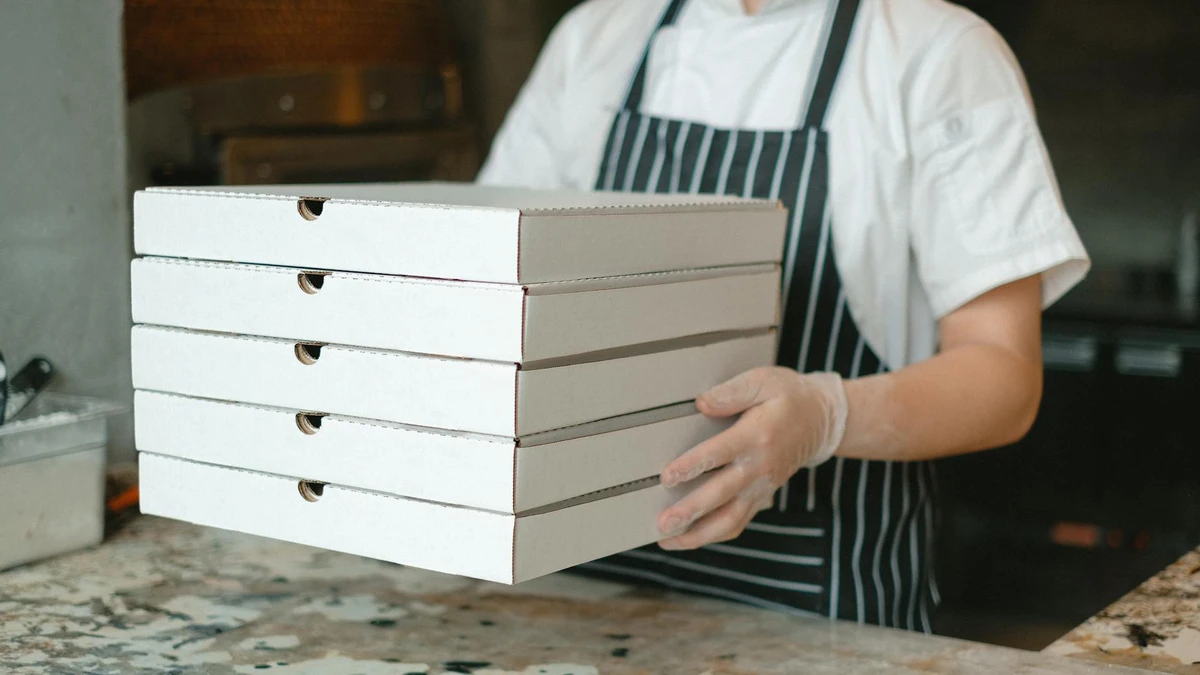
Papacko franchise restaurant employee packing food into branded custom boxes showing proper assembly and pre

Cost Optimization Strategies for Franchise Networks

Tiered Pricing by Location Volume

Key considerations:

Franchise size classification:
Location TierAnnual Box UsageFrecuencia de pedidosCoste unitarioCoste anual total
Pequeño (QSR satellite)10,000-25,000Quarterly (2,500-6,000/order)$0.32-0.42$3,200-10,500
Medio (standard location)25,000-75,000Bi-monthly (4,000-12,000/order)$0.24-0.32$6,000-24,000
Grande (high-volume flagship)75,000-200,000Monthly (6,000-18,000/order)$0.18-0.24$13,500-48,000
Mega (airport, mall, stadium)200,000-500,000Bi-weekly (8,000-20,000/order)$0.14-0.18$28,000-90,000
Consolidated network pricing:

-Corporate negotiates tier pricing based on total network volume

-Small locations access Medium pricing by ordering through corporate pool

-Example: 50 locations each using 20,000 boxes = 1,000,000 total volume

-Individual small location pricing: $0.38/box × 20,000 = $7,600

-Consolidated network pricing: $0.16/box × 20,000 = $3,200

-Savings per location: $4,400/year × 50 locations = $220,000 total network savings

Design Simplification for Cost Control

The key to choosing the custom paper boxes depends on:

Cost drivers in custom printing:
Elemento de diseñoImpacto en los costesSimplification StrategyAhorros
Recuento de coloresEach color = separate plate/passReduce 4-color to 2-color (Pantone only)25-40%
Coverage areaFull coverage = more ink, slower productionLimit to 40-60% box surface (front panel only)15-25%
Specialty finishesGloss, matte, metallic add stepsUse uncoated or aqueous coating only10-30%
Datos variablesUnique info per location = digital printing premiumStandardize 90% of design, localize 10%15-20%
Custom sizesNon-standard dimensions = custom diesUse industry-standard sizes20-35%
Cost-optimized franchise box design:

-2 Pantone colors (brand primary + black)

-Single exterior panel printing (front face only, 35-45% coverage)

-Standard size (align to common food portion: 16 oz, 26 oz, 32 oz)

-Aqueous coating (water-based, food-safe, low cost)

-Minimal variable data (store number only, printed during run)

Cálculo del retorno de la inversión:

-Complex design: 4-color process + gloss finish + full coverage = $0.42/box

-Simplified design: 2 Pantone colors + aqueous + front panel = $0.24/box

-Savings per box: $0.18

-Network usage: 1,000,000 boxes/year

-Annual savings: $180,000 while maintaining brand consistency

Technology Integration and Data Management

Inventory Tracking and Forecasting

When evaluating the custom paper boxes, consider the following:

Corporate dashboard metrics:
Data PointPropósitoUpdate FrequencyFuente
Per-location usage ratesIdentify ordering patternsSemanalPOS integration or manual reporting
Variación estacionalAdjust forecasts (holiday surges, summer lulls)MensualmenteHistorical data analysis
Waste/damage ratesQuality issue early warningPer-shipmentFranchisee incident reports
Stock-out incidentsPrevent service disruptionsReal-time alertsFranchisee inventory reports
Supplier lead timesReorder trigger pointsPer-orderSupplier performance tracking
Predictive reordering:

-System learns location-specific usage patterns over 6-12 months

-Auto-generates reorder recommendations 4-6 weeks before stock-out risk

-Accounts for seasonal spikes (Q4 holidays: 25-45% usage increase)

-Alerts franchisees and corporate when inventory drops below 3-week supply

Franchisee Compliance Monitoring

Understanding custom paper boxes requires attention to these factors:

Preventing off-brand packaging:
Monitoring MethodWhat It DetectsResponse Protocol
Mystery shoppingLocations using non-approved boxesWarning (1st), compliance audit (2nd), fine (3rd)
Social media monitoringCustomer photos showing wrong packagingDirect franchisee contact, corrective action
Waste auditGeneric boxes in trash vs branded box ordering volumeInvestigate procurement source
Supplier reportingFranchisees ordering from non-approved vendorsContractual violation notice
Incentive structures:

-Compliance bonuses: 5% rebate on packaging costs for locations with 100% brand adherence

-Non-compliance penalties: $500-2,000 per incident (escalating)

-Preferred supplier discounts: 8-12% savings vs open-market purchasing

-Quality awards: Annual recognition + marketing support for best brand presentation

Scaling Considerations for Growing Franchises

Onboarding New Locations

When evaluating the custom paper boxes, consider the following:

New franchisee packaging startup:
EscenarioActivityCronologíaCosteCorporate Support
Pre-openingDesign approval, initial order (3-6 month supply)Weeks -8 to -4$2,500-8,000Provide templates, supplier contacts
Launch inventoryDelivery of first batch with location infoWeek -2Included aboveCoordinate logistics
FormaciónProper assembly, quality checks, reordering processWeek -1$0 (online modules)Video tutorials, portal walkthrough
First reorderMonitor usage, adjust forecastsMonth 3-4Precios estándarReview consumption, optimize quantities
Startup package pricing:

-Small location (10,000 boxes, 3-month supply): $3,200-4,200

-Medium location (25,000 boxes, 4-month supply): $6,000-8,000

-Large location (50,000 boxes, 5-month supply): $9,000-12,000

International Expansion Challenges

When evaluating the custom paper boxes, consider the following:

Cross-border packaging considerations:
FactorDomestic (Single Country)InternacionalEstrategia de mitigación
LanguageSingle language on boxMultiple languages or location-specificModular design: logo standard, text variable
RegulationsUniform food safety standardsVarying allergen, recycling, labeling lawsLegal review per market, compliant base design
Suppliers2-4 approved vendors6-12 vendors (regional)Strict qualification, master spec enforcement
Currency/pricingFixed pricingFX fluctuations, tariffsAnnual contracts, USD-based pricing clauses
Quality varianceConsistent standardsDifferent production capabilitiesHigher tolerance bands (±10% vs ±5%) or premium suppliers only
Case example—US-based franchise expanding to EU:

-Challenge: EU requires recyclability logos, allergen text in local language

-Solution: Design “international base” template (logo, colors) + country-specific regulatory panel (modular 15% of design)

-Cost: +$0.04-0.08/box for variable compliance printing vs standardized domestic design

-Suppliers: Qualified 2 EU-based vendors meeting same Pantone, dimensional specs as US suppliers

Common Franchise Customization Mistakes

Error #1: Allowing franchisees to “customize” templates with local design preferences (different fonts, colors, layouts) ✅ Enfoque correcto: Lock all brand elements (logo, colors, typography, layout) in master template files. Only franchisee-specific data (address, phone, store number) should be variable. Brand consistency across 100 locations is more valuable than local “creative input” that dilutes recognition.

Error #2: Using CMYK color specifications instead of Pantone — well-known to 20-40% color variation between suppliers and print runs ✅ Enfoque correcto: Specify Pantone PMS codes for all brand colors. Invest $0.02-0.05 more per box for spot color printing. Require suppliers to use spectrophotometers for color QC (ΔE < 2.0 tolerance). Inconsistent brand colors communicate poor quality control.

Error #3: Decentralized purchasing—each franchisee orders independently, losing 35-55% volume discounts and quality control ✅ Enfoque correcto: Implement centralized or regional hub purchasing for 10+ locations. Corporate negotiates master pricing, approves suppliers, and coordinates orders. A franchise network using 1 million boxes annually saves $180,000-300,000 through consolidated purchasing vs decentralized model.

Error #4: No formal quality control—franchisees discover defective boxes only when customers complain ✅ Enfoque correcto: Implement three-stage QC: (1) pre-production proof approval, (2) first-article inspection from each print run, (3) franchisee incoming inspection of 5% sample. Require suppliers to replace batches exceeding 0.5% defect rates. QC prevents customer-facing brand damage.

Mistake #5: Over-designing boxes with 4-6 colors — full coverage, specialty finishes—paying $0.38-0.52/box for complexity that doesn’t improve brand recognition ✅ Enfoque correcto: Simplify to 2 Pantone colors, front-panel-only printing (40-60% coverage), standard sizes. Achieve same brand impact at $0.18-0.28/box. The $0.20/box savings across 1 million annual units = $200,000 redeployed to food quality or marketing.

Related Papacko Resources

Authority References

Preguntas frecuentes

1. What are custom paper boxes for franchise brands and why do they matter?

Custom paper boxes for franchise brands are “>food packaging containers printed with standardized logos, colors, and designs that maintain consistent brand identity across all locations. They matter because packaging consistency drives 22-31% higher brand recall, reduces customer confusion that causes 25-35% recognition loss, and signals quality control professionalism. Franchise networks using standardized custom boxes achieve 15-20% higher repeat visit rates vs chains allowing location-specific packaging variations. With 2.5-8 million annual containers distributed across networks, consistent boxes become primary brand touchpoint.

2. How do franchise brands maintain packaging consistency across multiple locations?

Franchise brands maintain consistency through: (1) centralized design governance with locked master templates (only franchisee address/phone variable), (2) Pantone PMS color specifications with ±5% tolerance limits enforced across all suppliers, (3) approved vendor networks of 2-4 qualified suppliers meeting identical technical specifications, (4) three-stage quality control (pre-production proofs, first-article inspection, franchisee incoming checks), and (5) online ordering portals preventing template modifications. Corporate controls design files and supplier qualification—franchisees order from pre-approved catalog, not design independently.

3. Should franchise brands use centralized or decentralized packaging purchasing?

Centralized purchasing is recommended for 20+ locations, consolidating 500,000+ annual boxes to achieve 30-55% cost savings ($90,000-440,000 annually) vs decentralized buying. Implementation models: full centralization (corporate orders/ships all inventory) for 100+ locations, regional hubs (3-5 distribution centers) for 20-100 locations, or approved vendor group-buy (franchisees order individually at locked corporate pricing) for 5-20 locations. Decentralized purchasing only viable for 3-5 location networks—beyond that, volume consolidation savings exceed coordination costs.

4. How much do custom printed food boxes cost for franchise brands?

Custom box costs vary by volume and complexity: small franchisees ordering 10,000-25,000 boxes annually pay $0.32-0.42 per box, medium locations (25,000-75,000 units) pay $0.24-0.32, large locations (75,000-200,000) pay $0.18-0.24. Consolidated network purchasing for 1 million total boxes achieves $0.12-0.16 per unit—saving $220,000-440,000 annually vs decentralized buying. Design complexity impacts cost: 2-color Pantone printing on single panel costs $0.18-0.28/box vs 4-color full-coverage designs at $0.38-0.52/box. Annual packaging budget for 50-location network: $160,000-480,000.

5. What are the most important specifications for franchise food box standardization?

Critical specifications: (1) Pantone PMS color codes (not CMYK) with ΔE < 2.0 variance tolerance for brand consistency, (2) dimensional tolerances of ±3mm on length/width/height ensuring uniform presentation, (3) paperboard weight 300-320 GSM SBS with aqueous coating for structural integrity, (4) leak-test standard (hold 16 oz liquid 10 minutes), (5) locked design template with variable fields only for franchisee contact info, and (6) defect acceptance threshold of <0.5% per batch. Specification document distributed to all approved suppliers with requirement for pre-production sample approval.

6. How do franchise brands qualify and manage multiple packaging suppliers?

Supplier qualification requires: production capacity of 100,000+ boxes/month, ” target=”_blank” rel=”noopener”>ISO 9001 and FDA food-contact certifications, Pantone color-matching capability with spectrophotometer QC, regional distribution covering 30%+ of franchise locations, and flexibility to accept 5,000-10,000 unit minimum orders from individual franchisees. Optimal vendor networks: 1-2 suppliers for 5-20 locations, 2-3 for 20-100 locations, 3-4 for 100-500 locations. Management includes quarterly comparative audits (test boxes from each supplier side-by-side), annual contract reviews with performance scorecards, and archived reference samples for quality benchmarking.

7. What quality control processes prevent defective packaging in franchise networks?

Three-stage QC: (1) Pre-production—corporate approves digital proof (2-5 days), then physical proof on production material (5-10 days), plus first-article inspection of initial 50-100 boxes from print run; (2) In-production—suppliers conduct color control strip readings, dimensional checks every 500 units, leak testing (1 per 1,000), drop testing (1 per 5,000); (3) Post-delivery—franchisees inspect 5% of first batch within 7 days, report defects via standardized form. Defect thresholds: critical defects (structural/major misprints) >0.1% trigger full replacement, major defects >0.5% warrant partial replacement, minor cosmetic issues <2% accepted with credit.

Conclusión

Implementing custom paper boxes across franchise networks transforms packaging from operational necessity to strategic brand asset—but only when executed with rigorous standardization, centralized governance, and multi-supplier quality control. Success requires balancing corporate brand consistency with franchisee operational flexibility, consolidating purchasing power while maintaining local service levels, and enforcing specifications without stifling growth.

Principales conclusiones:

1. Lock brand elements—Pantone colors, logo placement, typography non-negotiable; only franchisee contact info variable

2. Centralize purchasing at scale—20+ locations justify regional hubs or corporate ordering, saving 30-55% ($90,000-440,000 annually for mid-size networks)

3. Qualify 2-4 suppliers maximum—more vendors = consistency challenges, fewer = supply risk; sweet spot is regional coverage with competitive redundancy

4. Implement three-stage QC—pre-production proofs, in-production monitoring, post-delivery franchisee inspection catches defects before customer exposure

5. Simplify design for cost efficiency—2 Pantone colors on single panel achieves brand impact at $0.18-0.28/box vs complex designs at $0.38-0.52/box

Recursos relacionados

-“>Food Packaging Containers

-“>Franchise Brand Guidelines

-“>Multi-Location Quality Control

Ready to Standardize Your Franchise Packaging?

Papacko partners with franchise brands operating 5-500+ locations to design, produce, and distribute custom paper food boxes with guaranteed consistency across all markets. Our franchise packaging program includes centralized design management, multi-supplier coordination, online ordering portals, quality control protocols, and consolidated pricing—ensuring brand integrity while optimizing costs.

Póngase en contacto:
krad lin
krad lin

Equipo de contenidos de Papacko - Creamos guías prácticas y fundamentadas para el envasado B2B de alimentos y bebidas. Los temas incluyen la selección de vasos/tazas de papel, revestimientos de PE/PLA/basados en agua, conformidad con el contacto con alimentos, impresión, control de calidad y flujos de trabajo listos para la exportación, para que cafeterías, restaurantes, distribuidores y socios OEM puedan escalar con un suministro fiable.

Artículos: 113