¿Está listo para crear sus propios vasos o envases de papel con su marca?
Díganos sus requisitos -tamaño, revestimiento, impresión y destino- y nuestro equipo le preparará un presupuesto detallado en 24 horas.

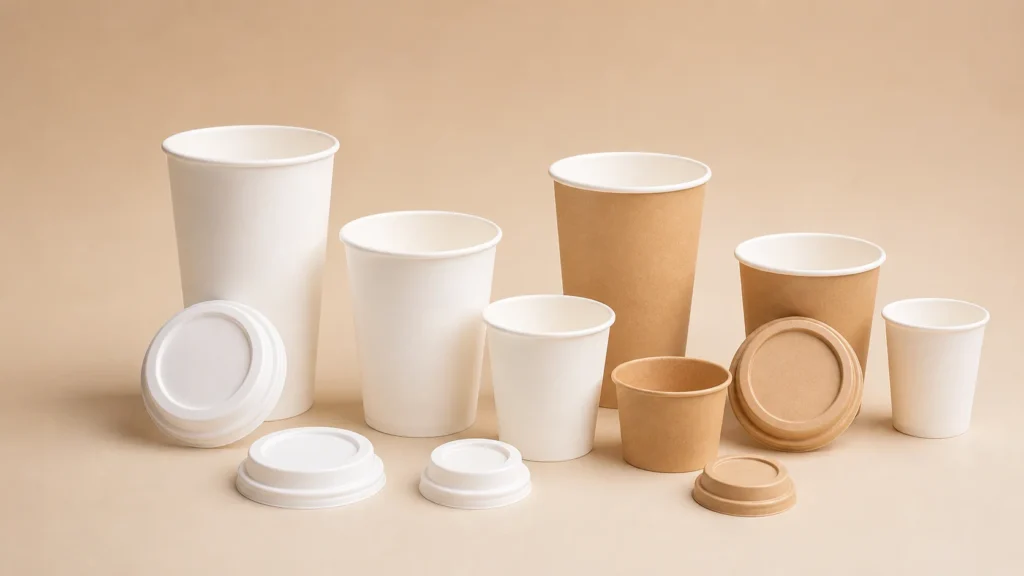
A paper cup coating must be confirmed against your exact filled product, intended hold time, service temperature range, lid system, and applicable food-contact regulations before any procurement decision. No coating type is universally suitable. Sistemas de vasos de papel vary by wall construction and coating specification, and buyers must verify each SKU against documented supplier data and physical sample testing.
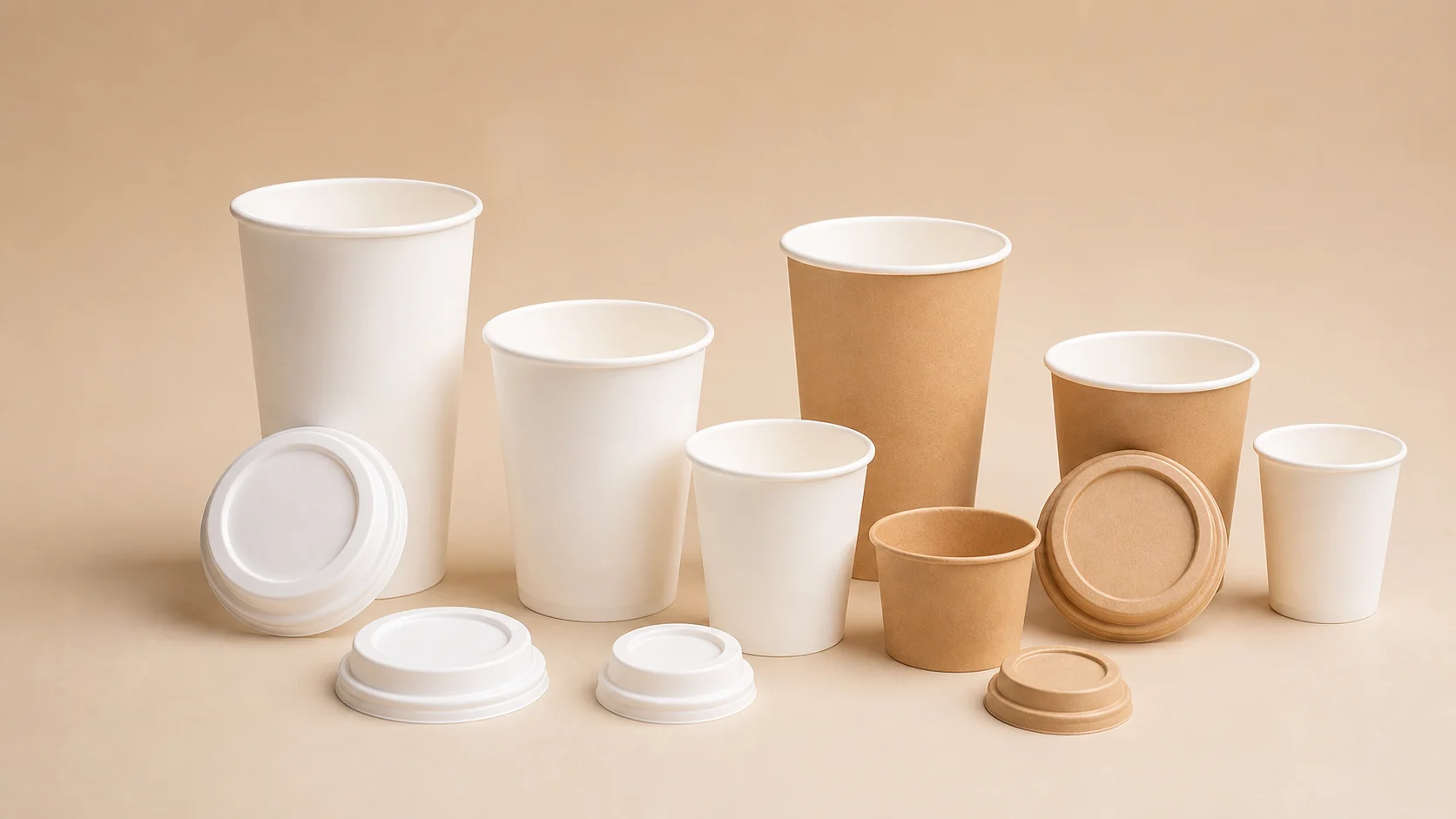
En Directrices de la Comisión Europea sobre materiales en contacto con alimentos treats packaging and containers as food-contact materials considered for intended use, making suitability condition-specific and requiring supplier verification against the actual application.
Three barrier types are currently prevalent in foodservice cup supply: polyethylene (PE), polylactic acid (PLA), and water-based dispersion coatings. Each requires distinct verification from buyers before procurement.
Polyethylene is a thermoplastic applied as a thin film to one or both sides of a paper cup blank. Buyers should not assume uniform performance across PE specifications.
Food-contact documentation. Request declarations of compliance and migration test reports for the intended filled product category. PE formulations differ and are not all tested against the same food simulants or conditions.
Single-sided versus double-sided application. Some cups carry PE only on the interior contact surface; others on both sides. Application weight and side count affect both barrier performance and recyclability classifications assigned by material recovery facilities.
Hold-time confirmation. Suppliers must document the fill conditions under which the cup was tested. Do not assume a cup meeting one service scenario also meets a longer hold time or a different fill product category.
Recycling route documentation. Whether PE-coated cups are accepted by material recovery infrastructure depends on local facility capability. Buyers should not make recyclability claims without confirmed route evidence for their disposal locations.
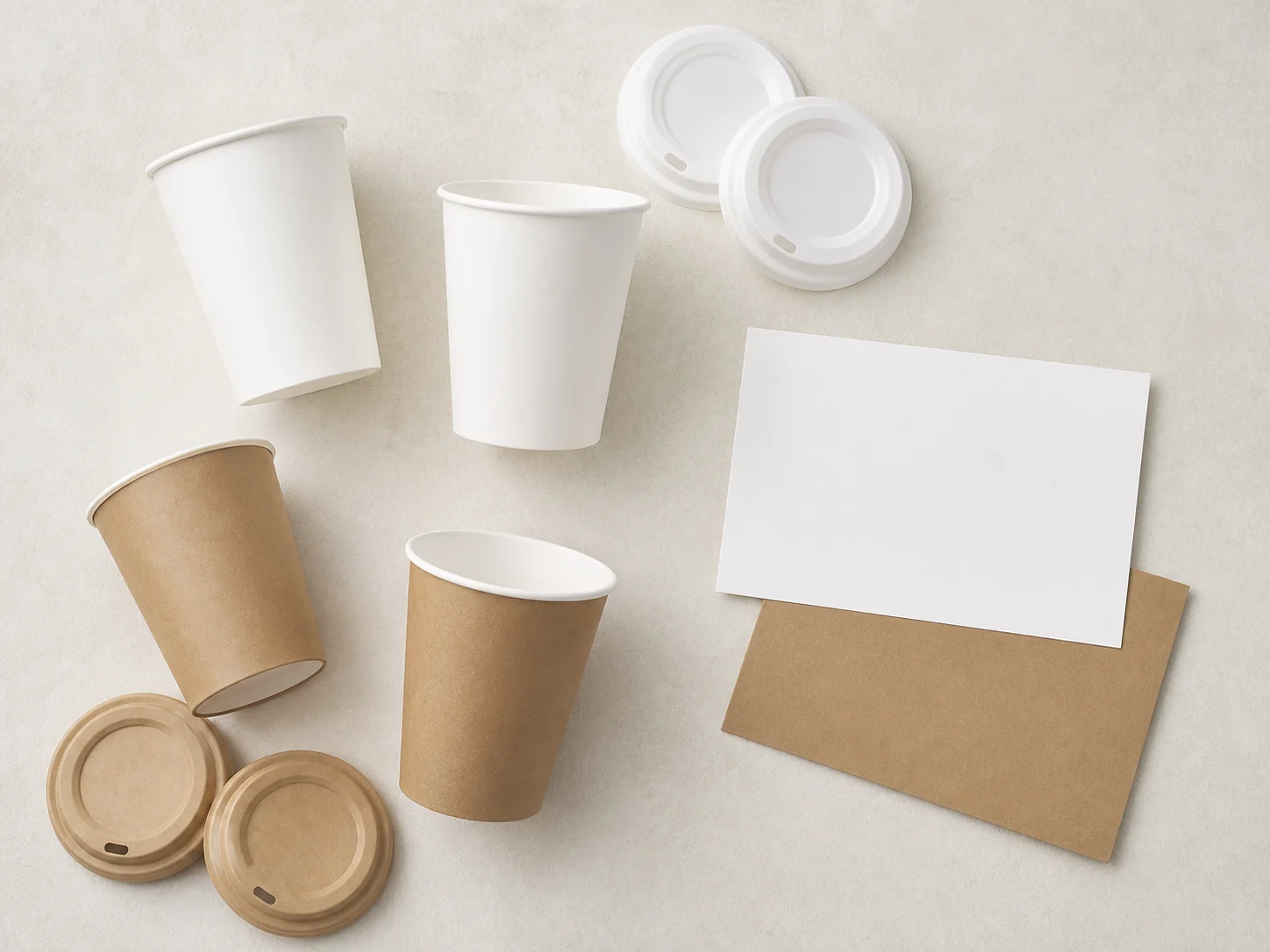
Polylactic acid is a biobased polymer applied as a coating alternative to PE. Supplier marketing often describes PLA as compostable, but buyers must apply caution before making end-of-life claims to customers or regulators.
Industrial composting conditions. PLA breakdown generally requires industrial composting infrastructure operating at sustained conditions for a defined period. Home composting may not meet those thresholds. Buyers must confirm that certified industrial composting access exists in the disposal locations relevant to their operation before stating composting claims.
Certification scope. A certification mark applies to the tested item under the tested conditions. Review which parts of the cup construction were tested, whether the lid is included, and whether the fill product alters the certified outcome.
Service temperature range. PLA has physical properties that differ from PE. Suppliers must confirm the fill temperature range and hold time that a specific PLA-coated SKU is rated for. No general claim about PLA coating performance should substitute for SKU-specific documentation.
Cup-and-lid system compatibility. A PLA-coated cup may need a lid whose material and fit are reviewed as a combined system. Confirm sealing rim dimensions, material interactions under service conditions, and whether lid and cup documentation are aligned.
Water-based barrier coatings are applied as dispersions and marketed with claims including reduced plastic content and improved recyclability potential. Buyers should treat these as prompts for verification, not conclusions.
Composition disclosure. Water-based barrier formulations vary significantly between suppliers. Request ingredient-level disclosure where supplier confidentiality permits, particularly regarding per- and polyfluoroalkyl substances (PFAS). Regulators in multiple jurisdictions have acted or are acting to restrict certain PFAS in food-contact materials.
Barrier performance scope. Performance against moisture, grease, and heat is specific to tested conditions. Do not extrapolate results from one fill product or temperature range to another without supplier confirmation for the specific SKU and application.
Recyclability claims. Assertions that water-based barrier cups are more readily recycled than PE or PLA alternatives must be backed by documentation from the material recovery facilities serving the buyer’s disposal locations. Compatibility with one sorting system does not imply compatibility with another.
Print compatibility. Buyers using custom-printed cups should confirm that inks applied over water-based barriers are food-contact compliant and do not compromise the barrier layer.
Coating selection cannot be separated from the menu and service conditions a cup will encounter. Buyers should document each condition before comparing coating types or requesting samples.
Fill product. Hot liquid, cold liquid, carbonated beverage, oil-containing soup, and mixed liquid-particulate content each create distinct contact conditions. Ask suppliers which fill categories a given coating has been tested against.
Service temperature range. Identify the minimum and maximum fill temperatures across your menu, including seasonal variation. A cup SKU rated for one temperature range may not be suitable for another without separate documentation.
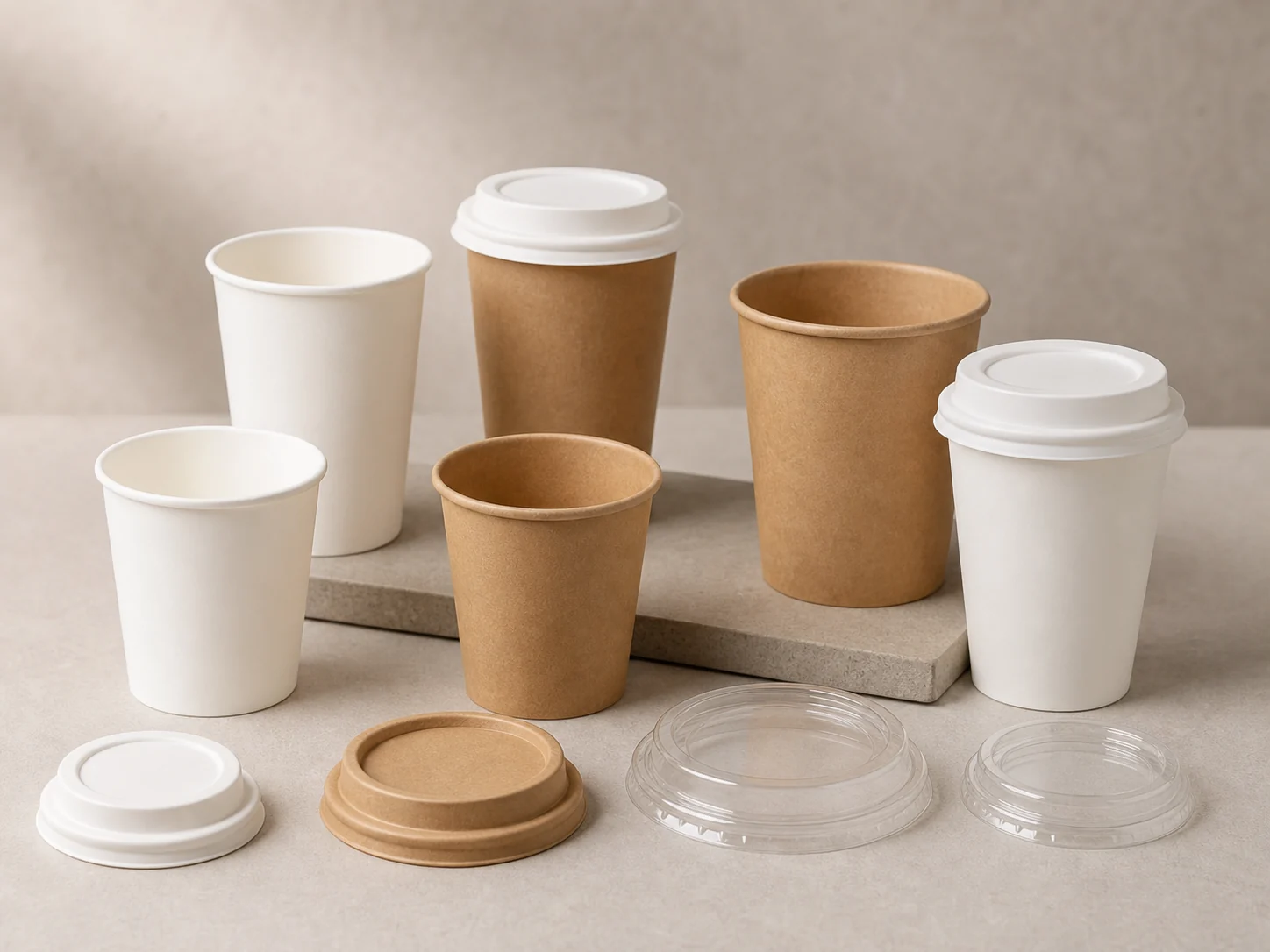
Dwell time. The duration between fill and consumption affects barrier integrity and migration potential. Specify realistic dwell times, including delivery scenarios where cups may be sealed and transported before opening.
Stacking and storage. Cups are typically shipped and stored nested. Verify that the coating surface is not compromised by adjacent cup contact pressure or by storage humidity conditions in the buyer’s environment.
Lid interface. The sealing rim and lid underside create a contact zone that may differ from the interior wall in fill contact and temperature exposure. Review this zone explicitly with the supplier before finalising a SKU.
The table below organises buyer verification questions by coating category. It does not represent confirmed performance and is not a substitute for supplier documentation and physical sample review.
| Verification Question | Recubrimiento de PE | Recubrimiento PLA | Barrera a base de agua |
|---|---|---|---|
| Food-contact declaration available | Confirm per SKU | Confirm per SKU | Confirm per SKU |
| Fill product categories tested | Request from supplier | Request from supplier | Request from supplier |
| Hot-fill suitability documented | Confirm fill range | Confirm fill range | Confirm fill range |
| Cold-fill and condensation performance | Confirm per SKU | Confirm per SKU | Confirm per SKU |
| End-of-life route confirmed | Route evidence required | Route evidence required | Route evidence required |
| PFAS disclosure requested | Ask for confirmation | Ask for confirmation | Ask for disclosure |
| Industrial composting certification | Not typically applicable | Scope and conditions required | Not typically applicable |
| Cup-and-lid system compatibility | Confirm rim and lid SKU | Confirm rim and lid SKU | Confirm rim and lid SKU |
| Print and ink compatibility | Confirm with print supplier | Confirm with print supplier | Confirm with print supplier |

No coating type reviewed in this guide carries a universal recyclability or compostability outcome. Buyers operating in foodservice face increasing scrutiny over disposal claims and must work from route-specific evidence rather than coating-category assumptions.
For PE-coated cups, recyclability depends on whether material recovery facilities in the relevant geography have the equipment and contracts to sort, clean, and process PE-coated paper. This varies by country and by region, and in some markets by facility vintage.
For PLA-coated cups, composting outcomes depend on whether certified industrial composting facilities that accept food-contact packaging exist within the buyer’s disposal geography and operate at the conditions required for PLA breakdown. Buyers should confirm this before making claims to customers.
For water-based barrier cups, compatibility with paper recycling streams should be confirmed with the specific facilities serving the buyer’s locations. A coating passing a repulpability protocol in one test does not automatically meet the requirements of every facility.
Buyers exploring Opciones de vasos de papel ecológicos should treat supplier sustainability documentation as a starting point and verify each claim against their own operational context and confirmed disposal infrastructure.
A sample review should treat the cup and lid as a single functional unit, not as independent components. Begin with a defined protocol before samples arrive.
Step one: Define the fill scenario. Specify liquid type, fill volume, fill temperature, and intended dwell time before samples are ordered. Testing against undefined conditions produces data that cannot be meaningfully compared across SKUs.
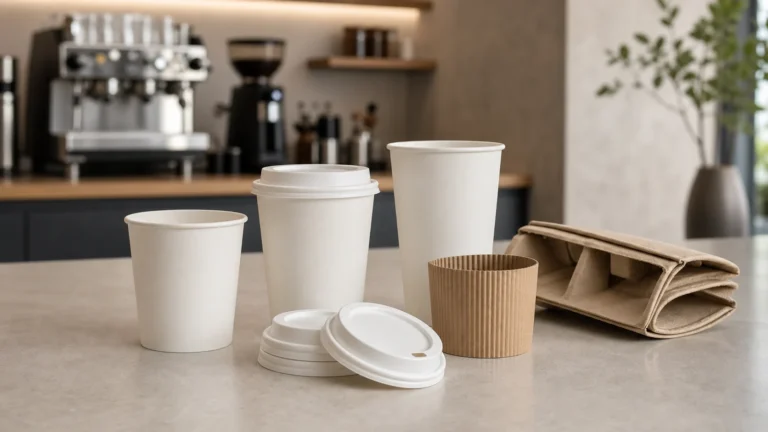
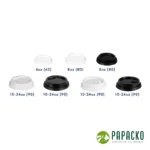
Step two: Request matched samples. Ask the supplier to provide the cup SKU alongside a lid SKU confirmed as dimensionally and materially compatible. Review paper cup lid products to understand the range of lid specifications available and identify which lids should be tested alongside candidate cup SKUs.
Step three: Conduct thermal and mechanical review. Assess the cup under fill conditions at the defined temperature range. Apply and remove the lid multiple times to evaluate fit consistency. Note any change in coating integrity at the fill line or sealing rim.
Step four: Review documentation in parallel. Declarations of compliance, test reports, and certification documents should be reviewed alongside physical samples, not after procurement decisions are made.
Step five: Assess disposal route. Confirm with the relevant facility or scheme operator that the cup-and-lid unit, as a combined material, is accepted under your operation’s specific disposal method.
Buyers working through coating selection benefit from engaging suppliers early with a written brief rather than relying on catalogue descriptions. A brief should specify fill product categories, service temperature ranges, volume requirements, disposal route constraints, and any regulatory requirements applicable to the buyer’s markets.
Papacko works with buyers across a range of foodservice formats and supports the matching of cup specifications to operational conditions. Explore disposable food packaging systems to understand the broader packaging context before finalising a cup-specific brief.
Coating specifications, lid compatibility confirmations, and food-contact documentation are SKU-level conversations that require defined input from the buyer. A catalogue cannot replace a brief.
This guide covers PE, PLA, and water-based barrier coatings as categories of buyer verification questions. It does not represent the full range of coating technologies available in the market, and it does not endorse any coating type as superior to another for any application.
Performance data, temperatures, hold times, certification scopes, and recyclability outcomes cited in supplier materials should be verified by buyers against the supplier’s own documentation and against the operational conditions of the buyer’s specific estate.
Recursos sobre la categoría de vasos de papel provide additional reference points for buyers reviewing cup specifications. Buyers should treat all claims in this guide as prompts for supplier verification rather than confirmed facts.
Regulatory requirements for food-contact materials vary by jurisdiction and are subject to change. Buyers are responsible for confirming compliance with applicable regulations in each market where they operate.
Food-contact suitability is not determined by coating category. It is determined by the specific formulation, the tested food simulants, and the conditions of intended use. Buyers must request declarations of compliance and test documentation for each SKU against their specific fill product and service conditions.
Not without verifying that certified industrial composting infrastructure exists and accepts the cup-and-lid unit in the disposal locations your customers use. A certification mark on a supplier data sheet does not automatically permit an on-packaging claim in every jurisdiction or confirm that accessible composting routes exist.
Some water-based barrier formulations may contain PFAS; others do not. Buyers must request explicit disclosure from the supplier for each SKU under consideration. A water-based label does not mean PFAS-free without written supplier confirmation.
Request matched samples with documented rim dimensions and material specifications from both the cup and lid supplier. Test the unit under your defined fill and service conditions. Do not confirm compatibility from catalogue dimensions alone.
Because material recovery and composting infrastructure varies by facility and geography. A cup classified as recyclable or compostable by a certification body may not be accepted by the specific facilities serving the buyer’s locations. Route confirmation is a separate step from coating specification.
Contact Papacko with documented fill product categories, service conditions, volume requirements, and disposal route constraints. SKU-level specification data, declarations of compliance, and lid compatibility information are available through direct supplier engagement rather than catalogue review alone.