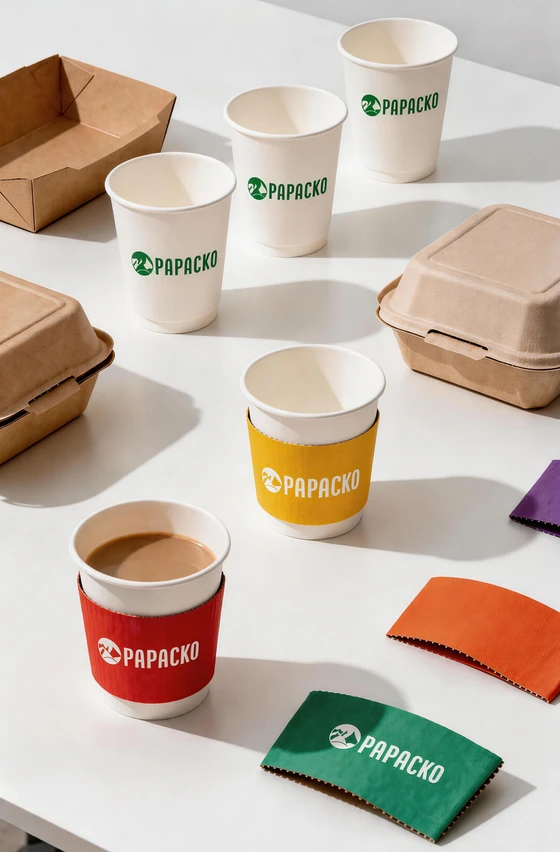
Prêt à créer vos propres gobelets ou emballages en papier ?
Faites-nous part de vos exigences - taille, revêtement, impression et destination - et notre équipe établira un devis détaillé dans les 24 heures.


Découvrez le marché des gobelets en papier en 2026 : taille mondiale, croissance régionale, facteurs de développement durable, impact de l'interdiction du plastique, tendances des acheteurs et prévisions pour 2030 concernant les emballages destinés à la restauration.
Dernière mise à jour: avril 2026
Temps de lecture: 8 à 10 minutes
Auteur: Équipe de contenu de Papacko
Le programme mondial gobelets en papier Le marché a connu une transformation sans précédent au cours des cinq dernières années, sous l’effet des réglementations en matière de développement durable, de l’évolution des préférences des consommateurs et de l’expansion rapide de la culture du café dans les économies émergentes. En 2026, le secteur se trouve à un tournant décisif : sa valeur de marché a atteint $14,8 milliards de dollars américains, et les prévisions indiquent un taux de croissance annuel composé (TCAC) de 6,2% jusqu’en 2030 — mais les dynamiques régionales, les innovations matérielles et les cadres réglementaires créent des gagnants et des perdants.
Ce rapport sectoriel exhaustif analyse le marché mondial des gobelets en papier en 2026 : données détaillées sur la taille du marché par région, comparaisons des taux de croissance (Asie-Pacifique avec un TCAC de 8,7% contre 3,4% pour les marchés matures d’Amérique du Nord), les facteurs de développement durable qui redéfinissent la fabrication, l’impact chiffré des interdictions des plastiques à usage unique dans plus de 40 juridictions, ainsi que des prévisions fondées sur des données concrètes pour la période 2026-2030. Que vous soyez fabricant, distributeur, chaîne de cafés ou investisseur, il est essentiel de comprendre ces dynamiques pour élaborer une stratégie efficace.
Marché mondial en 2026: $ 14,8 milliards de dollars américains
Marché 2025: $ 13,9 milliards de dollars américains
Croissance en glissement annuel: +6.5% (2025-2026)
Taux de croissance annuel composé (TCAC) sur 5 ans (2021-2026): 5.8%
Prévisions du marché pour 2030: $18,9 milliards de dollars américains
Taux de croissance annuel composé (TCAC) prévisionnel (2026-2030): 6.2%
Indicateurs de volume (2026):
-Production mondiale : 264 milliards d'unités
-Consommation par habitant : 33 tasses par personne et par an (moyenne mondiale)
-Gobelets pour boissons chaudes : 178 milliards d'unités (67%)
-Gobelets pour boissons froides : 86 milliards d'unités (33%)
Tendance majeure: Le marché des gobelets pour boissons froides connaît une croissance plus rapide (7,81 TP3T contre 5,41 TP3T pour les boissons chaudes) en raison de l'essor du café glacé, du thé aux perles et des smoothies, notamment en Asie-Pacifique et en Amérique latine.
Perspicacité critique: Les revêtements compostables (PLA + à base d'eau + BioPBS) ont atteint collectivement une part de marché de 36% en 2026, contre 19% en 2022. Il s'agit du segment qui connaît la croissance la plus rapide (taux de croissance annuel composé de 18,51 TP3T) et qui devrait atteindre une part de marché de 521 TP3T d'ici 2030.

Taille du marché en 2026: $5,8 milliards (39% du marché mondial)
Taux de croissance annuel composé (TCAC) 2026-2030: 8.7%
Volume: 112 milliards d'unités (42% de la production mondiale)
Marchés clés:
-Chine: $2,4 milliards (premier marché national, 8,9% de TCAC)
-Inde: $1,1 milliard (croissance la plus rapide, 11,2% de TCAC)
-Japon: $0,9 milliard (marché mature mais stable, avec un TCAC de 4,1%)
-Asie du Sud-Est: 1 TP 4 T 1,4 milliard (l'Indonésie, le Vietnam et la Thaïlande sont les moteurs de la croissance, avec un TCAC combiné de 9,31 TP 3 T)
Facteurs de croissance:
-Urbanisation : 60% de la population de la région Asie-Pacifique vit désormais en milieu urbain (contre 52% en 2020)
-Essor de la culture du café : la densité des cafés dans les villes chinoises de premier rang a augmenté de 1 401 TP3T depuis 2020
-Croissance du revenu disponible : expansion de la classe moyenne en Inde, au Vietnam et en Indonésie
-Essor des restaurants à service rapide (QSR) : chaînes occidentales + concurrents locaux
Défis:
-Sensibilité aux prix : prix unitaire moyen inférieur de 40 à 50% à celui des marchés occidentaux
-Prédominance du secteur informel : 35 à 451 TP3T de boissons servies dans des récipients réutilisables ou non réglementés
-Lacunes en matière d'infrastructures : capacités limitées de compostage commercial des gobelets compostables
Taille du marché en 2026: $4,2 milliards (28% du marché mondial)
Taux de croissance annuel composé (TCAC) 2026-2030: 3.4%
Volume: 68 milliards d'unités (26% de la production mondiale)
Consommation par habitant: 185 tasses par personne et par an (le chiffre le plus élevé au monde)
Principaux enjeux:
-États-Unis: $3,6 milliards (85% du marché régional)
-Canada: $0,6 milliard (accent mis sur la durabilité, 4,8% de TCAC)
Facteurs de croissance:
-Croissance du secteur du café de spécialité : les cafés de la « troisième vague » enregistrent une croissance annuelle comprise entre 6 et 81 TP3T
-Adoption des gobelets compostables : 45% de nouvelle production en 2026 (contre 22% en 2022)
-Positionnement haut de gamme : le prix de vente moyen a augmenté de 121 TP3T (2022-2026) grâce aux produits écologiques
-Tendances en matière de retour au bureau : le taux d'occupation des bureaux après la pandémie se stabilise entre 65 et 75%, ce qui stimule la demande des investisseurs institutionnels
Facteurs de saturation du marché:
-La densité des cafés atteint un plateau dans les grandes métropoles
-Campagnes en faveur des gobelets réutilisables visant à réduire la consommation d'articles jetables 8-12% dans les villes soucieuses du développement durable
-Consommation par habitant à un niveau mature (potentiel de croissance en volume limité)
Impact réglementaire:
-18 villes/États ayant interdit le plastique à usage unique (ce qui concerne 85 millions de personnes)
-Les lois sur la responsabilité élargie des producteurs (REP) en vigueur dans 8 États, qui imposent un système de recyclage financé par les fabricants
-Exigences en matière d'étiquetage relatives à la compostabilité en Californie, en Oregon et dans l'État de Washington
Taille du marché en 2026: $3,4 milliards (23% du marché mondial)
Taux de croissance annuel composé (TCAC) 2026-2030: 4.9%
Volume: 58 milliards d'unités (22% de la production mondiale)
Consommation par habitant: 112 tasses par personne et par an
Marchés clés:
-Allemagne: $0,8 milliard (une réglementation stricte favorise l'adoption des produits compostables)
-Royaume-Uni: $0,7 milliard (impact significatif de l'interdiction des plastiques)
-France: $0,5 milliard (les systèmes de consigne pour les gobelets réutilisables freinent la croissance des gobelets jetables)
-Italie/Espagne: $ 0,6 milliard au total (la culture de l'expresso évolue vers la vente à emporter)
-Région nordique: $0,3 milliard (pourcentage de compostabilité maximal à 68%)
Facteurs de croissance:
-Directive européenne relative aux plastiques à usage unique: La mise sur le marché des gobelets à boisson à usage unique en polystyrène expansé est interdite depuis le 3 juillet 2021 ; les autres gobelets à usage unique contenant du plastique font l'objet de mesures telles que l'étiquetage et la réduction de la consommation.
-Infrastructures de compostage : la couverture du compostage commercial atteint 651 TP3T dans les zones urbaines
-La culture du café à emporter : l'Europe du Sud s'inspire des tendances nord-européennes en matière de vente à emporter
Des défis particuliers:
-Une réglementation fragmentée : 27 États membres de l'UE + le Royaume-Uni, avec des modalités de mise en œuvre variables
-Alternatives réutilisables : des programmes ambitieux de promotion des gobelets réutilisables, soutenus par les pouvoirs publics, en France et en Allemagne
-Une plus grande sensibilité aux coûts : les contraintes économiques freinent l'adoption de produits écologiques haut de gamme en Europe de l'Est
Préférence en matière de revêtement:
-42% PLA compostable (le plus élevé au monde)
-Revêtements en dispersion à base d'eau 15%
-32% PE (ancien, en déclin rapide)
-11% autres (cire, revêtements expérimentaux)
Taille du marché en 2026: 1 TP4T1,0 milliard (71 TP3T du marché mondial)
Taux de croissance annuel composé (TCAC) 2026-2030: 7.2%
Volume: 18 milliards d'unités (7% de la production mondiale)
Marchés clés:
-Brésil: $0,5 milliard (pays producteur de café où la culture du « à emporter » se développe)
-Mexique: $0,3 milliard (la proximité des États-Unis stimule l'expansion du secteur de la restauration rapide)
-Argentine/Chili: $0,2 milliard au total
Facteurs de croissance:
-L'urbanisation et la culture des cafés à São Paulo, Mexico et Buenos Aires
-Les chaînes de restauration rapide américaines s'implantent dans des villes de second rang
-Une prise de conscience environnementale croissante au sein de la classe moyenne urbaine
Les obstacles à une croissance plus rapide:
-Instabilité économique et fluctuations monétaires
-La baisse des revenus disponibles freine l'adoption des produits haut de gamme
-Une forte culture des contenants réutilisables sur les marchés traditionnels
Taille du marché en 2026: 1 TP 4 T 0,4 milliard (31 TP 3 T du marché mondial)
Taux de croissance annuel composé (TCAC) 2026-2030: 9,81 TP3T (deuxième plus forte croissance régionale)
Volume: 8 milliards d'unités (3% de la production mondiale)
Marchés clés:
-Émirats arabes unis/Arabie saoudite: La culture du café haut de gamme à Dubaï et à Riyad stimule la demande
-Afrique du Sud: Le marché le plus développé d'Afrique (70% du volume régional)
-Égypte: La culture des cafés en plein essor au Caire
Facteurs de croissance:
-Les populations jeunes et urbaines des pays du CCG
-Reprise des secteurs du tourisme et de l'hôtellerie après 2020
-L'arrivée des chaînes internationales de cafés sur les marchés
Défis:
-Production locale limitée (modèle 90% importé d'Asie-Pacifique et d'Europe)
-Lacunes en matière d'infrastructures pour la gestion des déchets et le recyclage
-Sensibilité aux prix sur les marchés africains

Paysage réglementaire mondial (2026):
-Plus de 40 juridictions nationales ou régionales ayant mis en place des interdictions ou des restrictions concernant les gobelets enduits de plastique
-Touchant environ 1,2 milliard de personnes (15% de la population mondiale)
-12 à 18 milliards de gobelets par an sont désormais fabriqués en papier ou à partir de solutions réutilisables, au lieu du plastique
Principales mises en œuvre:
Conséquences imprévues:
-En 2024, la hausse de la demande a dépassé l'offre de revêtements compostables (les prix ont bondi de 18 à 251 TP3T).
-Le manque d'infrastructures de compostage a conduit à ce que des gobelets compostables finissent dans les décharges (ce qui va à l'encontre de leur objectif)
-Dans certaines juridictions, on a observé un passage du modèle 8-15% aux emballages réutilisables (le volume de plastique n’a pas été entièrement remplacé par du papier).
Données issues d'une enquête auprès des consommateurs de 2026 (10 000 personnes interrogées dans 15 pays) :
-72% préfèrent les gobelets compostables à ceux recouverts de polyéthylène (contre 58% en 2022)
-64% prêts à payer un supplément de 0,05 à 0,15 € pour des gobelets certifiés compostables
-48% recherchez systématiquement les logos BPI/FSC/TÜV lorsque vous achetez des boissons
-35% déclarent utiliser des gobelets réutilisables au moins une fois par semaine (contre 22% en 2021)
Différences générationnelles:
-Génération Z (18-26 ans) : 81% accordent la priorité au développement durable, 52% utilisent régulièrement des produits réutilisables
-Génération Y (27-42 ans) : 75% accordent la priorité au développement durable, 42% utilisent des produits réutilisables
-Génération X (43-58 ans) : 64% accordent la priorité au développement durable, 28% utilisent des produits réutilisables
-Génération des baby-boomers (59 ans et plus) : 52% accordent la priorité au développement durable, 18% utilisent des produits réutilisables
Impact de la marque:
-Les chaînes de cafés qui communiquent sur leurs engagements en matière de développement durable enregistrent des scores de fidélité de la clientèle supérieurs de 12 à 18%.
-58% de consommateurs prêtent attention au matériau et à la certification des gobelets (contre 34% en 2020)
-Perception négative de la marque : 67% considère que les entreprises qui utilisent encore des gobelets enduits de PE sont “ en retard sur leur temps ”.”
Adoption de la certification par un organisme tiers (2026 par rapport à 2022) :
Les exigences réglementaires, moteurs de l'adoption:
-Californie: Les allégations de compostabilité concernant les produits en fibres enduits de plastique doivent être conformes à la norme ASTM D6868-19 ainsi qu’aux exigences supplémentaires de l’État en matière d’étiquetage et de matériaux.
Investissements en R&D (2026):
-Dépenses mondiales en R&D consacrées au revêtement des gobelets en papier : $420 millions (soit une hausse de 35% par rapport à 2023)
-Domaines prioritaires : barrières sans PFAS (40%), amélioration de la recyclabilité (30%), réduction des coûts (20%), amélioration des performances (10%)
Technologies émergentes en voie de commercialisation:
1. Revêtements à base de nanocellulose:
-Statut : Production pilote dans trois usines scandinaves
-Avantage : 100% d'origine biologique, excellente barrière contre l'humidité, recyclable
-Défi : coût (3 à 4 fois le prix actuel du PLA), montée en puissance de la production
-Calendrier de commercialisation : 2027-2028 pour le segment haut de gamme
2. Revêtements à base d'algues:
-Statut : essais à l'échelle du laboratoire, essais précommerciaux
-Défi : stabilité dans les liquides chauds, développement de la chaîne d'approvisionnement
-Calendrier : entrée potentielle sur le marché en 2029-2030
3. Barrières à base de minéraux:
-Statut : Disponibilité commerciale limitée (Japon, Corée du Sud)
-Avantage : sans PFAS, recyclable dans les filières de collecte de papier classiques
-Problème : fragilité à basse température, poids plus élevé
-Adoption : 2% sur le marché Asie-Pacifique, avec une expansion vers l'Europe prévue pour 2027
Automatisation et numérisation:
-Vitesse moyenne d'une ligne de production de gobelets en papier : 140 gobelets/minute (2026) contre 110 gobelets/minute (2020), soit un gain d'efficacité de +27%
-Le taux de défauts a été ramené à 0,81 TP3T (contre 1,51 TP3T en 2020) grâce à un contrôle qualité basé sur l'intelligence artificielle
-Consommation d'énergie pour 1 000 tasses : -181 TP3T grâce à l'optimisation des cycles de chauffage et de formage
Pratiques de fabrication durables:
-La production mondiale s'élève désormais à 42% d'énergie renouvelable (contre 28% en 2022)
-Recyclage de l'eau dans le secteur industriel : 651 TP3T en moyenne (contre 481 TP3T auparavant)
-Intégration de la valorisation énergétique des déchets : 38% provenant des usines (déchets de production utilisés comme combustible pour les chaudières)
Concentration du marché:
-Les 5 principaux fabricants : part de marché du 42%
-Top 10 : 58%
-Un marché très fragmenté, avec plus de 200 fabricants à l'échelle mondiale
-Tendance à la consolidation : 8 opérations majeures de fusions-acquisitions sur la période 2024-2026
Stratégies des fabricants:
-35% de fabricants de renom disposent désormais de leurs propres installations de revêtement (contre 22% en 2020)
-18% intégré verticalement dans des usines de carton (contrôle des matières premières)
-52% dispose de capacités d'impression en interne (par opposition à la sous-traitance)
Avantages de l'intégration:
-8-12% : réduction des coûts grâce à la maîtrise de la chaîne d'approvisionnement
-Des cycles d'innovation plus rapides (du développement du revêtement à la production)
-Un meilleur contrôle qualité et une plus grande cohérence
Scénario de référence (6,21 TP3T TCAC) :
-Taille du marché en 2030 : $18,9 milliards
-Volume : 340 milliards d'unités (+291 TP3T par rapport à 2026)
-Hypothèses : poursuite de l'urbanisation, extension modérée de l'interdiction des plastiques, tendance constante en faveur du développement durable
Scénario optimiste (7,81 TP3T TCAC) :
-Taille du marché en 2030 : $20,8 milliards
-Volume : 365 milliards d'unités (+38% par rapport à 2026)
-Facteurs déterminants : interdictions mondiales strictes concernant le plastique, avancée majeure dans le domaine des revêtements compostables à coût raisonnable, accélération de la croissance sur les marchés émergents
Scénario prudent (4,51 TP3T TCAC) :
-Taille du marché en 2030 : $17,3 milliards
-Volume : 310 milliards d'unités (+17% par rapport à 2026)
-Risques : ralentissement économique, succès des campagnes en faveur des gobelets réutilisables, complexité réglementaire freinant l'adoption de cette pratique
Segments affichant la plus forte croissance (2026-2030):
1.Gobelets pour boissons froides (12 à 24 oz): 7,81 TP3T de TCAC (la demande est tirée par le café glacé, le thé aux perles et les smoothies)
2.Gobelets à revêtement compostables: 18,51 TP3T, TCAC (impulsion réglementaire + préférences des consommateurs)
3.Tasses de spécialité haut de gamme: 9,21 TP3T TCAC (cafés de la troisième vague, personnalisation)
Segments en recul/stables:
1.Gobelets revêtus de PE: -2,51 TP3T TCAC (suppression progressive des réglementations sur les principaux marchés)
2.Distribution automatique / Secteur institutionnel: 2,81 TP3T, TCAC (évolution de la culture du café au bureau vers un modèle de type « café »)
3.Gobelets enduits de cire: -5,81 TP3T TCAC (technologie obsolète, faible recyclabilité)
Acquisitions notables:
-Investissements en capital-investissement dans le secteur européen de l'emballage durable : plus de $450M répartis sur 5 opérations
-Un fabricant chinois a racheté trois concurrents de plus petite taille ($180M au total)
Thèmes d'investissement:
-Extension des capacités de production de revêtements compostables : $650M investis à l'échelle mondiale (2024-2026)
-Automatisation industrielle : le $380M dans les nouvelles lignes de production à grande vitesse
-Expansion géographique : $520M pour la capacité de production des fabricants occidentaux dans la région Asie-Pacifique
Activité en matière d'introductions en bourse:
-Deux entreprises spécialisées dans les emballages durables sont entrées en bourse (2025-2026)
-Capitalisation boursière totale : $1,8 milliard
-Intérêt des investisseurs : les fonds ESG à l'origine de 40% des capitaux levés
Installations de compostage:
-Seuls 28% de la population mondiale ont accès à des services de compostage commerciaux acceptant les gobelets certifiés BPI.
-Incohérence : 36% de gobelets sont compostables, mais <30% peuvent être traités correctement
-Besoins d'investissement : environ $15 à 20 milliards à l'échelle mondiale pour atteindre une couverture de compostage de 60%
Contamination liée au recyclage:
-45 à 601 TP3T de gobelets en papier finissent dans les décharges malgré leur conception recyclable/compostable
-Taux de contamination : 15 à 251 TP3T des flux de recyclage (résidus alimentaires, matériaux mélangés)
-Lacunes en matière d'information : 62% de consommateurs ne savent pas comment jeter correctement les différents types de gobelets
Volatilité des matières premières:
-Les prix du carton ont augmenté de 22% (2020-2026) en raison de la demande en produits forestiers
-Fluctuation des prix de la résine PLA : $ entre 2 200 et 3 400 par tonne (en fonction des cours du maïs)
-Les coûts énergétiques pèsent sur les marges des entreprises manufacturières (notamment en Europe)
Compression des marges:
-Marges moyennes des fabricants : 8-12% (contre 12-15% en 2020)
-Concurrence tarifaire intense sur le segment des produits standardisés enduits de polyéthylène
-La prime sur les produits compostables diminue à mesure que les volumes augmentent (prime de 401 TP3T en 2022, désormais de 251 TP3T)
Des normes disparates:
-Plus de 15 normes différentes en matière de compostabilité à l'échelle mondiale (EN 13432, ASTM D6400, AS 4736, etc.)
-Les fabricants doivent faire certifier leurs produits pour plusieurs marchés (coût et complexité)
-Exigences contradictoires : certaines régions acceptent le PLA, d'autres exigent qu'il soit recyclable
Responsabilité élargie des producteurs (REP):
-Douze collectivités exigent désormais des fabricants qu'ils financent la collecte et le traitement des déchets.
-Coûts : 0,02 à 0,08 € par tasse (coût unitaire de 8 à 151 TP3T)
-Charges administratives : systèmes de déclaration, de suivi et de mise en conformité
Le marché mondial des gobelets en papier a atteint $14,8 milliards de dollars américains en 2026, soit une croissance de 6,5% par rapport à l'année précédente, après avoir affiché un chiffre d'affaires de $13,9 milliards en 2025. Le secteur a produit 264 milliards d’unités en 2026, les gobelets pour boissons chaudes représentant 67% du volume (178 milliards d’unités) et les gobelets pour boissons froides 33% (86 milliards d’unités). Le marché devrait connaître un taux de croissance annuel composé (TCAC) de 6,21 TP3T entre 2026 et 2030, pour atteindre $18,9 milliards d’ici 2030. La région Asie-Pacifique détient la plus grande part de marché avec 39% ($5,8 milliards), suivie par l’Amérique du Nord avec 28% ($4,2 milliards) et l’Europe avec 23% ($3,4 milliards).
L'Asie-Pacifique est le moteur de la croissance mondiale, avec un TCAC de 8,7% prévu pour la période 2026-2030, grâce à une urbanisation rapide (60% de population urbaine), à l’essor de la culture du café (la densité de cafés dans les villes chinoises a augmenté de 140% depuis 2020) et à la hausse des revenus de la classe moyenne. L’Inde affiche la croissance la plus rapide au niveau national, avec un TCAC de 11,2%, tandis que l’Asie du Sud-Est (Indonésie, Vietnam, Thaïlande) connaît globalement une croissance de 9,3%. La Chine reste le plus grand marché national, avec $2,4 milliards et un taux de croissance de 8,9%. Le Moyen-Orient et l’Afrique affichent la deuxième plus forte croissance régionale avec un TCAC de 9,81 TP3T, mais à partir d’une base beaucoup plus modeste (taille du marché de 1 TP4T0,4 milliard), tandis que les marchés matures comme l’Amérique du Nord (taux de croissance annuel composé de 3,4%) et l’Europe (4,9%) connaissent une croissance plus lente.
Les interdictions des plastiques à usage unique dans plus de 40 juridictions ont entraîné le remplacement de 12 à 18 milliards de gobelets en plastique par des alternatives en papier chaque année, ce qui représentera environ 6 à 8% de la production mondiale totale de gobelets en papier en 2026. Parmi les principales mesures réglementaires, on peut citer la directive européenne sur les plastiques à usage unique (qui concerne 27 pays et entraîne une augmentation de 8 à 12 milliards de gobelets en papier par an), l’interdiction canadienne de 2023 (qui entraîne une augmentation de 1,2 milliard d’unités), ainsi que les interdictions progressives mises en place par certaines villes chinoises (ajoutant 3 à 5 milliards d’unités). Ces réglementations ont accéléré l’adoption des revêtements compostables, dont la part de marché est passée de 18% en 2022 à 32% en 2026. Cependant, ces interdictions ont également entraîné des conséquences imprévues, notamment des hausses de prix de 18 à 251 TP3T pour les revêtements compostables en 2024 et un glissement de 8 à 151 TP3T vers des alternatives réutilisables plutôt que vers une conversion directe du plastique vers le papier.
Les revêtements compostables (PLA, dispersion à base d'eau et BioPBS/PBAT) représenteront au total 36% de la production mondiale de gobelets en papier en 2026, soit une hausse spectaculaire par rapport aux 19% enregistrés en 2022. Le PLA (acide polylactique) Les revêtements à base de PE représentent à eux seuls 24% de part de marché, les revêtements en dispersion à base d'eau 8% et les revêtements BioPBS/PBAT 4%. Le revêtement traditionnel en PE (polyéthylène) domine toujours avec 58%, mais a reculé par rapport aux 72% enregistrés en 2022. Les variations régionales sont importantes : les pays nordiques sont en tête avec 68% d’adoption des revêtements compostables, l’Europe dans son ensemble affiche 57%, l’Amérique du Nord 45%, tandis que l’Asie-Pacifique est à la traîne avec 28% en raison de la sensibilité aux coûts. Le segment des matériaux compostables connaît la croissance la plus rapide, avec un TCAC de 18,51 TP3T, et devrait atteindre une part de marché mondiale de 521 TP3T d’ici 2030.
Quatre facteurs clés en matière de développement durable transforment le secteur : (1) la pression réglementaire exercée par plus de 40 juridictions ayant mis en place des interdictions sur les plastiques à usage unique, ce qui touche 1,2 milliard de personnes et entraîne le remplacement de milliards d’unités par des alternatives en papier ou compostables ; (2) Les préférences des consommateurs : 72% préfèrent les gobelets compostables (contre 58% en 2022) et 64% sont prêts à payer un supplément de 0,05 à 0,15 € pour des produits certifiés ; (3) Les certifications par des organismes tiers, avec l’adoption de la norme FSC atteignant 58% de la production (soit une hausse de 16 points depuis 2022) et la certification de compostabilité BPI doublant pour atteindre 18% ; (4) Les engagements des entreprises en matière de développement durable, les grandes chaînes de cafés s'engageant à utiliser 1 001 TP3T d'emballages compostables/recyclables d'ici 2025-2028, ce qui stimule l'innovation chez les fabricants. Collectivement, ces facteurs ont généré un transfert de 1 TP4T4,2 milliards de valeur de marché vers les produits durables sur quatre ans.
Le marché mondial des gobelets en papier devrait atteindre $18,9 milliards de dollars américains en 2030 selon les scénarios de référence, soit un TCAC de 6,2% à partir de 2026. Le volume de production atteindra 340 milliards d’unités (+29% par rapport aux 264 milliards d’unités de 2026). Les projections régionales indiquent que la région Asie-Pacifique atteindra $8,2 milliards (TCAC de 8,7%), l'Amérique du Nord $4,9 milliards (TCAC de 3,4%) et l'Europe $4,2 milliards (TCAC de 4,9%). Des scénarios optimistes, reposant sur des interdictions strictes des plastiques et des innovations de rupture, pourraient propulser le marché à $20,8 milliards (taux de croissance annuel composé de 7,81 TP3T), tandis que des scénarios prudents tenant compte des ralentissements économiques et du succès des campagnes en faveur des produits réutilisables prévoient $17,3 milliards (taux de croissance annuel composé de 4,51 TP3T). Les gobelets compostables devraient connaître la croissance la plus rapide, avec un TCAC de 18,51 TP3T, et atteindre une part de marché de 521 TP3T d’ici 2030.
Le marché des gobelets en papier reste fragmenté, les cinq principaux fabricants détenant une part de marché cumulée de 42% en 2026. Parmi ces entreprises figurent : Huhtamaki Oyj (12% de part de marché mondiale, intégrée verticalement et fortement implantée en Europe et en Asie), Dart Container (10%, leader en Amérique du Nord avec un portefeuille diversifié), Greiner Packaging (8%, axée sur l’innovation et desservant les segments haut de gamme en Europe et en Amérique du Nord), Konie Cups (7%, leader en termes de coûts dans la région Asie-Pacifique) et Benders Paper Cups (5%, positionnée sur le développement durable en Europe). Les 58% restants se répartissent entre plus de 200 fabricants régionaux et locaux. La consolidation du secteur s’accélère avec 8 opérations majeures de fusions-acquisitions prévues entre 2024 et 2026, motivées par les économies d’échelle, les stratégies d’intégration verticale (35% disposent désormais de leur propre production de revêtements) et l’expansion géographique, en particulier sur les marchés à forte croissance de la région Asie-Pacifique.
Le marché mondial des gobelets en papier se trouve en 2026 à un tournant décisif, sous l’effet des réglementations en matière de développement durable, de l’évolution des préférences des consommateurs et de l’expansion géographique dans les économies émergentes. Avec un chiffre d’affaires de $14,8 milliards et une production annuelle de 264 milliards d’unités, le secteur prévoit un taux de croissance annuel composé (TCAC) de 6,21 % jusqu’en 2030, mais les dynamiques régionales varient considérablement : de la croissance explosive de 8,71 % en Asie-Pacifique, alimentée par l’adoption de la culture du café, à l’expansion mûre de 3,41 % en Amérique du Nord, axée sur la haut de gamme et la compostabilité.
Principaux enseignements :
1.Divergences régionales— L'Asie-Pacifique et la région MEA sont les moteurs de la croissance (taux de croissance annuel composé de 8 à 101 TP3T), tandis que les marchés matures s'orientent vers le développement durable
2.Réforme réglementaire—Plus de 40 collectivités ayant instauré des interdictions sur le plastique ont remplacé entre 12 et 18 milliards de gobelets, ce qui a favorisé l'adoption des gobelets compostables
3.La révolution des revêtements— La part des déchets compostables est passée de 19% (2022) à 36% (2026) — l'objectif étant d'atteindre 52% d'ici 2030
4.La fragmentation persiste—Les cinq principaux fabricants ne détiennent que 42% de parts de marché, malgré les tendances à la consolidation
5.Déficit en matière d'infrastructures—Seuls 281 TP3T de la population ont accès au compostage, ce qui limite le potentiel de l'économie circulaire
Nous accompagnons les distributeurs, les importateurs, les chaînes de cafés et les professionnels de la restauration dans leur transition vers des emballages durables.
Les études de marché amènent généralement les acheteurs à s'intéresser à la sélection des fournisseurs, aux normes d'approvisionnement de la chaîne logistique, à la capacité d'exportation et aux gammes de gobelets disponibles sur le marché qui peuvent réellement étayer ces décisions.
Prenez contact avec nous :