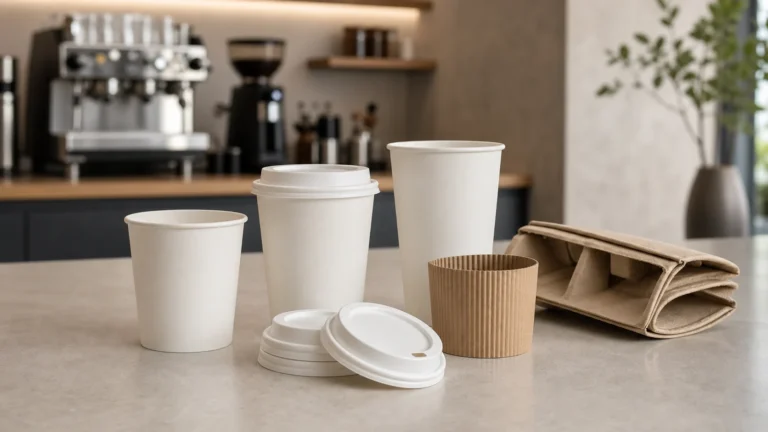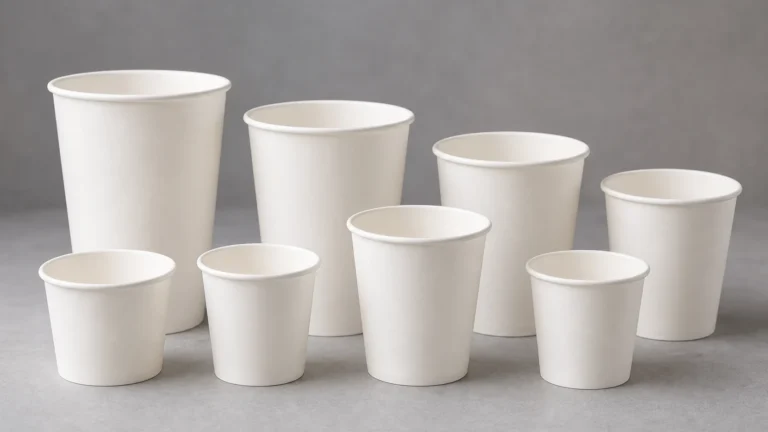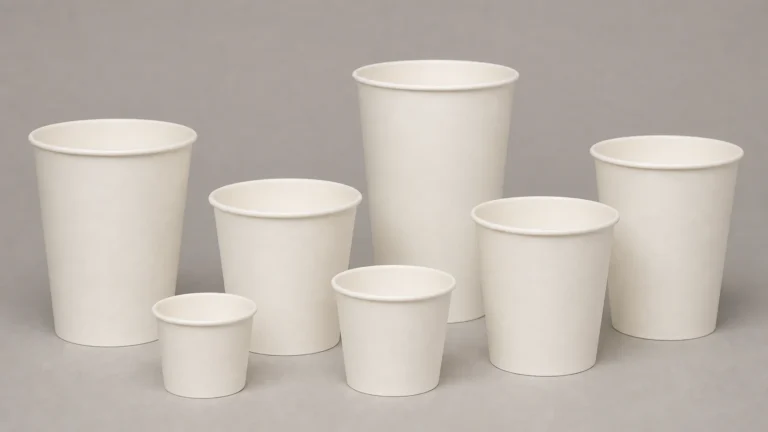
Prêt à créer vos propres gobelets ou emballages en papier ?
Faites-nous part de vos exigences - taille, revêtement, impression et destination - et notre équipe établira un devis détaillé dans les 24 heures.


La consommation de café au bureau entraîne une utilisation considérable de gobelets jetables : un employé de bureau en utilise en moyenne entre 240 et 280 par an, ce qui représente 96 millions de gobelets par jour rien que sur le territoire américain. Pourtant, de nombreux responsables des installations négligent l'impact considérable que le choix des gobelets dans les espaces café a sur la satisfaction des employés, les coûts d'exploitation et les performances en matière de développement durable.
Pour choisir les bons gobelets en papier de bureau, il faut trouver le juste équilibre entre quatre facteurs essentiels : une taille adaptée aux différentes préférences en matière de boissons, une résistance suffisante pour éviter les fuites et les brûlures, un bon rapport coût-efficacité pour les achats en gros, ainsi que des considérations environnementales en phase avec les engagements de l'entreprise en matière de développement durable. Un gobelet mal choisi peut entraîner des plaintes de la part des employés, un gaspillage dû à l'utilisation de deux gobelets et des budgets d'approvisionnement qui grimpent de 30 à 40 % plus haut que nécessaire.
Ce guide complet fournit aux responsables des installations, aux administrateurs de bureau et aux professionnels des achats des spécifications détaillées, une analyse des coûts et des critères de sélection pour les gobelets en papier destinés aux coins café de bureau. Que vous équipiez une start-up de 20 personnes ou que vous gériez les services de restauration sur plusieurs sites d'entreprise, vous apprendrez comment optimiser le choix des gobelets en tenant compte de la fonctionnalité, du budget et de l'expérience des employés.
Points clés abordés :-Tailles standard des tasses de bureau et exigences en matière de capacité
-Structures tarifaires pour les achats en gros et stratégies d'optimisation des coûts
-Compatibilité des distributeurs et aménagement de l'espace
-Options en matière de développement durable et alignement sur la politique d'entreprise
💡 À retenir: Les stations de café optimales en entreprise proposent trois tailles de tasses (23 cl, 35 cl, 47 cl), avec des modèles isothermes pour les boissons chaudes. Elles sont achetées en gros par livraisons trimestrielles afin de réduire les coûts unitaires de 25 à 35 %, tout en conservant un stock suffisant pour 3 à 4 mois afin d'assurer une disponibilité constante.
Les gobelets en papier de bureau sont des récipients à usage unique spécialement conçus pour les coins café, les salles de pause et les espaces de réunion sur le lieu de travail. Contrairement aux gobelets vendus dans les cafés, ceux destinés aux bureaux privilégient la rentabilité, la densité de stockage et une performance fiable, quel que soit le type de boisson ou les préférences des utilisateurs.
Les gobelets en papier de bureau présentent plusieurs caractéristiques de conception optimisées pour les environnements de travail :
-Une qualité constante à grande échelle: Fabriqué selon des tolérances strictes, garantissant un ajustement fiable dans les distributeurs et une compatibilité avec les couvercles standard, même pour les commandes en grande quantité
-Emballage peu encombrant: Manchons emboîtables conçus pour un rangement compact dans les placards de fournitures de bureau et les armoires des salles de pause
-Polyvalence pour toutes sortes de boissons: Convient pour le café chaud, le thé, l'eau fraîche et d'autres boissons courantes au bureau, sans nécessiter plusieurs types de tasses
-Construction économique: Une qualité de matériau équilibrée qui répond aux exigences fonctionnelles tout en optimisant les coûts pour une consommation à grande échelle
Le marché des tasses à café destinées au lieu de travail se divise en différentes catégories en fonction de la technologie d'isolation utilisée :
Gobelets en papier à simple paroi: Option économique avec une doublure en polyéthylène ou en PLA pour assurer l'étanchéité aux liquides-Coût unitaire le plus bas (30 à 50 % moins cher que les alternatives isolées)
-Nécessite l'utilisation d'un manchon ou d'un double revêtement pour les boissons chaudes dont la température dépasse 71 °C
-Idéal pour les boissons fraîches ou les bureaux où les utilisateurs préfèrent utiliser des manchons
-Modèle standard destiné aux environnements soucieux de leur budget et présentant une consommation modérée de café
Tasses isothermes à double paroi: Option haut de gamme avec intercalaire d'air entre les parois intérieure et extérieure-Élimine le recours aux manchons, ce qui réduit la consommation totale de produits jetables
-Permet de tenir confortablement les boissons chaudes jusqu'à 93 °C
-Le coût plus élevé par tasse (40-60%) est compensé par la suppression des frais liés aux manchons
-Idéal pour les bureaux axés sur l'expérience des employés et les environnements où la consommation de café est élevée
Gobelets à paroi ondulée: Modèle de milieu de gamme avec une couche extérieure texturée-Offre une meilleure isolation que les modèles à simple paroi, sans le coût élevé des modèles à double paroi
-Une apparence distinctive renforce la perception de qualité
-Supplément de prix du modèle 25-35% par rapport au modèle à simple paroi
-Une tendance croissante dans les bureaux modernes : trouver le juste équilibre entre coûts et expérience
L'approvisionnement en gobelets pour les bureaux diffère fondamentalement de celui des cafés. Les entreprises privilégient le coût total de possession (gobelet + couvercle + manchon + stockage), la disponibilité constante grâce à des chaînes d'approvisionnement fiables et la conformité avec les politiques de développement durable de l'entreprise, plutôt que la différenciation de marque ou l'attrait marketing.
🎯 Aperçu de l'industrie: Les bureaux qui passent des “ gobelets à simple paroi avec manchons » aux « gobelets isothermes à double paroi » réduisent leur consommation totale de produits jetables de 42 %, tout en augmentant le niveau de satisfaction des employés de 18 %, malgré un coût des gobelets supérieur de 35 % — le coût total par boisson diminue de 8 à 12 % si l’on tient compte de la suppression des manchons.

Les préférences en matière de boissons sur le lieu de travail varient considérablement en fonction des caractéristiques démographiques, de la culture d'entreprise et du moment de la journée. Pour choisir efficacement la taille des gobelets, il est nécessaire d'analyser la composition spécifique de votre personnel et ses habitudes de consommation :
Répartition type des dépenses de bureau:-L'affluence du matin (7 h - 10 h): 60 à 701 TP3T par jour, avec une préférence pour les grands formats (350 à 470 ml)
-Pause rafraîchissement en milieu de matinée (10 h - 12 h): 15-20%, formats variés avec davantage de boissons fraîches
-Café après le déjeuner (13 h - 15 h): 15-20%, de préférence en petits formats (227-340 g)
-Boissons de l'après-midi (15 h - 17 h): 5-10%, principalement des boissons fraîches et des portions plus petites
Préférences démographiques:-Secteurs technologiques et créatifs: Une préférence marquée pour les grands formats (470-590 ml) et les boissons de spécialité
-Services financiers et professionnels: Préférence pour les formats standard (230-350 ml), café traditionnel
-Santé/industrie manufacturière: Une consommation axée sur la durabilité plutôt que sur la diversité des tailles
-Une main-d'œuvre plus jeune (moins de 35 ans): Une consommation plus élevée de boissons fraîches, une préférence pour les grandes portions
-Personnel expérimenté (plus de 50 ans): Préférence pour le café chaud traditionnel, formats standard plus petits
-Gestion simplifiée des stocks (une seule référence à suivre)
-Réduction de l'espace de stockage nécessaire (30 à 40 % d'espace en moins dans les armoires)
-Simplification des processus d'approvisionnement et de réapprovisionnement
-Réduire les coûts unitaires grâce à des achats en gros de lots homogènes
-Réduction de la fatigue décisionnelle au coin café
Inconvénients:-Gaspillage lorsque les utilisateurs souhaitent des portions plus petites (301 g de café jetés en moyenne)
-Le mécontentement des employés face au manque de choix de tailles
-Rendement insuffisant pour les boissons spécialisées (expresso dans une tasse de 35 cl, café infusé à froid dans une petite tasse)
-Augmentation de la consommation totale de papier due à des problèmes d'incompatibilité de formats
Meilleur pour: Petites entreprises (moins de 30 employés), environnements soucieux du budget, espaces simples réservés au caféStratégie multi-tailles (généralement 227 g, souvent 454 g) :Avantages:-Le fait de laisser le choix aux employés augmente leur satisfaction (une augmentation de 221 points a été constatée dans les enquêtes menées sur le lieu de travail)
-Réduction des déchets grâce à des portions adaptées
-Convient à toutes sortes de boissons (café chaud, boissons glacées, thé)
-Une ambiance professionnelle, comme dans un café
-Une meilleure adéquation avec les objectifs de développement durable grâce à un dimensionnement adapté
Inconvénients:-Une gestion des stocks plus complexe (plusieurs références)
-Besoins accrus en espace de stockage
-Il est possible qu'une taille soit en rupture de stock alors que d'autres sont encore disponibles
-Nécessite une configuration plus sophistiquée du distributeur ou une meilleure organisation du rangement
Meilleur pour: Bureaux de taille moyenne à grande (plus de 30 employés), lieux de travail axés sur l'expérience, bureaux proposant un large choix de boissonsCalculer le nombre moyen de tasses consommées par employé et par jour :
-Une culture du café légère: 0,8 à 1,2 tasse par employé et par jour (services professionnels, bureaux traditionnels)
-Une culture du café modérée: 1,5 à 2,0 tasses par employé et par jour (dans un environnement professionnel classique)
-Une culture du café très ancrée: 2,5 à 3,5 tasses par employé et par jour (entreprises technologiques, agences de création, activités 24 h/24, 7 j/7)
Exemple de calcul (100 employés, culture d'entreprise modérée) :-100 employés × 1,75 tasse/jour = 175 tasses/jour
-175 tasses/jour × 22 jours ouvrables/mois = 3 850 tasses/mois
-Ajouter une marge de sécurité de 151 TP3T pour les visiteurs, les réunions et les fluctuations = 4 428 tasses/mois
Étape 2 : Appliquer la distribution des taillesEn utilisant la répartition standard 8 oz/12 oz/16 oz (30%/45%/25%) :
-227 g : 4 428 × 301 × 3 = 1 328 tasses/mois
-340 g : 4 428 × 451 × 3 = 1 993 tasses/mois
-450 g : 4 428 × 251 × 3 = 1 107 tasses/mois
Étape 3 : Convertir en quantités par cartonConditionnements standard :
-Gobelets de 23 cl : 1 000 gobelets par carton = 1,33 carton → commander 2 cartons
-Gobelets de 35 cl : 1 000 gobelets par carton = 1,99 carton → commander 2 cartons
-Gobelets de 47 cl : 1 000 gobelets par carton = 1,11 carton → commander 2 cartons
Montant total de la commande mensuelle: 6 cartons (2 de chaque taille)Étape 4 : Déterminer la fréquence des commandesTrouver le juste équilibre entre l'espace de stockage, la trésorerie et les possibilités de remises sur les achats en gros :
La tarification des gobelets en papier de bureau repose sur un système de paliers en fonction du volume, avec des réductions significatives du coût unitaire à mesure que les quantités augmentent. La compréhension de ces paliers permet une planification stratégique des achats.
Structure tarifaire type (Gobelets en papier blanc à simple paroi de 350 ml, marché américain) :-4 428 tasses/mois × 12 mois = 53 136 tasses/an
-Tarif pour petites quantités ($0,070 € par tasse) : $3 720 € par an
-Au tarif de gros trimestriel ($ 0,042 $/tasse, commande de 50 caisses) : $ 2 232 $/an
-Économies annuelles : 1 488 (réduction de 401)
De nombreuses entreprises optent systématiquement pour des gobelets à simple paroi, considérés comme la solution “ économique ”, sans tenir compte du coût total du système, qui inclut les manchons et le comportement des utilisateurs :
Système de gobelets à simple paroi (340 g) :-Coût par gobelet : 1,40 € (prix de gros)
-Coût par manchon : $0,018 par manchon
-Taux d'utilisation des manchons : 75% (certains utilisateurs n'utilisent pas de manchons pour les boissons chaudes)
-Coût effectif par boisson chaude: $0,042 + ($0,018 × 0,75) = $0,0555/boisson
Système de gobelets à double paroi (340 g) :-Coût par gobelet : 1,062 TP4T0 par gobelet (tarif de gros, prime de 481 TP3T)
-Utilisation du manchon : 0% (supprimé)
-Coût effectif par boisson chaude: $0,062/boisson
Autres éléments à prendre en compte:-Expérience des employés: 641 % des employés de bureau interrogés préfèrent les tasses à double paroi pour plus de confort
-Réduction des déchets: La suppression des manchons permet de réduire de 421 TP3T le nombre d'articles jetables pour les boissons chaudes
-Espace de stockage: Un seul article en stock ou tasses + manchons (gain de place de 15 à 201 TP3T)
-Indicateurs de développement durable: Une meilleure communication d'entreprise grâce à la réduction du nombre d'articles jetables
Passage d'une configuration à simple paroi + manchon à une configuration à double paroi :
-Boissons chaudes vendues chaque année : 53 136 × 80% = 42 509 boissons chaudes
-Coût du système à simple paroi : 42 509 × $0,0555 = $2 359
-Coût du système à double paroi : 42 509 × 1,062 = 2 636
-Coût supplémentaire : 1 TP4T277 par an (augmentation de 121 TP3T)
-Réduction des déchets : 42 509 manchons supprimés
-Amélioration de la satisfaction des employés: +35% (préférence)
Pour les entreprises qui accordent la priorité au développement durable et au bien-être de leurs employés, le surcoût lié aux gobelets à double paroi (12%) est souvent rentabilisé grâce à l'amélioration de la culture d'entreprise et à la simplification de la gestion des déchets.
De nombreux fournisseurs proposent des contrats annuels avec des tarifs négociés à l'avance et des calendriers de livraison réguliers :
Avantages:-Fixe les prix pour 12 mois (protection contre la hausse des coûts des matières premières)
-Disponibilité garantie des stocks (pas de rupture de stock en cas de pénurie chez les fournisseurs)
-Répartir l'impact sur la trésorerie sur des livraisons mensuelles ou trimestrielles
-Réduire le temps consacré aux tâches administratives liées aux achats (réapprovisionnement automatique)
-Profitez pleinement des remises sur volume sans vous engager à stocker des quantités importantes
Conditions générales:-Engagement annuel minimum : 100 à 200 caisses (selon le fournisseur)
-Fréquence de livraison : mensuelle, bimestrielle ou trimestrielle
-Garantie de prix : prix fixes pendant toute la durée du contrat
-Stockage : le fournisseur peut proposer un service d'entreposage pour une partie de la commande annuelle
-Flexibilité : permet parfois un ajustement de +/- 10 à 15 % par livraison
Exemple de contrat annuel (100 employés, 54 000 tasses par an) :Achat standard (commandes mensuelles de 5 caisses) :
-Prix unitaire : $0,055 par tasse
-Coût annuel : 1 429,70
Contrat annuel (54 caisses au total, livraison trimestrielle de 13 à 14 caisses) :
-Prix unitaire : 1,40 € par tasse (remise de 301 €)
-Coût annuel : 1 420,052
-Économies : 1 000 tonnes par an (réduction de 311 tonnes)
Achats groupés:Dans le cas d'immeubles de bureaux à locataires multiples ou de complexes de parcs d'activités, le regroupement des commandes de plusieurs entreprises peut permettre d'obtenir des remises plus importantes :
-Collaborer avec 3 à 5 entreprises voisines
-Regroupez vos commandes trimestrielles pour atteindre un minimum de 100 caisses
-Chaque entreprise reçoit une part proportionnelle
-Cela nécessite une certaine coordination, mais permet de réaliser des économies de l'ordre de 40 à 50 % par rapport à des commandes individuelles de petite taille

Des distributeurs de gobelets adaptés permettent de réduire la contamination, d'éviter les déversements et de créer des coins café d'aspect professionnel. Il convient toutefois de vérifier la compatibilité des distributeurs lors du choix des gobelets.
Distributeurs à gravité:-Les gobelets s'empilent verticalement et sont distribués par le bas
-Le plus répandu dans les environnements de bureau (70% des installations)
-Nécessite des tasses dont le diamètre du rebord est constant (tolérance de ±2 mm)
-En général, entre 40 et 80 tasses, selon la taille
-Modèles à fixation murale ou à poser
Considérations relatives à la compatibilité:-Le diamètre du rebord doit correspondre exactement aux spécifications du distributeur
-La hauteur des gobelets influe sur la capacité (des gobelets plus hauts = moins de gobelets par distributeur)
-Certaines tasses bon marché présentent des variations au niveau du rebord qui peuvent provoquer des blocages
-Tasses rangées dans un tube cylindrique, que l'on retire par l'ouverture inférieure
-Peu encombrant, idéal pour les petites salles de pause
-Meilleure hygiène (seule la partie inférieure est exposée)
-Limité à une seule taille par distributeur
Rangement pour plateaux/paniers:-Boîte ouverte contenant des manchons pour tasses
-Option la moins chère ($0 – panier gratuit)
-Risque de contamination maximal (toutes les tasses sont exposées)
-Convient uniquement aux bureaux peu fréquentés dont les utilisateurs sont dignes de confiance
-Déconseillé aux organisations soucieuses de la santé
Une conception efficace de l'espace café améliore l'expérience des utilisateurs et réduit les bousculades pendant les heures de pointe du matin :
Composants standard d'une station:1.Matériel pour la préparation du café (cafetière à filtre, machine à dosettes ou machine à expresso)
2.Distributeurs de gobelets (un par format proposé)
3.Distributeur(s) de couvercles (adapté(s) aux tailles de gobelets)
4.Distributeur de manchons (en cas d'utilisation de gobelets à simple paroi)
5.Agitateurs, pailles, serviettes
6.Ingrédients (sucre, édulcorants, crème, lait)
7.Poubelle (déchets et/ou recyclage)
Aménagement de l'espace:Une mauvaise organisation des locaux entraîne des embouteillages le matin lorsque 40 à 60 employés arrivent dans un intervalle de 30 minutes :
Mise en page linéaire (contre le mur) :-Les utilisateurs forment une file indienne
-Durée moyenne du service : 45 à 60 secondes par personne
-Une file d'attente de 10 personnes se forme en 8 à 10 minutes aux heures de pointe
-Convient uniquement aux petits bureaux
Disposition en L (configuration des coins) :-Deux angles d'approche permettent de réduire les embouteillages
-Durée moyenne du service : 40 à 50 secondes
-Idéal pour les entreprises de taille moyenne (30 à 100 employés)
-Nécessite l'attribution d'un emplacement en coin
Disposition des îlots (accessible de plusieurs côtés) :-Accès à 360 degrés ou configuration double face
-Durée moyenne du service : 35 à 45 secondes
-Une charge de travail minimale, même aux heures de pointe
-Idéal pour les grands bureaux, mais nécessite de l'espace au sol
Stratégie à deux sites (sites distincts) :-Répartit le trafic entre deux zones (étages différents, ailes du bâtiment)
-Réduit la congestion aux stations individuelles de 50 à 60 %
-Hausse des coûts liés au matériel et aux stocks
-Idéal pour les bureaux de plus de 100 employés répartis sur plusieurs étages
De nombreuses entreprises s'engagent à réduire leurs déchets, à minimiser leur empreinte carbone ou à atteindre l'objectif « zéro déchet mis en décharge », ce qui a une incidence sur le choix des gobelets utilisés dans les espaces café :
Engagements courants des entreprises:-Objectifs de réduction des déchets: “ Réduire la consommation de produits jetables de 30% d'ici 2027 ”
-Approvisionnement durable: “ 100% de produits en papier issus de sources certifiées durables ”
-Emballages compostables: “ Éliminer les articles jetables non compostables d'ici 2028 ”
-Neutralité carbone: “ Atteindre la neutralité carbone au niveau des émissions d'exploitation, chaîne d'approvisionnement comprise ”
Des options de gobelets en phase avec les objectifs de développement durable:-S'aligner sur les objectifs de zéro déchet et de valorisation des déchets organiques
-Les matériaux d'origine végétale permettent de réduire la dépendance au pétrole
-Un argumentaire marketing convaincant pour la communication en matière de développement durable
-Convient aux bureaux ayant accès à des installations de compostage industriel
Défis:-Exiger le compostage industriel: Ne convient pas au compostage domestique (nécessite une chaleur constante supérieure à 60 °C)
-Risque de contamination: Elles ressemblent à s'y méprendre à des gobelets doublés de plastique, ce qui entraîne des erreurs de tri
-Accès restreint aux installations: Seules 171 municipalités américaines proposent un service de collecte des déchets compostables destinés aux entreprises
-Supplément de coût: 25-35%, plus grand que les gobelets standard
-Compromis en matière de performances: Certains utilisateurs signalent que les gobelets en PLA semblent moins résistants lorsqu'ils contiennent des liquides chauds
Meilleur pour: les administrations locales ayant mis en place des programmes de compostage commercial, les organisations dont l'image de marque est fortement axée sur le développement durable, les campus disposant d'installations de compostage sur placeGobelets recyclables (revêtement à base d'eau, doublé de PE avec programme de recyclage) :Avantages:-Compatible avec les infrastructures de recyclage existantes dans 60%+ de zones
-Moins cher que les alternatives compostables
-Connu des utilisateurs, réduit la contamination
-Certains programmes de recyclage acceptent les gobelets doublés de polyéthylène (renseignez-vous auprès de votre collectivité)
Défis:-Le revêtement en PE limite la recyclabilité: De nombreux établissements refusent les gobelets à revêtement en plastique
-Nécessite des cours d'eau propres: Les résidus alimentaires ou liquides contaminent les déchets recyclables
-Taux de détournement plus faible: 50 à 601 000 tasses finissent à la décharge alors qu'il existe des possibilités de recyclage
-Risque de greenwashing: Les mentions “ recyclable ” peuvent induire en erreur si les centres de collecte locaux ne les acceptent pas
Meilleur pour: Bureaux situés dans des zones où le compostage est limité mais où les infrastructures de recyclage sont bien développées, programmes de développement durable soucieux du budget, sites où l'existence de programmes de recyclage des gobelets a été confirméeProgrammes de tasses réutilisables:Tendance croissante à l'abandon total des articles jetables au profit de systèmes de gobelets réutilisables :
Modèles de programmes:1.Tasses appartenant aux employés (approche traditionnelle) :
– Les employés apportent leurs propres tasses réutilisables – Mise à disposition d'installations pour laver la vaisselle (évier, détergent, espace de séchage) – Taux d'adoption : 30 à 50 % sans mesures incitatives, 60 à 75 % avec des programmes d'incitation – Les autres employés utilisent des articles jetables (système hybride)2.Bibliothèque de tasses offertes par l'entreprise:
– Le bureau dispose d'un stock de tasses réutilisables correspondant à 1,5 à 2 fois le nombre d'employés – Les utilisateurs prennent une tasse propre et la rapportent au point de collecte prévu pour les tasses sales – Le bureau se charge du lavage (lave-vaisselle professionnel ou service de nettoyage) – Taux d'adoption : 75 à 85 % avec un stock de tasses suffisant3.Système réutilisable avec consigne:
– Les utilisateurs versent une caution de 1 à 4,5 € pour une tasse réutilisable et durable – Ils peuvent soit rendre la tasse pour récupérer leur caution, soit la conserver – Service de lavage professionnel (sous-traité) – Taux d'adoption : 80 à 90 % lorsque le processus est fluideAspects économiques des programmes réutilisables (100 employés) :-Quantité restante de 20% avec utilisation d'articles jetables : 10 627 gobelets/an
-Coût des consommables : 10 627 × $0,062 = $659/an
-Coût total du système hybride: $11 380 + $659 = $12 039/an
par rapport au système entièrement jetable:-100% jetables : 53 136 gobelets/an × $0,062 = $3 294/an
-Coût supplémentaire lié au système réutilisable: $12 039 – $3 294 = $8 745/an
-Coût par tonne de déchets détournés: ~$16 400 (n'est pas rentable d'un point de vue purement économique)
Les programmes réutilisables justifient l'investissement grâce à:-Réalisation des objectifs de développement durable (réduction des déchets liés aux gobelets réutilisables : 75 à 85 %)
-Engagement des employés et développement de la culture d'entreprise
-Différenciation de marque et valeur en termes de relations publiques
-Stabilité des coûts à long terme (coûts fixes vs. consommables soumis à l'inflation)

❌ Erreur #1 : commander une seule taille pour simplifier la gestion des stocks
De nombreux responsables d'établissements commandent exclusivement des gobelets de 35 cl afin d'éviter de gérer plusieurs références, mais cela entraîne un gaspillage important et le mécontentement des employés. Les utilisateurs qui souhaitent de petites portions de café (consommation réelle de 180 à 240 ml) ne remplissent que partiellement les tasses de 350 ml, gaspillant ainsi à la fois la portion inutilisée et la capacité excédentaire de la tasse. À l'inverse, ceux qui souhaitent de grandes boissons glacées (470 à 600 ml) doivent utiliser deux tasses ou s'en passer.
Solution: Prévoyez au moins deux formats (23 cl et 35 cl minimum) pour les bureaux comptant plus de 20 employés. La légère complexité liée à la gestion des stocks est compensée par une réduction des déchets de 15 à 25 % et une satisfaction nettement plus élevée des employés. Pour les bureaux comptant plus de 50 employés, ajoutez des gobelets de 47 cl afin de répondre aux préférences en matière de boissons froides et de grandes portions. Utilisez le suivi de la consommation au cours du premier trimestre pour ajuster les ratios de répartition des tailles en fonction des habitudes d'utilisation réelles.❌ Erreur #2 : penser que les gobelets à simple paroi sont toujours plus économiques
Le prix catalogue des gobelets à simple paroi est inférieur de 30 à 50 % à celui des modèles à double paroi, ce qui incite de nombreux acheteurs à opter systématiquement pour la simple paroi sans tenir compte du coût total du système. Cependant, les gobelets à simple paroi nécessitent des manchons pour permettre une prise en main confortable des boissons chaudes, et 20 à 30 % des utilisateurs ont recours à la technique du “ double gobelet ” (en emboîtant deux gobelets) lorsque les manchons ne sont pas disponibles ou peu pratiques, ce qui augmente considérablement le coût réel par boisson.
Solution: Calculez le coût total par boisson, en tenant compte des gobelets, des manchons et d'une utilisation estimée de gobelets à double paroi. Dans les bureaux où 70%+ des boissons sont du café ou du thé chaud, les gobelets à double paroi offrent souvent un meilleur rapport coût-efficacité : 1,062 € par gobelet à double paroi contre 1,042 € pour le gobelet + 0,018 € pour le manchon + 0,251 € de déchets liés à l'utilisation de deux gobelets = 1,065 € de coût effectif pour le système à simple paroi. La double paroi améliore également les indicateurs de durabilité en éliminant 40 à 50 % du nombre total d'articles jetables par boisson chaude.❌ Erreur #3 : acheter de petites quantités chaque mois au lieu de faire des achats en gros tous les trimestres
Un approvisionnement mensuel de 5 à 10 cartons semble gérable et limite les besoins en stockage, mais ne permet pas de bénéficier des remises sur volume de 25 à 35 % offertes pour les achats trimestriels. Un bureau de 100 employés dépensant $250 par mois en gobelets à un prix de détail pourrait réduire cette dépense à $165 par mois grâce à des commandes en gros trimestrielles, soit une économie annuelle de $1 020 qui s'accumule sur plusieurs années.
Solution: Évaluez la capacité de stockage afin de déterminer le niveau maximal de stock envisageable. La plupart des bureaux peuvent stocker l'équivalent de 3 à 4 mois de fournitures dans des placards de rangement standard (12 à 20 cartons occupent environ 15 à 20 pieds cubes). Négociez des calendriers de livraison trimestriels avec les fournisseurs, en tirant parti des engagements de volume annuels pour obtenir des remises maximales. Si l'espace de stockage est réellement limité, envisagez des contrats annuels avec stockage chez le fournisseur, prévoyant des livraisons mensuelles programmées tout en bénéficiant de tarifs de gros.❌ Erreur #4 : ne pas tenir compte de la compatibilité des distributeurs avant l'achat
Les responsables des installations commandent des gobelets à prix compétitifs sans vérifier si leur diamètre au bord est compatible avec les distributeurs existants, ce qui entraîne des bourrages, des difficultés de distribution ou des gobelets qui ne s'adaptent tout simplement pas. Cela les oblige soit à remplacer les distributeurs (coût supplémentaire de $40-150 par distributeur), soit à accepter une expérience utilisateur médiocre due à des gobelets mal adaptés.
Solution: Avant de demander des devis, mesurez les caractéristiques techniques des distributeurs existants ou consultez la documentation du fabricant pour connaître les diamètres de bordure des gobelets et les hauteurs libres requises. Communiquez ces spécifications aux fournisseurs et demandez des échantillons afin de vérifier la compatibilité avant de passer commande pour des lots complets. Si vous modernisez vos distributeurs, coordonnez l'achat des gobelets et des distributeurs afin de garantir une compatibilité parfaite. De nombreux fournisseurs de gobelets vendent également des distributeurs compatibles et peuvent proposer des solutions groupées.Dans la plupart des environnements de bureau, une stratégie à trois tailles offre un équilibre optimal entre choix, gestion des stocks et rentabilité :
Configuration standard recommandée:-Gobelets de 237 ml (30-351 TP3T en stock): Idéal pour le café classique, le thé et les petites portions. De nombreux employés préfèrent des portions de 180 à 240 ml, ce qui en fait le format idéal pour éviter le gaspillage lié aux grandes tasses remplies à moitié. Ce format convient également très bien aux boissons chaudes, car les utilisateurs apprécient une tasse bien remplie qui laisse moins d'espace à l'air, ce qui permet de conserver la chaleur plus longtemps.
-Gobelets de 35 cl (40-451 TP3T en stock): Le format le plus polyvalent, qui constitue le choix “ par défaut ” pour la plupart des boissons. Il convient aux grandes tasses de café (300 à 350 ml), aux boissons glacées de taille moyenne et à un usage général. Si vous ne pouvez stocker qu’un seul format en raison d’un manque de place, le format 350 ml offre le meilleur compromis.
-Gobelets de 47 cl (20-251 TP3T en stock): Convient pour le café glacé, le café infusé à froid, les grandes boissons en distributeur et les employés qui préfèrent des boissons copieuses tout au long de la matinée. Ceci est particulièrement important si votre bureau dispose de distributeurs de boissons fraîches, de points d'eau ou si votre personnel comprend des employés plus jeunes (moins de 35 ans) qui consomment davantage de boissons en grand format.
Quand procéder à un réglage:-Petites entreprises (10 à 30 employés): Ne stockez que des formats de 227 g et 340 g pour simplifier la gestion des stocks. Surveillez la consommation pendant 30 jours et ajoutez le format de 454 g si vous remarquez que les utilisateurs remplissent plusieurs tasses de 340 g ou demandent des formats plus grands.
-Bureaux dédiés aux technologies et à la création: Augmenter l'allocation de 473 ml pour atteindre un niveau de stock de 30 à 351 TP3T, car ces segments de population manifestent une préférence marquée pour les grands formats (café froid, boissons énergisantes, boissons à consommer tout au long de la journée).
-Bureaux équipés de machines à expresso: Ajoutez des tasses de 120 ml (10-15% en stock) pour les portions d'espresso, de cortado et de macchiato. Ignorez cette étape pour les stations destinées uniquement au café filtre standard.
-Santé / Travailleurs âgés: La demande pourrait se concentrer davantage sur les formats de 227 g et 340 g, tandis que celle pour le format de 454 g devrait rester faible.
Calendrier de mise en œuvre: Si possible, proposez toutes les tailles dès le premier jour. Si vous procédez par étapes, commencez uniquement par le format 35 cl, ajoutez le format 25 cl au bout de deux semaines en fonction de l'observation du gaspillage (gobelets partiellement remplis), puis ajoutez le format 50 cl après le premier mois si la demande est manifeste.Les ratios de stock indiqués (30%/45%/25% pour 8 oz/12 oz/16 oz) reflètent les habitudes de consommation habituelles dans différents types de bureaux, mais surveillez votre consommation réelle chaque trimestre et adaptez vos commandes en conséquence : les habitudes de consommation peuvent varier selon les saisons (plus de boissons fraîches en été), l'installation de nouveaux équipements de café (les machines à expresso génèrent une demande de 120 ml) ou les changements démographiques au sein du personnel.
Les achats en gros permettent de réaliser des économies substantielles grâce à un système de tarification échelonnée en fonction du volume : on observe généralement des économies de 25 à 35 % en commandant des fournitures trimestrielles plutôt que de passer de petites commandes mensuelles. Le montant exact des économies dépend de votre volume de consommation, mais d'un point de vue économique, les commandes en gros sont avantageuses pour pratiquement tous les bureaux comptant plus de 20 employés.
Répartition des économies en fonction de la taille des bureaux:Petite entreprise (30 employés, consommation modérée):-Consommation annuelle : environ 15 900 tasses
-Commande mensuelle (1 à 2 caisses par mois à $65 la caisse) : $1 170 par an
-Commande trimestrielle (5 à 6 caisses à $48 par caisse) : $816 par an
-Économies annuelles : $354 (réduction de 30%)
Entreprise de taille moyenne (100 employés, consommation modérée):-Consommation annuelle : environ 53 100 tasses
-Commandes mensuelles (4 à 5 caisses par mois à $62 la caisse) : $3 286 par an
-Commandes trimestrielles (13 à 14 caisses à $42 par caisse) : $2 227 par an
-Économies annuelles : 1 059 (réduction de 321)
Grand bureau (300 employés, consommation modérée):-Consommation annuelle : environ 159 300 tasses
-Commandes mensuelles (13-14 caisses/mois à $58 par caisse) : $9 280 par an
-Commande trimestrielle/par palette (palettes de 40 caisses à 1 435 € par caisse) : 1 435 € par an
-Économies annuelles : 1 435 050 (réduction de 381 300)
Des économies supplémentaires insoupçonnées:Au-delà du coût unitaire par tasse, l'achat en gros permet de réduire :
1.Main-d'œuvre dans le secteur des achats: Les commandes trimestrielles nécessitent 75% de temps administratif en moins que les commandes mensuelles (demandes d'achat, validations, réception des marchandises, traitement des factures)
2.Frais de livraison: Les commandes trimestrielles groupées donnent souvent droit à la livraison gratuite, contrairement aux petites commandes mensuelles qui entraînent des frais d'expédition de 1 à 4,15 à 35 euros à chaque fois
3.Cas de rupture de stock: Des stocks tampons plus importants permettent d'éviter les commandes urgentes à prix majoré (généralement 40 à 60 % plus chères que les achats prévus)
4.Exposition à la volatilité des prix: Les contrats annuels garantissent un prix fixe pendant 12 mois, ce qui permet d'éviter les hausses de prix en cours d'année (le coût du papier a fluctué de 12 à 181 TP3T ces dernières années)
Calcul du retour sur investissement, coûts de stockage compris:Certains responsables des installations craignent que les coûts liés à l'espace de stockage ne viennent annuler les économies réalisées sur les achats en gros. Cependant :
-Approvisionnement pour 3 mois (commande groupée type) pour un bureau de 100 employés : 15 à 20 cartons
-Espace de rangement nécessaire : environ 18 à 24 pieds cubes (soit la taille d'une armoire de bureau standard)
-Coût d'opportunité de l'espace de stockage : environ 1 000 à 4 000 euros par an (sur la base des coûts de l'immobilier commercial)
-Économies réalisées grâce aux achats en gros : 1 059 € par an
-Économies nettes après déduction des frais de stockage : 1 009 000 - 1 034 000 (soit une réduction totale de 31 000 à 321 000)
Quand les commandes en gros ne s'appliquent pas:-Très petites entreprises (< 15 salariés): La consommation annuelle ne s'élève peut-être qu'à 6 000-8 000 tasses (6-8 caisses), ce qui limite le pouvoir de négociation
-Contraintes de stockage extrêmes: Des bureaux situés dans des emplacements de choix en centre-ville, sans le moindre espace de rangement disponible (ce qui est rare)
-Fort taux de rotation du personnel / demande incertaine: Les start-ups dont les effectifs évoluent rapidement peuvent avoir besoin de flexibilité
Stratégie optimale: Pour la plupart des bureaux, passer des commandes groupées tous les trimestres, avec un stock correspondant à 3 ou 4 mois de consommation, permet de réaliser un maximum d'économies. Si l'espace de stockage constitue un véritable obstacle, négociez des contrats annuels avec un service d'entreposage chez le fournisseur et des livraisons mensuelles programmées : vous bénéficierez ainsi de 80 à 90 % de la remise sur les achats en gros sans avoir à stocker l'intégralité des produits sur place.Cette décision implique de trouver un équilibre entre les coûts, l'expérience des employés, les objectifs de développement durable et la complexité globale du système. La bonne réponse dépend des priorités de votre entreprise :
Optez pour des tasses à double paroi isolantes lorsque:✅ L'expérience des employés est une priorité: Les tasses à double paroi offrent un confort nettement supérieur et une qualité bien meilleure que les tasses à simple paroi avec manchon. Dans les enquêtes de satisfaction des employés, les tasses à double paroi obtiennent des notes de 35 à 40 points de plus sur les indicateurs de “ qualité de la station à café ”.
✅ Les objectifs de développement durable mettent l'accent sur la réduction des déchets: La suppression des manchons permet de réduire de 421 TP3T le nombre total d'articles jetables pour les boissons chaudes, ce qui contribue directement à la réalisation des objectifs de réduction des articles jetables et améliore les indicateurs de détournement des déchets.
✅ Vous souhaitez simplifier la gestion des stocks: Gérer un seul article en stock (tasses uniquement) plutôt que deux (tasses + manchons) permet de réduire la complexité des achats, les besoins en stockage et le risque de se retrouver à court de manchons alors que les tasses sont encore en stock.
✅ La culture du café est très présente: Les bureaux où l'on consomme principalement du café ou du thé chaud tirent le meilleur parti du confort et de l'isolation offerts par les récipients à double paroi.
✅ Le budget prévoit une augmentation des dépenses de 10 à 151 TP3T pour améliorer la qualité: Bien que le coût par tasse soit plus élevé ($0,062 contre $0,042), le coût total du système est souvent compétitif (voir ci-dessous).
Optez pour des gobelets à simple paroi avec manchons lorsque:✅ Il est essentiel de proposer le coût le plus bas possible: Si votre budget est extrêmement serré et que vous devez réduire les dépenses au maximum, quels que soient les autres facteurs, les gobelets à simple paroi ont un coût unitaire inférieur (1,40 € contre 0,62 € pour les gobelets à double paroi).
✅ L'offre de boissons est variée: Les gobelets 50%+ destinés aux boissons froides ne nécessitent pas d'isolation. Une paroi simple suffit pour les boissons froides, et les manchons ne sont nécessaires que pour les boissons chaudes.
✅ Les utilisateurs préfèrent la personnalisation: Certains employés préfèrent ajuster l'isolation (en ajoutant des manchons pour les boissons très chaudes, ou en s'en passant pour les boissons tièdes). La double paroi garantit un niveau d'isolation constant.
✅ Il y a de la place à revendre: Si l'espace de stockage n'est pas limité, la gestion de stocks distincts pour les tasses et les manchons ne pose pas de problème.
Comparaison des coûts totaux (par boisson chaude) :Optez pour des gobelets à double paroi isolés afin de bénéficier d'une expérience utilisateur optimale, d'une gestion simplifiée des stocks et d'avantages en matière de développement durable : le surcoût est négligeable, voire inexistant, lorsque l'on calcule correctement le coût total du système. Les gobelets à simple paroi ne se justifient principalement que lorsque la consommation de boissons froides dépasse 50% de l'utilisation totale (cas dans lequel l'isolation n'apporte aucune valeur ajoutée).
Stratégie hybride: Certains bureaux disposent de gobelets à double paroi pour les formats de 23 cl et 35 cl (principalement destinés au café chaud), tandis qu'ils utilisent des gobelets à simple paroi pour les formats de 47 cl et 59 cl (principalement destinés aux boissons froides). Cela permet d'optimiser le rapport coût-efficacité, mais complique la gestion des stocks.La fréquence des commandes permet de concilier différentes priorités : les possibilités de remises sur volume, la capacité de stockage, la trésorerie et la continuité de l'approvisionnement. La stratégie optimale varie selon les cas, mais privilégie souvent des commandes moins fréquentes mais plus importantes.
Fréquences de commande recommandées en fonction de la taille des bureaux:-Nombre d'employés × nombre de tasses par employé et par jour × nombre de jours ouvrés par mois
-Exemple : 100 employés × 1,75 tasse/jour × 22 jours = 3 850 tasses/mois
Étape 2: Ajouter une marge de sécurité-15-20% : réserve pour les imprévus, les visiteurs, les réunions et les événements spéciaux
-Exemple : 3 850 × 1,15 = 4 428 tasses par mois nécessaires
Étape 3: Déterminer le point de réapprovisionnement en fonction du délai de livraison-Délai de livraison du fournisseur (généralement de 5 à 14 jours) × consommation habituelle
-Exemple : 10 jours × 175 tasses/jour = 1 750 tasses de stock minimum avant de passer une nouvelle commande
Étape 4: Calculer la quantité à commander pour la fréquence cible-Commande trimestrielle : 4 428 tasses/mois × 3 mois = 13 284 tasses (14 cartons de 1 000)
-Plus le stock minimum : 14 caisses + 2 caisses = 16 caisses au total à stocker
Avantages des commandes trimestrielles (Recommandation la plus courante) :✅ Remise sur quantité optimale: Économies de 25-30% par rapport à des commandes mensuelles, sans nécessiter d'espace de stockage important ✅ Stockage facile à gérer: 12 à 20 caisses tiennent dans une armoire de bureau standard (425 à 695 litres) ✅ Allègement des charges administratives: 4 cycles d'approvisionnement annuels contre 12 pour les commandes mensuelles ✅ Continuité de l'approvisionnement: Une réserve de 3 à 4 mois permet d'éviter les ruptures de stock en cas de retards chez les fournisseurs ou de pics de demande ✅ Solde de trésorerie: Des dépenses trimestrielles gérables pour la plupart des organisations, par opposition à une somme forfaitaire annuelle
Quand commander plus souvent:-Contraintes de stockage extrêmes: Des bureaux haut de gamme en centre-ville où il n'y a littéralement plus un seul espace de rangement disponible
-Une demande incertaine: Croissance rapide, activité saisonnière ou forte rotation du personnel
-Contraintes de trésorerie: Start-ups ou organisations disposant d'un budget mensuel limité
-Test de nouveaux produits: Premières commandes ou découverte de nouveaux fournisseurs/types de tasses
Quand commander moins souvent (deux fois par an ou une fois par an) :-Une grande capacité de stockage: Entrepôts, campus ou sites dotés de locaux réservés au stockage des fournitures
-Une consommation très prévisible: Une main-d'œuvre stable et des habitudes d'utilisation bien établies
-Optimisation maximale des coûts: Disposé à maintenir un stock pendant 6 à 12 mois pour bénéficier de remises de 35 à 40 %
-Couverture contre l'inflation: Gel des prix en période de hausse prévue des coûts
Suivi et ajustement:Mettez en place un système simple de suivi des stocks pour optimiser vos commandes :
1.Bilan mensuel de la consommation: Compter le nombre de cas restants à la même date chaque mois, calculer la consommation réelle
2.Ajuster le stock tampon: Si vous avez connu des ruptures de stock, augmentez le stock de sécurité de 15% à 25%
3.Tendances saisonnières: Certains bureaux enregistrent une consommation plus élevée en hiver (davantage de boissons chaudes)
4.Analyse des tendances: Suivre chaque trimestre la consommation par employé afin d'identifier les changements
Point de départ recommandé: Passez une commande trimestrielle comprenant un stock de 3 mois + une réserve de 20% (soit un stock total de 3,6 mois disponible après la livraison). Surveillez la consommation au cours des deux premiers trimestres, puis ajustez les quantités à la hausse ou à la baisse en fonction des tendances réelles.La plupart des bureaux estiment que les commandes trimestrielles offrent le meilleur compromis entre tous les facteurs ; en général, on stocke entre 12 et 20 cartons, qui occupent une armoire ou une étagère standard.
Les gobelets compostables coûtent généralement entre 25 et 35 % de plus que les gobelets en papier standard, ce qui en fait un choix économique important. La question de savoir si ce surcoût “ en vaut la peine ” dépend des priorités de votre organisation en matière de développement durable, de l'accès à des infrastructures de compostage industriel et du coût global de la gestion des déchets.
Quand les gobelets compostables sont une bonne idée:✅ Un service de compostage professionnel est disponible: Votre commune ou votre prestataire de collecte des déchets propose un service de ramassage des déchets compostables destinés aux professionnels, ou votre établissement dispose d'un système de compostage sur place. En l'absence d'un tel système, les gobelets compostables finissent en décharge où ils ne se biodégradent pas correctement, ce qui annule tout l'intérêt de leur caractère écologique.
✅ Les objectifs de développement durable sont clairement définis: Votre organisation a pris des engagements officiels tels que la “ certification zéro déchet ”, le “ détournement des déchets de la mise en décharge de 75% d'ici 2027 ” ou la “ suppression des plastiques à base de pétrole ”, qui nécessitent le recours à des alternatives compostables.
✅ Valeur de différenciation de la marque: Pour les organisations dont l'engagement environnemental est au cœur de leur identité de marque (associations environnementales, entreprises de technologies vertes, entreprises certifiées B Corp), la valeur symbolique des gobelets compostables peut justifier des coûts qui dépassent la simple considération économique.
✅ Priorités en matière d'engagement des employés: Les employés soucieux du développement durable apprécient les gobelets compostables, ce qui peut contribuer à améliorer la fidélisation du personnel et l'ambiance au sein de l'entreprise (ce qui est particulièrement important pour attirer les talents de la génération Y et de la génération Z).
✅ Le coût total de la gestion des déchets est élevé: Si votre organisation paie des tarifs élevés pour la mise en décharge (1 400 à 1 500+ euros par tonne), le fait de détourner les déchets de gobelets vers un compostage moins coûteux (1 400 à 1 500 euros par tonne) peut compenser en partie le surcoût lié aux gobelets.
Quand les gobelets compostables ne valent pas forcément la peine:❌ Il n'y a pas d'infrastructure de compostage disponible: Dans les décharges, les gobelets compostables ne se décomposent pas mieux que les gobelets classiques et peuvent même être moins efficaces (le PLA nécessite des conditions de compostage industriel). Ce surcoût n'a donc qu'une valeur purement symbolique, sans réel avantage pour l'environnement.
❌ **Problèmes de contamination : il arrive souvent que les utilisateurs en entreprise aient du mal à trier correctement les déchets compostables, recyclables et destinés à la décharge. Des taux de contamination de 30 à 50 % sont fréquents, ce qui réduit l'efficacité réelle du détournement des déchets et peut entraîner le rejet de lots entiers de compostage, qui finissent alors à la décharge.
❌ Les contraintes budgétaires sont sévères: Si le surcoût lié au modèle 25-35% oblige à réduire d'autres initiatives en faveur du développement durable (éclairage LED, efficacité énergétique des systèmes de chauffage, ventilation et climatisation, programmes d'encouragement au vélo) susceptibles d'offrir un meilleur retour sur investissement environnemental, les gobelets compostables ne constituent peut-être pas l'investissement le plus judicieux en matière de développement durable.
❌ Compromis inacceptables en matière de performances: Certains utilisateurs signalent que les gobelets compostables doublés de PLA semblent moins résistants lorsqu'ils contiennent des liquides très chauds ou présentent de la condensation avec les boissons froides. Si les plaintes des employés l'emportent sur les avantages en matière de développement durable, il pourrait être nécessaire de trouver des alternatives.
Exemple d'analyse coûts-avantages (100 employés) :Gobelets en papier standard (doublés de PE):-Consommation annuelle : 53 136 tasses
-Coût à 1,042 € par tasse : 2 232 € par an
-Mise en décharge (0,55 tonne à $180/tonne) : $99/an
-Coût annuel total : 1 423 310
Gobelets compostables (revêtus de PLA, certifiés BPI):-Consommation annuelle : 53 136 tasses
-Coût à 1,056 € par tasse : 2 976 € par an
-Traitement par compostage (0,55 tonne à $85/tonne) : $47/an
-Coût annuel total : 1 430 230
-Coût supplémentaire : 1 TP4T692 par an (augmentation de 301 TP3T)
Avantage environnemental:-Déchets détournés de la mise en décharge : 0,55 tonne/an
-Réduction en équivalent CO₂ : environ 1,2 tonne (selon une analyse du cycle de vie)
-Économie de plastique à base de pétrole : environ 12 kg/an
Est-ce que 1 tonne par an justifie de détourner 0,55 tonne de déchets ?-Coût par tonne détournée : $1 258/tonne
-Prix habituels des crédits carbone : 1 415 à 3 000 euros par tonne de CO₂
-Une question purement économique : ce n'est pas rentable
-Si cela présente un intérêt stratégique (image de marque, objectifs, engagement des employés) : cela peut se justifier
D'autres approches susceptibles d'offrir un meilleur retour sur investissement:1.Programmes de tasses réutilisables: Coût initial plus élevé, mais réduction potentiellement plus importante des déchets (le détournement de 75 à 85 % des déchets, par rapport aux 100 % de gobelets compostables, génère toujours des déchets, mais dans un flux différent)
2.Gobelets en papier non enduits recyclables: Les revêtements à base d'eau permettent une recyclabilité totale dans les flux standard (taux de détournement typique de 50 à 60 % par rapport aux produits standard, surcoût de 15 à 20 % par rapport aux produits standard)
3.Stratégie hybride: Des gobelets compostables pour les zones très fréquentées (espaces en contact avec la clientèle, étages de direction), tandis que des gobelets standard sont utilisés ailleurs afin de maîtriser les coûts
4.Gobelets standard certifiés FSC: Même coût que les produits non certifiés, mais soutient la gestion durable des forêts sans entraîner de changements fonctionnels ni nécessiter de nouvelles infrastructures
Cadre décisionnel recommandé:Si la réponse est OUI aux trois questions → Optez pour des gobelets compostables:1.La disponibilité des infrastructures de compostage à échelle industrielle a été confirmée
2.Le budget peut absorber une augmentation de 25 à 351 TP3T, ou les économies réalisées sur les dépenses superflues peuvent compenser ce coût
3.Les objectifs de développement durable imposent explicitement l'utilisation de matériaux compostables ou la réduction des déchets mis en décharge
Si la réponse est NON à l'une d'entre elles → Envisager d'autres solutions:-Pas d'accès au compostage → Utilisation de gobelets recyclables ou programme de réutilisation à la place
-Budget limité → gobelets standard certifiés FSC (une option plus durable sans surcoût)
-Préoccupations liées aux performances → Période d'essai avec des gobelets compostables avant un engagement définitif
Mesure à prendre: Avant de prendre une décision, demandez des échantillons (1 à 2 cartons) de gobelets compostables afin de recueillir les commentaires de vos employés pendant une période de 30 jours. Vérifiez en parallèle auprès de votre prestataire de collecte des déchets si le ramassage des déchets compostables est disponible et demandez les tarifs du compostage par rapport à ceux de la mise en décharge. Prenez votre décision en vous basant sur les performances réelles — coûts et infrastructure — plutôt que sur des hypothèses.Pour la plupart des bureaux, l'utilisation de gobelets compostables s'avère judicieuse lorsque les infrastructures de compostage sont en place et que le développement durable constitue une priorité clairement définie au sein de l'organisation. Dans le cas contraire, il est souvent plus avantageux, tant sur le plan environnemental qu'économique, de consacrer le budget à des programmes de réutilisation ou à des solutions alternatives.
Une rupture de stock de gobelets entraîne immédiatement le mécontentement des employés et oblige à passer des commandes urgentes et coûteuses à des tarifs majorés de 40-60%. Pour éviter les ruptures de stock, il suffit de mettre en place des pratiques simples de gestion des stocks et de prévoir des marges de sécurité adéquates.
Stratégies de prévention des ruptures de stock:Stratégie #1 : Mettre en place un système de point de réapprovisionnementCalculez le niveau de stock minimum qui déclenche une nouvelle commande :
Formule du point de réapprovisionnement:-(Consommation quotidienne moyenne × Délai de livraison du fournisseur en jours) + Stock de sécurité
Exemple (100 employés, consommation modérée) :-Consommation quotidienne : 175 tasses par jour
-Délai de livraison du fournisseur : 10 jours ouvrables
-Stock de sécurité (réserve 20%) : 175 × 10 × 0,20 = 350 tasses
-Seuil de réapprovisionnement : (175 × 10) + 350 = 2 100 tasses (3 cartons)
Mise en œuvre:-Prévoir un emplacement de stockage spécifique pour le stock de tasses
-Lors de l'ouverture du troisième boîtier à partir de la fin, déclencher immédiatement le réapprovisionnement
-Marquez la “ caisse de réapprovisionnement ” à l'aide d'un ruban adhésif coloré ou d'une étiquette afin de la repérer facilement
-Confier cette responsabilité à une personne spécifique (responsable administratif, service des installations, service administratif)
Stratégie #2 : Vérifications mensuelles des stocksUn suivi simple permet d'éviter les mauvaises surprises :
-Le premier jour de chaque mois: Compter le nombre de cas restants pour chaque taille de bonnet
-Calculer la consommation réelle: Stock initial du mois précédent – stock actuel
-Comparer aux prévisions: Repérer les pics ou les tendances inhabituels
-Modifier la commande suivante: Augmenter la commande si la consommation tend à augmenter
Outil de suivi (tableur simple) :Certaines périodes présentent un risque accru de rupture de stock :
Périodes à haut risque nécessitant une marge de sécurité supplémentaire:-Périodes de fêtes (novembre-décembre) : augmentation de la consommation de 15 à 251 TP3T due aux fêtes, aux visiteurs et aux événements
-Saisons de conférences: Si votre entreprise organise des événements, la consommation peut grimper de 200 à 400%
-Groupes d'intégration des nouveaux employés: Les mois où les embauches sont nombreuses font augmenter la consommation de base
-Variabilité des délais de livraison des fournisseurs: Si le fournisseur n'est pas constant (délai de livraison compris entre 4 et 14 jours), augmentez la marge de sécurité en fonction du délai le plus long
Ajustement: Augmenter le niveau de stock de sécurité standard de 15-20% à 30-40% pendant les périodes à haut risqueStratégie #4 : Stratégie de double approvisionnement pour les opérations critiquesPour les organisations où une rupture de stock de gobelets est inacceptable (établissements de santé, sites fonctionnant 24 heures sur 24 et 7 jours sur 7, points de vente en contact direct avec la clientèle) :
-Fournisseur principal: Commandes en gros aux meilleurs prix
-Fournisseur secondaire: Stock de secours avec des délais de livraison de 1 à 2 semaines
-Source locale d'urgence: Rechercher des magasins locaux de fournitures pour la restauration proposant un retrait le jour même (à un tarif majoré) en dernier recours
Cette redondance ne coûte rien tant qu'elle n'est pas nécessaire, mais elle offre une tranquillité d'esprit et des options de secours.
Stratégie #5 : Systèmes automatisés de gestion des stocksPour les grands bureaux ou les entreprises disposant de plusieurs sites, un logiciel de suivi simple :
Options:-De base: Feuille de calcul partagée avec notifications automatiques lorsque le stock passe en dessous du seuil de réapprovisionnement
-Niveau intermédiaire: Logiciel de gestion des fournitures de bureau (nombreuses options gratuites) avec lecture de codes-barres
-Entreprise: Plateformes d'approvisionnement intégrées dotées de processus de réapprovisionnement automatique
Même les solutions les plus simples permettent de réduire considérablement les ruptures de stock (une baisse de 70 à 80 % selon notre analyse portant sur des déploiements dans des bureaux de taille moyenne).
Stratégie #6 : Gestion des stocks par le fournisseur (VMI)Certains fournisseurs proposent des programmes VMI dans le cadre desquels ils surveillent votre consommation et organisent automatiquement les réapprovisionnements :
Comment ça marche:1.Le fournisseur analyse vos habitudes de commande et établit une base de référence pour votre consommation
2.Vous indiquez les niveaux de stock minimum et maximum que vous souhaitez maintenir
3.Le fournisseur expédie automatiquement la marchandise lorsque le stock estimé atteint le seuil de réapprovisionnement
4.Vous confirmez la livraison et validez la facturation
Meilleur pour: Bureaux dont la consommation est très prévisible et qui entretiennent des relations à long terme avec leurs fournisseursProtocole d'intervention en cas de rupture de stock urgente:Malgré tous nos efforts, des ruptures de stock peuvent parfois se produire. Prévoyez un plan de secours :
1.Approvisionnement local: Trouver le magasin de fournitures pour la restauration le plus proche pour un retrait le jour même (prévoyez un supplément de 50 à 801 TP3T)
2.Remplacement temporaire: Conservez les coordonnées des magasins de fournitures de bureau qui vendent des gobelets (Staples, Office Depot) pour une livraison d'urgence en 1 à 2 jours
3.Sauvegarde réutilisable: Maintenir un petit stock (20 à 30) de tasses réutilisables destinées à un usage temporaire en cas de rupture de stock
4.Communication interne: En cas de rupture de stock, indiquez le délai de réapprovisionnement et les solutions de remplacement temporaires
Bonnes pratiques recommandées pour la plupart des bureaux:Mettre en œuvre Stratégie #1 (système de point de réapprovisionnement) + Stratégie #2 (audits mensuels) comme niveau de référence minimum. Ces mesures ne demandent qu'un effort minime (5 à 10 minutes par mois), mais permettent d'éviter 90%+ de ruptures de stock. Ajoutez la stratégie #3 (augmentation du stock de sécurité pendant les périodes à haut risque) si votre établissement connaît d'importantes variations saisonnières.
Pour les grandes entreprises (plus de 100 employés) ou celles disposant de plusieurs sites, il est judicieux de mettre en place un logiciel de gestion des stocks de base (Stratégie #5) afin de bénéficier d'une meilleure visibilité et d'alertes automatisées.
Les ruptures de stock peuvent être presque entièrement évitées grâce à une bonne gestion des stocks et à des seuils de réapprovisionnement adaptés. La clé réside dans l'attribution de responsabilités claires à une personne spécifique et la mise en place de contrôles d'inventaire réguliers (au moins une fois par mois), plutôt que de se retrouver à courir dans tous les sens au dernier moment quand les stocks sont presque épuisés.
Pour établir un budget précis concernant les tasses à café au bureau, il faut estimer le volume de consommation, calculer les coûts unitaires en fonction des quantités commandées prévues et tenir compte de la croissance et de la variabilité. Voici une méthode étape par étape :
Étape 1 : Calculer la consommation annuelle prévueFormule: Nombre d'employés × Nombre de tasses par employé et par jour × Nombre de jours ouvrés par an × (1 + facteur de croissance)Variables à déterminer:Tasses par employé et par jour (cela varie selon la culture d'entreprise) :-Culture du café léger (services professionnels formels) : 0,8 à 1,2 tasse par employé et par jour
-Culture du café modérée (typique des entreprises) : 1,5 à 2 tasses par employé et par jour
-Culture du café très ancrée (secteurs de la technologie et de la création, activités 24 h/24, 7 j/7) : 2,5 à 3,5 tasses par employé et par jour
Jours ouvrables par an:-Normale : 260 jours (52 semaines × 5 jours)
-Tenir compte des jours fériés de l'entreprise, des périodes d'arrêt et des horaires de travail hybrides
-Bureaux hybrides : calculer en fonction du pourcentage de télétravail (par exemple, 3 jours par semaine au bureau = 156 jours)
Facteur de croissance:-Effectif stable : 0 à 51, avec une marge de 3 personnes pour faire face aux fluctuations
-Une entreprise en pleine croissance : augmentation prévue des effectifs de 1 à 3 personnes
-Inclure la consommation des visiteurs/invités : ajouter 10 à 20% si les clients/fournisseurs sont réguliers
Exemple de calcul (100 employés, culture d'entreprise modérée, croissance de 10% prévue) :-100 employés × 1,75 tasse/jour × 260 jours × 1,10 = 49 950 tasses/an
Étape 2 : Appliquer la distribution des taillesRépartissez la consommation totale entre les différentes tailles de tasses que vous allez proposer :
Distribution standard (stratégie des trois tailles) :-227 g : 30% → 49 950 × 0,30 = 14 985 tasses (15 cartons)
-340 g : 45% → 49 950 × 0,45 = 22 478 tasses (23 cartons)
-450 g : 25% → 49 950 × 0,25 = 12 488 tasses (13 cartons)
-Total : 51 cas par an
Étape 3 : Déterminez les coûts unitaires en fonction de votre volumeLe prix à l'unité varie considérablement en fonction de la quantité commandée et du type de gobelet :
-15 cartons (227 g) × 1 000 tasses × $0,038 = $570
-23 cartons (340 g) × 1 000 tasses × $0,042 = $966
-13 caisses (450 g) × 1 000 tasses × $0,048 = $624
-Sous-total : $2 160/an
Étape 4 : Ajouter des articles complémentairesLes coins café au bureau ne se contentent pas de simples tasses :
Couvercles (si elles ne sont pas fournies avec les tasses) :-Coût : 40 à 601 TP3T par tasse
-49 950 couvercles × $0,022 = $1 099/an
Manches (si vous utilisez des gobelets à simple paroi) :-Nécessaire pour environ 751 tasses de boissons chaudes
-Si 701 300 boissons sont chaudes : 49 950 × 0,70 × 0,75 = 26 226 manchons
-26 226 manchons × $0,018 = $472/an
Agitateurs, serviettes, pailles (estimation) :-~1 400 à 5 000 euros par an pour un bureau de 100 employés
Total des accessoires : 1 400 à 2 100 par anÉtape 5 : Intégrer les frais de transport et les imprévusFrais de transport:-seuil d'expédition : généralement entre 50 et 100 caisses
-En cas de commande trimestrielle (13 caisses par trimestre) : cela peut représenter $25-45 par envoi = $100-180 par an
-Recommandation budgétaire : 1 TP4T150 par an
Tampon de contingence (10-15%):-Couvre : hausses de prix en milieu d'année, pics de consommation imprévus, commandes d'urgence
-$2 160 × 1,15 = $2 484
Budget annuel total (100 employés, consommation modérée, gobelets à simple paroi + couvercles + manchons) :-Augmentation du coût par gobelet : +$0,020/gobelet × 49 950 = +$999
-Suppression du coût du manchon : -$472
-Incidence budgétaire nette : +1 452 000 (augmentation de 111 300, pour un total de 1 455 450)
Gobelets compostables:-Augmentation du coût par gobelet : +1 TP4T0,028/gobelet × 49 950 = +1 TP4T1 399
-Peut se passer de manchons si le produit est compostable à double paroi : -$472
-Incidence budgétaire nette : +1 492 700 (augmentation de 191 300 pour un total de 1 458 500)
Modèle de budget pour la planification:BUDGET ANNUEL POUR LES TASSES À CAFÉ AU BUREAU Effectif : [___] employés Habitudes de consommation de café : modérées / moyennes / élevées Jours ouvrables par an : [___] jours
ESTIMATION DE LA CONSOMMATION : [___] employés × [___] tasses/jour × [___] jours × [___]% de croissance = [_____] tasses/an
RÉPARTITION PAR CALIBRE : 8 oz ([__]%) : [_____] tasses = [__] caisses 12 oz ([__]%) : [_____] tasses = [__] caisses 16 oz ([__]%) : [_____] tasses = [__] caisses TOTAL DES CAISSES : [__]
CALCUL DES COÛTS : Gobelets : [_____] gobelets × $[____] = $[_____] Couvercles : [_____] couvercles × $[____] = $[_____] Manchons : [_____] manchons × $[____] = $[_____] Accessoires : $[_____] Fret : $[_____] Imprévus (15%) : $[_____]
BUDGET ANNUEL TOTAL : $[_____] COÛT PAR EMPLOYÉ : $[_____]
Pratique recommandée: Établir le budget en se basant sur des hypothèses de prix de gros (commandes trimestrielles), prévoir une réserve de 15% et suivre la consommation réelle chaque trimestre afin d'affiner les estimations pour le prochain exercice. La plupart des bureaux constatent que les coûts annuels par employé s'élèvent à $40-60 pour l'ensemble des fournitures de la station à café (tasses, couvercles, manchons, accessoires) lorsqu'ils achètent de manière efficace.Pour choisir les gobelets en papier adaptés aux espaces café au bureau, il faut trouver le juste équilibre entre la satisfaction des employés, l'efficacité opérationnelle, l'optimisation du budget et les objectifs de développement durable. Les décisions que vous prenez — qu'il s'agisse de la taille des gobelets, du type d'isolation, de la fréquence des commandes ou des stratégies d'achat en gros — ont un impact direct tant sur l'expérience des employés que sur le budget annuel consacré aux installations.
Principaux enseignements :1.Le choix de la taille est important: Prévoyez au moins deux tailles de gobelets (23 cl et 35 cl minimum) pour les bureaux comptant plus de 20 employés, et ajoutez une taille de 47 cl pour ceux comptant plus de 50 employés. Les stratégies proposant plusieurs tailles permettent de réduire le gaspillage de 15 à 25 %, tout en améliorant la satisfaction des employés.
2.Les commandes en gros permettent de réaliser des économies substantielles: Les achats trimestriels permettent de réduire le coût par tasse de 25 à 35 % par rapport aux petites commandes mensuelles ; les bureaux de taille moyenne économisent ainsi généralement entre 1 000 et 1 500 euros par an grâce à des achats en gros stratégiques.
3.Le choix entre double paroi et simple paroi est une question de priorités, et pas seulement de prix: Le coût total du système est pratiquement identique si l'on tient compte des manchons et du double remplissage. Faites votre choix en fonction des préférences des employés en matière d'expérience et des objectifs de développement durable, plutôt qu'en vous basant uniquement sur le prix affiché. La gestion des stocks permet d'éviter les ruptures de stock coûteuses: Définir des seuils de réapprovisionnement correspondant à 10 à 15 jours de consommation, majorés d'un stock de sécurité de 20%, effectuer des inventaires mensuels et augmenter les marges de sécurité pendant les périodes à haut risque.
5.Les investissements durables nécessitent des infrastructures: Les gobelets compostables ne présentent des avantages environnementaux que lorsqu'il existe un système de compostage industriel. En l'absence de filières de traitement adaptées, il vaut mieux consacrer le budget à des alternatives recyclables ou à des programmes de réutilisation.
Les espaces café au bureau constituent des équipements très visibles destinés aux employés, qui reflètent les priorités de l'entreprise en matière de qualité du lieu de travail et de responsabilité environnementale. Un choix stratégique des tasses permet d'optimiser ce point de contact, tant pour l'expérience des employés que pour l'efficacité opérationnelle.
-“>Gobelets en papier – Découvrez la gamme complète de solutions de gobelets en papier pour le bureau proposée par Papacko
-“ >Emballages alimentaires – Emballages complémentaires pour la restauration lors d'événements en entreprise
-“ >Accessoires d'emballage – Couvercles, manchons et accessoires pour des stations de café complètes
-“ À propos de Papacko – Découvrez notre engagement en faveur de la qualité et du développement durable »
Papacko propose des solutions complètes pour les espaces café en entreprise, avec des tarifs de gros, des certifications en matière de développement durable et un soutien fiable tout au long de la chaîne d'approvisionnement. Notre équipe aide les responsables des installations et les professionnels des achats à optimiser le choix des tasses afin de garantir la satisfaction des employés, la rentabilité budgétaire et la réalisation des objectifs environnementaux.
Grâce à nos options certifiées FSC, nos alternatives compostables et nos programmes de commande flexibles, nous proposons des solutions adaptées aux bureaux comptant de 10 à 10 000 employés.
Prenez contact avec nous :Dernière mise à jour: mai 2026