Prêt à créer vos propres gobelets ou emballages en papier ?
Faites-nous part de vos exigences - taille, revêtement, impression et destination - et notre équipe établira un devis détaillé dans les 24 heures.

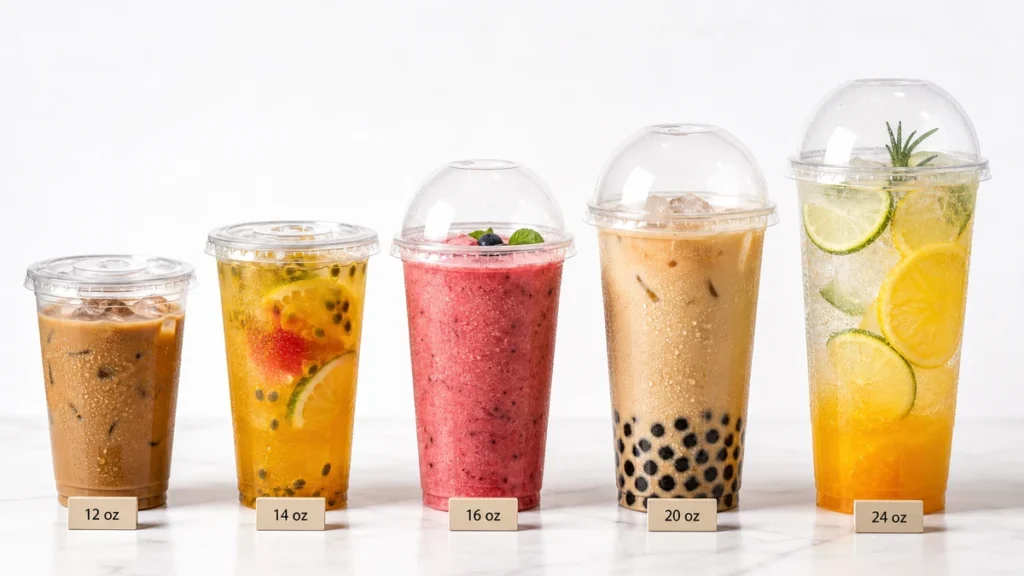
Choosing the right plastic cups with lids is less about finding a single best product and more about matching cup material, lid style, cup size, and service conditions. For most cafes, juice bars, QSR chains, and delivery-focused beverage programs, the practical default is a clear cold cup in PET or RPET with a correctly matched flat or dome lid. For rougher delivery handling, frozen drinks, or seal-film applications, PP may be the better fit.
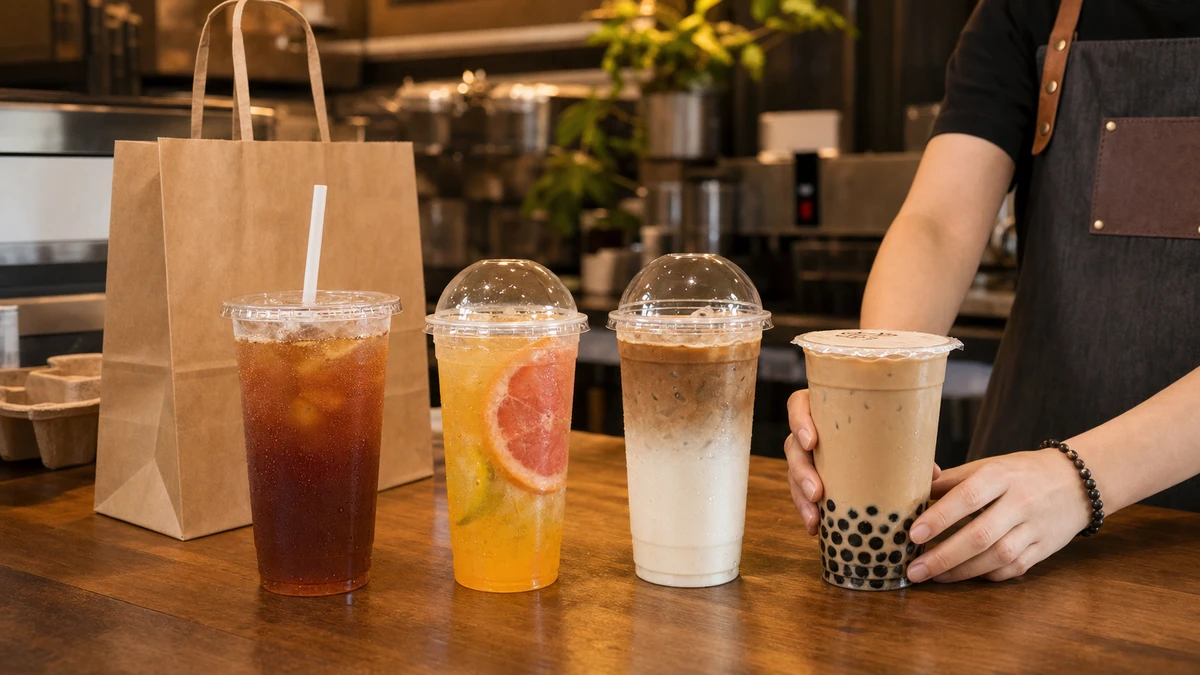
Most leakage complaints and stock problems do not come from the idea of using plastic cups with lids. They come from mismatch. Common issues include the wrong rim diameter, an under-specified cup wall for transport, too many size SKUs, or lids sourced separately without tolerance checks. A strong buying decision starts with the full service context, not just the cup price.
Material selection sets the performance ceiling for plastic cups with lids. The most common cold-drink options are PET, RPET, PP, and sometimes PS. Each has a different balance of clarity, rigidity, durability, sustainability positioning, and cost.
PET is the standard choice for iced coffee, tea, juice, lemonade, and other drinks where product visibility matters. It offers high clarity and efficient stacking, which helps both presentation and storage. RPET follows the same logic but adds recycled content, which can support procurement goals. PP is less clear but stronger in tougher delivery conditions and low-temperature use. PS still appears in low-cost commodity supply, but it is increasingly less attractive for long-term programs.
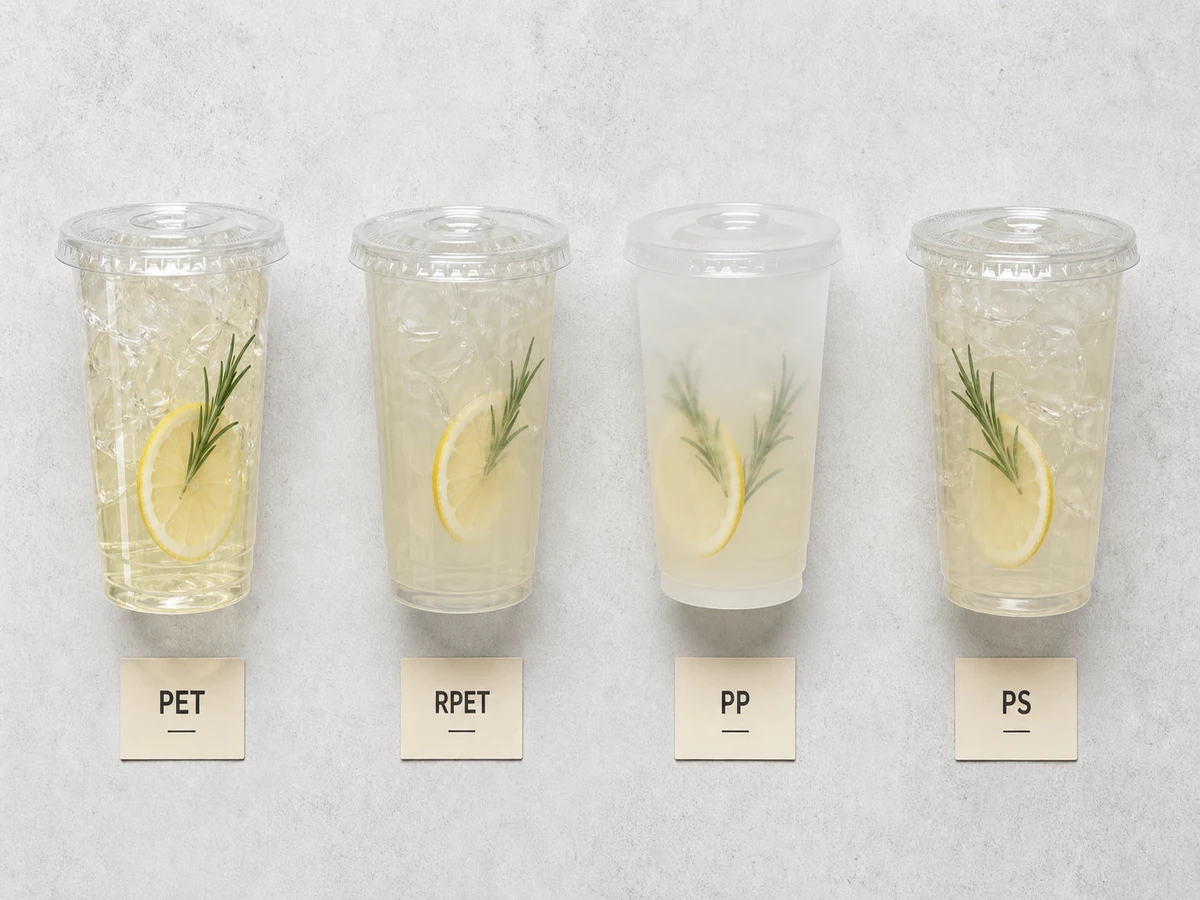
| Matériau | Best Fit | Main Advantage | Main Trade-off |
|---|---|---|---|
| PET | Iced coffee, tea, juice, premium visible drinks | Best clarity and stack efficiency | Not for hot fill |
| RPET | Same uses as PET where recycled content matters | Supports recycled-content goals | Slight haze variation and possible price premium |
| PP | Smoothies, frozen drinks, delivery-heavy service | Better impact and temperature tolerance | Lower clarity |
| PS | Low-cost legacy programs | Low first cost | Narrower channel acceptance |
A practical buying rule is simple. If the drink is cold and visual appeal matters, start with PET or RPET. If the drink will face longer transport, harder handling, or lower temperatures, test PP.
Ask suppliers for clear technical specifications, not just marketing names. You should confirm resin type, wall thickness range, rim diameter, sleeve count, case pack, and intended use. If recycled content is important, ask for support tied to the exact quoted product. For food-contact packaging in the US, the Guide de la FDA sur les substances en contact avec les aliments is a useful regulatory reference point.
Standardization also matters across broader beverage packaging. If you manage both cold and hot drink lines, reviewing diameter families together with tailles des gobelets en papier can make storage and purchasing more consistent.
Lids are not a minor accessory. In plastic cups with lids, the cup-to-lid interface is where most failure starts. Even when two products look similar by ounce, a small difference in rim tooling can cause lids to pop off during transport or leak when cups are squeezed into carriers.
The most common cold-drink lid types are flat lids, low-dome lids, high-dome lids, closed dome lids, and seal-film systems. Each serves a different operational purpose.
| Type de couvercle | Usages conseillés | Main Benefit | Main Limitation |
|---|---|---|---|
| Flat lid with straw slot | Iced tea, soda, cold brew | Fast assembly and compact storage | Lowest spill control |
| Low-dome lid | Light toppings, smoothies | Extra headspace with moderate cube | Still has an opening risk |
| Couvercle à dôme élevé | Whipped toppings, boba, blended drinks | More product presentation space | Larger carton cube |
| Closed dome lid | Delivery and transit-heavy service | Better spill resistance | Slightly slower customer access |
| Seal film | Bubble tea and high-spill formats | Strongest seal control | Requires machine compatibility |
Flat lids are usually the fastest option for counter service. Dome lids are often necessary for drinks with foam, fruit, cream, or wider straws. Closed dome lids reduce leakage risk during delivery because they remove the open straw slit until use. Seal-film systems are especially common in bubble tea because they help control spills and support tamper-evident presentation.
Buyers should always test lid fit physically. Do not rely only on ounce descriptions or supplier assurances. Confirm rim diameter in millimeters, ask whether the lid family is shared across cup sizes, and request filled-cup tests that include tilt, squeeze, and carrier movement. When cups and lids come from different factories, tolerance mismatch becomes more likely.
If your business also runs a hot-beverage line, coordinating cold-cup sourcing with couvercles de tasses à café can reduce unnecessary SKU complexity in storage and purchasing.
For most takeaway operations, two or three core sizes are more efficient than carrying a wide menu of cup volumes. Too many SKUs increase lid errors, storage pressure, and reordering mistakes.
The usual cold-drink size bands are:
In many cafe and QSR programs, the medium range carries most of the volume. A common practical structure is one smaller cup, one core medium cup, and one larger upsell size. Many operators simplify even further by focusing on two primary sizes if the menu allows.
The critical point is that size planning must follow lid logic as well as fill volume. A 16 oz cup from one supplier may share a lid with a 20 oz cup in the same family, while another supplier may use a different rim for a similar-looking product. Compare by rim diameter, not by ounce description alone.
A strong sourcing brief for plastic cups with lids should include:
For bubble tea programs, cup sizing is often a separate system with film sealing rather than snap-on lids. Trying to merge those cups into a standard cold-drink inventory often creates problems with straws, films, and lids that are not interchangeable.
Cup planning should also fit your wider takeaway range. Aligning beverage packs with contenants d'emballage alimentaire can improve bag fit, tray setup, and service-line efficiency.
Custom branding on plastic cups with lids is usually a decision about MOQ, lead time, artwork stability, and inventory risk. Buyers often focus on appearance first, but the better approach is to match print method to reorder rhythm.
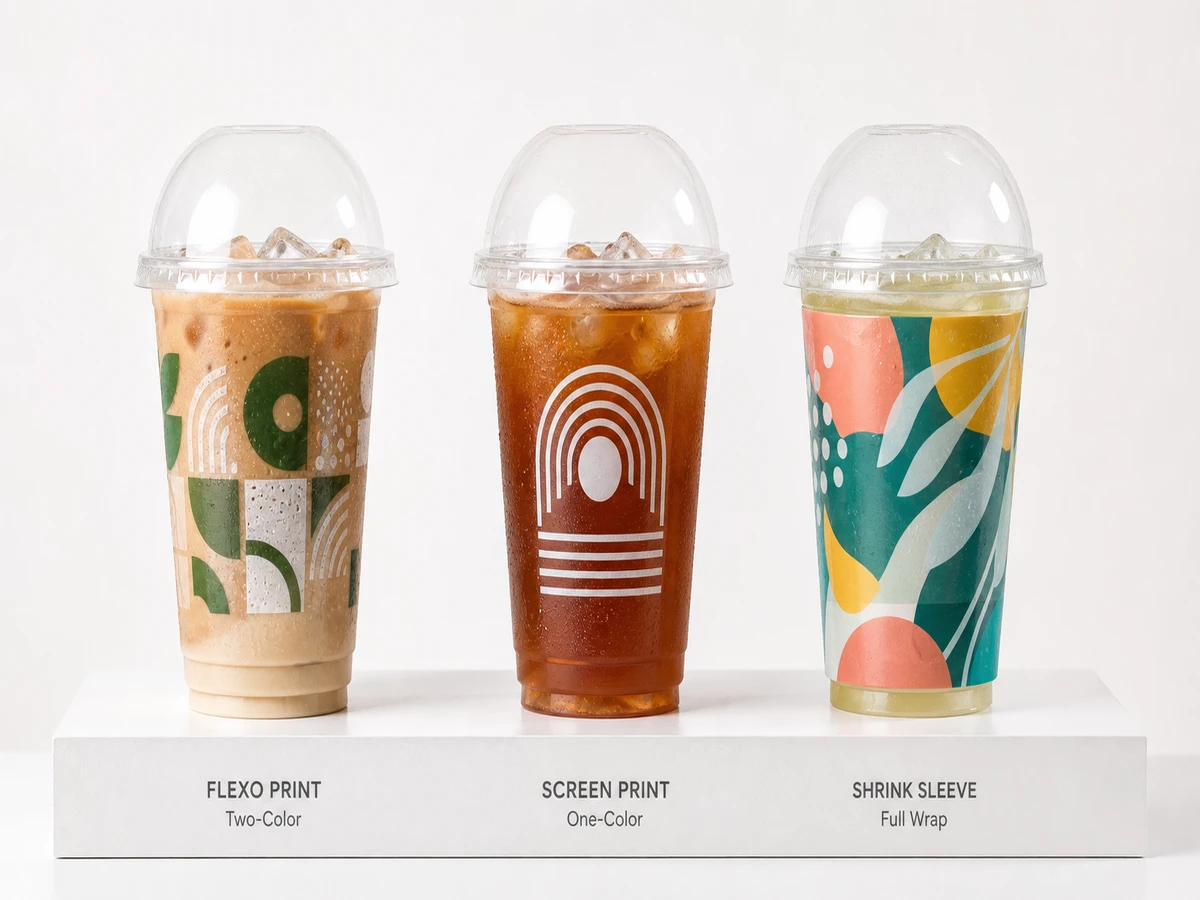
The main options are flexographic printing, screen printing, digital printing, and sleeve labeling.
| Méthode d'impression | Quantité minimale de commande type | Best Fit | Main Limitation |
|---|---|---|---|
| Flexographique | 50000 to 100000 units, sometimes lower for simple work | High-volume repeat programs | Higher setup cost |
| Sérigraphie | 5000 to 20000 units | Mid-volume branded runs | Limited artwork complexity |
| Impression numérique | 500 to 1000 units and up | Test runs and short campaigns | Higher unit cost at scale |
| Sleeve labeling | Often 10000 to 25000 units | Programs needing branding flexibility | Surface and condensation sensitivity |
Flexo works best when artwork is stable and order volumes are high enough to absorb setup costs. Screen printing is a practical middle ground for regional groups or growing independent operators. Digital suits validation runs, limited campaigns, and lower-volume launches. Sleeve labeling can be helpful when menus change often, but specifications must account for wet and chilled conditions.
Ask the supplier whether PET cups need surface treatment for print adhesion and how ink performance is tested under condensation. A cup that looks good dry may not perform well after 20 minutes in a customer’s hand.
Lead time should also be reviewed before approving artwork. Typical commercial ranges are:
If you are planning a broader branded takeaway program, sacs en papier personnalisés should be reviewed on the same MOQ-versus-flexibility basis.
A serious B2B purchase of plastic cups with lids should include more than price and photos. Buyers should verify compliance, samples, documentation quality, lead time, and service-set planning before placing an order.
First, ask for samples. Dry-fit samples are useful, but they are not enough. Request physical samples of both cups and lids, then test them with actual beverages under real service conditions. Include stacking, filling, sealing, carrying, squeezing, and delivery simulation where relevant.
Second, verify food-contact compliance. Cups and lids should be assessed separately, especially if they use different resins, additives, pigments, or drinking apertures. Request documentation that matches the exact product being quoted, not a generic factory statement. At minimum, ask for:
Third, review MOQ and order structure carefully. Stock distributor programs may start around 1000 to 5000 units per SKU. Factory-direct custom programs often begin around 10000 to 50000 units per SKU depending on print and tooling. MOQ should be read as a storage and cash-flow signal, not just a unit threshold.
Fourth, ask about lead time and replenishment logic. Confirm:
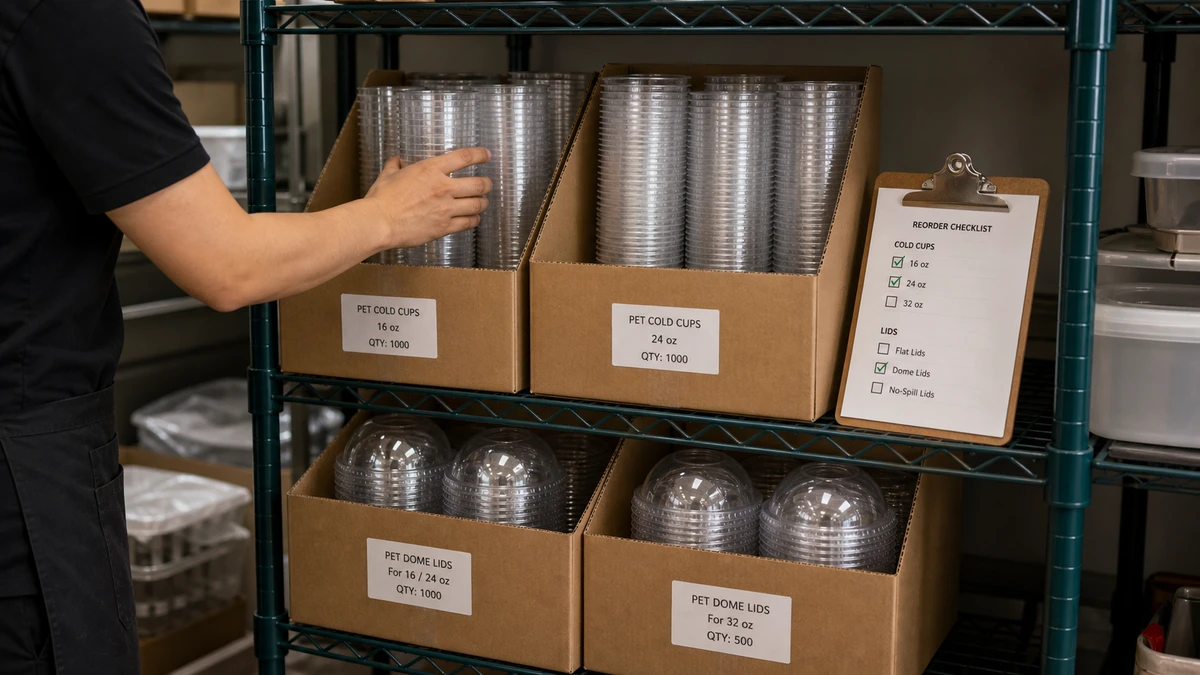
Case-pack logic matters as much as MOQ. A buyer can easily end up short of lids even when cup inventory looks healthy, simply because lid cartons and cup cartons do not convert into the same number of service sets. Always order against actual serving ratios, not equal carton counts.
Finally, review the wider takeaway line at the same time. Accessories, straws, carriers, and sealing options can affect cup performance just as much as the cup itself. That is why many buyers also benchmark related accessoires d'emballage when standardizing a beverage program.
For most cold takeaway drinks, PET is the standard choice because it offers clarity, rigidity, and efficient stacking. PP is often better when drinks face tougher delivery handling or lower temperatures.
Usually no. Even when cup sizes look similar by ounce, lid fit depends on rim diameter and tooling tolerance. Always verify by millimeter specification and physical fit testing.
It often is when buyers need recycled content for procurement targets, reporting, or customer expectations. The added unit cost can be reasonable compared with the value of meeting sustainability requirements.
Closed dome lids and seal-film systems generally perform better than open straw-slot lids during transit. The final result still depends on rim fit, cup rigidity, and courier handling conditions.
Pour la plupart des opérateurs, il est plus avantageux de disposer de deux ou trois tailles principales plutôt que d’une large gamme. Un nombre réduit de tailles permet de diminuer le nombre de références de couvercles, les besoins en stockage et les erreurs de préparation des commandes.
Ask for food-contact compliance documents for both cups and lids, plus technical specifications covering resin type, intended use, and key dimensions. If recycled content or other claims matter, request supporting evidence tied to the exact quoted product.