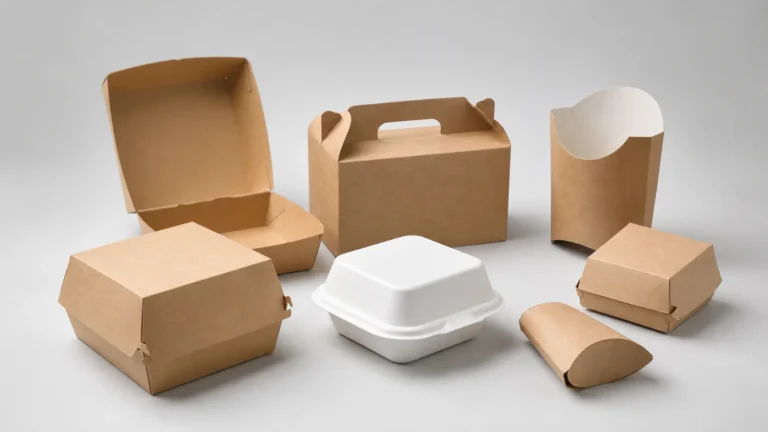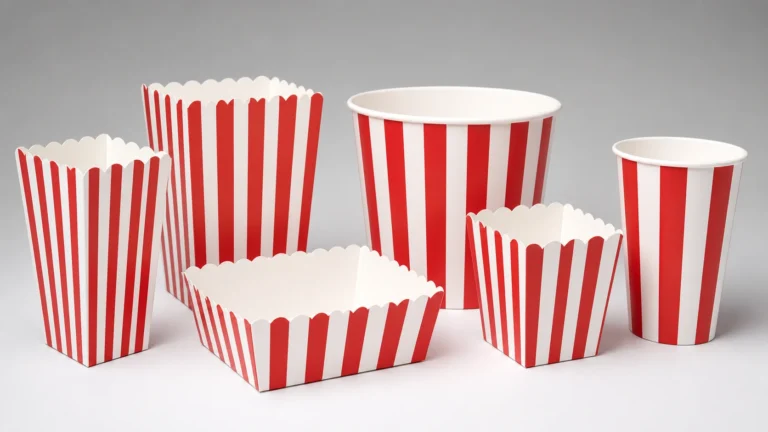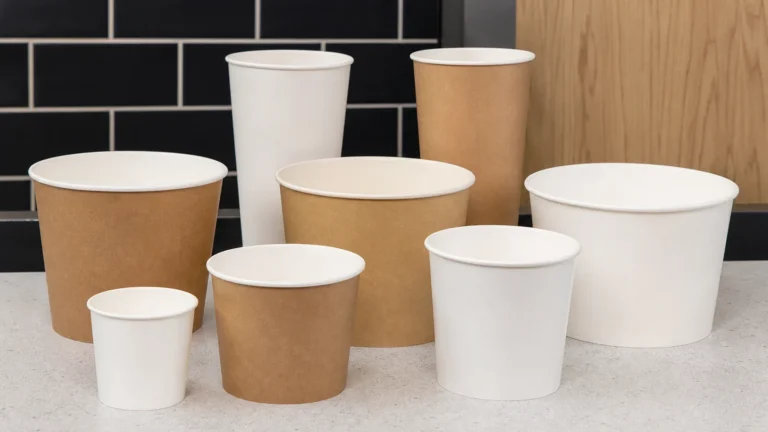
Prêt à créer vos propres gobelets ou emballages en papier ?
Faites-nous part de vos exigences - taille, revêtement, impression et destination - et notre équipe établira un devis détaillé dans les 24 heures.

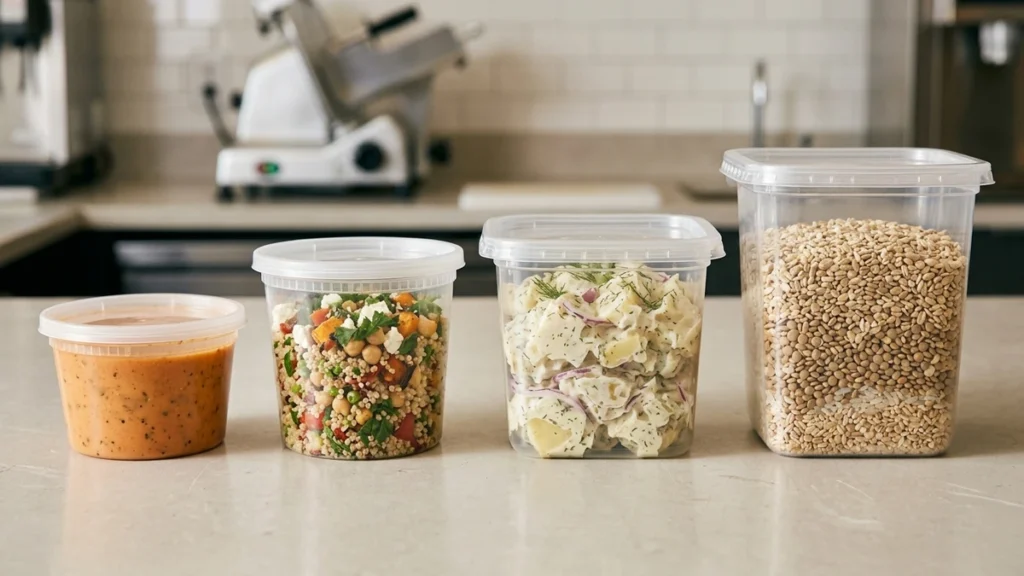
Deli containers with lids are one of the most practical packaging formats in foodservice because they cover portioning, prep, storage, display, and takeaway with a relatively simple container-and-closure system. For operators handling soups, sauces, salads, deli sides, cut fruit, grains, and meal prep items, the right deli containers with lids can reduce packing errors, streamline purchasing, and support more consistent service.
Most formats are round, though rectangular versions also exist. Common capacities range from 8 oz to 32 oz for front-of-house and takeaway, with larger 64 oz and 128 oz options used more often in commissaries, catering, and back-of-house prep. Many systems are designed around a shared rim family so one lid fits multiple container heights, which helps reduce lid SKUs and simplifies reordering.
The lid seal is typically mechanical rather than adhesive. A press-on or snap-on lid engages the rim bead of the base and creates a friction-based closure. That means seal quality depends on material stiffness, rim consistency, molding tolerance, and correct lid-to-base pairing. Buyers should treat leak resistance as something to verify with samples, not assume from a generic size description.
| Attribut | Plage typique | Pourquoi c'est important |
|---|---|---|
| Volume sizes | 4 oz to 128 oz | Determines portion fit, menu coverage, and SKU count |
| Common foodservice sizes | 8, 12, 16, 24, 32, 64 oz | Covers most deli, soup, side, and prep applications |
| Base materials | PP, PET, rPET, PLA, coated paper | Affects heat tolerance, clarity, stiffness, and claims |
| Lid materials | PP or PET | Influences fit, visibility, and closure performance |
| Temperature profile | Varies by material | Must match hot fill, chilled storage, or reheating use |
| Case pack | Often 240 to 500 sets per carton | Affects storage, reorder rhythm, and freight efficiency |
| Assistance en matière de conformité | FDA or market-specific food-contact documentation | Needed for procurement approval and retail confidence |
Chez Papacko contenants d'emballage alimentaire collection is a useful starting point when comparing deli formats with other portion-pack and takeaway options.
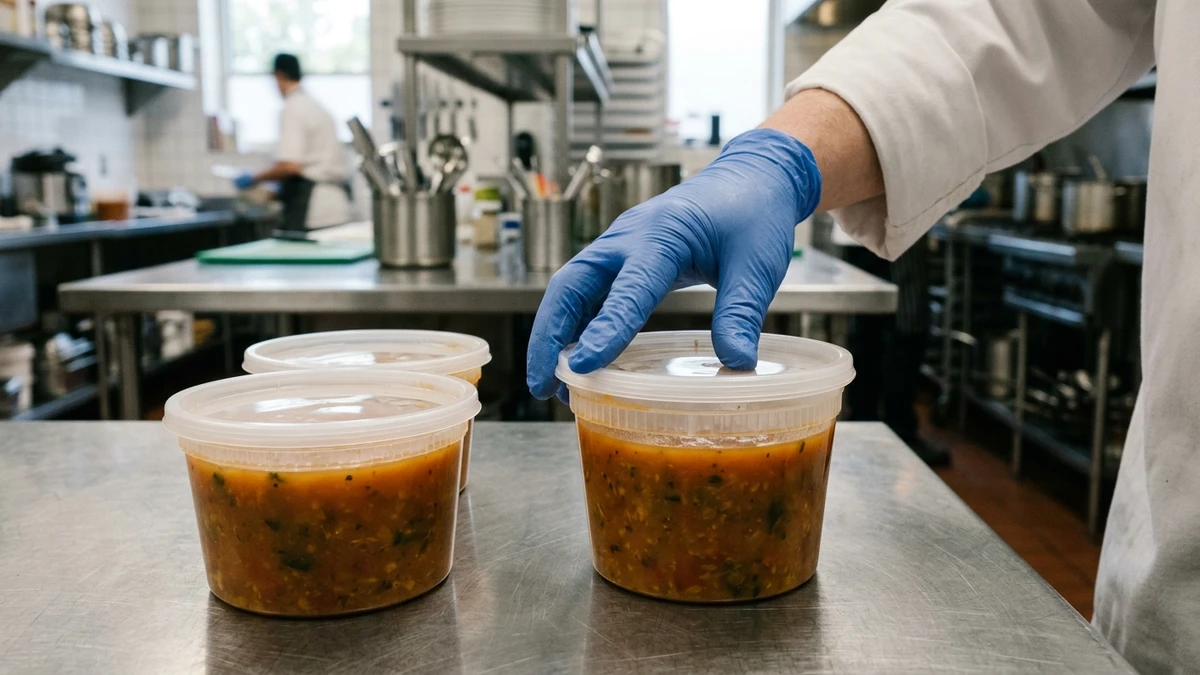
Size selection should start with actual fill behavior rather than nominal ounce capacity. A container listed as 16 oz should not usually be filled to the absolute brim. In real operations, some headspace is needed so the lid seats properly, the rim stays clean, and staff can close packs quickly during busy periods.
Below is a practical guide to the sizes most buyers evaluate.
| Taille | Utilisation typique | Practical Notes |
|---|---|---|
| 8 oz | Sauces, dips, dressings, small sides | Good for portion control, less flexible for mixed use |
| 12 oz | Compact salads, grains, side dishes | Useful bridge size, but not always widely stocked |
| 16 oz | Single-serve soup, salads, deli sides | Often the most versatile all-around choice |
| 24 oz | Larger meal prep, entree salads | More weight requires better sidewall rigidity |
| 32 oz | Family sides, larger soups, bulk deli items | Strong multipurpose size for takeaway and retail |
| 64 oz | Prep storage, catering transport | Better for back-of-house than consumer carryout |
| 128 oz | Batch prep, institutional storage | Heavy fills put more stress on lid retention |
For many operators, 16 oz and 32 oz carry most of the program. A 16 oz container works well for soup, pasta salad, prepared sides, and grain bowls. A 32 oz format covers larger family portions, bulk deli items, and catering side packs. Adding one smaller portion size, such as 8 oz, often creates a balanced lineup without making replenishment complicated.
Large-format deli containers with lids offer strong prep and storage value, but transport risk rises with size. A full 64 oz or 128 oz container can place significant load on a standard friction-fit lid, especially if handled at an angle. In these sizes, buyers should pay special attention to lid retention and stack stability.
Material choice changes how deli containers with lids perform in service. Heat tolerance, product visibility, grease resistance, stiffness, and end-of-life claims all depend heavily on the resin or substrate selected.
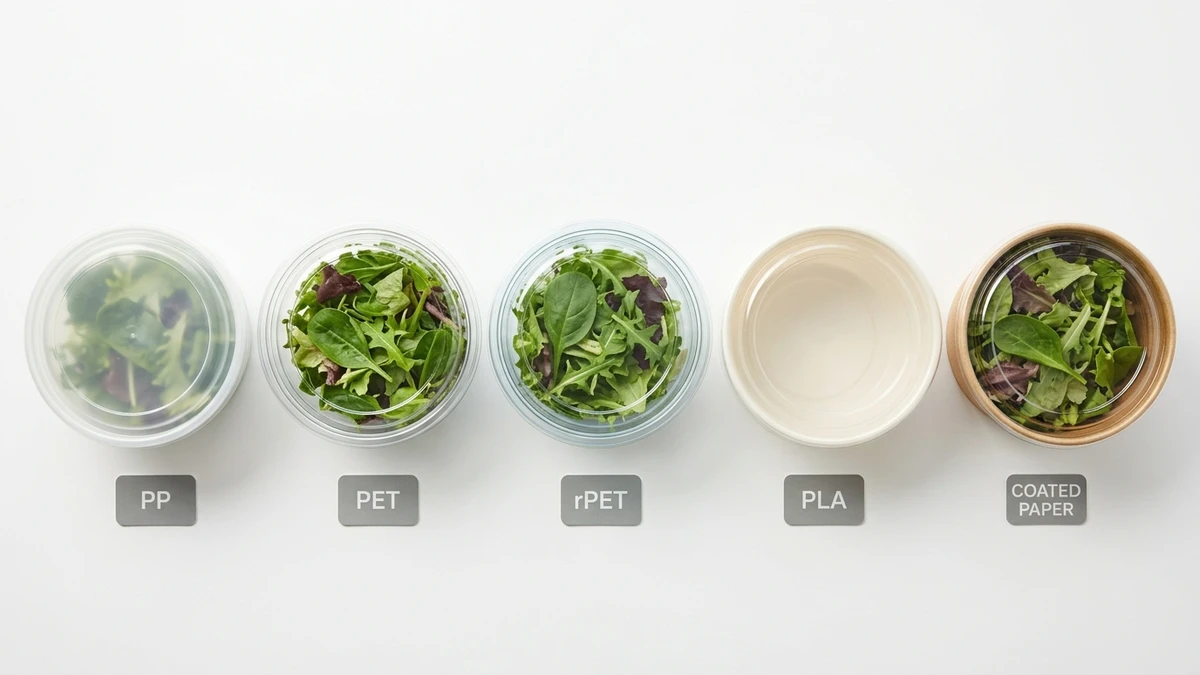
Polypropylene, or PP, is often the safest choice for hot foods and reheating programs. It is widely used for soups, braises, hot sides, and mixed hot-cold operations because it handles elevated temperatures better than PET and generally offers good toughness. PP is also common when operators want one container family for prep, storage, and customer takeaway.
The trade-off is visual presentation. Standard PP tends to be more translucent or hazy than PET, so it may be less effective when product appearance drives refrigerated sales.
PET is popular for cold display because of its clarity. It helps salads, fruit, layered sides, and refrigerated prepared foods look fresher and more premium. If the product is sold through grab-and-go merchandising, that visibility can matter.
rPET offers similar benefits while supporting recycled-content positioning. However, if recycled content is part of your purchasing criteria or marketing claim, request supporting documentation rather than relying on a general sales statement.
PET and rPET are usually better for cold and ambient applications than hot fill or microwave use.
PLA and other compostable-style options can work in controlled cold-service programs, but they are not automatically the best solution for every operator. Compostability only has practical value where suitable collection and processing infrastructure exists. Buyers evaluating certified compostable formats can refer to the Biodegradable Products Institute compostable products directory.
Paper-based deli-style containers can support fiber-based packaging goals, but performance depends on the coating, barrier design, and lid compatibility. Buyers comparing these options alongside emballages alimentaires compostables should confirm real use conditions before standardizing.
| Matériau | Usages conseillés | Force | Limitation |
|---|---|---|---|
| PP | Hot fill, reheating, mixed-use programs | Heat resistance and toughness | Lower clarity |
| PET | Chilled retail and cold deli foods | Excellent product visibility | Poor fit for high heat |
| rPET | Cold display with recycled-content goals | Clarity plus sustainability positioning | Documentation and batch consistency matter |
| PLA | Cold use where composting exists | Compostable positioning | Limited heat tolerance |
| Coated paper | Selected takeaway applications | Fiber-based appearance | Barrier and lid fit vary by construction |
The lid is where many real-world performance issues show up. Even a good container base can create complaints if the lid fit is inconsistent, too loose for transport, or not matched to the fill conditions.
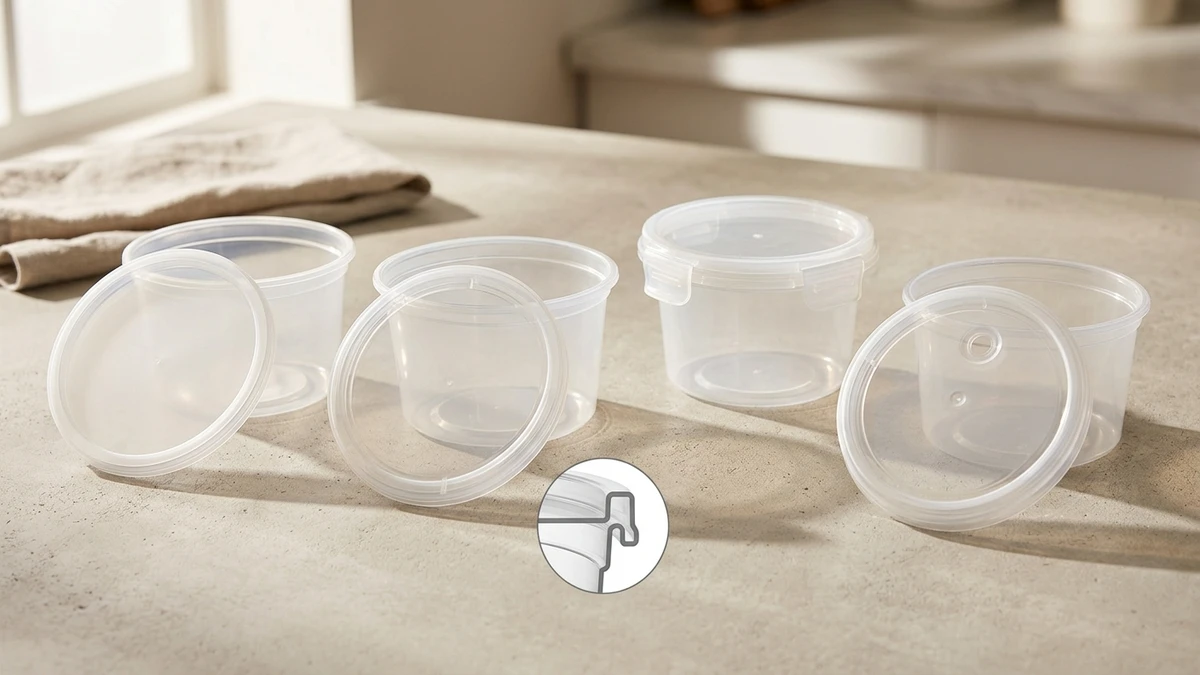
Most deli containers with lids fall into three practical closure categories:
Press-on lids are quick and often economical, but they are better suited to dry or lower-risk products. Snap-on lids provide more reliable engagement for takeaway and moderate transport. Tab-lock or stronger-retention styles can make sense for soups, sauces, and longer delivery cycles where lateral movement is common.
Vented lids are another consideration. They can help hot fried or baked foods release steam, but they are not ideal for liquid-heavy items. For soups, chilled deli foods, fruit, and moist prepared meals, non-vented lids are usually the safer option.
Buyers should validate lid performance with practical testing, including:
If your packaging program includes add-ons such as seals, labels, cutlery packs, or transport support items, Papacko’s accessoires d'emballage page can help when reviewing the full closure and takeaway setup.
Deli containers with lids are used across more than one channel, but each environment stresses the pack differently.
In grocery deli and prepared foods, clear visibility, label placement, and shelf consistency are important. PET or clarified formats may be preferred where visual merchandising matters. In this setting, one of the biggest issues is incomplete lid engagement during fast packing or shelf replenishment, so lids should close cleanly and consistently.
In restaurants and delivery, hot fill and spill control matter more. PP is often a strong choice for soup, braised items, or warm sides. Delivery adds movement, stacking, and handling angles that can expose weak seals, especially with thinner walls or poorly matched lids.
In commissaries and ghost kitchens, SKU simplification is often the main goal. A shared lid family across several depths can reduce training problems and streamline inventory. Buyers should also check how labels perform after chilling, since condensation can affect adhesion and barcode readability.
For retail-ready grab-and-go programs, appearance often drives material choice. Clear containers can help showcase salads, fruit, and layered sides. If the wider program also includes beverage and hot service packaging, teams often compare deli packs with complementary items such as gobelets en papier to keep the packaging range consistent.
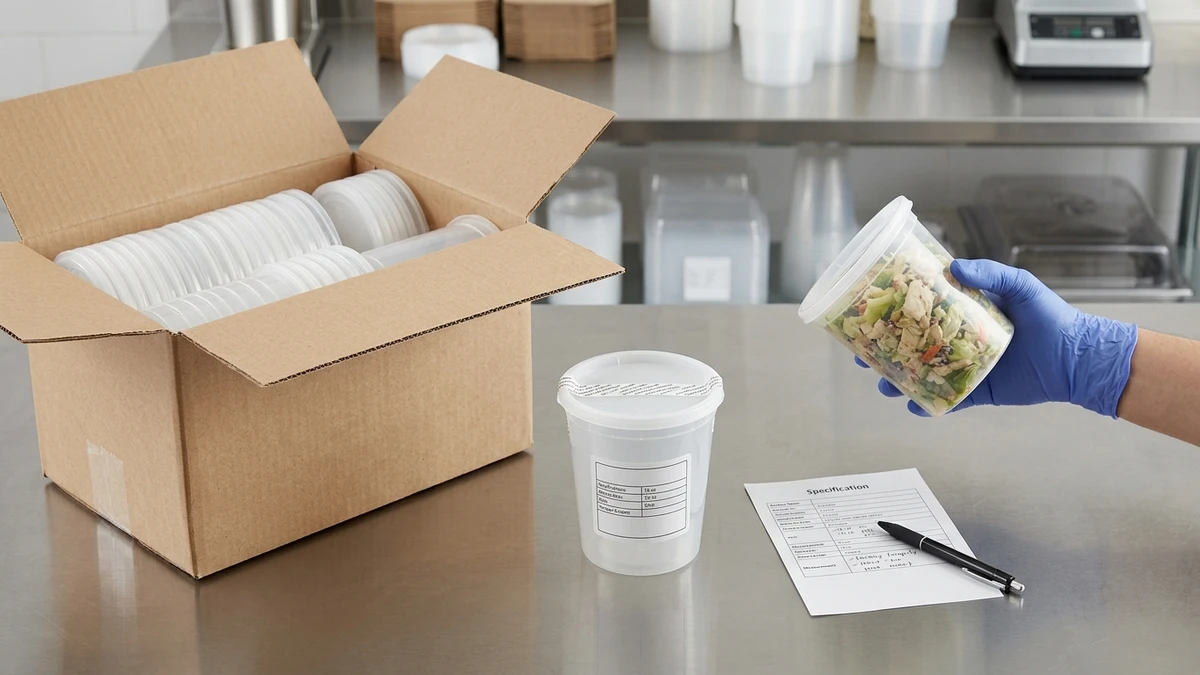
Commercial buying decisions should not be based on price alone. The most useful deli container specification includes size, rim family, base material, lid material, intended use temperature, lid type, case pack, and compliance requirements.
For food-contact packaging in the U.S., buyers commonly request documentation showing that the materials are suitable for the intended use conditions under FDA food-contact rules. This is especially important when the application includes heat, fats, acids, or reheating.
At minimum, ask suppliers for:
MOQ and lead time also matter in real purchasing. Stock items from distribution can reduce startup risk and speed launch, but direct factory sourcing often provides better consistency and pricing at scale. The trade-off is usually higher MOQ and longer lead time.
Typical commercial checkpoints include:
For many buyers, stock containers plus applied labels are the safest first step. They allow faster testing and lower commitment than custom print. Once volume is stable, direct print may become viable, but it often requires higher MOQ and a longer lead time.
If sustainability positioning is part of the buying brief, match claims to disposal reality. Papacko’s emballages en papier durables resource is useful for aligning material selection with actual end-of-life pathways rather than broad marketing language.
For single-serve soup, 16 oz and 32 oz are the most common choices. Leave enough headspace so the lid seats properly, especially with hot fill.
Most deli containers with lids are better described as leak-resistant rather than fully leak-proof. Performance depends on lid geometry, fill temperature, handling angle, and whether the lid and base are a matched set.
PP is usually better for hot foods and reheating. PET is usually better for chilled display because of its clarity. The right choice depends on temperature exposure and whether product visibility affects sales.
Some PP containers are suitable for microwave reheating, but the specific base and lid must be rated for that use. PET containers generally should not be microwaved.
Test filled samples under actual packing, chilling, stacking, and transport conditions. Empty-container checks are not enough to predict real line performance.
At minimum, ask for resin identification, intended temperature-of-use information, and a food-contact compliance declaration for your target market. If you are making recycled-content or compostability claims, request supporting documentation for those as well.