هل أنت مستعد لإنشاء أكواب ورقية أو عبوات ورقية تحمل علامتك التجارية الخاصة بك؟
أخبرنا بمتطلباتك - الحجم والطلاء والطباعة والوجهة - وسيقوم فريقنا بإعداد عرض أسعار مفصل في غضون 24 ساعة.

آخر تحديث: نوفمبر 2025
وقت القراءة: 8-10 دقائق
المؤلف: فريق محتوى باباكو
Serving food at 35,000 feet presents packaging challenges unlike any other foodservice environment. Cabin pressure at cruising altitude is equivalent to 6,000-8,000 feet elevation, causing sealed containers to expand and unsecured lids to pop open. Temperature swings from -40°C cargo holds to 80°C reheating ovens demand material resilience. And space constraints in galley carts require precision-engineered standardized dimensions.
This guide examines the specialized requirements for airline food packaging, from IATA regulatory standards to stackability protocols, providing actionable insights for catering companies, packaging manufacturers, and airline procurement teams.
في هذه المقالة، ستتعلم ما يلي:
-Pressure resistance specifications for cabin altitude environments
-Leak-proof sealing systems and moisture barrier requirements
-Standardized dimensions for galley cart compatibility (ATLAS, KSSU formats)
-Material certifications for aviation food contact and fire safety
💡 الوجبات السريعة: Airline food packaging must withstand 8-10 PSI pressure differential without bursting, seal leak-proof through 30-minute reheating cycles, and fit precisely into standardized galley cart slots with ±2mm tolerance.
Non-compliant packaging causes 12-18% of in-flight service delays.
Airline food packaging comprises specialized containers, trays, and wrapping materials designed to meet the unique demands of commercial aviation catering. Key characteristics include:
-Pressure resistance: Withstands cabin altitude pressure changes (0.7-0.8 bar/10-12 PSI)
-Standardized dimensions: Conforms to ATLAS units (aviation standard unit sizing)
-تحمّل درجة الحرارة: Survives -40°C to +180°C range (cargo to oven)
-قابلية التكديس: Nests securely with anti-slip features for turbulence
-Lightweight construction: Minimizes fuel costs (every kg = $2-4 annual fuel expense)
Primary Container Types:
Regulatory Framework:
-IATA Resolution 763: Standardizes airline catering equipment dimensions
-FAA/EASA Fire Safety: Packaging materials must meet flammability standards
-لائحة الاتحاد الأوروبي 10/2011: Food contact material compliance
-نظام تحليل المخاطر ونقاط التحكم الحرجة: Traceability and food safety protocols
🎯 رؤى الصناعة: Emirates Airline switched from traditional aluminum to dual-ovenable paperboard for 35% of meals in 2023, reducing packaging weight by 18% (saving $2.3 million annually in fuel) while maintaining pressure/heat performance.
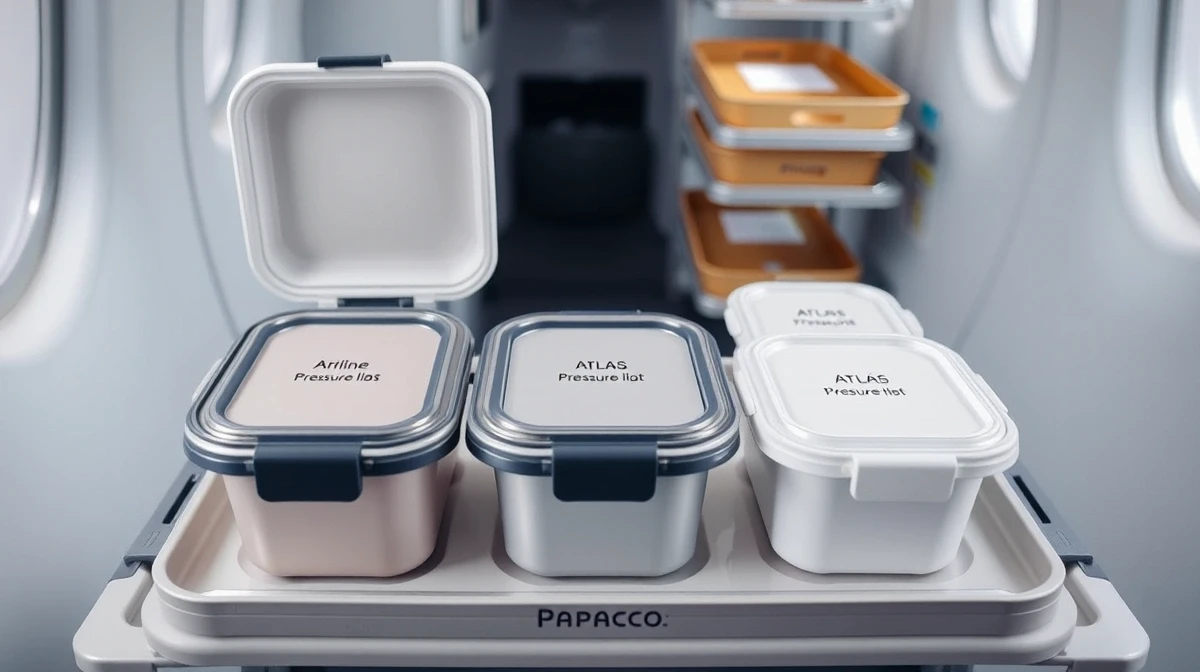 food containers showing pressure-resistant lids and standardized ATL” class=”wp-image-flux” style=”border-radius: 12px; box-shadow: 0 4px 12px rgba(0,0,0,0.1);”/>
Physics of Pressure Differential:
At cruising altitude (35,000-42,000 feet), cabin pressure is maintained at equivalent of 6,000-8,000 feet elevation:
-Sea Level Pressure: 1.0 bar (14.7 PSI)
-Cabin Pressure: 0.75-0.82 bar (11-12 PSI)
-Pressure Differential: 0.18-0.25 bar (2.6-3.7 PSI)
Impact on Sealed Containers:
Engineering Solutions:
1. Pressure Relief Vents:
-الموقع: Lid center or edge, 0.5-2mm diameter holes
-الوظيفة: Allow air escape during ascent, prevent vacuum on descent
-المقايضة: Slightly reduced moisture retention vs. safety
2. Flexible Lid Materials:
-PET/PP Lids: Flex 10-15% without permanent deformation
-رقائق الألومنيوم: Crimped edges allow controlled flex
-المزايا: Accommodates expansion without seal failure
3. Reduced Headspace:
-Principle: Fill containers 85-92% capacity (vs. 70-80% in ground service)
-التأثير: Minimizes air volume subject to expansion
-الحدود: Requires precise portioning equipment
Performance Criteria:
Seal Failure Modes and Prevention:
### Moisture Barrier Technologies
Coating Options for Paperboard Containers:
التوصية: For hot meals requiring reheating, PLA or EVOH coatings balance performance and sustainability. For cold items, water-based coatings meet performance needs at lower environmental impact.
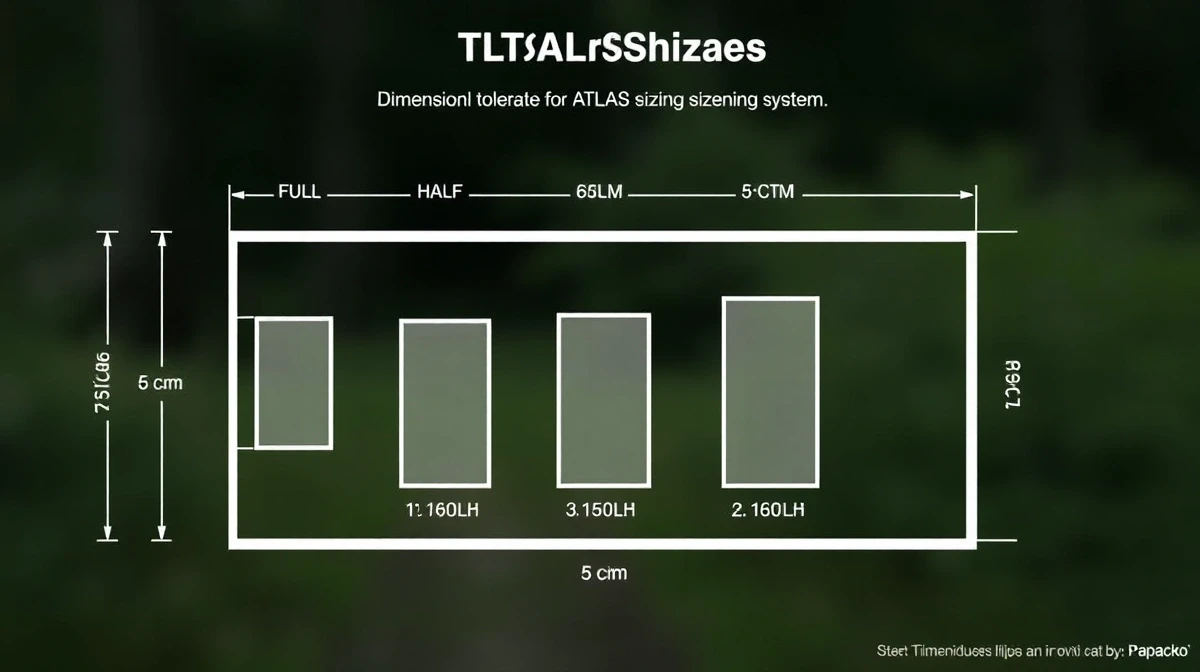
Full ATLAS Unit:
-الأبعاد: 210mm × 134mm × 40-60mm (height varies)
-الحجم: 600-1200ml depending on depth
-الاستخدام: Main entrées, large salads
Common Subdivisions:
Tolerance Requirements:
-Length/Width: ±2mm (tighter tolerance than ground foodservice)
-الارتفاع: ±3mm (stacking uniformity critical)
-Rim Flatness: ±0.5mm (prevents tipping during turbulence)
Why Precision Matters:
-Galley Cart Slots: Designed with 1-2mm clearance for full ATLAS units
-+3mm oversized container: Won’t fit into slot (service delays, waste)
--3mm undersized container: Shifts during turbulence, cross-contaminates adjacent meals
Alternative standard used by Asian carriers:
-الأبعاد: 200mm × 150mm (slightly wider than ATLAS)
-التبني: Japan Airlines, ANA, some Korean Air routes
-التوافق: Not interchangeable with ATLAS equipment
Implication for Manufacturers: Catering to multiple airline clients requires maintaining two production lines or negotiating standard alignment.
المزايا:
-Excellent Conductivity: Even heating in convection ovens (18-22 min to 75°C core temp)
-Barrier Properties: Total moisture/oxygen barrier (WVTR ~0)
-نطاق درجة الحرارة: -40°C to +350°C (widest range)
-قابلية إعادة التدوير: Infinitely recyclable (if clean)
القيود:
-الوزن: 15-25% heavier than paperboard alternatives
-Metal Detection: Complicates airport security screening if carried by passengers
-التكلفة: 20-30% more expensive than molded fiber
الأفضل لـ: Premium long-haul flights, business/first class, hot entrées requiring extended reheating.
المزايا:
-خفيف الوزن: 30-40% lighter than aluminum
-الاستدامة: Compostable, made from renewable/waste materials
-التكلفة: 25-35% cheaper than aluminum
القيود:
-حساسية الرطوبة: Requires coating for sauce-heavy dishes
-Temperature Limits: 180-200°C max (vs. aluminum’s 350°C)
-Structural Weakness: Can soften under prolonged heat/moisture exposure
الأفضل لـ: Short-haul flights (<3 hours), eco-conscious airlines, dry or semi-dry foods.
Hybrid Construction:
-الهيكل: Coated paperboard outer + aluminum inner liner OR heavy-duty PLA coating
-الأداء: Ovenable to 200-220°C, lightweight (20% less than aluminum)
-التكلفة: Mid-range (15-20% less than aluminum, 30-40% more than molded fiber)
المزايا:
-Weight Savings: Fuel cost reduction (key for airlines)
-Better Sustainability Optics: “Less metal” perception (even if still using foil liner)
-قابلية الطباعة: Outer paperboard accepts high-quality branding
الأفضل لـ: Economy class on long-haul, airlines prioritizing sustainability messaging.
Typical Airline Meal Journey:
1.Chilling: Prepared meals cooled to 0-4°C within 90 minutes
2.Cold Storage: Held at 0-4°C for 2-24 hours before flight
3.Cargo Loading: Potential exposure to -40°C in cargo hold (rare but possible)
4.Galley Storage: Pre-flight storage at 4-10°C
5.Reheating: Convection oven 160-180°C for 18-25 minutes
6.Serving: Must reach 75°C core temperature (food safety standard)
Material Performance Under Thermal Stress:
التوصية: For maximum versatility across all meal types and reheating protocols, aluminum or CPET provide best performance. For cost-optimized operations with controlled temperatures, الألياف المصبوبة المغلفة بجزيء PLA suffices.
Fuel Cost Calculation:
-Industry Estimate: 1 kg of additional weight costs $2-4 per year in fuel per aircraft
-Fleet Scale: 300-aircraft fleet × 150 flights/year × 200 meals/flight = 9 million meals
-Weight Savings: 10g per meal × 9M meals = 90,000 kg annual reduction
-Annual Savings: 90,000 kg × $3/kg = $270,000 per year
Material Weight Comparison (Full ATLAS Unit):
Strategic Implications:
Low-Cost Carriers (RyanAir, EasyJet, Southwest):
-Prioritize weight savings over premium appearance
-Prefer molded fiber or lightweight paperboard
-Typical savings: 15-25% vs. aluminum
Premium/Legacy Carriers (Emirates, Singapore Airlines, Lufthansa):
-Balance weight with presentation quality
-Use aluminum for first/business, dual-ovenable for economy
-Incremental savings: 8-15% while maintaining brand image
EU Regulation 10/2011:
-Applies to: All food contact plastics used on EU-registered carriers
-المتطلبات الأساسية: Migration testing (specific & overall migration limits)
-Common Non-Compliant Materials: Recycled PET without food-grade certification
FDA Food Contact Notification (FCN):
-Applies to: US carriers and manufacturers exporting to US airlines
-Database: FDA’s Food Contact Substance Database (must appear or have FCN)
-Common Issue: Novel bio-based materials (PHA, algae films) may lack FCN
FAA/EASA Flammability Standards:
-اختبار: Vertical Bunsen burner test (FAR 25.853)
-المتطلبات: Self-extinguishing within 15 seconds, burn length <6 inches
-التأثير: Limits use of certain plastics; favors aluminum, treated paperboard
Certification Process:
1.Material Testing: Submit samples to accredited lab (Intertek, SGS, TÜV)
2.Burn Rate Measurement: Horizontal/vertical burn tests
3.Smoke/Toxicity: Assess smoke density and toxic gas release
4.التصديق: Issue Certificate of Compliance for specific material formulation
التكلفة: $5,000-15,000 per material formulation for full testing suite.
المشكلة: Turbulence causes meal trays to shift, spilling contents and delaying service.
Design Solutions:
التوصية: For standard service, textured base provides best cost/performance balance. Reserve interlocking corners for premium cabins or turbulence-prone routes.
Galley Cart Capacity Optimization:
-Standard Cart Slot: 210mm × 134mm × 60mm (full ATLAS)
-Nesting Angle: 3-5° taper allows containers to nest, reducing height
-Nested Height: 10 full units = 180-220mm (vs. 600mm if non-nested)
Space Savings Calculation:
المقايضة: Aggressive taper (5-7°) maximizes nesting but reduces internal volume by 10-15% and complicates automated filling.
Volume Discounts:
### MOQ and Lead Times
Standard Production:
-موك: 20,000-50,000 units for stock designs
-المهلة الزمنية: 25-35 days (production + shipping)
-التخصيص: Airline branding, logos (+15-25% cost, 40-60 day lead time)
Rapid Procurement (Emergency):
-موك: 5,000-10,000 units
-المهلة الزمنية: 10-15 days
-بريميوم: 40-60% higher cost vs. standard production
❌ الخطأ #1: Using ground foodservice containers without pressure testing
✅ النهج الصحيح: Specify “aviation-certified” packaging and request altitude simulation test data before bulk orders
❌ الخطأ #2: Ignoring ±2mm dimensional tolerances for ATLAS sizing
✅ النهج الصحيح: Work with manufacturers experienced in aviation standards; verify samples fit actual galley cart slots before production
❌ الخطأ #3: Over-specifying premium materials for short-haul flights
✅ النهج الصحيح: Use lightweight molded fiber for <3 hour flights where reheating isn't required; reserve aluminum for long-haul hot meals
❌ الخطأ #4: Neglecting flammability testing until after production
✅ النهج الصحيح: Obtain FAA/EASA fire safety certification during material selection phase to avoid costly redesigns
Airline food packaging comprises specialized containers designed to withstand cabin pressure changes (0.7-0.8 bar), temperature extremes (-40°C to +180°C), and fit standardized ATLAS unit dimensions (210mm × 134mm) for galley cart compatibility. It must meet aviation fire safety and food contact regulations.
At cruising altitude (35,000-42,000 feet), cabin pressure is 0.75-0.82 bar vs. 1.0 bar at sea level, creating 0.18-0.25 bar differential. Sealed containers expand 8-30% depending on rigidity. Properly designed packaging includes pressure relief vents or flexible materials to prevent bursting.
ATLAS (aviation standard unit) defines container dimensions for galley cart compatibility: full unit (210×134mm), half (105×134mm), quarter (105×67mm), sixth (70×67mm). Containers must maintain ±2mm dimensional tolerance to fit cart slots and stack securely during turbulence.
Aluminum foil excels for hot meals requiring reheating (temperature range -40°C to +350°C). Molded fiber reduces weight by 30% for cold items or short-haul flights. Dual-ovenable paperboard balances weight savings (20% lighter) with oven capability for eco-conscious carriers.
Industry estimates: 1 kg additional weight costs $2-4 annually in fuel per aircraft. For a 300-aircraft fleet serving 9 million meals/year, reducing packaging weight by 10g per meal saves $270,000 annually. Weight optimization is a key procurement criterion.
لائحة الاتحاد الأوروبي 10/2011 (food contact plastics), FDA ملامسة الأغذية Notification (US carriers), FAA/EASA fire safety standards (FAR 25.853 flammability test), and HACCP traceability. Materials must be self-extinguishing within 15 seconds in vertical burn tests.
Standard MOQs: 20,000-50,000 units for stock designs, 50,000-100,000+ for custom airline branding. Rapid procurement possible at 5,000-10,000 units with 40-60% cost premium. Lead times: 25-35 days standard, 10-15 days expedited.
Airline food packaging operates at the intersection of engineering precision, regulatory compliance, and economic optimization. The unique demands of cabin pressure environments, temperature extremes, and weight-sensitive operations require specialized containers that far exceed ground foodservice standards.
الوجبات السريعة الرئيسية:
1.Pressure resistance is non-negotiable: Containers must withstand 0.18-0.25 bar differential with pressure relief vents or flexible designs
2.ATLAS dimensional precision (±2mm) ensures galley cart compatibility and prevents service delays
3.Material selection balances performance and weight: Aluminum for premium/hot meals, molded fiber for weight optimization on short-haul
4.Every 10g reduction per meal saves $270,000 annually in fuel for a typical 300-aircraft fleet
5.Aviation certifications (fire safety, food contact) must be secured during material selection, not post-production
Whether you’re an airline procurement officer, catering company operator, or packaging manufacturer, understanding these specialized requirements ensures safe, efficient, and cost-effective in-flight meal service while meeting increasingly stringent sustainability goals.
-“>Food Packaging Containers
-“>Sustainable Packaging Solutions
-“>Export and Wholesale Services
Papacko manufactures airline food containers meeting IATA ATLAS standards, FAA/EASA fire safety requirements, and EU food contact regulations. Our solutions include aluminum foil, dual-ovenable paperboard, and molded fiber options with pressure relief venting and anti-slip stackability features.
Airline food packaging sits closer to compliance, material safety, and transport performance than to ordinary takeaway packaging. These guides extend the decision path toward certification, sustainability, and broader container planning.
تواصل معنا
آخر تحديث: نوفمبر 2025