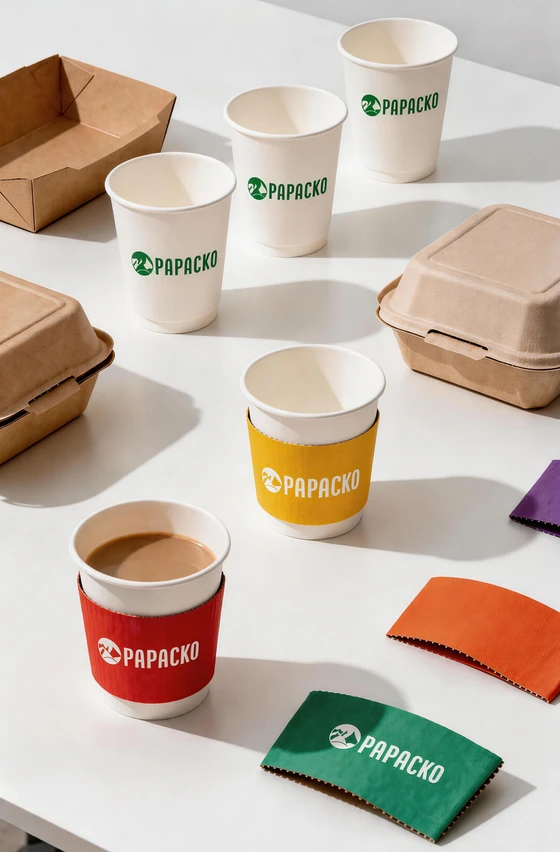
هل أنت مستعد لإنشاء أكواب ورقية أو عبوات ورقية تحمل علامتك التجارية الخاصة بك؟
أخبرنا بمتطلباتك - الحجم والطلاء والطباعة والوجهة - وسيقوم فريقنا بإعداد عرض أسعار مفصل في غضون 24 ساعة.

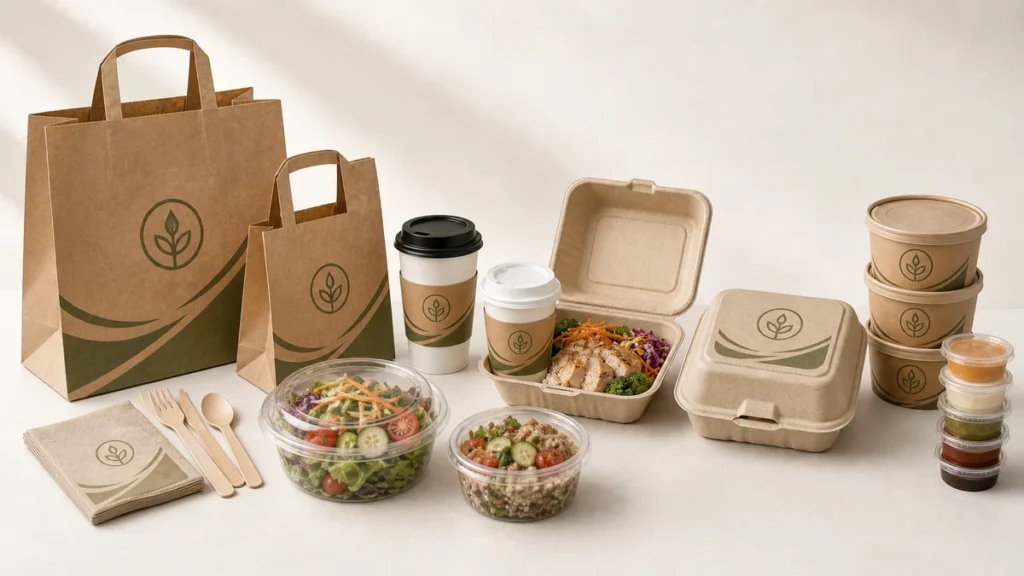
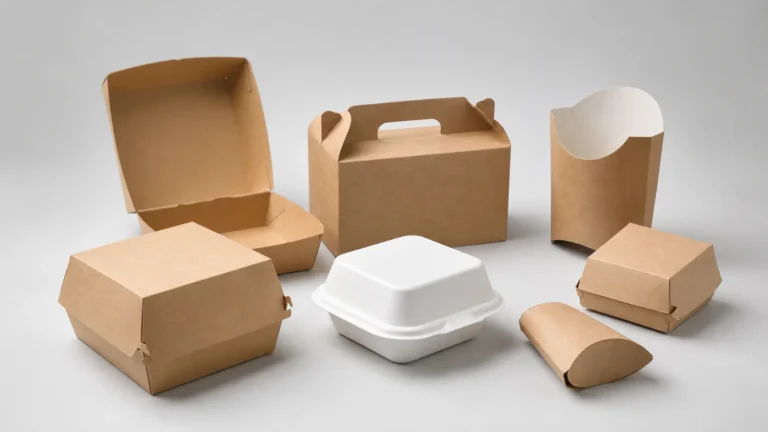
The best food packaging supplies for restaurant chains do more than hold food. They protect temperature, control leaks, support speed at the make line, and keep branded presentation consistent across every location. For multi-unit operators, the goal is a coordinated system of containers, cups, lids, wraps, bags, and service items that fits the menu, the delivery window, and the supply chain.
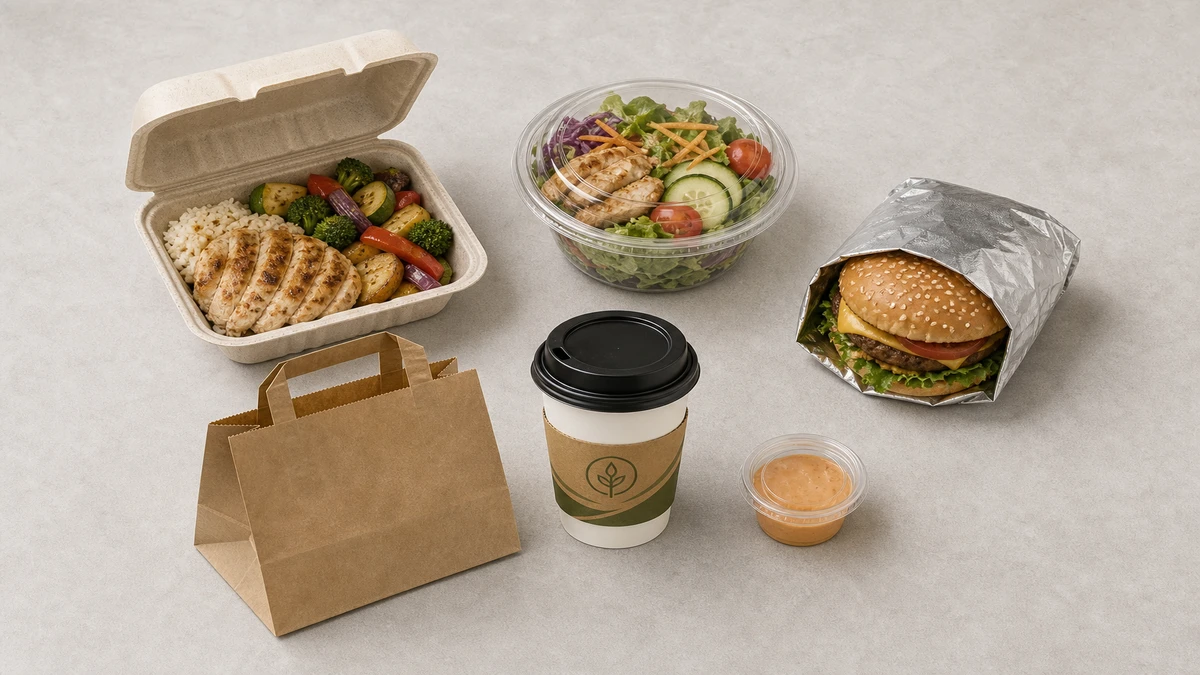
For chain buyers, the core packaging groups usually include:
Standardizing these categories early helps simplify training, forecasting, and supplier qualification.
Chain packaging decisions usually come down to four factors: performance, compatibility, compliance, and cost. A lower unit price does not help if lids leak, containers collapse, or the material fails under heat and moisture.
Packaging should be tested for the actual use case, not just the shelf sample. Hot entrees, soup, and fried foods create different stress than cold salads or dry bakery items. Ask how the package performs during holding, delivery, and pickup, then verify with filled samples.
Material choice affects barrier performance, recyclability, and storage behavior. Paperboard with the right coating can work well for hot meals, while molded fiber may suit short-hold hot items. For cold applications, clear plastic containers may offer visibility, but they need lid fit and anti-fog performance if product presentation matters.
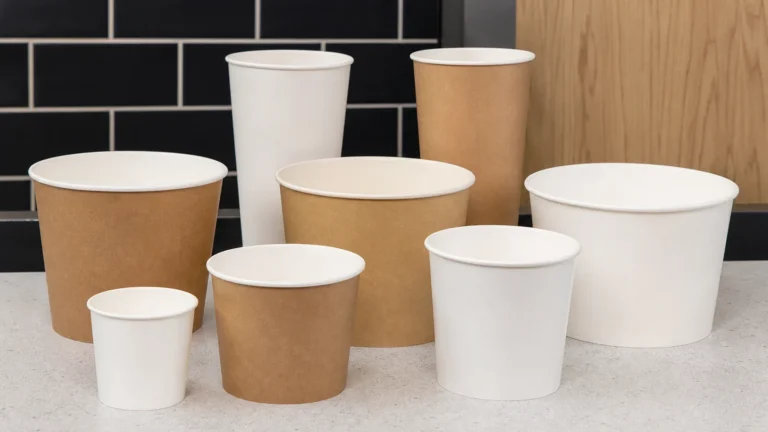
Lid fit is one of the most common failure points in restaurant chain packaging. Even small tolerance differences can cause leaks, slow packing lines, or customer complaints. If cups and lids come from different sources, confirm diameter, snap force, and stack behavior before approving the SKU.
Food packaging should come with supplier documentation that supports food-contact use, material claims, and any sustainability claim you plan to make. Packaging compliance is not only about the product itself, but also about the market where it will be sold. The FDA food-contact overview is a useful reference point: https://www.fda.gov/food/food-ingredients-packaging/food-contact-substances-fcs
A supplier that can serve one store is not always ready for a chain rollout. Buyers should evaluate the supplier’s ability to deliver repeat quality, stable lead times, and documentation support at volume.
Ask for the minimum order quantity, normal lead time, and peak-season lead time for each SKU. A supplier with a low MOQ may still struggle if the line is already near capacity. For launch planning, confirm whether the quoted lead time includes artwork approval, production, and inland freight.
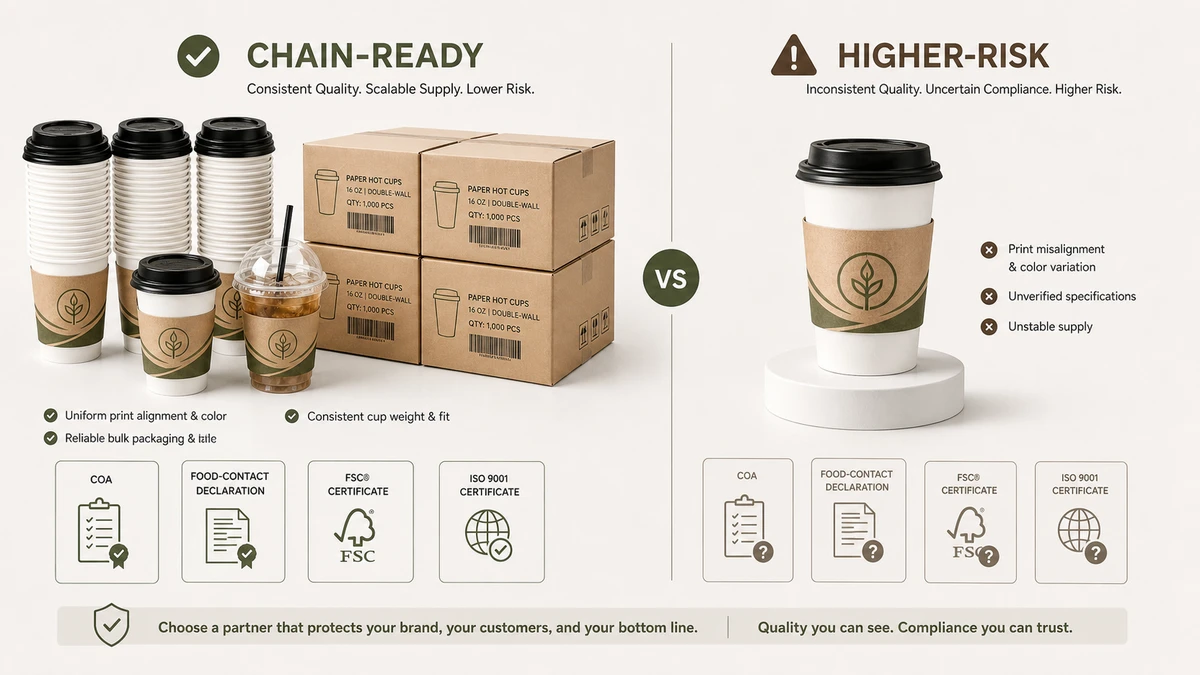
A single polished sample is not enough. Ask for samples from multiple production runs so you can compare print alignment, stiffness, sealing, and lid fit. This matters especially for high-volume items like cups, containers, and bags.
At minimum, request food-contact declarations, test reports for coatings or printed surfaces where relevant, and certificates that support any compostable or fiber sourcing claims. If your chain operates in multiple markets, ask for documentation that matches the rules in each market, not just the supplier’s home country.
| Evaluation Area | ما الذي يجب التحقق منه | ما أهمية ذلك |
|---|---|---|
| موك | Minimum order by SKU | Affects launch planning and inventory risk |
| المهلة الزمنية | Normal and peak timelines | Impacts promotions and new store openings |
| عينات | Multi-run samples, not one-off samples | Reveals consistency problems |
| Lids and fit | Rim tolerance, snap force, stackability | Prevents leaks and packing delays |
| الامتثال | Food-contact and claim support documents | Reduces risk during audits and reviews |
| Packaging format | Case pack and pallet pattern | Affects storage and freight efficiency |
Chain buyers should also ask whether the supplier can support scheduled releases, safety stock, or regional warehousing. The lowest price is not always the best value if it creates freight issues or stockouts during a promotion.
Restaurant chains usually need a balanced mix of hot, cold, and transport packaging. The right mix depends on menu design, service model, and delivery range.
Hot food packaging should hold heat without trapping too much steam. That balance helps protect texture and reduce condensation. Molded fiber, paperboard, and rigid plastic all have use cases, but the right choice depends on food type and hold time.
Salads, desserts, and chilled sides need clear visibility, secure lids, and good stacking. If the product is displayed or delivered cold, anti-fog performance can matter as much as strength. حاويات تغليف المواد الغذائية are often selected by use case rather than by one universal spec.
Beverage packaging is especially sensitive to fit and consistency. A cup and lid that seem interchangeable on paper may not behave that way in production. Buyers should verify diameter, closure profile, and performance after storage and transit. For cup programs, review أكواب ورقية and compatible lids as one system rather than separate line items.
Wraps and liners help manage grease, heat, and handling speed. Kraft wraps, grease-resistant sheets, and foil-style formats each serve different menu items. Bags should be sized for the actual order mix, not just the largest possible basket.
Portion cups, cutlery, napkins, and sauce lids may seem secondary, but they affect labor and customer experience. These items should be included in the same sourcing review as primary containers because mismatch and shortage problems often begin there.
Custom printing changes MOQ, lead time, inventory exposure, and the level of artwork control required. For restaurant chains, print is a supply chain decision as much as a branding decision.
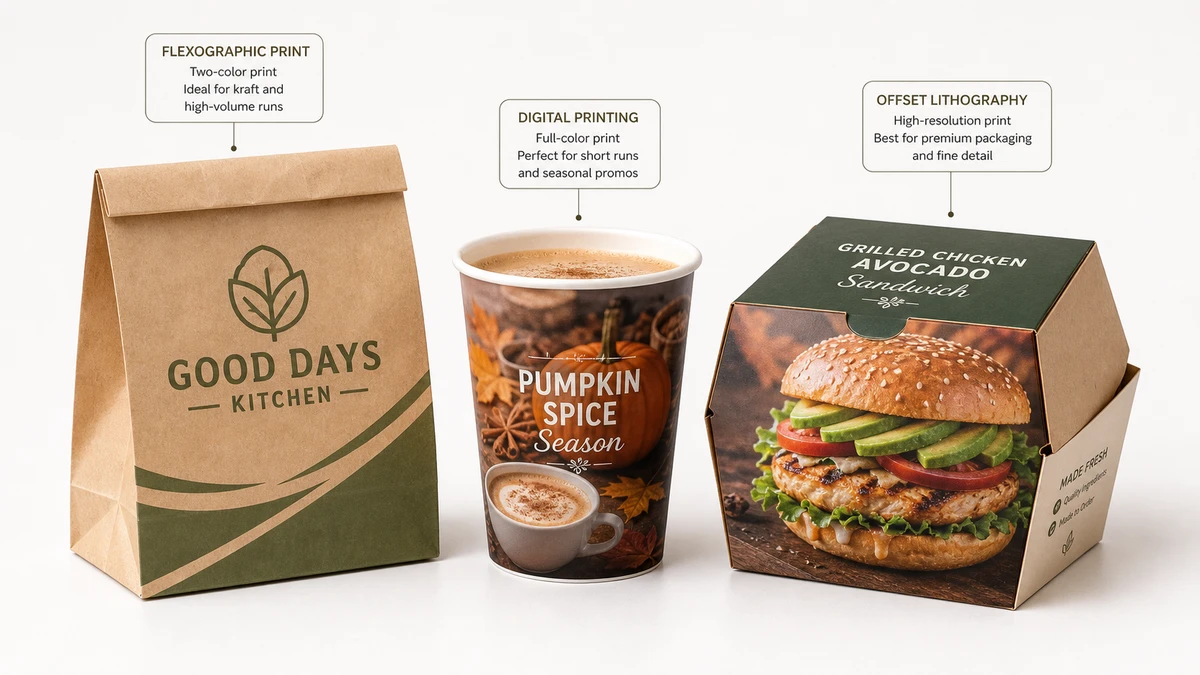
Flexographic printing generally fits stable, repeat-order SKUs. Digital printing is better for short runs, seasonal programs, and regional variants. Offset printing can work well for premium cartons, but it is less common for commodity takeout formats.
If a core bag or box will stay the same for a long period, flexo may be the best fit. If a cup sleeve changes for a campaign or market, digital may reduce the risk of obsolete stock. The right answer depends on annual volume, artwork change frequency, and substrate. Teams can apply تصميم التغليف البسيط principles to keep printed packs recognizable without creating too many SKU variants.
Printed surfaces should be reviewed for ink placement relative to food contact, especially when the print is on the inside or near an opening. Ask suppliers how they control print migration risk and whether coating or lamination changes the final performance.
Custom print should strengthen brand consistency without creating too many versions of the same item. If the art changes often, buyers may need a plain core item plus a smaller number of printed promotional formats. ملحقات التعبئة والتغليف can also be standardized to reduce variation across stores.
Packaging demand often shifts with menu promotions, weather, holidays, and store openings. If planning is too loose, the result is either excess stock or emergency buys.
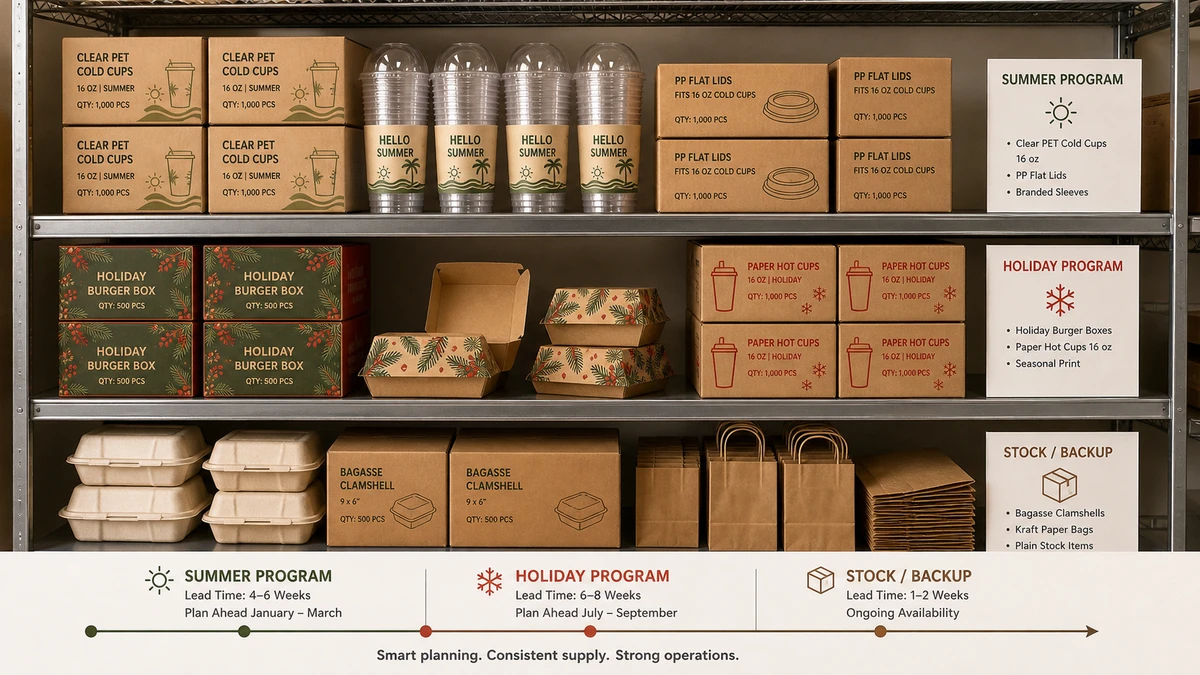
A chain may see different demand patterns for cups, bowls, bags, and containers in the same quarter. Use historical consumption by SKU, not just topline sales, to plan order timing and replenishment.
Core packaging should be ordered with enough buffer to support normal swings. Seasonal print, promotional items, and specialty formats should have their own forecast and release schedule so they do not interfere with routine supply.
Artwork proofing, sample review, and final approval can take longer than expected. Treat these steps as part of the lead time. For branded packaging, the calendar should start earlier than the first store launch date.
When a promotion ends, leftover printed packaging can quickly become dead stock. Chains should define a drawdown plan before purchase, including how to use plain fallback items if demand changes.
Sustainability claims only help if they are tied to real procurement decisions and supported by documents. Buyers should not treat compostable, recyclable, and fiber-based claims as interchangeable.
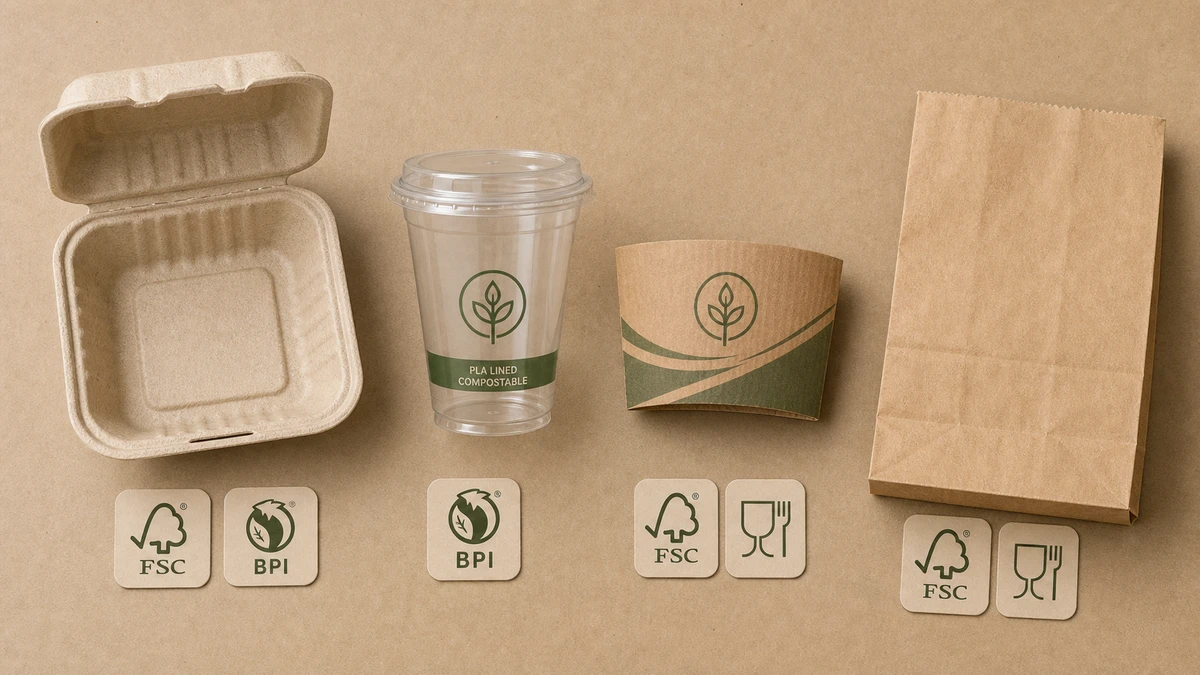
FSC relates to fiber sourcing and chain-of-custody for paper-based materials. Compostable claims require the right certification and the right waste stream. Food-contact compliance still applies regardless of the sustainability story.
Compostable packaging only makes sense when the markets served can actually collect and process it. Recyclable packaging is only useful where the format is accepted and recovered in practice. The best choice is the one that fits your actual operating footprint.
If your chain uses sustainability language in menus, marketing, or on-pack copy, ask suppliers for the papers that support those claims before placing the order. That includes certification records, food-contact declarations, and any restricted-substance statements relevant to the material. Use التغليف الورقي المستدام claims only when the material, coating, and waste pathway support the statement.
A package still has to perform. If a greener material leaks, warps, or causes line delays, it can create more waste, not less. Sustainability should be selected alongside performance, not instead of it.
The safest cost reductions usually come from simplification, not from weakening the spec.
If two containers serve nearly the same menu role, it may be worth standardizing one. Fewer SKUs can improve buying power, reduce storage pressure, and make training easier.
Do not overbuy strength, barrier, or print complexity where the menu does not need it. A short-hold pastry bag does not need the same barrier as a greasy fried-food wrap, and a plain side container may not need premium decoration.
Unit price is only part of the cost. Freight, case pack, storage, defect rate, and line speed all matter. The best packaging supply decision is the one that performs well through the full chain of use.
For high-risk items like soup cups, matching lids, and branded beverage packaging, approve a fallback spec. That gives procurement a way to protect continuity if the primary source runs late.
Start with high-volume, high-risk items such as cups, lids, core takeout containers, bags, and sauce cups. These have the biggest impact on fit, labor, and repeat purchasing.
The right MOQ depends on annual usage, storage space, and cash flow. A lower MOQ is helpful for test runs, but chain buyers should also check whether the supplier can scale the same SKU later.
Plain stock items may need only a short buffer, but custom print, seasonal packaging, and specialty materials should be planned well in advance. Buyers should include artwork approval and production scheduling in the timeline.
Request food-contact declarations, relevant test reports, and any certificates that support claims like compostable or FSC. If the packaging is printed or coated, ask for documentation that covers those features too.
Lid fit can fail because of small tolerance differences, inconsistent forming, or mixing components from different sources. Always test the exact cup and lid combination before approving chain-wide use.
No. Compostable packaging only works well when the local waste system can process it. If the required infrastructure is not available, the practical benefit may be limited.
Not always. Many chains use a core spec with more than one approved supplier to reduce risk while keeping control over quality, lead time, and price.