هل أنت مستعد لإنشاء أكواب ورقية أو عبوات ورقية تحمل علامتك التجارية الخاصة بك؟
أخبرنا بمتطلباتك - الحجم والطلاء والطباعة والوجهة - وسيقوم فريقنا بإعداد عرض أسعار مفصل في غضون 24 ساعة.

Buying paper cups and lids wholesale is mostly a matching problem, not a price problem. The right order depends on cup construction, lid fit, coating choice, MOQ, lead time, and the documents your market needs. If any one of those is wrong, you get leaks, comfort issues, storage waste, or claims you cannot support.
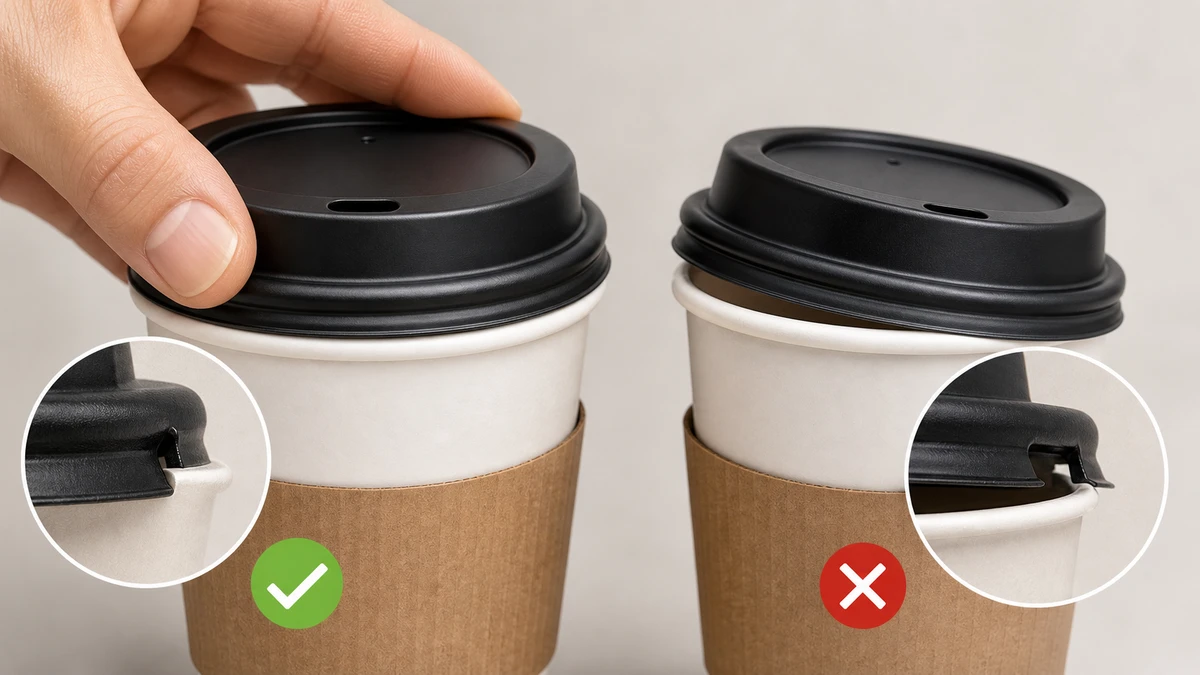
Before you compare unit price, confirm the cup rim family, the intended beverage temperature, and the disposal claim you want to make. That is the fastest way to narrow the options and avoid ordering a product that works on paper but fails in service.
Rim fit is the first gate. A lid is only compatible if the rim diameter, curl profile, and lock depth all match the cup spec. Two cups with the same ounce size can still need different lids.
That is why a buyer should test samples, not rely on the catalog alone. A lid that seats cleanly at room temperature can loosen when the cup is filled hot, especially if the rim tolerance is loose or the cup wall softens under heat.
For buyers building a repeat order program, it helps to standardize on fewer rim families. If one lid can serve several cup sizes, stock control becomes simpler and the risk of a mismatch drops.
Cup construction affects heat transfer, grip, print area, and freight efficiency. The best structure depends on how the drink is served and how long it stays in the cup.
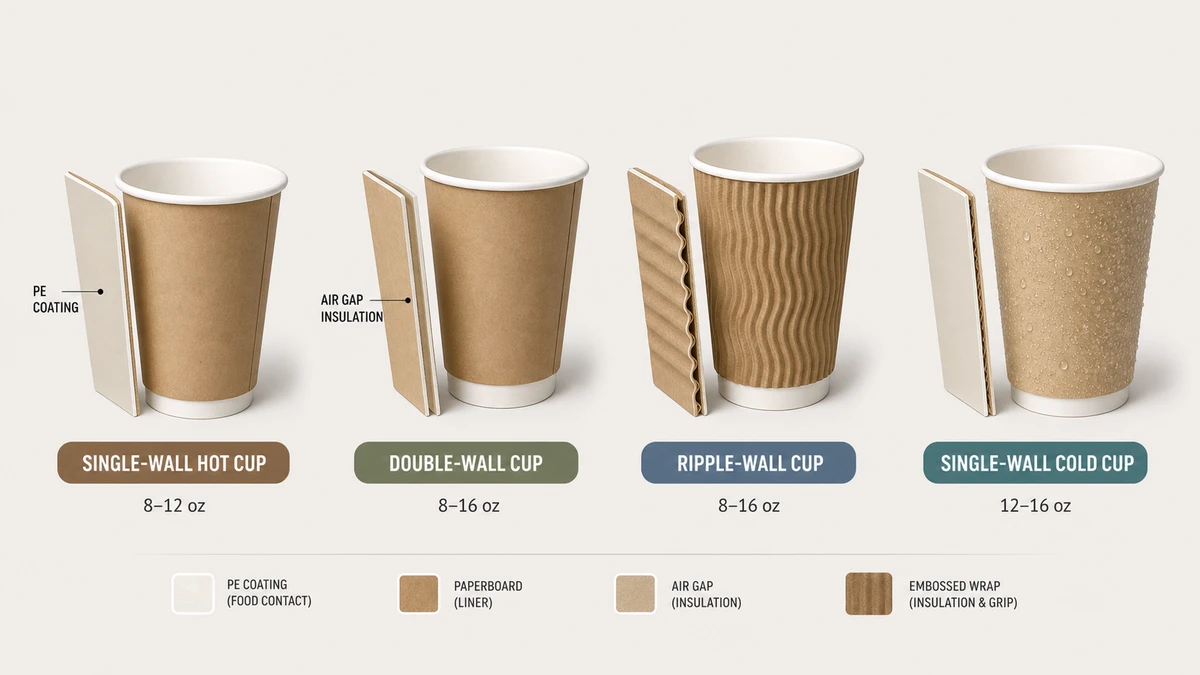
| نوع الكوب | بناء الجدران | أفضل استخدام | المقايضة |
|---|---|---|---|
| Single-wall hot cup | One coated paperboard layer | Fast coffee service | May need a sleeve |
| Double-wall hot cup | Two layers with air gap | Premium takeaway | Higher unit cost |
| كوب بجدار متموج | Textured outer wrap | Better grip and insulation | More complex packing |
| Single-wall cold cup | ورق مقوى مطلي | Iced drinks and fountain use | Not for hot service |
| PLA-lined cup | Compostable-style programs | Facilities with compost access | Needs valid claim support |
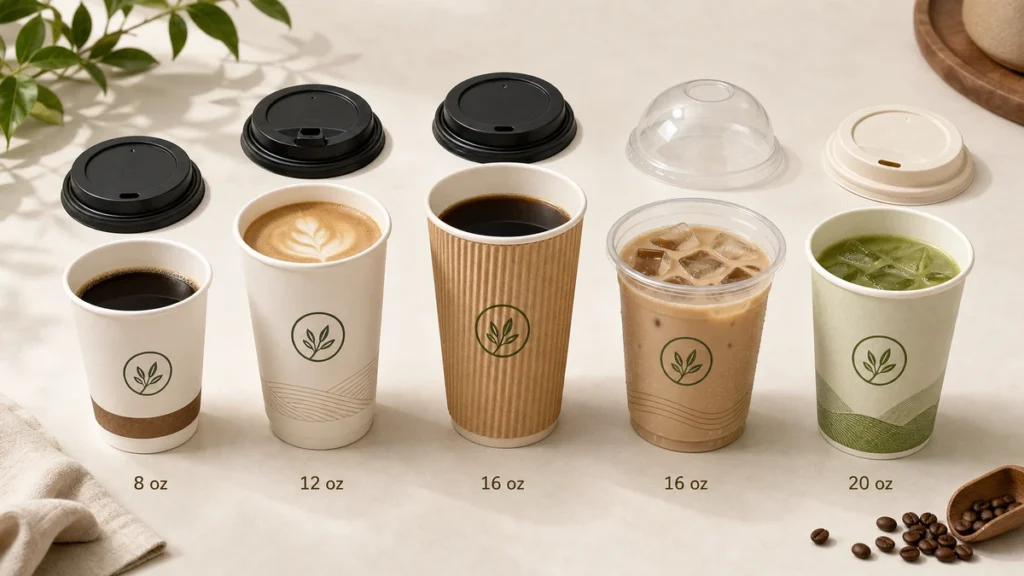
Single-wall cups are usually the lowest cost and nest tightly. Double-wall and ripple-wall cups improve comfort, but they add material and carton volume. Cold cups need a different sourcing logic because condensation changes how the cup performs in hand and on the counter.
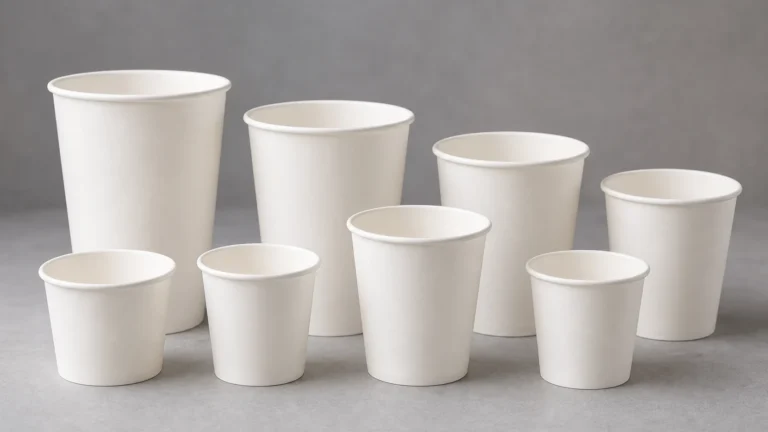
If you need a starting point for standard inventory, review the main أكواب ورقية range and compare it with your menu and service temperature.
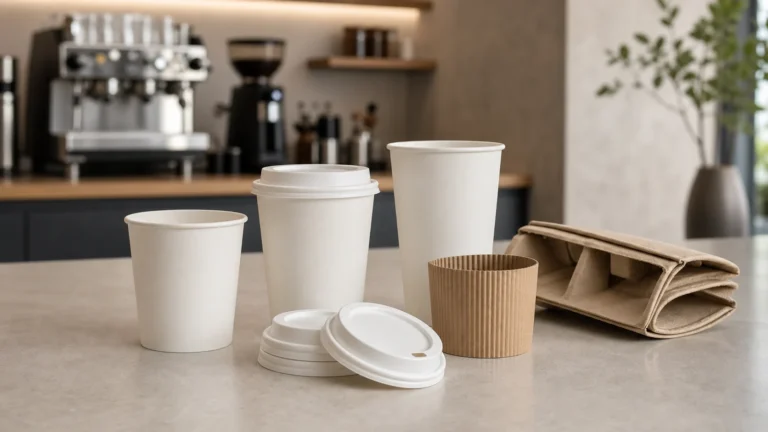
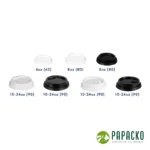
Lid type should follow beverage format, not just cup size. Flat sip lids are common for hot drinks and quick service. Dome lids are better for whipped toppings and blended drinks. Traveler lids help reduce spill risk for carryout.
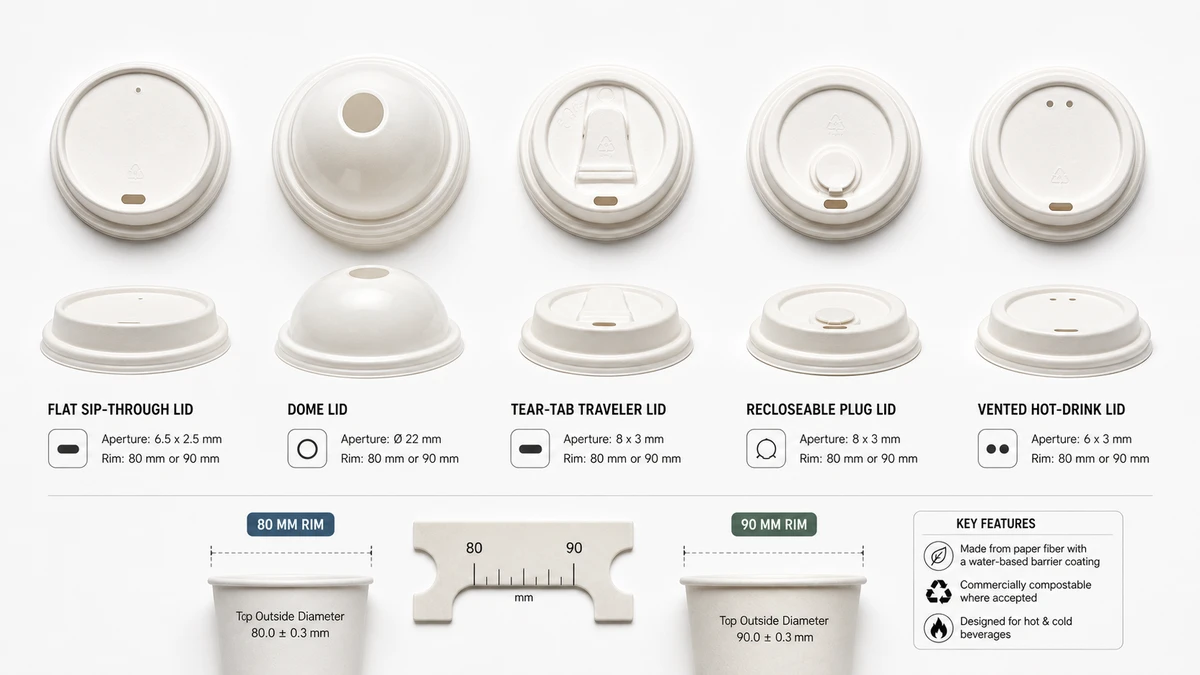
Rim diameter is the key compatibility number. A 12 oz cup and a 16 oz cup may share the same lid if the rim family is identical. That is why the lid spec matters more than the printed volume.
| قطر الحافة | Typical Cup Sizes | الاستخدام الشائع |
|---|---|---|
| 62 مم | 2 oz to 4 oz | Espresso and samples |
| 79 mm | 6 oz to 10 oz | Short hot drinks |
| 80 mm | 8 oz to 12 oz | Standard hot drinks |
| 90 مم | 12 oz to 20 oz | Core cafe sizes |
| 98 mm | 16 oz to 24 oz | Large hot and cold drinks |
| 104 mm | 22 oz to 32 oz | Large cold formats |
When you compare lids, ask for fit samples and test them under normal use conditions. A tight lid on paper can still fail if the rim is slightly out of spec or the cup is filled too high. For broad sourcing, compare options in أغطية أكواب القهوة and confirm the match before placing a full order.
Coating controls moisture resistance, heat tolerance, and disposal claims. It is also one of the biggest drivers of documentation.
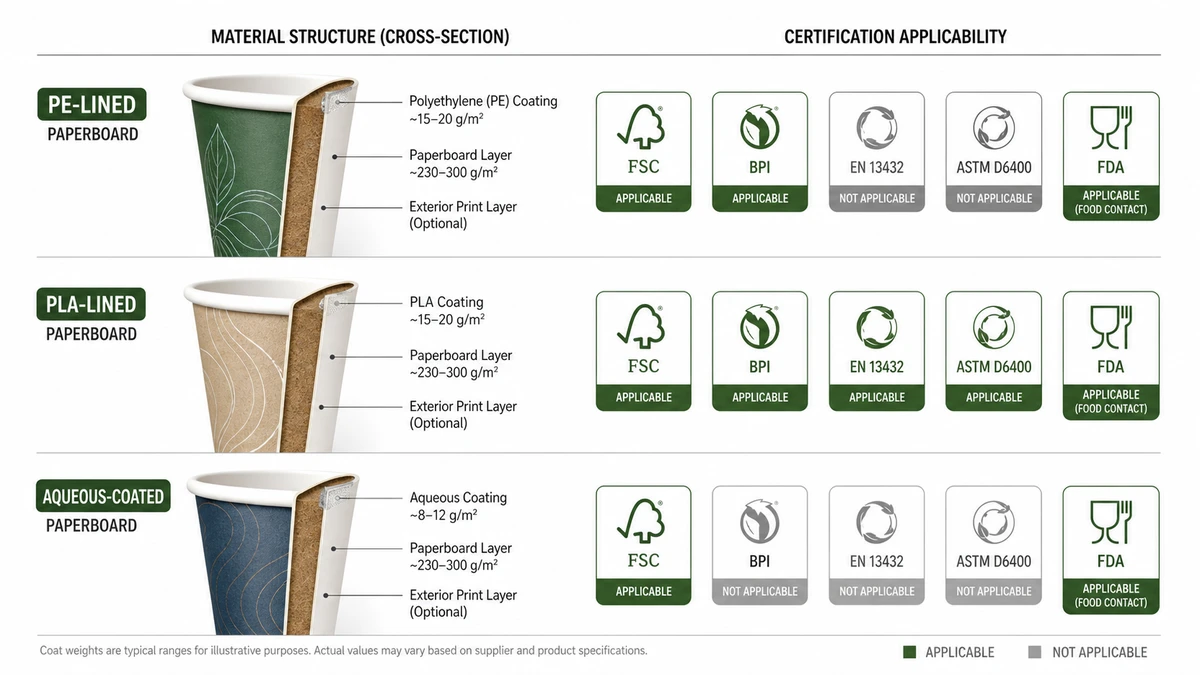
PE lining is the most common option for general-purpose cups. It gives reliable barrier performance and is widely used for hot and cold service. PLA lining is used for compostable-style programs, but only if the finished product is certified and the local composting stream actually accepts it. Aqueous coatings can support recyclability-oriented programs, but the claim still depends on the full product structure and the local waste system.
[FIG-05]
Do not confuse sourcing claims with compliance. A fiber claim is not the same as a food-contact claim, and a compostability claim is not the same as a recyclability claim. They are separate questions.
For US buyers, request food-contact documentation tied to the finished cup structure. The FDA overview for food contact substances is here: https://www.fda.gov/food/food-ingredients-packaging/food-contact-substances
What to ask for:
– Declaration of compliance for the finished cup
– Coating type and coat weight
– Ink and adhesive information
– Compostability certificate if you plan to claim compostable
– Chain-of-custody documents if you need FSC or similar sourcing proof
Wholesale buying is not only about the unit price. MOQ, lead time, and carton configuration can change the real cost of the program.
Typical questions to settle before order placement:
– MOQ per SKU and per print version
– Stock lead time versus custom lead time
– Sample availability from the production line
– Case count per carton and cartons per pallet
– Reorder timing and whether partial cases are allowed
A low MOQ can be useful for trialing a new menu or branding idea. A higher MOQ may be better for a stable program if it improves price and carton efficiency. The best answer is the one that matches your turnover, not just your budget.
Lead time also matters more than many buyers expect. If your replenishment cycle is monthly but the factory needs several weeks for production and transit, a single missed reorder can create a stockout.
Supplier qualification should focus on proof, not promises. Ask for the documents that let you verify what you are buying before you commit volume.
Use this checklist:
– Spec sheet with cup size, rim diameter, coating, and carton count
– Food-contact documents for the destination market
– Sample from the actual production line
– MOQ and lead time in writing
– Fit details for the matching lid
– Lot traceability on cartons
– Replacement or claims policy
If you need a broader packaging source, حاويات تغليف المواد الغذائية can be useful as a vendor reference point, especially when you are consolidating procurement across cups, lids, and related items.
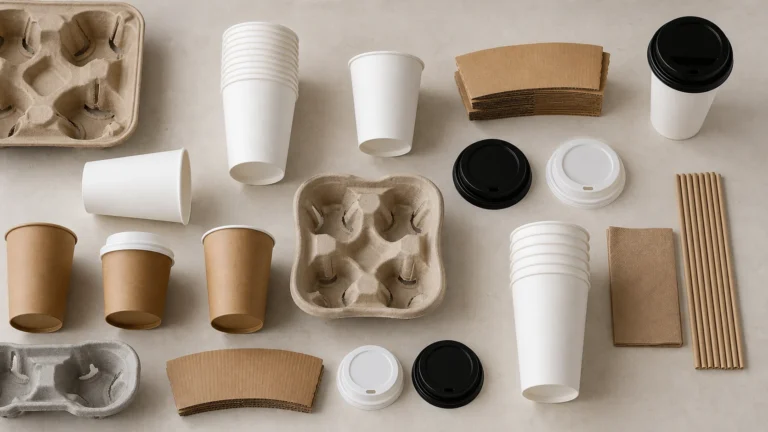
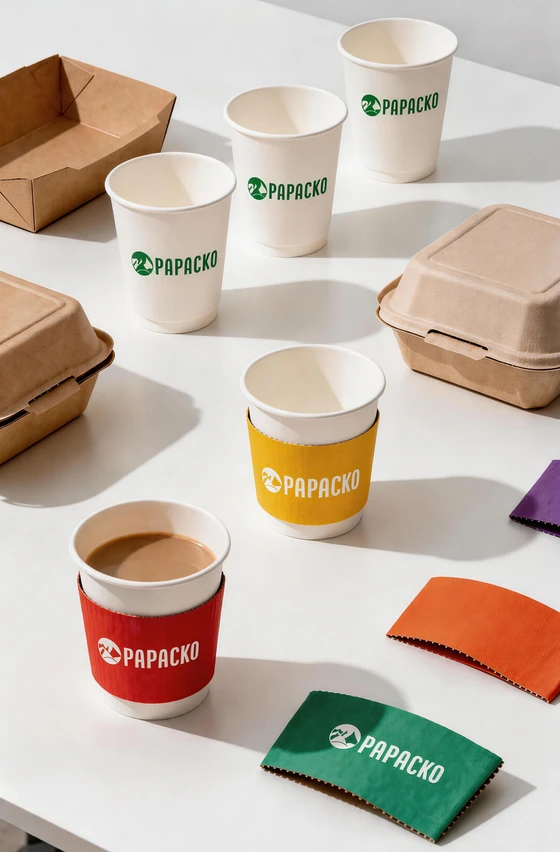
For many wholesale programs, accessories are where hidden complexity appears. Cup sleeves, stirrers, drink carriers, and spare lids may be ordered on different cycles from the cups themselves, so the buyer should check whether the supplier can coordinate these items in one shipment plan. Papacko’s ملحقات التعبئة والتغليف category is a useful reference when you need to align cups and lids with the supporting items that actually move through a cafe, QSR, or distributor warehouse.
This matters because a cup program is rarely only one SKU. A buyer may need 8 oz hot cups for espresso drinks, 12 oz cups for daily coffee, 16 oz cold cups for iced drinks, and two or three lid families. If each item has a different MOQ and lead time, the cheapest unit price can still create a more expensive replenishment pattern. Ask the supplier to quote the complete set and show which SKUs share cartons, pallet positions, or reorder dates.
Red flags:
– No dimensional spec sheet
– No written fit spec for the lid
– Environmental claims without certification
– Verbal lead times only
– Samples that differ from production units
– No lot numbers on cartons
A good first order is small, testable, and documented. That gives you a clean way to confirm fit, print quality, and shelf handling before you scale.
Keep the approved sample, carton label, and spec sheet together for future reorders.
Before you approve a purchase order, verify the following:
– Cup size matches the beverage and fill line
– Lid family matches the rim diameter
– Coating matches heat and moisture needs
– Claims match the disposal route
– MOQ fits your reorder cycle
– Lead time fits your inventory buffer
– Samples passed in real service conditions
– Supplier documentation is complete
If you are still deciding between sizes, the أحجام الأكواب الورقية reference is a useful way to align volume, rim, and use case before you commit.
ابدأ بحجم المشروب وقطر حافة الكوب، لا تكتفِ بالأونصات فقط. وإذا أمكن، قم بتوحيد استخدام مجموعات حواف مشتركة بحيث يمكن لغطاء واحد أن يغطي أحجامًا متعددة من الأكواب.
لا. فهي قابلة للتحلل في السماد فقط في ظل الظروف الصناعية المناسبة، وعندما يكون المنتج النهائي معتمدًا لهذا الغرض. وفي غياب مسار خاص للتحلل في السماد، تكون الفائدة التشغيلية محدودة.
Assuming all “12 oz” cups use the same lid. Rim diameter and curl profile control fit, and a small mismatch can create leaks or lid blow-offs.
تُعد الطباعة الرقمية بنفث الحبر عادةً الخيار الأكثر عمليةً للكميات الصغيرة، لأنها تغني عن تكاليف الألواح وتتيح إنجاز العمل بسرعة أكبر. أما الطباعة الفلكسوغرافية، فتصبح أكثر جاذبية مع ارتفاع حجم الإنتاج.
لا. لا تتناول شهادة FSC سوى مسألة مصادر الألياف. أما قابلية إعادة التدوير وقابلية التحلل العضوي فتعتمدان على الطبقة الداخلية والطلاء والشهادة والبنية التحتية المحلية للتخلص من النفايات.
Ask for the spec sheet, food-contact documentation, fit details for the lid, MOQ, lead time, and a sample from the production line. That gives you enough data to validate the program before scaling.