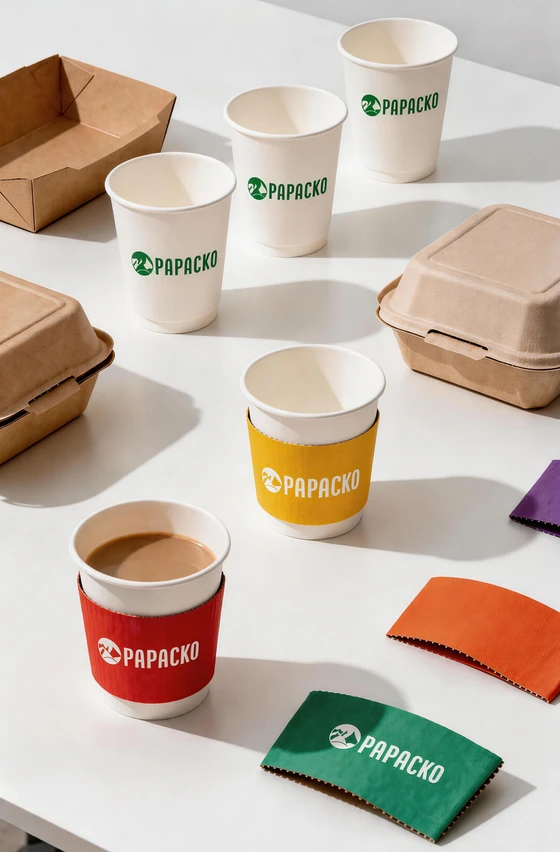
Ready to create your own branded paper cups or packaging?
Tell us your requirements — size, coating, printing, and destination — and our team will prepare a detailed quotation within 24 hours.

Choosing the right disposable food containers with lids is not just about price. For B2B buyers, the container has to match the food, service temperature, transit time, compliance requirements, and storage conditions. A salad bar, a takeaway chain, a caterer, and a distributor may all buy containers with lids, but they do not need the same material or lid style.
This guide explains how to compare the main container families, evaluate lid fit, review supplier documents, and plan orders with realistic MOQ, sample, and lead time expectations. If you are building a broader sourcing list, start with Papacko’s disposable food packaging range and then narrow by material, use case, and compliance needs.
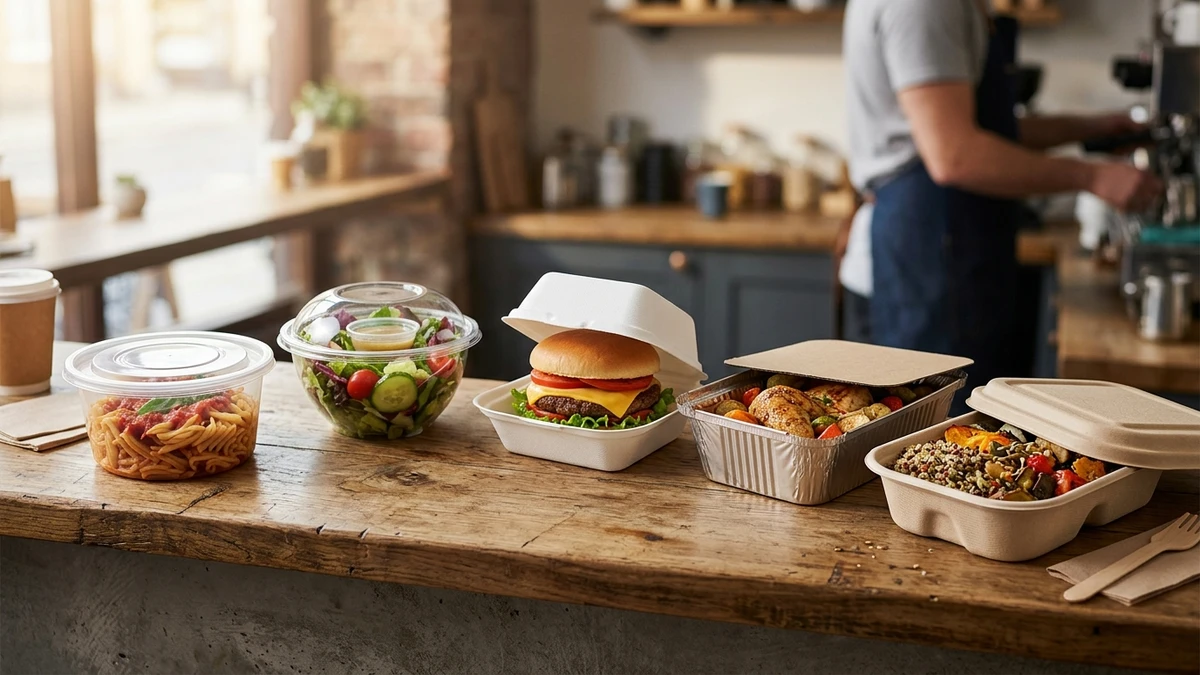
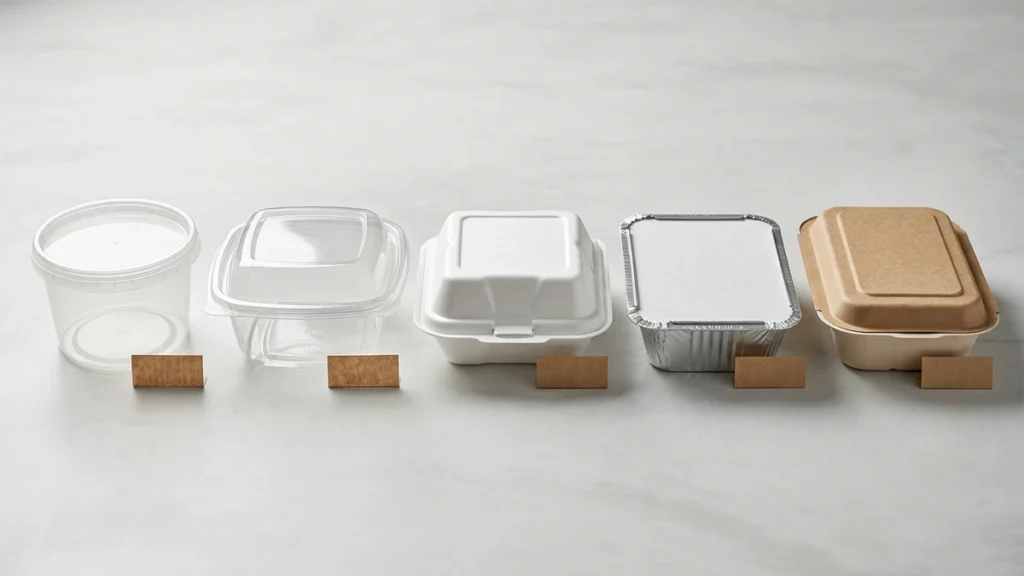
The best disposable food containers with lids depend on how the food is packed and served. In most commercial buying, five categories cover the majority of needs.
Polypropylene, or PP, is the standard choice for hot meals, deli items, meal prep, and microwavable takeaway. It handles cold storage and reheating in one format, and it is available with snap lids, flat lids, and tamper-evident lids.
PET is the preferred option for cold presentation. It is clear, rigid, and works well for salads, desserts, fruit, and chilled deli products. It should not be specified for microwave or hot-fill use.
EPS clamshells are still used in some markets for burgers and hot takeaway because they insulate well and cost less than many alternatives. However, their regulatory status varies widely, so buyers must verify local restrictions before ordering volume.
Aluminum foil trays with lids suit oven use, airline catering, and prepared meals that may go from kitchen to reheat. They tolerate very high heat but are not microwave-safe.
Bagasse and molded fiber containers are chosen when compostability or a natural paper-like appearance matters. They can work well for dry or semi-moist foods, but performance depends heavily on coating choice and hold time.
A simple first filter is:
– Hot food and microwave reheating: PP
– Cold display and visibility: PET
– Oven use: aluminum
– Compostability goals: bagasse or molded fiber
– Low-cost insulated takeaway where legal: EPS
Material choice controls temperature tolerance, leak resistance, unit cost, branding options, and end-of-life claims. It also affects which lids can be used.
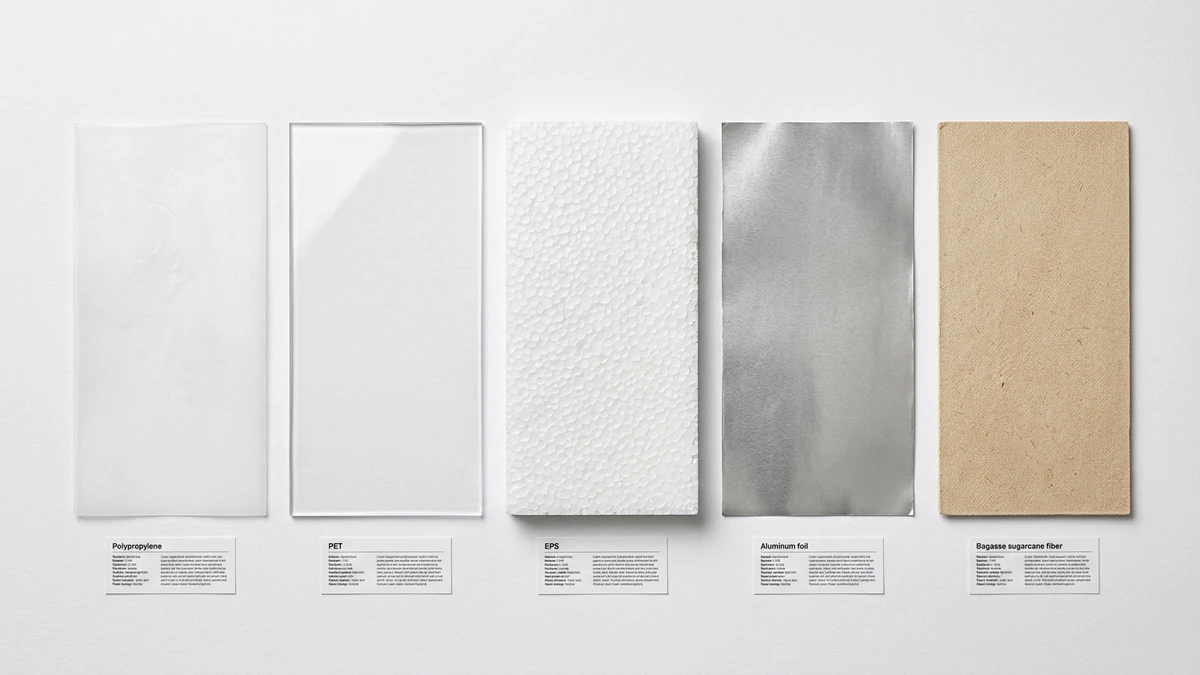
| Material | Best Use | Typical Temp Fit | Main Strength | Main Limitation |
|---|---|---|---|---|
| PP | Hot meals, meal prep, soups, deli | Approx. -20 C to 120 C | Microwave-safe, durable, good lid options | Less visual appeal than clear PET |
| PET | Salads, desserts, fruit, cold deli | Approx. -40 C to 70 C | High clarity, strong shelf presentation | Not suitable for microwave or hot food |
| EPS | Burgers, hot takeaway, short delivery | Warm to hot holding | Good insulation, low cost | Bans and restrictions in many markets |
| Aluminum | Oven meals, catering trays | Very high heat | Oven-safe, strong barrier | Not microwave-safe |
| Bagasse or molded fiber | Compostable takeaway, bowls, trays | Cold to moderately hot | Fiber-based appearance, compostable claims possible | Wet or oily foods may need coating |
PP remains the broadest all-purpose answer for buyers who want one format for hot and chilled use. If your business needs dependable takeaway performance with strong closure options, it is often the safest starting point. Papacko’s PP food containers are commonly specified for this reason.
PET works best when appearance sells the product. A clear salad or dessert pack can increase shelf appeal, but PET loses shape when exposed to heat. That makes it unsuitable for hot counters, microwaves, or steaming foods packed directly off the line.
Bagasse and molded fiber need closer scrutiny than buyers sometimes expect. Many products are sold as compostable, but coating, lamination, or grease barrier chemistry can change the finished product’s status. If sustainability claims matter, ask for documents on the finished item, not only the base pulp.
For buyers needing a broader eco-focused range, Papacko’s compostable food packaging section is a useful comparison point.
A container body is only half the specification. Many field complaints come from lids that are technically compatible on paper but fail under real use. Lid fit must be checked against temperature, fill level, transport, and opening method.
Common lid types include:
– Snap lids for fast manual packing
– Tamper-evident lids with break tabs or tear skirts
– Dome vent lids for hot food that releases steam
– Flat lids for stacking efficiency
– Foil or film seals for stronger barriers
When reviewing disposable food containers with lids, check these points:
Rim compatibility
The lid and base must share the same flange profile. Similar dimensions do not guarantee a reliable seal if the rim geometry differs.
Engagement depth
A shallow snap fit may look fine on a sample but release when stacked or squeezed during delivery.
Heat behavior
PET lids are excellent for cold display, but they deform with hot food. PP lids are more suitable for reheatable and hot-filled applications.
Steam management
For hot dishes, a fully tight lid can trap steam and create pressure. Vented or dome styles can reduce lid pop and condensation issues.
Tamper evidence
Many delivery platforms and institutional buyers prefer visible first-open evidence. This matters for meal delivery, healthcare, and retail prepared foods.
Stack height
A high dome may protect food appearance but increases carton size, warehouse volume, and transport cost.
Practical testing is essential. Ask the supplier for samples of both base and lid from the same production standard. Then run a service test with actual food, not just water. Fill, stack, carry, and hold the pack for the expected delivery time. If you are switching suppliers, request fresh fit samples even when the nominal size is unchanged.
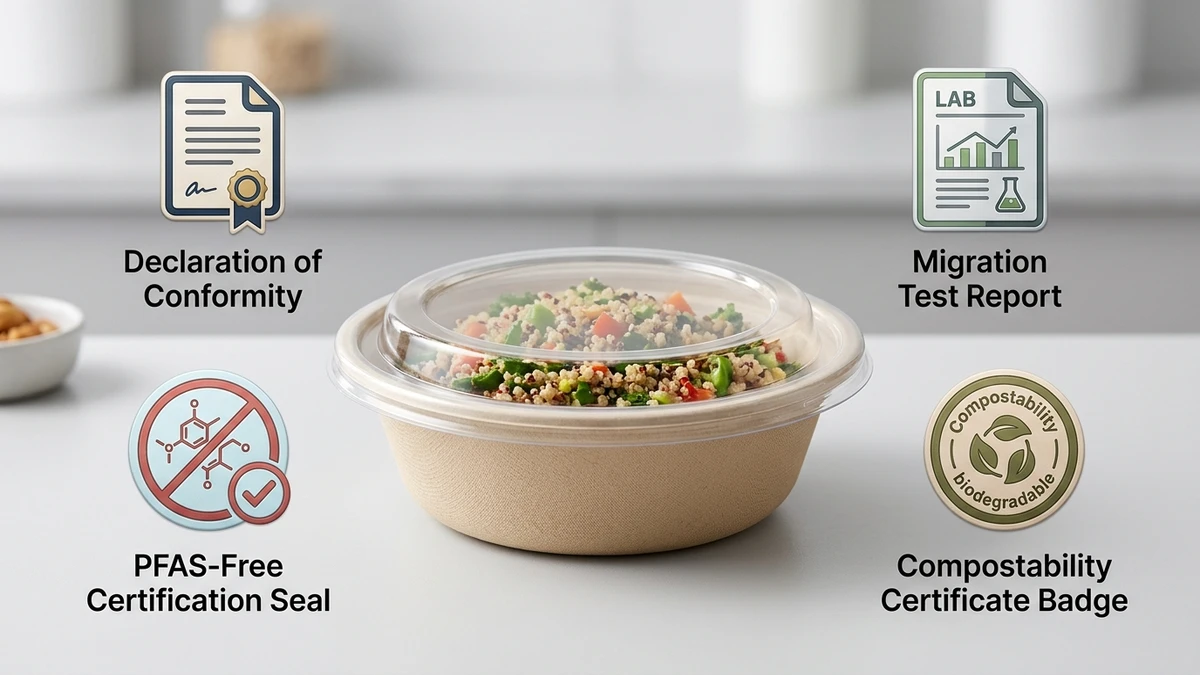
For B2B procurement, compliance should be checked before price negotiation. A low-cost container is not a good buy if the supplier cannot support food-contact claims in your target market.
At minimum, request:
– Declaration of Compliance or equivalent food-contact statement
– Migration test reports from an accredited lab
– Material specification sheet
– Documentation for coatings, inks, and adhesives where used
– PFAS-free statement where relevant for fiber-based products
– Recycled-content authorization if food-contact recycled resin is claimed
For US-bound goods, the FDA remains the main authority for food-contact packaging requirements. The relevant reference point for buyers is the FDA food-contact packaging framework: FDA food-contact substances guidance.
In practice, buyers should match the documents to the exact construction. For example:
– A PP tub and PP lid need resin compliance support
– A bagasse tray with grease barrier needs support for the fiber and the coating
– A printed paper lid needs support for substrate, ink, and any adhesive layers
– A foil tray with lacquer needs support for foil and internal coating
Also confirm the intended use conditions in writing:
– Cold fill or hot fill
– Microwave or non-microwave
– Direct food contact time
– Food type, such as fatty, acidic, or aqueous foods
If the supplier changes raw material source, additive package, or coating formulation, the documentation may need updating. Serious suppliers should confirm change-control procedures and tell you how they notify buyers of specification changes.
Commercial packaging buyers need realistic sourcing details, especially when comparing stock items with custom programs.
Typical MOQ ranges vary by process and product type:
– Stock PP or PET containers: often 1 carton to a few master cartons through trading stock, but factory direct MOQ may be 10,000 to 25,000 units per SKU
– Custom printed paper or fiber containers: often 50,000 to 100,000 units per SKU
– Custom molded fiber or custom tooling items: often 10,000 to 50,000 units, sometimes more depending on mold cost
– Digital short-run print programs: lower MOQ, but higher unit cost
Sample policy should be clarified early. Ask:
– Are plain stock samples free or charged?
– Is courier freight charged separately?
– Are fit-test samples from production stock or hand-picked?
– Can branded pre-production samples be supplied before mass production?
Lead time depends on whether the item is stock, plain custom, or printed custom:
– In-stock items can ship quickly if available locally
– Plain factory production may take several weeks
– Custom print often needs artwork approval, plate preparation, production scheduling, and export transit
– New molds or special lid designs add further development time
Artwork and branding also change the buying equation. If your main need is printed takeaway, compare the container with the lid and the secondary packaging together. A lower container cost can be offset by higher print setup, longer lead time, or inflexible MOQ. Papacko buyers often review custom food packaging options at this stage to balance branding with operational volume.
For supplier qualification, ask these operational questions:
– What is the exact MOQ per SKU?
– What is the lead time for samples?
– What is the lead time for repeat orders?
– Are lids and bases packed together or separately?
– What is the carton quantity and pallet configuration?
– Is there a standard tolerance for weight and dimensions?
– Can the supplier support split shipments or blanket orders?
The best purchasing approach is usually to start with sample testing, then a pilot order, then a volume commitment once the fit, compliance, and warehouse performance are confirmed.
Several sourcing errors appear again and again in food packaging procurement.
The first is choosing by material name alone. Not all PP tubs perform the same, and not all bagasse containers hold wet food equally well. Wall thickness, mold quality, and lid geometry matter.
The second is checking only the base and not the lid. Many leaks are closure failures, not body failures.
The third is relying on substrate certificates without reviewing the finished product. This is common with coated fiber items and compostability claims.
The fourth is skipping real-use testing. Bench checks do not replicate hot food, stacking, delivery vibration, or repeated opening and closing.
The fifth is underestimating storage conditions. Fiber products and kraft formats are more sensitive to humidity than PP, PET, or foil.
The sixth is locking into a custom print MOQ before confirming long-term demand. Printed packaging can create excess stock risk if the menu changes or a container format is discontinued.
A disciplined buying workflow helps:
– Define food type and temperature
– Select likely material families
– Review compliance documents
– Test base and lid together
– Confirm MOQ, sample terms, and lead time
– Approve pilot order
– Move to full-volume ordering
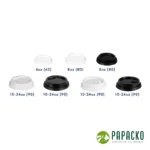
For operations that use multiple packaging formats, it also helps to review related categories such as Papacko’s paper bowl lids when building a matched system across bowls, trays, and cups.
PP is the standard choice for hot meal delivery. It tolerates higher temperatures than PET, works with vented and tamper-evident lids, and can support microwave reheating where specified by the supplier.
Some are, but buyers should verify the certification for the finished product. A fiber base may be compostable, yet the added coating or barrier can affect the final claim. Ask for the certificate and test report for the complete item.
A snap lid closes by friction or a locking bead and can usually be reopened without visible evidence. A tamper-evident lid includes a break tab or tear section that shows first opening.
No. PET is mainly for cold use and will deform at elevated temperatures. If microwave use is required, specify a PP container and confirm its microwave rating with the supplier.
They are banned or restricted in some markets, but not all. Buyers should verify local legislation before placing an order, especially for cross-border supply programs.
Request a Declaration of Compliance, migration test reports, technical data sheet, and supporting documents for coatings, inks, adhesives, PFAS-free claims, and recycled food-contact content where relevant. Also confirm intended use conditions in writing.