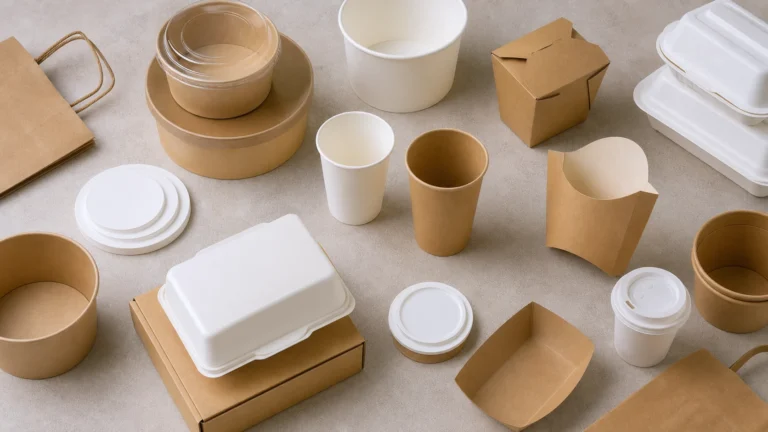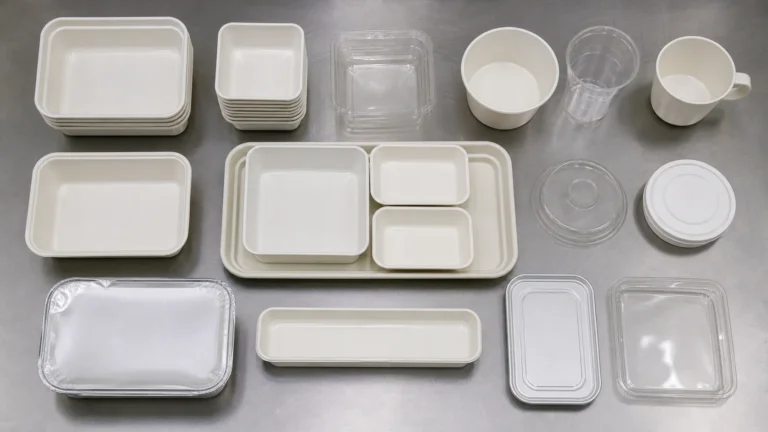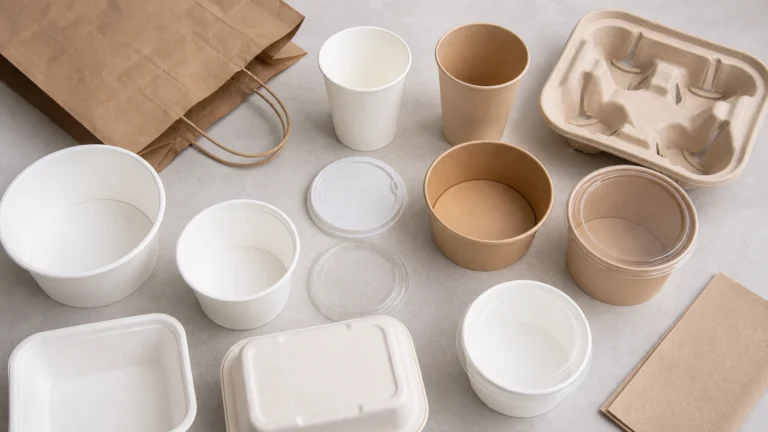
¿Está listo para crear sus propios vasos o envases de papel con su marca?
Díganos sus requisitos -tamaño, revestimiento, impresión y destino- y nuestro equipo le preparará un presupuesto detallado en 24 horas.

Última actualización: agosto de 2026
Tiempo de lectura: 8-10 minutos
Autor: Equipo de contenidos de Papacko
Los meses de invierno traen consigo un aumento de 35-45% en los pedidos de comida caliente a domicilio, siendo las categorías de sopas y platos reconfortantes las que registran un mayor crecimiento. Sin embargo, muchas empresas del sector alimentario se enfrentan a problemas con los envases, que no mantienen la temperatura, presentan fugas durante el transporte o generan condensación que compromete la calidad de los alimentos.
Esta guía exhaustiva analiza las soluciones de envasado de alimentos para el invierno diseñadas específicamente para sopas calientes, guisos y comidas calientes. Descubrirás estrategias para la selección de materiales que garanticen un aislamiento óptimo, técnicas de sellado que eviten derrames, diseños de envases que minimicen la pérdida de calor y enfoques rentables para mantener las normas de seguridad alimentaria durante la distribución en climas fríos.
💡 Resumen rápido: Para que el envasado de alimentos en invierno sea eficaz, es necesario contar con un aislamiento de varias capas (envases de doble pared o de espuma), sistemas de cierre hermético de las tapas, materiales resistentes a la humedad y una ventilación adecuada para evitar la condensación, al tiempo que se mantienen temperaturas superiores a los 60 °C (140 °F) durante 30-45 minutos a lo largo del transporte.
Las condiciones de reparto en invierno plantean retos específicos:
-Diferencial de temperatura ambiente: La diferencia de temperatura entre los alimentos en el interior (70-80 °C) y el aire exterior (de -5 °C a 10 °C) genera un gradiente de temperatura de 60-85 °C
-Pérdida acelerada de calor: Los entornos fríos extraen calor entre 2 y 3 veces más rápido que en condiciones estivales
-Riesgo de condensación: Las diferencias de temperatura provocan la acumulación de humedad en el interior de los envases, lo que hace que los alimentos se empapen.
-Fragilidad del material: Algunos plásticos se vuelven frágiles a temperaturas inferiores a 0 °C, lo que aumenta el riesgo de rotura
Datos del sector: Un estudio sobre la entrega de comida a domicilio realizado en 2025 reveló que 42% de las quejas de los clientes durante los meses de invierno se debían a que la comida llegaba fría, frente a solo 18% en verano, lo que pone de manifiesto la importancia fundamental de las soluciones de embalaje térmico.
🎯 Perspectiva del sector: Los restaurantes que utilizan envases estándar de pared simple registran descensos de temperatura medios de entre 25 y 30 °C durante las entregas invernales de 20 minutos, lo que hace que los alimentos alcancen temperaturas inferiores a las recomendadas para su consumo (60 °C).
El embalaje aislante mejorado reduce la pérdida de temperatura a entre 8 y 12 °C durante el mismo periodo.
Factores clave de selección:
1.Plazo de entrega: <15 minutos = se acepta pared simple; 15-30 minutos = se recomienda pared doble; más de 30 minutos = se requiere espuma o aislamiento de alta calidad
2.Tipo de alimento: Los alimentos con mucho líquido (sopas) requieren cierres herméticos; los guisos con trozos no necesitan un cierre tan preciso
3.Objetivos de sostenibilidad: La espuma ofrece el mejor rendimiento, pero plantea problemas medioambientales; la fibra moldeada supone una alternativa ecológica que alcanza entre el 85 y el 90 % del rendimiento de la espuma.
4.Necesidades de recalentamiento: El aluminio y ciertos plásticos (CPET) permiten recalentar en el horno o en el microondas
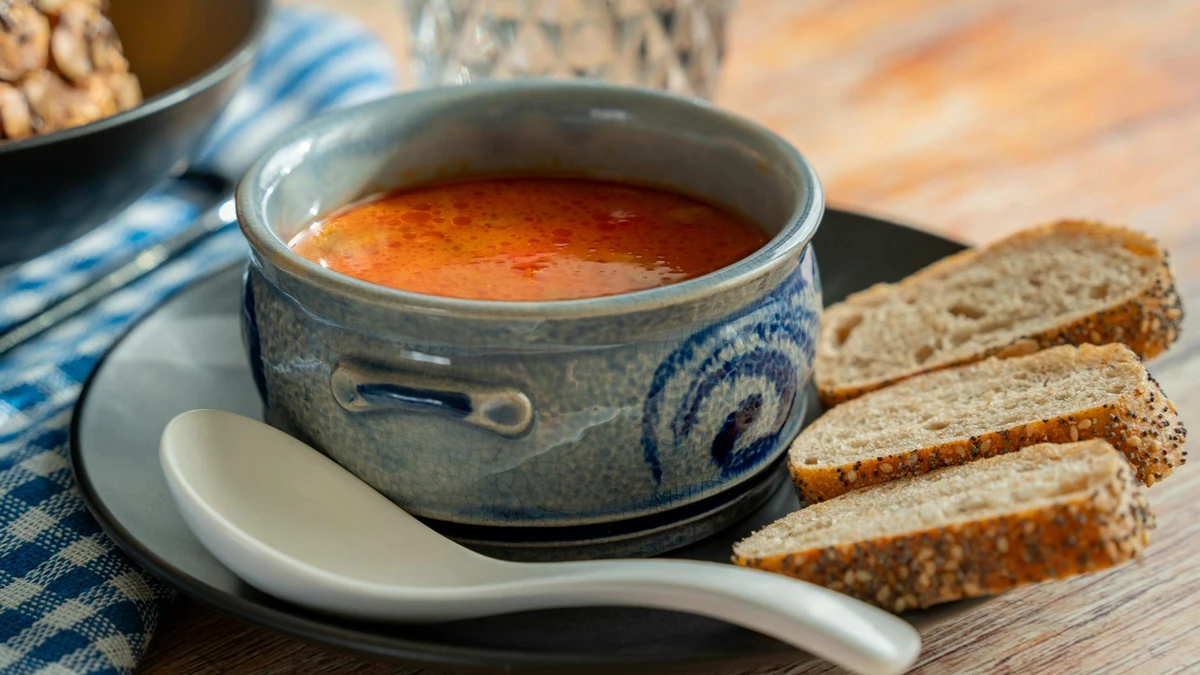
Construcción: Dos capas de cartón con un espacio de aire (3-5 mm) a modo de aislamiento
Especificaciones técnicas:
-Retención de calor: 75-82% tras 30 minutos
-Descenso de temperatura: 12-18 °C durante un tiempo de suministro de 30 minutos
-Resistencia a la humedad: el recubrimiento de PE o PLA evita que se empapen las bases
-Precio: $0,35-0,65 por envase (12-24 onzas)
Ventajas:
-Una relación calidad-precio equilibrada para la mayoría de las operaciones
-Hay disponibles opciones compostables (versiones con revestimiento de PLA)
-Su diseño apilable permite ahorrar espacio de almacenamiento
-Admite impresión personalizada para la imagen de marca
Limitaciones:
-Es necesario que la tapa quede bien sellada para evitar que se escape el calor
-No es adecuado para plazos de entrega muy largos (más de 45 minutos)
-El espacio de aire puede comprimirse si se apilan demasiados objetos encima.
Lo mejor para: Tiendas de sopas, restaurantes asiáticos de fideos y servicios de reparto de comida casera con plazos de entrega de entre 15 y 30 minutos.
Construcción: La estructura de espuma de célula cerrada retiene el aire, lo que proporciona un aislamiento superior
Especificaciones técnicas:
-Retención de calor: 85-92% tras 30 minutos
-Descenso de temperatura: 6-10 °C durante un tiempo de entrega de 30 minutos
-Resistencia a la humedad: Resistente al agua por naturaleza
-Precio: $0,45-0,85 por envase (12-24 oz)
Ventajas:
-El mejor rendimiento térmico de su clase
-Excelente resistencia a las fugas gracias a las tapas de encaje a presión
-Su ligereza reduce los costes de envío
-Amortigua los golpes que sufre la comida durante el transporte
Limitaciones:
-Preocupaciones medioambientales (no es fácil de reciclar en muchas zonas)
-Prohibido en algunas ciudades o regiones (consulta la normativa local)
-Ocupa más espacio de almacenamiento que el cartón apilado
-Capacidad limitada de impresión personalizada
Lo mejor para: Servicios de reparto premium, servicios de catering, reparto de comidas a hospitales y centros sanitarios, transporte de larga distancia (entre 30 y 60 minutos o más).
Criterios de selección:
Para sopas líquidas: Las láminas termoselladas o las tapas de rosca ofrecen la mejor protección contra las fugas. Es preferible priorizar la integridad del sellado frente a la ventilación.
Para guisos y platos con trozos: Las tapas con cierre a presión o de encaje a presión combinan la prevención de fugas con la facilidad de apertura. Se admite cierta ventilación.
Para platos de pasta: Las tapas con orificios de ventilación son imprescindibles para evitar que los fideos se empapen por la condensación del vapor.
El dilema de la condensación: Los recipientes herméticos retienen el calor, pero retienen también el vapor, lo que hace que la comida se empape. Los recipientes con orificios de ventilación evitan que la comida se empape, pero pierden calor más rápidamente.
Soluciones:
1.Insertos que absorben la humedad: Coloca tiras de papel absorbente dentro de la tapa para recoger la condensación (añade $0,02-0,04 por envase)
2.Diseño de doble ventilación: Unos pequeños orificios de ventilación (2-3 mm) permiten que salga el exceso de vapor, al tiempo que retienen la mayor parte del calor (lo que reduce la pérdida de temperatura en solo 3-5 °C en comparación con un sistema totalmente hermético).
3.Purgado retardado: Enviarse precintado; incluir instrucciones para que el cliente lo ventile al recibirlo
4.Diseño compartimentado: Separa la salsa o el caldo de los ingredientes sólidos para evitar que se empapen.
Datos de prueba: Los recipientes con tapas de doble ventilación conservaron 78% de calor al cabo de 30 minutos, al tiempo que redujeron las quejas por humedad en un 65% en comparación con los recipientes totalmente herméticos.
Relación entre el volumen y la superficie: Una superficie menor en relación con el volumen reduce la pérdida de calor.
Principios de diseño:
-Contenedores más profundos (altura > diámetro) pierden calor más lentamente que los recipientes poco profundos y anchos
-Formas redondeadas tienen menos superficie que las esquinas afiladas para un mismo volumen
-Porciones individuales más pequeñas conservan mejor el calor que los recipientes grandes compartidos (divide un pedido de 32 oz en 2×16 oz en lugar de 1×32 oz)
Área de contacto de la tapa: Asegúrate de que la tapa sobresalga del borde del recipiente al menos entre 8 y 12 mm para garantizar un cierre hermético. Si el saliente es insuficiente (entre 4 y 6 mm), la pérdida de calor aumenta entre un 15 y un 20%.
Propósito: Separar los ingredientes calientes de los fríos; evitar que se mezclen las texturas
Opciones de configuración:
1.2 compartimentos (reparto 70/30): Plato principal caliente + ensalada de acompañamiento o guarnición fría
2.3 compartimentos (50/25/25): Plato principal + dos guarniciones (las salsas se sirven por separado)
3.Cuenco + compartimento para la tapa: La sopa abajo; las galletas saladas y la guarnición, en el hueco de la tapa
Ventajas térmicas:
-Separa los alimentos sensibles al calor (lechuga, guarniciones) de los alimentos calientes
-Evita la contaminación cruzada de las salsas, que diluye los sabores
-Permite diferentes estrategias de recalentamiento (calentar el plato principal y mantener fríos los acompañamientos)
Consideración de los costes: Los envases con varios compartimentos cuestan entre 25 y 40% más que sus equivalentes de un solo compartimento, pero reducen la necesidad de utilizar envases separados (impacto neto en el coste: +10-15% para un envase de dos compartimentos frente a la compra de dos envases separados).
Temperaturas seguras para la conservación de los alimentos:
-Comida caliente: Debe mantenerse por encima de los 60 °C (140 °F) para evitar la proliferación bacteriana
-Zona de peligro: Una temperatura de entre 5 y 60 °C (41-140 °F) favorece la rápida multiplicación bacteriana
-Plazo de entrega: Mantener una temperatura superior a 65 °C en la puerta del cliente para tener en cuenta el retraso en el servicio
Relación tiempo-temperatura:
Cumplimiento normativo: Muchos organismos sanitarios exigen que los alimentos se mantengan a una temperatura superior a 60 °C o inferior a 5 °C. Los plazos de entrega que superen los intervalos de temperatura seguros pueden requerir el uso de bolsas térmicas, cajas de reparto con calefacción o restricciones en el tiempo de servicio.
Protocolo de ensayo de retención de la temperatura:
1.Llena el recipiente con la comida a temperatura de servicio (75-80 °C)
2.Precintado con tapa, tal y como lo recibirían los clientes
3.Conservar a temperatura ambiente en invierno (0-10 °C)
4.Mide la temperatura interna a los 10, 20, 30 y 40 minutos.
5.Repite la prueba 5 veces y calcula la media de los resultados
Criterios de aceptación:
-Retención de 30 minutos: ≥65 °C (mínimo aceptable)
-Retención de 30 minutos: ≥70 °C (buen rendimiento)
-Retención de 30 minutos: ≥72 °C (rendimiento excelente)
Pruebas de campo: Realiza pruebas de entrega reales durante las épocas más frías del año. Las condiciones de laboratorio no tienen en cuenta las aperturas repetidas de las puertas, la calefacción de los vehículos ni los retrasos debidos a la gestión por parte de los clientes.
Consideraciones sobre la rentabilidad:
Menos quejas: El cambio de envases de pared simple a envases de doble pared redujo las quejas por “comida fría” en 58% en un estudio piloto, lo que supuso una disminución de los costes de reembolso de $180 al mes en una operación de 500 pedidos.
Pedidos recurrentes: Los clientes que recibieron alimentos conservados a la temperatura adecuada registraron unas tasas de repetición de pedidos un 23% superiores en un plazo de 30 días, en comparación con aquellos que sufrieron problemas de temperatura.
Ahorro de mano de obra: Un mejor embalaje reduce el tiempo dedicado a atender llamadas por reclamaciones y a tramitar devoluciones (se estima entre 2 y 4 horas a la semana para una actividad de 500 pedidos = $120-240 al mes a $15 por hora).
Enfoque específico para el invierno:
-Utiliza recipientes aislantes únicamente durante los meses fríos (de noviembre a marzo en climas templados).
-Pide un suministro para 4 a 6 meses antes del invierno para asegurarte el precio.
-Informar a los clientes de la mejora (“Ahora utilizamos embalajes aislantes aptos para el invierno”)
Transición al verano:
-Volver a utilizar envases de pared simple más ligeros (de mayo a septiembre)
-Reduce los costes de embalaje entre un 30 y un 40% durante los meses cálidos
-Destinar los ahorros a otras necesidades operativas o a la competitividad en los precios
Inventario híbrido:
-Stock de contenedores 60% para invierno y 40% estándar durante las temporadas intermedias (octubre y abril)
-Utiliza embalajes de alta calidad para los pedidos de gran valor y embalajes estándar para los clientes que buscan precios más económicos.
-Estar atento a las previsiones meteorológicas para ajustar los índices de consumo
Compromisos en cuanto al rendimiento:
-Las opciones ecológicas suelen retener entre un 5 y un 15% menos calor que la espuma.
-Compensar mediante:
– Empezando con temperaturas de los alimentos más altas (+5 °C)
– Reducir el radio de reparto para acortar el tiempo de tránsito
– Utilizar bolsas de reparto isotérmicas como protección adicional
– Informar a los clientes sobre las ligeras diferencias de temperatura
Percepción de los clientes: 68% de los clientes encuestados están dispuestos a aceptar una ligera reducción de la temperatura a cambio de un embalaje sostenible, pero solo si se les informa claramente (“embalaje ecológico, es posible que se produzcan ligeras variaciones de temperatura”).
❌ Error #1: Utilizar el mismo embalaje durante todo el año sin adaptarlo a las condiciones invernales
✅ Enfoque correcto: Utiliza recipientes aislantes durante los meses de frío (noviembre-marzo). Las pruebas de temperatura muestran que los recipientes de pared simple pierden entre 25 y 30 °C en 20 minutos durante el invierno, frente a los 12-15 °C que pierden en verano. Opta por recipientes de doble pared o de espuma para garantizar la seguridad y la calidad de los alimentos.
❌ Error #2: Dar prioridad al menor coste del contenedor sin tener en cuenta los costes derivados de las reclamaciones y los reembolsos
✅ Enfoque correcto: Calcula el coste total, incluyendo las devoluciones y la pérdida de clientes. Ejemplo: Ahorrar $0,20 por envase gracias a un embalaje más barato, pero con una tasa de reclamaciones de 15%, sale más caro que gastar $0,40 más en un embalaje de calidad con una tasa de reclamaciones de 3%. Ten en cuenta el valor del ciclo de vida del cliente a la hora de tomar decisiones sobre el embalaje.
❌ Error #3: Cerrar herméticamente los recipientes para maximizar la retención del calor, lo que hace que la comida se empape debido a la condensación
✅ Enfoque correcto: Utiliza tapas con doble ventilación que liberen el exceso de vapor a la vez que retienen el calor, o incluye insertos que absorban la humedad. Las pruebas demuestran que las tapas ventiladas reducen las quejas por comida empapada en un 65%, al tiempo que solo disminuyen la retención de temperatura entre 3 y 5 °C, lo que supone una compensación aceptable a cambio de una mejor calidad de los alimentos.
❌ Error #4: Pedir un solo envase grande para los pedidos familiares, en lugar de varias raciones más pequeñas
✅ Enfoque correcto: Divide los pedidos grandes en 2 o 3 recipientes más pequeños. La física demuestra que los volúmenes más pequeños conservan mejor el calor (mayor relación volumen-superficie) y que las raciones individuales se recalientan de forma más uniforme si es necesario. Dos recipientes de 16 oz conservan el calor entre un 12 y un 18% mejor que un solo recipiente de 32 oz durante 30 minutos.
El embalaje de alimentos para el invierno hace referencia a envases aislantes especializados, diseñados para mantener la temperatura de los alimentos calientes durante el reparto y el servicio de comida para llevar en épocas de frío. Se utilizan materiales como cartón de doble pared, espuma de poliestireno expandido o fibra moldeada con aislamiento de cámara de aire para frenar la pérdida de calor a bajas temperaturas ambientales. Un embalaje eficaz para el invierno mantiene los alimentos a una temperatura superior a 60 °C (140 °F) durante 30-45 minutos, lo que evita la proliferación bacteriana y garantiza la satisfacción del cliente al recibir comidas a la temperatura adecuada.
La espuma de poliestireno expandido (EPS) ofrece el mejor rendimiento, con una retención del calor de 85-92% tras 30 minutos, lo que mantiene los alimentos entre 6 y 10 °C más calientes que otras opciones. El cartón de doble pared supone una alternativa económica, con una retención de 75-82%. La fibra moldeada (bagazo) ofrece una solución ecológica con una retención de 78-85%. Para entregas muy largas (más de 45 minutos), los envases de espuma con bolsas aislantes externas son los que mejor mantienen la temperatura. La elección del material depende del tiempo de entrega, del presupuesto y de las prioridades en materia de sostenibilidad.
Utiliza envases con mecanismos de cierre adecuados: las tapas de película termosellada ofrecen una prevención de fugas del 98-99% (ideales para sopas líquidas), las tapas de rosca ofrecen una eficacia del 95-98% y las tapas con cierre de lengüeta proporcionan una protección del 90-95%. Asegúrese de que la tapa sobresalga del borde del envase un mínimo de 8-12 mm. Llene los envases hasta el 80-85% de su capacidad, dejando espacio libre para la expansión. Pruebe el envase con sopas reales antes de su implantación total: realice pruebas de agitación e inclinación para verificar la integridad del sellado en condiciones de transporte.
Los embalajes aislantes para invierno cuestan entre 40 y 120% más que los contenedores estándar de pared simple. Los de pared simple cuestan entre $0,15 y 0,25 por unidad; los de doble pared, entre $0,35 y 0,65; y los de espuma, entre $0,45 y 0,85. Por otra parte, los embalajes mejorados reducen las reclamaciones por alimentos fríos en un 58% y los costes de reembolso en aproximadamente $180 al mes para operaciones que gestionan 500 pedidos. El aumento de los costes de embalaje suele compensarse con la reducción de las reclamaciones, el menor número de reembolsos y una mayor fidelización de los clientes, lo que permite alcanzar un retorno de la inversión positivo en un plazo de 3 a 4 meses.
Utiliza envases de cartón de doble pared o de fibra moldeada (retención térmica 78-85%), empieza con temperaturas más altas de los alimentos (80-85 °C en lugar de 75 °C), reduce el radio de reparto para acortar el tiempo de tránsito por debajo de los 25 minutos, utilice bolsas de reparto aislantes como protección secundaria y optimice la forma de los envases (los envases más profundos y con menor superficie pierden calor más lentamente). La combinación de estas estrategias permite igualar el rendimiento de la espuma utilizando materiales más sostenibles.
Sí. Las sopas líquidas requieren una protección superior contra las fugas (tapas termoselladas o de rosca, con una eficacia de sellado 98%+) y pueden utilizarse envases totalmente herméticos, ya que la humedad no supone un problema. Las comidas sólidas y los platos de pasta necesitan ventilación para evitar que se empapen debido a la condensación; utiliza tapas con doble ventilación o insertos que absorban la humedad. Las sopas se conservan mejor en envases cilíndricos y profundos (mejor relación volumen-superficie), mientras que las comidas con trozos funcionan bien en envases con compartimentos que separen los ingredientes con diferentes niveles de humedad.
La normativa de seguridad alimentaria exige que los alimentos calientes se mantengan por encima de los 60 °C (140 °F). Intenta mantener una temperatura de 65 °C al llegar a la puerta del cliente para tener en cuenta los retrasos en el servicio. Para entregas de entre 15 y 25 minutos, basta con un embalaje de doble pared que mantenga una retención de calor de 75-82%. Las entregas de entre 25 y 40 minutos requieren espuma o aislamiento de alta calidad (retención de 85-92%). A partir de los 40 minutos, utilice envases de espuma junto con bolsas aislantes externas. Realice pruebas de temperatura con los platos específicos de su menú y sus rutas de reparto para verificar que el embalaje cumple los umbrales de seguridad.
El envasado de alimentos en invierno requiere una selección estratégica de los materiales, sistemas de sellado adecuados y una optimización del diseño térmico para garantizar la seguridad alimentaria y la satisfacción del cliente durante el transporte en climas fríos. La diferencia de rendimiento entre los envases estándar y los de invierno repercute directamente en las tasas de reclamaciones, los costes de reembolso y la fidelización de los clientes.
Principales conclusiones:
1.Actualiza el embalaje según la temporada—Los recipientes de doble pared o de espuma durante los meses de invierno (noviembre-marzo) reducen la pérdida de temperatura entre un 40 % y un 60% en comparación con los de pared simple.
2.Adaptar el aislamiento al plazo de entrega—Las rutas de 15 a 25 minutos requieren doble pared (retención 75-82%); las de 25 a 40 minutos requieren espuma (retención 85-92%)
3.Equilibrio entre el sellado y la ventilación—Las sopas líquidas necesitan cierres herméticos; en el caso de las comidas sólidas, es recomendable utilizar tapas con orificios de ventilación para evitar que se empapen.
4.Calcular el coste total—Tener en cuenta los costes derivados de las reclamaciones y los reembolsos a la hora de tomar decisiones sobre el embalaje; los envases de alta gama ofrecen un retorno de la inversión positivo en un plazo de 3 a 4 meses.
5.Prueba antes de la implementación—realizar pruebas de mantenimiento de la temperatura con platos reales del menú en condiciones reales de reparto
-Soluciones de embalaje para envíos
Papacko suministra a restaurantes y servicios de reparto de comida a domicilio envases isotérmicos aptos para el invierno, entre los que se incluyen modelos de cartón de doble pared, fibra moldeada y espuma. Nuestros especialistas en embalaje ofrecen asistencia en pruebas de temperatura, tamaños a medida y planificación de inventario estacional, lo que garantiza que su comida caliente llegue a la temperatura adecuada durante los meses de frío.
Póngase en contacto:
Última actualización: agosto de 2026