¿Está listo para crear sus propios vasos o envases de papel con su marca?
Díganos sus requisitos -tamaño, revestimiento, impresión y destino- y nuestro equipo le preparará un presupuesto detallado en 24 horas.


Drink carriers and cup holders occupy a narrow but consequential space in food-service logistics. They sit at the intersection of packaging engineering, route planning, and customer experience—and a mismatch between any of those layers can turn a well-prepared order into a spilled liability before it reaches the table or doorstep. This guide examines each layer in sequence, from route mapping through material documentation, so operators and buyers can make informed sourcing decisions.
Before selecting a carrier format, map the physical journey a drink order will take from point of preparation to point of consumption. That journey typically involves several distinct micro-environments: the counter or pass-through window, a staff member’s hands or a tray, a vehicle seat or delivery bag, a courier’s hand during the final approach, and the customer’s own grip at hand-off.
Each transition introduces a different stress pattern. Counter-to-bag transfers are brief but often rushed during peak hours. Vehicle transport introduces vibration, lateral G-forces during turns, and temperature differentials that affect both the liquid inside the cup and the structural behavior of the carrier itself. Final-mile courier delivery on foot or by bicycle adds repetitive vertical motion and the possibility of the carrier being held at an angle.
Route mapping should document:
This map becomes the functional specification against which every carrier format and material choice is evaluated. A carrier that performs well in a drive-through hand-off scenario may behave differently when placed inside an insulated courier bag for a thirty-minute delivery run. Route mapping prevents operators from discovering those differences at the customer’s expense.

The market offers a wide spectrum of formats, each suited to a different combination of drink count, route type, and operational context. Understanding the structural logic of each format helps buyers match the right solution to their specific workflow rather than defaulting to the most familiar option.
Single-cup sleeves wrap around an individual cup to provide thermal insulation and a more comfortable grip. They do not provide structural support for transport and are best understood as a cup-level accessory rather than a carrier solution. They are most relevant when a customer is receiving a single drink at a counter and walking a short distance.
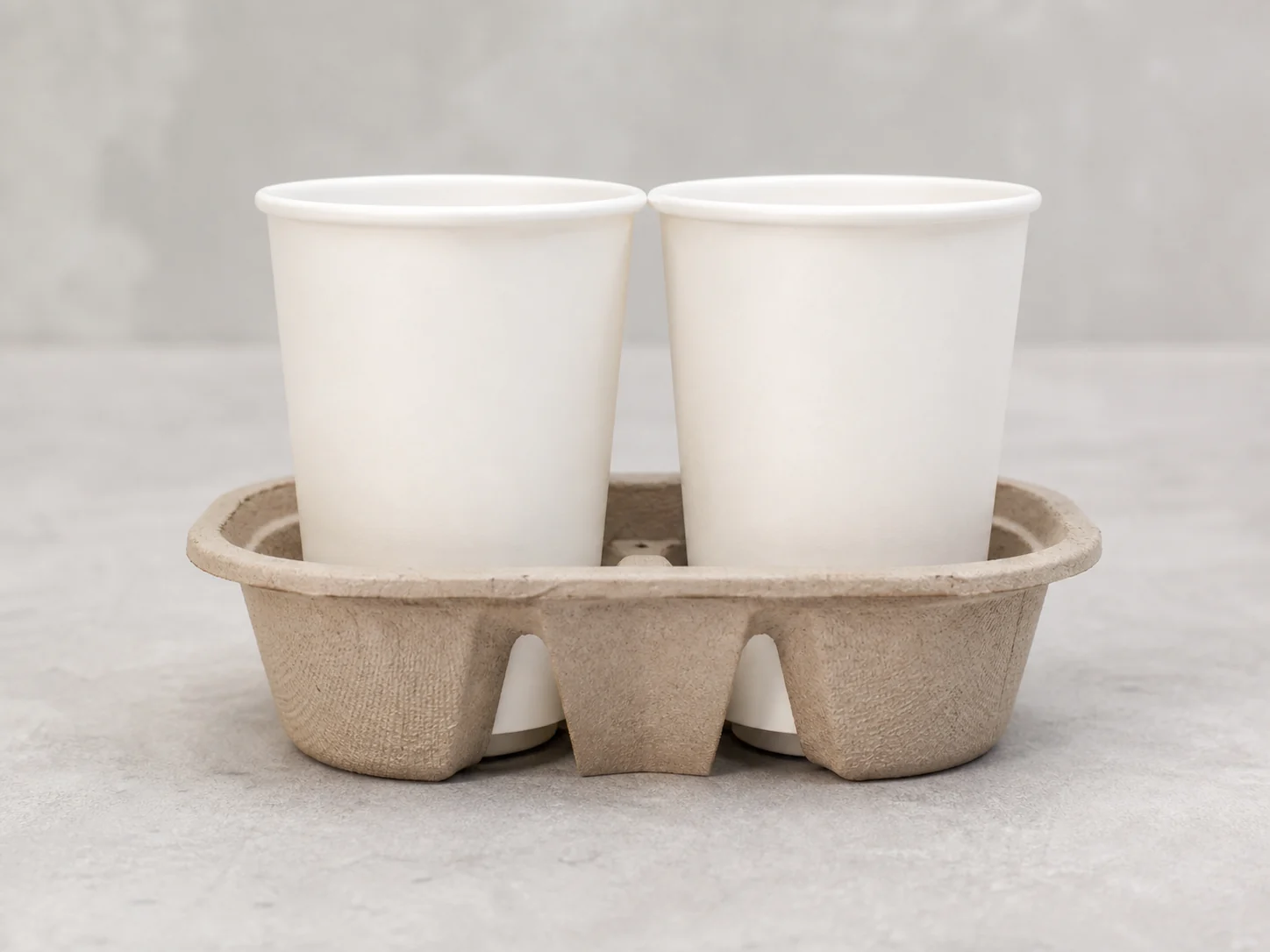
Flat tray carriers, often die-cut from paperboard, hold multiple cups in molded or die-cut apertures arranged in a row or grid. The cups rest in the apertures and the tray is carried by a central handle or by gripping the tray body itself. This format works well for short, stable transfers where a flat surface is available at both ends of the journey.
Caddy-style carriers have raised side walls and a central handle arch, giving them more three-dimensional rigidity than a flat tray. The enclosed geometry helps resist lateral cup movement during transport. These are common in café and quick-service restaurant environments where staff carry multiple drinks across a dining room or to a curbside pickup zone.
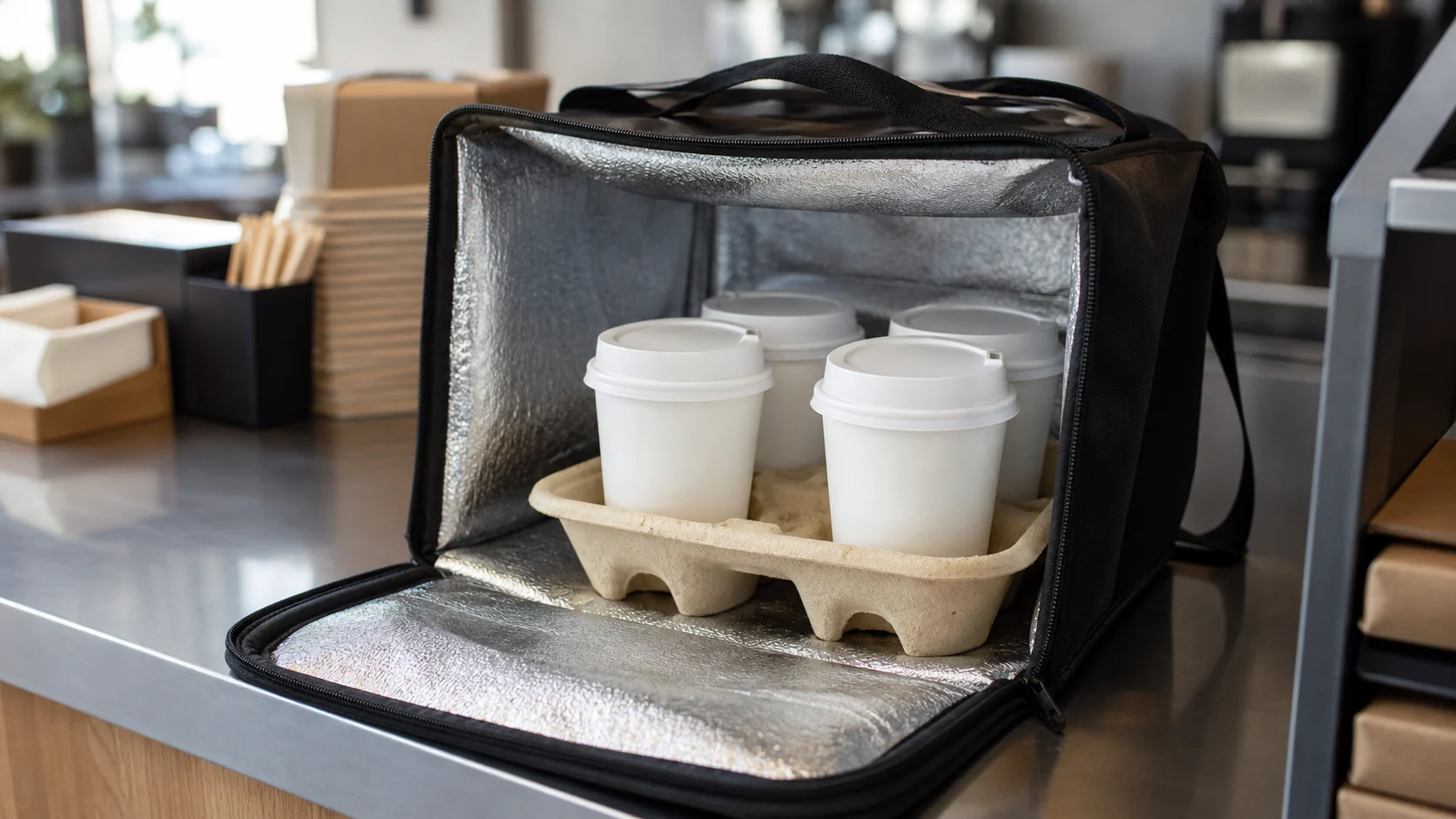
For delivery operations that use insulated courier bags, bag-insert holders are designed to sit inside the bag and keep cups separated and upright. The bag itself provides the outer structure; the insert provides internal organization. This format is particularly relevant for third-party delivery platforms where the courier does not have a dedicated drink tray.
Heavier-duty corrugated paperboard and molded fiber formats offer greater structural depth and are often used for larger drink counts or for operations where the carrier must also function as a display or presentation element at the table. Their material thickness provides additional resistance to compression and moisture compared to lighter paperboard formats.
Buyers should evaluate each format against their route map rather than by drink count alone. The number of cups is one variable; the number of hand-off points, the availability of flat surfaces, and the duration of transport are equally important.
A carrier is only as effective as its relationship with the specific cups and lids it holds. This interaction has two critical dimensions: the fit between the cup base and the carrier aperture, and the relationship between the lid profile and the carrier’s overhead clearance.
Cup bases vary in diameter, taper angle, and the presence or absence of a recessed foot ring. A carrier aperture that is sized for one cup geometry may allow another to sit too loosely, creating lateral play that amplifies during transport, or too tightly, making it difficult to remove the cup cleanly at hand-off. Neither extreme is acceptable in a high-volume service environment.
The taper of a cup’s sidewall also affects how it behaves in an aperture. A cup with a pronounced taper will self-center more readily but may also ride higher in the aperture, raising the center of gravity of the loaded carrier. A straighter-sided cup may sit more securely at a lower height but require a more precisely sized aperture to avoid excessive play.
Lids add height to the cup assembly and introduce a profile that may interact with the carrier’s handle arch, side walls, or any stacking element above. Dome lids, flat sip-through lids, and recessed straw lids each have different height profiles and different surface geometries at the point where they meet the cup rim.
If a carrier’s handle arch passes directly over the cup apertures, dome lids may contact the arch during loading or removal, potentially dislodging the lid. Buyers sourcing lids should review the available range at tapas de vasos de papel and cross-reference lid height specifications against the carrier’s internal clearance before committing to a combined format.
No specification sheet can fully predict how a cup, lid, and carrier will interact under real service conditions. Temperature affects the dimensional behavior of paperboard and plastic components. Condensation on the cup exterior changes the friction coefficient between the cup and the aperture. The weight distribution of different drink formulations affects how the loaded carrier responds to the accelerations of transport.
Operators should always sample the exact carrier with the intended cups and lids under actual hand-off, carrying, and delivery conditions before placing a production order. This is not a precautionary formality; it is the only reliable method of validating fit and function.
The moment a loaded carrier changes hands is one of the highest-risk points in the drink delivery chain. Multi-drink hand-offs introduce a combination of factors that single-cup transfers do not: asymmetric loading when drinks are different sizes or fill levels, the need for the recipient to establish a secure grip without a clear line of sight to the handle, and the social pressure of a busy service environment that discourages the careful, deliberate movements that would minimize spill risk.
Carrier handles should allow a natural hand position that keeps the wrist in a neutral posture during the transfer. Handles that require the wrist to pronate or supinate significantly increase the torque applied to the carrier body and reduce the carrier’s effective resistance to tipping. Buyers evaluating carriers should physically load them with representative cups and walk through the hand-off motion before approving a format.
When a carrier holds drinks of different sizes or fill levels, the center of mass shifts toward the heavier side. Carriers with a centrally positioned handle will tilt toward the heavier side unless the recipient actively compensates. Some carrier formats address this by positioning the handle off-center or by providing two grip points, but these solutions introduce their own ergonomic trade-offs.
Equipment selection and staff training are complementary, not substitutes. Even a well-designed carrier will be mishandled if staff are not trained to load it with heavier drinks toward the handle, to confirm lid seating before transfer, and to communicate the weight distribution to the recipient during hand-off. Operators should incorporate carrier-specific handling protocols into onboarding and refresher training.
Third-party delivery couriers may not have received any training specific to the operator’s carrier format. This makes the carrier’s self-evident usability—how intuitively a new user can grip, carry, and set it down—a more important design criterion for delivery contexts than for in-house service contexts. Carriers intended for delivery should be evaluated by someone unfamiliar with the format to identify any non-obvious handling requirements.
Drive-through and delivery channels impose distinct validation requirements because the operator has less control over what happens to the carrier after it leaves the service window or preparation station.
At a drive-through window, the carrier must be transferable through the window opening in a single smooth motion, must be receivable by a driver who is seated and may have limited reach, and must be stable on a vehicle seat or cup holder for the duration of the customer’s drive. Each of these requirements can be validated through structured observation during a pilot period.
Window transfer validation should assess whether the carrier’s width and handle position allow a comfortable one-handed transfer through the window opening. Vehicle stability validation should test the carrier on representative vehicle seat surfaces and in vehicle cup holders, noting whether the carrier sits flat, whether it tips when the vehicle turns, and whether it can be retrieved from the seat without spilling.
For delivery operations, the carrier must fit inside the operator’s chosen insulated bag without compressing the cups or lids and without leaving so much lateral space that the carrier shifts during transport. Bag-carrier compatibility should be validated with the bags actually used by the delivery platform, not assumed from nominal dimensions.
Some third-party delivery platforms specify carrier requirements or provide their own carrier equipment. Operators should review platform requirements before sourcing carriers independently to avoid duplication or incompatibility. Where platforms allow operator-supplied carriers, the validation process described above applies in full.
Validation findings should be documented and retained. If a carrier format is later implicated in a spill or customer complaint, documented validation records demonstrate that the operator applied a reasonable standard of care in carrier selection. Documentation should record the specific cups, lids, and carrier format tested, the conditions of the test, and the findings.
Drink carriers and cup holders come into contact with food-contact articles—specifically, the cups and lids that hold consumable beverages. While the carrier itself may not directly contact the beverage, it is part of the food-service supply chain and is subject to the same general expectation of material safety that applies to food-contact packaging.
The European Union’s framework for food-contact materials is maintained by the European Commission’s Directorate-General for Health and Food Safety. Operators sourcing carriers for use in EU markets, or sourcing cups and lids that will be used in conjunction with carriers, should consult the current European Commission food-contact materials guidance to understand the applicable requirements for the specific materials in their supply chain.
The framework addresses the migration of substances from packaging materials into food and beverages, and it establishes the documentation obligations that apply to businesses placing food-contact materials on the market. Operators should request and retain the relevant declarations of compliance from their packaging suppliers.
Paper and paperboard are the most common materials for drink carriers. Their food-contact safety profile depends on the specific fiber source, any coatings or treatments applied, and the inks or adhesives used in construction. Buyers should request material declarations that address each of these components, not just the base substrate.
Moisture resistance treatments are particularly relevant for drink carriers, which are frequently exposed to condensation from cold drinks and heat from hot drinks. The treatment chemistry affects both the carrier’s functional performance and its food-contact documentation requirements.
Some carriers incorporate plastic components—handles, reinforcing elements, or aperture liners. Each plastic component should be covered by its own food-contact declaration, referencing the applicable regulation for the specific polymer type.
Carriers made from compostable or recycled-content materials require the same food-contact documentation as conventional materials. The environmental profile of a material does not substitute for food-contact compliance documentation. Buyers should request documentation specific to the compostable or recycled-content formulation, not generic documentation for the conventional equivalent.
For operators interested in compostable packaging options, the range available at compostable packaging options provides a starting point for identifying formats that may be relevant to their service model, subject to the documentation verification process described here.
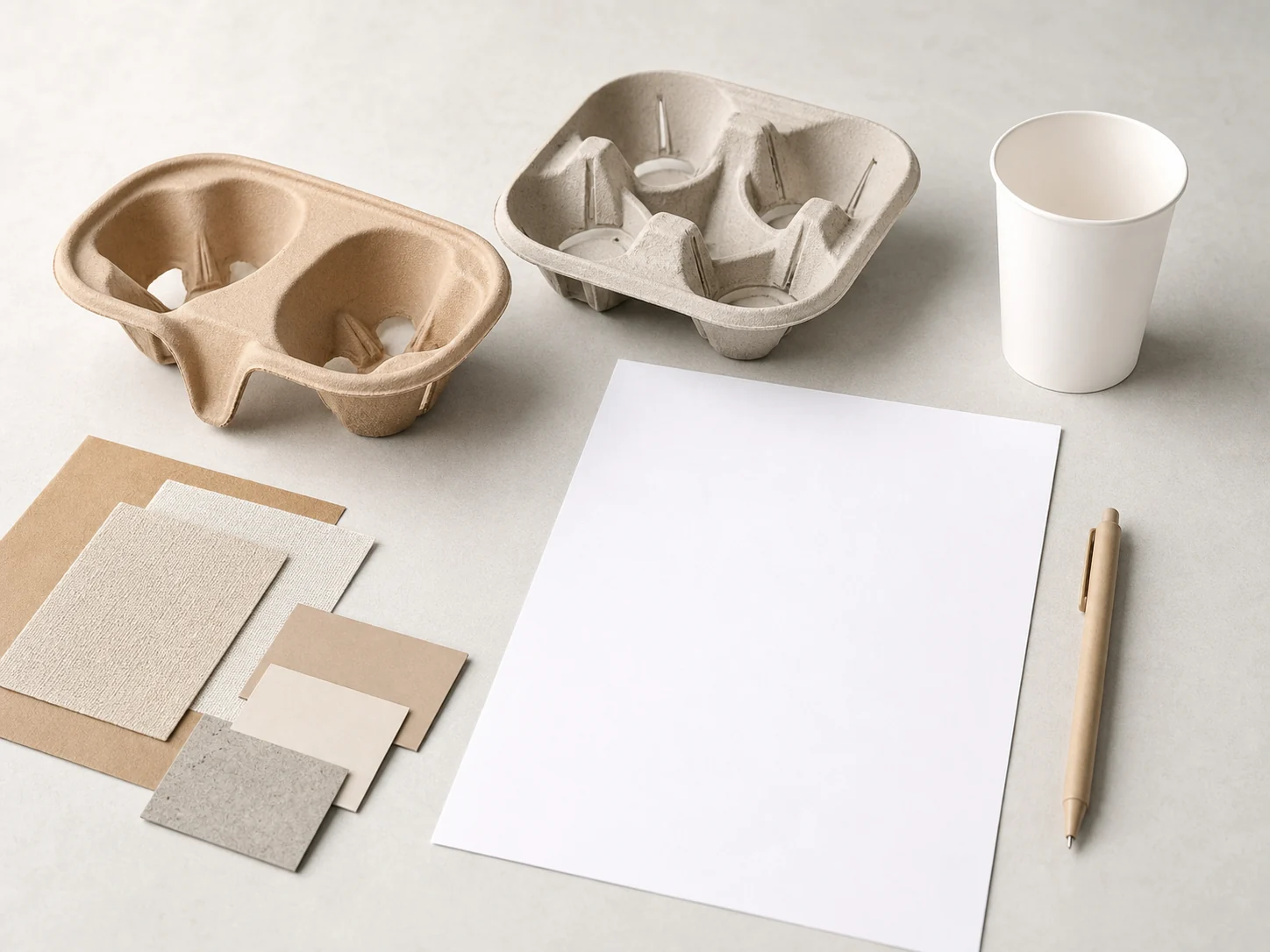
The following checklist consolidates the key verification steps discussed in this guide. It is intended as a working document for buyers and procurement teams, not as a substitute for professional regulatory or food-safety advice.
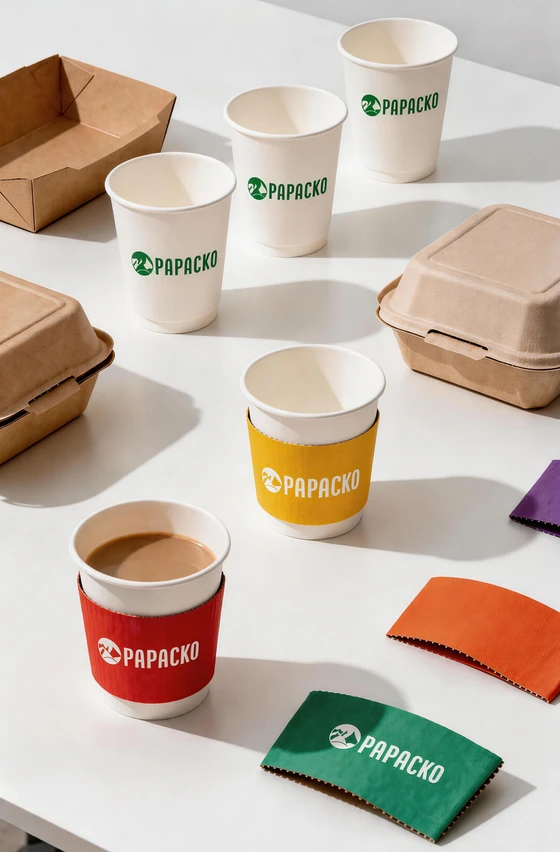
Papacko offers a range of packaging formats relevant to operators building or refining their drink carrier and cup holder supply chain. The paper cup range at paper cup range provides a foundation for evaluating cup-to-carrier compatibility. Food packaging containers at envases para alimentos and the broader disposable food packaging range at gama de envases alimentarios desechables extend the sourcing conversation to the full order assembly.
Operators are encouraged to contact Papacko to discuss their specific service route requirements, request physical samples of relevant formats, and work through the compatibility testing process described in this guide before committing to a production order. The goal of that conversation is not to identify the most popular format but to identify the format that performs correctly under the operator’s specific conditions.
This article is intended to support informed purchasing decisions by providing a structured framework for evaluating drink carriers and cup holders across the dimensions of route fit, format selection, material documentation, and operational validation. It does not constitute regulatory advice, food-safety certification guidance, or a product endorsement.
Specific performance claims—including but not limited to load ratings, dimensional specifications, material suitability for particular applications, and compliance with specific regulatory standards—must be verified directly with the supplier for each product under consideration. Regulatory requirements vary by market and are subject to change; buyers should consult current official sources, including the EU food-contact materials framework referenced in the material documentation section, and seek professional advice where required.
The testing and validation protocols described in this guide represent a general standard of care, not a guaranteed outcome. Operators are responsible for determining whether those protocols are appropriate and sufficient for their specific operational context.

A sealed lid reduces the risk of spillage from the cup itself, but it does not address the behavior of the cup within the carrier during transport. A cup that moves laterally in an oversized aperture, or that tips because the carrier is unbalanced, can still result in a spill when the carrier is set down or when a lid is dislodged by contact with the carrier structure. The carrier’s role is to keep the cup assembly stable throughout the entire journey, not just to hold it upright at the point of preparation.
Multi-size orders are one of the more demanding test scenarios because they create asymmetric loading. Operators should test the carrier with the heaviest realistic combination of drinks in the positions most likely to be used during service, not with a uniform set of identical cups. The test should include the full hand-off sequence—loading, carrying, vehicle transport if applicable, and final delivery—with the actual cups, lids, and carrier format that will be used in production.
At a minimum, operators should request a declaration of compliance covering the base substrate, any coatings or moisture-resistance treatments, inks, and adhesives used in the carrier’s construction. For carriers with plastic components, a polymer-specific declaration should be requested for each component. Operators supplying into EU markets should verify that the documentation addresses the requirements of the EU food-contact materials framework. Documentation should be product-specific, not generic to a material category.
The environmental profile of a material—including its compostability—does not determine its suitability for a specific application. A compostable carrier must be evaluated against the same functional and food-contact criteria as a conventional carrier: aperture fit, structural behavior under load and moisture, and compliance documentation for the specific formulation. Buyers should request documentation specific to the compostable formulation and test the carrier under the actual temperature and moisture conditions of their service environment.
The first step is to review the platform’s own carrier requirements or equipment provisions, since some platforms specify or supply carriers as part of their service. Where the platform allows operator-supplied carriers, the operator should validate compatibility with the platform’s insulated bags and with the handling patterns of platform couriers, who may not be trained on the operator’s specific carrier format. Self-evident usability—the ability of an unfamiliar handler to grip, carry, and set down the carrier correctly without instruction—becomes a more important selection criterion in this context.
The most frequently reported carrier-related issues involve drinks arriving tilted, lids partially dislodged, or carriers that are difficult to carry without the drinks shifting. These issues typically trace back to one of three root causes: a mismatch between cup-base geometry and aperture size, a lid height that conflicts with the carrier’s overhead clearance, or a handle design that does not allow a stable grip during the specific transport conditions of the route. All three can be identified and addressed during the physical testing phase described in this guide—provided that testing is conducted with the exact combination of cup, lid, and carrier under actual service conditions, not with substitute components or in a controlled environment that does not reflect the real route.