¿Está listo para crear sus propios vasos o envases de papel con su marca?
Díganos sus requisitos -tamaño, revestimiento, impresión y destino- y nuestro equipo le preparará un presupuesto detallado en 24 horas.

Choosing the right disposable coffee cups with lids is not just a material question. For B2B buyers, the best option depends on beverage temperature, lid fit, print requirements, storage conditions, compliance, and the waste system at the final point of use. Paper is usually the default for hot coffee service, plastic is often the strongest option for cold beverages, and PLA only makes sense when cold-use conditions and industrial composting are both clearly verified.
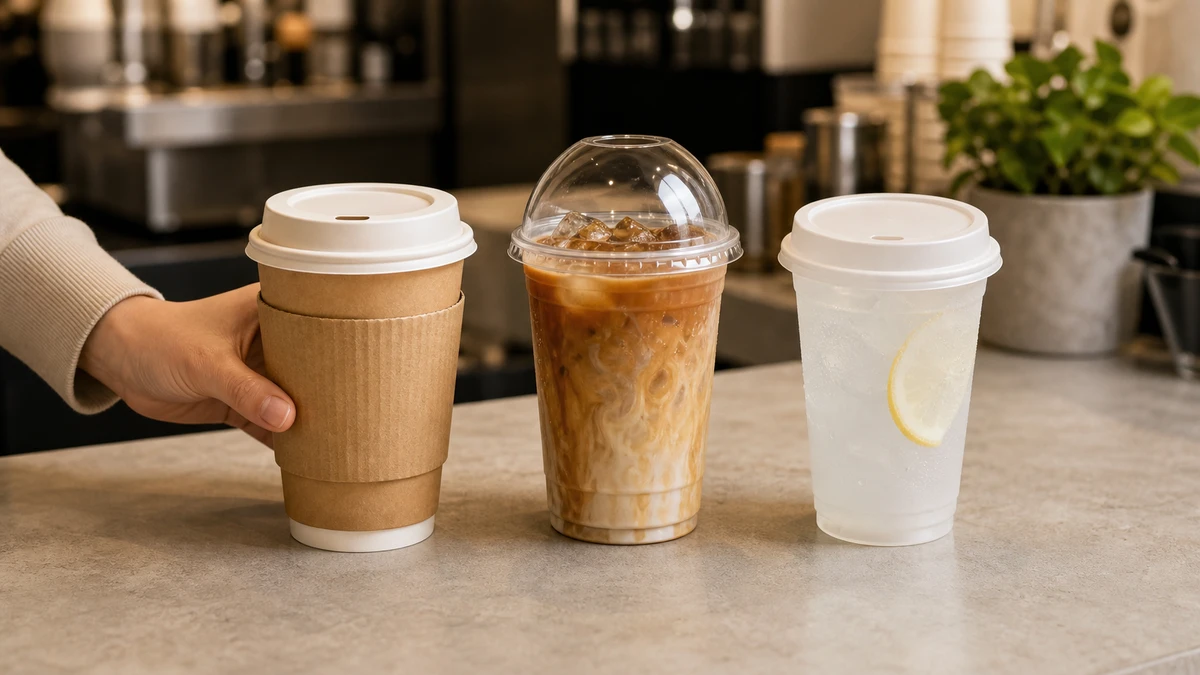
A practical buying decision starts with how the cup will perform in real service. A cup that looks fine on a product sheet can fail when it sits under a heat lamp, travels in delivery, or is paired with a poorly matched lid. That is why material choice should be evaluated together with rim size, coating, wall structure, and the supplier’s documentation.
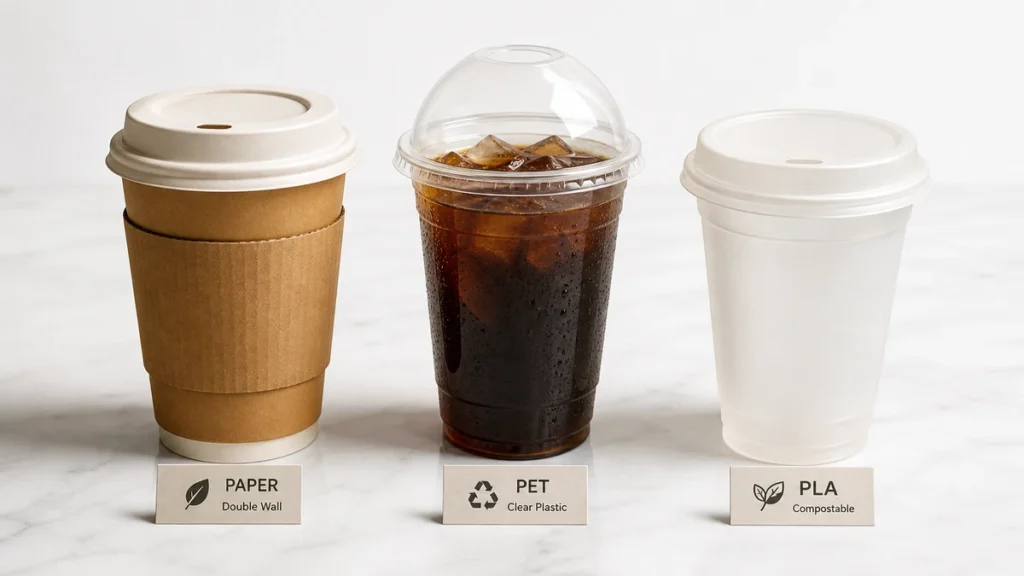
The three main material paths solve different packaging problems.
Paper cups are built from food-grade paperboard with a barrier layer that helps prevent leaks and soak-through. They are widely used for hot drinks because they are easy to print, familiar to consumers, and available in single-wall, double-wall, and ripple-wall formats. They can also be used for some cold drinks, but condensation and long hold times can reduce performance.
Plastic cups are commonly made from PET or PP. PET is valued for clarity in iced coffee, cold brew, and other chilled beverages. PP is less clear but handles higher temperatures better than PET, which is why some operators use PP for mixed beverage programs. Plastic cups usually offer strong structural consistency and reliable lid engagement for cold drinks.
PLA cups are made from a biopolymer and are mainly used for cold beverage service where a compostable specification is required. Standard PLA is heat-sensitive, so it is not a safe default for hot coffee. Buyers should also remember that compostable does not mean suitable for every market. Without industrial composting collection, the claim may not deliver the intended benefit.
For many buyers, the most important difference is not marketing language but operating range. If your menu is hot coffee to go, paper cups with lids are usually the safest fit. If your menu is iced drinks with product visibility, plastic will often be stronger. If your program requires compostable cold cups and the disposal route is documented, PLA may be worth considering.
Cup performance is shaped by several technical details, and most service failures can be traced back to a small number of specification errors.
Hot drinks need materials that maintain shape, reduce heat transfer, and support a stable lid fit. Paper handles this well, especially in double-wall or ripple-wall construction. Standard PLA should generally be excluded from hot coffee programs. For iced drinks, PET and PLA are both common, while PP can serve where extra toughness matters.
Lid leaks are one of the most expensive preventable issues in takeaway beverage service. Fit depends on rim diameter and rim profile, not only on the nominal cup size. A 90 mm lid from one supplier may not fit securely on a 90 mm cup from another supplier. Always test the exact cup and lid pair before confirming a bulk order.
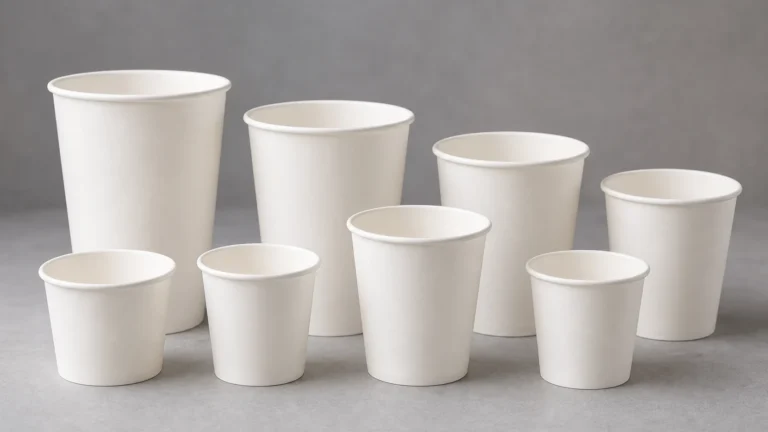
Buyers sourcing across multiple SKUs should also reduce unnecessary variation. Standardizing around fewer rim sizes can simplify procurement, lower picking errors, and improve service consistency. If you need guidance on matching formats, review Papacko’s Tapas para tazas de café y Tamaños de vasos de papel.
Paper cups are not all the same. Important variables include board weight, barrier coating, and wall design. Single-wall cups are cost-effective, but they may need sleeves in hot service. Double-wall and ripple-wall cups improve grip and insulation. For cold applications, the barrier layer must hold up under condensation and longer dwell times.
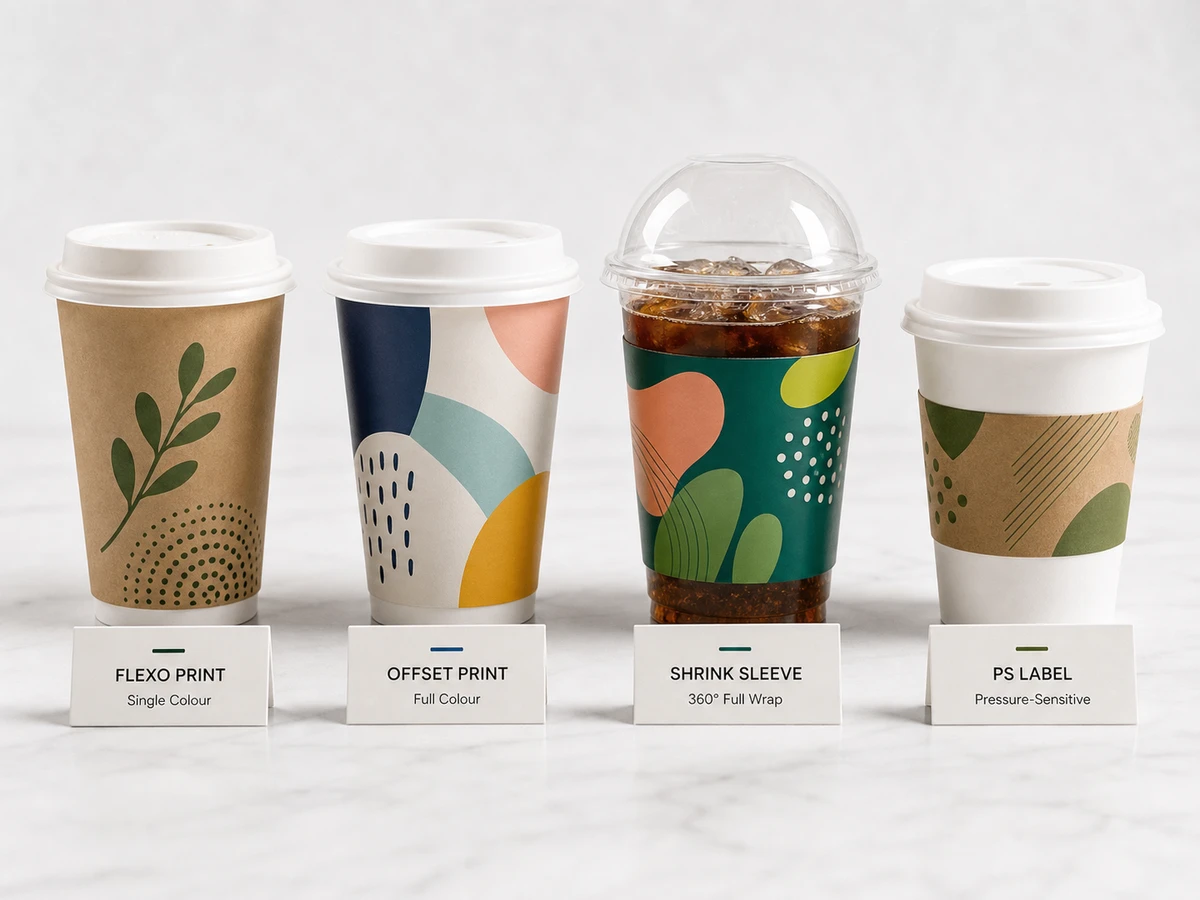
Branding can affect both cost and lead time. Paper cups are commonly printed on flat blanks before forming. Plastic and PLA cups are often branded with labels or sleeves after forming. If your design changes seasonally or by location, your MOQ and print method may need to change too.
Warehouse heat, humidity, and shipping routes matter. PLA is more sensitive to heat than paper or PP. Paper cups also need dry storage to avoid carton damage and board distortion. For export or warm-climate distribution, storage conditions should be confirmed before specification approval.
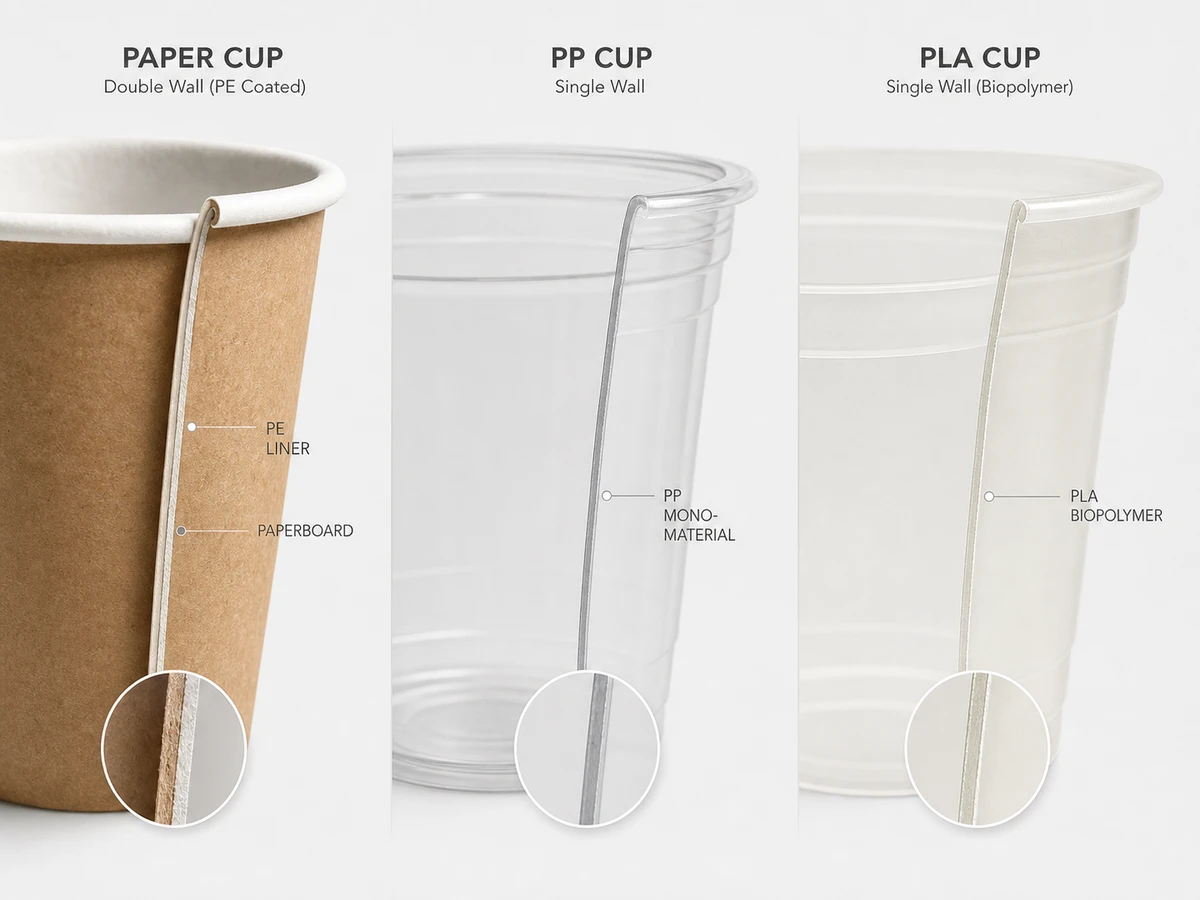
A good sourcing conversation should include exact material and coating details, not generic terms like eco or food safe.
Paper cups typically use food-grade board in a range that may suit small espresso sizes through large takeaway formats. Common constructions include single-wall, double-wall, and ripple-wall. The barrier layer is often PE-based, although different lining systems may be available depending on the market and application.
Paper remains the strongest all-round option for many hot beverage operators because it balances cost, printability, availability, and user familiarity. Buyers comparing formats can start with Papacko’s Vasos de papel.
PET is widely used for clear cold cups. It supports a premium product view and pairs well with dome or flat lids for iced coffee and other chilled drinks. PP is more versatile in temperature handling, though it is less visually clear than PET.
Plastic cup programs are often attractive for cold beverage operations because the cup wall stays stable during condensation-heavy service. The main caution is regulatory and sustainability alignment. A technically strong plastic cup may still be the wrong choice if the destination market has restrictions or if the brand promise requires a different material path.
PLA can be a suitable cold-service choice where buyers need a compostable specification and have a verified collection route. It is not a drop-in replacement for hot coffee cups. Any buyer considering PLA should confirm service temperature, shelf life, storage conditions, and end-of-life handling before approval.
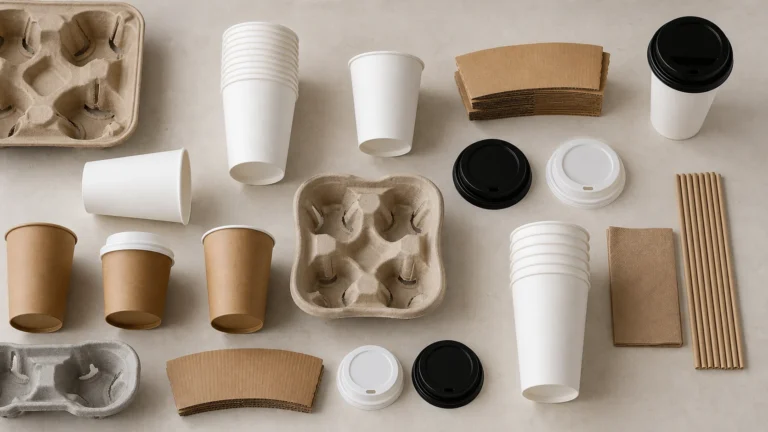
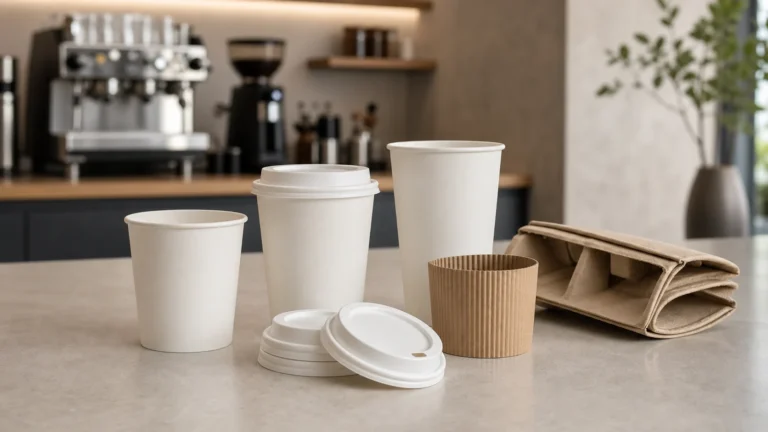
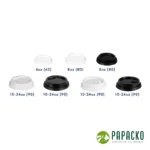
Lids are commonly produced in PP, PET, PLA, or fiber-based formats depending on the cup system. In practical sourcing, PP lids are often chosen for hot beverage paper cups because they provide dependable snap-fit performance. PLA lids are generally used for cold compostable systems. Fiber lids may support a sustainability message, but buyers should still test seal consistency, sip comfort, and leak resistance.
When the program includes additional takeaway formats beyond drinks, it can help to source related items from one packaging partner. Papacko’s Envases para alimentos page is useful for teams standardizing broader foodservice packaging ranges.
Commercial cup buying should not be based on unit price alone. The right supplier will provide the details needed for repeatable, low-risk purchasing.
MOQ depends on cup type, print method, and whether the product is plain stock or custom branded. Plain stock items may be available in relatively low quantities. Custom paper cups printed by flexo usually require higher MOQs. Digital or label-based branding can reduce MOQ for trials or seasonal runs, but the unit cost will usually be higher.
For many B2B programs, a realistic planning range is:
– Plain stock cups and lids: lower MOQ, often suitable for smaller launches or distributors testing demand.
– Custom printed paper cups: medium to high MOQ, usually better for stable recurring volume.
– Sleeved or labeled plastic and PLA cups: moderate MOQ, useful when artwork flexibility matters.
The exact MOQ should always be confirmed by SKU, size, print method, and carton configuration.
Lead time can vary by stock availability, print complexity, material, and shipping mode. Plain stock can move faster if inventory is already held. Custom cups usually require artwork approval, production scheduling, and transit time. Buyers should ask for separate timelines for sample production, mass production, and delivery.
A useful procurement question is whether the supplier’s lead time changes significantly by season. Beverage packaging often experiences peak demand periods, and planning too late can force substitutions.
Catalog samples are not enough for a live rollout. Request production-representative samples or batch samples where possible. Your team should test:
– Lid engagement and removal force
– Leak resistance under real fill conditions
– Cup performance during holding and transport
– Stackability and dispenser compatibility
– Print appearance on the final surface finish
These checks matter more than a small price difference. A cup that leaks or collapses in service costs more than it saves.
Before approving disposable coffee cups with lids, ask for:
– Ficha técnica de materiales
– Board weight or resin information
– Coating or liner details
– Food-contact compliance documents for the destination market
– Declaration of Conformity where applicable
– Test information relevant to intended use
– Carton pack details and pallet loading data
In the United States, food-contact material oversight is tied to FDA frameworks. Buyers can reference the FDA overview of sustancias en contacto con los alimentos when verifying supplier support. A strong supplier should not rely on vague claims. Documentation should match the actual product and market.
Sustainability claims should be tested against the real disposal route, not just the label on the carton.
Paper cups may be preferred for hot drinks and branding, but recyclability depends on local infrastructure and the specific cup construction. A lined paper cup is not automatically accepted in standard paper streams everywhere. Buyers evaluating recovery options can review Papacko’s Paper cup recycling.
Plastic cups can appear less favorable in marketing language, yet they may perform well in places where collection systems are established and contamination is low. PLA can support a compostable program, but only when the venue or municipality actually captures and processes compostable packaging.
For compliance, the key rule is simple. The product must be appropriate for the destination market and the intended use conditions. That means:
– Hot-fill suitability should be confirmed, not assumed.
– Cold-use compostable claims should be supported by actual system compatibility.
– Documents should be product-specific and current.
– Any lid used in the final set should also align with the intended claim.
For many commercial buyers, the safest path is to specify performance first, then confirm the strongest supportable sustainability claim.
A straightforward selection framework can help avoid overbuying or choosing the wrong material family.
If your main business is hot takeaway coffee, start with paper cups and tested PP lids. Choose wall structure based on heat retention, user comfort, and whether you want to avoid sleeves.
If your business focuses on iced coffee, cold brew, frappes, or chilled drinks with strong visual presentation, PET or PP cups with matching cold lids are often the most operationally dependable choice.
If your contract, venue, or brand guidelines require compostable serviceware, evaluate PLA only after confirming three things: cold-use suitability, storage control, and industrial composting access.
For distributors and multi-site operators, simplification is often more valuable than chasing every possible material option. Fewer lid families, fewer rim sizes, and better-documented SKUs can reduce service errors and inventory complexity. In most cases, the best commercial result comes from a small, well-tested range rather than a broad assortment with uncertain compatibility.
A good final supplier checklist includes:
– Exact cup size and rim diameter
– Material and coating confirmation
– Lid compatibility test results
– MOQ by SKU and print method
– Lead time by order type
– Sample approval process
– Compliance documents for the destination market
– Storage recommendations
– Carton and pallet data
When those points are clear, buying disposable coffee cups with lids becomes a controlled packaging decision rather than a trial-and-error purchase.
Paper is usually the safest default for hot drinks because it balances heat handling, branding, and cost. Double-wall and ripple-wall paper cups are especially practical for takeaway coffee. Standard PLA is generally not suitable for hot coffee.
PET and PP are usually the strongest options for iced coffee and other cold beverages. PLA can also work for cold drinks, but only when storage and disposal conditions are appropriate.
Sometimes, but fit depends more on rim diameter and rim profile than on cup material. Always test the exact cup and lid combination before placing a bulk order.
Some are, but acceptance depends on the cup’s lining and the local recycling system. Buyers should not assume that every paper cup is accepted in standard paper recycling streams.
PLA can be compostable under industrial composting conditions, but only if the collection and processing system accepts it. Without that infrastructure, the compostable claim has limited practical value.
Check lid fit, cup construction, coating or resin type, MOQ, lead time, sample approval, storage requirements, and supplier compliance documents. These details have more impact on service performance than a small unit price change.