¿Está listo para crear sus propios vasos o envases de papel con su marca?
Díganos sus requisitos -tamaño, revestimiento, impresión y destino- y nuestro equipo le preparará un presupuesto detallado en 24 horas.

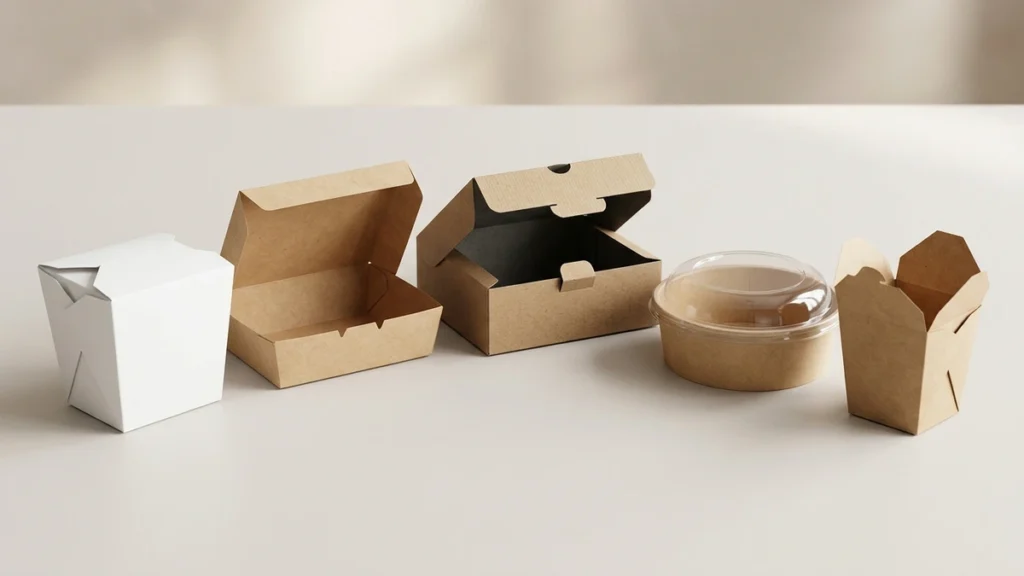
Las cajas de papel para alimentos son envases fabricados con cartón o papel kraft, diseñados para proteger los alimentos durante el envasado, la entrega, el transporte y el consumo. Para los compradores B2B, la especificación adecuada rara vez se reduce únicamente a la apariencia. Depende de la temperatura de los alimentos, el nivel de humedad y grasa, el tiempo de conservación, la fiabilidad del cierre y el rendimiento de la caja en condiciones reales de uso. Un plato de arroz caliente, una ensalada fría y un plato principal a domicilio pueden parecer similares en el estante, pero plantean exigencias muy diferentes al envase.
Elegir las cajas de papel para comida inadecuadas puede provocar que el fondo se ablande, que la tapa no se mantenga bien cerrada, que se produzcan fugas, que la comida se empape, que se desperdicie stock y que se generen costes de devolución que se podrían evitar. Para elegir las adecuadas, hay que dar prioridad a la funcionalidad: el sustrato, el recubrimiento, la estructura y el cierre deben adaptarse al plato y al plazo de entrega antes de definir la imagen de marca.
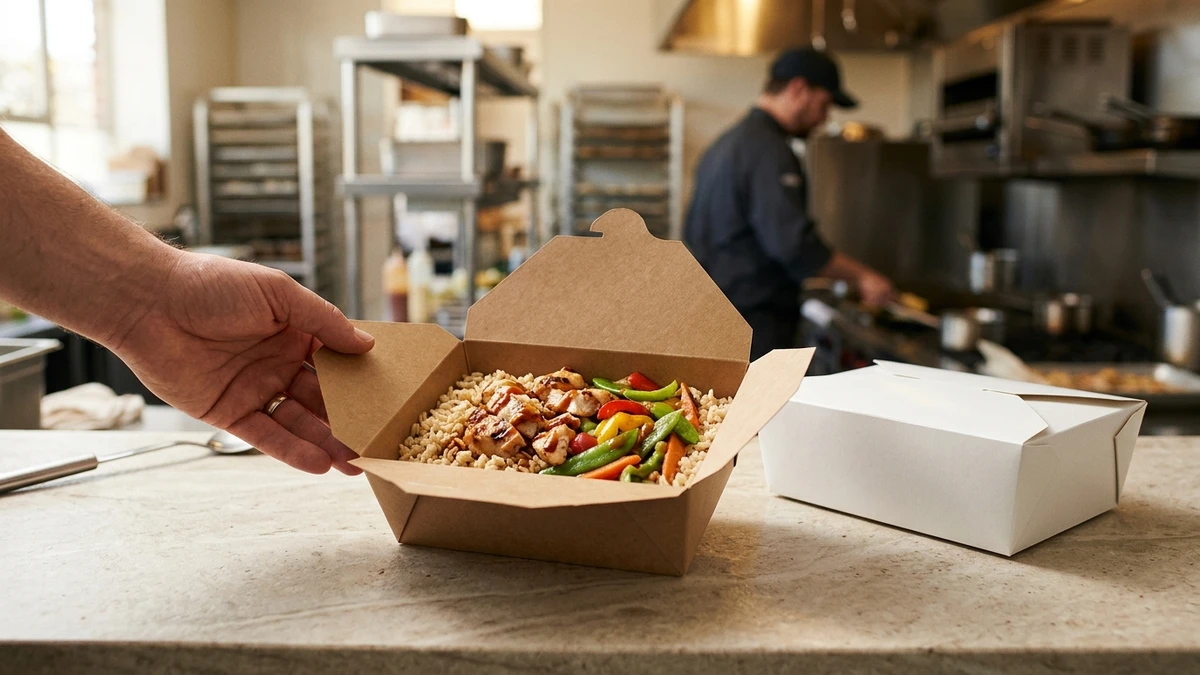
La forma más práctica de elegir cajas de papel para alimentos es partir del uso que se les vaya a dar. Los compradores deben definir qué funciones debe cumplir la caja a lo largo de todo el ciclo de vida útil, y no solo en el momento del llenado.
En el caso de las comidas calientes, la caja debe resistir el vapor, la condensación y el ablandamiento del fondo, sin dejar de ser fácil de cerrar en una línea de producción con mucho volumen de trabajo. En el caso de las ensaladas, la presentación y el espacio libre suelen ser más importantes que la retención del calor. Para el reparto a domicilio, la seguridad de la tapa y la estabilidad al apilarse se vuelven fundamentales, ya que el transporte conlleva vibraciones, presión y tiempo.
Entre los factores clave para la toma de decisiones se incluyen:
En muchas operaciones, las cajas de papel para comidas calientes requieren una barrera más resistente y una estructura de base más sólida que las cajas utilizadas para alimentos fríos o a temperatura ambiente. Las ensaladas suelen beneficiarse de una presentación más limpia, aberturas más amplias y tapas abovedadas o de gran altura. Las comidas a domicilio suelen necesitar un cierre más seguro que las para llevar en el propio local, ya que los pequeños fallos en la tapa se convierten rápidamente en quejas de los clientes.
A la hora de estandarizar una gama más amplia de productos para llevar, resulta útil comparar las cajas con otras similares envases para alimentos De este modo, el sistema de paquetes completos funciona de forma integrada en todas las categorías del menú.
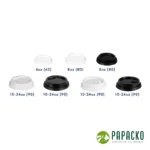
Para los compradores que también estén valorando el servicio de bebidas, otros artículos relacionados, como tapas para tazas de café deberían comprobarse siguiendo la misma lógica que se aplica a la documentación relativa al almacenamiento, al embalaje y al proveedor.
Una caja de cartón para alimentos funciona como un sistema. La calidad del cartón por sí sola no determina el éxito. El sustrato, el recubrimiento de barrera y el diseño estructural interactúan entre sí.
El SBS ofrece una superficie blanca y lisa, así como una mejor calidad de impresión. Se utiliza a menudo para ensaladas, productos de panadería y aplicaciones destinadas al público, en las que la presentación es importante. No obstante, sigue siendo necesario utilizar una barrera adecuada para alimentos húmedos, grasientos o calientes.
El papel kraft y el papel kraft recubierto de arcilla son muy habituales para comida para llevar y a domicilio. Aportan un aspecto más natural y se utilizan mucho para comidas calientes, ya que ofrecen un buen equilibrio entre resistencia, coste y funcionalidad.
El cartón reciclado puede contribuir a los objetivos de sostenibilidad, pero los compradores no deben dar por sentado que se comporta exactamente igual que el cartón de fibra virgen. La uniformidad de la resistencia y la adherencia del recubrimiento pueden variar, lo que cobra mayor importancia en las cajas de comida sometidas a carga.
Las cajas de papel recubiertas de polietileno se utilizan ampliamente en aquellos casos en los que es importante que sean resistentes a los líquidos y a la grasa. Por lo general, dan buenos resultados con comidas calientes, húmedas o con mucha salsa, pero su reciclabilidad depende de los sistemas locales de recogida y tratamiento de residuos.
Las barreras acuosas pueden funcionar bien, pero su rendimiento varía en función de la formulación. Los compradores deberían solicitar datos específicos para cada aplicación, en lugar de basarse en afirmaciones genéricas.
Los envases recubiertos de PLA suelen ser más adecuados para alimentos fríos o ligeramente templados que para comidas que se envasan en caliente. El calor durante el almacenamiento o la entrega puede reducir la estabilidad del envase.
Los tratamientos resistentes a la grasa ayudan a frenar la migración del aceite, pero no son lo mismo que las barreras líquidas completas. Si es importante que el producto no contenga PFAS, solicita una confirmación por escrito para la referencia concreta.
Para conocer los fundamentos normativos sobre el contacto con los alimentos, la guía general de la FDA sobre sustancias en contacto con los alimentos constituye una referencia útil: Resumen de la FDA sobre sustancias en contacto con alimentos.
Las cajas con tapa encajable son habituales y económicas, sobre todo cuando se da prioridad al envío en paquete plano y al montaje sencillo. Suelen ser más adecuadas para tiempos de almacenamiento cortos y aplicaciones en las que no se requiere una gran resistencia.
Los fondos con cierre automático mejoran la resistencia de la base y suelen ser la opción más segura para platos principales más pesados, platos a base de arroz, pasta y platos proteicos. El coste unitario adicional puede justificarse si reduce los fallos durante el servicio.
Los cierres a presión y con enclavamiento positivo mejoran la sujeción de la tapa. Merece la pena tenerlos en cuenta para programas de reparto en los que el movimiento dentro de las bolsas o durante la manipulación por parte de los mensajeros forma parte del proceso habitual.
Las estructuras de doble pared o más robustas pueden contribuir a mejorar el aislamiento y la resistencia a la compresión, sobre todo en plazos de entrega más largos.
En la práctica, muchas quejas sobre las cajas de cartón para alimentos se deben a la parte superior, no a la inferior. Una tapa débil o mal ajustada puede comprometer una estructura que, por lo demás, sería buena.
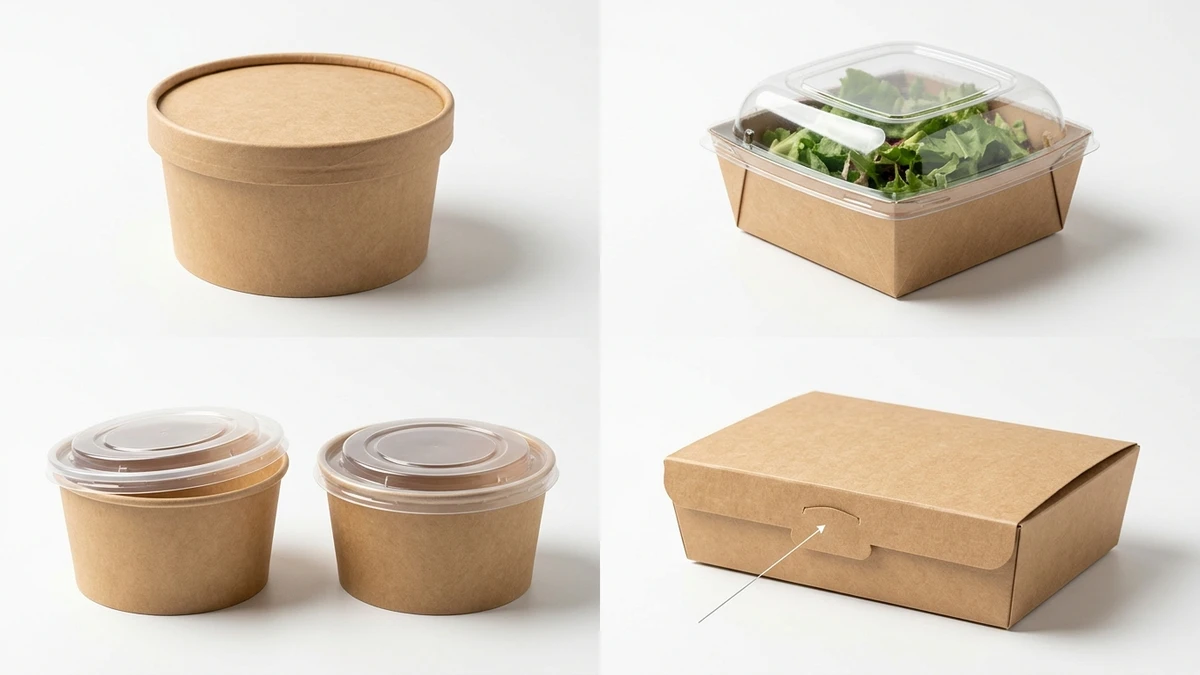
Las tapas planas suelen ser más adecuadas para alimentos densos y de perfil bajo, como los platos de arroz, los currys, la pasta y las comidas calientes compactas. Se apilan de forma eficiente y aprovechan bien el espacio de la bolsa, pero ofrecen un espacio libre vertical limitado.
Las tapas abovedadas ofrecen más espacio libre para ensaladas de hojas verdes, guarniciones, platos en capas y productos en los que no conviene que los alimentos queden comprimidos. La contrapartida es una menor eficiencia en el apilamiento y, en ocasiones, una mayor condensación en los alimentos calientes.
Los cierres tipo «tuck» son adecuados para plazos de entrega cortos y artículos más ligeros. No son la mejor opción para la entrega si el contenido es pesado o está a punto de llegar al borde.
Las tapas de encaje a presión suelen ofrecer un ajuste más uniforme, pero los compradores deberían comprobar la fiabilidad con la que el personal es capaz de colocarlas a gran velocidad. Una tapa que funciona bien en una sala de pruebas puede no colocarse correctamente en una línea de producción con mucho ajetreo.
Los diseños con lengüeta de bloqueo ofrecen una mayor sujeción y resultan útiles en aquellos casos en los que las fugas o la apertura durante el transporte podrían suponer un coste elevado. Aunque pueden tardar un poco más en cerrarse, esa compensación puede merecer la pena a la hora de la entrega.
Los alimentos recién fritos u asados pueden necesitar ventilación para que salga el vapor y se conserve su textura. Si se cierran demasiado, los alimentos crujientes pueden ablandarse rápidamente.
Para ensaladas, platos fríos o platos en los que se puede producir fugas, suele ser más seguro utilizar una tapa que cierre mejor. La elección debe hacerse producto por producto, en lugar de aplicar una misma lógica de tapa a todos los platos del menú.
Si las tapas se adquieren por separado, se debe garantizar su compatibilidad con la gama más amplia de accesorios de envasado. Las variaciones dimensionales entre proveedores pueden provocar problemas de estanqueidad, incluso cuando las piezas parecen similares.
El éxito comercial de las cajas de papel para alimentos no depende únicamente de la muestra en sí. Los compradores deben confirmar con antelación los detalles relativos a la compra, la gestión operativa y la documentación para evitar retrasos o desajustes en el suministro.
La cantidad mínima de pedido varía en función del tamaño, el método de impresión, la estructura y de si el artículo es de stock o personalizado. Los artículos de stock pueden estar disponibles en cantidades por caja más reducidas, mientras que las cajas con impresión personalizada suelen requerir cantidades mínimas de pedido más elevadas.
Antes de solicitar presupuestos, define:
La impresión personalizada puede ser una buena opción cuando el volumen es estable, pero los operadores con un volumen menor quizá prefieran utilizar cajas de papel para alimentos en stock con etiquetas hasta que la demanda sea predecible.
Se debe comprobar el plazo de entrega tanto para el primer pedido como para los pedidos posteriores. El plazo de entrega inicial puede incluir la elaboración de muestras, la aprobación de los diseños gráficos, la fabricación de utillaje y la revisión de la documentación. Los pedidos posteriores pueden ser más rápidos, pero solo si el proveedor dispone de las especificaciones y los materiales aprobados.
Los compradores deberían preguntarse:
Una primera oferta baja resulta menos atractiva si el suministro recurrente deja de ser fiable durante los meses de mayor demanda.
Las muestras deben someterse a ensayo con alimentos reales, pesos de llenado reales y condiciones de funcionamiento reales. Una revisión práctica de las muestras debe incluir:
Como mínimo, solicita:
Estos documentos deben archivarse por artículo, no solo por proveedor. Si cambia una placa, un recubrimiento o una impresora, puede que sea necesario actualizar el expediente de conformidad.
La imagen de marca es importante, pero debe estar supeditada al rendimiento. Por lo general, resulta más eficaz fijar primero la estructura y la barrera y, después, ultimar los elementos gráficos.
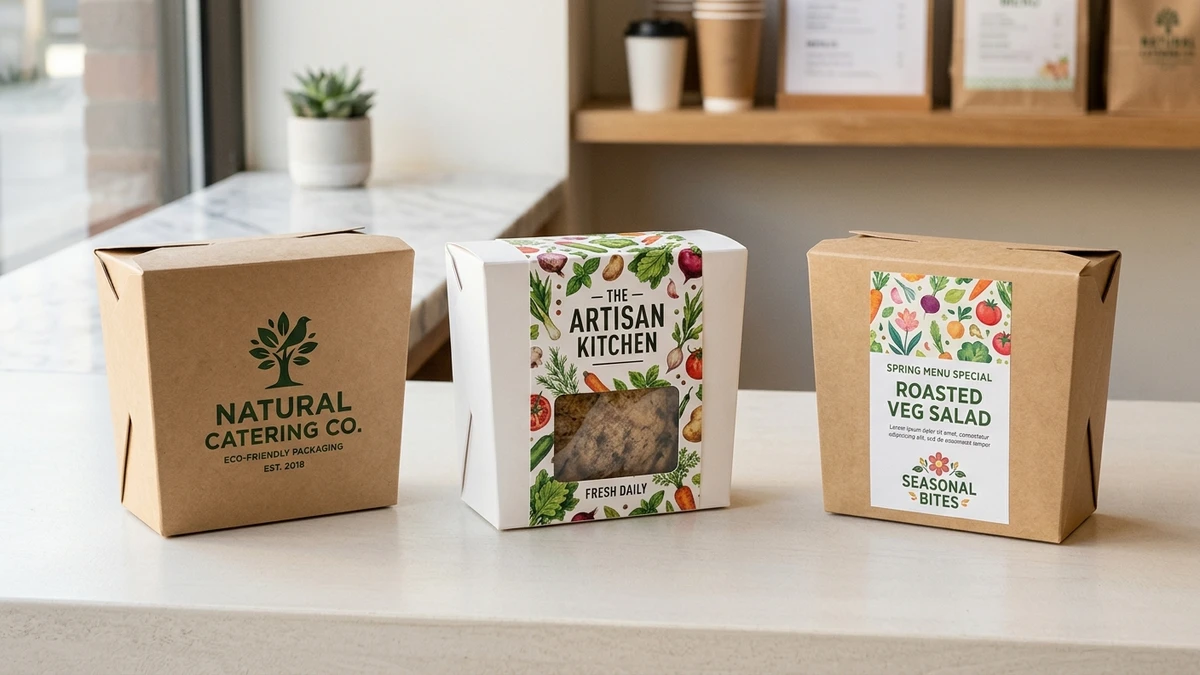
La impresión flexográfica es habitual para tiradas de gran volumen y ofrece buenos resultados en muchos formatos de papel kraft y SBS. La impresión offset es más adecuada cuando se requiere una calidad de impresión superior. La impresión digital o la aplicación de etiquetas pueden ser más adecuadas para cantidades mínimas de pedido (MOQ) más reducidas, lanzamientos de temporada o pruebas regionales.
Para muchos compradores del sector de la restauración, la verdadera cuestión no es si es posible la impresión personalizada, sino si está justificada desde el punto de vista comercial. Si la demanda es incierta, las cajas estándar con etiquetas pueden reducir el riesgo de exceso de existencias. Si el volumen es estable y la caja está a la vista del cliente, la impresión personalizada puede contribuir a una mayor coherencia de la marca.
Los compradores también deben mantener bajo control el número de referencias (SKU). Tener en stock demasiadas cajas de papel para alimentos similares aumenta la presión sobre el espacio de almacenamiento, la complejidad de los pedidos y los errores de preparación. A menudo, es mejor contar con un conjunto más reducido de tamaños básicos que añadir muchos tamaños casi idénticos.
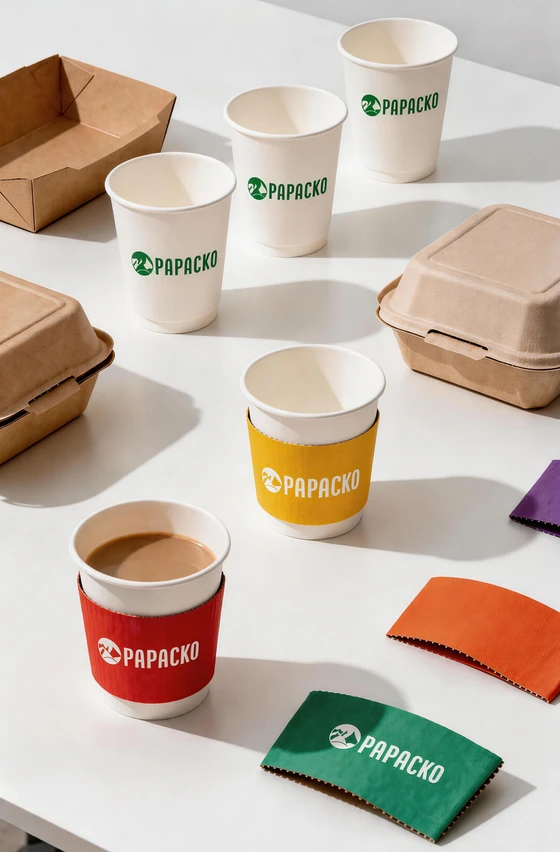
Esto resulta especialmente útil a la hora de coordinar las cajas con embalajes adyacentes, como vasos de papel o formatos de comida para llevar de marca, como bolsas de papel con impresión personalizada.
Incluso las mejores cajas de papel para alimentos pueden resultar poco eficaces si no se adaptan al tipo de actividad.
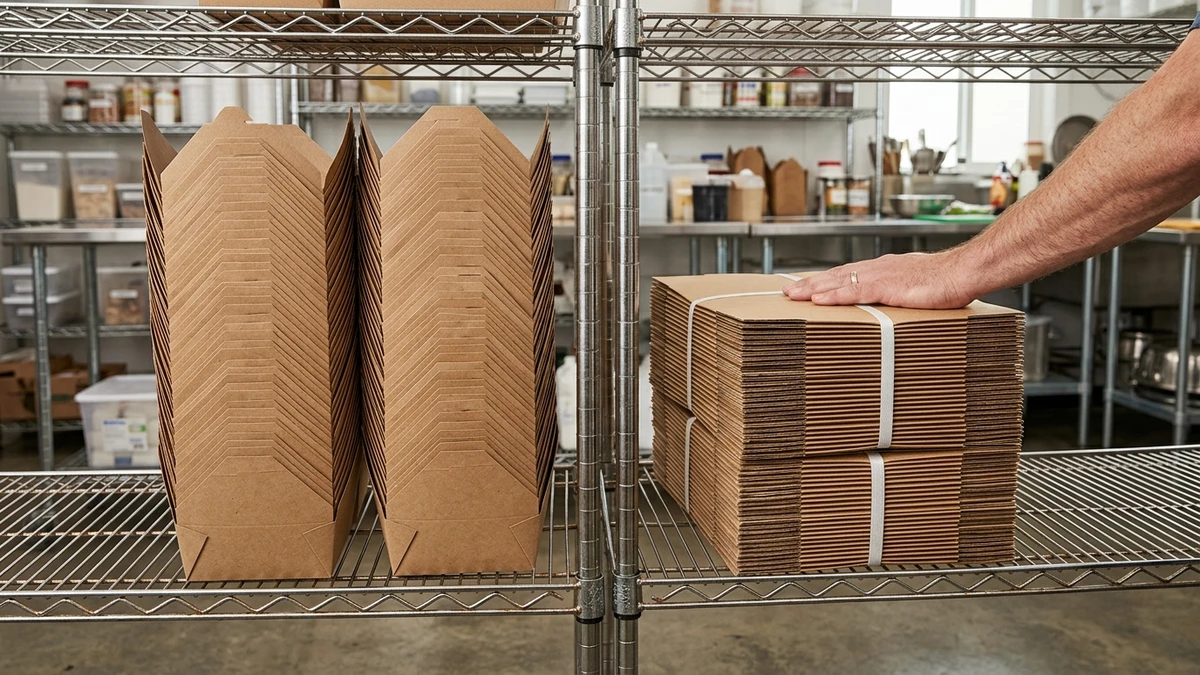
Las cajas desmontadas ahorran espacio de almacenamiento y, a menudo, reducen el volumen de carga, pero aumentan el tiempo de montaje. Los formatos premontados o anidados ahorran mano de obra en la estación de embalaje, pero suelen requerir más espacio en las estanterías. En las zonas de servicio de tamaño reducido, esa compensación es importante.
La humedad es otro factor que suele pasarse por alto. Las cajas almacenadas cerca de fuentes de vapor, zonas de lavado o áreas de preparación húmedas pueden perder rigidez y la fiabilidad de sus lengüetas incluso antes de ser llenadas. Las condiciones de almacenamiento deben tenerse en cuenta en la evaluación, especialmente en el caso de los formatos de papel kraft utilizados en aplicaciones de comida caliente.
En el momento de la entrega, los compradores deben probar el sistema completo, no solo la caja por separado. Algunas preguntas que deben plantearse son:
Si la respuesta a alguna de estas preguntas no está clara, significa que la especificación aún no está terminada.
Un proceso de compra práctico consiste en preseleccionar dos o tres propuestas realistas, probarlas en condiciones reales de servicio, comparar el coste total de suministro y, a continuación, estandarizar la opción ganadora en la medida en que lo permita la carta. Este enfoque suele dar mejores resultados que elegir únicamente a partir de las fotos del catálogo.
Por lo general, las cajas de papel kraft recubierto o de SBS con base de cierre automático y una sujeción más firme de la tapa son las que mejor resultado ofrecen. Para trayectos más largos, puede merecer la pena asumir el coste adicional que supone utilizar cartón más grueso o una estructura de doble pared.
A menudo no se incluyen en los flujos habituales de reciclaje de papel. Su aceptación depende de la capacidad local de recogida y tratamiento, por lo que los compradores deben informarse a nivel local antes de realizar declaraciones sobre su eliminación.
Puede funcionar con alimentos fríos o ligeramente templados, pero, por lo general, no es adecuado para platos que se sirven realmente calientes. El calor durante el almacenamiento o el transporte puede ablandar el recubrimiento y reducir su estabilidad.
Elige tapas con orificios de ventilación cuando la salida de vapor ayude a conservar la textura, sobre todo en el caso de alimentos fritos u asados. Para ensaladas o platos en los que se producen fugas, una tapa hermética suele ser la opción más segura.
Solicita una declaración de conformidad para el producto acabado, la información sobre el recubrimiento y cualquier certificado relevante sobre el origen o la compostabilidad relacionado con la referencia concreta. Si las declaraciones de «sin PFAS» o «compostable» son importantes, pídelas por escrito.
A menudo no, si la demanda sigue siendo incierta. Para tiradas más pequeñas, la impresión digital o una caja de stock con etiquetas pegadas pueden ser una opción más práctica hasta que el volumen se estabilice.