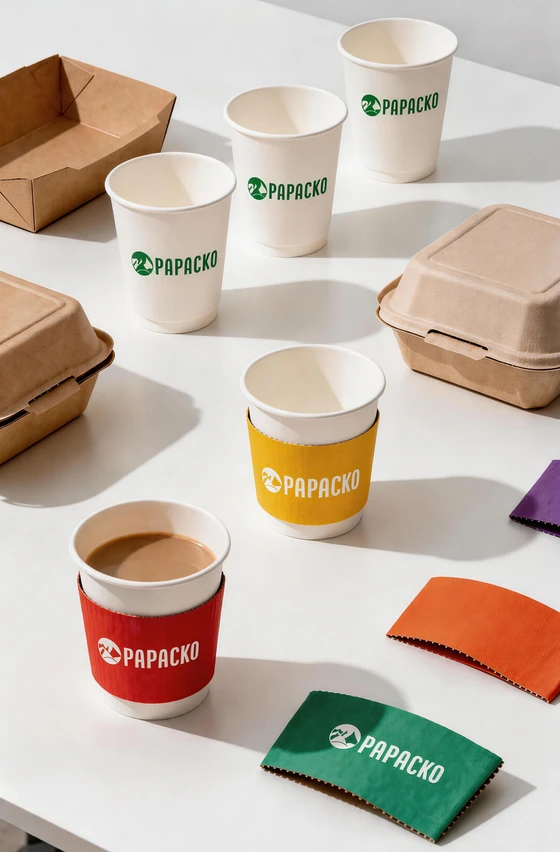
هل أنت مستعد لإنشاء أكواب ورقية أو عبوات ورقية تحمل علامتك التجارية الخاصة بك؟
أخبرنا بمتطلباتك - الحجم والطلاء والطباعة والوجهة - وسيقوم فريقنا بإعداد عرض أسعار مفصل في غضون 24 ساعة.

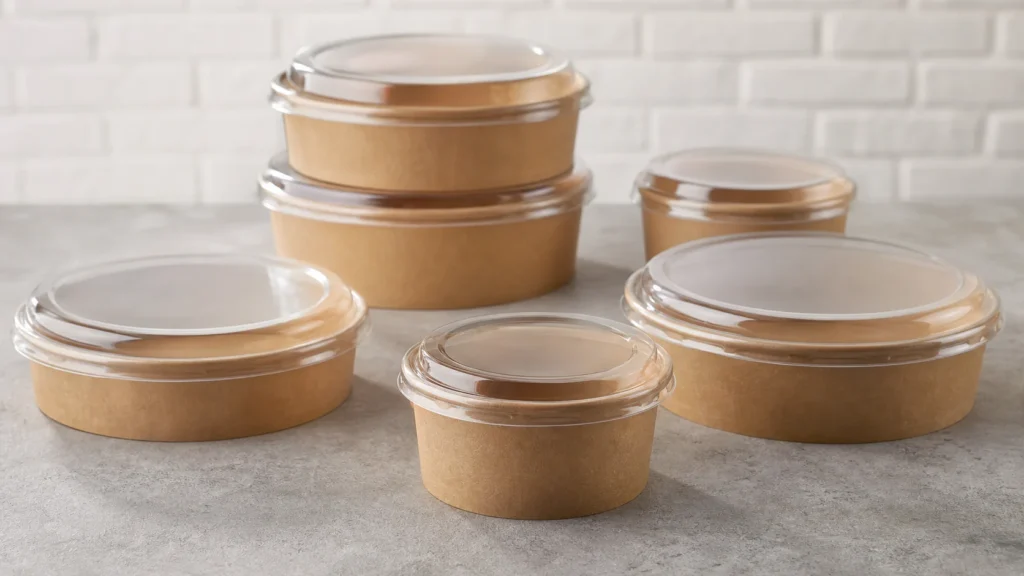
Salads sit at the intersection of several packaging challenges that rarely appear together in a single product category: high moisture content, delicate leaf structures, dense protein toppings, liquid dressings, and a consumer expectation of visual freshness at the moment of opening. Getting the packaging right means thinking simultaneously about structural integrity, condensation behavior, ingredient separation, cold-chain compatibility, and the regulatory framework that governs every material touching food. This guide walks buyers, menu developers, and operations managers through each of those dimensions in sequence.
Before selecting a single container or lid, map every salad format on your menu against every service route it travels. These two variables together define the mechanical and thermal demands your packaging must meet — and they vary more than most buyers initially expect.
Menu format considerations include whether the salad is served dry (greens only, dressing on the side), pre-dressed (tossed and sealed), layered (grain base, protein, greens stacked for visual effect), or component-separated (multiple compartments keeping hot and cold ingredients apart). Each format generates different internal humidity, different weight distribution, and different stacking behavior during transit.
Service-route considerations include dine-in plating (where packaging is largely cosmetic), grab-and-go retail (where the container must function as its own display unit under refrigerated lighting), third-party delivery (where the container endures a bag, a vehicle, and a handoff), and catering bulk transport (where dozens of units stack and shift together). A container that performs well in one route may fail visibly in another.
Map these combinations in a simple grid before approaching any supplier. A grain bowl with warm roasted vegetables traveling via third-party delivery has almost nothing in common with a chilled Caesar in a grab-and-go cooler, even if both are called “salads” on your menu.
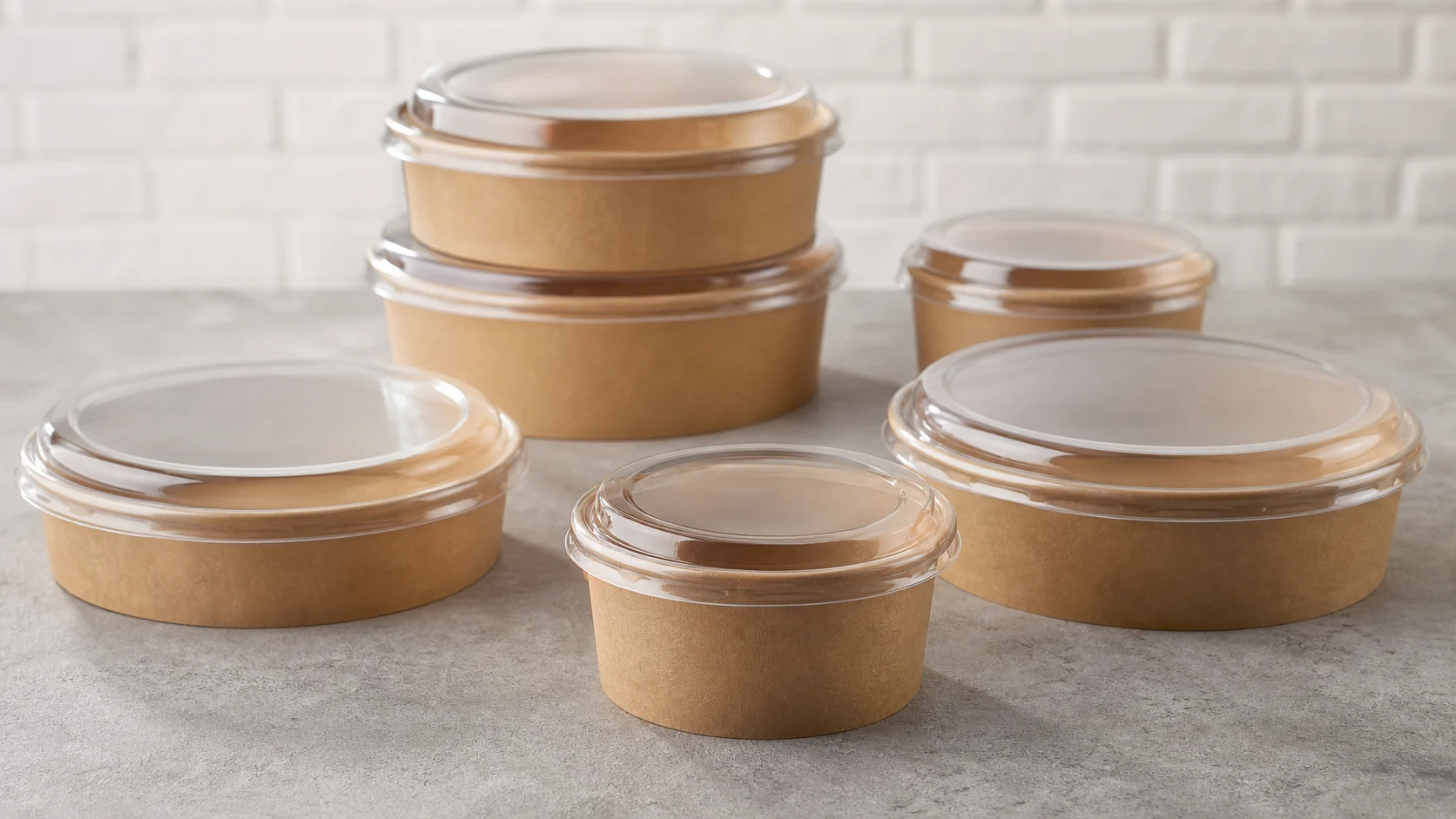
The salad packaging market organizes itself into several broad container families, each with distinct structural logic. Understanding the families prevents the common mistake of selecting a container by appearance rather than by engineering intent.
صدفات are hinged single-piece units that close on themselves. They are common in grab-and-go retail because the hinge eliminates a separate lid SKU and speeds line assembly. Their weakness is that the hinge creates a potential stress point under stacking load, and the closure seal depends entirely on the snap geometry holding under vibration.
Base-and-lid systems separate the container body from its closure, allowing each to be optimized independently. The base can be deep and rigid for heavy grain bowls; the lid can be domed to accommodate tall ingredient stacks without compressing them. This family is the most flexible for menu variety but requires managing two SKUs per format.
Compartmented trays divide the interior into two or more sections, keeping ingredients physically separated until the consumer combines them. They are particularly relevant for salads where a hot protein sits alongside cold greens, or where dressing must remain isolated.
Bowls with flat or domed lids are common for tossed salads and noodle-based preparations. The bowl geometry distributes weight evenly and resists the tipping that flat-bottomed rectangular containers can experience during delivery.
Sleeve-and-wrap formats are less common for salads but appear in some fast-casual contexts where a paper sleeve around a clear container provides branding surface without obscuring the product.
Explore the full range of structural options across these families at Papacko’s food packaging containers before narrowing your selection.
The lid is not an accessory — it is a structural component of the packaging system. A lid that fits poorly creates more operational problems than almost any other single packaging failure: leaking dressing, compressed greens, condensation pooling on the interior surface, and consumer-facing presentation damage.
Fit geometry refers to how the lid seats onto the container rim. Snap-fit lids engage a bead or channel on the container rim; the engagement depth and the flexibility of the lid skirt together determine how securely the lid holds under lateral force. Friction-fit lids rely on dimensional tolerance between the lid inner diameter and the container outer rim. Both approaches can work well, but both require that the lid and container come from a matched system — not from two different suppliers whose nominal dimensions happen to be close.
Dome height matters for salads specifically because leafy greens and tall ingredient stacks need vertical clearance. A flat lid pressed against the top of a salad will bruise leaves, compress croutons, and create a visual impression of a product that has been handled roughly. Measure your tallest assembled salad before specifying dome height, and add margin for the natural variation that occurs during line assembly.
Anti-fog treatment on clear lids affects how the product looks in a refrigerated display case. Condensation on the interior of a clear lid obscures the salad and signals to consumers that the product may be old or improperly handled, even when neither is true. Anti-fog coatings or surface treatments can reduce this effect, but their performance varies by material and by the specific humidity conditions inside your container. Test under your actual refrigeration conditions.
Tamper-evident features — perforated tear strips, adhesive seals, or shrink bands — add a layer of consumer confidence for retail and delivery contexts. They also add assembly time and cost, so evaluate whether your service route genuinely requires them.
For a broad view of lid formats compatible with salad containers, see Papacko’s paper cup lids and closure options as a reference point for closure engineering principles that translate across container types.
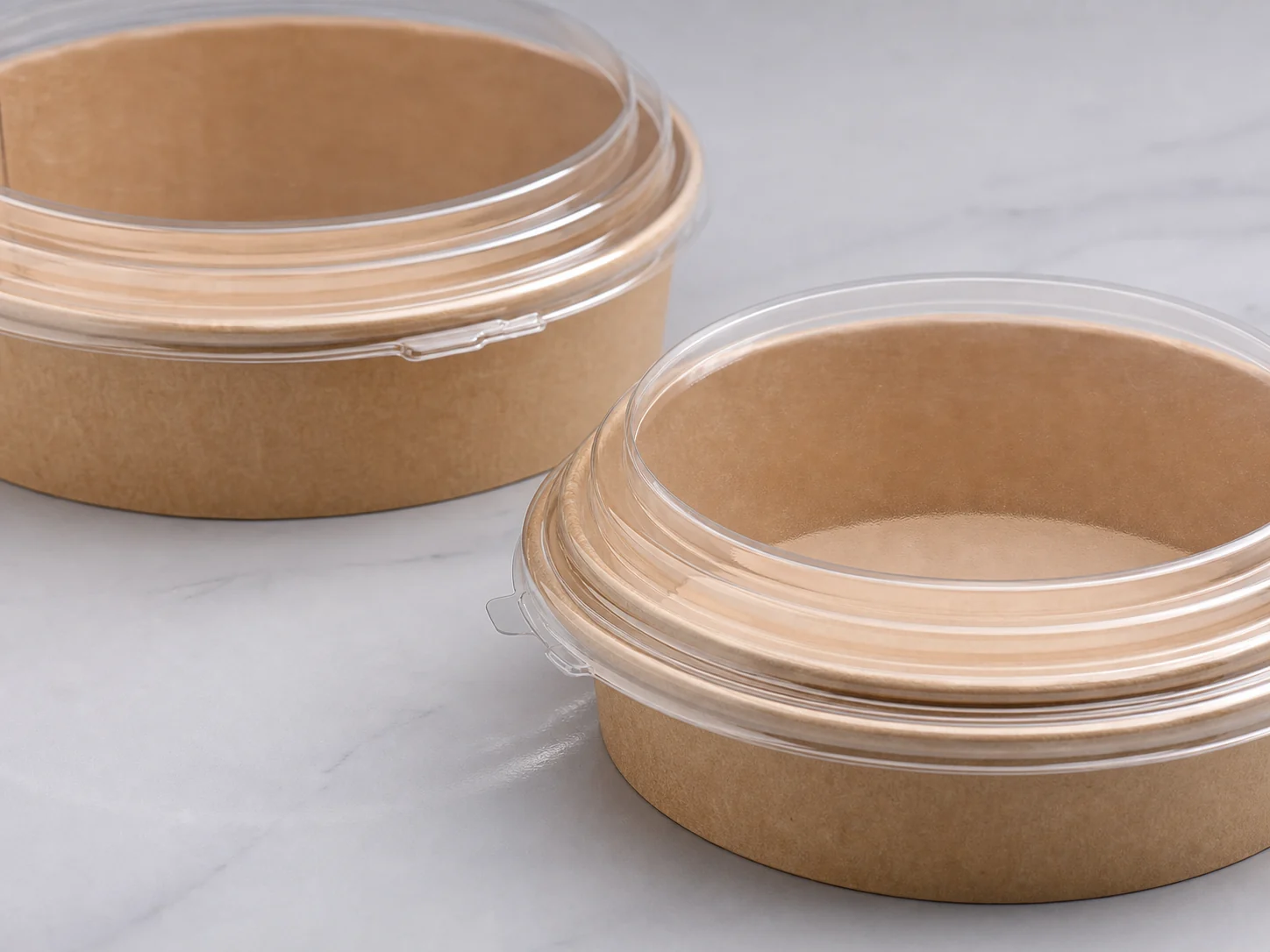
Moisture management is the central technical challenge of salad packaging. Greens release water as they sit; proteins release juices; dressings migrate laterally and downward; and the combined effect can turn a visually appealing salad into a soggy, discolored product within the time window of a delivery route.
Drainage geometry in the container base can slow moisture accumulation against the greens. Some containers incorporate a slightly raised grid or channel pattern in the base that allows liquid to pool below the ingredient level rather than saturating it. This is a container-body feature, not a lid feature, and it must be evaluated against your specific salad composition.
Dressing cups and compartments are the most reliable method of keeping dressing separated until consumption. A separate small cup nested inside the main container, or a snap-on side compartment, keeps the dressing isolated without requiring the consumer to receive a completely separate package. The fit between the dressing cup and the main container matters: a cup that shifts during transit can tip and defeat its purpose.
Ingredient layering sequence interacts with packaging design. Placing dense, moisture-resistant ingredients (grains, proteins, roasted vegetables) at the base and delicate greens at the top reduces the rate at which moisture migrates upward into the leaves. This is an operational decision, but it should be made in conversation with your packaging geometry — a container that is wider at the base than at the top may invert the intended layering logic when the consumer opens it.
Absorbent liners are used in some retail salad formats to manage excess moisture at the base of the container. Their compatibility with your specific container material and their food-contact status should be verified independently.
The interaction between dressing chemistry (acidity, oil content, emulsifiers) and container material is a real consideration. Highly acidic dressings and oil-based preparations can interact with some materials over time. This is one of the reasons that testing your actual dressing in your actual container — rather than relying on general material claims — is essential before committing to a packaging system.
A packaging system that performs well in a controlled environment may behave differently in the real conditions of a refrigerated display case or a delivery bag. Validation means testing under those real conditions, not under idealized ones.
Cold display validation should replicate the actual refrigeration unit you use, including its cycling behavior, airflow patterns, and the typical duration a product sits before purchase. Condensation behavior, lid clarity, and structural integrity under stacking should all be observed over the full expected display window.
Delivery validation should replicate the actual delivery route: the bag or insulated carrier used, the typical transit duration, the vibration profile of the vehicle, and the number of times the bag is opened and closed during a multi-stop route. A salad that arrives with a displaced lid, pooled dressing, or compressed greens has failed its packaging validation regardless of how well it performed in a static test.
Stacking behavior is particularly important for catering and bulk delivery contexts. Containers that nest or stack under load should be tested with the actual weight of a full delivery order, not just a single unit. Lid deformation under stacking load is a common failure mode that only appears when multiple units are tested together.
Temperature transition behavior — moving from a refrigerated prep environment to a delivery bag to a consumer’s hands — can affect lid fit, condensation, and ingredient texture. Observe what happens to your specific container and lid combination through that transition before finalizing your packaging specification.
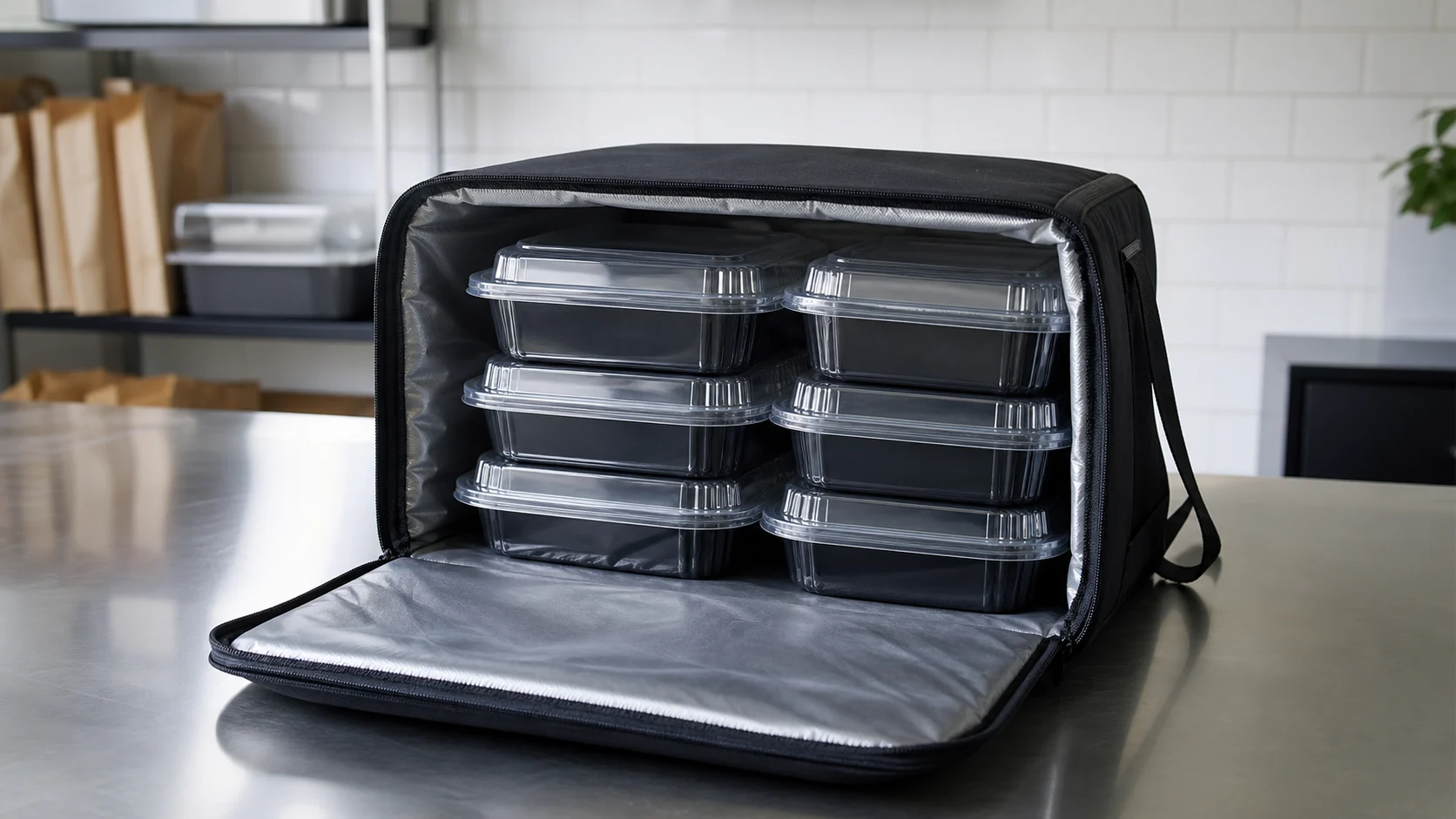
Browse the full range of disposable food packaging formats suitable for cold-chain applications at Papacko’s disposable food packaging.
Every material that touches your salad — container body, lid, dressing cup, absorbent liner, adhesive label — is a food-contact material and is subject to regulatory requirements that vary by market.
In the European Union, food-contact materials are governed by a framework that includes both horizontal legislation applying to all materials and specific measures for particular material types. The European Commission’s food-contact materials resource at food.ec.europa.eu provides the authoritative reference for understanding which substances are permitted, under what conditions, and what documentation suppliers must provide. Buyers operating in or exporting to EU markets should use this resource as their primary regulatory reference.
What to request from suppliers includes a Declaration of Compliance (DoC) confirming that the material meets applicable regulations, supporting test data or technical documentation, and information about any specific use conditions or restrictions that apply to the material. A DoC is a supplier’s formal statement of compliance — it is not a substitute for your own due diligence, but it is the starting point for any food-contact material evaluation.
Material-specific considerations differ by container type. Plastics, paper and board, metals, and bio-based or compostable materials each have their own regulatory pathways and their own sets of permitted substances. A container described as “food-safe” without further specification has told you very little. Ask which regulation it complies with, for which food types, and under which contact conditions.
إمكانية التتبع matters for recall preparedness. Know your supplier’s lot identification system and retain documentation that links each packaging batch to its compliance records.
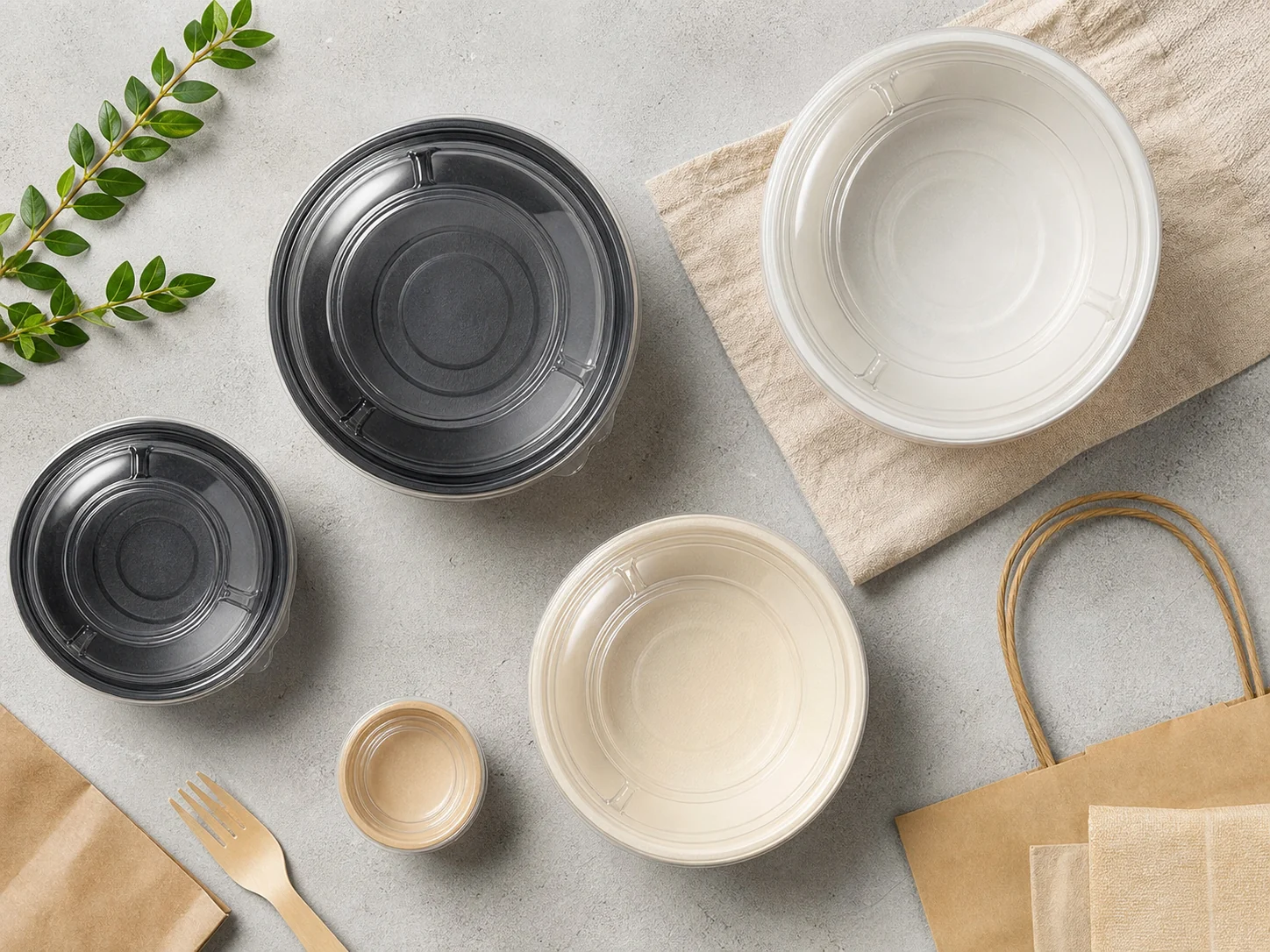
Use this checklist as a structured starting point for evaluating salad packaging suppliers and finalizing your specification. It is not exhaustive — your specific menu, service route, and regulatory context will add items — but it covers the most common gaps in salad packaging procurement.
Menu and route alignment
– [ ] All salad formats mapped against all service routes
– [ ] Moisture release behavior assessed for each format
– [ ] Dressing separation requirement identified per format
– [ ] Stacking and transit conditions documented
اختيار الحاوية
– [ ] Container family selected based on structural requirements
– [ ] Base geometry evaluated for drainage and ingredient layering
– [ ] Compartment options assessed where ingredient separation is needed
– [ ] Dome height measured against tallest assembled salad
Lid and closure
– [ ] Lid sourced from matched system with container (same supplier or verified compatibility)
– [ ] Snap or friction fit tested under vibration conditions
– [ ] Anti-fog performance evaluated under actual refrigeration
– [ ] Tamper-evident requirement assessed per service route
Moisture and dressing management
– [ ] Dressing cup or compartment format selected
– [ ] Dressing cup fit tested under transit conditions
– [ ] Absorbent liner food-contact status verified if used
– [ ] Actual dressing chemistry tested in actual container
Cold-chain validation
– [ ] Display validation conducted in actual refrigeration unit
– [ ] Delivery validation conducted with actual delivery bag and route
– [ ] Stacking test conducted with full delivery order weight
– [ ] Temperature transition behavior observed
Food-contact compliance
– [ ] Declaration of Compliance obtained for all food-contact components
– [ ] Applicable regulation identified for each material and market
– [ ] Use conditions and restrictions reviewed
– [ ] Supplier lot traceability system documented
Sustainability and format options
– [ ] Compostable format options evaluated where operationally appropriate
– [ ] End-of-life pathway confirmed for each material in your disposal context
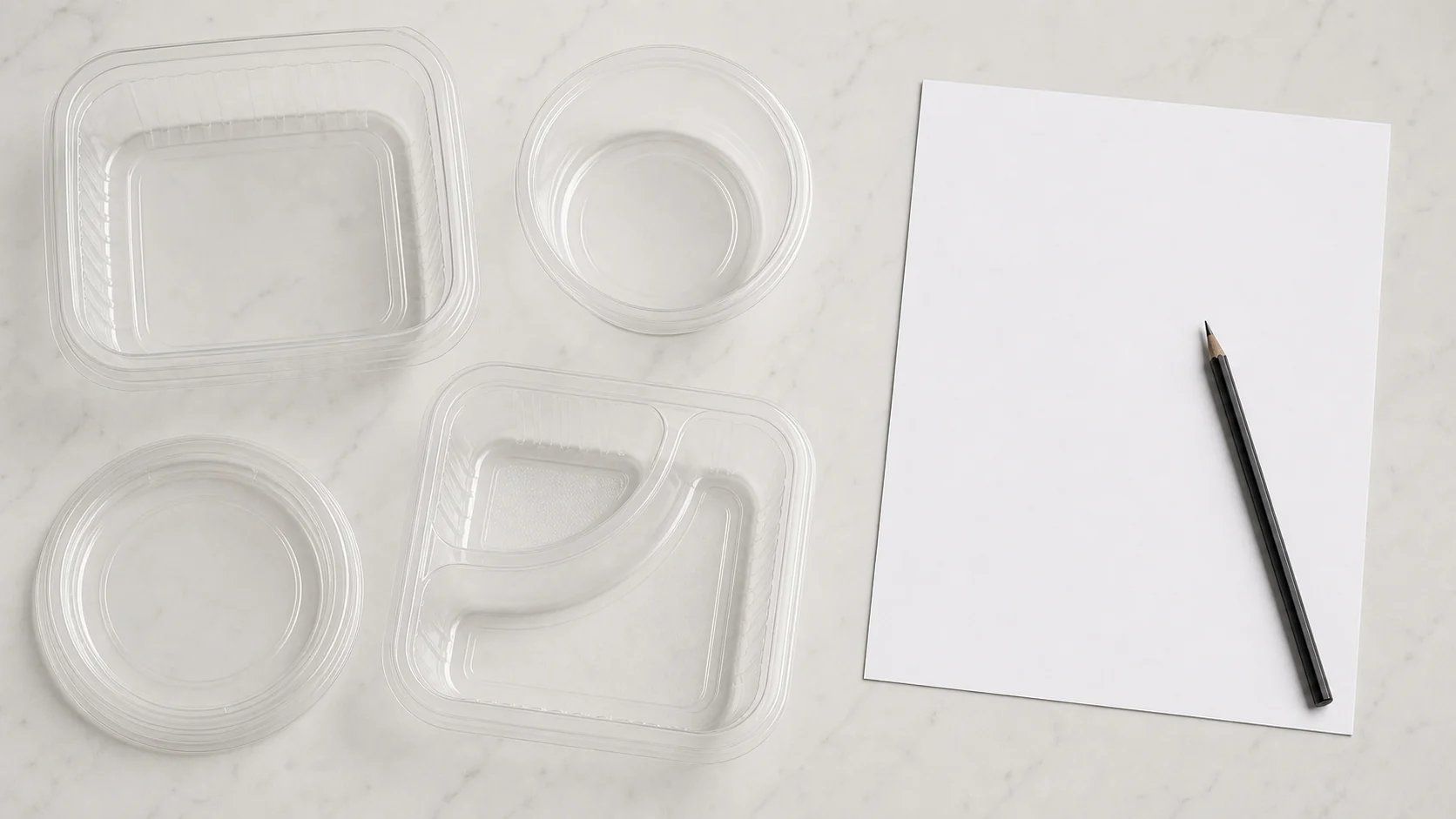
For operations with sustainability commitments or consumer-facing environmental messaging, compostable salad packaging formats are available and worth evaluating — with the same rigor applied to any other packaging decision.
Compostable containers and lids must be matched to the composting infrastructure actually available in your disposal context. Industrial composting and home composting are different processes with different material requirements, and a container certified for one may not perform in the other. Verify the end-of-life pathway before making a compostable claim to consumers.
Compostable materials also have their own food-contact compliance requirements. The same documentation standards described in the food-contact section above apply regardless of whether a material is conventional or bio-based.
Explore compostable packaging options at Papacko’s compostable food packaging as a starting point for understanding available formats.
Papacko supplies a range of food packaging formats relevant to salad operations across grab-and-go retail, delivery, and catering contexts. Their catalog spans container bodies, lids, and closure systems across multiple material types, allowing buyers to evaluate options within a single sourcing relationship.
إن Papacko food packaging category provides a structured entry point for browsing formats by application. Buyers are encouraged to request samples of any container and lid combination under consideration and to conduct their own validation testing with their actual salad compositions, dressings, and handling routes before committing to a specification.
Contact Papacko directly to discuss your menu format requirements, service-route conditions, and documentation needs. No packaging specification should be finalized without physical testing under real operational conditions.
This guide is intended to help food service operators, retailers, and catering buyers structure their thinking about salad packaging selection. It covers the key decision dimensions — container format, lid fit, moisture management, cold-chain validation, and food-contact compliance — at a level of detail appropriate for procurement planning.
What this guide does not do: It does not specify temperature performance limits, leakproofness ratings, container capacities, material shelf life, certifications held by any specific product, recycling or compostability claims for specific materials, pricing, minimum order quantities, or lead times. These variables are product-specific, supplier-specific, and in some cases batch-specific. They must be verified directly with your supplier for the exact products you are considering.
مسؤولية المشتري: Every claim made by a packaging supplier about performance, compliance, or suitability should be verified against your actual use conditions. A container that meets a general specification may not meet your specific combination of salad composition, dressing chemistry, transit duration, and refrigeration environment. Test the exact container and lid with your real salad, your real dressing, and your real handling route before finalizing any packaging decision.
Regulatory information referenced in this guide reflects publicly available sources at the time of writing. Regulatory frameworks evolve, and buyers should consult current official sources and, where appropriate, qualified legal or regulatory advisors for their specific markets.
الإجابة المختصرة هي أنه لا يمكنك معرفة ذلك دون إجراء اختبارات فعلية. فقد تبدو الأبعاد الاسمية من موردين مختلفين متوافقة على الورق، لكنها قد تختلف عمليًّا بدرجة كافية لتؤدي إلى عدم اتساق التثبيت المفاجئ، أو ظهور فجوات تسمح بتسرب الحشو، أو انفصال الأغطية تحت تأثير القوة الجانبية. النهج الأكثر أمانًا هو شراء الغطاء والحاوية كنظام متوافق من مورد واحد قام بالتحقق من ملاءمتهما. إذا كان لا بد من الجمع بين مكونات من مصادر مختلفة، فقم بإجراء اختبار ميكانيكي شامل في ظل ظروف الاهتزاز والتكديس السائدة في مسار الخدمة الفعلي قبل الالتزام بهذا المزيج على نطاق واسع.
المعالجات المضادة للضباب هي طبقات طلاء سطحية أو إضافات تقلل من التوتر السطحي لقطرات الماء على السطح الداخلي للغطاء، مما يؤدي إلى انتشارها لتشكل طبقة رقيقة بدلاً من تكوين قطرات منفصلة تعمل على تشتيت الضوء وإخفاء المنتج. تتمتع بعض المواد بطبيعتها بطاقة سطحية أقل وتنتج ضبابًا أقل من غيرها، لكن هذه خاصية متأصلة في المادة وليست معالجة. يمكن لكلا النهجين تقليل التكثف المرئي، لكن فعاليتهما تختلف بشكل كبير اعتمادًا على الرطوبة داخل الحاوية، وظروف التبريد، ومدة العرض. ولا يقضي أي من النهجين على التكثف تمامًا. قم بإجراء اختبار باستخدام وحدة التبريد الفعلية الخاصة بك مع تركيبة السلطة الفعلية لديك لفهم مستوى الوضوح الذي يمكنك توقعه.
يُعد هذا أحد أكثر سيناريوهات تغليف السلطات تعقيدًا، لأنه ينطوي على إدارة انتقال الحرارة بين المكونات التي يجب أن تظل عند درجات حرارة مختلفة، فضلاً عن الرطوبة المنبعثة من المكونات الدافئة والتي تتكثف على المكونات الباردة. وتُعد الحاويات المقسمة إلى حجرات، التي تفصل ماديًّا بين المكونات الدافئة والباردة، الحل الهيكلي الأكثر مباشرةً. يجب اختبار السلوك الحراري للمواد المحددة المستخدمة — مدى سرعة انتقال الحرارة عبر الفاصل، وكيفية تكوّن التكثيف على الجانب البارد — باستخدام المكونات الفعلية الخاصة بك، وفي إطار الفترة الزمنية الفعلية من التعبئة حتى الاستهلاك. لا توجد إجابة عامة لأن المتغيرات (كتلة المكونات، الفرق في درجات الحرارة، مدة النقل) تختلف بشكل كبير من عملية إلى أخرى.
At minimum, request a Declaration of Compliance from your supplier. This is a formal document in which the supplier states that the material meets the applicable food-contact regulations for the intended use. For EU markets, the relevant framework is described at the European Commission’s food-contact materials resource. The DoC should identify the specific regulation it references, the food types and contact conditions it covers, and any restrictions on use. Supporting technical documentation — migration test data, substance lists — may also be available and is worth requesting for materials where you have specific concerns. Remember that a DoC is a supplier’s statement, not an independent certification; your own due diligence and, where appropriate, independent testing remain your responsibility.
Third-party delivery introduces variables you do not fully control: the insulated bag the driver uses, the number of stops before your order is delivered, the way the bag is loaded alongside other orders, and the handling behavior at the consumer’s door. The most useful validation approach is to replicate the worst-case version of that route — longest transit time, fullest bag, most stops — and observe what happens to your container and lid combination. Pay attention to lid displacement, dressing migration, leaf compression, and condensation behavior. If your container fails under worst-case conditions, it will fail in the field. If it performs acceptably under worst-case conditions, you have reasonable confidence in its real-world behavior. Consider also whether tamper-evident closures are appropriate for your delivery context, both for food safety and for consumer confidence.
Compostable containers vary in their structural behavior depending on the material, the manufacturing process, and the specific conditions they encounter in use. Some compostable formats perform well with dry or lightly dressed salads; others may be affected by prolonged contact with acidic dressings, oils, or high-moisture ingredients. The only reliable way to know whether a specific compostable container is suitable for your specific salad format is to test it under your actual conditions — including the full duration from assembly through display or transit to consumption. Do not assume that a compostable material performs identically to its conventional counterpart in the same form factor. Test independently, and verify food-contact compliance documentation for the compostable material just as you would for any other food-contact packaging.