¿Está listo para crear sus propios vasos o envases de papel con su marca?
Díganos sus requisitos -tamaño, revestimiento, impresión y destino- y nuestro equipo le preparará un presupuesto detallado en 24 horas.

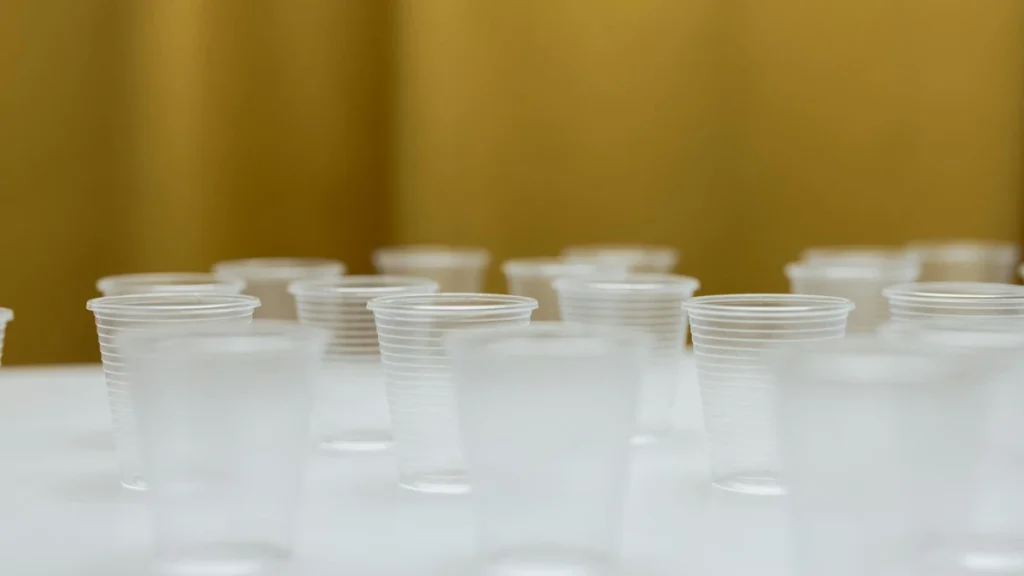
El cambio global hacia los envases sostenibles ha puesto en el punto de mira a los vasos transparentes para bebidas. Los restaurantes, cafeterías, tiendas de té de burbujas y bares de zumos se enfrentan a una elección crucial en cuanto al material: los vasos de plástico tradicionales de PET (polietileno tereftalato) o las alternativas de origen biológico de PLA (ácido poliláctico). Esta decisión repercute en la huella medioambiental, la percepción de los clientes, el cumplimiento normativo y los costes finales.
Los vasos de PLA transparente se han consolidado como la principal alternativa ecológica a los plásticos PET convencionales, ya que ofrecen una transparencia y una funcionalidad comparables, al tiempo que destacan por su compostabilidad y su origen renovable. La comparación entre materiales va mucho más allá de la simple dicotomía “plástico frente a bioplástico”, ya que abarca la resistencia al calor, las propiedades de barrera, los costes de producción, el tratamiento al final de su vida útil y el rendimiento real en diferentes aplicaciones relacionadas con las bebidas.
Esta guía exhaustiva ofrece un análisis basado en datos que compara los vasos de PLA transparente y los de PET en 12 aspectos clave de rendimiento. Descubrirás las diferencias en la composición de los materiales, el impacto medioambiental a lo largo del ciclo de vida, el desglose de costes para distintos volúmenes de pedido, los requisitos de cumplimiento normativo y recomendaciones específicas para bebidas frías, batidos, té de burbujas y zumos.
1.Fermentación: Los almidones de maíz o de caña de azúcar se fermentan para producir ácido láctico
2.Polimerización: Las moléculas de ácido láctico se unen para formar cadenas de ácido poliláctico (peso molecular de 50 000 a 200 000)
3.Producción de pellets: La resina PLA se presenta en forma de gránulos para termoformado o moldeo por inyección
4.Formado de copas: Moldeadas en caliente para obtener vasos transparentes mediante termoformado a 160-180 °C
Características principales:-Abastecimiento de energía renovable: Materia prima vegetal 100% frente al PET derivado del petróleo
-Biodegradabilidad: Se descompone en ácido láctico → agua + CO₂ en condiciones de compostaje
-Transparencia: El PLA Crystal alcanza una transmisión de la luz de entre el 88 % y el 92,1 % (comparable al PET)
-Sensibilidad al calor: Temperatura de transición vítrea: 55-60 °C (inferior a la del PET, que es de 70-80 °C)
1.Polimerización: El etilenglicol reacciona con el ácido tereftálico a una temperatura de entre 260 y 280 °C
2.Producción de pellets: La resina de PET se transforma en gránulos
3.Extrusión de chapas: La resina de PET se extruye en láminas para su termoformado.
4.Termoformado de vasos: La lámina de PET calentada se moldea para formar vasos y se recorta.
Características principales:-A base de petróleo: Materias primas de combustibles fósiles no renovables
-No biodegradable: El PET no está diseñado para el compostaje.
-Transparencia: 90-93% transmisión de la luz (ligeramente superior a la del PLA)
-Tolerancia al calor: Utiliza las condiciones nominales del vaso ya fabricado; los vasos transparentes estándar de PET para bebidas frías no son una opción versátil para bebidas calientes.
-Reciclabilidad: Ampliamente reciclable (código de reciclaje #1), tasa de reciclaje global del 29%
-Semanas 1-2: Corrosión superficial, pérdida de peso 5-10%
-Semanas 4-6: Comienza la hidrólisis, las cadenas poliméricas se rompen, pérdida de peso de 30-50%
-Semanas 8-12: Fragmentación en trozos más pequeños, pérdida de peso de 70-85%
-Semanas 16-24: Degradación completa en CO₂, agua y humus
Requisitos fundamentales:-Temperatura: 55-60 °C como mínimo (instalaciones de compostaje industrial)
-Humedad: 50-60 % de humedad relativa
-Oxígeno: Condiciones aeróbicas para la actividad microbiana
-Tiempo: entre 90 y 180 días para su descomposición completa
Compostaje doméstico: Los vasos de PLA NO se descomponen de forma fiable en los contenedores de compost domésticos (las temperaturas son demasiado bajas, suelen oscilar entre 30 y 40 °C). Solo las instalaciones de compostaje industriales o comerciales alcanzan los 55-60 °C necesarios.Degradación del PET: El PET no se biodegrada en un plazo de tiempo razonable. Los estudios demuestran que:-Infraestructura global: Ampliamente disponible (entre el 87 % y el 95 % de las comunidades estadounidenses aceptan el PET)
-Índice de reciclaje: 291 TP3T a nivel mundial, 45-551 TP3T en Europa, 20-251 TP3T en EE. UU.
-Proceso: Reciclaje mecánico (trituración, lavado, refundición) o reciclaje químico
-Calidad: El uso del rPET en contacto con alimentos depende del proceso de reciclaje, de la pureza del material y de las condiciones de uso previstas.
-Contaminación: La contaminación por PLA en los flujos de reciclaje de PET provoca problemas de calidad
Reciclaje de PLA:-Infraestructura global: Limitada (requiere instalaciones específicas para el PLA, independientes de las del PET)
-Índice de reciclaje: <5% a nivel mundial (infraestructura insuficiente)
-Proceso: Debe separarse del PET (su aspecto similar provoca problemas de contaminación)
-Calidad: El PLA reciclado es una opción viable, pero el mercado está poco desarrollado
-Realidad: La mayoría de los vasos de PLA acaban actualmente en los vertederos, a pesar de ser “compostables”.”
Déficit de infraestructuras: Solo el 12,1 % de las instalaciones de compostaje comercial de EE. UU. aceptan PLA. En Europa, entre el 25 % y el 30 % de las instalaciones aceptan bioplásticos. La mayoría de los consumidores carecen de acceso a un sistema adecuado de eliminación del PLA.-Materia prima: La resina PLA 30-50% es más cara que la resina PET (1,40-2,20-2,80 €/kg frente a 1,40-2,00 €/kg)
-Volumen de producción: La fabricación de PLA está menos desarrollada y ofrece menores economías de escala
-Herramientas: Costes de utillaje similares para el termoformado y el moldeado
-Cadena de suministro: Proveedores de PET con mayor trayectoria, precios competitivos
-Estado del PET: Permitido, pero sujeto al pago de las tasas de la responsabilidad ampliada del productor (EPR)
-Situación del EPL: Los plásticos de origen biológico y biodegradables entran dentro del ámbito de aplicación de la Directiva sobre envases de plástico de un solo uso; la certificación EN 13432 no supone una exención general.
Estados Unidos (a nivel estatal o local):-California: Se exige que los artículos de menaje compostables cumplan las normas ASTM D6400 o D6868
-Nueva York: Se prohíbe la espuma; se fomenta el uso de alternativas compostables
-Seattle: Los artículos de un solo uso para el sector de la restauración deben estar homologados como compostables para su uso en el local, y como reciclables o compostables para comida para llevar; se aplican los requisitos locales de aceptación y recogida.
Canadá:-Federal: La normativa canadiense sobre la prohibición de los plásticos de un solo uso abarca seis categorías de productos concretas, entre las que se incluyen las bolsas de la compra y los artículos de menaje para el sector de la restauración que contengan determinados plásticos problemáticos.
-Situación del EPL: La certificación de compostabilidad no supone una exención general del Reglamento de Canadá sobre la prohibición de los plásticos de un solo uso.
Asia-Pacífico:-Japón: Fomenta los plásticos de origen biológico y ofrece subvenciones para la adopción del PLA
-Australia: Prohibiciones de los plásticos de un solo uso a nivel estatal (Australia Meridional, Queensland)
-Contacto con alimentos en EE. UU.: Las formulaciones de PET deben cumplir los requisitos aplicables, incluido el artículo 21 CFR 177.1630 cuando proceda, para el uso previsto.
-Contacto con alimentos en la UE: Verifique la documentación de conformidad del vaso terminado en relación con su uso previsto, de acuerdo con la normativa aplicable en materia de contacto con alimentos, incluido el Reglamento (UE) n.º 10/2011.
-Códigos de reciclaje: PET #1, ampliamente reconocido en los programas de reciclaje
1.Servicio de bebidas frías dentro de los límites de temperatura especificados para la taza terminada
2.Acceso al compostaje industrial (servicio comercial de recogida de residuos orgánicos o programa municipal)
3.Marca con conciencia ecológica (el mercado objetivo valora la sostenibilidad)
4.Cumplimiento normativo (que opera en jurisdicciones con numerosas restricciones: UE, California, Seattle)
5.Bebidas sin gas (zumos, tés, café —no refrescos—)
Tipos de empresas:-Cafeterías especializadas que apuestan por la sostenibilidad
-Bares de zumos con un enfoque ecológico y saludable
-Cafeterías en barrios con conciencia ecológica (ciudades universitarias, ciudades progresistas)
-Restaurantes con iniciativas de cero residuos
-Servicio de catering para eventos con infraestructura de compostaje
Impulsores del ROI:-Los clientes están dispuestos a pagar una prima de entre 3 y 81 TP3T por envases sostenibles
-La diferenciación de marca en mercados competitivos
-El valor comercial del mensaje “100% compostable”
1.Un vaso de PET con la clasificación para la bebida prevista y las condiciones de servicio
2.Bebidas carbonatadas (refrescos, bebidas gaseosas que requieren retención de CO₂)
3.Infraestructura de reciclaje existente (los clientes tienen acceso al reciclaje de PET #1)
4.Sensibilidad al coste (se necesita el menor coste unitario posible; ahorro de 30-501 TP3T respecto al PLA)
5.No hay acceso al compost (En la zona no hay instalaciones de compostaje industrial, por lo que el PLA acabaría de todos modos en el vertedero)
Tipos de empresas:-Las cadenas de comida rápida dan prioridad a la rentabilidad
-Tiendas de conveniencia que venden refrescos de máquina
-Tiendas de té de burbujas que necesitan la máxima claridad para que se vean bien los ingredientes
-Camiones de comida que operan en zonas sin programas de compostaje
-Empresas de regiones con un sistema de reciclaje de PET consolidado (altas tasas de reciclaje)
Impulsores del ROI:-Menores costes de materiales (ahorro de 30-501 TP3T en la producción a gran escala)
-Infraestructura de reciclaje consolidada (tasa de reciclaje global de 291 % frente a <51 % en el caso del PLA)
-Mayor retención del gas (fundamental para la calidad de los refrescos)
-Tolerancia a la temperatura: elige la taza adecuada para cada bebida; un mismo tipo de taza para bebidas frías no sirve para todas las bebidas.
-Pedido de 5.000 vasos de PLA + 5.000 vasos de PET
-Utiliza PLA para el café o el té helado, y PET para los batidos o el té de burbujas
-Recopila opiniones de los clientes a través de los tickets de caja (“¿Qué te parecen nuestros vasos ecológicos?”).
-Evaluar los hábitos de gestión de residuos (¿utilizan los clientes correctamente los contenedores de compost?)
Fase 2 (Meses 4-6): Optimizar la mezcla-Analizar los datos de la fase 1: preferencias de los clientes, precisión en la eliminación y repercusión en los costes
-Ajusta la proporción en función de los resultados (por ejemplo, 70 % de PLA 3T / 30 % de PET 3T si se trata principalmente de bebidas frías)
-Negociar precios al por mayor en función de los volúmenes anuales previstos
-Formar al personal para que respete la temperatura recomendada para cada vaso y las instrucciones de uso de las bebidas
Fase 3 (Meses 7-12): Ampliar y perfeccionar-Suscrito un contrato anual para obtener la mezcla óptima de PLA y PET
-Utilizar un etiquetado claro (fundas para vasos con la indicación “¡Compóstame!” o “¡Recíclame!”).
-Si aún no existe este servicio, colabora con una empresa de recogida de residuos para la recogida de residuos para compostaje
-Promocionar las iniciativas de sostenibilidad a través de las redes sociales y la señalización en las tiendas
-✅ Bebidas frías (0-15 °C) → Vasos de PLA
-✅ Bebidas calientes → utiliza una taza adecuada para la temperatura a la que se sirven
-✅ Bebidas carbonatadas → comprueba la resistencia térmica del vaso y la compatibilidad de la tapa
-✅ Té de burbujas con aderezos → PET (mayor transparencia)
-✅ Todos los vasos: comprueba que el cliente utilice el contenedor adecuado (compostaje o reciclaje)
Sistema de etiquetado:-Vasos de PLA: con borde verde o con el sello “Compostable”
-Vasos de PET: borde azul o la inscripción “Reciclable #1”
-Cajas de almacenamiento codificadas por colores en la trastienda
-Recordatorio para los baristas en el punto de venta
❌ Mito #1: “Los vasos de PLA son siempre más respetuosos con el medio ambiente” ✅ Realidad: El impacto medioambiental depende de la producción, el transporte, el diseño del vaso y las condiciones reales de eliminación. Si en tu zona existe un sistema eficaz de reciclaje de PET pero no hay compostaje, el PET reciclado puede resultar más sostenible que el PLA que acaba en el vertedero.
❌ Mito #2: “Los vasos de PLA se pueden tirar a los contenedores de compost del jardín” ✅ Realidad: La mayoría de los contenedores de compostaje doméstico solo alcanzan una temperatura de entre 30 y 40 °C, muy por debajo de los 55-60 °C necesarios para la degradación del PLA. El PLA requiere instalaciones de compostaje industrial. Indicar a los clientes que compostan el PLA en casa provoca contaminación y decepción.
❌ Mito #3: “Los vasos de PLA y PET son idénticos, así que a los clientes no les importará” ✅ Realidad: Aunque visualmente son similares (transparencia 88-93%), la percepción de los clientes difiere significativamente. Los estudios muestran que el 68% de los consumidores tiene una opinión más favorable de los envases compostables y está dispuesto a pagar un sobreprecio de entre 3 y 8%. Posicionar las tazas de PLA como ecológicas fomenta la fidelidad.
❌ Mito #4: “Los vasos de PLA cuestan entre dos y tres veces más que los de PET” ✅ Realidad: En grandes cantidades (más de 10 000 unidades), el PLA cuesta entre un 30 % y un 50 % más, no entre 2 y 3 veces más. Para una cafetería que sirve 500 bebidas al día, la diferencia es de 10-15 € al día (300-450 € al mes), lo que a veces se compensa con un aumento de precio de 1-2 € o se absorbe como gasto de marketing.
❌ Mito #5: “El PET es perjudicial para la salud porque libera sustancias químicas” ✅ Realidad: La idoneidad del PET para el contacto con alimentos depende de su composición y de las condiciones de uso previstas; el nombre del material por sí solo no garantiza una migración nula ni un rango de temperaturas seguro. Las preocupaciones relativas al BPA no se aplican al PET (el BPA se utiliza en plásticos de policarbonato, no en el PET). Debe demostrarse la conformidad con la normativa de contacto con alimentos para el vaso de PLA o PET acabado y su uso previsto.
-PLA cristalizado: El aumento de la cristalinidad puede mejorar la rigidez por encima de la temperatura de transición vítrea; la resistencia al calor del producto acabado debe evaluarse por separado.
-Impacto en los costes: El PLA resistente al calor 15-25% es más caro que el PLA estándar
PLA con propiedades de barrera mejoradas:-Mezclas de PLA y PHA: La incorporación de PHA (polihidroxialcanoatos) reduce la permeabilidad al oxígeno entre un 40 % y un 60 %
-Nano-recubrimientos: Las nanopartículas de sílice o arcilla crean barreras de oxígeno comparables a las del PET
-Solicitud: Permite el uso de PLA en bebidas carbonatadas para 2027-2028
-Situación actual: 291 TP3T de vasos de PET contienen material reciclado
-Previsión para 2027: 50-60%: contenido reciclado en vasos de PET aptos para uso alimentario
-Huella de carbono: El rPET reduce las emisiones entre un 60 % y un 70 % en comparación con el PET virgen (es competitivo con el PLA)
Reciclaje químico:-Proceso: Despolimerización del PET en monómeros y repolimerización para obtener resina de calidad virgen
-Cronología: Instalaciones de reciclaje químico a escala comercial que entrarán en funcionamiento entre 2026 y 2030
-Impacto: Podría lograr que el PET fuera totalmente circular, reduciendo así la brecha de sostenibilidad con respecto al PLA
1.Certificación: “¿Cuentan los vasos con la certificación BPI (ASTM D6400) o EN 13432?”
2.Grado de claridad: “¿Cuál es el porcentaje de transmisión de luz?” (Modelo: 88%+)
3.Tolerancia al calor: “¿Cuál es la temperatura máxima segura para las bebidas?” (Consulta las especificaciones del vaso y de la bebida en cuestión)
4.Niveles de precios: “Presente presupuestos para 5 000, 10 000, 25 000 y 50 000 unidades” (evalúe los descuentos por volumen)
5.Plazos de entrega: “¿Cuál es el plazo de entrega para el pedido inicial en comparación con los pedidos posteriores?” (entre 4 y 6 semanas, por lo general)
6.Pedidos mínimos: “¿Cuál es el pedido mínimo para la impresión personalizada?” (entre 10 000 y 50 000 unidades, por lo general)
7.Modelo de política: “¿Puedo recibir entre 50 y 100 muestras antes de hacer un pedido al por mayor?” (Prueba siempre primero)
Banderas rojas:-⚠️ Sin certificación de compostabilidad (BPI, EN 13432, OK Compost)
-⚠️ Afirmaciones vagas sobre la “biodegradabilidad” sin especificar las condiciones ni el plazo
-⚠️ Rechazar muestras o cobrar tarifas excesivas por ellas
1.Contenido reciclado: “¿Qué porcentaje de rPET?” (el modelo 30-50% es cada vez más habitual)
2.Cumplimiento de la FDA: “¿Está el PET autorizado por la FDA para el contacto con alimentos?” (Consulte el artículo 21 CFR 177.1630)
3.Claridad: “¿Porcentaje de transmisión de luz?” (Objetivo: 90%+)
4.Espesor de la pared: “¿Qué opciones hay?” (rango de 0,3-0,7 mm para un equilibrio entre durabilidad y coste)
5.Compatibilidad: “¿Qué sistemas de tapas son compatibles?” (Asegúrese de que haya tapas disponibles)
6.Precios por volumen: “Presupuestos para 10 000, 50 000 y 100 000 unidades” (el PET se adapta mejor que el PLA)
7.Personalización: “¿Cuál es la cantidad mínima de pedido para la impresión o el marcado?”
Atributos preferidos:-✅ Contiene PET reciclado (rPET) 30%+
-✅ Incluye el código de reciclaje #1 en el etiquetado
-✅ Ofrece varias opciones de tamaño (355, 473, 591 y 710 ml)
-✅ Estructura de precios clara con descuentos por volumen
-✅ Plazo de entrega rápido para los pedidos de reposición (2-3 semanas)
Los vasos de PLA transparentes son envases para bebidas biodegradables fabricados con ácido poliláctico de origen vegetal (derivado del almidón de maíz, caña de azúcar o yuca), mientras que los vasos de PET son envases de plástico derivados del petróleo, fabricados con polietileno tereftalato. Los vasos de PLA se descomponen en 3-6 meses en condiciones de compostaje industrial (55-60 °C), mientras que el PET persiste más de 450 años en los vertederos, aunque es ampliamente reciclable. El PLA ofrece una huella de carbono entre un 60 % y un 70 % menor, pero cuesta entre un 30 % y un 50 % más y se utiliza habitualmente para bebidas frías dentro de los límites especificados para el vaso acabado. La idoneidad de los vasos de PET depende de las características del producto acabado; los datos sobre la barrera al oxígeno por sí solos no garantizan la retención de la carbonatación.
Los vasos de PLA generan entre 58 y 65% menos emisiones de carbono que los de PET a lo largo de su ciclo de vida y se biodegradan por completo en instalaciones de compostaje industrial en un plazo de 3 a 6 meses. Sin embargo, la ventaja medioambiental depende de la infraestructura de gestión de residuos: el PLA que se envía a vertederos (debido a la falta de acceso al compostaje) ofrece un beneficio mínimo respecto al PET. Si en tu región existe un sistema sólido de reciclaje de PET (tasa global de 29%) pero las instalaciones de compostaje son limitadas (acceso en EE. UU. de 12%), el PET reciclado puede ofrecer una sostenibilidad comparable. El PLA solo es superior desde el punto de vista medioambiental cuando existe una infraestructura adecuada de compostaje industrial y los vasos se eliminan correctamente.
Los vasos transparentes estándar de PLA para bebidas frías no deben utilizarse para bebidas calientes. Los vasos de PLA pueden ablandarse y deformarse si se utilizan más allá de las condiciones nominales del producto. Esto conlleva riesgos de quemaduras y quejas de los clientes. No debe darse por sentado que los vasos transparentes estándar de PET para bebidas frías sean adecuados para bebidas templadas o calientes. Para el café y el té calientes, utilice vasos de papel con las características adecuadas y con revestimiento de PLA o PE.
Los vasos de PLA transparentes cuestan entre 30 y 50% más que los de PET para volúmenes comparables. Para 10 000 unidades (tamaño de 16 oz), el PLA cuesta entre $0,15 y 0,20 por vaso, frente a los $0,11-0,15 del PET. A partir de 50 000 unidades, el PLA cuesta entre $0,12 y 0,16, frente a los $0,08-0,12 del PET. Esta diferencia de precio se debe a los mayores costes de la materia prima ($2,20-2,80/kg para la resina de PLA frente a $1,50-2,00/kg para el PET) y a una escala de fabricación menos consolidada. Para una cafetería que utilice 8 000 vasos al mes, la diferencia de coste anual es de aproximadamente $2 500-3 500, o $0,027 por bebida, lo que se compensa con la fidelidad de los clientes impulsada por la sostenibilidad.
Los vasos de PLA funcionan bien para el té de burbujas que se sirve frío (5-25 °C), pero el PET ofrece una mayor transparencia para resaltar los ingredientes decorativos, como las perlas de tapioca y la fruta. Para las bebidas carbonatadas, se recomienda encarecidamente el PET debido a sus propiedades superiores de barrera al CO₂. La permeabilidad al oxígeno del PLA es entre 10 y 20 veces mayor que la del PET, lo que hace que las bebidas carbonatadas pierdan el gas en un plazo de 2 a 4 horas, frente a las 8 a 12 horas del PET. Elija el PET para el té de burbujas que requiera el máximo atractivo visual o para cualquier bebida carbonatada. Utilice PLA para el té de burbujas solo si prioriza la compostabilidad frente a ligeras diferencias de transparencia y sirve versiones sin gas.
Los vasos de PLA requieren un compostaje industrial para su correcta gestión al final de su vida útil; no se biodegradan en los contenedores de compostaje domésticos (temperatura insuficiente) ni en los vertederos (condiciones anaeróbicas). Aunque técnicamente son reciclables, la infraestructura de reciclaje de PLA es extremadamente limitada (menos de 5% de disponibilidad a nivel mundial) y requiere su separación de los flujos de reciclaje de PET (mezclar PLA con PET contamina los lotes de reciclaje). La mayoría de los municipios no aceptan el PLA en la recogida selectiva. Solo 12% de las instalaciones de compostaje comercial de EE. UU. aceptan vasos de PLA. Comprueba que tu zona disponga de acceso a un sistema de compostaje industrial antes de optar por el PLA; de lo contrario, los vasos acabarán en vertederos, lo que anularía los beneficios medioambientales.
En el caso de los vasos de PLA transparentes, comprueba las certificaciones de compostabilidad: Certificación BPI (EE. UU., norma ASTM D6400), EN 13432 (Europa), certificación BNQ ISO 17088 (Canadá), AS 4736 (Australia) u OK Compost (TÜV Austria). La certificación se refiere a condiciones de ensayo definidas y no garantiza el tiempo de procesamiento ni la aceptación en una instalación concreta. Evita los vasos con afirmaciones vagas como “biodegradable” o “respetuoso con el medio ambiente” que carezcan de certificación de terceros. En el caso de los vasos de PET, solicite la documentación que acredite la conformidad con la normativa sobre contacto con alimentos para el uso previsto (21 CFR 177.1630) y compruebe que el porcentaje de contenido reciclado (rPET) se sitúe entre el 30 % y el 50%. El código #1 identifica el PET; confirme que el programa local acepte ese vaso en concreto.
La elección entre vasos de PLA transparente y vasos de PET va más allá de la simple clasificación de “plástico frente a bioplástico”, ya que requiere una evaluación matizada de las aplicaciones en el sector de las bebidas, la infraestructura de gestión de residuos, los valores de los clientes, la tolerancia al coste y el marco normativo. Ninguno de los dos materiales es superior en todos los casos; cada uno destaca en contextos específicos.
Principales conclusiones:1.El PLA ofrece una huella de carbono entre un 60 % y un 70 % menor que el 70% pero solo si se compostan adecuadamente; comprueba que se pueda llevar a un centro de compostaje industrial antes de comprometerte
2.Elige PLA para bebidas frías (café helado, zumos, batidos) servidos por marcas comprometidas con la sostenibilidad que cuentan con instalaciones de compostaje
3.Elige el PET para las bebidas carbonatadas y el té de burbujas gracias a una mayor retención de CO₂ y a una mayor claridad del 2-5%, que mejora la visibilidad de la espuma
4.El enfoque híbrido optimiza el rendimiento y los costes—utilizar PLA para las bebidas frías 60-70% y PET para las bebidas frías compatibles (30-40%)
5.Las innovaciones futuras reducirán la brecha—El PLA resistente al calor (2027-2028) y el PET reciclado químicamente (2026-2030) ampliarán sus ámbitos de aplicación
6.La certificación es fundamental—Verificar la norma BPI/EN 13432 en cuanto a la compostabilidad del PLA y la autorización de la FDA en cuanto a la seguridad del PET para el contacto con alimentos
-Vasos de papel
-Envases para alimentos
-Soluciones de embalaje sostenibles
-Guía sobre envases compostables