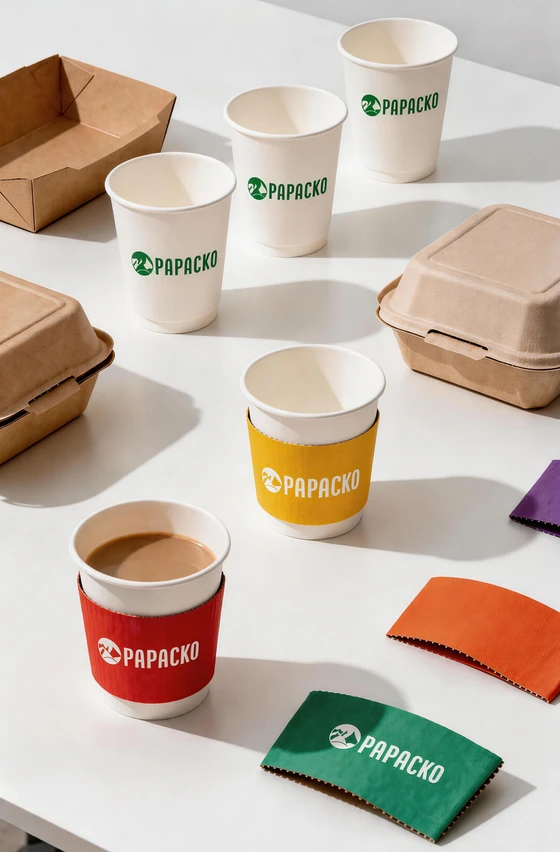
هل أنت مستعد لإنشاء أكواب ورقية أو عبوات ورقية تحمل علامتك التجارية الخاصة بك؟
أخبرنا بمتطلباتك - الحجم والطلاء والطباعة والوجهة - وسيقوم فريقنا بإعداد عرض أسعار مفصل في غضون 24 ساعة.

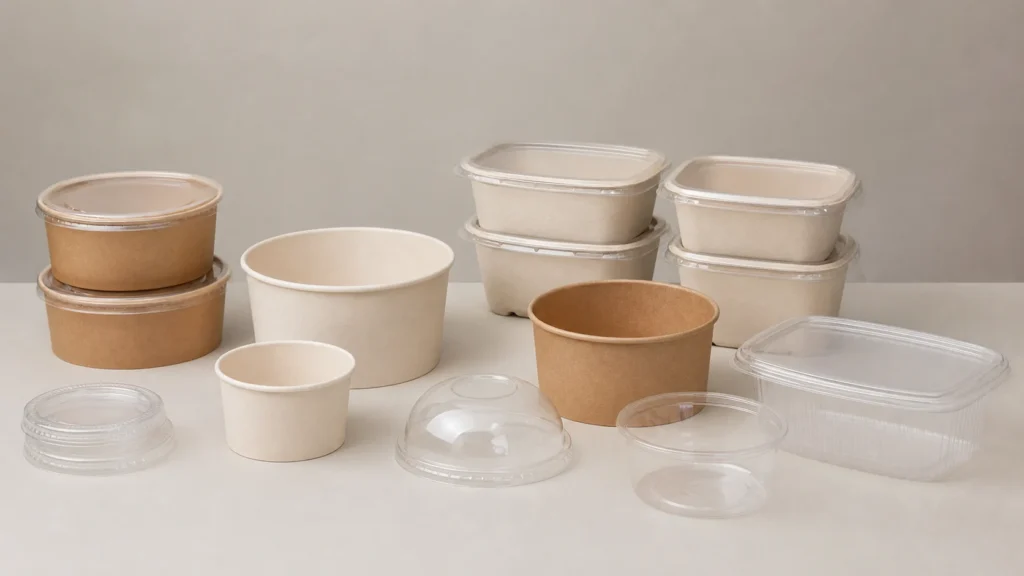
Sourcing food containers with lids as matched pairs is one of the decisions in foodservice packaging that rewards disciplined procurement and punishes guesswork. A lid that fits 99 percent of the time is not fit for a commercial kitchen. A seal that holds cold salads but fails under steam pressure from a hot curry is a separate SKU decision, not a universal claim. This guide walks B2B buyers—catering operators, ghost kitchen managers, contract caterers, central production units, and hospitality procurement teams—through every stage of that decision, from food type and fill temperature to closure mechanics and pre-volume sampling.
Browse the full range at Papacko food packaging containers before reading further, then return to this guide to apply the evaluation framework to specific SKUs you shortlist.
A container without a lid is a serving vessel. A container with a lid is a delivery system. The distinction matters because every functional requirement for the lid is derived from what the container is already committed to doing.
Containment without leakage. The most basic requirement is that the closed pair does not leak its primary content—liquid, sauce, oil, or moisture—during the handling window from fill point to consumer. Leakage failure modes include an imperfect rim-to-lid interface, a lid that deflects under internal pressure, and a hinge or tab that creates a micro-gap when not fully engaged.
Atmosphere management. Depending on the food, the pair needs to either vent steam (hot foods that would otherwise create condensation pooling), trap moisture (foods that dry out), or maintain a modified atmosphere (prepared meal components destined for extended shelf life). These three requirements are mutually exclusive within a single lid design, which is why buyers who serve diverse menus often stock more than one lid type even when the container base is identical.
Structural integrity under load. In delivery and catering contexts, containers are stacked, transported in carriers, and placed in insulated bags. The lid must bear compressive load without deforming to the point that it presses into food or disengages from the rim. Structural integrity is a function of both material and geometry—a dome profile distributes load differently from a flat lid.
Openability at the point of consumption. A lid that seals perfectly but requires tools or two-handed force to remove creates a negative consumer experience. For B2B buyers supplying aggregator platforms, consumer-facing unboxing is part of the service proposition.
Stacking efficiency in storage. Pre-assembled (lid already placed on container) stacks occupy more linear shelf space than nested container stacks with lids stored separately. Buyers with limited back-of-house storage need to weigh assembly labour against storage footprint.
Compatibility with labelling and branding. Many operators apply thermal-printed labels to the lid flat. The lid surface must accept label adhesive cleanly and present a legible print area.
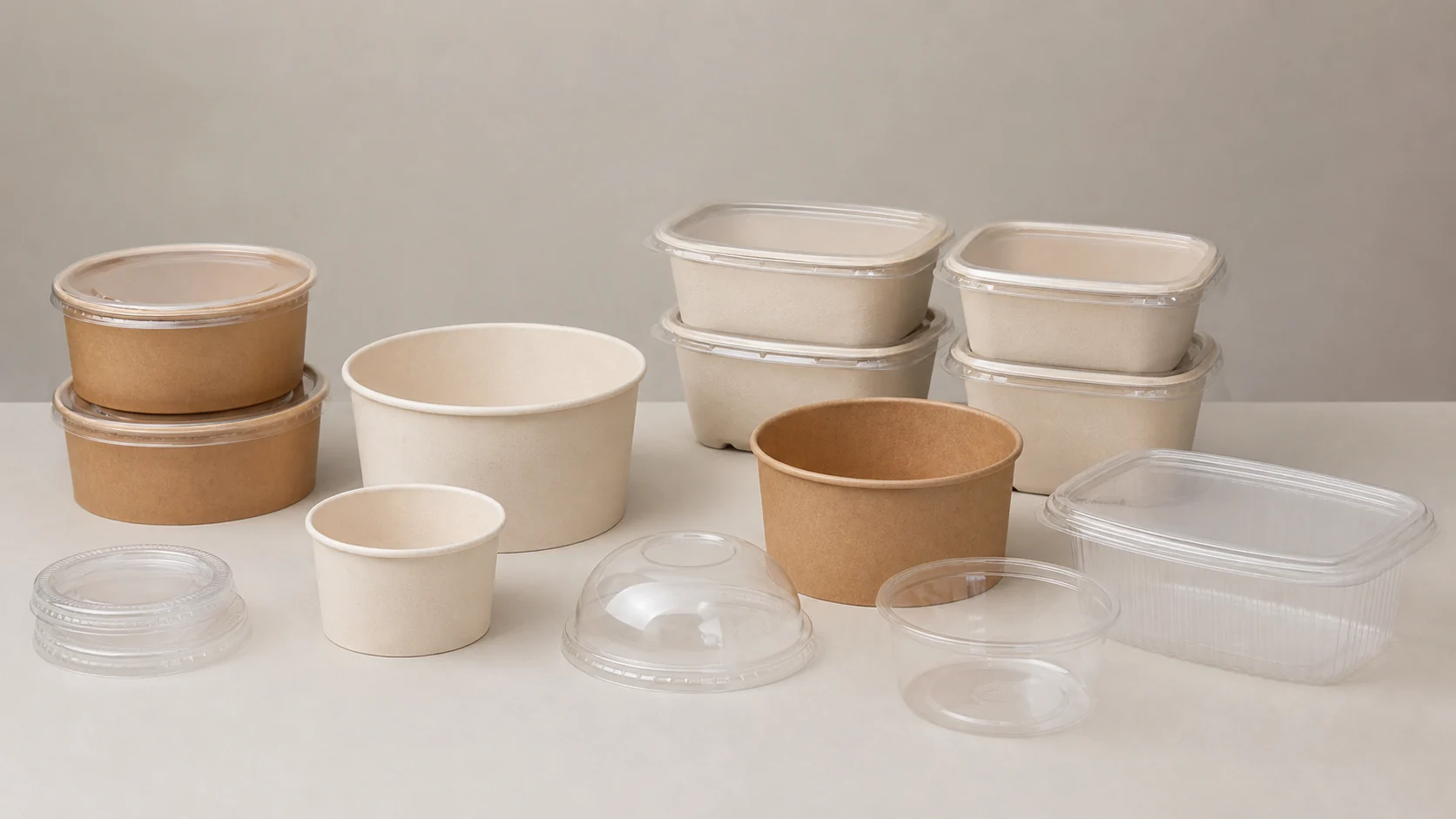
Before evaluating any container-and-lid SKU, document three parameters for every menu item the packaging will carry.
Classify each item: ambient, warm, hot at fill, frozen, or chilled after fill. This single variable drives material selection more than any other factor. Paper-based containers with PE or PLA linings behave differently under prolonged heat exposure compared with polypropylene containers. A container rated for hot fill in one material may distort or release the lid under the same fill condition in another.
Rank each item on a practical scale: dry or low moisture (sandwiches, pastries), medium moisture (grain bowls, pasta without excess sauce), high moisture (soups, curries, braised proteins, stews), or free liquid (beverages, broths). This ranking maps directly to the seal type required. A friction or tab closure that performs acceptably on a medium-moisture bowl will not be acceptable for free-liquid soups. Soups require either a fully recessed lid with a positive lock or a separate soup container engineered as a unit.
Document the journey: fill → quality check → bag or carrier → transit → delivery platform hand-off → consumer. Note every transfer point, because each represents an opportunity for the lid to disengage. A container-and-lid pair for a 10-minute local delivery has a different durability specification than one for a 45-minute aggregator route where the bag is lifted, set down, and transferred multiple times.
FIG 1 — Suggested placement: A flow diagram mapping food state (hot / warm / chilled / frozen) against handling route (counter service / delivery / catering transfer) with lid seal type recommended at each intersection.
For operators working across multiple food formats, the Papacko disposable food packaging category provides a useful starting point for reviewing what container families are available before mapping them to the matrix above.
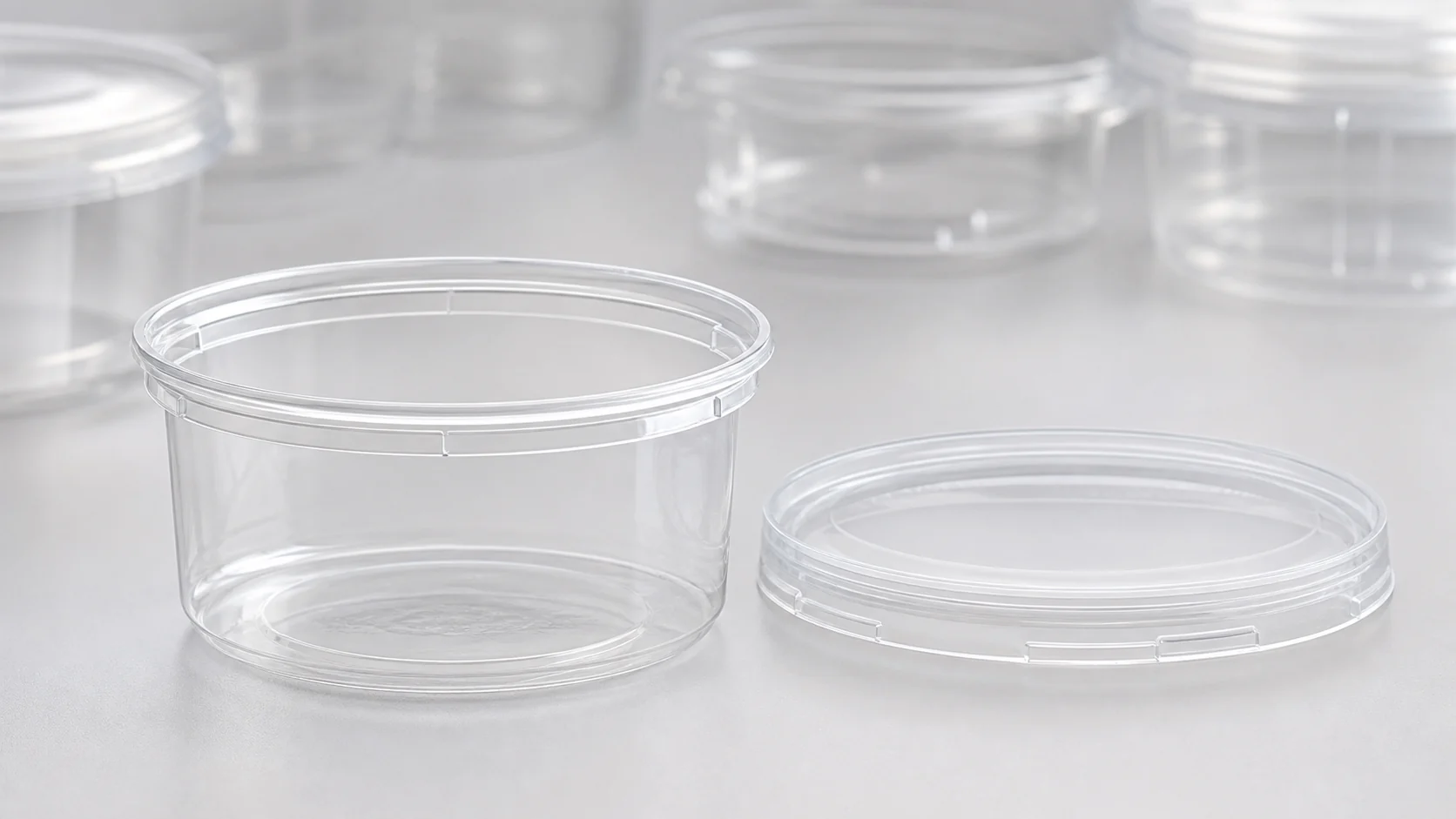
This is the section most buyers skip because it feels obvious. It is not obvious, and the cost of skipping it is return batches, complaints, and emergency re-sourcing.
Fit is not a visual match. Fit means that the lid seats fully on the container rim under the pressure a trained kitchen worker applies in a normal assembly motion, that the seated lid does not disengage under the handling forces described in your route map, and that it releases cleanly under the force a consumer would reasonably apply.
Rim geometry is the determining variable. Containers in the same nominal diameter from two different manufacturers may have different rim profiles—inner diameter, outer diameter, rim height, and rim curl radius can all differ by fractions of a millimetre that make the difference between a secure fit and a lid that pops under lateral pressure.
The rule is simple: lid and container must be validated as a pair, not as individual SKUs. This means your purchase order references both SKUs together, your goods-in check verifies both, and any mid-season substitution of one triggers re-validation of the pair.
Tuck-under (friction) closure. The lid skirt tucks inside or around the container rim. Fast to apply, easy to remove, low tooling cost. The closure relies entirely on interference fit. Appropriate for ambient or low-moisture foods with short handling routes.
Tab-lock closure. The lid has one or more tabs that clip over or under the rim. More positive engagement than friction alone. Requires deliberate release action. Common on round containers for medium-moisture foods.
Recessed snap or locking rim. The container rim has a channel or bead that the lid snaps into. This provides the most secure closure for high-moisture and hot-fill applications. Requires greater assembly force and deliberate disengagement. Common in soup containers and premium delivery formats.
Fold-flat and tuck closures on paper formats. Kraft and paper bowls often use a different lid geometry entirely—a paper lid that wraps over the bowl rim with a tuck tab. Evaluate these as a distinct category. The Papacko kraft paper bowls range illustrates how paper bowl and lid pairings work as an integrated format, and complementary lid options are detailed at Papacko paper bowl lids.
FIG 2 — Suggested placement: Cross-section diagram showing four closure types (tuck-under, tab-lock, recessed snap, paper tuck) with the interface geometry annotated for each.
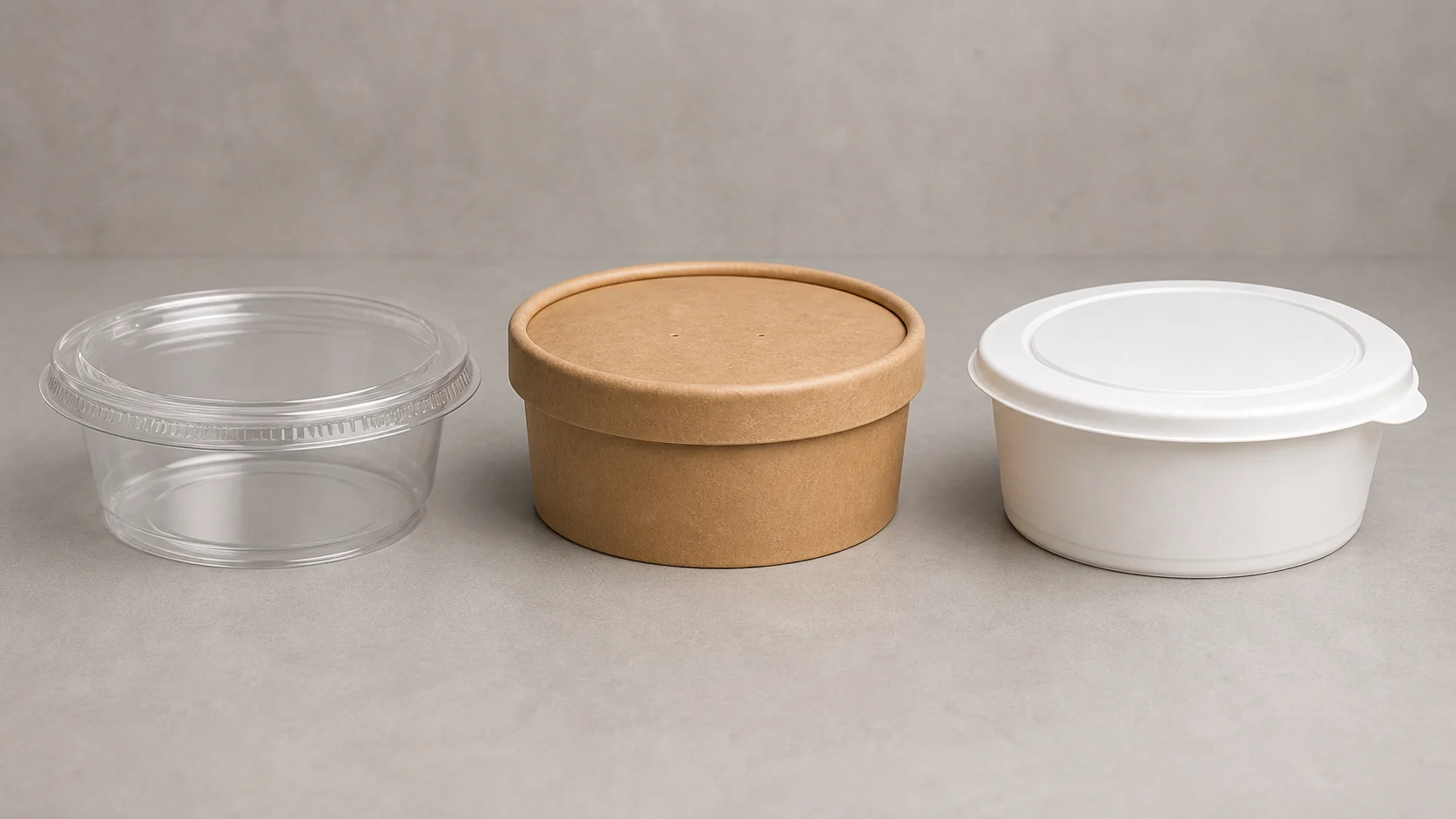
Seal quality and handling practicality sit in tension. Understanding the trade-offs explicitly allows buyers to make deliberate compromises rather than discovering them at the complaint stage.
A recessed snap closure provides the best moisture and vapour seal, but it requires more force and a two-handed or braced motion to engage fully. In a high-volume kitchen operating at cover speed, that extra second per unit accumulates. Buyers sourcing for central production units with packing lines accept that trade-off; buyers sourcing for table-service kitchens doing ad hoc takeaway orders may not.
Document your kitchen’s expected units-per-hour pack rate before specifying closure type.
Hot foods generate steam after lidding. If the lid seals completely, that steam condenses on the underside of the lid and drips back onto the food, softening bread, diluting sauces, and degrading presentation. Vented lids (with one or more small perforations or a structured vent tab) allow steam to escape but also allow the food to cool faster.
For hot foods on long delivery routes, buyers sometimes choose a vented lid and accept faster cooling rather than a sealed lid and condensation. Neither is universally correct. The choice depends on food type and route duration.
A high dome lid provides headroom for garnished dishes, assembled salads, or plated presentations. It also increases the stacked height per unit, reducing how many stacks fit in a delivery bag or insulated carrier. Flat or low-profile lids maximise carrier density but cannot accommodate tall food builds.
Calculate your carrier capacity with both lid profiles before ordering at volume.
Many operators face procurement requirements or local authority expectations regarding material sustainability or recyclability. Paper-lidded paper containers have a different end-of-life profile than clear PET lids on paper bases (which are typically non-recyclable as a composite). Buyers should review current guidance from regulators and their local waste infrastructure, and reference the FDA food contact materials guidance for any market where regulatory alignment is a purchasing requirement.
FIG 3 — Suggested placement: Trade-off matrix grid with seal tightness, assembly speed, venting, dome height, and material recyclability on one axis, and closure types on the other, showing relative performance without numerical scores.
No reputable packaging supplier—Papacko included—expects buyers to commit to volume without a sample stage. Formalising your sample review process protects both parties and reduces the risk of a large order arriving that fails your specific operational conditions.
Write a one-page brief before samples arrive. The brief should state: food types, fill temperatures expected, moisture classification, handling route, assembly method (manual or machine-assisted), closure force acceptable, and any label or print requirements. When samples arrive, review them against the brief—not against a general impression.
This means filling the container with your actual food at your actual fill temperature and lidding it as it would be in your kitchen. Then subject it to your actual handling route—including placing it in your carrier, simulating a transit period, and opening it as a consumer would. Do not test with water as a proxy for curry unless you have confirmed that water’s surface tension and viscosity are representative. Review the pair with the food it will carry.
The people who will lid 200 units per service know within five applications whether a closure is practical at cover speed. Their input is procurement data, not opinion.
Record: did the lid seat fully on every application attempt; did the sealed unit retain its contents through the transit simulation; did condensation form and in what quantity; did the lid release cleanly; was the label surface acceptable. Inferences about what would happen at volume are not sample review findings.
FIG 4 — Suggested placement: Sample review form template with rows for each review criterion and columns for pass, marginal, and fail, with a notes field per row.
The table below compares container-and-lid format types across procurement-relevant dimensions. No numerical claims are made about specific SKU performance. Use this as a framework to apply to the exact SKUs you are evaluating.
| Format Type | Typical Food Application | Closure Mechanism | Moisture Suitability | Venting Option | Material Recyclability Profile | Assembly Speed |
|---|---|---|---|---|---|---|
| Clear PET round with tab-lock lid | Cold salads, desserts, ambient prep | Tab-lock | Low to medium | Typically no | Check local infrastructure | Fast |
| Polypropylene round with snap lid | Hot meals, curries, soups | Recessed snap | عالية | Some SKUs offer vent | Generally recyclable where collected | معتدل |
| Kraft paper bowl with paper tuck lid | Soups, noodles, warm bowls | Paper tuck-tab | متوسط | Partial venting inherent | Depends on lining; check SKU | معتدل |
| Rectangular PET with hinged lid | Sandwiches, cold platters, salads | Integrated hinge/friction | منخفضة | لا يوجد | Check local infrastructure | Very fast |
| Black PP base with clear PP dome lid | Hot meals, presentation delivery | Friction or tab | Medium to high | Some SKUs | Generally recyclable where collected | Fast |
| Bagasse round with fibre lid | Hot foods, organic-certified menus | Friction or friction-tab | متوسط | Partial venting inherent | Compostable where facility exists | معتدل |
| Aluminium foil tray with board lid | Oven-to-table, catering bulk | Friction/crimp | Medium to high | لا يوجد | Aluminium recyclable; board separate | Fast |
| Paper soup container with PE lid | Soups, broths, beverages | Recessed snap or push-on | عالية | Push-on lids may vent | Composite; check local guidance | Fast |
Table is a format comparison tool, not a performance ranking. Verify all material and recyclability claims with the specific SKU data sheet and your local waste authority.
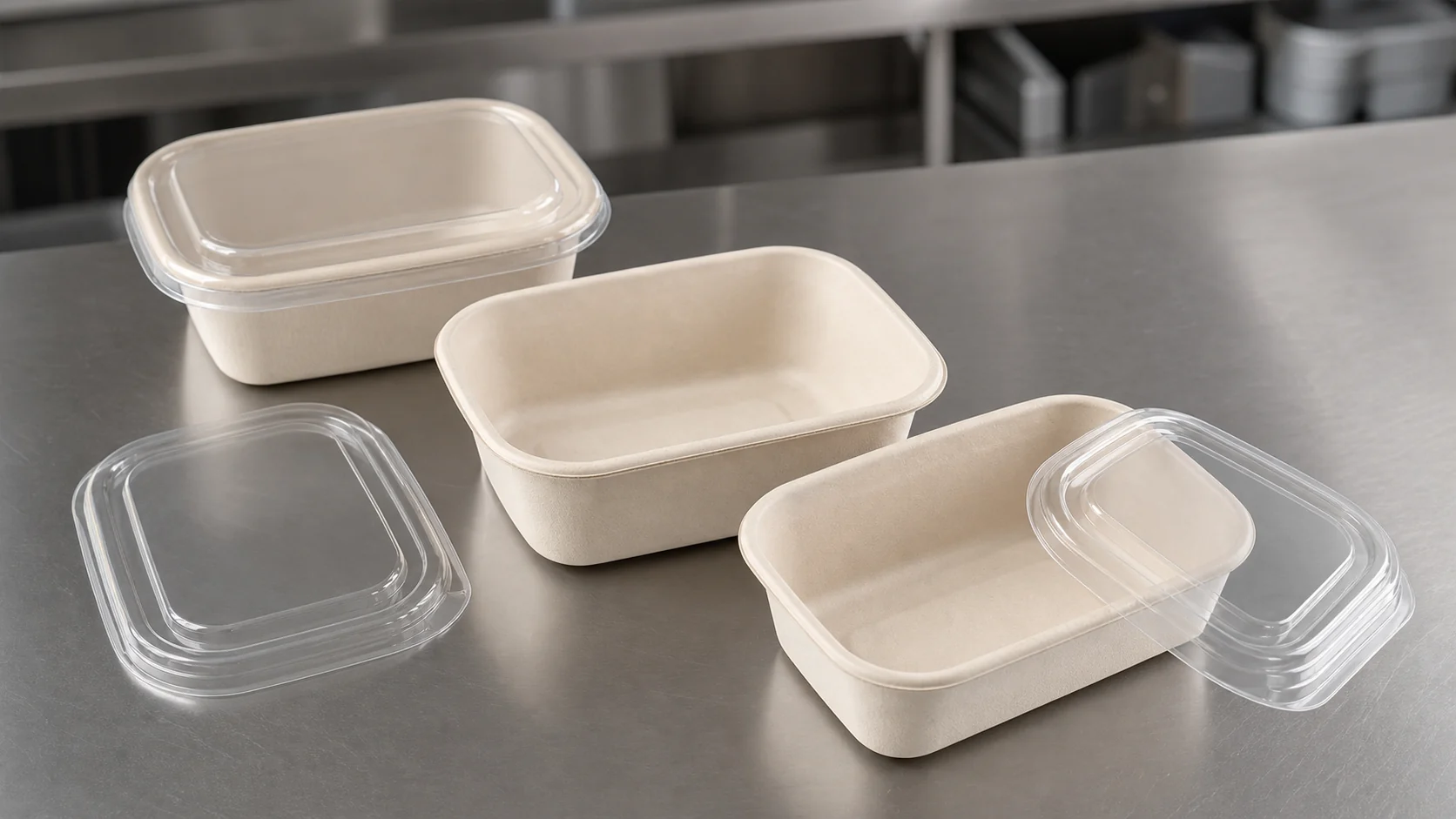
Use this checklist at the point of writing a purchase specification or placing a first order.
Food and fill
– [ ] Every menu item has been classified by food state at fill (hot / warm / ambient / chilled / frozen)
– [ ] Every menu item has been classified by moisture level (dry / medium / high / free liquid)
– [ ] Maximum expected fill temperature has been noted per food category
Route and handling
– [ ] Handling route has been documented with number of transfer points
– [ ] Estimated transit duration has been noted
– [ ] Carrier or bag type has been confirmed (insulated / ambient / open tray)
Fit and closure
– [ ] Container SKU and lid SKU have been confirmed as a validated pair from the same supplier range
– [ ] Closure type has been matched to moisture level and route duration
– [ ] Assembly motion has been reviewed with kitchen staff
Seal and venting
– [ ] Venting requirement has been confirmed for hot-fill applications
– [ ] Condensation impact on food quality has been assessed in sample review
Volume and supply
– [ ] Sample review has been completed against the actual food and fill conditions
– [ ] Minimum order quantity aligns with anticipated usage volume
– [ ] Lead time from order to delivery has been confirmed
Compliance and labelling
– [ ] Material food-contact compliance documentation has been requested from supplier
– [ ] Label adhesion on lid surface has been verified in sample stage
– [ ] End-of-life disposal route has been confirmed for each material in the pair
FIG 5 — Suggested placement: Printed version of this checklist formatted as an A4 PDF insert for procurement teams, with signature lines for buyer and kitchen manager sign-off at sample review stage.
Papacko works with B2B buyers across foodservice, contract catering, ghost kitchens, and hospitality procurement. The brief process described below is how experienced buyers structure their enquiry to get an accurate recommendation rather than a catalogue response.
Menu scope. List the food categories you are packaging, not just the container sizes. A supplier needs to know whether a 500 ml container will carry soup or salad because those are different lid specifications.
Volume and order cadence. State your estimated weekly or monthly unit requirement and whether demand is steady or seasonal. This affects whether you are buying from stock or discussing a dedicated supply arrangement.
Existing constraints. If you already have a container SKU in use that you are satisfied with and are looking only for a lid match, state this explicitly. If you are specifying both container and lid fresh, state that.
Operational constraints. Kitchen assembly method, storage space for packaging stock, and any existing label printer compatibility are relevant operational constraints that a supplier cannot infer from a menu list.
Sustainability or compliance requirements. If your procurement policy, client contract, or local authority requires specific material types or end-of-life profiles, state these at brief stage rather than after samples are agreed.
إن Papacko takeaway packaging hub covers the full range of formats relevant to delivery and takeaway operations and is the recommended starting point for operators building a packaging brief for the first time.
A well-structured brief should generate a recommendation that references specific SKU pairs, not a general category. If the response you receive does not reference both the container SKU and the lid SKU as a pair, ask for clarification before proceeding to sample.
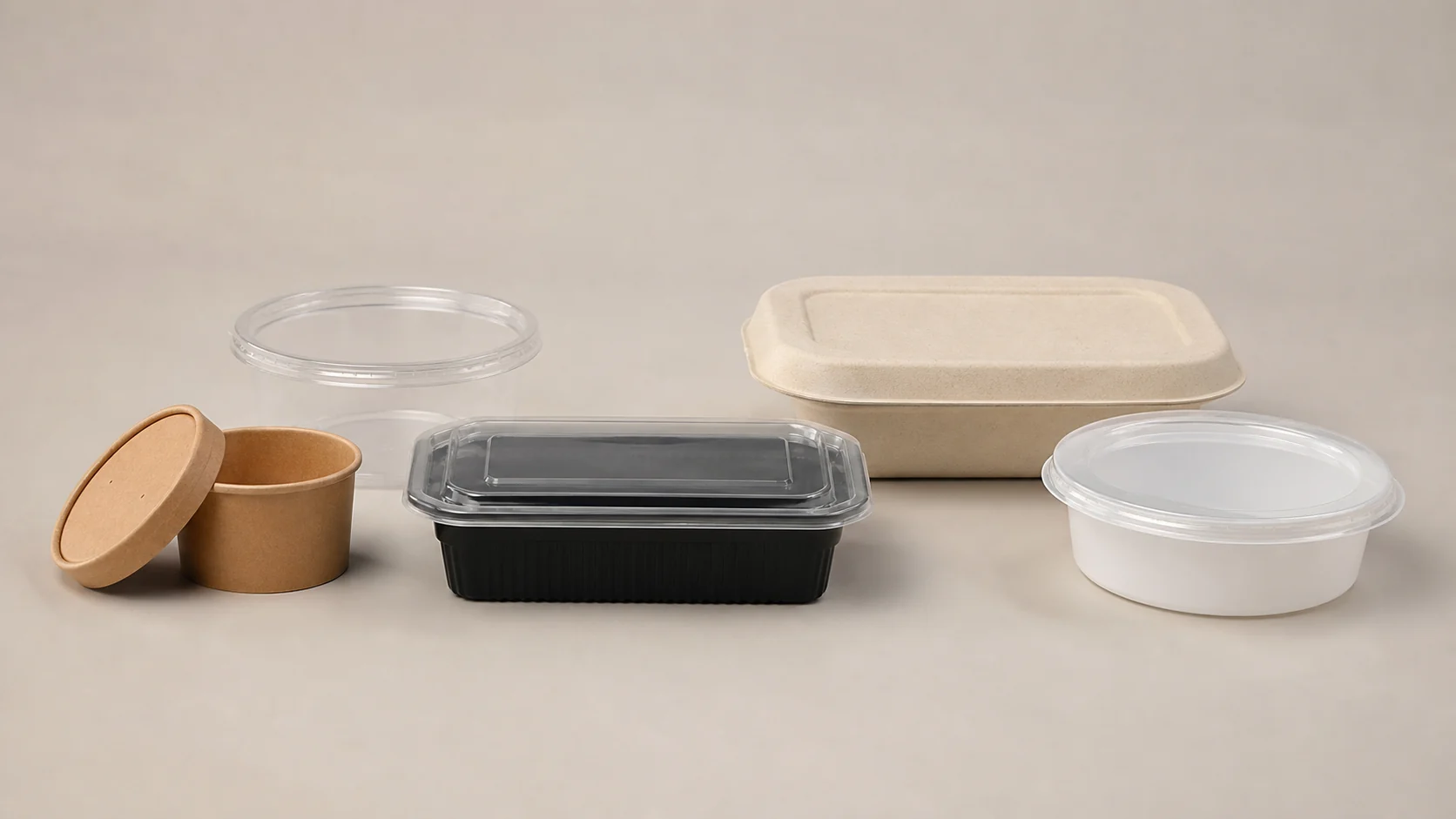
This guide was written for B2B buyers who are responsible for specifying and purchasing food packaging at commercial volumes. The frameworks, checklists, and comparison tools in this guide reflect the procurement questions that arise repeatedly in foodservice, ghost kitchen, contract catering, and hospitality procurement contexts. The guide does not address consumer retail packaging, pharmaceutical packaging, or industrial food processing formats.
The sourcing context assumed throughout is that buyers are purchasing from a commercial packaging supplier for operational deployment—not for regulatory submission, academic research, or compliance audit. Buyers in regulated markets should verify all compliance claims independently with their relevant authority.
No specific material performance figures, temperature ratings, transit time guarantees, or compliance certifications have been stated in this guide. Those figures are SKU-specific and must be sourced from the supplier’s data sheet for the exact SKU pair you are evaluating. The FDA link included in this guide points to the FDA’s food contact substances guidance page, which is a reference starting point for buyers in US-regulated markets. Buyers in other markets should consult the relevant national or regional food contact material authority.
The comparison table in this guide presents format types and procurement-relevant characteristics as a framework. It does not constitute a test report, performance guarantee, or ranking. All claims in the table should be verified against the specific SKU data sheet before purchase.
Use this guide sequentially. Start with the food, fill, and route section before evaluating any container. Apply the fit and closure section to specific SKU pairs, not to container categories in general. Run the sample review section with your actual food and fill conditions before committing to volume. Use the checklist as a sign-off tool before raising a purchase order, not as a retrospective audit tool after problems have emerged.
If your operation spans multiple food types, multiple fill temperatures, or multiple handling routes, you may need more than one container-and-lid pair. This guide supports that conclusion—it does not suggest that a single pair can serve all conditions.
You can attempt to, but you cannot assume compatibility without validating the specific pair under your operational conditions. Rim geometry—including inner diameter, outer diameter, rim height, and curl profile—varies between manufacturers even when nominal sizes appear to match. The only reliable validation is to fill your actual container with your actual food, apply the candidate lid under your assembly conditions, and subject the sealed unit to your handling route. If the pair performs acceptably across that sequence, it is a usable pair. If it does not, it is not—regardless of what the nominal dimensions suggest.
The decision point is whether the food generates steam after lidding under normal service conditions. Hot foods—soups, braised dishes, rice, pasta with sauce, steamed proteins—generate steam that will condense on an unvented lid and return as condensate to the food. If condensate on your specific food degrades presentation or eating quality within the timeframe of your route, a vented lid is preferable. If the food is at or near ambient temperature at fill, or if condensation does not affect the food type, a sealed lid is preferable. Review this with your sample under actual fill conditions rather than making an assumption by food category.
A friction fit lid relies on the interference between the lid skirt and the container rim to remain in place. Heat can soften some materials slightly, which may reduce the interference fit over time in a hot-fill application. A snap-lock or recessed-snap lid engages a positive mechanical feature—a bead, channel, or tab—that requires deliberate force to disengage. For hot, high-moisture foods on longer handling routes, a positive mechanical closure is generally more appropriate than a friction fit, but the correct specification depends on the exact material and rim geometry of the SKU pair you are evaluating. Request the supplier’s guidance on the heat tolerance of the specific closure mechanism before specifying.
Treat any change to either the container SKU or the lid SKU as a new pair requiring re-validation. This applies even if the supplier describes the change as a minor update, a formulation adjustment, or a tooling refresh. The rim geometry and closure mechanics of any changed component may have shifted in ways that affect the fit. Request samples of the new SKU before accepting delivery of a new batch, and run your standard sample review against the actual food and fill conditions before approving the change.
Paper-based formats with appropriate linings can perform well under hot-fill conditions for certain food types, but the performance is specific to the lining material, the paper weight, and the lid format. A paper tuck-tab lid on a PE-lined kraft bowl behaves differently from a push-on plastic lid on the same bowl. For paper formats under hot-fill conditions, pay particular attention to whether the lining maintains integrity at the rim—this is the interface point where steam and moisture most commonly stress paper-composite formats. Review the specific SKU data sheet and validate with your sample review.
Request enough units to cover at least three separate fill sessions under your actual kitchen conditions, with a minimum of five to ten units per session. This gives you data across different staff members applying the lid, different food temperatures within your normal service range, and different positions in a delivery bag or carrier. A single fill-and-check on two units is not a sample review—it is a visual inspection. The value of the sample stage is identifying failure modes that only appear under repetition or variation, and that requires a meaningful number of units across realistic conditions.
This guide is an editorial procurement resource. All SKU-specific performance, compliance, and material claims must be verified with the supplier data sheet for the exact products under evaluation. Papacko product links included in this guide are provided for navigation and reference. Regulatory guidance should be sourced from the relevant authority for your market.