Готовы создать собственные фирменные бумажные стаканчики или упаковку?
Сообщите нам свои требования - размер, покрытие, печать и место назначения - и наша команда подготовит подробное коммерческое предложение в течение 24 часов.

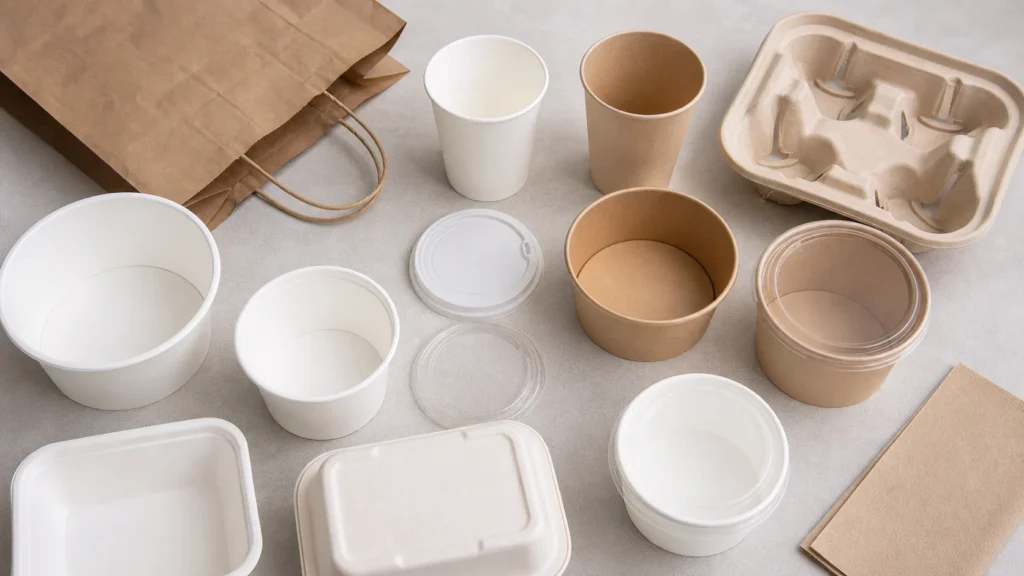
Procurement teams sourcing food packaging regularly encounter the word “recyclable” on spec sheets, product pages and supplier sales decks. The problem is that the word describes a potential route, not a guaranteed outcome. Whether a specific container, lid, cup or tray actually moves through a recycling stream depends on far more than the material it is made from. It depends on the exact SKU and all of its components, the food residue left on it after use, the collection infrastructure available at the point of use, the specifications of the receiving facility and the end markets active at that moment.
This guide is written for foodservice procurement teams, multi-site operators, brand managers and distributors who need to build accurate, defensible purchasing decisions rather than rely on broad category claims. It separates three concepts that are frequently conflated — recyclability, recycled content and food-contact suitability — and outlines the documentation steps that responsible buyers should complete before communicating anything to their own teams or customers.
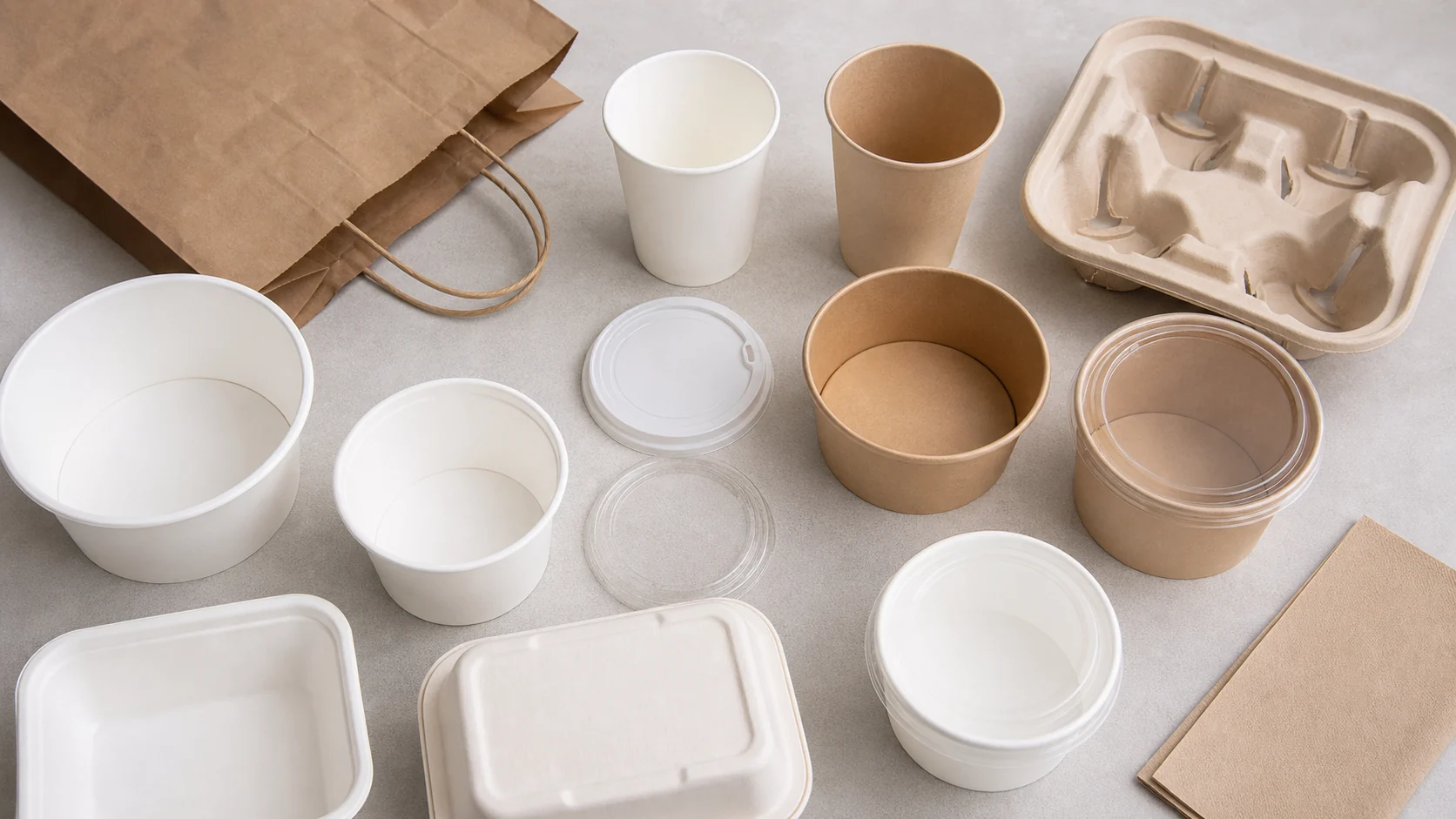
When a supplier lists a product as recyclable, that statement describes what is theoretically possible under favorable conditions. It does not confirm that the product will be collected in your operating geography, accepted at the receiving facility closest to your sites or processed without contamination from food residue.
A more useful working definition for procurement purposes is this: a package is recyclable at a specific site when there is a confirmed collection pathway, the receiving facility accepts that exact item in its current form, the item is reasonably free of food soil at the point of disposal, and a credible end market exists for the recovered material. All four conditions apply simultaneously. Any single gap breaks the chain.
Buyers who treat “recyclable” as a settled product attribute rather than a conditional route to verify create compliance risk, marketing risk and operational confusion downstream.
These three concepts appear in the same conversations but answer completely different questions.
Переработка refers to the end-of-life route: can this item, in the form in which it leaves your operation, enter a collection and processing stream that yields recovered material? This is site-specific, component-specific and residue-sensitive. It requires confirmation from the collecting authority or hauler at each location.
Переработанное содержимое refers to what went into the product: what percentage of the material used to manufacture this item came from post-consumer or pre-consumer recovered sources? A product can contain recycled content and still have no viable recycling route at end of life. Conversely, a product may be highly recyclable at end of life but contain no recycled content in its manufacture. These attributes do not imply each other.
Food-contact suitability refers to regulatory and safety compliance: is the material, including any recycled content, reviewed and approved for direct or indirect contact with the specific food types this package will hold? This is a separate regulatory question governed by the authorities relevant to your market, not a property that follows automatically from recyclability or recycled-content status.
Buyers should ask about each of these three attributes independently and expect documentation for each.
Before any recyclability assessment is possible, procurement teams need a complete component map for every SKU under review. A container sold as a single product unit may include several distinct materials that behave differently at every stage of the recycling process.
Common components to map include: the primary container body, the lid or seal (which may be a different resin or fiber type than the base), any barrier film or liner inside the container or on the lid, the pressure-sensitive or wrap-around label (which may use a different adhesive or substrate), any sleeve or secondary wrap, and accompanying accessories such as cutlery packets, sauce cups or condiment lids.
Each component needs its own material identification. A fiber container with a PE-coated interior and a clear PET lid is not a single-material item. The recyclability of the assembly — and whether it should be separated before disposal — depends on how the receiving facility handles each component individually.
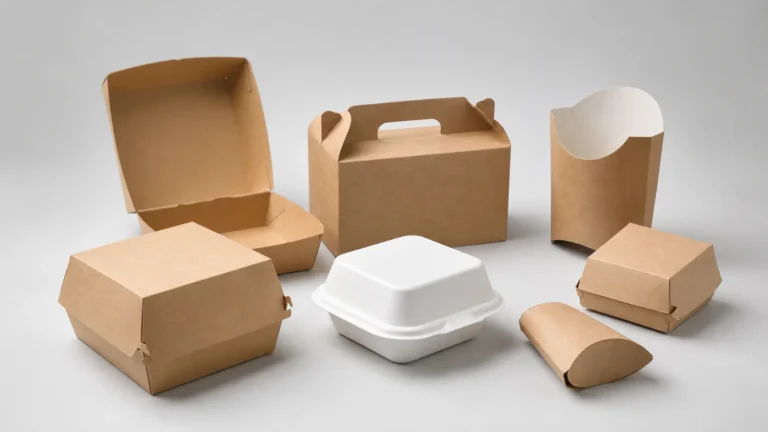
This level of detail is standard practice when working with контейнеры для упаковки пищевых продуктов across multiple formats. Suppliers should be able to provide material composition data at the component level for every SKU, not just a general category description.
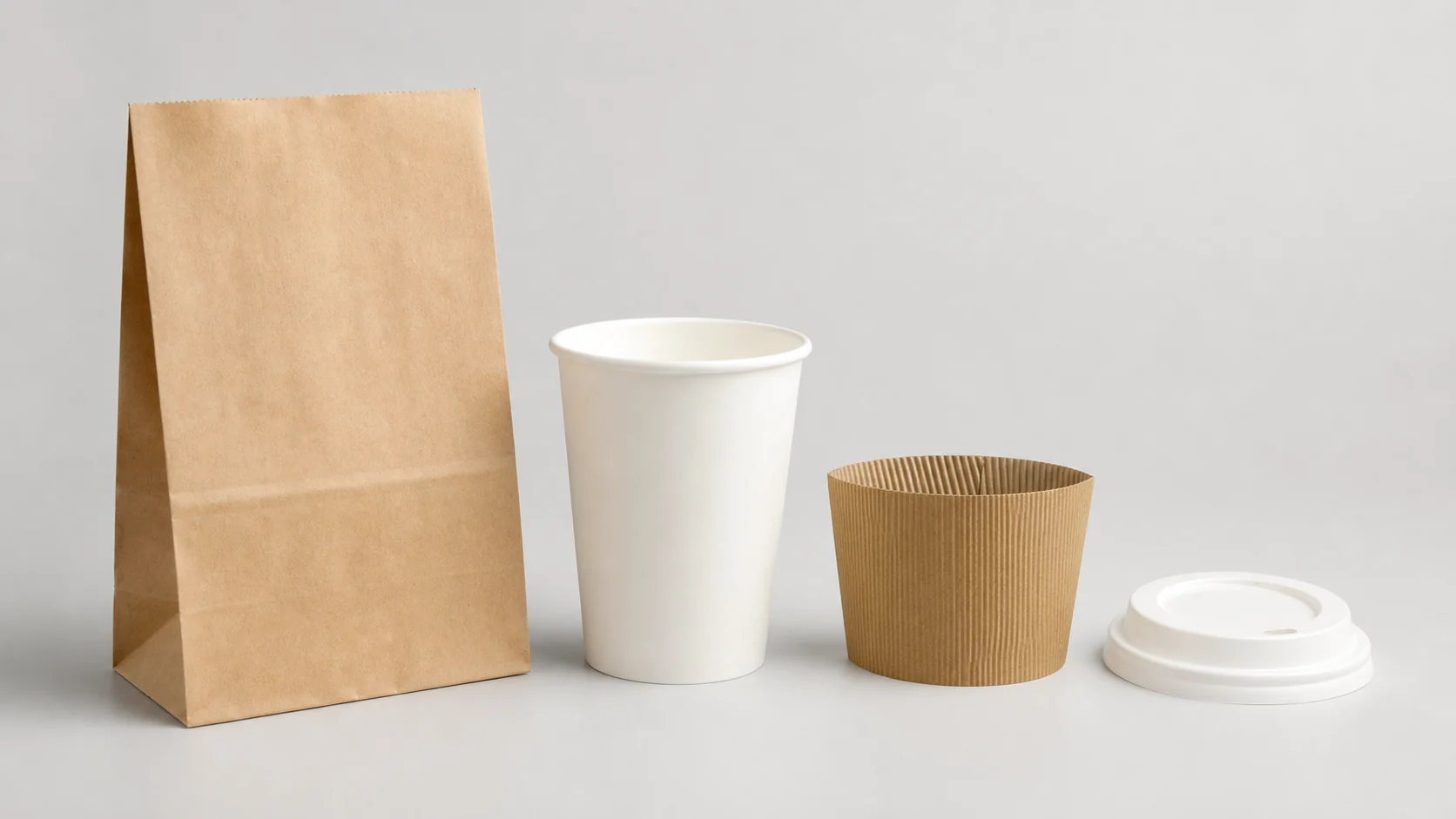
Paper-based food packaging presents a specific challenge because paper is widely understood to be recyclable, and many fiber products genuinely do have viable recycling routes — but only under conditions that buyers must verify rather than assume.
The key variable in paper food packaging is coating. Paper used in food service applications is frequently coated or lined to provide moisture resistance, grease resistance or heat resistance. The coating material, its weight and how it is bonded to the fiber substrate all affect whether the item can be accepted at a fiber-processing facility. Some facilities can accept lightly coated or unlined papers. Others cannot. Some accept only specific coating types that are designed for fiber repulpability, a characteristic that requires its own third-party assessment.
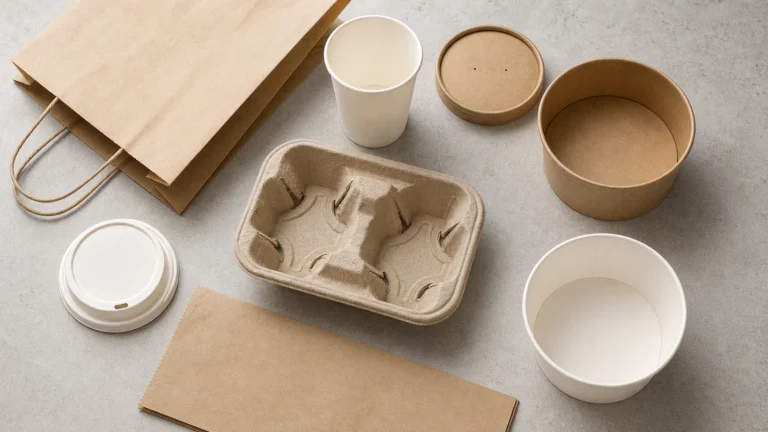
Single-use hot and cold бумажные стаканчики are a clear example of the gap between apparent recyclability and actual collection reality. The cup is primarily fiber, which creates the impression that it belongs in a paper recycling stream. In practice, acceptance depends on the coating type, whether the lid is separated, the residue level from beverage contents and whether the collection program serving that location specifically includes cups of that construction. These are site-by-site and facility-by-facility questions. No buyer should communicate that a paper cup is universally recyclable, because that is not a statement that current infrastructure supports consistently.
For procurement purposes, ask your supplier to identify the exact coating type used on each paper product, whether that coating has been assessed for repulpability under a recognized protocol, and which specific processing facilities have confirmed acceptance.
Molded fiber, pressed pulp and paperboard bowls occupy a similar position to cups: they are fiber-based, which creates familiarity, but their actual end-of-life route requires individual verification.
Бумажные миски used in foodservice frequently carry a barrier treatment — either a coating applied during manufacture or a liner added for wet or greasy foods. These treatments serve an essential functional purpose, but they affect how the fiber can be recovered. A bowl used for soup, rice, pasta or any oily food carries residue that further complicates acceptance.
Mixed-component formats add another layer. A fiber bowl with a film seal or a paperboard tray with a PET window requires buyers to determine whether the components should be separated by the end user before disposal, whether that separation is realistic in a quick-service or high-volume environment and what happens to each component independently. If user separation is required for recyclability, that step must be built into the disposal instructions at the point of use — it does not happen automatically.
Suppliers should be able to confirm the specific composition of barriers and liners used in any bowl system, and buyers should verify acceptance with the facilities serving each operating location before making any disposal claims to staff or customers.

Plastic food packaging carries a resin identification code — the number inside the triangle that appears on most plastic products. These codes identify the polymer family: PET, HDPE, PVC, LDPE, PP, PS and other. They are material identifiers, not recycling instructions. A resin code alone does not determine whether a specific item will be collected or processed in any particular location.
Whether a plastic food package has a viable recycling route depends on several additional factors working together:
Form and format. Rigid containers and thermoformed trays are processed differently from flexible films, even when they are made from the same polymer. Thin-walled formats may not be accepted at facilities that accept thicker versions of the same resin. Lids and bases made from the same nominal material but different densities or additives may sort differently.
Component interaction. Labels, adhesive coatings, barrier layers or co-extruded materials in the same item can disqualify an otherwise acceptable plastic from a processing stream. A PET tray with a PVDC barrier film, for example, is not straightforward PET for processing purposes.
Food residue. Most plastic recycling streams require reasonably clean material. Items with significant food contamination are typically rejected at sorting, which affects the economics and acceptance criteria of facilities. Rinse requirements vary and are not always practical in a foodservice disposal environment.
Local acceptance. Collection programs in different regions, municipalities and building types accept different resin codes. What is collected curbside in one city may not be collected by the program serving a commercial kitchen or a dense urban multi-site operation. Buyers operating across multiple sites must verify acceptance at each location.
Documentation should confirm the specific resins in every component, the facility types that have confirmed acceptance and any pre-sort or cleaning requirements that affect realistic collection rates at the point of use.
When a plastic packaging product contains post-consumer recycled (PCR) plastic content and is intended for direct food contact, a separate regulatory review applies. Recycled plastic content introduces variability in the source material that virgin polymers do not have. The regulatory question is whether that recycled material has been processed in a way that makes it suitable for contact with specific food types under the intended conditions of use.
In the United States, the FDA has published guidance on this question. Buyers sourcing plastic food-contact packaging that includes recycled content should review the FDA recycled plastics guidance as a starting point for understanding the framework. This guidance describes the FDA’s evaluation process and the expectations for recycling technology submissions. It reflects a US regulatory context and does not constitute approval for any individual product or supplier. Buyers operating in other markets should consult the relevant authority in each jurisdiction.
The practical implication for procurement is straightforward: a supplier’s claim that a product contains recycled content does not automatically mean that content has been reviewed for food-contact suitability. These are separate steps. Request documentation that covers both the recycled content percentage and the food-contact review for each specific SKU.
A packaging item that is theoretically recyclable provides no benefit if the disposal environment at the point of use does not support correct sorting. Procurement decisions should include a review of the collection infrastructure at each operating location: what programs are active, what materials they accept, how bins are labeled and positioned and whether staff and customers can realistically sort correctly under normal operating conditions.
This operational step is frequently overlooked in procurement planning. The gap between what a spec sheet says and what actually gets sorted correctly in a busy kitchen, a high-traffic counter-service environment or a distribution facility disposal area is significant. Items that require special handling — film removal, component separation, rinsing — see lower correct-disposal rates when those steps are not clearly communicated and practically supported.
Bin labeling, staff communication and customer-facing disposal guidance all depend on having accurate information about which items are actually accepted at each location. Supporting these programs often requires упаковочные принадлежности that help communicate disposal instructions clearly at the point of use, including appropriate labeling, sorting aids and packaging designed to minimize user steps required for correct disposal.
Do not import recyclability claims from one geography to another. Verify acceptance at each specific site.
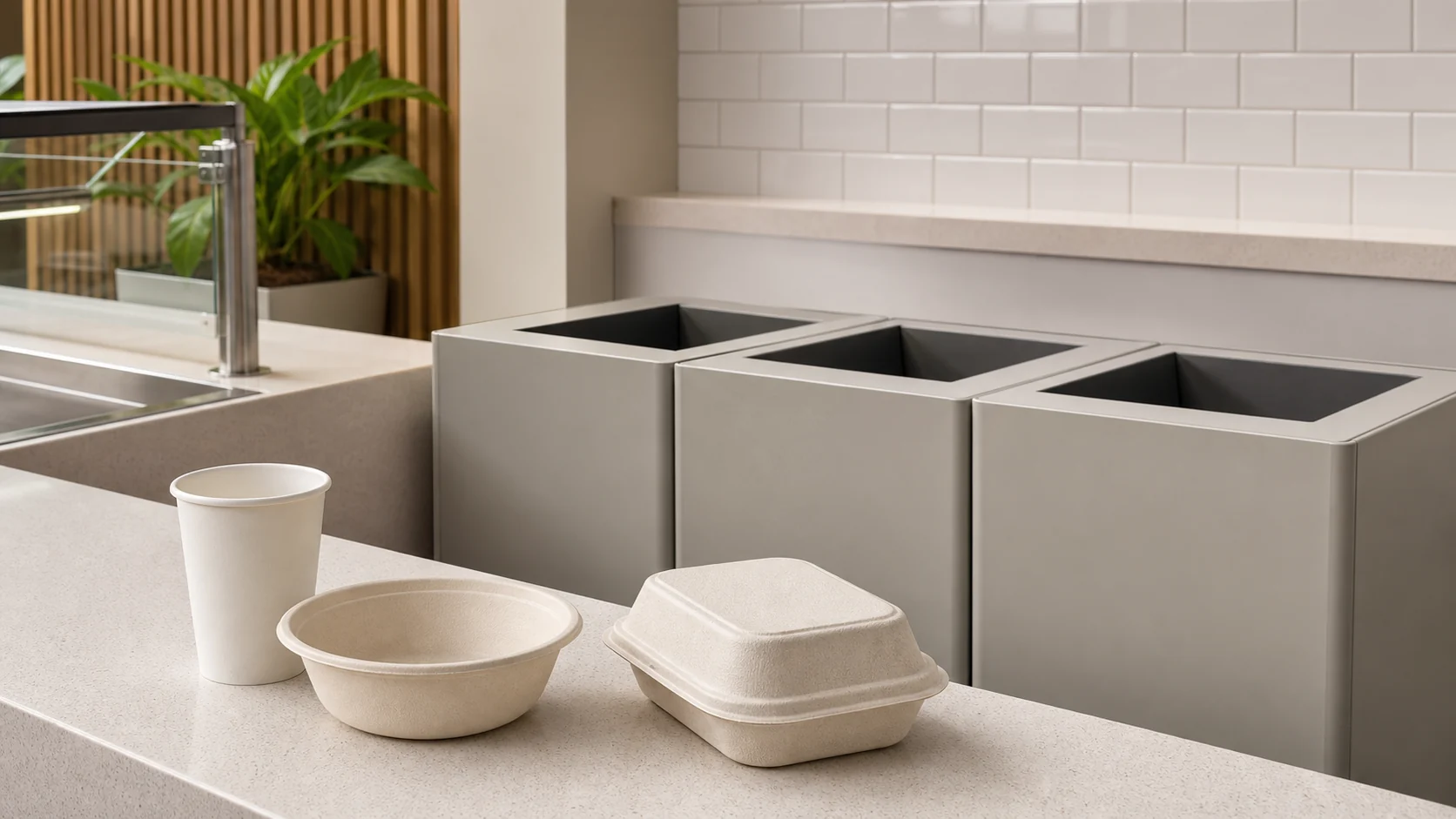
Before communicating anything about recyclability to your team, customers or marketing channels, the following documentation should be in hand for each relevant SKU:
For guidance on material comparison across container formats, the take-out container material guide provides background on how different material types compare across functional and sourcing dimensions, which can inform the questions to prioritize in supplier conversations.
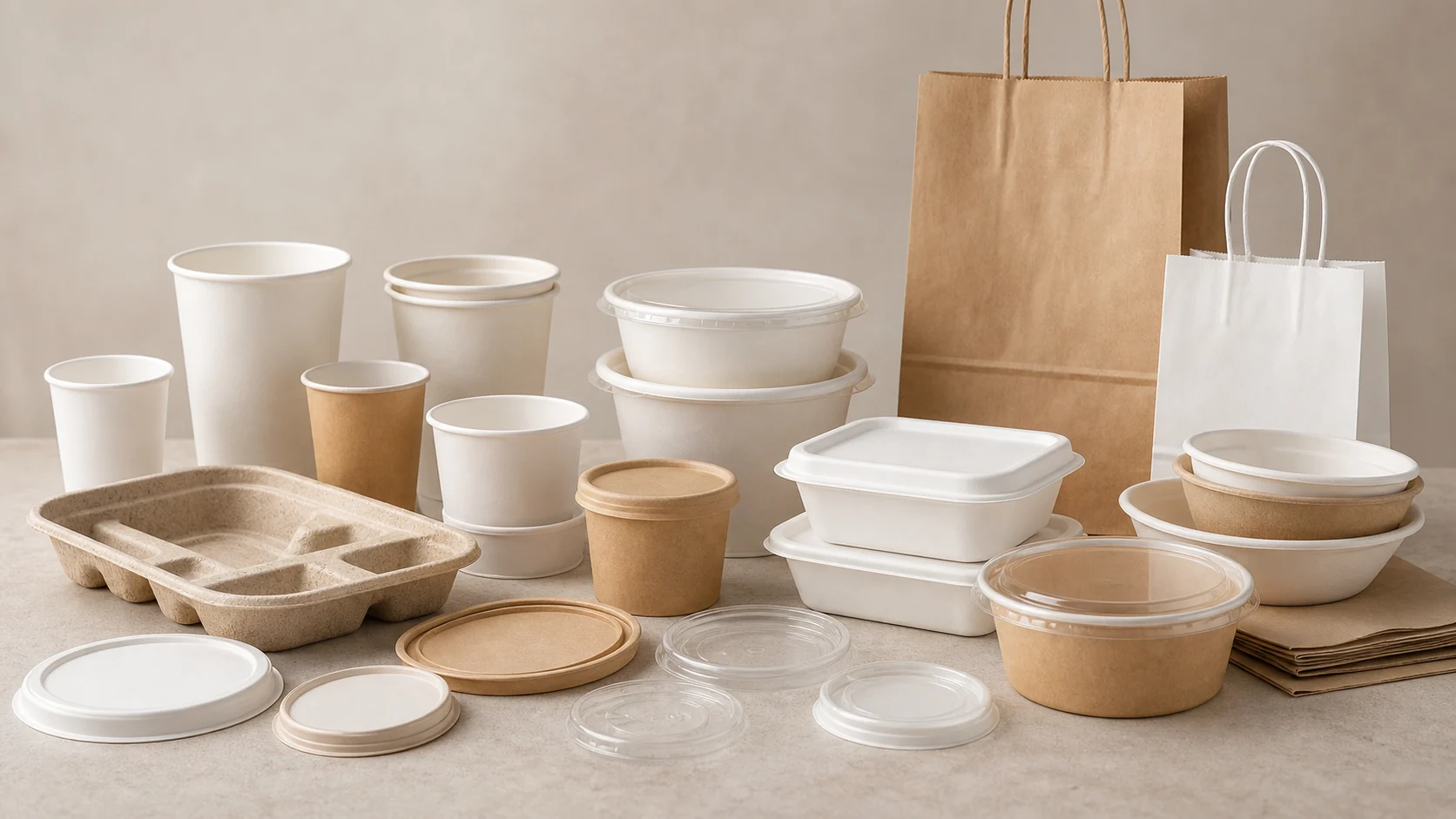
Even when all verification steps are completed and confirmed, exceptions will occur. Collection programs change their accepted materials lists. Facilities upgrade or change processing technologies. End markets shift, affecting what is economically viable to process. A verification completed at one point in time may need to be revisited within a relatively short period.
Some items in a food packaging portfolio will not have a viable recycling route regardless of the material. Items with heavy food residue that cannot be cleaned, complex multi-material assemblies with no separation pathway, formats too small to sort reliably and items collected in regions without matching infrastructure will route to general waste. This is a reality of operating at scale across diverse geographies, not a failure specific to any product category.
Buyers should plan disposal communication accordingly: define which items in the portfolio have confirmed collection pathways in which locations, and be precise about that scope. Do not communicate a general recyclability claim that applies to a subset of locations as if it applies to the entire operation. Residual disposal — where no viable route exists — should be acknowledged and handled accordingly rather than obscured by aspirational language.
Review your portfolio, your collection programs and your documentation on a defined schedule, not as a one-time exercise.
If you are working through a multi-SKU portfolio assessment, managing a transition to packaging with different material profiles or trying to build documentation that will support responsible disposal communication at your sites, a structured packaging material review is a practical starting point.
Papacko works with procurement teams, operators and distributors on packaging selection across a range of material types and formats. Contact the team to discuss the specific SKUs and sites under review. No commitments or outcomes are guaranteed in advance — the value is in working through the actual documentation and asking the right questions for your specific operating context.
Опыт и условия закупки. This article is written by the Papacko editorial team drawing on sourcing experience across food packaging categories including fiber, plastic and multi-material formats used in foodservice, take-out and distribution environments. The content reflects practical questions that procurement teams and operators raise when reviewing packaging specifications and building responsible disposal communications.
Технические и нормативные основания. This article does not constitute regulatory advice, legal guidance or a certification of any product’s recyclability, recycled content or food-contact status. Regulatory frameworks referenced reflect publicly available guidance documents and are cited as starting points for buyer research, not as confirmations of compliance for any specific product. Buyers should consult qualified regulatory, legal or technical advisers for their specific products and markets.
Как использовать данное руководство. Use this article as a framework for structuring conversations with suppliers and for identifying the documentation gaps in your current portfolio. Every claim in it is conditional: outcomes depend on specific SKUs, specific locations, specific facilities and specific documentation that only you and your suppliers can confirm. Do not apply general statements from this article to specific products without completing the verification steps described.
For a food package, “recyclable” describes a conditional end-of-life route rather than a fixed product attribute. It means that under the right conditions — confirmed collection at the point of use, acceptance at the receiving facility, adequate cleanliness and an active end market for the recovered material — the item can re-enter a material stream. All of those conditions must be verified for your specific operating locations. No single condition substitutes for the others.
Paper cups may have a viable recycling route in some locations and programs, but this is not universal. The coating type, the lid material, beverage residue and whether the collection program serving your site accepts cups of that specific construction all determine the actual outcome. Buyers should not communicate that paper cups are recyclable without confirming acceptance with the hauler or program at each site. The coating type and any repulpability data from your supplier are the starting documentation.
No. The resin identification code tells you the polymer family of the primary material. It does not indicate whether the item will be collected in your operating geography, whether the receiving facility accepts that format, or whether other components in the same product — coatings, labels, barriers — affect processing. Collection acceptance varies significantly by location, format and facility. A resin code is a starting point for a material identification conversation, not a recycling confirmation.
Not automatically. Recycled content percentage and food-contact suitability are separate questions requiring separate documentation. The FDA has published guidance on what it expects from recycling technology submissions for food-contact plastics in the US context. Buyers should request specific food-contact review documentation for any PCR-containing plastic packaging, covering the intended food types and use conditions, from each supplier. Operating outside the US requires consulting the relevant authority for that market.
Food residue is a practical barrier at sorting and processing facilities. Most collection programs and receiving facilities expect material that is reasonably free of food soil. Items with significant residue are typically rejected or contaminate loads, reducing the quality and value of recovered material. In foodservice environments where rinsing is not practical, this may mean that packaging that is technically recyclable in its clean form does not consistently reach a recycling stream in actual operation. Buyers should confirm residue tolerances with receiving facilities.
Collection programs, facility specifications and end markets change, sometimes significantly within a single year. A practical approach is to schedule a documentation review at least annually and whenever you make a material or supplier change, expand to new operating geographies, receive updated information from a hauler or municipality, or plan to make new public-facing claims about your packaging. Recyclability verification is not a one-time exercise — it reflects the current state of infrastructure and markets at a specific point in time.