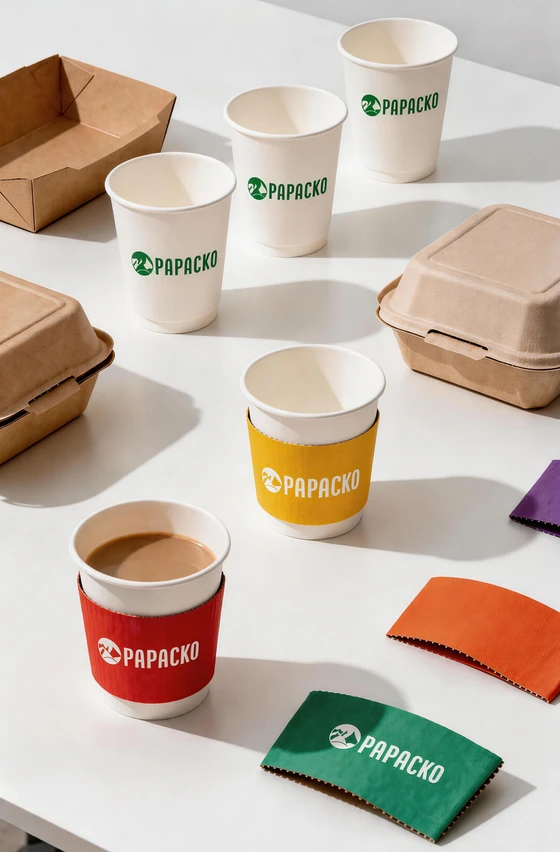
Готовы создать собственные фирменные бумажные стаканчики или упаковку?
Сообщите нам свои требования - размер, покрытие, печать и место назначения - и наша команда подготовит подробное коммерческое предложение в течение 24 часов.

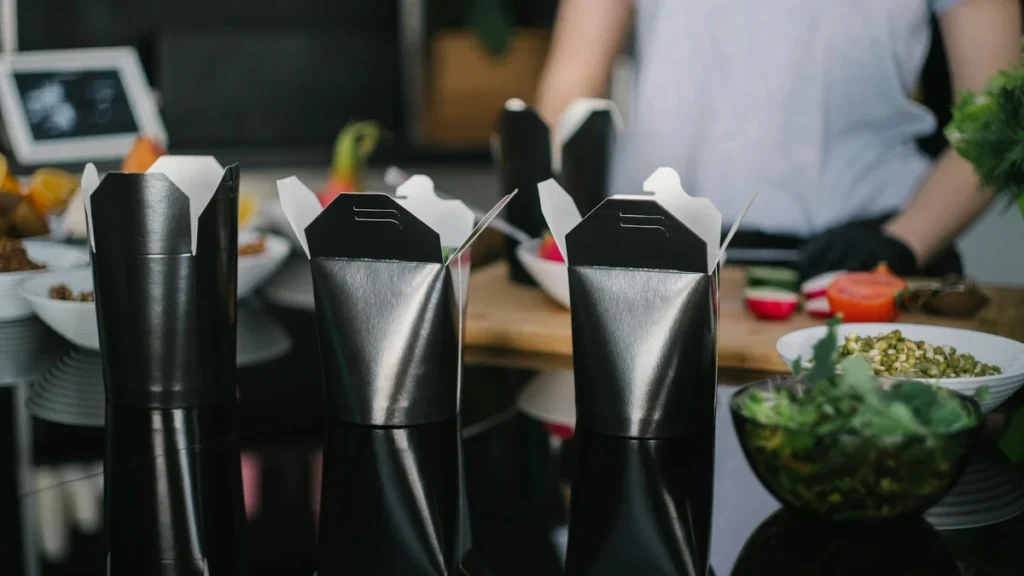
The catering industry generates 12-18 million tons of packaging waste annually, with food service businesses facing mounting pressure from corporate clients, event planners, and environmentally conscious consumers to adopt.
The catering industry generates 12-18 million tons of packaging waste annually, with food service businesses facing mounting pressure from corporate clients, event planners, and environmentally conscious consumers to adopt sustainable alternatives. A 2025 industry survey found that 67% of corporate event planners now require eco-friendly packaging as a mandatory criterion when selecting catering partners—making sustainability not just an ethical choice but a competitive necessity.
This comprehensive guide examines eco food packaging solutions specifically designed for catering operations, from small event caterers to large-scale corporate dining services. You’ll learn material comparisons across compostable, recyclable, and biodegradable options, cost analysis frameworks that account for total lifecycle expenses, regulatory compliance requirements across different jurisdictions, supplier vetting criteria, and ROI calculations that demonstrate how sustainable packaging drives customer retention, premium pricing, and operational efficiency.
💡 Краткий вывод: Effective eco catering packaging balances material performance (leak resistance, temperature tolerance), environmental credentials (compostability, carbon footprint), cost structure (15-40% premium over conventional plastics), and regulatory compliance—with properly implemented systems delivering positive ROI within 8-14 months through client retention, price premiums, and waste disposal savings.
The key to choosing eco-friendly eco catering packaging depends on:
The catering landscape has fundamentally shifted:
-Corporate requirements: 72% of Fortune 500 companies mandate sustainable packaging in catering contracts (2025 procurement data)
-Event planner preferences: 58% actively seek caterers with comprehensive eco packaging programs
-Consumer willingness to pay: 45% of event hosts accept 8-12% cost increases for verified sustainable options
-Дифференциация бренда: Caterers with strong sustainability credentials command 15-25% higher pricing vs competitors using conventional packaging
Данные о рынке: Catering businesses that transitioned to 80%+ eco packaging reported 22% higher client retention rates and 18% increase in corporate contract renewals over 24-month periods, significantly offsetting higher material costs through volume stability and premium pricing.🎯 Отраслевой обзор: Wedding and corporate event planners increasingly publicize vendor sustainability credentials on social media and event materials—turning eco packaging into a marketing asset that generates referral business beyond the immediate event.
The key to choosing the eco catering packaging depends on:
Состав: PLA (” target=”_blank” rel=”noopener”>polylactic acid) from corn/sugarcane, bagasse (sugarcane fiber), bamboo fiber, molded fiber-PLA containers: Ideal for cold foods, salads, desserts (clarity resembles plastic)
-Bagasse clamshells: Excellent for hot entrees, grilled items (heat-resistant to 220°F)
-Bamboo fiber bowls: Strong, leak-resistant, suitable for saucy dishes and soups
-Molded fiber trays: Cost-effective for dry/semi-dry items, appetizer presentations
Compostability requirements:-Must be processed in commercial facilities at 140-160°F
-Breakdown produces nutrient-rich soil amendment
-Not suitable for landfill disposal (anaerobic conditions prevent degradation)
-Contamination with conventional plastic can ruin entire compost batches
Основные моменты, которые следует учитывать:
Состав: Recyclable plastics (PET, PP), aluminum, paperboard-Food-contaminated containers rejected by recycling facilities
-Multi-material designs (plastic+paper laminates) not recyclable
-Effective recycling requires consumer compliance—challenging at large events
-Black plastic containers (common in foodservice) not detectable by optical sorters
Understanding eco catering containers requires attention to these factors:

The key to choosing eco-friendly eco catering packaging depends on:
-Orders of 10,000+ units: 12-18% discount
-Orders of 50,000+ units: 22-30% discount
-Annual contracts with forecasted volume: 15-25% additional savings
Основные моменты, которые следует учитывать:
Beyond material costs, comprehensive analysis includes:
Disposal cost differences:-Conventional plastic waste disposal: $85-140 per ton (landfill fees)
-Compostable waste processing: $45-95 per ton (composting facilities)
-Recycling processing: $30-75 per ton (but requires sorting, cleaning)
-Annual savings potential: 5,000-event caterer reducing waste disposal costs by $1,200-2,800/year
Storage and logistics:-Eco pasometimesng often bulkier (molded fiber, bagasse): +15-25% storage space
-Lighter weight: -8-12% shipping costs vs conventional plastics
-Inventory complexity: Managing multiple eco materials vs single plastic source
Labor and operational:-Staff training on proper disposal/sorting: $400-800 initial investment
-Signage and communication materials: $200-500 per event season
-Client education time: +5-10 minutes per contract discussion
When evaluating quality eco catering packaging, consider the following:
Pricing strategies:-Catering company: 200 events/year, $8,500 average contract
-Eco packaging cost increase: +$180/event
-Applied price premium: 10% on 60% of clients = $510 additional revenue/event
-Net gain per event: $330
-Annual net revenue increase: $66,000 (from sustainability positioning)
Основные моменты, которые следует учитывать:
Калифорния SB 1383 (model for other states):-Bans non-compostable foodservice packaging for dine-in and takeout
-Requires 75% organic waste diversion from landfills by 2025
-Mandatory commercial composting programs for businesses generating 2+ cubic yards waste/week
-Penalties: $500-10,000 per violation
European Union Single-Use Plastics Directive:-Prohibits certain single-use plastic items (plates, cutlery, straws)
-Extended Producer Responsibility for packaging waste
-Mandatory labeling of environmental impact on packaging
Municipal regulations (varying by jurisdiction):-New York City: Foam container ban, composting requirements for large food establishments
-Seattle: Compostable/recyclable foodware requirement for food service
-San Francisco: Comprehensive ban on non-compostable foodservice packaging
Основные моменты, которые следует учитывать:
-Request certification documentation from suppliers
-Verify certification numbers on official registry websites
-Beware of self-awarded “eco” labels without third-party validation
-Maintain certification records for regulatory audits and client inquiries
For eco-friendly eco catering packaging, focus on:
Documentation requirements:-Third-party certification copies (BPI, EN 13432, etc.)
-Паспорта безопасности материалов (MSDS)
-Carbon footprint reports or lifecycle assessments
-Supply chain transparency documentation
Тестирование производительности:-Temperature tolerance verification (hot holding tests)
-Leak resistance for liquids and sauces
-Structural integrity under loaded conditions
-Compatibility with your menu items and serving methods
When evaluating the eco catering packaging, consider the following:
-Vague “eco-friendly” claims without certifications
-Inability to provide documentation upon request
-Prices significantly below market (suggests quality/certification issues)
-Long lead times (>8 weeks) without explanation
-Poor communication or delayed responses
The key to choosing eco catering packaging depends on:
Стратегия многочисленных поставщиков:-Primary supplier: 60-70% of volume (negotiated rates, reliable delivery)
-Secondary supplier: 20-30% (backup, competitive pricing pressure)
-Specialty supplier: 10% (unique items, premium events)
Управление запасами:-Just-in-time ordering for high-volume standard items (2-3 week supply)
-Safety stock for critical events (20-30% buffer)
-Seasonal pre-ordering (secure pricing, guarantee availability)
When evaluating eco catering packaging, consider the following:
Шаг 1: Audit current packaging usage-Catalog all packaging items (containers, utensils, cups, napkins)
-Quantify monthly usage by SKU
-Calculate current costs and waste generation
Шаг 2: Identify eco alternatives-Research certified compostable/recyclable options for each current item
-Request samples from 3-5 suppliers per category
-Conduct performance testing with actual menu items
Шаг 3: Cost-benefit analysis-Calculate material cost differences
-Project disposal cost savings
-Estimate potential price premiums based on client base
-Model 12-month and 24-month ROI scenarios
Understanding eco catering containers requires attention to these factors:
Шаг 4: Selective rollout-Choose 15-20% of events for eco packaging (mix of client types)
-Implement with supportive clients likely to provide positive feedback
-Collect performance data (breakage rates, client reactions, staff feedback)
Step 5: Waste management coordination-Establish commercial composting partnership (if using compostable materials)
-Set up on-site sorting protocols for events
-Train staff on proper disposal procedures
Step 6: Client communication development-Create marketing materials highlighting sustainability commitment
-Develop event signage explaining eco packaging choices
-Prepare FAQ responses for client questions about costs and performance
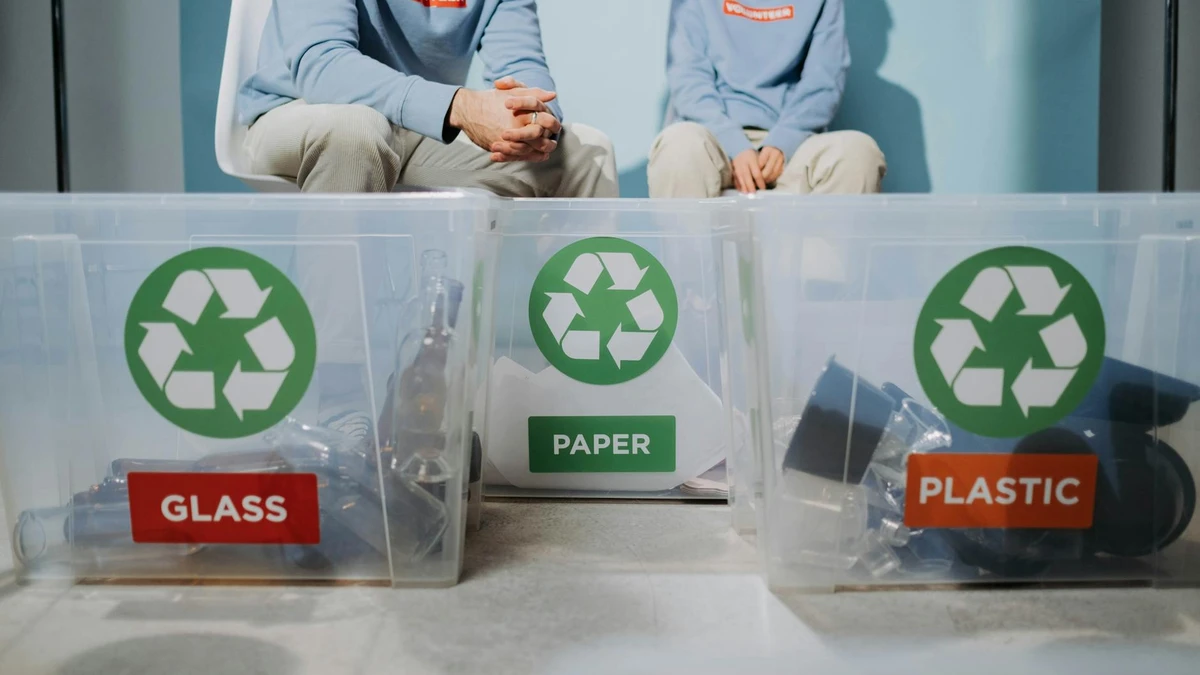 compostable food packaging waste into clearly labeled recycling bins at event ” style=”border-radius: 8px; box-shadow: 0 2px 8px rgba(0,0,0,0.08);”/>
When evaluating quality eco catering packaging, consider the following:
Step 7: Expand to 80%+ of events-Transition remaining clients to eco packaging
-Adjust pricing structures to reflect cost increases
-Update contracts and proposals with sustainability messaging
Step 8: Optimize based on data-Analyze pilot program results (costs, client retention, operational issues)
-Refine supplier mix based on performance
-Adjust inventory levels based on actual usage patterns
Step 9: Marketing and differentiation-Publicize sustainability achievements (waste diverted, certifications)
-Pursue industry recognition (green business awards, certifications)
-Leverage eco credentials in sales proposals and marketing materials
❌ Challenge #1: Compostable packaging costs 30-40% more than conventional plastic, eroding profit margins ✅ Решение: Implement tiered pricing model—”standard” option (conventional), “eco” option (+10-12% premium), “premium eco” option (+15-20% with enhanced sustainability features). 70% of corporate clients and 55% of wedding planners choose eco options when presented as choice than forced upgrade. Volume consolidation across eco options enables better supplier negotiations.
❌ Challenge #2: Compostable containers require commercial composting infrastructure not available in all event locations ✅ Решение: Develop relationships with 2-3 commercial composting facilities willing to accept event waste (transported within 48 hours). For events in areas without composting access, use recyclable alternatives (aluminum, paperboard) or partner with facilities that accept compostables via mail-back programs. Educate clients upfront about disposal logistics and incorporate costs into pricing.
❌ Challenge #3: Hot food packaging (entrees above 160°F) causes some compostable containers to soften or leak ✅ Решение: Material selection by application—bagasse and bamboo fiber for hot items (heat tolerance to 220°F), PLA for cold foods only. Test containers with your specific menu items at target holding temperatures (15-30 minute tests). For very hot/saucy dishes, use aluminum (infinitely recyclable) rather mpromising on compostable performance. Always prioritize functionality over sustainability credentials.
❌ Challenge #4: Clients question why eco packaging costs more but “looks the same” as conventional options ✅ Решение: Develop visual communication tools—laminated comparison cards showing lifecycle analysis (carbon footprint, waste diversion, resource use), certification badges, environmental impact quantification (“This event diverted 45 pounds from landfill”). Pre-event emails and on-site signage reinforce value. Quantify impact: “Your 200-guest event prevented 12 pounds of plastic waste—equivalent to eliminating 840 single-use plastic bags.”
-Waste diversion rate: % of packaging diverted from landfill (target: 75-90%)
-Carbon footprint reduction: CO2 equivalent saved vs conventional packaging
-Certification coverage: % of packaging items with third-party eco certification (target: 80%+)
Financial metrics:-Cost per event: Total packaging cost including disposal fees
-Price premium realization: % of clients accepting eco packaging upcharges
-Supplier cost trends: Year-over-year changes in eco material pricing
Operational metrics:-Container failure rate: % of units failing during service (<2% acceptable)
-Staff training completion: % of team trained on proper eco packaging protocols
-Client satisfaction: Net Promoter Score related to sustainability efforts
-Incremental material costs: $18,000 (200 events × $90 additional cost/event)
-Staff training and systems: $1,500
-Marketing and communication materials: $2,500
-Total first-year investment: $22,000
Returns (first year):-Price premium revenue: $51,000 (120 events × 10% premium on $4,250 average)
-Waste disposal savings: $2,400 (reduced landfill fees)
-Client retention value: $17,000 (4 additional retained clients × $4,250 value)
-New client acquisition: $25,500 (6 new clients citing sustainability × $4,250)
-Total first-year returns: $95,900
Чистая рентабельность инвестиций: ($95,900 – $22,000) / $22,000 = 336% first-year ROIPayback period: 2.8 months (break-even after ~12 events)Transitioning to eco catering packaging represents both an environmental imperative and a strategic business opportunity. While material costs run 15-45% higher than conventional plastics, comprehensive ROI analysis reveals positive returns within 8-14 months through client retention (22% higher rates), price premiums (10-15% on corporate events), and waste disposal savings (30-50% reduction in fees).
Основные выводы:1. Prioritize certified compostable materials (BPI, EN 13432) over vague “biodegradable” claims to ensure legitimate environmental benefits and regulatory compliance
2. Match materials to applications—bagasse/bamboo for hot foods (220°F tolerance), PLA for cold items, aluminum for extreme heat
3. Implement tiered pricing—offer eco options as value-add with 10-15% premiums rather than absorbing costs
rstanding eco catering packaging helps.Secure composting infrastructure first—compostables in landfills waste investment and negate environmental benefits5. Start with pilot programs—test with 15-20% of events before full rollout to validate costs, performance, and client acceptance
-“>Food Packaging Containers
-“>Решения в области экологичной упаковки»
-“>Catering Industry Guides
Papacko supplies catering businesses with certified compostable and recyclable food packaging solutions including BPI-certified PLA containers, bagasse clamshells, bamboo fiber bowls, and recyclable aluminum options. Our sustainability team provides lifecycle assessments, regulatory compliance guidance, and waste management partnership recommendations—ensuring your transition to eco packaging delivers both environmental impact and business profitability.
Свяжитесь с нами: