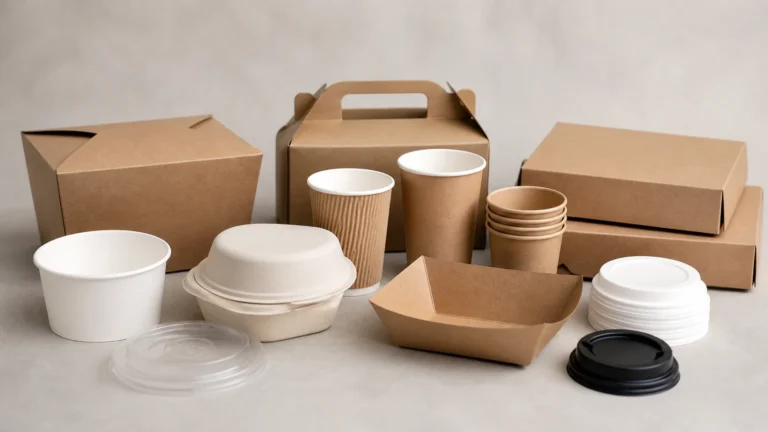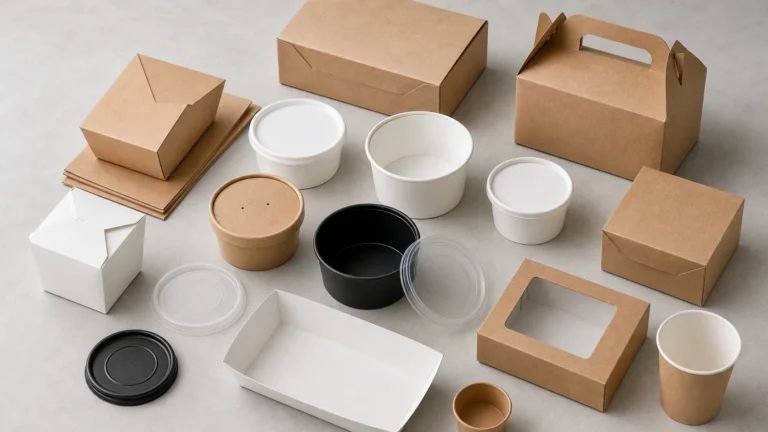
Готовы создать собственные фирменные бумажные стаканчики или упаковку?
Сообщите нам свои требования - размер, покрытие, печать и место назначения - и наша команда подготовит подробное коммерческое предложение в течение 24 часов.

Choosing the right food packaging supplier affects more than purchase price. It influences food-contact safety, leak control, speed at the service line, warehouse efficiency, branding flexibility, and how much inventory risk you carry. Restaurants and distributors both need dependable packaging, but they evaluate suppliers through different operational priorities. A practical checklist helps you compare options on specification fit, documentation, MOQ, lead time, and total cost of ownership.
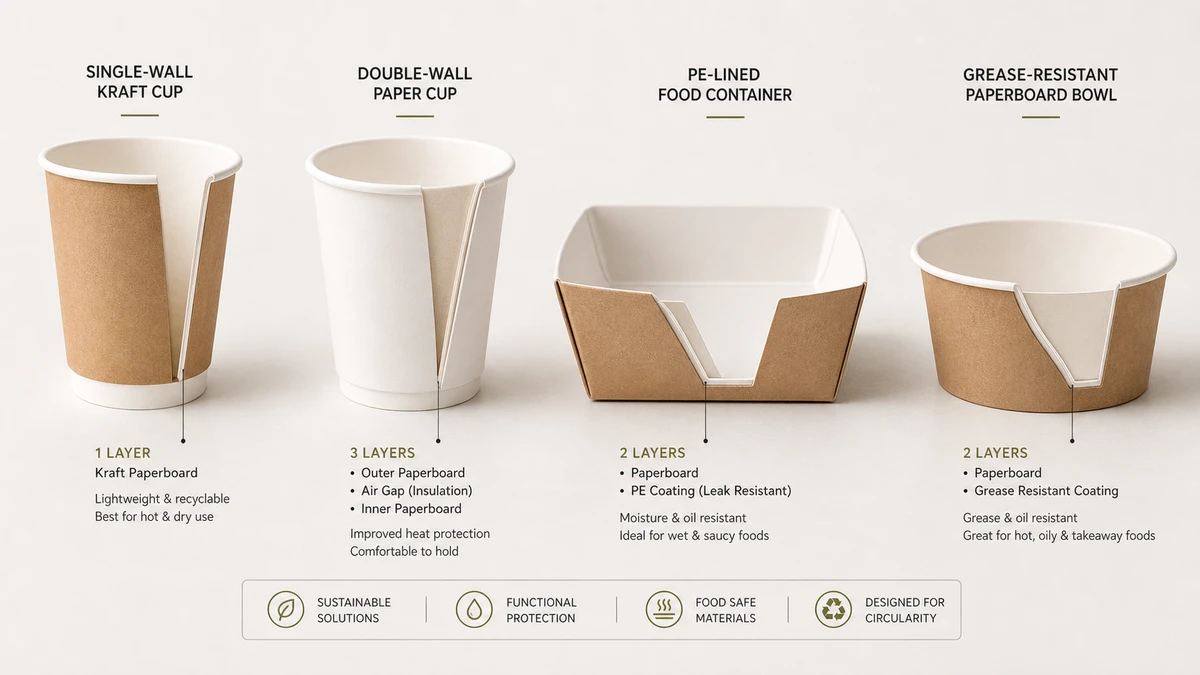
Start with the application, not with a generic material preference. A good food packaging supplier should ask what food you serve, fill temperature, grease level, moisture exposure, expected hold time, transport conditions, and whether the item is consumed on-site or off-premise. Without that context, product recommendations are only guesses.
Restaurants usually need packaging that supports speed, sealing, and customer handling. Distributors usually need packaging that stacks well, ships reliably, and works across a broader account base. The same cup or container may perform well at the counter but create issues in palletization or resale if the case pack is wrong.
Use this first-pass checklist before reviewing price:
Material structure matters because barrier layers, coatings, and wall construction determine real-world performance. For beverage programs, confirm that бумажные стаканчики and matching lids are tested as a system. Nominal size alone does not ensure proper fit.
A supplier that cannot explain why one coating, wall structure, or closure style is better for your exact use case is not giving enough technical guidance.
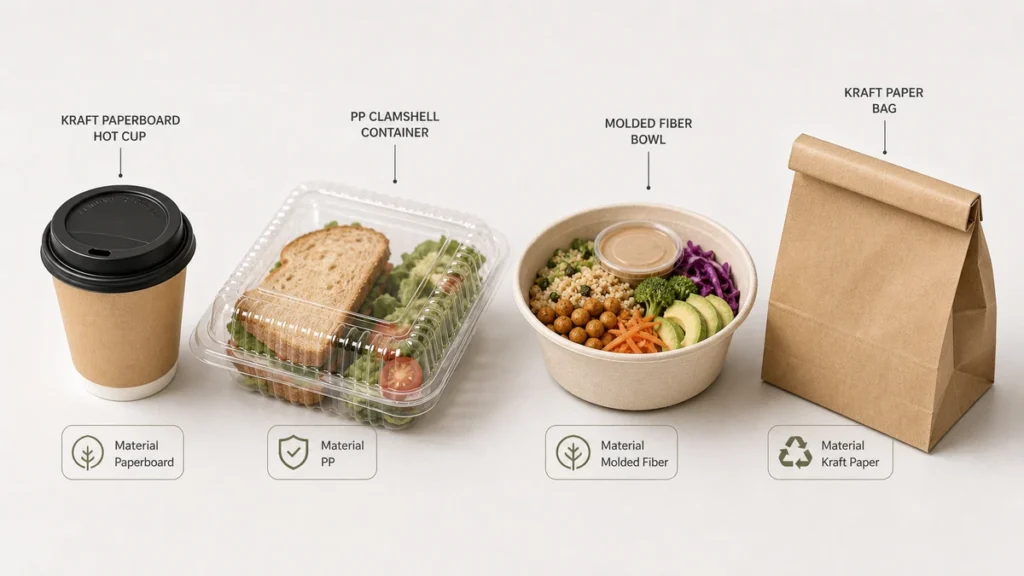
A food packaging supplier should be able to connect materials and format choices to operating conditions. That means discussing substrate, coating, closure, and structural design in practical terms rather than broad claims like durable or food safe.
For hot drinks, bowl meals, and greasy foods, ask how the packaging performs over your actual service window. A paper container that is acceptable for immediate serving may soften during a 30-minute delivery trip. A clamshell that closes well in back-of-house handling may open under stacked bag pressure.
Focus on these performance checks:
Lid fit deserves special attention. Fit problems often happen because rim geometry, wall taper, and tolerance ranges vary between manufacturers. If you plan to source cups and lids separately, test them together before approving a switch. This is especially important for drinkware using крышки для кофейных чашек, where seal security affects both safety and customer experience.
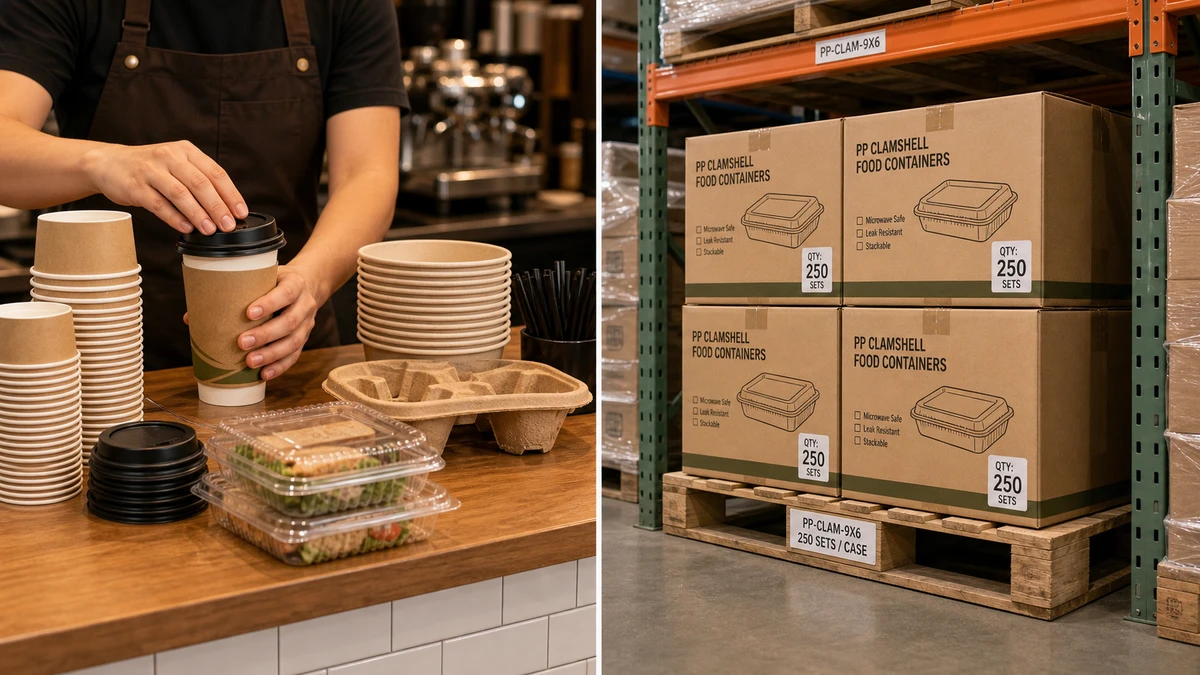
Restaurants should test packaging in service conditions, not just empty on a sample table. Fill the item, close it, carry it, stack it, and place it in a delivery bag if relevant. Distributors should also review outer-carton strength, inner-pack layout, and pallet stability, because transit durability can be as important as direct food performance.
For containers and bowls, review whether the supplier can guide you toward the right format for dine-in, takeaway, meal prep, or delivery. If you are evaluating a broader range of formats, compare options across контейнеры для упаковки пищевых продуктов to avoid forcing one material into every application.
Compliance is not something to assume. Any food packaging supplier you shortlist should be able to provide current documents tied to the actual product and intended use. A vague statement that packaging is food grade is not enough for a serious approval process.
At minimum, ask for:
For US buyers, food-contact suitability should align with FDA requirements for the relevant conditions of use. Review the official framework here: Руководство FDA по веществам, вступающим в контакт с пищевыми продуктами.
If you buy for multiple markets, confirm that the documentation matches the destination region rather than only the production country. This is especially important for printed items, coated boards, and specialty barrier structures.
Also ask whether documentation is SKU-specific or only issued at material-family level. SKU-specific records are usually more useful when you need a clear internal approval file. A reliable food packaging supplier should also explain how changes are handled. If they switch coating, ink system, or source mill, you should know before substituted stock arrives.
Good supplier documentation also supports issue resolution. If there is an odor problem, print rub, sealing failure, or migration concern, traceability should lead back to the converting site and production lot.
Many buying mistakes happen after the sample stage, when commercial realities appear. MOQ, reorder timing, storage footprint, and approval lead time can turn a good product into a poor buying decision if they are ignored.
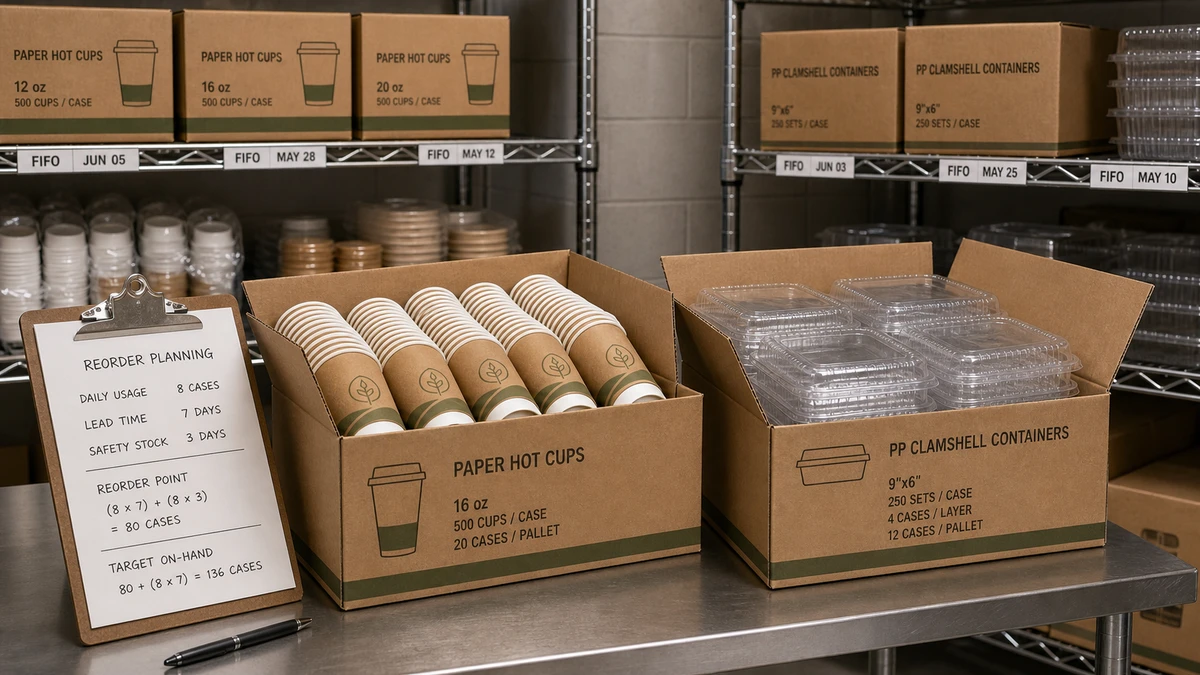
Ask every food packaging supplier the same commercial questions:
Samples are essential. Request samples for every shortlisted option and test them in real service. If custom print is involved, ask whether a printed proof or pre-production sample is available before full production.
MOQ should be reviewed against actual usage. A custom run may look attractive on unit price but create months of excess inventory. That ties up cash, consumes storage space, and raises obsolescence risk if menus, branding, or regulations change. For lower-volume drinkware programs, stock or semi-custom solutions may be safer than large print commitments.
Lead time should be treated as a range, not a promise. Ask for first-run and repeat-order timing separately. Custom items often require artwork approval, plate preparation, and production scheduling, so your reorder point must reflect that reality. If the lead time is six weeks, reordering with only two weeks of stock left is risky.
Storage footprint matters too. Review carton dimensions, nested height, humidity sensitivity, and how many cases fit your actual shelf or pallet space. A lower-cost case can become expensive if it disrupts back-of-house storage or warehouse slotting.
Custom branding can make sense, but only when demand, lead time, and reorder discipline support it. A food packaging supplier should explain print methods, color control, setup requirements, and the commercial trade-offs between stock and custom packaging.
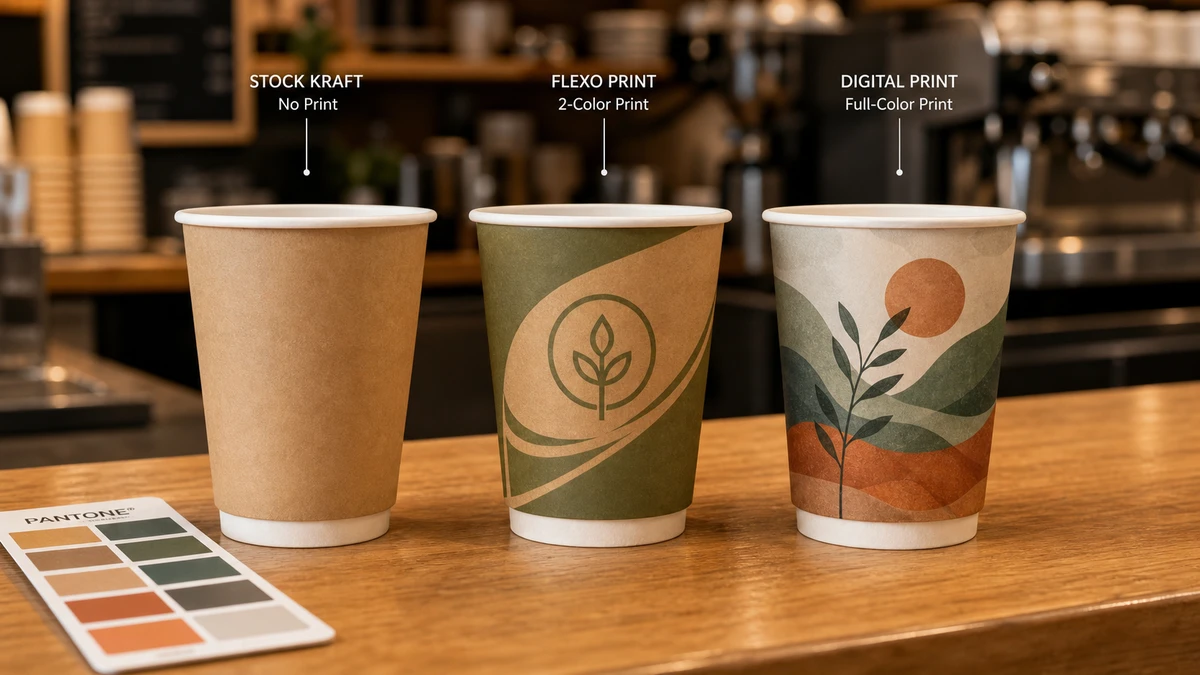
When reviewing custom capabilities, ask about:
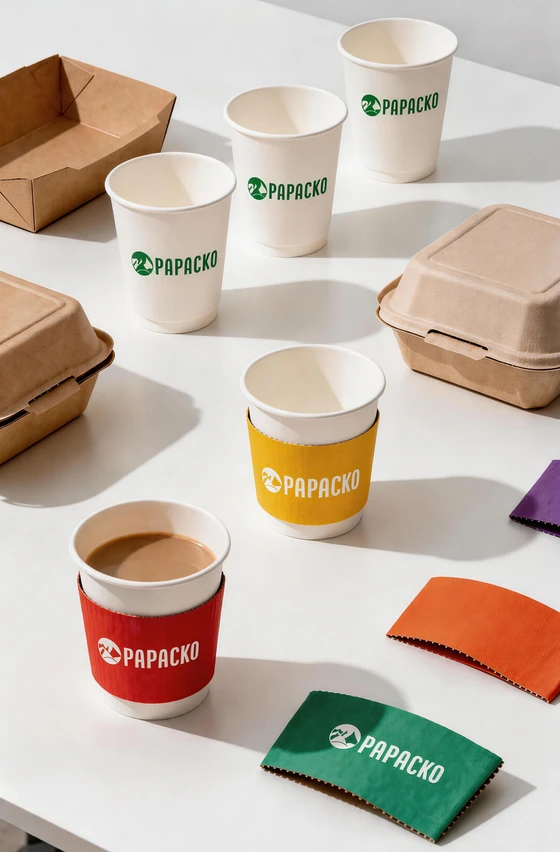
Flexographic printing is often used for stable, higher-volume packaging, while digital printing is usually better for shorter runs or test programs. For branded beverage service, comparing экологичные бумажные стаканчики can be useful when you need both presentation and practical reorder economics.
Do not judge custom print only by appearance. Ask whether the print remains stable under heat, condensation, rubbing, and stacking. Clarify whether the supplier can maintain consistency across related items if you are branding cups, bags, sleeves, or bowls together.
Total cost of ownership is where supplier comparisons become more realistic. Review:
A cheaper unit price is not truly cheaper if it creates more breakage, more emergency reorders, or more labor at the service line. In many cases, standardizing a few key formats can reduce SKU complexity and lower cost across purchasing, storage, and operations.
Before placing a commercial order, summarize your review into an approval checklist. This helps restaurants and distributors compare suppliers objectively and avoid decisions based only on quote speed or sample appearance.
A practical supplier checklist should include:
You should also evaluate supplier communication standards. A reliable food packaging supplier tells you early if there is a delay, allocation issue, formulation change, or print approval problem. That kind of communication protects launches and prevents stockouts.
For restaurants, strong supplier support usually means fast sample turnaround, dependable fit between bases and lids, and packaging that works smoothly during rush periods. For distributors, it usually means consistent fill rates, durable cartons, manageable SKU breadth, and documentation that supports resale to multiple customer types.
Choosing well is usually less about finding the broadest catalog and more about finding the supplier that can translate technical packaging details into practical buying outcomes.
If lids, sleeves, holders, or bags are part of the same program, review them as упаковочные принадлежности during supplier approval rather than adding them after the main container choice is locked.
The most important factor is fit between the packaging specification and your real service conditions. A supplier should connect food type, temperature, hold time, and handling conditions to a documented material and format recommendation.
Compare landed cost, lead time stability, MOQ, case-pack efficiency, defect risk, storage impact, and documentation quality. A lower quoted price can cost more overall if it creates waste, delays, or stock pressure.
Request food-contact compliance documentation, traceability details, material specifications, and declarations for coatings, inks, adhesives, or sustainability claims when relevant. For printed programs, ask for records tied to the actual SKU where possible.
Custom printing makes sense when order volumes are stable enough to absorb setup cost and MOQ without creating slow-moving inventory. If your volume is inconsistent, stock packaging with labels is often the lower-risk option.
That depends on lead time, demand variability, and storage conditions. Many restaurant buyers plan around 2 to 4 weeks of stock for standard items, while custom programs usually need earlier reorder points because approvals and production add time.
Nominal size does not guarantee compatibility. Rim geometry, wall taper, and manufacturing tolerances vary by supplier, so lids and bases should always be tested together before approval or substitution.