Готовы создать собственные фирменные бумажные стаканчики или упаковку?
Сообщите нам свои требования - размер, покрытие, печать и место назначения - и наша команда подготовит подробное коммерческое предложение в течение 24 часов.

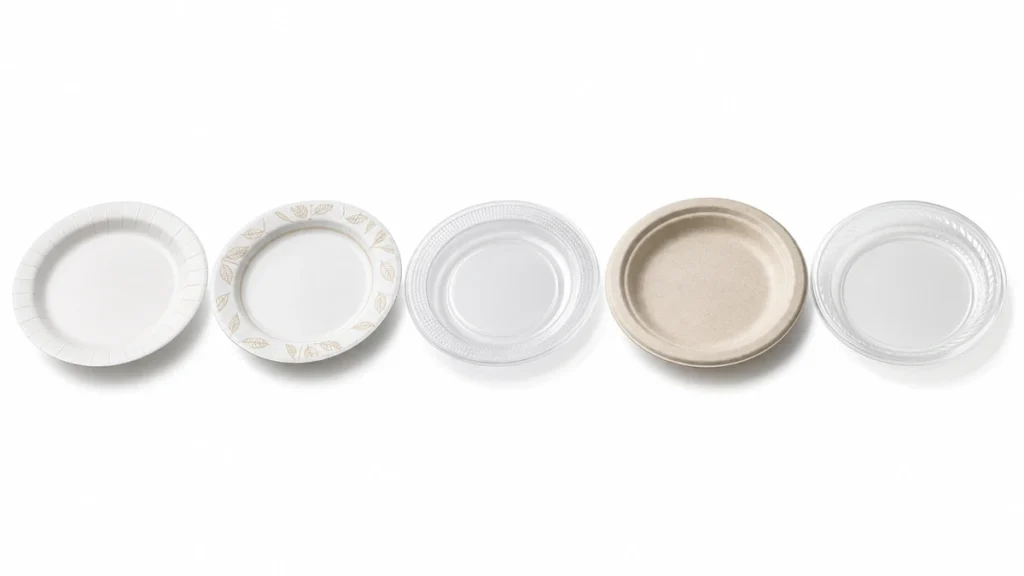
The best disposable plates for wholesale buying match food temperature and moisture, service time, and cost or sustainability requirements. Most buyers carry at least one value SKU and one heavy-duty or compostable option to avoid overbuying performance on some menus and underbuying it on others.
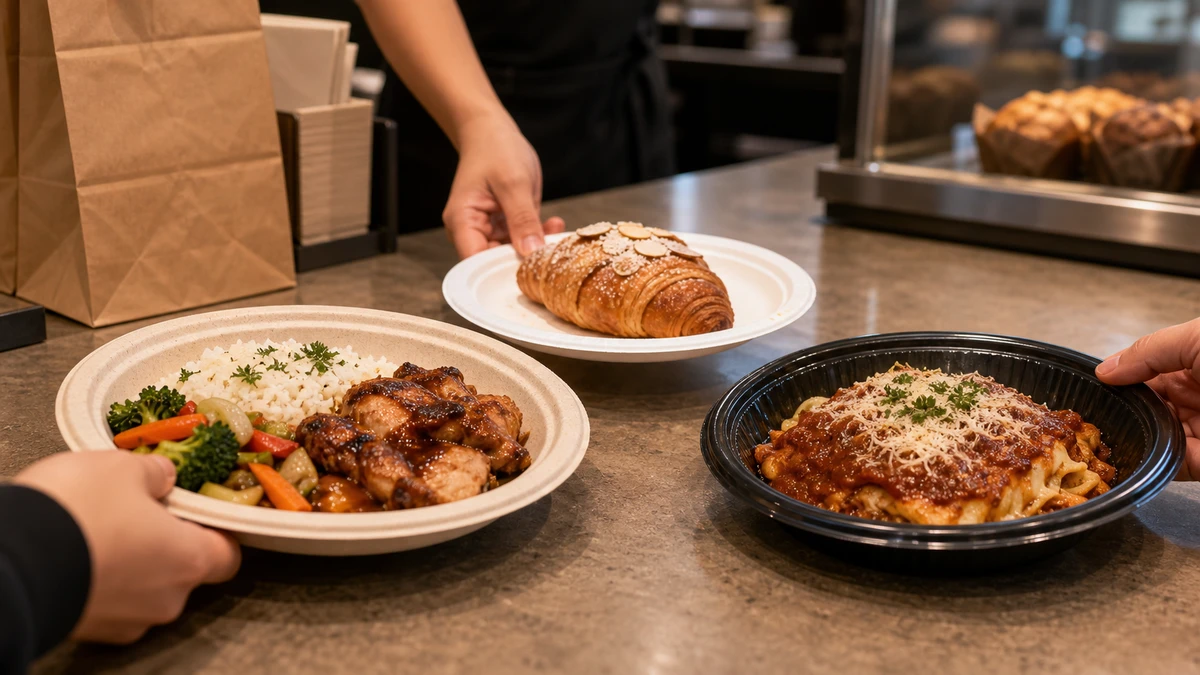
Start with how the plate behaves under heat, grease, and load. A $0.01-per-plate saving on paper stock can disappear through complaints, double-plating, and wasted food during peak service.
Three trade-offs drive plate selection. Barrier system controls soak-through – a single PE-coated paper plate may handle pizza but not a saucy rice bowl held 20 minutes. Basis weight controls rigidity – economy paper around 230 gsm can sag badly under a full entree; 280 gsm is a more realistic floor for hot meal service. Geometry and nesting affect freight – a deeper rim can consume 15-25% more pallet space, changing landed cost.
If you are still comparing broad categories, reviewing adjacent formats such as контейнеры для упаковки пищевых продуктов can help, because many buyers are really solving for holding time and transport stability rather than plate cost alone.
At wholesale volume, this is a sourcing decision: which substrate meets service conditions with the lowest total commercial risk, including plate failure, freight, compliance, storage, and reorder consistency.
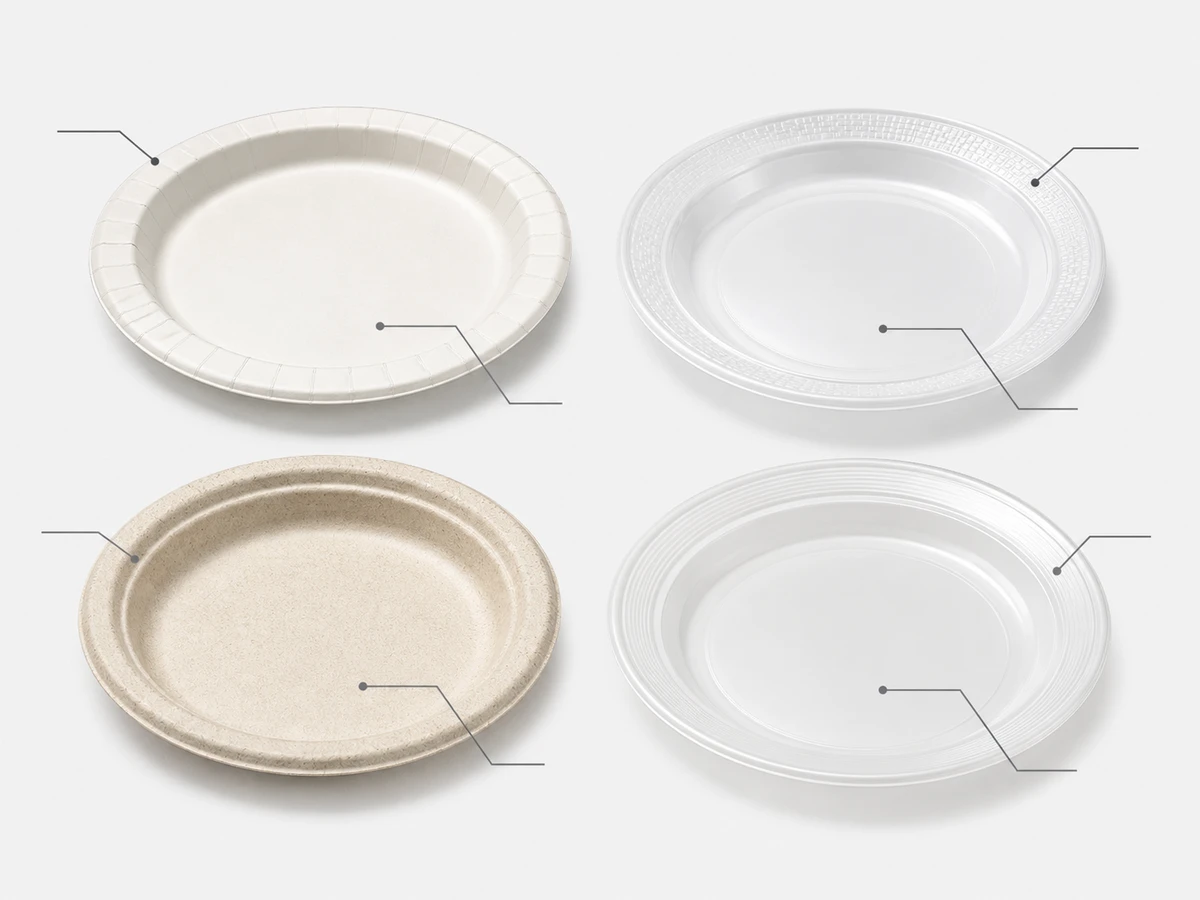
Paper plates are coated with PE, clay, or an aqueous barrier – the coating matters more than the marketing label. Single-coated paper can work for 10-15 minutes with lightly moist foods; heavier constructions can extend wet hold toward 30-45 minutes, but confirm with samples, not catalog claims.
PP commonly handles service temperatures up to about 120 degrees C; PS is lower-cost but less tolerant of heat and microwave use. The critical spec is actual wall thickness at the rim and plate floor, where failure starts.
Two distinct products are often conflated. Bagasse or molded fiber resists grease and moderate moisture without a PE laminate at typically 3-4 mm wall thickness, carrying a 20-45% premium over conventional paper. PLA is a bioplastic useful mainly for cold or ambient service – standard PLA softens well below typical hot-food conditions, making it a poor default for hot foodservice despite its compostable positioning.
| Criteria | Мелованная бумага | ПП пластик | Bagasse/Molded Fiber | PLA |
|---|---|---|---|---|
| Best fit | Dry/light-moist foods | Hot, wet, heavy foods | Hot foods with compostable positioning | Cold display or desserts |
| Typical hold time | 10-45 min depending on coating | 60+ min | 30-60 мин | Cold use only |
| Теплостойкость | Умеренный | Высокий | High for service use | Низкий |
| Microwave use | Usually no for PE-coated paper | Often yes for PP | Often yes, confirm by SKU | Нет |
| Branding quality | Высокий | Умеренный | Умеренный | Low-moderate |
| Freight efficiency | Usually strong | Умеренный | Often bulkier stack | Умеренный |
| Typical unit economics | Lowest at scale | Mid-range | Выше | Highest in many cases |
| Main sourcing risk | Soak-through or sag | Market restrictions | Paying premium without composting access | Heat failure |
[Expert Insight]
For buyers balancing sustainability targets with operational reality, it often makes sense to compare plate programs against broader компостируемая упаковка для пищевых продуктов и одноразовая пищевая упаковка standards already used across the line.
The safest approach is to disqualify bad fits early – start with failure points, not artwork or price.
For a 9-inch meal plate, center deflection when held one-handed at the rim should not exceed about 10-15 mm under a loaded hot meal – excessive sag is where thin paper stock fails first.
Run a soak test with actual menu items at service temperature for 20 minutes; this is more useful than any brochure claim. Ask the supplier for coating type, basis weight, and wet-strength data.
If your operation reheats plated food or customers microwave leftovers, confirm material suitability with the supplier in writing – PP and some molded fiber formats may handle this; most coated paper and PLA formats will not.
Switching to a deeper-rimmed plate can cause case cube to jump unexpectedly, breaking shelving plans and par levels – confirm case configuration before committing to volume.
Paper products in humid back-of-house conditions can stick, curl, or separate poorly during peak service. Confirm storage range and shelf life before ordering pallet quantities in non-climate-controlled stockrooms.
Catering and institutional service often expose cut-through weakness under metal utensils that is not obvious in basic trials – include a cut test if this applies to your operation.
Three questions matter: Is it suitable for food contact? Can it legally be marketed the way you plan to market it? Will the disposal claim hold up in the customer’s actual market?
In the U.S., food-contact coatings and laminations can change compliance status independently of the base plate material; see the FDA overview: https://www.fda.gov/food/food-ingredients-packaging/food-contact-substances-fcs. For EU markets, request the supplier declaration and migration documentation for the exact finished article. If a supplier promotes a plate as compostable, verify that the certification applies to the finished article, not just the raw material.
Confirm whether MOQ is per SKU or per order, whether stock is inventory-held or made to order, and lead time by season rather than best case. Request samples from more than one production lot – small shifts in diameter, rim geometry, or fiber density can create stack inconsistency and dispenser issues.
[Expert Insight]
A broader sourcing review can benefit from current packaging guidance on the Papacko blog.
“Compostable” is not a single performance level. The important questions are: under what conditions, under which standard, and with which certification body?
Most wholesale compostable plates are designed for industrial composting, which uses sustained heat around 55-60 degrees C, moisture, and microbial activity – not backyard conditions. Bagasse typically makes more sense than PLA for hot-food service because it delivers in-service performance first, then a compostability pathway where facilities exist.
In North America, BPI certification is one of the most recognized indicators that a product has been assessed against applicable industrial compostability criteria for the finished item; buyers can verify program details at https://bpiworld.org/compostable-products. A base resin or pulp certificate is not sufficient if the final plate includes coatings, printing, or additives, and a compostability certificate does not guarantee acceptance by every local composting facility.
They are easiest to justify when your customer has access to industrial composting collection, your brand or contract requires a compostable format, or the menu includes hot food that would challenge standard paper plates. They are harder to justify when the product is likely to enter general waste, because you pay a premium without capturing the intended end-of-life value.
For a broader framework on material choice and claim positioning, Papacko’s guidance on sustainable paper packaging is a useful companion when standardizing across SKUs.
Custom printing can support private label, event branding, or chain-level standardization. It also changes MOQ, lead time, and compliance complexity.
Best for high-volume paper plate programs; setup becomes economical once annual volume reaches roughly 50,000-100,000 units per SKU, with setup charges and longer development time applied.
Better detail than flexo on premium paperboard, but higher setup complexity and less forgiving on rushed launches.
Lower MOQ – sometimes 5,000-10,000 units – at higher unit cost; useful for market tests but not usually the best long-run cost structure.
Printing affects food-contact ink selection, distortion around rims and formed geometry, approval cycles, and shelf-life planning. In real rollouts, delay often comes from proving color on the actual substrate and confirming that print does not interfere with compostability or food-contact documentation.
For offshore custom programs, allow 5-10 business days for artwork and prepress, 10-20 for print tooling, 15-30 for production, plus 3-6 weeks for ocean freight, customs, and receiving. Experienced buyers treat custom printed plates as a 10-16 week project.
If annual volume is low or your menu changes often, generic stock plates usually win – you avoid tooling costs, long lead times, and obsolete inventory, even if unit cost is slightly higher than a mature private-label program.
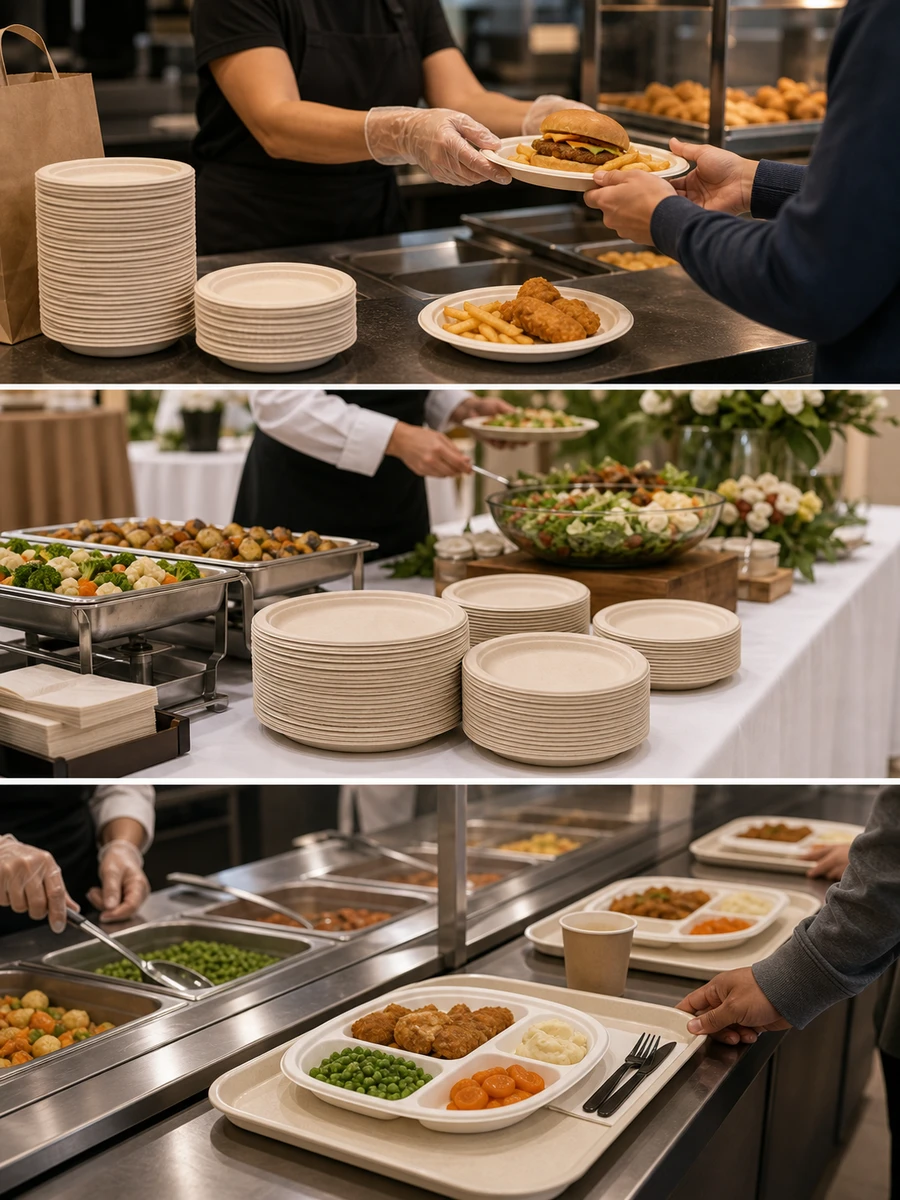
Typical need is low cost and reliable 15-20 minute hold. Coated paper works for dry-to-lightly moist foods; molded fiber suits heavier sauced items. A menu shift toward wetter builds can silently make an old paper spec obsolete.
Typical need is presentation and 30-60 minute plate hold with better utensil performance. Molded fiber often wins because it handles heat reasonably well and presents more premium than low-cost paper without moving into expensive specialty formats.
Typical need is consistency, storage efficiency, and predictable replenishment. Dimensional tolerance is critical – a small variance in plate geometry becomes a daily handling issue when thousands of units move through automated dispensers or rails.
Typical need is dependable catalog SKUs and simple reordering. Standardization is usually smarter than chasing occasional promo pricing on substitute SKUs, and stock-out risk is often more expensive than paying slightly more per case.
Once you know the right plate format, the final buying discipline is writing the order tightly enough to protect margin.
Stock plain items are often workable at low case quantities. Custom print usually requires 50,000-100,000 units per design to make sense on paper plate programs – if annual usage does not support the MOQ, forcing a custom project typically creates dead inventory or ties up cash in slow-moving stock.
A technical supplier should provide production samples before large first orders, food-contact and claim documentation relevant to the market, written case-pack and pallet details, and a clear complaint and replacement process for off-spec shipments. Aligning plate sourcing with the same documentation discipline used for paper cups – approved specs, repeatable print controls, and clear reorder parameters – helps standardize a broader foodservice range.
The practical next step: shortlist by use case, test samples under real service conditions, then put the exact spec and packing configuration on the PO. That is how you reduce surprises, protect landed cost, and scale a plate program that can reliably be reordered.
Для горячих, влажных или сытных блюд наиболее надежными материалами обычно являются полипропилен (ПП) и плотное прессованное волокно. Бумага с покрытием также может подойти, но только в том случае, если барьерные свойства и плотность бумаги соответствуют особенностям блюд.
Как правило, да. Мелованная бумага зачастую является самым экономичным вариантом, тогда как сертифицированная компостируемая формованная целлюлоза, как правило, стоит значительно дороже.
No. Plant-based origin is not the same as certified compostability. Verify whether the finished plate, including coatings and inks, is certified under a recognized standard.
At minimum, test load capacity, grease resistance, heat tolerance, stack handling, and real service hold time. If the plate will be used in delivery or catered service, test it after time in transit or staging.
Very important. Sleeve count, case count, and pallet density affect storage, labor, and freight, so a lower unit price can still produce a worse landed cost.
Not usually. PLA works better for cold or ambient applications, while hot-food service more often favors bagasse or molded fiber.
Usually once annual volume is high enough to spread tooling and setup costs across repeat orders. For lower volumes or short campaigns, stock plates are often the more practical choice.