Готовы создать собственные фирменные бумажные стаканчики или упаковку?
Сообщите нам свои требования - размер, покрытие, печать и место назначения - и наша команда подготовит подробное коммерческое предложение в течение 24 часов.

A reliable paper cup supplier is not just a factory that can make a clean sample. For importers, reliability means repeated production consistency, market-ready compliance, clear order communication, and export packing that protects cups through sea freight, storage, and distribution.
When buyers source across borders, the risk is larger than a local purchase. A small change in board weight, coating, rim diameter, or carton loading can create leakage, poor stacking, lid-fit complaints, or customs delays. Serious importers therefore qualify suppliers by documents, samples, process control, and logistics discipline, not by unit price alone.
The first supplier conversation should define the commercial use case before discussing price. A supplier needs to know cup size, beverage temperature, target market, monthly volume, printing needs, and matching accessories. Without those inputs, the quote is usually too loose to compare.
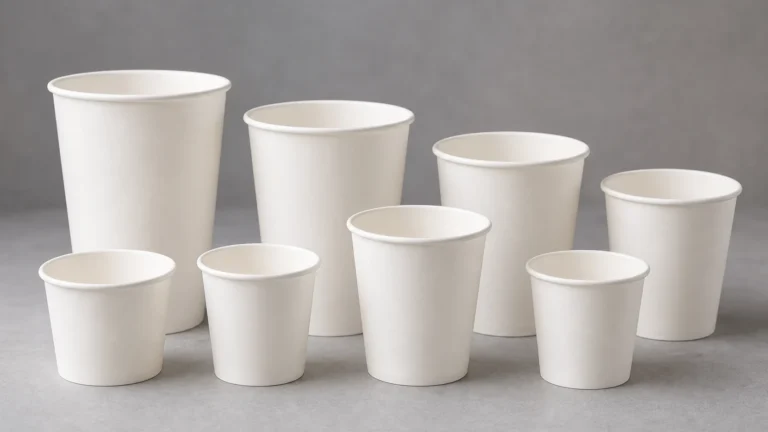
For standard бумажные стаканчики, ask the supplier to confirm cup size, rim diameter, board gsm, coating type, lid option, case pack, MOQ, sample lead time, and production lead time. The answer should be specific enough to turn into a purchase specification. If the response stays generic, the supplier may be selling from a catalog instead of controlling production details.
Good supplier screening also separates manufacturer capability from trading ability. A trading company can be useful if it manages QC well, but importers still need to know which factory forms the cup, who prints the artwork, who controls coating or lamination, and which party owns the compliance file.
This early clarity also makes quotes comparable. If three suppliers quote different board weights, carton counts, or lid assumptions, the lowest number may simply reflect a weaker specification. Normalize the quote sheet before negotiating price.
That discipline saves time later because every supplier is being judged against the same buyer brief and approval standard before negotiation.
For a first inquiry, send one page rather than a vague message. Include target cup sizes, estimated monthly volume, destination country, beverage type, printing requirement, lid need, preferred carton quantity, and the date when samples are required. Suppliers that answer this brief clearly are easier to qualify than suppliers that only reply with a price list.
The same brief can later become the order checklist. That continuity reduces mistakes when sales, artwork, production, quality control, and export documentation teams hand the job to one another inside the supplier organization and prepare the shipment for final release with agreed acceptance limits.
Material consistency is the first real test of a paper cup supplier. Importers should ask for the exact paperboard grade, coating specification, and production lot traceability for each run. A sample that looks good is not enough if later shipments use a different board feel or rim behavior.
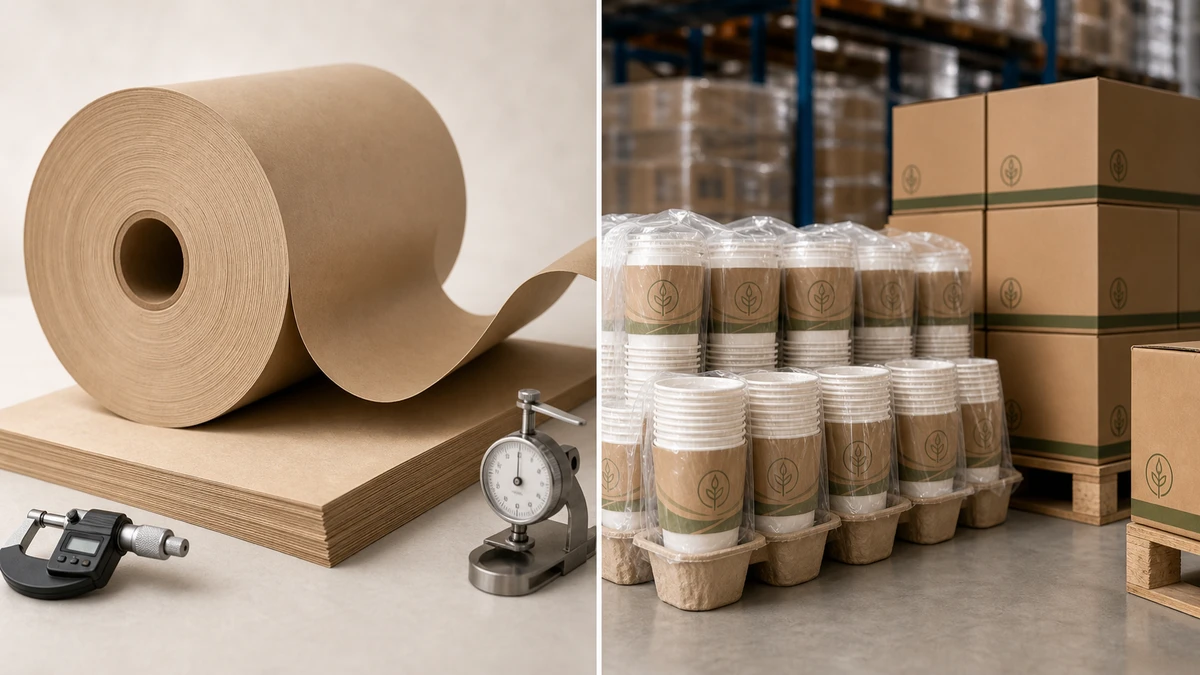
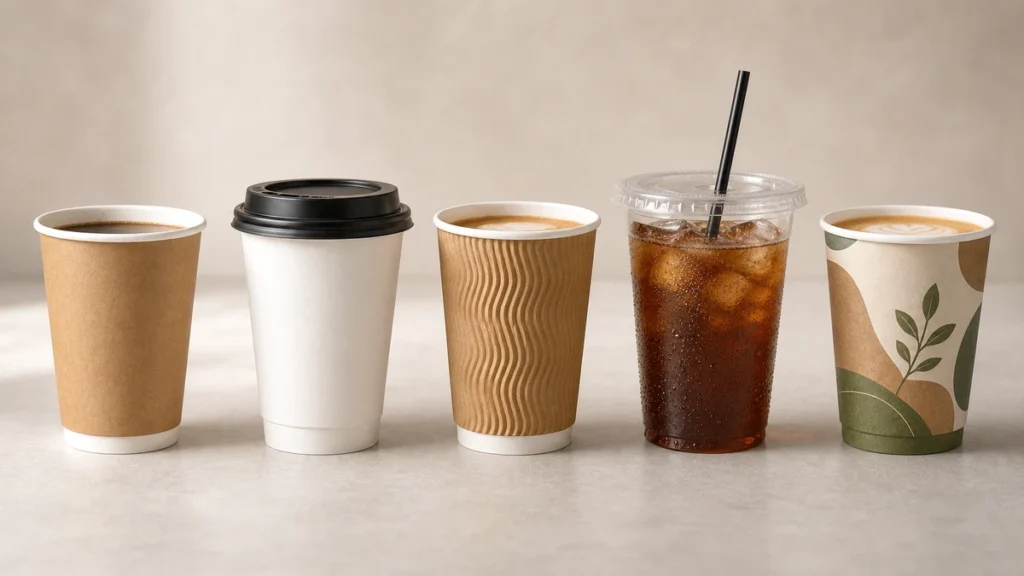
Cup construction changes real service performance. Single-wall cups can work for fast-turn hot drinks when a sleeve is used or when holding time is short. Double wall paper cups improve hand comfort for takeaway coffee, while бумажные стаканчики с волнистыми стенками add grip and insulation for higher-value hot drink programs.
The technical sheet should clearly state board weight, coating type, cup height, top diameter, bottom diameter, capacity, packing quantity, and intended use. Importers should also ask whether the cup and lid were tested together. Many cup failures come from rim tolerance or heat deformation rather than an obvious leak in the cup body.
Food-contact compliance is non-negotiable. Importers should ask for documentation that matches the exact cup structure, production site, and destination market. A generic “food safe” claim is not enough.
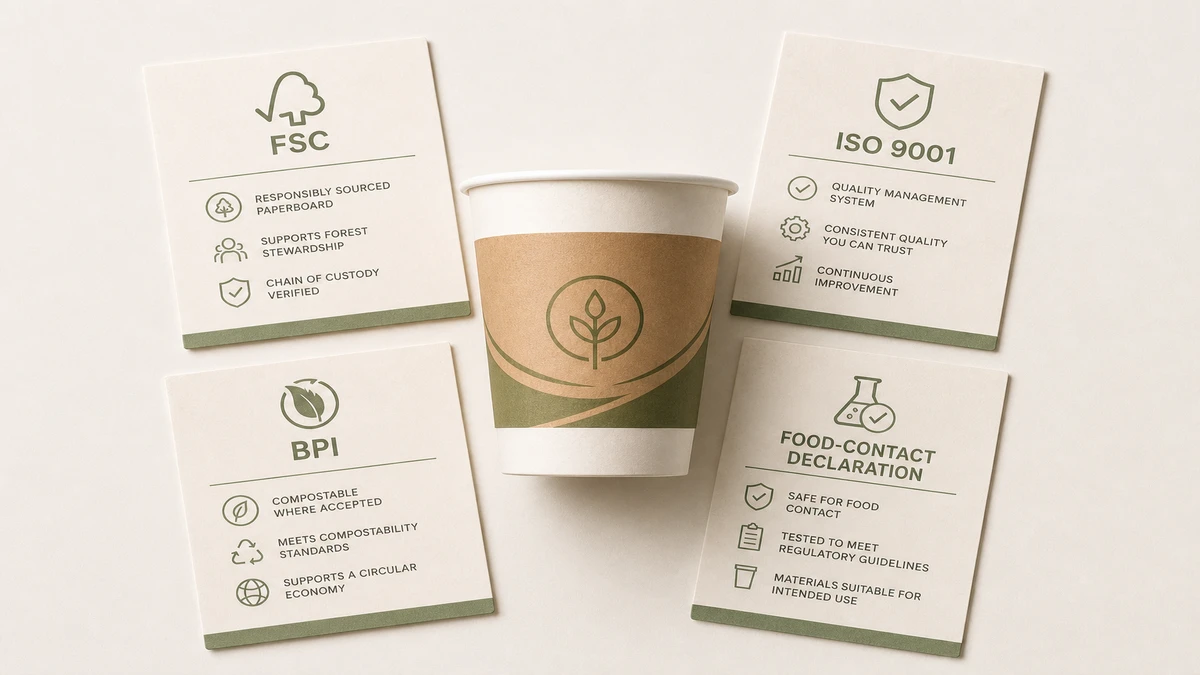
For US-bound goods, buyers can reference the FDA framework for вещества, контактирующие с пищевыми продуктами. The supplier should be able to provide a food-contact declaration or relevant test support for the material system being purchased. If the cup uses a different coating, ink, adhesive, or print process, the document package may need to be reviewed again.
Useful documents include food-contact declarations, material test reports, ISO quality certificates if claimed, chain-of-custody certificates if fiber claims are used, and batch traceability records. Check whether the certificate names the actual manufacturing site. If printing, coating, or packing is subcontracted, the buyer should know that before deposit.
MOQ and lead time decide whether a supplier is practical for the importer’s business model. A very low quote is not useful if the MOQ is too large for the sales channel or the delivery window is too slow for seasonal demand.
For printed cups, MOQ depends on print method, size, color count, artwork setup, and whether the cup uses an existing mold. Short-run pilots may be possible with digital printing, while repeated branded programs usually need higher volume for stable pricing. Lead time should include artwork proofing, tooling, production, packing, inspection, and shipment handoff.
Ask for sample timing in writing. A good supplier should clarify whether samples are stock samples, digitally printed mockups, or production-condition samples. For approval, importers should request enough cups to test leakage, lid fit, stacking, odor, print rub, and carton protection. Five hand-picked samples are not enough to judge repeat-run stability.
It is also useful to separate development samples from approval samples. Development samples help the buyer compare sizes, wall structures, and print direction. Approval samples should represent the exact specification that will move into production. Once the approval sample is signed, the supplier should not change paper grade, coating type, rim tooling, ink system, sleeve bag, or carton layout without written confirmation. This simple rule protects the importer when several people are involved across sales, production, QC, and freight booking.
Printing is where many importers underestimate complexity. Good branding requires the right print method, correct color references, readable artwork zones, and a cup shape that still looks balanced after forming.

Flexographic printing often suits larger repeated orders with simpler color systems. Digital printing can support short pilots and seasonal campaigns. Offset printing can deliver sharp detail, but setup and MOQ may be stricter. Before approving artwork, confirm Pantone references, bleed zones, seam position, file format, and whether every cup size needs adjusted artwork.
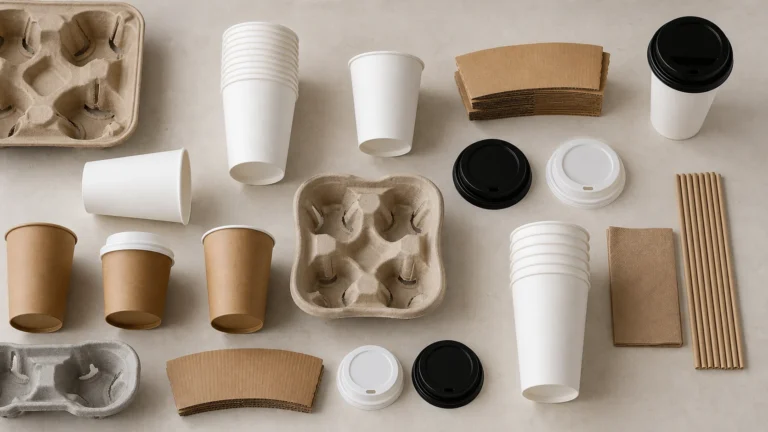
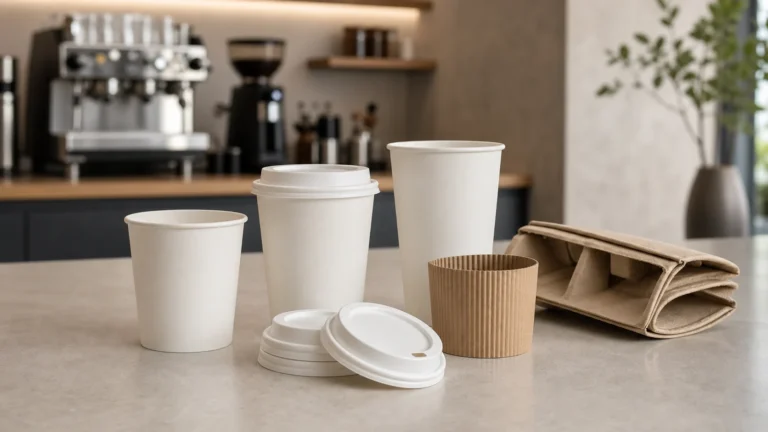
Cup programs rarely stand alone. If the order includes lids, sleeves, holders, or bags, coordinate them with упаковочные принадлежности early. A strong paper cup supplier should help match rim diameter, lid type, sleeve height, carrier fit, and carton packing so the full service system works together.
A reliable supplier should welcome a simple audit process. Importers do not need a complicated inspection program for every order, but they do need a repeatable checklist that catches common risks before a container ships.
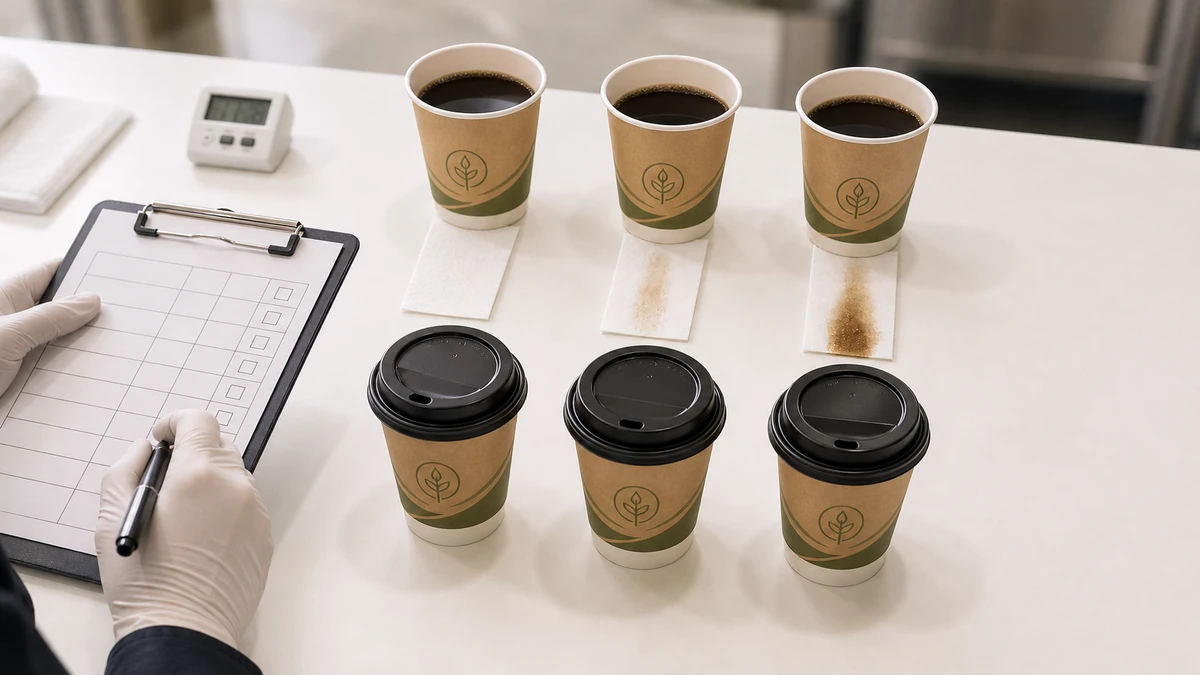
Start with documents, then test real use. Fill cups with hot water at realistic service temperature, hold them for the expected time, check the side seam and bottom, apply lids after filling, and test stacking after the cup cools. For cold drink cups, add condensation and ice-hold checks. For printed cups, rub the print area and inspect color consistency across several pieces.
Also review export packing. The best cup can still arrive damaged if the carton is weak, the sleeve bag is loose, or the pallet height is wrong for the warehouse. Importers sourcing cups alongside контейнеры для упаковки пищевых продуктов should use one common inspection standard across the packaging range.
Before the first container order, lock the final technical specification, approved sample, tooling ownership terms, artwork proof, compliance file, case pack, pallet plan, and pre-shipment inspection timing. This is the point where supplier support becomes commercially valuable: the buyer needs clear answers before money, production slots, and freight bookings are committed.
For repeat orders, keep a short supplier scorecard. Track on-time sample delivery, proof accuracy, production lead time, carton condition, inspection findings, complaint rate, and responsiveness after shipment. A supplier that solves problems clearly is often more valuable than one that only quotes aggressively at the start. Over time, this scorecard helps importers decide which suppliers deserve larger programs and which should stay limited to low-risk stock items.
A reliable supplier can repeat the same cup structure, quality, documentation, and packing standard across multiple orders, not just produce one attractive sample.
Ask for a food-contact declaration and supporting test information for the exact cup structure, coating, ink system, and factory involved in the order.
MOQ depends on cup size, print method, color count, tooling, and whether the supplier uses an existing cup format. Custom printed cups usually require higher MOQ than plain stock cups.
Lead time should cover artwork proofing, sample approval, production, packing, inspection, and shipment handoff. The exact timing depends on order complexity and season.
Lid fit can fail because of small changes in rim diameter, roundness, or heat deformation after filling. Cups and lids should be tested together under real service conditions.
Choose the coating based on beverage temperature, disposal expectations, and destination-market requirements. The material choice should match the real use case, not only a sustainability claim.
Confirm the technical sheet, compliance documents, sample approval record, MOQ, lead time, artwork proof, packing method, inspection plan, and payment terms.