Готовы создать собственные фирменные бумажные стаканчики или упаковку?
Сообщите нам свои требования - размер, покрытие, печать и место назначения - и наша команда подготовит подробное коммерческое предложение в течение 24 часов.

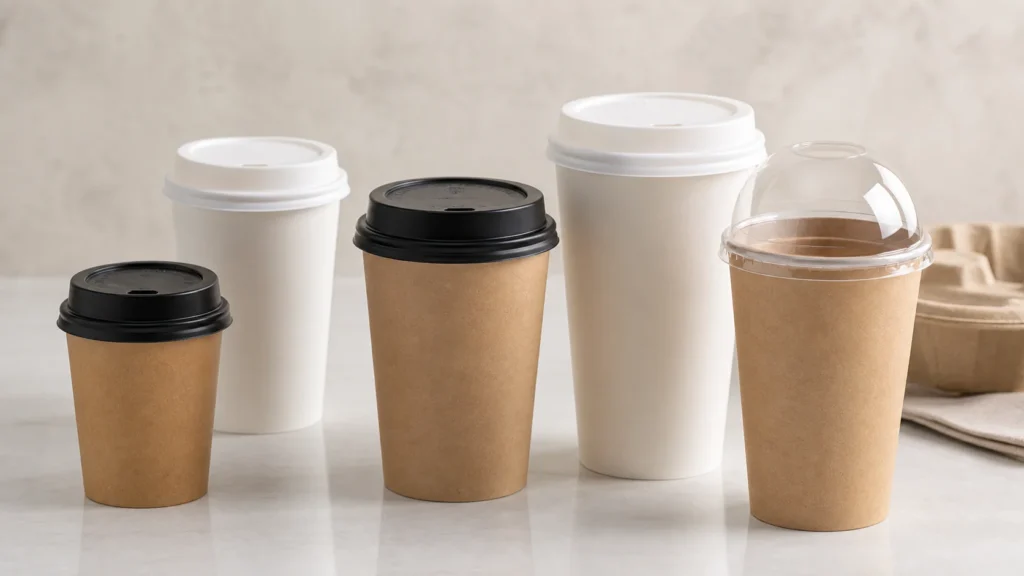
Before selecting a lid format, confirm the rim profile of your cup. A lid’s sip opening, dome height, and spill-reduction geometry only function correctly when the lid seats fully on the cup’s specific rim. Match rim profile and supplier specification first, then choose the lid style that fits your beverage, service model, and customer handling route. Request production samples to validate every combination before committing to stock.
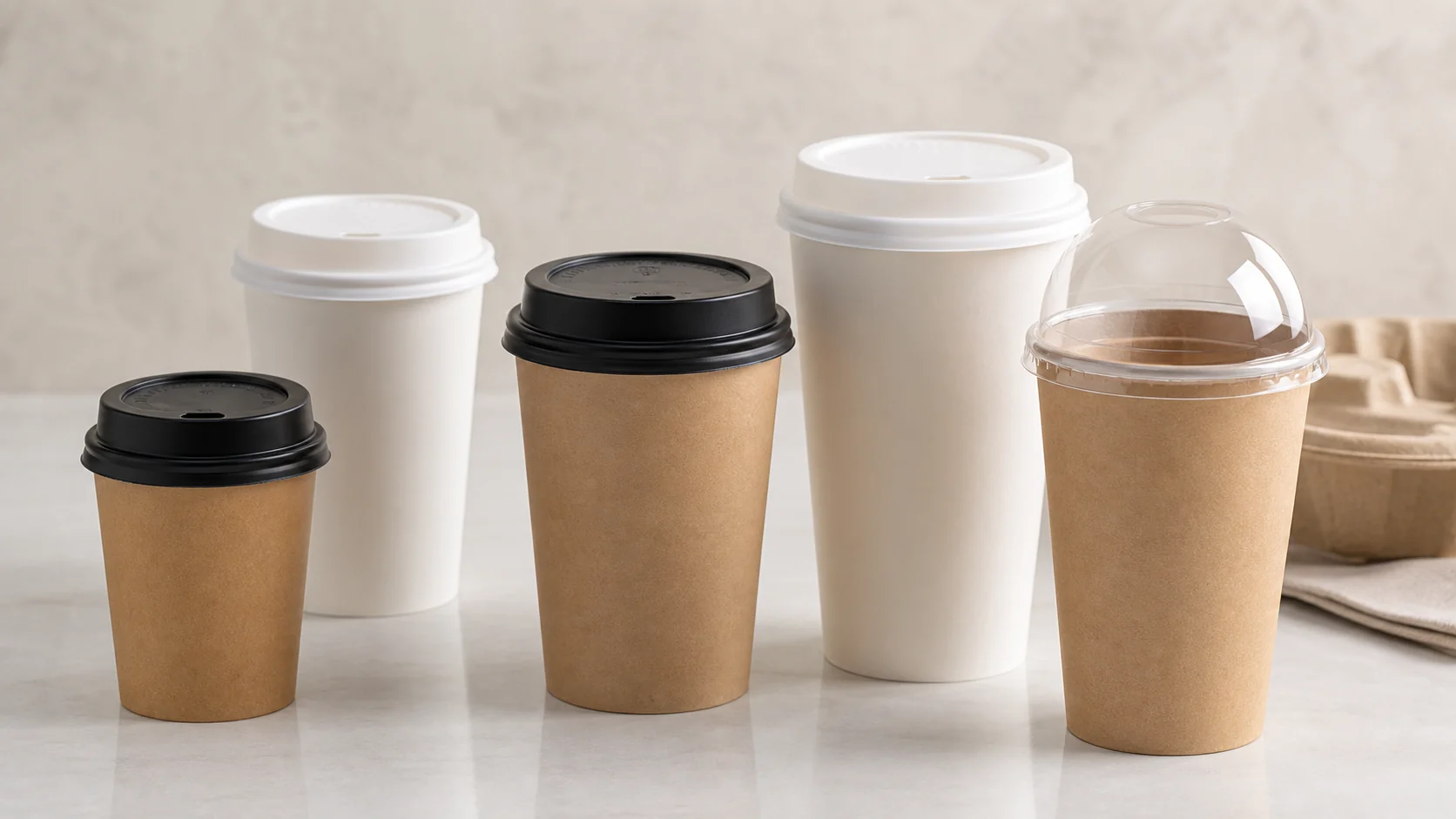
The coffee cup lid market offers several distinct formats. Each format addresses a different combination of beverage type, drinking access, transit risk, and operational speed. No single format solves every problem, and not every supplier carries every option. Evaluate each against your actual menu and service conditions.
The most common format in café and QSR environments, a sip-through lid has a small aperture—often a curved or tear-shaped opening—moulded into the top surface. The customer drinks directly through the opening without removing the lid.
What it solves: Keeps heat in, reduces splash during short-distance handoff, and allows drinking while walking or commuting.
Ограничения: The sip opening is not a sealed closure. If the cup tips or is squeezed, liquid can exit through the opening. Fill headspace and lid seating are critical variables. These lids are designed for hot beverages and may not be appropriate for iced drinks served with a straw.
A flat or near-flat lid sits flush or close to flush with the top of the cup. Some flat lids include a small raised drinking port; others are entirely flat with no opening.
What it solves: Flat lids can suit cold brew, iced coffee served without a straw, and applications where a dome profile would interfere with stacking or lid-on tray service. They also work for grab-and-go products where the cup remains closed until the customer opens it.
Ограничения: There is no drinking access without a straw slot or tear tab. If your service model requires immediate sipping, a flat sealed lid can create friction at handoff.
These lids are designed for cold beverages served with a straw. The lid includes a pre-formed slot or cross-cut that accepts a straw while maintaining a degree of closure around it.
What it solves: Allows straw insertion without full lid removal, reduces ice and liquid splash during transit, and can suit blended and iced espresso drinks.
Ограничения: The straw slot is an open channel. Tipping the cup can result in spillage through the slot. Straw diameter must be compatible with the slot geometry—confirm this with the straw supplier and lid supplier together.
A dome lid has a raised, curved top surface that creates headspace above the drink. It is commonly used for whipped-cream drinks, blended beverages, and layered cold drinks where the drink itself rises above the cup rim.
What it solves: Accommodates drink volume and toppings that exceed the cup’s rim height. It can suit smoothies and specialty cold drinks where presentation is part of the product.
Ограничения: Dome lids increase the stacked height of finished drinks, affecting tray capacity and delivery-bag fit. Confirm dome height against your drink build and delivery-container dimensions.
Some lid formats include a resealable tab, plug, or sliding closure that can partially cover the sip opening after the customer takes a sip.
What it solves: Reduces the open-aperture risk during transit between the counter and a seat, or while commuting. The closure mechanism gives the customer a degree of control over the opening.
Ограничения: Closable lids are not spill-proof. A partial closure reduces—but does not eliminate—liquid exit if the cup is inverted or heavily compressed. These lids can be more complex to manufacture, so confirm mechanism durability with the supplier and test it under realistic handling conditions.
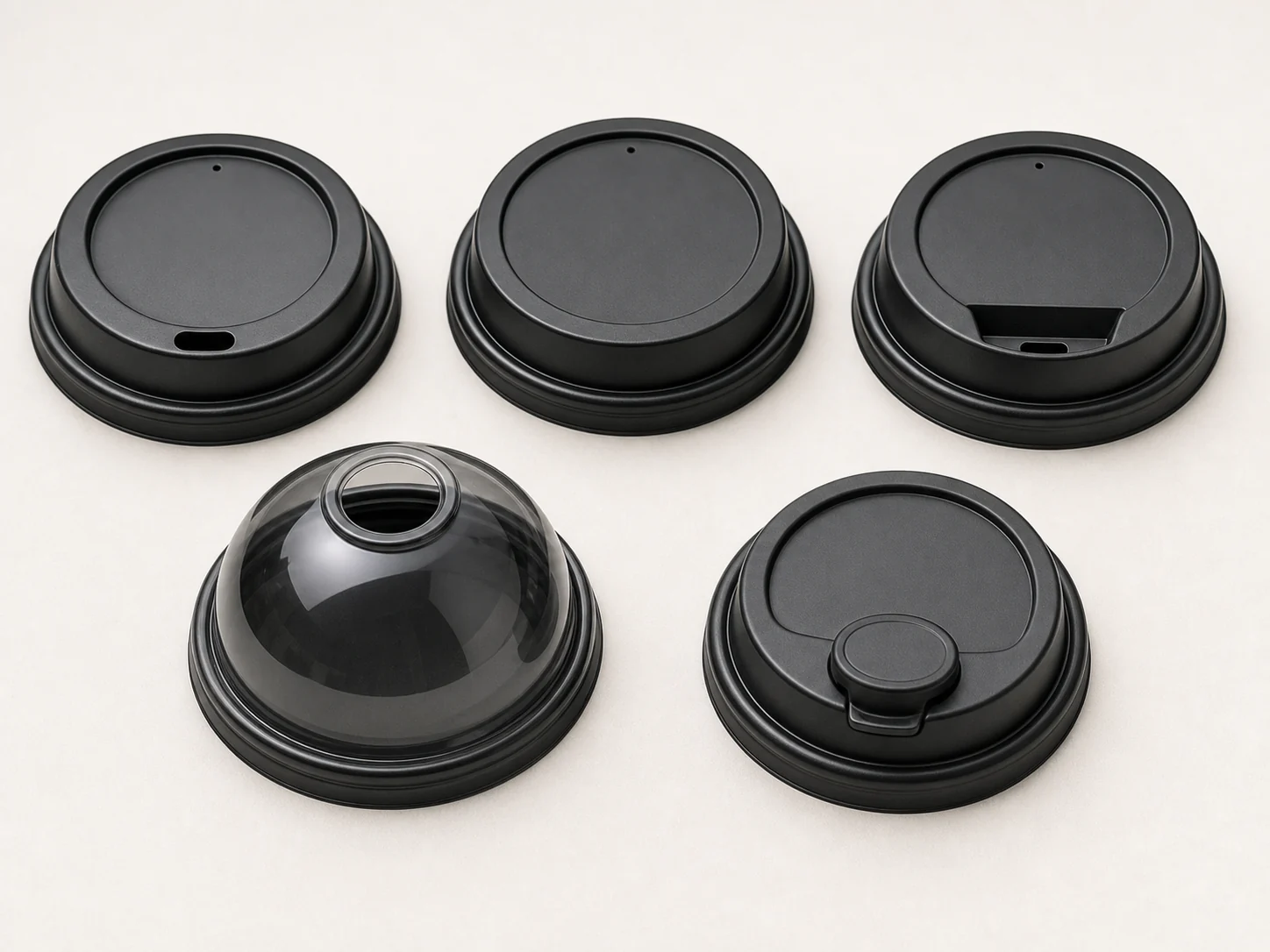
Selecting the correct lid is a system decision, not a product decision. The following evaluation sequence gives buyers a structured way to narrow the option set before requesting samples.
Cup rims are not standardised across all manufacturers. A rim profile describes the shape, diameter, and material thickness at the top of the cup. Two cups that hold the same volume may have different rim profiles and may not accept the same lid. Obtain the rim profile specification from the cup supplier before contacting a lid supplier. If you switch cup suppliers, re-validate all existing lid fits.
Explore the foodservice paper cup range to understand how cup construction affects the rim specification you need to match.
Build a simple matrix of your menu items against the lid formats described above. Hot espresso drinks and filter coffee may use sip-through lids. Iced drinks with straws may use straw-slot lids. Blended drinks and specialty cold beverages with toppings may require dome lids. If the menu spans multiple categories, you may need more than one lid format—and more than one rim system if the cup range varies.
Использование paper cup size planning to understand how capacity selection can interact with lid availability across your range.
Headspace—the gap between the drink surface and the underside of the seated lid—is a key variable in spill risk. Too little headspace can make liquid contact the lid interior during normal handling. Ask the lid supplier what fill condition the lid is designed for, then test with your actual fill volume and cup size.
Consider the full journey from fill point to first sip:
No specification sheet replaces a physical fit check. Request samples of both the cup and the lid, fill to your standard volume, seat the lid using the usual application method, and test under actual handling conditions. Document the results. If you operate multiple sites, test at each site when filling equipment, counter height, or delivery practice differs.
| Lid format | Best-fit drink / service | Rim / specification check | Drinking access | Spill-risk trade-off | Buyer validation question |
|---|---|---|---|---|---|
| Sip-through hot-drink lid | Hot espresso, filter coffee, hot tea; counter or takeaway service | Confirm rim-profile match with the cup supplier; request a sample set | Direct sip through aperture; no straw needed | The aperture remains open; risk increases if the cup tips or is compressed | What fill condition is this lid designed for with my cup and beverage? |
| Flat lid (no opening) | Cold brew, grab-and-go closed drinks, stacked storage | Confirm the flat profile seats fully on the rim without a gap | No access without a straw slot or tear tab | Lower risk while closed, but the customer must open it before drinking | Does this lid include a tear tab or opening mechanism, or is it fully closed? |
| Straw-slot / iced-drink lid | Iced coffee, cold brew with straw, blended iced drinks | Confirm slot geometry matches the straw; validate with both suppliers | Straw access through slot; the slot remains open around the straw | The slot is an open channel; tipping can cause spillage | Which straw profile has this slot been sampled with, and is it a cross-cut or pre-formed slot? |
| Куполообразная крышка | Whipped-cream drinks, blended beverages, layered cold drinks | Confirm dome height clears the drink build; check delivery-bag and tray fit | Usually straw access or a compatible variant | Greater finished-drink height; check stability under lateral movement | Does the dome clear my standard drink build and the packaging used for delivery? |
| Closable / plug-cap lid | Commuter hot drinks, takeaway with moderate transit | Confirm the closure seats and reopens reliably; request a durability sample | Sip through aperture when open; partial closure when engaged | Closure can reduce but does not eliminate open-aperture risk | How should the closure be tested for repeated use and realistic transit? |

In a high-volume counter-service environment, lid application speed is an operational variable. A lid that requires significant force to seat correctly can slow throughput and increases the chance of incorrect seating under time pressure. Conversely, a lid that seats too easily may not form an adequate seal. When evaluating lids for counter service, include a timed application test with your actual staff and cup-filling setup.
Lid dispensing equipment—whether a simple countertop dispenser or an integrated lid applicator—must be compatible with the lid’s rim system and material thickness. Confirm compatibility before ordering case quantities.
Third-party delivery is the most demanding operational context for a coffee cup lid. Validate lids under a realistic delivery simulation: place filled, lidded cups in your delivery bags, subject them to movement patterns typical of the route, and inspect for lid displacement, liquid migration, and seal integrity. If the delivery operation uses insulated bags or particular cup holders, test with those accessories in place.
Browse takeaway packaging accessories to consider how cup carriers, bags, and holders interact with lid selection in a delivery context.
Event service—festivals, corporate catering, and stadium concessions—often involves pre-filling cups or serving in high-throughput bursts. In these contexts, lid consistency across a large case quantity matters more than in a café setting where lids are applied one at a time. Request a quality-consistency statement from the supplier and inspect multiple units from different positions in a case to check for dimensional variation.
Storage conditions at events, including heat, humidity, and outdoor exposure, can affect lid material. Ask the supplier for storage recommendations for the specific material ordered.
Distributors sourcing lids for resale to multiple operators face a different challenge: they need lid formats that fit the widest practical range of cups in their portfolio, or clear SKU-level documentation mapping each lid to compatible cup specifications.
Explore the paper cup resource library for adjacent cup references that can inform distributor compatibility mapping.
A practical rollout sequence for a new lid specification:
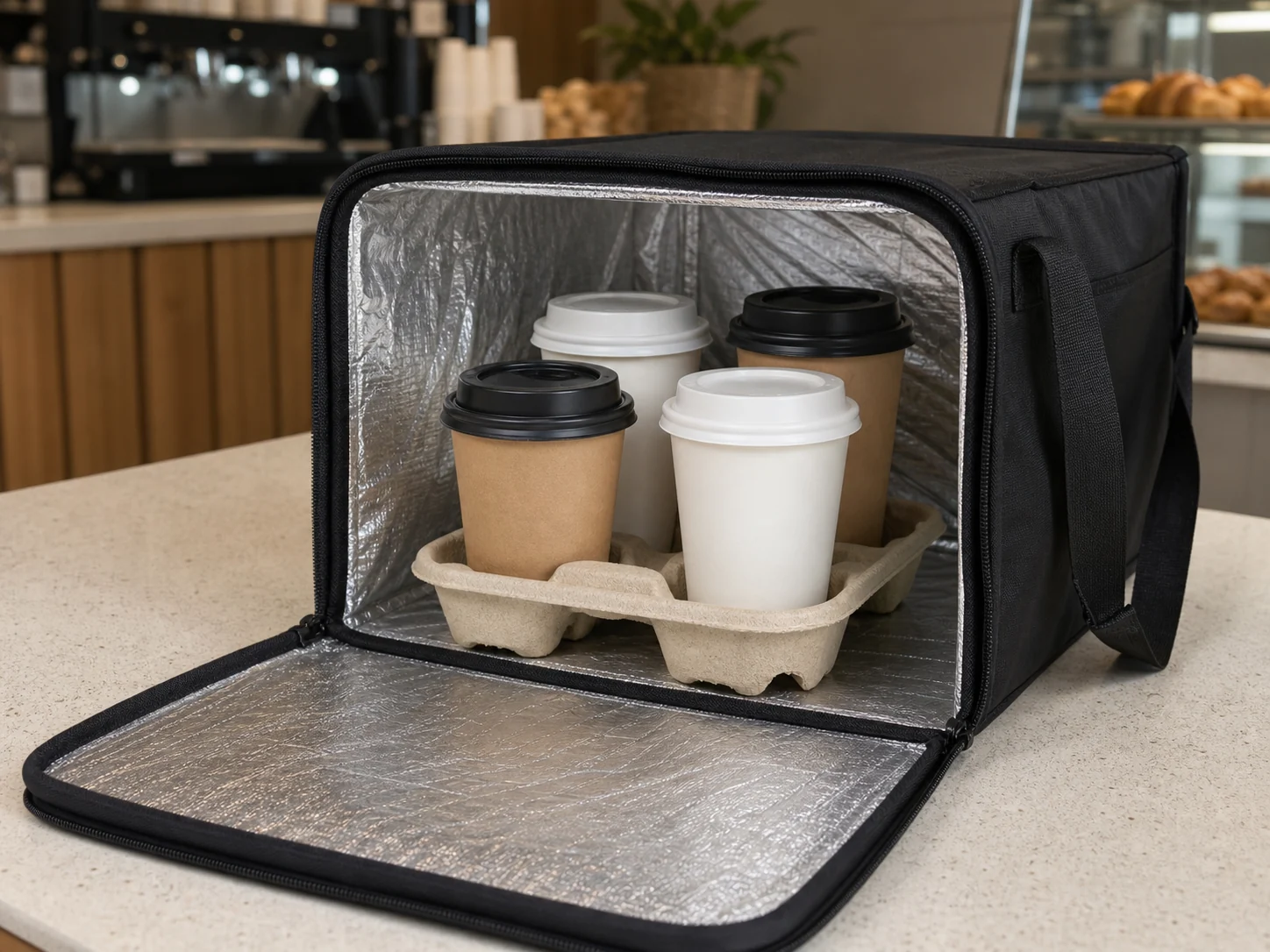
Any material that contacts food or beverage—including coffee cup lids—should be supported by appropriate food-contact documentation from the supplier. This documentation can help the buyer assess whether the materials are suited to the intended food-contact application.
Ask the lid supplier for:
Do not assume that a lid is compliant merely because it is commercially available. Request documentation specific to the product being ordered.
Buyers sourcing for the US market can consult FDA food-contact materials guidance when framing questions about the regulatory basis for supplier claims. Use it to understand the food-contact-substance framework, then direct product-specific compliance questions to the supplier and, where necessary, your own regulatory or legal advisers.
Avoid unsupported FDA-status shorthand based on a supplier’s general compliance claim. Ask what specific regulatory basis or documentation the supplier relies on.
A lid’s food-contact suitability may be specific to a temperature range or beverage type. A lid documented for cold beverage contact may not carry the same documentation for hot beverage contact. Confirm that the documentation covers actual use conditions—hot fill, cold fill, or both—and the temperature range your beverages reach at the point of lidding.
If a supplier makes claims about compostability, recyclability, or material content, ask for the specific certification, standard, or test method supporting the claim, plus the certifying body where applicable. Do not repeat supplier environmental claims in customer-facing materials without reviewing the underlying documentation.
Papacko works with café operators, QSR groups, distributors, and foodservice sourcing teams to develop lid specifications that match cup systems, beverage menus, and operational requirements. To build a useful specification, prepare the following information before the first conversation.
Cup and rim reference. Provide the cup supplier name, cup reference or SKU, and rim-profile specification if available. If you are sourcing cups and lids together, start with cup selection and derive the rim profile from there. The paper cup lid options page gives an overview of the lid formats available through Papacko.
Beverage menu. List the drink types you are lidding: hot espresso drinks, filter coffee, iced drinks, blended beverages, or a combination. If the menu spans multiple categories, note which drinks are highest volume, as this influences which lid format to prioritise.
Lid form preference. Indicate whether you have a preferred format—sip-through, flat, straw-slot, dome, or closable—or need guidance based on the menu and service model.
Customer handling and service route. Describe how drinks reach the customer: counter service, table delivery, takeaway bag, third-party delivery, or event service. Include specific transit conditions such as delivery-bag type, cup holder, or tray format.
Branding requirements. If you require custom printing, embossing, or colour on the lid, note this at the outset. Custom branding can affect minimum order quantities, lead times, and tooling requirements, so confirm these parameters early.
Case-pack quantity and volume forecast. Provide the expected weekly or monthly volume and preferred case-pack size. This helps determine whether standard-stock lids or a custom specification is more practical, and it allows Papacko to discuss lead times and stock planning.
Sample requirement. Confirm the need for physical samples before placing a production order. Build that validation step into the timeline.

Опыт и условия закупки. This guide is produced by Papacko’s editorial team, drawing on B2B foodservice packaging supply across café, QSR, catering, and distribution channels. It reflects the practical questions buyers encounter when specifying coffee cup lids for commercial operations, including rim-system matching, format selection, documentation, and operational validation.
Технические и нормативные основания. The guidance reflects general foodservice-packaging procurement practice and the official source cited above. It does not constitute legal, regulatory, or food-safety advice. Numeric specifications—including rim diameters, temperature limits, material grades, and compliance thresholds—vary by product, supplier, and market; buyers should request current product specifications, samples, and documentation for their exact use.
Как использовать данное руководство. Use this article as a framework for the lid evaluation process: identify the rim system, map lid formats to the menu, assess the handling route, and request documentation and samples before committing to a specification. It is designed to help you ask better questions of a supplier, not replace product-specific data or operational testing.
No. Cup volume in ounces does not determine lid fit. Fit is determined by the rim profile—the shape and diameter at the top of the cup. Two cups of the same stated volume from different manufacturers may have different rim profiles and require different lids. Confirm the rim profile with the cup supplier and validate fit with physical samples.
A sip-through lid has a fixed open aperture through which the customer drinks. A closable lid adds a tab, plug, or sliding mechanism that partially covers the aperture when not in use. For short-distance counter takeaway, a well-fitted sip-through lid may be sufficient. For longer transit or delivery, a closable lid can reduce—but does not eliminate—the risk of liquid exiting through the aperture. Test both formats under your actual takeaway conditions.
Ask the supplier for food-contact documentation that specifically covers hot beverage use and states the temperature range documented for the product. Suitability for hot contact is a material and documentation question, not something that can be assumed from appearance or general commercial availability. Confirm that documentation covers your actual fill temperature.
In many cases, no. Hot-drink and iced-drink lids are designed for different beverage types and can have different aperture geometry, material specifications, and food-contact documentation. If the menu includes both, you may need more than one format. Confirm whether any lid in the range is documented for both hot and cold contact, and validate fit and performance for each beverage type separately.
Before committing to a bulk order, ask for the rim-profile specification and which cups it is validated for; food-contact documentation covering your beverage type and temperature; physical samples for fit and handling validation; case-pack quantity and lead time; storage recommendations; and the supplier’s process for handling dimensional variation across production batches. Run a pilot before a full rollout.
Some suppliers offer lids made from materials described as compostable or containing recycled content. If this is relevant, ask for the specific certification, standard, or test method supporting the claim, along with the certifying body. Do not use supplier environmental claims in customer communications without reviewing underlying documentation. Availability of material types varies by supplier and market; confirm current availability directly.