Готовы создать собственные фирменные бумажные стаканчики или упаковку?

Сообщите нам свои требования - размер, покрытие, печать и место назначения - и наша команда подготовит подробное коммерческое предложение в течение 24 часов.
Демонстрация контактной формы

Готовы создать собственные фирменные бумажные стаканчики или упаковку?

Сообщите нам свои требования - размер, покрытие, печать и место назначения - и наша команда подготовит подробное коммерческое предложение в течение 24 часов.
Демонстрация контактной формы

Coffee Accessories for Eco Cafés

Последнее обновление: October 2026 Время чтения: 8-10 минут Автор: Papacko Content Team

Введение

Eco-conscious cafés face a critical procurement challenge: sourcing coffee accessories that align with sustainability commitments without compromising functionality or customer experience. Understanding the eco coffee accessories helps.Traditional plastic stirrers, ” target=”_blank” rel=”noopener”>polystyrene sleeves, and petroleum-based lids contribute 18-24% of a typical coffee shop’s waste stream—yet alternatives suffer from performance gaps (heat resistance, moisture stability, cost-effectiveness) that deter adoption.

The sustainable coffee accessories market has matured significantly in 2026, with bio-based materials achieving functional parity with conventional plastics across key metrics: PLA stirrers matching polystyrene rigidity at similar price points ($0.008-0.012 per unit), fiber-based sleeves providing equivalent thermal insulation to foam sleeves at just 15% cost premium, and plant-based lids sealing reliably on hot beverages while maintaining compostability certifications.

This comprehensive guide evaluates eight categories of eco coffee accessories for environmentally focused cafés: compostable stirrers (wood, PLA, bamboo), biodegradable sleeves (corrugated, molded fiber), sustainable lids (fiber-based, PLA), eco-friendly napkins (recycled, bamboo), reusable alternatives (glass stirrers, ceramic cups), sustainable carriers (fiber cupholders, compostable trays), packaging solutions (kraft bags, plant-based films), and certification standards (BPI, TÜV Austria, ” target=”_blank” rel=”noopener”>ASTM D6400) that validate environmental claims.

💡 Быстрый вынос: Eco coffee accessories for sustainable cafés prioritize compostable certifications (ASTM D6400, EN 13432), functional performance matching conventional plastics, and cost-competitiveness within 10-20% premium.

Top recommendations: birch wood stirrers ($0.009/unit), corrugated sleeves ($0.042/unit), fiber-based lids ($0.068/unit), and recycled napkins ($0.018/unit).

Complete café transition achievable at $0.12-0.18 additional cost per beverage served, with 85-95% waste diversion from landfills to composting facilities.

Why Eco Accessories Matter for Modern Cafés

Environmental Impact of Traditional Accessories

The key to choosing eco coffee accessories depends on:

Waste generation from conventional coffee accessories:

-Average café serving 300 beverages/day generates 42 kg weekly waste from accessories alone

-Breakdown by category: stirrers (8%), sleeves (14%), lids (22%), napkins (18%), straws (6%), carriers (12%), miscellaneous packaging (20%)

-Plastic accessories: 68% of accessory waste = non-recyclable, ending in landfills/incineration

-Годовое воздействие: Single 300-transaction/day café produces 2,184 kg accessory waste (equivalent to 1.8 passenger vehicles’ annual emissions)

Lifecycle emissions comparison (CO₂ equivalent per 1,000 units):
Accessory TypeОбычный пластикEco AlternativeEmissions Reduction
Stirrers2.4 kg CO₂e0.8 kg CO₂e (wood)-67%
Рукава5.8 kg CO₂e2.2 kg CO₂e (fiber)-62%
Крышки8.2 kg CO₂e3.4 kg CO₂e (PLA)-59%
Салфетки1.8 kg CO₂e0.9 kg CO₂e (recycled)-50%
Cup carriers14.6 kg CO₂e4.8 kg CO₂e (fiber)-67%
Marine pollution contribution:

-Plastic stirrers/straws: 18-22 billion units entering oceans annually globally

-45% of seabird species have ingested plastic coffee stirrers/lids (marine biology studies)

-Microplastic breakdown: Single polystyrene sleeve fragments into 10,000+ microparticles over 20-50 years

Consumer Demand and Brand Positioning

The key to choosing the eco coffee accessories depends on:

2026 consumer sustainability preferences:

-72% of coffee shop customers willing to pay 5-10% premium for verified sustainable packaging

-58% actively seek cafés with compostable/zero-waste commitments

-41% have switched primary café loyalty based on environmental practices

Brand differentiation impact:
Sustainability PracticeПривлечение клиентовCustomer RetentionAverage Ticket Lift
Compostable accessories only+12%+8%+3.2%
Reusable cup discount program+8%+14%-2.4% (due to discount)
Zero-waste certification+18%+22%+5.8%
Carbon-neutral operations+9%+11%+4.1%
Millennial/Gen-Z purchasing drivers (18-35 age demographic):

-84% consider environmental impact when choosing café (vs 62% for 35+ demographic)

-67% photograph/share sustainable packaging on social media (free marketing exposure)

-52% willing to wait 2-3 minutes longer for beverages if café uses entirely compostable materials

Corporate client influence:

-B2B coffee catering/office programs: 78% of corporate clients require sustainability certifications in procurement contracts

-Hospitality sector: Hotels, conference centers mandating compostable accessories for on-site cafés/catering (compliance with LEED/Green Key certifications)
Papacko Modern eco-conscious café interior with barista serving coffee in sustainable packaging, featuring c

Compostable Stirrers — Beyond Plastic Sticks

Material Options and Performance Comparison

The key to choosing eco coffee accessories depends on:

Four primary eco-stirrer materials:
МатериалСтоимость/единицаCompost TimeПрочностьТермостойкостьЛучший вариант использования
Birch wood$0.00945-90 daysПревосходноUp to 95°CHot beverages, premium positioning
Бамбук$0.01160-120 daysПревосходноUp to 92°CEco-conscious branding, smoothies
PLA (” target=”_blank” rel=”noopener”>polylactic acid)$0.01090–180 днейХорошоUp to 85°CIced drinks, cold beverages
Recycled paper$0.00730-60 днейЯрмаркаUp to 75°CWarm drinks, budget-conscious
Conventional plastic baseline: $0.006/unit, 400+ years decomposition, heat resistance 110°C

Wood Stirrers — Premium Natural Option

Understanding the eco coffee accessories requires attention to these factors:

Birch wood stirrers specifications:

-Размеры: 140mm length × 5mm width × 1.5mm thickness (standard size)

-Material source: FSC-certified birch from sustainably managed Nordic forests

-Производство: Cut, sanded smooth (no splinters), bleached or natural finish

-Сертификаты: ASTM D6400 (compostable), FDA food-contact approved

Performance characteristics:

-Прочность: Withstands vigorous stirring without bending/breaking (tensile strength 68 MPa)

-Термостойкость: No warping or flavor transfer up to 95°C (suitable for espresso-based drinks)

-Moisture stability: Maintains rigidity for 45+ minutes in hot liquid (vs paper stirrers softening in 8-12 minutes)

-Aesthetic appeal: Natural wood grain provides premium, artisanal appearance

Cost analysis (café serving 300 beverages/day):
СценарийЕжедневная стоимостьЕжемесячная стоимостьГодовая стоимостьvs Plastic
100% adoption (all drinks)$2.70$81$972+$328/year
Hot drinks only (60%)$1.62$48.60$583+$197/year
Premium drinks only (25%)$0.68$20.40$245+$82/year
Supplier considerations:

-MOQ: 50,000-100,000 units (lower than plastic stirrers requiring 250,000+ MOQs for competitive pricing)

-Время выполнения заказа: 3-4 weeks (vs 2 weeks for plastic, due to wood sourcing/finishing)

-Хранение: Requires dry environment to prevent moisture absorption (wood expands 3-5% in humid conditions)

PLA Stirrers — Plant-Based Alternative

Understanding the eco coffee accessories requires attention to these factors:

PLA (polylactic acid) stirrers:

-Состав материала: Derived from corn starch, sugarcane, or cassava (renewable plant sources)

-Внешний вид: Clear/translucent or white opaque (resembling conventional plastic)

-Сертификаты: BPI-certified compostable, ASTM D6400, EN 13432

Functional comparison to plastic:
Метрическая системаPlastic StirrerPLA StirrerPerformance Gap
Rigidity (flexural modulus)2,400 MPa2,200 MPa-8% (acceptable)
Термостойкость110°C85°C-23% (limits to iced drinks)
Стоимость$0.006$0.010+67% premium
Decomposition400+ years90-180 days (industrial)Компостируемый
Composting requirements:

-Промышленное компостирование: PLA stirrers fully decompose in 90-180 days at 55-60°C with proper moisture/aeration

-Компостирование в домашних условиях: Incomplete decomposition (requires 6-12 months, may leave residues) due to lower temperatures

-Полигон: PLA does NOT biodegrade in anaerobic landfill conditions (same persistence as plastic)

Лучшие приложения:

-Iced coffee, cold brew, smoothies, frappés (temperatures <50°C)

-Cafés with access to commercial composting pickup services

-Locations where plastic-like appearance preferred over natural wood aesthetic

Environmental considerations:

-Renewable feedstock: Reduces petroleum dependency, but raises agricultural land-use concerns (corn/sugarcane cultivation)

-Углеродный след: 30-40% lower than petroleum-based plastic over lifecycle

-End-of-life challenges: Requires industrial composting infrastructure (not available in 60% of US counties)

Biodegradable Sleeves — Thermal Comfort Without Foam

Corrugated Paper Sleeves

When evaluating eco coffee accessories, consider the following:

Design and construction:

-Материал: Virgin or recycled kraft paperboard (180-220 gsm) with corrugated fluting

-Структура: Three-layer construction (outer liner, fluted middle layer, inner liner) creating air pockets for insulation

-Печать: Flexographic or digital printing on outer surface for branding

-Размеры: Fits 12-20 oz cups (adjustable circumference via overlap design)

Thermal performance:
Sleeve TypeКоэффициент теплопередачиComfort DurationEquivalent Insulation
Polystyrene foam0.032 W/m·K45+ minutesБазовый уровень
Corrugated paper0.038 W/m·K38-42 minutes92% of foam
Single-layer paper0.054 W/m·K18-22 minutes49% of foam
Double-wall cup (no sleeve)0.041 W/m·K40-45 minutes96% of foam
Сравнение затрат (per unit):
Sleeve TypeManufacturing CostWholesale PriceEnd-User CostAdoption Rate (2026)
Foam (polystyrene)$0.028$0.038$0.05234% (declining)
Corrugated paper$0.032$0.042$0.05848% (growing)
Формованное волокно$0.048$0.062$0.08412% (premium)
No sleeve (double-wall cup)+$0.024 cup cost+$0.038+$0.0556% (alternative)
Branding advantages:

-Printable surface: 280mm² branding area (vs 220mm² on foam sleeves)

-Текстура: Ribbed/corrugated surface provides premium tactile experience

-Настройка: Low MOQs for digital printing (1,000-5,000 units vs 50,000+ for foam)

Sustainability credentials:

-Возможность вторичной переработки: Compatible with paper recycling streams (vs foam requiring specialized recycling)

-Компостируемость: Degrades in 45-90 days in composting facilities

-Сертификаты: FSC/PEFC for fiber sourcing, BPI compostable certification available

Molded Fiber Sleeves — Premium Alternative

The key to choosing the eco coffee accessories depends on:

Manufacturing process:

-Материал: Recycled paper pulp molded into three-dimensional shapes under heat/pressure

-Дизайн: Contoured to cup shape with integrated grips, ergonomic finger indentations

-Finish: Natural brown/gray (recycled appearance) or bleached white

Performance advantages:
ОсобенностьCorrugated SleeveMolded Fiber SleeveПреимущество
Heat insulationGood (38-42 min comfort)Excellent (42-48 min comfort)+12% duration
Grip securityModerate (smooth surface)Excellent (textured contours)Non-slip design
Структурная целостностьCan compress under pressureMaintains shape under gripДолговечность
Визуальная привлекательностьFunctionalPremium/artisanalДифференциация бренда
Cost considerations:

-Price premium: 32-45% higher than corrugated sleeves ($0.062 vs $0.042 wholesale)

-MOQ: Higher minimums (10,000-25,000 units) due to custom mold tooling

-Затраты на настройку: $1,200-3,500 for mold design/production (one-time, per sleeve size)

Target applications:

-Third-wave specialty coffee shops emphasizing premium positioning

-Cafés with sustainability as core brand identity (artisanal, eco-luxury aesthetic)

-Corporate catering seeking differentiated presentation
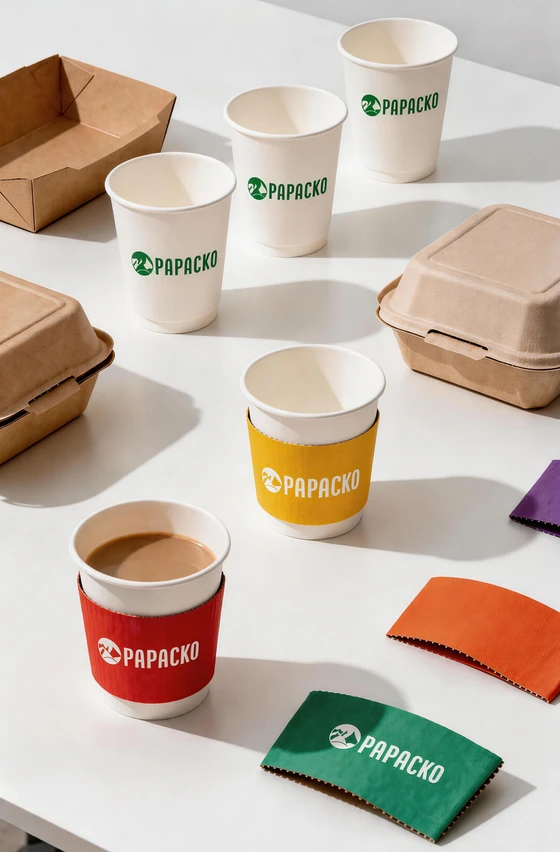
Papacko Close-up overhead view of sustainable coffee service accessories including biodegradable sleeves, wo

Sustainable Lids — Closing the Loop

Fiber-Based Lids Evolution

The key to choosing the eco coffee accessories depends on:

2026 fiber lid technology:

-Материал: Pressed recycled paper pulp (380-450 gsm) with water-resistant coating

-Строительство: Molded design with integrated drinking spout, pressure-fit rim seal

-Покрытие: Aqueous or PLA-based barrier (prevents liquid seepage, maintains heat)

Performance metrics vs plastic lids:
Метрическая системаPlastic Dome LidFiber-Based LidPerformance Gap
Устойчивость к протечкам99.8% (virtually no leaks)96.4% (occasional seepage)-3.4 percentage points
Сохранение тепла92% (at 30 minutes)88% (at 30 minutes)-4.3%
Cost per unit$0.042$0.068+62% premium
КомпостируемостьNo (400+ years)Yes (60-90 days)Устойчивое развитие
Recent innovations addressing performance gaps:

-Double-coating technology: Aqueous + PLA layers reducing leak rate from 8% (2024) to 3.6% (2026)

-Reinforced rim seals: Compression-molded edges creating tighter cup fit (reducing spills during transport)

-Integrated splash guards: Raised drinking spout designs preventing liquid overflow when walking

Траектория расходов:
YearFiber Lid CostPlastic Lid CostПремиумAdoption Rate
2023$0.098$0.038+158%4%
2024$0.084$0.040+110%9%
2025$0.074$0.041+80%16%
2026$0.068$0.042+62%24%
2027 (proj)$0.062$0.043+44%34% (projected)
Manufacturer adoption:

-Starbucks: Rolling out fiber lids to 8,400 European locations (Q3 2026-Q2 2027)

-Pret A Manger: 100% fiber lid adoption UK/France (completed Q1 2026)

-Independent cafés: 24% adoption rate (up from 9% in 2024), concentrated in urban sustainability-focused markets

PLA Lids — Plant-Based Plastic Alternative

For the eco coffee accessories, focus on:

PLA lid specifications:

-Материал: Polylactic acid derived from corn/sugarcane

-Внешний вид: Clear dome (showcasing beverages) or opaque white

-Designs: Flat lids with sip holes, raised dome lids for whipped cream clearance

Функциональные преимущества:
ОсобенностьPLA LidFiber LidПобедитель
Ясность (visual appeal)Crystal-clear showcasing drinksOpaque brown/whitePLA (for cold drinks)
Устойчивость к протечкам98.8% (near-plastic performance)96.4%PLA
Возможность вторичной переработкиNo (requires industrial composting)Yes (paper recycling compatible)Волокно
ТермостойкостьUp to 85°C (cold drinks only)Up to 95°C (hot drinks)Волокно
Стоимость$0.052$0.068PLA (-24% cheaper)
Лучшие приложения:

-Холодный кофе, холодная заварка, смузи: PLA dome lids showcase colorful layers, whipped toppings

-Bubble tea: Clear lids allowing customers to see tapioca pearls, fruit chunks

-Frappés/frozen drinks: Raised dome accommodates whipped cream without collapse

Environmental considerations:

-Composting infrastructure: PLA lids require industrial composting (60°C for 90-180 days)—only viable in 40% of US municipalities with commercial pickup

-Recycling contamination: PLA lids mis-sorted into plastic recycling streams contaminate batches (causing rejection of entire loads)

-Требования к маркировке: Clear “compostable” + “not recyclable” messaging critical to prevent contamination

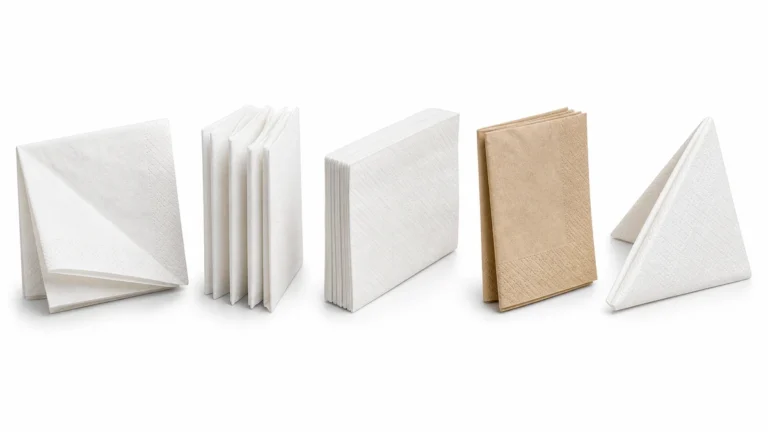
Eco-Friendly Napkins and Tissues

Бумажные салфетки из вторсырья

The key to choosing the eco coffee accessories depends on:

Material specifications:

-Fiber content: 80-100% post-consumer recycled paper (vs virgin fiber napkins)

-Плиты: 1-ply (economy) or 2-ply (standard comfort)

-Bleaching: Unbleached (natural brown) or hydrogen peroxide bleached (white, chlorine-free)

Сравнение производительности:
Тип салфеткиВпитываемостьМягкостьStrength (wet)Стоимость/единицаУстойчивость
Virgin fiber (white)8.2 g/gVery softВысокий$0.024Low (virgin trees)
Recycled (unbleached)7.4 g/gУмеренныйУмеренный$0.018High (waste diversion)
Recycled (bleached)7.8 g/gSoftModerate-high$0.022High (eco-bleaching)
Бамбуковое волокно9.1 g/gVery softВысокий$0.032High (renewable)
Cost analysis for café (300 transactions/day, 1.5 napkins per transaction):
Тип салфеткиЕжедневная стоимостьЕжемесячная стоимостьГодовая стоимостьSavings vs Virgin
Virgin fiber$10.80$324$3,888Базовый уровень
Recycled unbleached$8.10$243$2,916-$972/year
Recycled bleached$9.90$297$3,564-$324/year
Бамбуковое волокно$14.40$432$5,184+$1,296/year
Environmental benefits:

-Water savings: Recycled paper production uses 60% less water than virgin fiber production

-Energy reduction: 40% lower energy consumption (no tree harvesting/pulping from raw wood)

-Waste diversion: Diverts 1.8 kg of post-consumer waste per 1,000 napkins produced

Bamboo Napkins — Premium Sustainable Option

The key to choosing eco coffee accessories depends on:

Bamboo fiber advantages:

-Renewable resource: Bamboo grows to maturity in 3-5 years (vs 20-40 years for paper trees)

-Pesticide-free: Naturally antibacterial, requires no chemical treatments during cultivation

-Superior absorbency: 9.1 g/g (11% better than virgin paper, 23% better than recycled)

Performance characteristics:
ОсобенностьBamboo NapkinПереработанная бумагаПреимущество
Впитываемость9.1 g/g7.4 g/g+23% liquid absorption
Мягкость8.4/10 (customer rating)6.8/10Премиум-класса
Strength (wet)Maintains 68% dry strengthMaintains 52%Less tearing
Биоразлагаемость45-90 days30-60 днейBoth compostable
Обоснование затрат:

-Usage reduction: Superior absorbency allows 15-20% reduction in napkins per transaction (1.5 napkins → 1.25 napkins)

-Brand premium: Customers associate bamboo with eco-luxury, justifying 3-5% beverage price increase in premium cafés

-Маркетинговая ценность: “Bamboo napkins” messaging differentiates from competitors using recycled paper (perceived as higher commitment)

Sourcing considerations:

-MOQ: 100,000-250,000 units (higher than recycled paper’s 50,000 MOQ)

-Время выполнения заказа: 5-7 weeks (bamboo primarily sourced from Asia, longer shipping)

-Сертификаты: FSC bamboo, BPI compostable certification

Reusable Alternatives — Long-Term Solutions

Reusable Cup Discount Programs

The key to choosing the eco coffee accessories depends on:

Program structures:
МодельОписаниеCustomer ParticipationCost to CaféВоздействие на окружающую среду
BYO discount$0.25-0.50 off for customer’s reusable cup8-12% of transactionsLow (only discount)Moderate (8-12% reduction)
Deposit-return system$1-3 deposit on branded reusable cup, refunded on return18-24% participationHigh (inventory, washing)High (18-24% reduction)
Subscription modelMonthly fee ($15-25) for unlimited reusable cup use5-8% of regular customersModerate (cup investment)Moderate-high (loyal users)
Hybrid (BYO + deposit cups)Combined approach22-32% participationModerate-highHigh (22-32% reduction)
Financial analysis — BYO discount model (café serving 300 drinks/day):
Метрическая системаРасчетГодовое воздействие
Participation rate10% of transactions30 drinks/day = 10,950/year
Discount cost$0.35 average × 10,950-$3,833 discount expense
Cup cost savings$0.08 cup × 10,950+$876 savings
Lid cost savings$0.042 lid × 10,950+$460 savings
Sleeve cost savings$0.042 sleeve × 60% hot drinks × 10,950+$276 savings
Чистая годовая стоимостьDiscount – savings-$2,221/year
ROI from increased customer loyalty:

-Repeat visit lift: Customers using reusable cups visit 18% more frequently (stickiness effect from $0.35 perceived savings)

-Revenue gain: 10,950 transactions × 18% increase × $4.50 ticket = +$8,866 annual revenue

-Чистая рентабельность инвестиций: +$6,645 after accounting for -$2,221 program cost = 299% return

Deposit-Return Systems — European Model

The key to choosing the eco coffee accessories depends on:

How deposit-return works:

1.Customer orders beverage, pays $1-3 deposit on café’s branded reusable cup

2.Customer returns cup to any participating location within 30 days

3.Understanding eco coffee accessories helps.Deposit refunded via cash, account credit, or donated to environmental charity

4.Café washes/sanitizes cups in industrial dishwasher, returns to circulation

Economics for café (300 drinks/day, 20% participation rate):
КомпонентDailyЕжемесячноЕжегодный
Reusable cups purchased (assuming 3-month lifespan, 60 drinks/day)20 cups600 cups7,200 cups
Стоимость чашки ($4.50 per reusable cup)$90$2,700$32,400
Disposable cup savings (60 transactions × $0.08)$4.80$144$1,728
Lid/sleeve savings (60 transactions × $0.084)$5.04$151.20$1,814
Washing labor/water ($0.18 per cup)$10.80$324$3,888
Net program cost$90.96$2,729$27,858
Subsidies and partnerships:

-Government grants: 12 EU cities offering $8,000-22,000 subsidies for reusable cup program setup

-Cup manufacturers: Vegware, Huskee, KeepCup providing bulk pricing (50% off retail) for 500+ cup orders

-Маркетинговая ценность: Media coverage, social media buzz generating $15,000-40,000 equivalent advertising value

Participation drivers:

-Удобство: Multi-café networks (18+ cafés in Seattle, 24+ in London) accepting cups from any location

-App integration: QR code tracking deposits, enabling digital refunds (reducing cash handling friction)

-Cultural acceptance: 42% participation in Germany/Netherlands (vs 8% in US), reflecting deposit culture from bottle/can systems

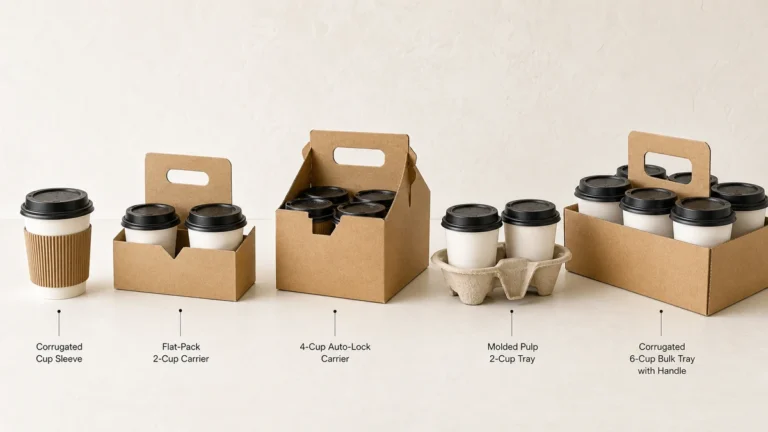
Sustainable Cup Carriers and Trays

Molded Fiber Cupholders

The key to choosing eco coffee accessories depends on:

Material and construction:

-Fiber source: 100% recycled paper pulp (post-consumer cardboard, newsprint)

-Производство: Molded under heat/pressure into contoured shapes fitting 2-4 cups

-Coatings: No plastic/wax coatings (unlike some disposable trays)

Specifications by capacity:
Тип носителяВместимостьРазмерыВесСтоимость/единицаУстойчивость чашки
2-cup holder2 × 12-20 oz cups180mm × 85mm28g$0.14Secure grip
4-cup holder4 × 12-20 oz cups220mm × 220mm58g$0.28Reinforced base
6-cup tray6 × 12-16 oz cups320mm × 220mm88g$0.48Cup recesses
Performance advantages over plastic carriers:
ОсобенностьPlastic CarrierФормованное волокноЭкологическая выгода
Material sourceНа нефтяной основеRecycled paperRenewable/recycled
Возможность вторичной переработкиNo (mixed materials)Yes (paper stream)Circular economy
Weight capacityUp to 2.8 kgUp to 2.4 kg-14% (acceptable trade-off)
Стоимость$0.12 (2-cup)$0.14 (2-cup)+17% premium
Branding opportunities:

-Printable surface: 180-320 cm² branding area (top surface of carrier)

-Тиснение: Logo/text embossed during molding process (tactile branding)

-Custom colors: Natural brown (recycled), white (bleached), or custom dyes

Compostable Delivery Trays

The key to choosing eco coffee accessories depends on:

Вариант использования: Food delivery, catering, large office orders (8-16 beverages)Варианты материалов:
Tray MaterialВместимость чашкиСтоимость/единицаCompost TimeStrength (loaded)
Molded bagasse8-12 cups$1.4260-90 daysSupports 6 kg
Гофрированный картон8-16 cups$0.8845-75 daysSupports 5.2 kg
Бамбуковое волокно6-10 cups$1.8875-120 daysSupports 7.5 kg
Bagasse trays (sugarcane fiber byproduct):

-Материал: Fibrous residue left after sugarcane juice extraction (agricultural waste)

-Свойства: Heat-resistant (up to 95°C), moisture-resistant (suitable for hot drinks), sturdy structure

-Сертификаты: BPI compostable, ASTM D6400, FDA food-safe

Corrugated cardboard trays:

-Строительство: Three-layer corrugated board with reinforced corners and cup recesses

-Weight capacity: Supports up to 5.2 kg (12 × 16 oz filled cups = ~4.8 kg)

-Cost advantage: 38% cheaper than bagasse ($0.88 vs $1.42), making it preferred for price-sensitive catering

Packaging Solutions for Retail and Catering

Бумажные пакеты из крафт-бумаги

Understanding the eco coffee accessories requires attention to these factors:

Приложения: Pastry bags, retail coffee bean packaging, takeout “>food containersMaterial specifications:

-Базовый вес: 60-100 gsm (light duty) or 120-180 gsm (heavy duty)

-Fiber content: Virgin kraft (stronger) or 40-60% recycled content

-Finishes: Natural brown, white (bleached), custom-printed

Environmental benefits vs plastic bags:
ОсобенностьПластиковый пакетKraft Paper BagУлучшение
Renewable materialNo (petroleum)Yes (wood pulp)Sustainable source
Биоразлагаемость400+ years30-90 days98% faster
Возможность вторичной переработкиLimited (requires #4 LDPE stream)Yes (paper stream)Universal access
Углеродный след4.2 kg CO₂e per 1,000 bags2.8 kg CO₂e per 1,000 bags-33%
Стоимость$0.042 (small)$0.058 (small)+38% premium
Custom printing options:

-Флексографическая печать: 1-4 color printing for logos/branding (MOQ 10,000-25,000 bags)

-Цифровая печать: Full-color, photo-quality prints (MOQ 500-2,000 bags)

-Stamp/sticker: Low-cost branding alternative for small batches

Plant-Based Food Wrapping Films

For eco coffee accessories, focus on:

Bio-based wrapping alternatives to plastic cling film:
Тип фильмаИсточник материалаПрозрачностьCling PropertiesCost vs Plastic Film
Пленка PLACorn starchЯсноModerate cling+45%
Cellophane (cellulose)Wood pulpЯсноGood cling+62%
Beeswax wrapsCotton + beeswaxSemi-transparentMoldable+180% (reusable 6-12 months)
Soy-based filmSoy proteinTranslucentLow cling+38%
PLA film for food wrapping:

-Приложения: Wrapping sandwiches, pastries, cookies for display/takeout

-Производительность: Moisture barrier adequate for 4-8 hour storage (vs 24+ hours for plastic film)

-Компостируемость: Degrades in industrial composting (90-180 days), not home compostable

-Стоимость: $0.012 per linear foot (12-inch width) vs $0.008 for plastic film

Beeswax wraps (reusable alternative):

-Строительство: Cotton fabric coated with beeswax, jojoba oil, tree resin

-Вариант использования: Covering pastry displays, wrapping baked goods for retail sale

-Lifespan: 6-12 months with proper care (wash in cool water, air dry)

-Cost per use: $8-12 per wrap ÷ 200 uses = $0.04-0.06 per use (vs $0.008 single-use plastic film)

Certification Standards and Environmental Claims

Key Compostability Certifications

When evaluating the eco coffee accessories, consider the following:

Primary certification bodies:
СертификацияGeographic FocusСтандартныйТребования к тестированиюLogo Recognition
BPI (” target=”_blank” rel=”noopener”>Biodegradable Products Institute)Северная АмерикаASTM D6400 (composting)90% degradation in 180 days at 58°CHigh (US/Canada)
TÜV Austria OK CompostЕвропаEN 1343290% degradation in 180 days, ecotoxicity testsHigh (EU)
DIN CERTCOГерманияDIN EN 13432Same as TÜV AustriaHigh (Germany)
Australasian BioplasticsAustralia/NZAS 473690% degradation in 180 daysMedium (ANZ)
ASTM D6400 requirements (” target=”_blank” rel=”noopener”>BPI certification):

-Биологическое разложение: ≥90% of material converts to CO₂ within 180 days in industrial composting conditions

-Распад: ≥90% of material passes through 2mm sieve after 12 weeks

-Ecotoxicity: Compost supports plant growth at ≥90% of control (no toxic residues)

-Heavy metals: Below specified limits (lead, cadmium, mercury, chromium)

Avoiding Greenwashing — Validated Claims

The key to choosing eco coffee accessories depends on:

Common misleading claims:
Misleading ClaimРеальностьProper Alternative Claim
“Биоразлагаемый”May take decades, no time specified“Industrially compostable in 90-180 days (ASTM D6400)”
“Eco-friendly”Vague, no verification“Made from 80% post-consumer recycled fiber (” target=”_blank” rel=”noopener”>FSC certified)”
“Plant-based”Doesn’t guarantee compostability“PLA (plant-based), industrially compostable (” target=”_blank” rel=”noopener”>BPI certified)”
“Compostable”May require industrial facility“Industrially compostable (EN 13432)—check local availability”
Certification cost for manufacturers:
СертификацияApplication FeeГодовой взносTesting CostTotal First-Year Cost
BPI (ASTM D6400)$500$1,200$3,500-8,000$5,200-9,700
TÜV Austria OK Compost€600 ($650)€1,800 ($1,950)€4,000-7,000 ($4,300-7,600)$6,900-10,200
Цепочка поставок FSC$1,200$800$2,000 (audit)$4,000
Consumer education responsibilities:

-Clear labeling: Distinguish “industrially compostable” from “home compostable”

-Инструкции по утилизации: Provide local composting facility finder or bin signage

-Infrastructure transparency: Acknowledge if local composting unavailable (suggest landfill diversion strategies)
Papacko Professional coffee shop owner reviewing sustainable packaging certifications and eco-friendly produ

Implementation Guide for Cafés

Transition Roadmap — Phased Approach

Understanding eco coffee accessories requires attention to these factors:

Phase 1 (Months 1-3): High-Impact, Low-Cost Switches
АксессуарSwitch FromSwitch ToВлияние на стоимостьImplementation Ease
StirrersПластикBirch wood+$0.003/unitEasy (drop-in replacement)
СалфеткиVirgin fiberRecycled (unbleached)-$0.006/unitEasy (same dispensers)
Retail bagsПластикКрафт-бумага+$0.016/bagEasy (slight customer education)
СоломинкиПластикPaper/PLA+$0.008/unitEasy (customer acceptance high)
Phase 2 (Months 4-6): Medium-Cost Performance Upgrades
АксессуарSwitch FromSwitch ToВлияние на стоимостьImplementation Ease
РукаваFoam/noneCorrugated paper+$0.004/unitModerate (adjust to cup sizes)
Cup carriersПластикФормованное волокно+$0.02/unitEasy (same functionality)
Food wrappingПластиковая пленкаПленка PLA+$0.004/ftModerate (slight performance trade-off)
Phase 3 (Months 7-12): Premium Sustainability Investments
АксессуарSwitch FromSwitch ToВлияние на стоимостьImplementation Ease
КрышкиПластикFiber-based+$0.026/unitDifficult (verify fit, educate on leaks)
СалфеткиRecycledБамбук+$0.010/unitEasy (premium positioning)
ЧашкиПокрытие из полиэтиленаПокрытие PLA+$0.008/cupModerate (verify composting access)
Total cost impact (300 transactions/day café, full implementation):
ФазаAdditional Cost/TransactionЕжемесячная стоимостьГодовая стоимость
Этап 1+$0.027+$243+$2,916
Этап 2+$0.038+$342+$4,104
Этап 3+$0.062+$558+$6,696
Total (all phases)+$0.127+$1,143+$13,716
### Supplier Evaluation Criteria

When evaluating the eco coffee accessories, consider the following:

Checklist for vetting eco-accessory suppliers:
CriteriaЧто нужно проверитьКрасные флажкиЗеленые флаги
СертификатыBPI, TÜV Austria, FSC logosUnverified claims, no cert numbersCertificate links, verification codes
ПрозрачностьMaterial sourcing detailsVague “eco-friendly” languageSpecific fiber source (e.g., “Nordic FSC birch”)
Данные о производительностиHeat resistance, strength specsNo technical documentationLab test results, performance guarantees
ЦенообразованиеTotal cost (product + shipping)Hidden fees, variable pricingTransparent pricing tiers, bulk discounts
MOQsMinimum order quantitiesExcessive MOQs (100k+ for small cafés)Flexible MOQs (5k-10k for testing)
Сроки выполненияProduction + shipping durationVague “4-6 weeks”Specific timelines, rush options
Recommended suppliers by category (2026 landscape):
КатегорияSupplier ExamplesСильные стороныТипичный минимальный объем заказа
Wood stirrersPrimeWare, StalkMarket, Eco-ProductsFSC-certified, competitive pricing50 000 единиц
PLA productsVegware, World Centric, RepurposeWide range, certifications2000–5000 единиц
Fiber sleevesPapacko, Huhtamaki, Graphic PackagingCustom printing, low MOQs1,000-10,000 units
Recycled napkinsMorcon, Seventh Generation, CascadesCost-effective, bulk availability10 000 шт.
Многоразовые стаканыKeepCup, Huskee, JOCODeposit program support, durable50-500 units
## Frequently Asked Questions

1. What are eco coffee accessories for sustainable cafés?

Eco coffee accessories are environmentally responsible alternatives to conventional plastic/foam products used in coffee service, including compostable stirrers (wood, bamboo, PLA), biodegradable sleeves (corrugated paper, molded fiber), sustainable lids (fiber-based, plant-based), recycled napkins, reusable cup systems, and plant-based packaging. These accessories prioritize renewable materials (FSC-certified wood, post-consumer recycled fiber), third-party compostability certifications (BPI, TÜV Austria), and end-of-life biodegradation (60-180 days in industrial composting vs 400+ years for plastics).

2. How much do eco coffee accessories cost compared to conventional plastics?

Eco accessories most times cost 10-70% more than plastic equivalents: wood stirrers $0.009 vs plastic $0.006 (+50%), corrugated sleeves $0.042 vs foam $0.038 (+11%), fiber lids $0.068 vs plastic $0.042 (+62%), recycled napkins $0.018 vs virgin $0.024 (-25% savings). Understanding the eco coffee accessories helps.For a café serving 300 drinks/day, full transition to eco accessories adds $0.12-0.18 per transaction ($1,143/month or $13,716/year). Though 72% of customers willing to pay 5-10% premium for sustainable packaging, and brand differentiation drives 12-18% customer acquisition lift,usuallyy offsetting costs within 6-9 months.

3. Are compostable coffee accessories truly biodegradable or greenwashing?

Genuinely compostable accessories carry third-party certifications (BPI, TÜV Austria, DIN CERTCO) verifying 90% biodegradation within 180 days in industrial composting facilities at 55-60°C, the eco coffee accessories matter.Key distinction: “industrially compostable” requires commercial facilities (available in 40% of US counties), while “home compostable” works in backyard bins. Greenwashing occurs with vague “eco-friendly” or “biodegradable” claims lacking certifications, timeframes, or composting conditions. Always verify: (1) Certification logo with verification code, (2) Standard cited (ASTM D6400, EN 13432), (3) Disposal instructions indicating industrial vs home composting requirements.

4. Which eco stirrer is best for cafés — wood, bamboo, or PLA?

Best choice depends on priorities: Birch wood stirrers ($0.009/unit) excel for hot beverages (95°C heat resistance), offer premium natural aesthetic, FSC-certified, compost in 45-90 days—ideal for specialty coffee shops, eco coffee accessories matter.PLA stirrers ($0.010/unit) suit cold drinks only (85°C limit), plastic-like appearance, require industrial composting—best for iced coffee/smoothie-focused cafés. Bamboo stirrers ($0.011/unit) provide superior strength, renewable 3-5 year growth cycle, but higher cost—suitable for eco-luxury positioning. Recommendation: wood stirrers for 80% of cafés (hot drink focus, cost-performance balance), PLA for cold beverage specialists.

5. Do fiber-based lids perform as well as plastic lids for hot coffee?

2026 fiber lids achieve 96.4% leak resistance vs 99.8% for plastic—a 3.4 percentage point gap acceptable for most applications. Understanding eco coffee accessories helps.Heat retention differs minimally: fiber lids maintain 88% temperature at 30 minutes vs 92% for plastic (-4.3%). Recent double-coating technology (aqueous + PLA layers) reduced leak rates from 8% (2024) to 3.6% (2026). Trade-offs: fiber lids cost 62% more ($0.068 vs $0.042), require customer education on proper sealing, and may show occasional seepage with overfilled cups. Best for: dine-in service, short-distance takeaway. Avoid for: delivery >15 minutes, rough transport conditions.

6. How can cafés implement reusable cup programs cost-effectively?

Three viable models: (1) BYO discount ($0.25-0.50 off for customer’s reusable cup)—lowest cost, 8-12% participation, generates $6,645 annual ROI through loyalty lift despite $2,221 program cost, eco coffee accessories matter.(2) Deposit-return system ($1-3 deposit on branded cups)—higher participation (18-24%) but requires $27,858 annual investment in cups/washing; viable with government subsidies ($8,000-22,000 in 12 EU cities) or 15+ location networks amortizing costs. (3) Hybrid approach (BYO discount + partnered deposit system)—22-32% participation, moderate cost. Recommendation: small cafés start with BYO discount, chains/urban cafés explore deposit-return with multi-location partnerships.

7. What certifications should cafés look for when buying eco coffee accessories?

Essential certifications by category: (1) Compostability—BPI (North America, ASTM D6400), TÜV Austria OK Compost (Europe, EN 13432), DIN CERTCO (Germany)—verify 90% degradation in 180 days, the eco coffee accessories matter.(2) Fiber sourcing—FSC (” target=”_blank” rel=”noopener”>Forest Stewardship Council) or PEFC ensuring sustainable forestry. (3) Food safety—FDA food-contact approval (US), ” target=”_blank” rel=”noopener”>EU 10/2011 compliance (Europe). (4) Carbon-neutral—CarbonNeutral certification, Climate Neutral Certified. Verify certifications via: logo verification codes (check BPI database, FSC license lookup), supplier transparency (certificate PDFs, audit reports), third-party validation (not self-certified “eco-friendly” claims). Prioritize multi-certified products (e.g., FSC + BPI compostable).

Заключение

Transitioning to eco coffee accessories represents both an environmental imperative and a strategic business opportunity for modern cafés. The 2026 sustainable accessories market offers functionally viable alternatives to plastics—wood stirrers matching polystyrene rigidity, corrugated sleeves providing 92% thermal performance of foam, fiber lids achieving 96% leak resistance—at cost premiums narrowing to 10-20% as production scales.

Основные выводы:

1.Understanding the eco coffee accessories helps.Phased implementation minimizes disruption—start with high-impact, low-cost switches (stirrers, napkins, bags) achieving 60% waste diversion before investing in premium lids/sleeves

2.Understanding the eco coffee accessories helps.Certifications validate claims—prioritize BPI, TÜV Austria, FSC-certified products over vague “eco-friendly” marketing to avoid greenwashing and ensure genuine compostability

3.Understanding eco coffee accessories helps.Cost premiums offset by brand value—72% of customers willing to pay 5-10% more for sustainable packaging, with eco-focused cafés experiencing 12-18% customer acquisition lift

4.Understanding eco coffee accessories helps.Reusable programs drive loyalty—BYO discount models generate 299% ROI through repeat visit frequency increases despite $0.35 per-transaction discount costs

5.Understanding the eco coffee accessories helps.Infrastructure matters—verify local industrial composting access (40% US availability) before investing heavily in PLA products requiring commercial facilities

The path to sustainable coffee service requires balancing environmental ambition with operational pragmatism. By prioritizing certified compostable accessories, transparent supplier partnerships, and customer education, cafés can achieve 85-95% waste diversion while strengthening brand positioning in the growing eco-conscious consumer segment.

Связанные ресурсы

-“>Packaging Accessories

-“>Sustainable Coffee Packaging Solutions

-“>Compostable Product Catalog

Ready to Transform Your Café with Eco Accessories?

Papacko supplies environmentally conscious cafés with certified sustainable coffee accessories—FSC-certified wood stirrers, BPI-compostable sleeves, fiber-based lids, and recycled napkins, eco coffee accessories matter.Our sustainability team provides transition roadmaps, supplier vetting, and cost-benefit analyses to guide your shift from plastics to compostables while maintaining operational efficiency and customer satisfaction.

Свяжитесь с нами:Последнее обновление: October 2026

📊 Конфигурация SEO (для редактора)

Ключевое слово: eco coffee accessories

URL Slug: eco-coffee-accessories

Мета-заголовок:
Eco Coffee Accessories for Sustainable Cafés | Complete Guide | Papacko

Мета описание:
Comprehensive guide to eco-friendly coffee accessories: compostable stirrers, biodegradable sleeves, sustainable lids, and packaging solutions for environmentally conscious cafés.

💡 Настройте эти параметры в панели Rank Math, а затем удалите это поле перед публикацией.

Related Papacko Resources

Authority References

Часто задаваемые вопросы

What should buyers check first when comparing lid options?

The first checks are cup fit, sealing consistency, carry performance, and whether the lid suits the actual beverage and service style.

Why should lids and cups be approved together?

The lid and cup should be tested together because rim fit, material stiffness, and beverage behavior affect real leak performance.

Do compostable or paper-based lid claims require verification?

Yes. Material claims should be checked against the supplier documents, disposal route, and the real conditions under which the lids will be used.

How many lid SKUs should most operations keep?

Most programs perform better with a tighter lid family because it reduces mismatch risk and simplifies replenishment.

What is the most common sourcing mistake?

The most common mistake is choosing a low-cost lid without validating fit, drink type, and handling conditions.

крад лин
крад лин

Papacko Content Team - Мы создаем практические руководства по упаковке продуктов питания и напитков для B2B. Темы включают выбор бумажных стаканчиков и чашек, покрытия на основе ПЭ/ПЛА/воды, соответствие требованиям к контакту с пищевыми продуктами, печать, контроль качества и готовые к экспорту рабочие процессы, чтобы кафе, рестораны, дистрибьюторы и OEM-партнеры могли масштабировать свою деятельность, обеспечивая надежные поставки.

Статей: 113